"Advice for Greenies in a Complicated World"
Dear JJ:
I've been trying in vain to locate guns and ammunition with less toxic materials, to use at work. Can you help me? I can't tell you what I do exactly (or I might have to kill you), but I can say that I work alone, that I use guns in a lethal manner on a regular basis, and that despite my commitment to "reduce, reuse, and recycle," I often have to discard a gun after I've used it.
J.N.
No home address
Dear J.N.:
Wow. Seriously, wow. A hit man?
OK, what a dilemma. On one hand, what you do for a living is reprehensible. OK, beyond reprehensible-- It makes what's reprehensible seem mildly objectionable.
And yet, guns don't kill people, right? People do--as the NRA always says--and in the U.S. alone, people are using guns to kill at least 12,000 people a year. That number isn't budging. The bullets can end up in the soils, and not a few of the guns get thrown into sewers, and they end up eventually in our rivers. So don't we need to act responsibly to green up these massive quantities of guns and bullets? For the planet. And, you know, for the people who aren't killed by the people who use guns that don't kill people to kill people.
Bullets, after all, don't poison the environment. People do.
And yes, J.N., the gun industry does seem to be quite far behind on the green curve. Which is pretty baffling, since the gun manufacturers introduce innovative new features every year, in their continuous quest to make their products both safer for people who shoot them and more lethal for anyone who gets shot. Why not greener, safer, and more lethal?
Glock did introduce green versions of seven of its popular handgun models in 2004--which seemed really exciting, until it turned out that the guns were actually just green instead of black.
And while there's been a big push to develop lead-free hunting ammo--and likewise to make the bullets at firing ranges more eco-friendly--the vast quantities of bullets we use in homicides continue to pump lead into the soil.
The good news is that the U.S. military, which uses guns to shoot a lot of people (and legitimately so), is showing a real and growing commitment to all kinds of sustainable practices, with the launch of major recycling programs as well as water and energy conservation initiatives--which include solar-powered tents and the development of biofuels for fighter jets. The bad news is that the military is moving much more slowly on technologies to green up firearms.
And the worse news is that we seem to be inexplicably losing the green arms race to the British. Yes, that's right. The British. Since 2006, the Ministry of Defence has contracted with the arms-manufacture titan BAE to develop green ammunition--having become convinced that the lead in bullets "can harm the environment and pose a risk to people." They're moving, too, to develop greener, reduced-smoke grenades. Also greener, quieter bombs to reduce noise pollution. And also greener, compostable explosives that can break down into manure--apparently in a cutting-edge effort to enrich enemy soil.
Seriously, the British--whom the American army first defeated 235 years ago, in the very war that inspired the 2nd Amendment right to own guns because "a well regulated Militia [is] necessary."
Which is exactly what now guarantees the right to conceal a 9mm semiautomatic handgun with a 10-shot clip in your pocket so you can kill someone when they nab your parking space.
(On the cool side, the U.S. Army did just deploy the Quantum Aggressor diesel-electric hybrid off-road reconnaissance vehicle, which has an all-battery silent mode--which can be very useful in hostile territory.)
Still, the U.S. government, which not only deploys more firearms than any European country but also controls 68% of the global arms trade, could be moving a lot faster on green munitions.
Of course, what will absolutely, ultimately, really make the difference is if each and every individual gun consumer can green up his or her own gun cabinet, at home and at work--which is why we really need to see Glock and other manufacturers produce low-toxic guns and ammo for the retail markets. And we need to see this happen especially in the United States--since people just don't kill such huge numbers of people in Britain, Australia, and other countries with gun-control laws that do more than require people without criminal records to wait up to three days before they can shoot someone.
Imagine if every single one of the 68 million gun owners in the U.S. could choose to purchase lead-free bullets. Americans own 283 million guns! 50 million more new guns since President Obama was elected! Imagine the difference we could make.
And yes, J.N., imagine if every single professional assassin--worldwide!--could buy Glocks made from plastics that are recyclable, and could buy AK47s made from metals that are sustainably mined.
Of course, I do have to encourage you at the same time--and seriously, please don't be angry now--to put as much consideration into reducing your impact not just on the environment but on people. Since the gun consumers in your profession also do, as you clearly must know, have a rather gigantic footprint in this regard.
Have you considered, for example, that for every person you shoot, you might make a substantial donation to the Brady Campaign to Prevent Gun Violence? Or to the Violence Policy Center, which hasn't tried so hard to assure would-be homicidal maniacs that it's not trying to prevent them from buying a gun as long as they've committed no previous crimes, have never truly scared a psychiatrist, and have the patience to wait, you know, up to three days.
Or to the Gun Control Network in Britain--since they did have 51 gun homicides in the U.K. last year in England, Scotland, and Wales combined. Or to Amer-I-Can, Homeboy Industries, or one of the other excellent groups in Los Angeles, my hometown, that's working to reduce gang violence.
In other words, when one family grieves anywhere, it's enormously important that another family be spared anywhere else. Your personal actions in one place should in no way increase the total number of homicides across the globe. And more, if you donate enough to prevent more than one homicide for each one you commit, then you can actually even save lives every time you carry out a contract.
In the meantime, you'll want to focus on all the things you can do to reduce your personal environmental footprint. You'll need to dispose of your guns properly--which means to avoid dumping them in rivers or lakes (as opposed to dumping the bodies, which will in fact biodegrade far more effectively than in a formal burial)--or in dumpsters either, where they'll end up in landfills. You might find someone you trust who can melt the sniper rifles down for you and recycle them as scrap metal. Which also ensures they won't end up in an evidence room (since TV detectives, at least, always find the guns in the dumpsters).
If you travel often internationally, then purchase carbon offsets when you fly. Rent the fastest hybrids when you drive. Take public transportation, when speed really isn't of the essence. Shred and recycle your files after you're done with them. Just all the obvious stuff. You know what it is. Wow.
Green Me Up, JJ is an occasional advice column. You can e-mail JJ with your burning questions about how to act and think environmentally smart in our complicated 21st-century world.
For previous entries, click here.
E-mail JJ to be on the e-mail list for future columns.
The Hollywood award ceremony death march continues on its merry way this weekend with stops at celebrations hosted by the Costume Designers Guild, Cinema Audio Society, American Society of Cinematographers and the Visual Effects Society. But other industries shine this week, too. Avant-garde art and design professionals can strut their stuff tonight at the Wallpaper magazine launch party in West Hollywood. Meanwhile, sports fans can listen to Joe Torre grill Sandy Koufax at a gala benefiting the Joe Torre Safe At Home Foundation at the Nokia Theater on February 27th.
Wednesday, February 24, 2010
Thursday, February 25, 2010
Friday, February 26, 2010
Saturday, February 27, 2010
Sunday, February 28, 2010
Monday, March 1, 2010
Wednesday, March 3, 2010
There's been a lot of anger directed at NBC in the past week for their coverage of the Winter Olympics. Yesterday, I was in my car, and within 5 minutes of each other, I heard two sports talk radio hosts on different stations bashing NBC's decision to put the USA-Canada hockey game on MSNBC.
One of those hosts was on the ESPN Radio national broadcast. He couldn't believe that NBC would move such an important to hockey game to cable. Cable! How dare they!
Of course, it's somewhat ironic that an ESPN host would be criticizing a decision to cover an important sporting event on cable. After all, ESPN has made a killing in recent years by buying the rights to major sports events and airing them on cable. Everything from the Monday Night Football to the BCS to the NBA Conference Finals can be found on ESPN. So the fact that the radio hosts I heard on 570-AM and 710-AM were both outraged that MSNBC (a station in about as many homes as ESPN) would cover a preliminary round hockey game was perplexing. NBC also aired some USA basketball games in Beijing on cable, and there was no hue and cry for that. And it wouldn't surprise me if those basketball games earned a better rating.
Regardless, the radio hosts failed to understand the reasoning behind NBC's decision. The USA-Canada game started just before 8 PM Eastern Time, 5 PM Pacific. NBC has a scheduled Prime Time broadcast every night at that time on the East Coast, and then it re-airs 3 hours later on the West Coast. By showing the game on a widely-available cable station, the network could actually air it live for hockey fans, without commercial interruption. It made for a much more exciting broadcast than a typical game. And I'm surprised hockey fans weren't more grateful the game was on MSNBC instead of, say, Versus, which broadcasts a few games of the Stanley Cup Finals.
Still, every day I'm hearing complaints from people here in Los Angeles about NBC's tape-delayed coverage for Olympic events that take place in our time zone. I'm not going to lie, it frustrates me too. It's especially annoying to get an LA Times e-mail news alert about an American winning a medal, only to know I can't watch it for three hours.
But the reality is that NBC has a different philosophy when it comes to Olympic coverage, and it's hard to blame them based on the numbers. NBC's goal is to get the biggest prime time rating that it can each night. And it is succeeding, as these are the most watched non-US Olympics since Lillehammer in 1994. If I was an executive at NBC, I might make the same decision.
Part of the problem is the way television ratings are determined, and the Neilsen system that networks are beholden to. There are dozens of creative solutions that exist between online and digital cable, but TV networks still are pressured to put up the single biggest number each night to generate the largest ad buys possible.
Personally, I'd at least be curious if NBC could experiment with some kind of a dedicated digital cable station that showed the East Coast feed to the West Coast. Or at the very least, I wonder if it's possible to start the tape-delay at 7 PM out here, instead of 8 PM. Many viewers complained about the men's figure skating final going past midnight on tape delay, and I doubt NBC really wants young kids being prevented from watching major events because they air past their bedtime. Maybe there would be less complaining, and they could still pull in a great prime time rating.
In the meantime, I want to give a little plug to the good people over at SportsFanLive, who are doing a live Olympic blog from The Parlor in Santa Monica. One of their bloggers is UCLA student McKenzy Golding, who could have qualified for the Olympics in skiing, but chose to step away from the sport after her mother became ill.
The Los Angeles Urban Rangers (disclosure: I'm Ranger Jenny) are wrapping up their Malibu Public Beaches program, and to celebrate, they're offering 3 (three!) last-hurrah 1-1/2-hour free mini-safaris.
Do you love how empty the beach is in winter? Are you tired of Zuma and Surfrider? Would you like to find and use the the extensive public beaches that are lined with private development?
The safaris equip people with the advanced skills necessary to find and use the Malibu public beaches legally and safely. Activities include signwatching, trailblazing the public-private boundary, and a public easement potluck.
No sign-up required this time. All welcome. The website has all the details.
To download a guide to the Malibu beaches, use the Malibu link on the website.
To find the California Coastal Commission guide to the entire southern California coast, click here.
To get the Coastal Commission maps of the dry-sand easements for Carbon and Broad Beaches (highly recommended for Carbon, though for now, erosion due to human and natural causes has erased the Broad easements), click here.
The award ceremony circuit has hit critical mass for the entertainment-industrial complex. For the uninvited, there's still plenty left to do this weekend:
Wednesday, February 17, 2010
Brett Ratner and Olivia Munn will present at the Second Annual Entertainment Awards hosted by One Show Entertainment to celebrate the best in entertainment advertising creative at the Egyptian Theatre.
Over at the Silent Movie Theater you can oogle flappers in lacy underthings when Cinefamily and The Silent Treatment screen two films in their Flappers series: "Getting Gertie's Garter" and "Up In Mabel's Room." The fun starts at 8 PM.
If flappers don't fry your burger, check out Jackie Collins at the Barnes and Noble store in the The Grove, where she will read from her latest masterpiece Poor Little Bitch Girl at 7 PM. Thanks to The L.A. Scene for the tip.
Thursday, February 18, 2010
Friday, February 19, 2010
Saturday, February 20, 2010
Sunday, February 21, 2010
Monday, February 22, 2010
![]()
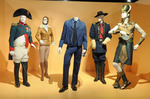
Costumes from "The Young Victoria."
Academy Awards season in Los Angeles manifests itself in a variety of ways. Oscar parties are being planned. Hair and makeup appointments are being made. Closer to the actual date, folks might start driving by the Kodak Theatre on Hollywood Boulevard to look for signs of red carpet installation. Then there are the die-hards, the fans who cruise the Four Seasons Hotel and the Chateau Marmont hoping to spot nominees.
One of my Oscar rituals is to visit the annual exhibit of motion picture costumes at the Fashion Institute of Design & Merchandising in Downtown. The exhibit, which always precedes the Oscar broadcast, is now in its 18th year. I enjoyed getting up close and personal with more than 100 costumes from the year's films. In the exhibit are costumes by four of this year's Oscar-nominated designers: Sandy Powell ("The Young Victoria"), Colleen Atwood ("Nine"), Janet Patterson ("Bright Star"), and Monique Prudhomme ("The Imaginarium of Dr. Parnassus.") The FIDM museum also has a tradition of showcasing the previous year's Oscar winner for costume design. This time it's the sumptuous costumes from "The Duchess," designed by Michael O'Connor and worn in the film by Keira Knightley and Ralph Fiennes.
Seeing a film's costumes in real life is always a reality check for me on the magic of movie making. I'm reminded how the costumes help actors inhabit their roles, and on the flip side how some actors can bring the costumes to life. There is the eye-opening realization of all the long hours and expert craftsmanship that go into making costumes. And there is the never-ending amazement at just how slender some actresses really are, so much so that FIDM curators sometimes have to use child-sized mannequins.
Walking through this year's exhibit brought the usual thrills, surprises and one or two disappointments. Powell's costumes for "The Young Victoria" were as stunning in person as they were on screen. I especially looked forward to those from "Bright Star," the film that depicts the love story between the poet John Keats and Fanny Brawne, played by Abbie Cornish. But without Cornish, her dress lost its magic. Penelope Cruz's tea-length, black crepe sheath with gold chains and rhinestones from "Broken Embraces" (shown here) was a show-stopper. It's an authentic Chanel dress from the 1990's, making it one of the most valuable pieces in the exhibit.
![]()
Shopping cart from "The Soloist"
It was fun to see homeless musician Nathaniel Ayers' shopping cart from "The Soloist." The cart, with all of its oddball components, arrived from storage in one piece ready for exhibit, according to curator Kevin Jones. The creature costumes from "Where the Wild Things Are" were so charming that I was finally convinced to put the movie in my Netflix queue. Ann Roth's costumes from "Julie and Julia" were surprisingly subdued, causing me to ponder whether it was all Meryl Streep that made them so successful.
Prudhomme happened to be at the exhibit the day I visited. She had just flown in from her home in Vancouver and was pleased to see the costumes from "Dr. Parnassus" re-assembled two years after finishing the project. Production was interrupted by the death of star Heath Ledger in 2008, and Prudhomme told me the cast and crew felt that "his spirit was always hovering over us." Prudhomme, who came to costume design from a fine arts backround, is having a good year on the awards circuit; besides being nominated for an Oscar, she is up for a Costume Designer's Guild award in the fantasy category.
A number of the designers featured in the exhibit are, of course, based in Los Angeles. FIDM alum Marlene Stewart, who created the costumes for "Night at the Museum: Battle of the Smithsonian," got her break in costume design working with Madonna in the early MTV days. She came to FIDM after earning a B.A. in history from UC Berkeley and cherishes any opportunity to do character research.
"You get the chance to explore that person's world," she said. "That's what really keeps me going in costume design." She affectionately recalls working with "Night at the Museum" star Ben Stiller: "Ben is very particular about his costumes. It's actually wonderful to work with someone who notices 1/8 inch from across the room."
![]()
"Night at the Museum: Battle of the Smithsonian"
FIDM's curators are already at work on next year's exhibit. Tracking down costumes once filming has finished is "a team effort and a treasure hunt. Costumes might be scattered all over the world," says Jones. Curators have to see any film with potential costume interest so they can quickly begin the process of assembling the show. It almost sounds as challenging as what the costume designers have to go through. Good thing all of us who get to see the end result will have so much fun and be so highly entertained. That's really the point of it all, isn't it?
"Art of Motion Picture Costume Design" at the FIDM Museum runs through April 17.
Photos: FIDM
In case you haven't noticed, it's Black History Month, filling the civic calendar with recitals, banquets, parades and literary events celebrating the past accomplishments of African Americans. But what are folks doing for the African American community's future?
Many black Angelenos will gather together at the Center for Healthy Communities downtown to map out a plan for future generations at the Uplifting Change Summit this morning. Organized by the Liberty Hill foundation, the event will feature presentations and strategy sessions on effecting social change for the African American community through grass roots philanthropy. California Assembly Speaker Karen Bass will present the key note speech.
Unfortunately, the event is sold out. However, Barbara Osborn, will live blog proceedings from the Liberty Hill Blog.
On the eve of the Summit, I spoke with Kafi Blumenfield, Liberty Hill's CEO and President, about the organization's hopes for this event.
Why is Liberty Hill putting on this conference and how does it amplify the organization's mission?
African-Americans talk a lot about the problems in our community but we don't talk enough about how to leverage the resources we do have and what we can do to solve those problems. That's what the Uplifting Change Summit is all about. At Liberty Hill we're about solving problems. Our motto is change, not charity.
What do you want attendees to get out of it?
We've been hosting salons all over town in preparation for this event. When you ask people if they give to their church, everybody's hand goes up. When you ask if they give to their fraternity, hands go up. But when you ask who thinks they're a philanthropist, no one raises their hand. We need to harness the power we have in our own community and direct it toward change not charity. When you walk into our offices there's a quote in our waiting room by Dr. King. He said: Philanthropy is commendable, but it must not cause the philanthropist to overlook the circumstances of economic injustice which make philanthropy necessary.
Uplifting Change should empower African-Americans at a critical time in our community and help them make strategic investments for change.
How will Liberty Hill follow up from the conference itself? Any other events or workshops planned?
This is a long-term project for us. We plan a report from the conference proceedings and will continue to work to strengthen social justice philanthropy in the African-American community as well as intensify our own investments to create new solutions, strong leaders and effective organizations in L.A.'s African-American community.
What is one project that Liberty Hill helped to initiate that you are most proud of?
Wow! That's like asking which of your children you love best! Here's one: In 1989 a public health nurse came to us with the idea for a conference to address the crack epidemic in South L.A. That woman's name was Karen Bass. We gave now-Speaker of the Assembly Karen Bass her first grant to establish one of South L.A.'s most effective community organizations, The Community Coalition.
![]()
Bruce Lisker at Point Fermin. All photos by Iris Schneider.
Part 4 of an occasional series
On a rainy morning in San Pedro, Bruce Lisker was in a reflective mood. He had come to Point Fermin, the spot where his parents' ashes had been scattered, and was talking about the adjustment to his new life. Now that he has been free almost 6 months, a new reality has set in.
"I'm feeling the loss. It was close to 30 years in which I didn't really grow in a lot of ways that people do. I feel like the perennial infant walking around, not having the tools with which to cope with life on its own terms. I'm looking for a therapist I can see a couple of times a week to help me deal with some of these issues. The PTSD.
"It's hard for me sleep in a room with the lights off. I'm so used to being able to see what's around me. In prison, you're trained to know it's dangerous, you need to see what's around you. And now, if I'm outside at night, I'm constantly on guard. I can't disengage from it, try as I might. The elation has given way to this underlying condition. They gutted my life."
He has started monthly get-togethers with one of the jurors on his case. They met through CBS, which arranged a meeting for the cameras. What Lisker really needs is a job. He's almost out of the little money his dad had put aside for him. He took the entrance exams for Santa Monica College and did well on the English, but needs help with algebra. His father was a lawyer, and Lisker muses about what might have been. "Maybe, once I got out of my rebellious teens, I would have followed in my father's footsteps and become a lawyer," he says.
Lisker's dad had his own booth at Musso & Frank's near his Hollywood law office. Today, Lisker has a booth and waiter assigned to him for the occasions he visits the restaurant. Those will be few until he has some income. The job search has been difficult. Imagine adding a murder conviction to your resume.
"The applications all ask if you've been arrested, and I can't lie. But once you say yes, for murder, they never call back. I went down to get a copy of my rap sheet, and even though I have been exonerated, they have not changed anything so the conviction is still there. That's the day I called the therapist.
"My whole life is on hold," he says. "Getting a job at this point will be a case of somebody throwing me a bone. I've inquired at many places, but with this economy, there are plenty of people without criminal records looking for work who are getting turned away."
Lisker thinks he may know someone who might have a job for him when he returns from his first trip abroad, a trip to England with his girlfriend to visit family and attend a family funeral. He and Kara may visit France as well, a trip Lisker swore he'd never make, if it meant getting on an airplane. But he's up for the new challenges life is sending his way, and when the idea of a trip came up, he went for it.
In late December, Lisker filed a lawsuit claiming his civil rights were violated by the city of Los Angeles, the LAPD and the two detectives who investigated his mother's murder and lied in building a case that wrongfully held him responsible for the murder. There is a hearing coming up on March 22 so the defendants can respond to Lisker's allegations. Until then, he waits.
Attorney Bill Genego, who is representing Lisker, acknowledges the difficulty of this new life, but professes faith in Lisker's innate intelligence and abilities. "Bruce is a very capable individual. He has a lot of employable skills and I think he will do fine after this transition period," Genego says. The lawsuit and request for damages tries to make up for what Lisker lost by being imprisoned for 27 years, from the time he was 17 to when he was released at 42. "The system took a huge chunk out of Lisker's life," the lawyer says. "They took the years away from him where we create the life we spend the rest of our years living. Those are the years when you set up your life and then carry it out. Those are the core of someone's life. He is at a real disadvantage."
People mistakenly think that the system tries to make it up to the wrongly imprisoned like Lisker. "But they don't," he says, somewhat disheartened. "They sit on their thumbs waiting for you to sue them." He tries to maintain his equilibrium, stay positive. He's hopeful that a job will materialize so he can begin to support himself and get his life moving forward, now that his long nightmare is over and the burden of freedom--with all its potential and all his liabilities--is his.
This is the fourth part of photographer Iris Schneider's series following Bruce Lisker as he returns to society. He was released from prison last August, after a court vacated his murder conviction.
Oh the weather outside may be frightful, but L.A.'s social whirl continues to be delightful. Here are some upcoming events that don't involve sports or the Oscars:
Tonight
Thursday, February 11, 2010
Friday, February 12, 2010
Saturday, February 13, 2010
Sunday, February 14, 2010
Monday, February 15, 2010
Tuesday, February 16, 2010
Today Pac-10 commissioner Larry Scott announced that the Pac-10 is considering expansion with the conference's television contract set to expire in 2012. Some might wonder why the Pac-10 would be interested in expanding, especially since the conference seems so perfectly set up right now.
With 10 teams, the Pac-10 has five natural rivalries. In football each team plays nine conference games, giving the conference a fair way to determine its champion. The schedule plays even more nicely in basketball, in which every team plays 18 games and has an obvious travel partner. The perfect Thursday-Saturday basketball weekend schedule is the envy of just about every other basketball conference out there, and some think it prepares the Pac-10 well for the NCAA Tournament.
That being said, adding two more teams could allow the conference to earn a larger television contract and provide more revenue for the schools. It would also allow the Pac-10 to have a lucrative football championship game. While playing nine conference games sounds good at first blush, it's one more than every other conference in football. That means five Pac-10 teams are guaranteed to have an extra loss, while teams in the SEC and Big-12 fill their non-conference schedule with lackluster mid-majors or I-AA schools.
Expanding the Pac-10 would almost entirely be for football purposes, since I doubt it would help the conference much basketball-wise.
So what schools could join the "Conference of Champions?" Well, adding schools is tricky. Aside from the fact that a team needs to be competitive in football and basketball, and it needs to be in a lucrative market, the Pac-10 has certain academic standards for member institutions. I don't quite know the specifics of Pac-10 policies regarding academic accreditation, but all Pac-10 schools are fairly major research institutions with relatively large student bodies.
Let's take a look at some of the candidates:
Colorado: In 1994, the Pac-10 actually invited Colorado into the conference, only to be rebuffed. At the time, Colorado was just beginning play in the new Big-12 Conference, and did not want to go back on its commitment.
Times have changed though, and Colorado might be more interested this time around. Geographically, Colorado is in an odd location, where road games in Ames, Iowa; Columbia, Missouri; and College Station, Texas; aren't any closer than trips to LA, San Francisco, or Seattle. Most alums would probably rather travel west.
Back in 1994, Colorado was a major football power, but the program has since fallen on hard times and might be looking for a change of scenery. While it has a rivalry with Nebraska on Thanksgiving weekend, that game has lost some luster.
Colorado is highly desirable for the conference as Denver is a major market where the Pac-10 has virtually no presence. While its football team has struggled, there's no reason to believe that Colorado can't be successful on the gridiron again. Its basketball program has little history, but they do have a good coach in Jeff Bzdelik, and they would certainly be competitive.
The fact is, any Pac-10 expansion talk begins with Colorado. The question is, would they accept?
Texas: Another school that was publicly courted by the Pac-10 back in 1994, but rejected an invitation to join the conference. While the Pac-10 would love to have Texas, the odds of the Longhorns leaving the Big-12 are virtually zero.
Geographically, Texas is well-situated relative to its conference foes, and they have long-standing rivalries with Oklahoma and Texas A&M. This won't happen.
Utah: From a competitive standpoint, Utah would appear to be a good fit. Their football program is as good as any Pac-10 school, and their basketball program has enjoyed success over the years. Despite a long rivalry with BYU, Utah would probably jump at the chance to join the Pac-10.
Should Colorado join the conference, then Utah would be its "rival" and travel partner. That might take some getting used to for people in the Rocky Mountains, but it's workable.
The question is if Salt Lake City is a desirable enough television market. It's large enough to have an NBA team, but it's just barely top-50 market. It's not a bad place to be, but it might not be worth expanding to.
BYU: Football-wise BYU is every bit as good as Utah, and actually has more history. Basketball-wise, the Cougars have had success in recent years, and are currently enjoying one of their best seasons. BYU's ability to compete would not be an issue with it joining the conference.
Some on-lookers might think adding BYU and Utah would make sense, because they're both great athletic schools, and the Pac-10's unique rivalry structure would essentially be preserved. But again, if the Pac-10 is going to expand, then why double-down on the state of Utah? BYU and Utah might be roughly the same size schools, but Provo is a smaller city than Salt Lake City. BYU may have some school policies that make it a difficult fit for the conference, and its refusal to play games on Sundays prohibits scheduling flexibility.
Boise State: From a football standpoint, adding Boise State would make sense. Heck, Boise State probably would have won the Pac-10 had it been in the conference this year, and it would be favored to win it again next year.
Boise State's basketball program has never been anything special, but that's not why the Broncos are a longshot to join the Pac-10. I don't believe that Boise State is a strong enough academic research institution to qualify for admission into the conference. It's that simple. However, if a school in the Mountain West Conference joins the Pac-10, then expect Boise State to bolt from the WAC.
San Diego State: The Aztecs have long wanted join the Pac-10 and have tried several times to do so. San Diego would seem like a good market for the Pac-10, since it's not any smaller than Denver. But there are a few factors working against San Diego State.
First off, San Diego might not formally be in the Pac-10, but it's a city with plenty of Pac-10 alums, and the conference already has something of a television presence there. Secondly, San Diego State football had a good run with Marshall Faulk in the early-1990s, but hasn't been competitive since. In fact, the football program has been downright awful for most of the past decade. Perhaps Brady Hoke can change that. Steve Fisher has done a decent job with the basketball program though, and they would probably be competitive in Pac-10 hoops.
However, another issue with San Diego State could be academics. I don't want to knock the school, which serves its area perfectly well. But I'm just not sure if it meets all of the Pac-10's specific requirements. I have the same question for any school in the Cal State system.
Fresno State: Again, I'm not sure about the academic situation. While Pat Hill's football team would give conference foes nightmares, its basketball program has been penalized one too many times. Also, Fresno just isn't a large enough market.
TCU: A terrific football program and a foothold in a major media market in Dallas-Fort Worth. But TCU might just be too far away to make geographic sense. If Colorado leaves the Big-12, then expect TCU to quickly file its application to change conferences.
SMU: Same geographic issues as TCU, despite being in a desirable media market. Also, not as strong as TCU in football.
UNLV: This might be an interesting fit. Moving into the growing Las Vegas market could be desirable.
UNLV has a terrific basketball history and would be competitive right away. But its football program has never won consistently, and I question if they could compete in the Pac-10. Additionally, there might be concerns from other Pac-10 schools about gambling and sending their students to Vegas every year.
Nevada: The school has had success in football in recent years, but not close to the kind of success of a Utah or BYU. In all likelihood, Nevada would be an also-ran in Pac-10 football, and would struggle to compete. The same goes for its basketball program. Reno is also not a large enough TV market.
Gonzaga: The Zags have been as good or better than nearly every Pac-10 school in basketball for most of the past decade. But Gonzaga has no football program, it's too small of a school to join the conference, and Spokane is already covered by Washington State anyways. That being said, if there was some weird situation in which the Pac-10 added different schools for football and basketball, then Gonzaga would dramatically boost the conference's hoops fortunes.
Colorado State: The only way the Rams get in is if Colorado joins and the conference has a clear fixation on keeping its in-state rival system going. Colorado State hasn't been good in football for several years and its basketball program is mediocre. I'm not sure if it's strong enough academically to get in either. Still, doubling down on the state of Colorado isn't such a bad idea.
Air Force: Another potential rival for Colorado, and it would add a unique fan base to the conference. Air Force would probably be competitive in football too. Still, I'm not sure if culturally this is a good fit.
New Mexico: Not a bad market to be in, and the school has had success in basketball. But the utter lack of success in football makes a move to the Pac-10 unlikely.
Hawaii: This school has had its good teams over the years, but I don't think Pac-10 teams want this long flight on their schedule annually.
Nebraska: Obviously it's not a huge market, and it's not that close to the rest of the conference, but this move could actually make sense.
First off, Nebraska would be a natural rival for Colorado. Secondly, the Cornhuskers do all of their football recruiting in California anyways, so why not just play where the recruits can see you? Third, while it's a small market, every single person in the entire state of Nebraska is utterly obsessed with Cornhusker football. The team's fan base extends beyond just the market, and the program has the brand power to help the conference command a large television deal.
Nebraska might be frustrated with the Big-12 North Division being as weak as it has been over the years, as the conference seems to be centered in Texas more and more. Its longtime rivalry with Oklahoma has effectively ended thanks to Big-12 scheduling that has the Sooners and Cornhuskers playing only once every other year. Oklahoma now has stronger rivalries with Texas and Oklahoma State, while Nebraska seems somewhat more isolated in the North Division.
The Cornhuskers might relish the chance to be seen on TV in Prime Time in LA and San Francisco, even if the start times are a little late for them. They would also give a major boost to the conference's football status.
The Verdict: Without Colorado, I don't think Pac-10 expansion happens. At the end of the day, I think Colorado would ultimately move to the conference, but it won't be an easy decision for them.
As for the second team, my money would be on Utah. Nebraska is really enticing, but it's probably just too far away. That being said, Saint Louis University is in the Atlantic 10, Boston College is in the ACC, and South Florida and Marquette are in the Big East, so there are plenty of awkward conference arrangements out there. Maybe Nebraska would be a good fit after all.
***Corrections: While Nebraska has several high-profile recruits from California, the state of Texas is actually its biggest out-of-state recruiting market. Also, Nebraska doesn't play Oklahoma every other year, as previously stated. It plays them in consecutive years for a home-and-home series, and then goes two years without playing them.
Mike Dunleavy has stepped down as the head coach of the Los Angeles Clippers, but will remain general manger of the team. The Clippers have needed a new coach for a while now, and this move should only help them. But Dunleavy staying on as GM leads to a host of new questions.
First off, Mike Dunleavy is a pretty good coach. LA fans may remember that Jerry West pulled him out of nowhere to replace Pat Riley in 1990, and was rewarded when Dunleavy guided the Lakers to an upset over Portland in the 1991 Western Conference Finals. A few months later, Magic Johnson announced he was HIV positive, and Dunleavy still rallied the Lakers to a playoff appearance.
Afterward, Dunleavy left for Milwaukee to become the Bucks' Coach/GM and after several lousy years, he stepped down as coach while remaining as GM (sound familiar?). That arrangement lasted one season before Dunleavy was hired to be the head coach of the Portland Trail Blazers. He guided Portland to two consecutive Western Conference Finals, doing his best to keep the talented "Jail Blazers" under control.
With the Clippers, Dunleavy led the team to its most successful season ever, a 2006 appearance in the second round of the playoffs, one round further than the Lakers. But Dunleavy's Clippers never came close to repeating that success. Part of that was due to injuries which seemed to ravage the team every year. But Dunleavy no longer seemed able to motivate his players and his defensive-oriented system clearly did not suit his personnel. He especially clashed with Baron Davis who thrives in a more up-tempo system, like the one he played in Golden State.
Most basketball observers felt Dunleavy should have been fired last year, or even earlier, but it's been widely assumed that Donald Sterling didn't want to pay the $5.5 million a year Dunleavy is owed through next year and a whole other coaching staff. Before today, Dunleavy was the only coach/GM in the NBA, and it's very difficult to do both jobs at the same time. But again, Sterling reportedly didn't want to have to pay for a new GM as well.
Kim Hughes is the new interim coach of the Clippers and no one knows what to expect from him. It's interesting that he was the assistant chosen over John Lucas, who actually has head coaching experience, but Dunleavy told ESPN Radio's Steve Mason and John Ireland that he felt Hughes was more familiar with the players.
The real question is how Dunleavy will continue to impact the Clippers as GM. There's no other NBA GM who makes close to $5.5 million a year, so it remains to be seen if he will stay on after next season. We also don't know if Hughes will be given a shot at becoming the permanent head coach, or if the Clippers will want to bring in a more established coach next year. And we have no idea what role Dunleavy will play in hiring a new coach. I actually think that Dunleavy has done a reasonably good job with personnel moves since Elgin Baylor left, finding ways to obtain cap space while still bringing in quality talent.
With Davis, Eric Gordon, Chris Kaman, and others, the Clippers have the talent to be a playoff team. Next year, they'll get a major boost with Blake Griffin coming back. But the Clippers need a coach who will run a more up-tempo offense to suit Davis' strengths.
Byron Scott would sound like a great candidate except that him and Davis did not get along in New Orleans. Avery Johnson might also be a good choice, but he would probably want to take more control of the team than Dunleavy would allow. Celtics assistant Tom Thibodeau is long overdue for a head coaching job, but he might be more defensive oriented than the Clippers need.
If there's one thing we've learned about Donald Sterling's coaching hires, it's that you can expect the unexpected. Kim Hughes is now the Sterling's 17th head coach in the 20 years he's owned the franchise. But this is an organization that has the potential to be successful and just needs the right coach to lead them. The current arrangement simply comes with more questions.
Earlier this evening I spoke with Fred Roggin about Dunleavy and also gave my Super Bowl pick on The Filter.
Over the past few years, I've seen an explosion of interest in college football recruiting. Much of this can be attributed to internet sites like Rivals.com and Scout.com which allow die-hard college fans to actively follow recruiting battles across the country. It's now reached the point where just a few days before the Super Bowl, ESPN.com devoted more space on its home page to National Signing Day than to any story it's covered in months.
While I'm always thrilled when people take an interest in sports, especially niche subjects like recruiting, I'm here to tell you not buy into the hype. At best, recruiting is an inexact science, and it is hardly worth obsessing over.
By all accounts, USC and UCLA have excellent recruiting classes. The three major services -- Rivals, Scout, and ESPN -- all rank the local schools in the top-10 for 2010. Rivals even ranks USC No. 1, which is impressive considering the school changed head coaches just a few weeks ago.
But the successes at USC and UCLA don't guarantee anything. Just three years ago, USC had the No. 1 recruiting class in the country according to ESPN. This was largely due to the Trojans securing the nation's No. 1 player (Joe McKnight), the No. 1 defensive recruit (Everson Griffen), another Top-5 recruit (Marc Tyler), and a top-flight QB (Aaron Corp).
Well, how has that worked out? Not so well. Dubbed "the next Reggie Bush," McKnight never realized his potential at USC, failing to consistently run between the tackles and only occasionally breaking off a big play. McKnight missed the Emerald Bowl this year because of an investigation into his use of a car that belonged to a marketing representative, and some fear it could lead to NCAA sanctions. McKnight initially said he'd come back to play in 2010, claiming he could win the Heisman, but after the investigations began he chose to enter the NFL Draft. After being the No. 1 recruit in the nation in 2007, he's now projected to be taken in the fourth round, meaning he's fallen from No. 1 to roughly No. 100
Griffen's first two years at USC were frustrating to watch, as he seemed undisciplined and unable to fulfill his potential. He finally became a full-time starter this past season, and did OK, being named Second-Team All-Pac 10. Griffen could barely wait for the Emerald Bowl to end to announce he was declaring for the NFL Draft. Based on potential alone, he's projected to be a late-first or early-second round pick, but he's been a disappointment at USC.
Tyler has had two injury-riddled seasons with the Trojans. In the one year in which he did play, Tyler rarely saw playing time, being stuck behind four other RBs on the depth chart. He hopes to have a good 2010, now that some of his competition has left.
Corp got passed on the depth chart by another top QB recruit in Matt Barkley. He started one game last season against Washington and looked horrible, subsequently falling to 3rd string. He has since decided to transfer to Richmond.
So as you can see, these recruiting lists aren't exactly a crystal ball. Three years ago, Boise State, TCU, and Cincinnati were on no one's top-25 recruiting lists, but all three made BCS games. Schools like Oregon, Iowa, and Georgia Tech, which also made the BCS, didn't have hyped recruiting classes either.
In the meantime schools such as Clemson, South Carolina, Illinois, Notre Dame, and Texas A&M continue to produce well-regarded recruited classes with little to show for it on the field.
The truth is, when you're talking about 17-year old kids, you never know what to expect. It's easy to watch a highlight tape of a high school kid and see that someone is fast or strong against lesser competition. But it's far more difficult to know how hard a kid will work, how he will work with others, whether he cares about team success or his own NFL prospects, and if he is able to withstand the pressures and lifestyle changes that accompany playing on the college level.
There's no question that it's important to recruit top talent. No team can win without good players. But it's more important to coach and develop players. There's a lot of development that goes on between ages 18 and 21, and young football players are no exception.
Recruiting rankings have little correlation with actual results on the field, so it's silly to wrapped up in the hype.
No. Not just books.
I quit my job as a journalist to go write novels.
Fiction.
Now, given the current condition of the newspaper industry, that probably makes me look like a genius to some, as though I ought to be waxing rhapsodic on the eve of my debut novel's publication. ["Boon" is available in stores and online. View the trailer at YouTube, read an excerpt, or visit WhatTheBoon.com.]
Indeed, several newspaper friends have inquired in recent weeks as to how they might do the same thing. How, they ask, does a journalist becomes a novelist?
"How?"
I've written and rewritten the answer to that question at least 100 different ways in the past week, all of which amounted to very poetic piles of steaming horseshit.
You want to know how? My answer is "no."
No.
Few journalists have ever accomplished anything worthwhile without first hearing "no" -- No, you can't talk to him ... No, you can't have that document ... No, you aren't allowed -- so that's my answer.
No.
When I started down this road, back in 2004, my life was good. I'd been a journalist for 15 years, more than half of which I'd spent writing for a growing, mid-sized newspaper in suburban Los Angeles. It was a dream job, well, as close as I was going to get to a dream job in journalism anyway, and the only job I wanted at that particular paper, a position that allowed me to spend weeks at a time researching and writing in-depth stories, but with enough flexibility to also dive into bigger news events as they occurred -- murders, manhunts, wildfires. Sure, if The New York Times had rung me up and invited me to come work for them, I'd have gone, but the only reason anyone from that paper ever called was to pitch a subscription special, and, well, I was OK with that.
The trouble was, I never intended to spend my life working for newspapers.
The only reason I got into it was because newspapering was the route most of my favorite writers took -- Twain, Hemingway, Thompson. Journalism was a way to see the world, or, at least, more than I would have seen otherwise. Writing for a newspaper provided me the kind of access no amount of money could buy, not that I had any money to begin with. I met heads of state, royalty, saintly people, and heartless scoundrels. I heard tales of tragedy, loss, and redemption straight from those who'd experienced it, and sometimes I even saw an injustice put right because the newspaper published a story about it. My experience was no more remarkable than any other reporter's, but I loved it, all of it, even the hate mail and the threats, which I quickly learned to interpret as indicators that I was doing the right thing.
But, then, one day I just woke to the realization that I'd stayed too long.
The newsroom reaction to my departure was mixed. Some of my colleagues were very supportive, while others treated me like a silly heart, as though the pressure had finally gotten to me, their well wishes the sort of sweet nothings you'd expect to see inscribed on Valentine candies.
"Good luck."
"You're brave."
My sources in government circles shared with me the wildest explanations they'd heard, gossip about how I'd finally stepped on the toes of some pol powerful enough to demand my dismissal. A few even offered to speak to my boss on my behalf, in defense of my job. A book? Even they could have made up a better excuse than that.
The most frank assessment came from one of my favorite editors, who, I'm glad to say, is still a good friend. She called the move "a mistake."
It was the most wonderful thing anyone could have said to me.
"A mistake."
It was the same as saying "no."
No, you can't have that. No, you can't go in there. No, you're not on the list.
So, how does a journalist become a novelist? There's not much in the how-to realm of writing that hasn't already been said so many times in so many books that bookstores dedicate entire sections to the issue. About all I can add is what you're bound to hear thousands of times before, during, and after writing your first damn book:
No.
No, you can't do it. No, you'll never do it. No, don't even try.
No.
More about TJ Sullivan's debut novel "Boon" is at WhatTheBoon.com, including where to buy it online.
View the trailer at YouTube, and/or read an excerpt of "Boon" at TJSullivanLA.com.
|
Media
|
Politics
|
|
|
LA Biz
|
Arts, Books & Food
|
LA Living
|
Sports
|