Main

May 21, 2020

'The Present'...and the fuzzy future of L.A. theater

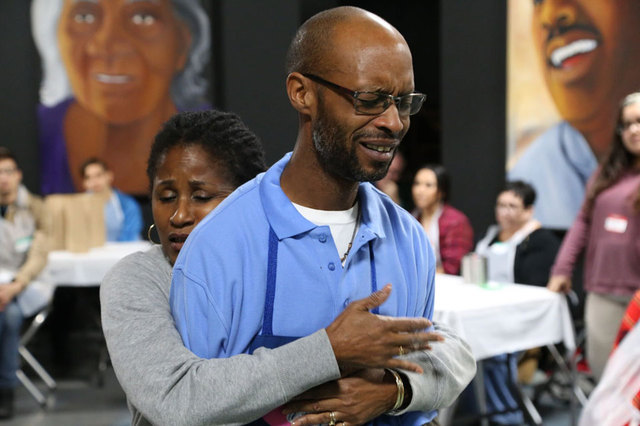
the_present_photo.jpgPhoto of "The Present."


"There is no theater in Los Angeles."

This line, or some variation of it, has been around for decades -- sometimes spoken by real people, sometimes ascribed to fictional characters. It's normally a snarky wisecrack, completely unrelated to the truth.

Right now, however, this line is much more accurate than usual. Like theaters in most of the rest of the world, L.A. stages -- in the sense of physical spaces where actors and audiences gather -- are dormant.

Most years, I see at least a hundred plays and musicals in greater Los Angeles -- some years, more than 200. In 2020, I had already seen 30 theatrical productions here, when suddenly it all stopped. The last production I saw in a theater was A Noise Within's "Alice in Wonderland" on March 8.

Like Alice, Angelenos are grappling with an adventure, but unlike Alice's, most of our COVID-era adventure is within familiar domestic surroundings -- not necessarily a theater-friendly terrain.

The essence of theater is that we leave home and enter that intersection between live performers and live spectators -- in a public, physical locale. How exactly is that going to happen until most audience members, as well as artists, are vaccinated against this virus?

In a recent national survey of 401 people who see at least two professional theatrical productions a year, almost two-thirds (63%) said that they would probably wait at least a few months before returning to the theaters after they re-open, while a similarly sized proportion (64%) said a vaccine would be the single factor that would most encourage them to return.

Of those aged 55 and above -- a key theatrical demographic and the age group that is at most risk of the virus -- only 21% said they would be likely to return in the next season after theaters re-open.

Sure, theater companies could require masks and then separate audience members -- or at least household groups -- from each other by six feet. The productions would have to be written and staged so that none of the masked cast members or backstage crew members is within six feet of the others.

In South Salt Lake, Utah, the Parker Theatre recently re-opened using those techniques. Here is more information about its arrangements for a 35-minute comedy revue, "The Corona Conundrum," inside its regular venue. The company's website includes a video tour which explains the venue's distancing precautions and offers brief views of the production, in which the performers appear to occupy solo positions on the stage.

I haven't seen "Corona Conundrum." But while sheltering at home, I've already seen a lot of free online comedy about sheltering at home -- for example, two music-video parodies, from different creators, that play on the rhyme of "quarantine" and "Billie Jean." If I were in Utah, I doubt that I would want to pay $17 to see still more COVID-era humor, while wearing a mask.

In L.A., there is some talk about possible "drive-in theater." Anyone up for adapting "A Chorus Line" so that the chorus never forms a line? (Actually, something that suggests this is on video, here).

Of course, distancing on the recommended scale would reduce the seating capacity of most theaters, and their potential box-office revenue, to small fractions of the previous numbers. With many L.A. theaters already operating as small-scale nonprofits, this sounds unworkable.

Even after most of us are vaccinated and distancing isn't required, will theatergoers eagerly return to seats with shared armrests -- or with no armrests (as in some of the smaller theaters) -- or during the season when audience coughs often punctuate or even muffle some of the spoken lines?

Movie theaters might be even more vulnerable, because so many of us have spent so much of our shelter-at-home time streaming movies and TV. I'm certainly streaming more often than ever, and I'm wondering if I'll ever return to a cinema.

But theater artists should remember that their art is different from movies and TV, or at least it should be.

At most theater productions, lurking in the background is the possibility that this particular performance could be at least slightly different from the previous night's or the next matinee's. For me, that adds an element of excitement -- even though I almost never hear that there were any significant variations -- because it means that these artists are performing for us in particular, not for the unseen masses who might watch a frozen-in-time movie or TV series or YouTube video.

When theater spectators laugh or cry (or, unfortunately, snore or heckle), the actors often hear us. The communication is much more of a two-way channel than it is at any screening.

During the last two months, most L.A. theater companies have increased online activities with a vengeance, reminding us that they're still here, that they need the support of their fans. Some of them are charging for filmed online versions of their previous work.

The remarkable blossoming of Zoom has made some of the digital encounters interactive, somewhat closer to that sense of a theatrical communion between performers and audience. But most of the online content that employs Zoom is on the level of the real-life audience talkbacks that often follow performances in theaters, instead of serving as the main event itself.

The big exception so far is "The Present," a Geffen Playhouse production that's taking place only online. It's a live, close-up magic show, which is the one theatrical genre that might be better-suited for Zoom than it is for production inside a theater. At some previous cards-intensive shows inside even small theaters, including those of the late Ricky Jay, I've had a slight sensation that I was too far away to adequately see what was going on.

But "The Present" casts that problem into the past. Only 25 households join "The Present" at any single performance. On Zoom, we not only glimpse our fellow audience members, but we can hear their louder reactions. We can even read their names appearing on the screen as we virtually assemble.

Assuming we use "speaker mode" on Zoom, we get a large image of the unassuming Portuguese-born Helder Guimarães, who performed his legerdemain inside the Geffen itself a year ago, during "Invisible Tango." We see his cards in close-up, as he astonishes us with his sleight of hand.

He also intertwines, among the card tricks, an affecting story about his own childhood experience when he was more or less quarantined after an accident, and how it changed his relationship with the grandfather who monitored his activities when his parents were at work.

The title refers not only to the present moment of COVID-caused quarantine, but also to a package that arrives in the regular US mail at each guest's address, several days before the reserved performance. Without revealing too much, I can say that the contents of this mailed "present" enable us to participate more fully in the onscreen events.

The production also is enabled by the fact that Guimarães is not in Actors' Equity, so the usual union contracts that regulate the use of professional actors at the Geffen aren't a factor. Tickets, now at $125 per household, are selling out almost as soon as they become available, including the most recent batch through August 16.

While the Geffen's previous relationship with Guimarães is paying off big-time right now, "The Present" is hardly a model for how to return the Geffen or any theater company to its regular fare -- actors in plays and musicals.

Theater managers and artists are considering all the options but are stymied by the absence of a clear-cut schedule. At what point do they decide that the next batch of in-theater shows must also be canceled? Perhaps what they need right now isn't a sleight-of-hand artist but a seer.

I must briefly note that the pondering of such questions must unfortunately continue without the expert services and easy affability of two pillars of the LA theater community who died (but not from coronavirus) since the theaters closed in March.

Diane Rodriguez was a vital and endearing administrator and artist. My most vivid recent memory of her was when we walked together from the Music Center to the starting point, near Olvera Street, of "Remote L.A.," a remarkable Center Theatre Group production that used headsets and guides to consider philosophical questions, as the audience strolled (and rode a subway) through downtown LA, in 2017. Rodriguez had discovered the German company that would create "Remote L.A." when she was at a theater event in Santiago - a mark of her combination of an international vision with the determination and ability to employ it for LA-specific art.

Kerry English was a pediatrician by day, but during much of the rest of his time he was attending theater, where we often chatted in lobbies. He not only seemed to see as many productions as I do, but he also served on some of the theaters' boards, helping them navigate through their endemic financial straits. He was an exemplar of the kind of theater devotee that the present moment requires if L.A. theater is to again become "the fabulous invalid" that not only survives but thrives in the post-pandemic world.

May 20, 2020

The sea is dying, the art lives

Slab City2 5-14-20 - Copy.JPG

Last week, cabin fever rising, I packed a face mask, disinfectant wipes, sunscreen and lunch into the car for a road trip to see no one.

In mid-May, with all desert temperatures rising, no one visits the Salton Sea. It's not a big draw any time, really, not since its resort heyday in the mid-20th century. California's largest inland body of water, 230-ish feet below sea level, is dying from human neglect and the whims of Mother Nature. It's salty, shrinking and sometimes stinks of hydrogen sulfide gas and dead fish.

My kind of no-human place! Especially on a day blessed with relatively mild weather and not a whiff of death or sulfur. My destination was the east side of the sea, the dusty town of Bombay Beach and a bit farther south, the curious folk-arty hillside tribute to God and love called Salvation Mountain.

Like most places in Southern California, Bombay Beach was closed. Even absent a pandemic, it's hard to tell. The tiny burg (pop. 250 on a good day) has no gas station, but there are two places where you can drink, the Ski Inn (think: dive bar, 1960s) and American Legion Post 801. According to one sometime local, they're like the Hatfields and the McCoys -- if you drink at one, you don't step foot into the other.

When last checked, the sole Bombay Beach listing on Airbnb offered a "kitsch haven" one-bed, one-bath house for $77 a night. It also announced: "DO NOT UNDERESTIMATE THE PECULIARITY OR REMOTENESS OF BOMBAY BEACH."

Bombay Beach2 5-14-20 - Copy.JPG

Remote, yes, since the sea lost its tourist mojo 50 years ago. But peculiar took over from terminal more recently, thanks to an infusion of artists who found cheap real estate and abundant inspiration in a place inhabited mostly by elderly folks living on the socio-economic edge. Most of the artists whose work proliferates around town don't live here full time, but over the years they have developed an appreciation for those who do.

In 2016, a loose collective of artists and their enablers launched the first Bombay Beach Biennale, an annual semi-subversive event over one weekend usually in March. They don't announce the dates because you're not really invited. By and for locals and artists, the celebration of art, music and woo-woo pops up in gnarly yards, among abandoned trailers, in vacant lots and along the diminishing shoreline.

It's an all-volunteer, anti-commercial shindig that tolerates a limited number of outsiders, if, per the website, you come equipped with:

• An open mind
• Cash - there are no ATM's in town. All local businesses are cash only.
• Your own drinking cup
• Sunscreen
• Water
• Food
• Toilet Paper
• Hand Sanitizer
• Shade

But not:

• Expectations

This year, explained Lauren Brand, one of its producers, the disorganizers opted against a visual/musical art Biennale in favor of a Literary Week. Alas, it was canceled courtesy of the virus. But in my brief drive-by, I was lucky to find a few artifacts from previous years.

Bombay Beach6 5-14-20 - Copy.JPG

During World War II, the Salton Sea was a practice site for the Army's B-29s. One pilot who dropped dummy bombs into the briny drink was Lt. Col. Paul Tibbets. In 1945, it was he who flew the Enola Gay over Hiroshima, Japan, to drop the first atomic bomb on Aug. 6.

Hanging from the chain link fence adjacent to the yellow "Bomb Bay Shelter," by artist/property owner Joe Regan, is a properly-fonted sign that smirks: "Sotheby's International Reality," and an invitation to visit www.bombaybeachreality.com, which, of course, does not exist, and to #bombaybeachreality, which brings you to depictions of mobile homes in various states of undress. The florid "sales" copy reads:


"Great Investor Owner Occupy Opportunity! ... This home has some of the original characteristics of it era. ... The units feature a grand entrance with a large open living room area with high ceilings and a kitchen/dining combo with natural light. ... Large backyard perfect for gardening and for family/friend gatherings. ... There are two parking spaces and lots of off-street parking. While they are friendly, please do not disturb current owners. Sold! Artists build desirable destinations out of once forgotten places. Through this act of creation, they precipitate their own annihilation."

An array of brightly painted televisions sets -- the old-fashioned boxy kind -- occupy a corner of 5th and H streets. Farther north on H, fancy light standards sprout from the weedy dirt yard of a house with a dubious, tar-paper patched roof and peeling white paint. Cut-glass chandeliers are suspended from the curlicues that once housed light bulbs.

Bombay Beach3 5-14-20 - Copy.JPG

The art world has described artist Randy Polumbo as a "mad scientist," and he has perfected the out-there formula. He lives in New York City (whose Museum of Sex includes his work in its collection), but he also cultivates his garden at a lot he owns at the north end of H Street. He crafted "Lodestar," according to Brand, from a plane he bought from a private collector and had trucked cross-country to California. The massive sculpture exhibited at Burning Man and Coachella, but its home is here, lovingly maintained by a local.

Bombay Beach1 5-14-20 - Copy.JPG

"Da Vinci Fish" air-swims in the well-kept yard of a colorfully painted building on 2nd Street. It was constructed by several artists from metal, fiber, wood and ceramics salvaged from the Salton Sea. The sign, Bombay Beach Arts & Culture, appears to be part of the installation, but the venue is real -- it's a nonprofit community center supported by the landowner, who is a friend of lead fish artist, Sean Guerrero.

The Biennale artists aren't the only creative types inspired by the harsh elements here, and they weren't the first. Nearly 20 miles south of Bombay Beach is Niland, another desiccated town with a few more services and no better prospects. Still, it's the provisioning hub for its eastern suburb, Slab City, another evolutionary remnant of the region's martial pedigree.

Slab City1 5-14-20 - Copy.JPG

A self-described "no-fee recreational vehicle 'squat' destination," Slab City's name derives from the residual concrete foundations of Camp Dunlap, a World War II Marine desert training base abandoned in the 1950s. The Department of Defense handed the 640 acres back to the state of California, which pretty much sat by as an assortment of desert dwellers took root over the years.

It's an interesting population composed, according to a Border Patrol agent at the Niland checkpoint, of "homeless, druggies and your sovereign people." (You know -- your Cliven and Ammon Bundy types.) The border guy said nothing about artists.

But living off the grid -- no running water, no electricity, no GrubHub -- they, too, decorate their desert with roadside attractions. A scrawny dead tree's knobby branches are hung with shoes, many more of which are scattered like fallen leaves around the sandy base. Some of them are new, and, at least until the wind kicks up, sparkly white.

Slab City3 5-14-20 - Copy.JPG
Another dead-plant construct wears colorful paint cans like Johnny Depp wears bracelets.

I didn't have time to drive into the heart of this community, only as far as its bold entry monument, Salvation Mountain. It, too, was COVID-closed. But it looms large from the road, beckoning all comers to share God's love, if not Leonard Knight's artistic sensibility.

Salvation Mountain1 5-14-20 - Copy.JPG

Starting in 1984, Knight began to blanket the lumpy landscape with adobe, straw and lead-free paint. (Really. It's certified.) The murals and designs invoke Bible verses and prayers, but give equal time to depictions of all manner of flora and fauna, spread across 150 feet and as high as 50. Some observers might find it garish, like the work of an aging hippie who moved here when he got priced out of the Haight.

The Folk Art Society of America would disagree. In 2000, it deemed Salvation Mountain "a folk art site worthy of preservation and protection."

On the road back to Niland, a sunburned, raggedy local carrying an empty plastic water jug was hitching a ride into town. I pondered. He could be an artist. Or a meth head. A sovereign. I didn't like the odds. I drove past.

He smiled and waved.

Salvation Mountain2 5-14-20 - Copy.JPG

Photos: Ellen Alperstein

March 14, 2020

A haunting look back at the Weimar Republic

weimar-art.jpgPhoto: Benjamin Suomela


Love in the time of Coronavirus. Love in the time of Presidential elections. That's all we hear about these days.

Reminders of the world's current authoritarian trend-lines, though, were not absent from the Weimar Republic Festival put on by conductor laureate Esa-Pekka Salonen with the LA Philharmonic. That spirit of Germany's impending trauma of 1918-1933, a movement reflected by Kurt Weill and Bertolt Brecht et al, came to Disney Hall in a brilliant production by the brothers Simon and Gerard McBurney.

Can you revel in a stage artist's magical creation of a decadent time? A time of raging capitalism? Of social chaos and political passions? Of rotting morality? All as the lead-in to Fascism? Forgetting that it came with great artistic and cultural freedom?

But of course. Just look around.

Especially at the recent Weimar Festival, where Disney Hall's square interior, with audience arranged on all four sides of the stage and no proscenium arch, I saw its best treatment so far since the acclaimed concert venue opened. A superb effort. Its credits belong to Anna Fleischele, along with Simon McBurney as a designer-architect-engineer-artist team in their handling of and inhabiting the space.

To surround the music (Paul Hindemith, Weill) they created an aura of dark Bauhausian sculptural panels in naturally-placed upstage divisions with chorus members housed in between them. The whole thing had an artistic balance -- an integration -- I've never seen before at Disney.

And its impact -- together with the darkened stage, the grainy black-and-white video clips of street life, Nazi soldiers at the Brandenburg Gate, etc. as background for Weill's "Berlin Requiem " -- was stunning. So too the stark music, splendidly played to its dramatic perfection, along with Grant Gershon's mighty chorus.

The Hindemith work, "Murderer, Hope of Women," had less theatrical advantage, but Salonen and the orchestra let its collective power sweep us into a racing, soaring torrent with voices slashing cross-wise through it.

And, finally, Weill-Brecht's "The Seven Deadly Sins" had a compelling treatment. More videos, this time of the Roaring Twenties in various American cities named in the text. As Anna I (the singer), Nora Fischer made a spunky, no-nonsense adventurer and as Anna II (the dancer), her doppelganger, Gabriella Schmidt embodied the wanton street-girl.

But just in case the name Weimar still does not ring bells, think, for starters, of movieland's émigrés from the early '30s: Fritz Lang, Marlene Dietrich ("The Blue Angel," where she strolled around a restaurant in a top hat and tux singing and kissing women at tables) -- not to mention "Cabaret" (Kander/Ebb), based on Christopher Isherwood's "Goodbye to Berlin."

What's more, the company across the street, LA Opera, was busy -- with two productions on the Chandler Pavilion stage, one that ranged into existential territory: the premiere of Matthew Aucoin's "Eurydice," yet another notch in the mythical subject composers have been obsessed with through history.

eurydice-dp.jpgFrom "Eurydice." Photo: Cory Weaver

Aucoin turned to Sara Ruhl who wrote its libretto based on her acclaimed play. It grapples with lots of reality issues embedded in the text: "Am I here, or there? Dead or alive?"And it captures lots of identity insights. "All he cares about is his music," Eurydice complains, of her composer husband Orpheus.

Even with Dan Ostling's provocatively post-modernish designs, though, and Mary Zimmerman's astute direction, it's Aucoin's music that shines through.

His skill is widely evident. The orchestral score -- a glittery frame that boasts a full arsenal of styles from Wagner to Glass -- artfully moves the narrative forward. What's more his innate kinship to the voice produces lines of glorious shape, so sing-able that I would imagine future cast hopefuls galore. Danielle de Niese, as the title character, luxuriated in those soaring lines, as Joshua Hopkins (Orpheus) and Rod Gilfry (the father) excelled in theirs.

But LA Opera's next entry, Donizetti's "Roberto Devereux," tumbled into an opening night jinx, no fault of conductor Eun Sun Kim, who capably held things together. Its scheduled soprano fell ill and canceled. A replacement, Angela Meade, who had sung the fairly treacherous role of Queen Elizabeth I elsewhere, stepped in -- but only by standing at the side curtain, since she had just several days notice and no time to rehearse.

Bad mistake.

Better to be onstage -- even with her music stand -- because the actual animation of singing and being there gives life to the physical interactions of the other cast members, rather than making the supposed drama a drowsy charade. And besides, this simple-minded Canadian production requires little more than face-this-way, exit-that-way-cues, as directed by Stephen Lawless.

To think that Beverly Sills gave hit status to "Devereux" when, in 1970, she sang it with New York City Opera and made history with Donizetti's Tudor Trilogy, featuring those three doomed lives, the first two by the hand of Henry the Eighth (his wives Mary Stuart and Anne Boleyn, besides Devereux).

Even though Meade had the rich lower range to denote the Queen's malice toward her faithless lover, Devereux, -- sung nicely by Ramon Vargas -- that wasn't enough. Sills, of lighter voice, fell short there. But her theatrical power as the almost elderly monarch, stalking around the stage in 55 pounds of upholstered velvet with a heavily chalked visage, commanded everyone's attention. Ditto her charged coloratura, of course.

Here, so did the lovely singing of Ashley Dixon, as Devereux's lover Sara, constitute LA Opera's best feature.

More words and music and, this time, dance, descended at UCLA' Royce Hall:

Pam Tanowitz, among the most sought-after and brainiest choreographers around, knows where to furnish her creative instincts.

How about T.S. Eliot's famous poetry cycle "Four Quartets," ("At the still point of the turning world..."), in a masterly recitation by Kathleen Chalfant, intertwined with the Knights exceptional playing of nuanced interludes?

Yes, you can collect an arts potpourri. But then you must get a Tanowitz to pull it together with movement that is not arbitrary -- which is what makes her stand at the top of the heap.

With this work she shows you what core impetus is. Her response -- abstract, as in Merce Cunningham, as opposed to narrative as in Martha Graham -- to Eliot's deeply questioning words about existence, about life in the midst of so much death (World War II), is revelatory. I marveled throughout the 75 minutes that no moment had an undetectable stimulus, even in the subtlest terms.

But music, alone, was all we needed when Gustavo Dudamel took charge of his LA Philharmonic with a festive survey of Dvorak and Charles Ives, among our country's most spirited musical minds. A true original, he studied his craft deeply and came out an expert -- as well as the open-hearted Connecticut Yankee who so loved our tunes, our marches, our parks' band concerts, our hymns and holidays that he uproariously splintered them together in his best known works. Who could not smile listening to their wit, their cleverness, their experimental adventure?

The surprise, for many, came in Ives' rarely heard 1st Symphony, a part of which sounded like something from mitteleuropa WW I -- gently lilting, tender, luscious. Dudamel and the Phil found those qualities and brought them to loving perfection.

February 20, 2020

Meet Jane Doe...and '$5 Shakespeare'

HIS_0025.jpgAleisha Force, Richard Azurdia, Tarina Pouncy and Matt Kirkwood in 'Human Interest Story. Photo by Jenny Graham.


The daily Bulletin is changing its motto from "A free press means a free people" to "A streamlined newspaper for a streamlined era."

Is this the latest symptom of the continuing economic collapse of American journalism? Then why does the motto still bother to include that antiquated word "newspaper"?

In fact, this change of a publication's motto appeared in 1941. It was graphically depicted in the first post-titles image of the movie "Meet John Doe," which was released then, back in the days when newspapers still appeared only on newsprint.

Stephen Sachs of the Fountain Theatre had the inspired idea of not only updating this film's script to 2020, but also expanding it to include a representative of Americans who were hardly visible in the original. In his "Human Interest Story" at the Fountain, "John Doe" is now "Jane Doe" -- a black woman who became homeless after she was laid off from her job as a teacher.

As in the original screenplay, this new "Doe" fills a gap in a yarn that was cooked up by a newspaper columnist -- in this version a man named Andy Kramer. As he's about to be laid off by the cost-cutters who now run his newspaper, he writes and runs a protest letter that's supposedly by the desperate "Doe" -- whose grand finale is a vow to kill herself on the Fourth of July. This letter creates a sensation about the fictitious woman's plight -- and it saves Andy Kramer's job. But he's then asked to find the real "Jane Doe."

Enter the destitute ex-teacher, whose name is Betty Frazier. She agrees to assume the identify of "Jane Doe," initially welcoming the upgrade from homelessness to hotels. Using words mostly written for her by Andy, she soon becomes a celebrity, appearing often on national TV.

The newspaper's new publisher sees Jane Doe primarily as a cash cow -- and then as a potential godsend for his own upcoming political campaign, which begins to draw on funds contributed by Doe disciples. But will Betty Frazier remain as peaceful as, well, a doe? Or will she begin to resent her role as the mouthpiece of two white men -- who can't stand each other?

In other words, Sachs enlarged the scope of the old Robert Riskin script beyond the corruption of journalism and the spectacle of economic inequality to include other red-hot topics: race, gender, homelessness, and a rich media mogul who plans to bulldoze and bully his way into political office via elaborate lies, rallies and stunts. Does any of this sound familiar?

It might sound like too much of a stew, but Sachs has cooked the ingredients into a bubbling boil. He avoided most opportunities to make the play LA-centric. The script is set in "an American city," with a variety of place names that aren't tied to any one metropolis. However, we hear references to the success of the LA Times "Dirty John" podcast and to the fictional city's homeless population of 36,000 -- which also is the number of homeless people identified as living last year within the city limits of Los Angeles.

Under Sachs' direction, Tanya Alexander is equally compelling as Betty and as Jane Doe. Andy is played by Rob Nagle, who delivers solid work in a different new play just about every three months, or so it seems. Aleisha Force plays a sharp-angled, not-so-romantic partner and professional colleague of Andy's. As the media mogul Harold Cain, James Harper channels Trump more than Bloomberg, but the character's name also suggests another newspaper mogul - the Citizen Kane whose own movie was also released in 1941, like the "Meet John Doe" original.

Finding an ending for this saga is a challenge. The filmmakers reportedly found and shot several before picking just one. The play's ending should be open to discussion, but only after you see it; otherwise we're in spoiler-land.

By the way, a stage musical based on the original "Meet John Doe" attained some respectful attention from critics in DC in 2007 and Chicago in 2011. Not having seen it, I don't know how its version of the story ends. LA producers should consider creating the musical's West Coast premiere. It would be fun to see how it might bounce off "Human Interest Story," so start your engines soon. "Meet John Doe" has a lot more contemporary bite than I would have imagined before I saw "Human Interest Story."

Another play that addresses the economic collapse of American journalism -- although without the larger dimensions of Sachs' play -- is Steven Leigh Morris' "Red Ink," about to close in the tiny Playwrights' Arena space in Atwater. Befitting the playwright's experience as a journalist at LA Weekly, "Red Ink" examines the arena of alternative newspapers that are taken over by larger corporations -- but from within the context of Bellevue Hospital, into which the newspaper's former editor has been committed. In other words, it explicitly takes place in New York, not in LA, which was a little disappointing to any of us LA observers who were hoping to witness a more direct connection to the LA Weekly saga.

Speaking of local references in the current crop of new plays, a title couldn't sound much more local than "West Adams," Penelope Lowder's new play. It's set against the backdrop of gentrification in the eponymous LA neighborhood -- although the production itself is at the Skylight, in long-gentrified Los Feliz. Yet as a broad satire that gradually evolves into over-the-top soap opera, "West Adams" seems oddly distant from any actual gentrification area. All the characters are among the neighborhood's new arrivals. No one represents the displaced, who would seem to be an essential component of a play that addresses gentrification.

A much tighter fit between a local subject and a local play occurs in Matthew Leavitt's "The $5 Shakespeare Company." In fact, let's call it site-specific. Its fictional story is set in a small Hollywood theater, backstage as well as onstage, and the production itself is in the pint-sized Theatre 68 in NoHo. The title of the play doubles as the name of the fictional troupe within the play; the $5 refers to the price of tickets to the fictional company's cheaply produced Shakespeare.

THE-$5-SHAKESPEARE-COMPANY---3.jpgEmerson Collins and Cindy Nguyen star in the "The $5 Shakespeare Company. Photo: Karianne Flaathen.


Although "A Midsummer Night's Dream" is that company's current attraction, we see only a few glimpses of it. The heart of the matter is in the backstage comings and goings of the cast, which occasionally approach "Noises Off" territory.

A rumor spreads among the backstage actors that the audience tonight includes a delegation from the city's parks department, which is scouting for a classical company to perform in "Summer of Shakespeare" -- a parks gig that has been vacated by the "Globe-Trotters," whose leader is moving to London. (Perhaps this was inspired by the real-life Independent Shakespeare Company, which performs free Shakespeare in Griffith Park. Its leaders include the British-born David Melville, although he isn't moving to London).

The "$5" actors go agog over the prospect of better pay, larger audiences and greater exposure to Hollywood casting directors. It's an amusing situation, enacted with considerable verve by veteran director Joel Zwick's cast. Those of us who frequently see or are involved in theater in, well, petite LA venues might laugh the loudest.

FYI, the tickets to the real-life "$5 Shakespeare Company" cost $35, not $5. The real-life actors are working under Actors' Equity's 50-Seat showcase code, which limits the number of performances but doesn't require even minimum-wage payments. However, they're receiving small stipends for rehearsals as well as performances, according to a spokesman for the production.

Leaving behind the pint-sized theaters, let's move on to LA's commercial theater business, which has shown a few signs of revival recently. The kingpin of this domain, the Nederlander company that runs the Pantages Theatre near the east end of the heavily visited section of Hollywood Boulevard, is expanding its empire for at least two seasons into the even larger Dolby Theatre, at the boulevard's opposite end, beginning this week with "Escape to Margaritaville."

This is happening as "Hamilton" returns to its previous Pantages home for much of this year, and also as the city has begun to discuss a possible plan to make the boulevard -- already well-served by Metro's Red Line subway -- more pedestrian-friendly and less amenable to solo cars.

Meanwhile, "Rock of Ages" -- the musical set in a Sunset Strip club in 1987 -- has returned to Hollywood Boulevard in an actual club, the Bourbon Room. It's not far from the Pantages, which presented other "Rock of Ages" companies in 2011 and 2012. The new "Rock" is also close to the three other club venues that hosted the musical's earliest incarnations in 2005 and 2006.

rock-of-ages-cast.jpg'Rock of Ages' cast.


Judging from my several experiences with "Rock," I noticed its refreshingly self-deprecating moments more often than usual in this new and apparently open-ended version. Its arrival roughly coincided with a two-weekend-only commercial run of Tom Eyen's campy "Women Behind Bars," a few blocks away at the Montalbán Theatre, which (under different names) once was a mainstay of LA's commercial theater scene.

Also, for one more weekend at El Portal in North Hollywood, another would-be for-profit producer is trying to revive a project, the newly titled "Hamlet the Rock Musical." This Cliff Jones musical, now produced by David Carver Music, had a long life in LA under a nonprofit banner at the Odyssey Theatre in West LA, with a much better title -- "Something's Rockin' in Denmark," beginning in 1981. That previous title (and also the title for the show's brief Broadway run, "Rockabye Hamlet") indicate a sense of humor that seems to be mostly missing from the current production, but the disco-era costumes might be funny enough for aficionados of the genre.

Most of the original Shakespearean text is also missing from "Hamlet the Rock Musical." Some of the disillusioned characters in "$5 Shakespeare Company," a few blocks away, would probably conclude that this omission might actually attract audiences, because Angelenos "don't care about Shakespeare." But the hordes who attend Independent Shakespeare's productions each summer in Griffith Park might disagree.

January 19, 2020

Breakouts from Kennedy Center to Disney Hall

swan-bozier-dp.jpgScene from Matthew Bourne's "Swan Lake." Photo by Johan Persson.


Used to be that the East Coast Elite called Los Angeles "a cultural wasteland," adding that pejorative to its put-down of populist TV, nation-wide.

It wasn't enough that this city hosted such renowned refugees as Arnold Schoenberg, Igor Stravinsky, Bertolt Brecht, Kurt Weill et al who created work of extraordinary value here. Or even that its own orchestra, helmed then by the 26-year-old swashbuckler Zubin Mehta, came calling at celebrity's door. The LA Phil still had trouble cracking "the big five" classical enterprises (New York, Chicago, Boston, Philadelphia, Cleveland).

Now, there's no contest. LA's own Michael Tilson Thomas just became a Kennedy Center honoree in the most vibrant profile of the entire televised celebration, and is very visible these days at Disney Hall, since stepping down from his San Francisco Symphony.

Although his reserved, un-hungry persona eschews the rock star spotlight, his stellar gifts (podium meister, pianist, Bernstein-like explainer of music from James Brown to Beethoven, winner of a National Medal of Arts, Peabody award, countless Grammys and founder of Miami's New World Symphony) make him a unique treasure. (More below on MTT's recent Disney Hall concert ).

But Mehta, back in the 60's, got the ball rolling big-time. The Bombay-born maestro was musically high-born. A figure who could not be ignored -- neither in New York, nor Vienna, nor Tel Aviv, nor elsewhere.

His LA Phil tenure (1962-1978) and then his NY Philharmonic post (for 13 years, the longest in that podium's history) came with a mastery of the late-Romantic extravaganzas and a break-out adventurism. But his tripping along with the Three Tenors shows, staged at massive arenas around the world, was often scorned as a crass sellout. (Pavarotti, especially targeted, won public adoration as that golden-voiced presence, that giant cherub waving a big white hanky and sucking in applause as though it were oxygen.)

Funny thing, though. Critical purists pooh-pooh such performances, while artists' managements pray for their popularized artists to bring in a bonus bankroll. Mehta's Time magazine cover signaled his primacy.

And now local audiences honor him with prolonged ovations, even as his stride to the podium is no longer a powerful force, but a slow, labored stroll, the effects of recent illness and 83 years of vigorous conducting.

After all, he never gave up his L.A. residence in the Bel-Air hills. He was an honorary native. He returned over the years to lead Philharmonic programs and to his family -- mainly his parents, who moved here from Bombay, his conductor father Mehli Mehta continuing his career as the American Youth Symphony's beloved music director.

So, who ignites the public? The general public, not just the classical music ticket-buyers. The ones who, even on the downside of their careers, remain top stars. We've got one in his prime now, 38-year-old Gustavo Dudamel.

He can name his pick anywhere in the world. And that ups the ante here at the LA Phil. It marks the city as a major center, with "the strongest, most innovative orchestra in the country," says the NY Times.

Which leads us to the Dudamel question: Who else from the concert hall realm has the wattage to be drafted for a Super Bowl half-time show? And for an upcoming animated film. And for conducting "West Side Story" in a new Spielberg picture? We know. Stars seek out their coterie of stars. It's called product-enhancement. Celebrity loves celebrity. And it pays off.

So no one, arguably, would dispute L.A. as the world capital of entertainment. Even our last music director, Esa-Pekka Salonen, turned down a bid to take over the NY Philharmonic.
Okay. So we have Bombay (Mehta), Helsinki (Salonen) and -- hurray -- an honest-to-god Angeleno (Michael Tilson Thomas). Nothing against internationalism, but just to say, not everything is imported.

Photo of Michael Tilson Thomas by Joshua RobisonTilson Thomas, prior to his Kennedy Center TV airing, came to us with "Appalachian Spring," a reading that grasped Copland's delicacy as a spirit, his rhythmic aliveness and, altogether, the open-hearted sensibility of such American music.

The orchestra, its playing rock-solid, even took some unexpected leaps under MTT's ministrations with its soloist, Daniil Trifonov, in Tchaikovsky's Piano Concerto No. 1.

Now you can forget the hundreds of times this warhorse has been trotted out by super-virtuosos -- ever since that tall Texan Van Cliburn brought home his 1958 International Tchaikovsky Competition prize from Moscow for his elegant account (which did so much for détente between the Soviet Union and U.S.).

But here was that ever-mindful Russian (who lives in New York) and decided to take it back. I have not heard anyone play the Tchaikovsky 1st with such depth, clarity and power as Trifonov. His unearthing of its structure let us hear something brand new, his simplified, un-pedaled statements revealing an original impetus. No matter where he determined to go MTT and the orchestra followed as a single heartbeat. I even saw a rarity at the 1st movement cadenza: the players sat in rapt attention, hardly breathing.

Something rare, also, had to be the Philharmonic's Viennese New Years show. This time Mehta, a baked-in manager of the mit schlag tradition, led the band in those delectable Johann Strauss numbers. And, come on, who could resist the rollicking "Tritsch-Tratsch" polka, ballet bon-bons or soprano Chen Reiss's Csardas from "Die Fledermaus?"

But do not despair. Mehta, still conducting from his stool, also signed up for his long-time favorite, a Germanic bill of Wagner and, this time, the noted 2nd Viennese School composers.

One thing to count on: that Wagnerian music with this orchestra, in this hall, is like nothing else -- especially, of course, with a maestro like Mehta. The clear lines layering, the beef, the sheen, the balances, the expressivity. All of it thrilling. So what, you can't get to Bayreuth? Hearing these excerpts from "Götterdämmerung" is enough.

The composer's loving heart for Siegfried and Brünnhilde's heroic radiance were high moments. Consider: soprano Christine Goerke's apparatus-like power in the Immolation Scene and her timing with Mehta, as she pushed the stage door to exit exactly on cue with the drum-roll crash signifying that glorious, sacrificial burn.

Deeply, thoroughly symphonic as well, although on a small scale, was Schoenberg's last tonal work, the Chamber Symphony No. 1, written just 30 years later and right before his revolutionary leap to 12-tone music). Mehta and the Phil gave us its restless energy spilling over, its searching quality, its break-outs of longing, all with passionate engagement.

A different kind of breakout hit the Ahmanson Theatre stage when, once more, Matthew Bourne treated us to his satiric social parable, "Swan Lake." You know, the one with menacing male swans, flapping around bare-chested, in their shag-rug pantaloons.

Well, Bourne, a self-confessed "serial meddler" was up to his old masterly tricks again, tinkering with the narrative and inventing new relationships.

The one that grabbed me was the third act ballroom scene with Odile (here called the Stranger). No longer a shiny sex object magnetizing the prince, Will Bozier was the re-incarnation of Marlon Brando confronting Vivien Leigh in "Streetcar Named Desire." The rape scene. And more.

The women here did not ooh and aah, they cringed. He menaced them. Even the queen mother, who craved him, allowed his assault and degradation, all of it especially targeting the prince; he was punished by the sight of his amour having sex with his mother. The slaps, the grunts, the utter domination in Bozier's body language -- his muscular bearing, his authenticity -- left us gaping.

Let's hear it for dancing actors and Sir Matthew, who continues to inspire them.

Photo of Michael Tilson Thomas by Joshua Robison

December 17, 2019

Don Shirley's theatrical highlights of 2019

2019_Eight_Nights_0074.jpgZoe Yale and Karen Malina White in "Eight Nights." Photo by Jenny Graham.


Looking for a New Year's resolution? Try seeing more LA theater in 2020. It might be necessary to show some resolve in the face of the growing number of distractions.

Beyond the usual complaints about LA distances, traffic and the price of tickets, LA theaters currently face competition from the increasingly urgent televised drama from Congress, the White House and the upcoming most-important-election-ever. And then there are the proliferating temptations of streaming movies and TV. Even stage devotees might be lured to sprawl on the sofa for the wonderful Canadian theater-centric TV series "Slings and Arrows" -- instead of going to see actual LA theater.

Still, for those of us who believe in that live-person-to-person alchemy that happens on stages but can't happen on screens, Los Angeles continues to offer enviable opportunities.

Here are the highlights of the LA-focused theater I saw in 2019 -- arranged alphabetically, more or less. As always, bear in mind that even especially active theatergoers can glimpse only a fraction of what's locally available in any given year. I saw almost 160 productions, but that's probably no more than a third of the professional productions that opened in Greater LA this year.

A Christmas Carole King. No theatrical production in Los Angeles in 2019 was funnier than this latest Troubadour Theater mashup, which officially opened last weekend and closes next weekend, at El Portal in North Hollywood. An updated version of a previous Troubies show, it sets the Dickens holiday story to the surprisingly appropriate tunes (and spoof-enhanced lyrics) of the Carole King songbook, managing the terrific trick of making fun of the source while also demonstrating just how great it is - and, of course, adding lots of references that only locals might appreciate. Master Troubie Matt Walker even references A Noise Within's annual "A Christmas Carol," mostly in order to charmingly deprecate his own version. And speaking of A Noise Within...

A Noise Within. The spring season of Pasadena's A Noise Within opened with a "Glass Menagerie" in which the hearts of Tennessee Williams' characters shattered indelibly, to the accompaniment of audience sobs. Geoff Elliott directed. The company's fall season began earlier than usual, in August, with Michael Michetti's commanding take on Nick Dear's adaptation of "Frankenstein," featuring Michael Manuel as a remarkably articulate Creature. This was clearly Manuel's year at ANW - he also played Iago in "Othello" and, in the fall, Tilden in a welcome return of Sam Shepard's "Buried Child." Later, the company's "Gem of the Ocean" marked the first time I've ever witnessed a shouting spectator walk out on a play at ANW. She was upset about the frequent use of the n-word by one of August Wilson's (African-American) characters, and she didn't hesitate to add her own voice to the drama.

Antaeus. Glendale's classics company expanded its horizons in the fall by producing, in rep, two premieres. But these new plays were thematically united as stories of Americans haunted by the darker chapters of their previous countries' 20th-century histories. Stephanie Alison's Walker's "Abuelas" cut deeply into the personal dilemma of an Argentinian-American's heritage from the days of Argentina's "desaparecidos," while Jennifer Maisel's "Eight Nights" traced the transformation of a Nazi victim into an American matriarch over the course of eight individual nights of Hanukkah, between 1949 and 2016. They were preceded by Stephanie Shroyer's sharp-eyed staging of Brecht's "The Caucasian Chalk Circle," which also tackled the theme of disputed motherhood in a post-war world, as Walker does in "Abuelas." No, "Chalk Circle" isn't set in America, but it was written when Brecht lived in Santa Monica, as a refugee from the Nazis.

"Big River." Speaking of the n-word (see A Noise Within, above) it sometimes causes controversy in discussions of Mark Twain's "Huckleberry Finn." But the rousing musical that's based on the novel is almost as irresistible as the flow of the river itself. It certainly was in Kirby Ward's staging at Ventura's Rubicon Theatre. The actors provided much of the instrumental accompaniment as well as their strong voices for Roger Miller's score, and they flowed frequently into the audience -- but then part of the audience was seated on the stage. A remount in LA, anyone?

"Falsettos" and "Indecent". Before an undistinguished second half of 2019, the Ahmanson Theatre had strong late spring/early summer runs of two imports from the East Coast: James Lapine's sparkling revival of William Finn's "Falsettos" and the local premiere of Paula Vogel's klezmer-infused "Indecent." The latter expanded beyond its theater-history roots - the stormy story behind the early 20th-century play "God of Vengeance" - into the larger context of Yiddish culture, the threats to its survival and its integration into the New World.

"Friends With Guns." Both barrels blaze in Stephanie Alison Walker's play - and not only at characters on two or three sides of the gun controversy, but also at one of the friendly couples' husbands -- because his domineering attitudes toward his wife make matters worse. All of this is set in the progressive haven of LA's West Side. Randee Trabitz's staging for the Road Theatre in North Hollywood helped make this one of the year's most provocative plays (also see "Antaeus", above, for more on Walker's year in LA theater).

"The Great Leap." For more on BD Wong's triumphant rendition of Lauren Yee's expedition across the Chinese and American cultural walls in the late 20th century, see my last column. Kudos to Pasadena Playhouse and East West Players for cooperating on this production, at the playhouse.

"Handjob." For more on Erik Patterson's journey through the cultural minefields of the Me Too era, see this column, referring to Chris Fields' Echo Theater premiere production in Atwater. No, I still won't give away any spoilers, because this play deserves a second production soon.

IAMA Theatre. Pronounce it as "I am a theater." More opportunities to say its name are appearing as IAMA rises rapidly among LA's smaller companies, often performing in small spaces within larger, higher-profile venues. I enjoyed its premiere of Jonathan Caren's LA-set "Canyon" at LATC (set to re-appear next year in CTG's Block Party at the Kirk Douglas) and its West Coast premiere of Daniel Pearle's "A Kid Like Jake" on the smaller stage at Pasadena Playhouse, where Sarah Utterback and Tim Peper were terrific as the nervous parents of an unseen child whose tastes tend toward transgender.

salvage-5.jpgChristopher Fordinal, Leonard Earl Howze and Nina Herzog in "Salvage." Photo by Ed Krieger.


"Lights Out: Nat 'King' Cole" and "Skintight." These were my favorites at the Geffen Playhouse last year. The first, by Colman Domingo and Patricia McGregor (who also directed), is one of those rare showbiz musicals that is vibrantly about something beyond the celebrity himself and his greatest hits - and most of it takes place in LA. Joshua Harmon's comedy "Skintight" isn't set in LA, but it should have been - if you buy the idea that Angelenos worship youth more than in most other areas.

"M. Butterfly." Speaking of the ever-growing conversation about gender ambiguity (see "IAMA," above), it was a great idea for South Coast Repertory to bring us David Henry Hwang's revival of his landmark play, somewhat re-written for the current times. Desdemona Chiang's direction was the first time the play was staged by an Asian-American woman.

"Men on Boats." Continuing in the same lane of plays exploring gender, Son of Semele brought us Jacklyn Backhaus' all-female play about John Wesley Powell's all-male expedition that explored the entire length of the Grand Canyon in 1869. Barbara Kallir's inventive staging had a sly sense of humor that I'll guess was absent from the original expedition.

"The Mother of Henry." A single mom finds employment at the Sears in Boyle Heights in 1968, just as her youngest son is sent to Vietnam. Guiding her through the times, as they are a-changin', is her vision of the Virgen de Guadalupe, but this particular manifestation of the Virgen knows her own limits. Evelina Fernandez ("A Mexican Trilogy") packed her script with poignance and comedy in its premiere at LATC, directed by Jose Luis Valenzuela.

"Ragtime." It was a good year for enthusiasts of "Ragtime," which ought to be dubbed the national musical. You could see the McNally/Flaherty/Ahrens masterpiece, based on the Doctorow novel, in David Lee's midsize staging at Pasadena Playhouse, or on an intimate scale at Chance Theater in Anaheim, where Casey Stangl was in charge. I'm grateful that I saw both.

"Salvage." This tiny but soulful folk-country one-act, with a book by Tim Alderson, who also assembled the score from songs by himself, the late Mark Heard, Pat Terry and the late Randy VanWarmer, offers the year's best LA-nurtured score of a musical. Produced outside the auspices of any of the well-known LA theater companies, it has been extended into mid-January, at the Lounge in Hollywood.

"Uncle Vanya." Although LA lacked any major productions of Chekhov's work this year, Jack Stehlin's small-scale but vivid "Vanya" made up for the gap. In this age of climate crisis, we again see how prescient the late-19th-century writer was in the scope of his environmental concerns. His characters often express their cares about what we might think of them, more than a century later, so I'm happy to assure their spirits that we still share their pain - and their comedy. Through December 21 at New American Theatre in Hollywood.

Also still playing:

I saw the original "Frozen" animated movie just before seeing the stage musical version. I'm nowhere near the movie's target audience, but if you too are older than, say, 30, consider this - that the stage musical is much better, at least from a relatively adult perspective. It helps that this version, opening its tour at the Pantages, has a two-sisters song that isn't in the movie or the original Broadway production. But most of all, I appreciated the fact that I didn't have to keep looking at the animated characters' gigantic eyes - which constantly suggest that they're Disney-princess dolls instead of human beings.

December 10, 2019

Chaplin-esque opera, LA Phil party, a strange swan

Nadezhda-Batoeva&-Kimin-Kim.jpgNadezhda Batoeva and Kimin Kim in "Rubies." Photo by Natasha Razina/State Academic Mariinsky Theatre. Below, Stephanie Berger.

So there's just one question: Did you miss Mozart's merry "Magic Flute"? You know, that special one directed by Barrie Kosky, the one that first came here from Berlin six years ago?

Well, the obvious answer is here's another chance, possibly the last time for a while. It's playing now courtesy of LA Opera at the Music Center Pavilion.

But don't wait to decide whether you're an opera buff (it doesn't matter) or if you like Mozart. Because what's onstage there until mid-December is a crafty little show, an escape to unimagined worlds, a shamelessly clever amalgam with silent-film savvy, comic-book villains like Nosferatu and Cruella De Vil and wide-spectrum appeals to any current CGI maven who never learned the old-timey characterizations.

Mostly-Mozart-Festival.jpgYes, the divine music is intact. The singers in top form. The conductor, James Conlon, infusing the score with zesty love. There are cats, too -- drawn in black, their antique forms whimsically clambering across the screen, posing silent questions in bemused style. Did Mozart and his librettist Schikaneder even think of them? Assuredly not. But they fit the tone, the scheme.

And the central figures -- Tamino, Pamina, Papageno, Papagena -- seem like outtakes of 1920's urbanites, cavorting on little "Laugh-In" pop-out platforms in irresistibly stylish dress, aided by GIF motion.

The whole thing is a sophisticated collaboration -- thanks to animation specialists Suzanne Andrade and Paul Barritt; and set/costume designer Esther Bialas, easily in sync with each other. You'll come to love Tamino in his mustardy yellow street-corner, casual-guy suit and off-handed matching hat. Somehow all the visuals are endearing. We know these characters -- their plight, their desires, their challenges, their innocence -- made so relatable in Mozart's little Singspiel.

The narrative, a fairy tale about good and evil, love and hate, becomes a repurposed tickler with explanatory intertitles on a black screen (just like in the 20s' movie houses). They happily replace the burdensome German dialogue. And they benefit from the accompanying Mozart piano excerpts (C-minor and F-minor Fantasies), further enhancing the affect of the story line. Just brilliant.

So much for Berlin and Kosky's Komische Oper -- it followed visitors from other parts of the world, namely: St. Petersburg's Mariinsky Ballet and Dublin's Teac Damsa.

Unlikely as it may seem these two companies both basked in the imagery of "Swan Lake" on their trips here. One of them, the Mariinsky, in true Russian Imperial style, of course, offered us Balanchine's "Jewels" at the Music Center Pavilion. And, remember, that nearly every time the born-and-bred St. Petersburger has turned to tiara-and-tutu classicism at his New York City Ballet we could see how haunted we was by those powerful signatures.

Especially so in the "Diamonds" episode. This Odette's movements -- a raised arm twining round her head, neck leaning over shoulder, her contained anguish, her yearning for freedom, a fluttering away in despair, the Tchaikovsky symphonic excerpt, -- all spelled out the original characterization. And Maria Khoreva, tall, thin and almost still-pubescent, made a gorgeous Swan Queen (by the way, this 19-year-old has an alarmingly active online publicity campaign.)

But as a curiosity there was Yana Selina, billed only among the lower ranks, who danced a small "Emeralds" solo, one that simply dazzled with her performance's subtleties. Keep in mind, though, this is conductor/impresario Valery Gergiev's province -- he runs the whole show. And politics, in Russia, is the mightiest indicator of what performance perks a dancer gets -- or does not get. Luckily, without any hullabaloo, we got the chance to see her.

In a brief few bars elsewhere in "Emeralds" Selina also triggered a mind-flash when she took those big but precise steps out on stage -- maybe you know the quote from 19th century ballerina Marie Taglioni who famously said "I shall not bend a blade of grass (when I dance), Papa." Had there been a lawn neither would have Selina. That's if you can imagine dancing of such deliberation and delicacy.

But don't even ask what the Irishman (not Robert De Niro) Michael Keegan-Dolan brought to UCLA's Royce Hall with his "Swan Lake" (or in Gaeilge "Loch Na Heala"). Just know that it was a riveting sight, an ever-changing spectacle with a humorous edge, a post-modern melodrama, an antidote to all the sober, self-serious sameness of much dance today.

This so-called "Swan" did keep us hopping, though. A half-naked sooth-sayer groaning and tethered to a circle of cement soon gets released by men who then bathe and dress him as several women installed on high aluminum ladders watch, each with a big, white swan wing draped on a rung.

There is a prince figure, you see, a stringbean of a disheveled guy (the marvelous Alex Leonhartsberger), wearing dark sweats and a beanie pulled over his head. He sleeps a lot, stays isolated and depressed, except for listening to his mother's incantations.

Like Siegfried (here he's called Jimmy), he longs for a girl, but all attempts to touch any who swoop down from their ladders are repelled. Instead they resort to gestural dance -- a kind of Amish Martha Graham with a separate male contingent added. Fiddlers seated upstage play Irish country tunes. Ingenious, but simple stagecraft, carries the piece forward. The whole thing a rare treat.

And if you call any 100th anniversary party a rare treat, so it was on that actual date for the LA Philharmonic. Yes, a confetti-festooned event at Disney Hall where the orchestra's trio of living music directors (current and former) assembled, each conducting something of his respective specialties and with documentary clips through the years highlighting the occasion.

It was quite a sight. Three generations of maestros. The thirty-something Gustavo Dudamel, the 60-ish Esa-Pekka Salonen. The 83-year-old Zubin Mehta, who holds forth on a stool and walks with a cane, but hails the band with his old razzamatazz.

This festive nod to history did not slight the Phil's status as No. 1 commissioner of new music, though. To wit: a pièce d'occasion, Daniel Bjarnason's "From Space I Saw the Earth" and a commission from 1993, Lutoslawski's Fourth Symphony, led by Salonen for all its supreme clarity of line, sharp outbursts and lyric sumptuousness.

Sorry to say, though, that the "Space-Earth" work seemed far less than that; because it called for three divided ensembles on stage, each led by one conductor, all trying to stay in sync, heads looking over shoulders. You had to call it something of a stunt. A single leader, choose one, would easily have sufficed. Better, even.

But all the rest -- Mehta's "La Valse" and "Meistersinger" prelude, Dudamel's "Firebird" -- made for a celebratory night.

So has the opening season of LA Chamber Orchestra, under its new maestro, Jaime Martin been a cause to celebrate. The band is once more energized, giving off a positively electric frisson. Their Ravel was sweetness personified and with Stravinsky's "Pulcinella" Suite we heard an outright joyous performance.

Handing the LACO off to conductor Nicholas McGegan for a program was also salutary. You had to wonder, though, while listening to Schubert's 6th Symphony delivered in all its playful spirit, what deep pleasures this composer felt in his short life. They were inscribed here. For our own pleasure.

But what about pianist Jeremy Denk's Mozart Concerto in F-major, No. 19 on the same bill? It seemed barely contained, almost clamorous, on a runaway track. Could this brilliant musician/writer have gotten bored?

Perish the thought. But an eccentricity -- turning his head abruptly to the audience at phrase endings, as if to say, "Did you hear that?" -- really piques our curiosity.

So did his most peculiar (perverse?) encore: Wagner's overture to "Tannhäuser," done as syncopated ragtime and banged out with abandon. Call it a stage of life.

November 22, 2019

Grounded at CTG but making a 'Great Leap' in Pasadena

2019_Great_Leap_0079-1.jpgChristine Lin and Justin Chien in the Pasadena Playhouse and East West Players' production of "The Great Leap." Photo by Jenny Graham.


Sometimes, you can get two different impressions of an LA Times article, depending on whether you're looking at the newsprint version or at latimes.com.

This was the printed headline over a particularly incisive commentary by Times theater critic Charles McNulty last month: "Our local theater lacks direction, leadership."

This was the headline at the top of the online version of the same article: "As Center Theatre Group sputters, L.A. struggles to realize its artistic potential."

In other words, unlike the headline on paper, the digital headline drew attention to McNulty's argument that the primary problem is with Center Theatre Group, not with the much broader swath of "our local theater." To be fair, the print edition also had a secondary headline, over the continuation of the article inside Calendar: "L.A. theater needs CTG as leader." But even those words lack the impact of the idea that CTG is "sputtering".

Anyone who cares about LA theater should already have read McNulty's essay. But perhaps you missed a couple of subsequent developments, so I'll draw your attention to them.

First, in a letter to the Times, playwright David Henry Hwang responded to McNulty with a spirited defense of CTG artistic director Michael Ritchie's commitment to "Soft Power," the Hwang/Jeanine Tesori script and score that CTG birthed at the Ahmanson Theatre in May 2018. McNulty had mentioned "Soft Power," mostly favorably, in the next-to-last paragraph of his commentary, but Hwang's letter cited Ritchie's decision to continue "Soft Power" and bolster its resources with a move from the Mark Taper Forum to the larger Ahmanson Theatre as "arguably the bravest act of producing we have experienced in our careers." He also noted that Ritchie made this decision even after one of the major plot components of "Soft Power" had been changed by the 2016 defeat of Hillary Clinton.

Second, in a little-noticed development unrelated to McNulty's commentary, CTG finally made the smart decision to include a play set in contemporary LA, Jonathan Caren's "Canyon," among the selections in CTG's Block Party next spring at the Kirk Douglas Theatre. I had mentioned the possibility of IAMA Theatre's staging of "Canyon," among other then-current LA-set productions, as a Block Party candidate in a March column, in which I pointed out that contemporary LA settings were completely missing from the three-year history of the Block Party. So I'm happy to see this play's one small corner of LA receiving an invitation.

soft-power-cast.jpgThe cast of "Soft Power." Photo by Craig Schwartz.


That said, let's also note that only two productions are scheduled for the 2020 Block Party (the other is Sacred Fools Theater's "The Art Couple"). In each of the Party's previous years, three local productions were transferred to the Douglas. The Block Party announcement last month didn't acknowledge that this is a cutback, let alone offer an explanation.

Perhaps we should simply assume that the same financial and marketing pressures on CTG that McNulty discussed in his commentary are to blame. They're probably also responsible for the fact that CTG's largest venue, the Ahmanson, has been occupied since the beginning of September with two successive solo standup comedy acts, John Leguizamo's "Latin History for Morons" and Michael Birbiglia's "The New One". Each of these discuss fatherhood (albeit from very different perspectives), and each of them is either available or about to be available in Netflix specials. Of course, the 2103-seat Ahmanson was built for larger-scale shows. But at least wider-angle productions will start returning next month, with yet another version of Matthew Bourne's "Swan Lake."

Thematically, the widest-angled show in LA theater right now is "The Great Leap," at Pasadena Playhouse, in a joint production between the playhouse and East West Players. It would make an ideal play to see in rep with "Soft Power," if that were possible, because the theme of both productions is the culture clash between the two biggest sovereign powers on the globe - the United States and China.

If the two shows are ever produced together, the sensible chronological order would be to see Lauren Yee's "The Great Leap" before "Soft Power." Yee's play is set in 1989, with a flashback to 1971, while "Soft Power" is set around the 2016 election.

Yee's narrative takes us into the arena of international basketball. In the 1971 flashback, we see a brash young American brought to China in order to form a basketball team. In the 1989 scenes, the now middle-aged coach is returning to China for a match between the San Francisco college team he currently coaches and the Chinese team that has grown from the roots he planted in 1971. That team is now coached by the man who served as the American's interpreter back in 1971.

Back home in California, a young American, whose Chinese immigrant mother has just died, wheedles his way into the China-bound American team - and surprising developments ensue. I would be violating all the usual spoiler rules if I were to be any more specific about what happens.

Let's just say that even if some plot turns strike you as a bit far-fetched, think of it as a somewhat tall tale with enormous metaphorical impact. While "The Great Leap" isn't quite as accomplished as Yee's "Cambodian Rock Band," which won national and local awards for Yee in its premiere at South Coast Repertory, it comes close.

The economy of BD Wong's staging of Yee's play is remarkable. Only four actors are on the stage, and they're playing only one character apiece, but they get the job done. This is in part due to transfixing projection designs by Hana Sooyeon Kim. This production is so successful that it offers a ray of hope that Pasadena Playhouse and East West Players could eventually collaborate on that previously mentioned idea -- a concurrent double bill of "The Great Leap" and "Soft Power."

And now a few words about the concurrent double bill at Geffen Playhouse. Occupying the Geffen's smaller stage is Larissa FastHorse's "The Thanksgiving Play," a satire about a white director and actors who are striving to create a "woke" Thanksgiving play for schools. Among the jokes is the revelation that the one actor in this fictional group who was presumed to be authentically Native turns out not to be Native after all.

At least part of FastHorse's intent is to poke fun at the same theater companies that might be producing "The Thanksgiving Play." They want to do a play by a Native writer, she has said, but they prefer "castable" plays, and the casting is easier if all the roles are "white-presenting." Unfortunately, at least in this production, the broad satire can't sustain a full evening; it would be work better as a short sketch.

If you go next door to the Geffen's larger stage, you find a new adaptation of "Key Largo." This Florida-set noirish tale is best known as a 1948 movie with Bogart, Bacall and Edward G. Robinson, which was adapted from an obscure Maxwell Anderson play from 1939. The Geffen adaptation, which retains the movie's post-war time frame, seems to exist primarily to draw the movie star Andy Garcia (who has Cuban-Floridian roots) to the Geffen as co-adapter (with Jeffrey Hatcher) and as the actor in the Robinson role as the gangster boss. Doug Hughes' staging is moderately entertaining and boasts John Lee Beatty's impressively intricate set. But l prefer the close-ups yet also the outdoor vistas of the movie -- most of which was actually shot in Burbank.

The odd thing about the juxtaposition of "Key Largo" with "Thanksgiving Play" is that if you've seen the 1948 movie, you'll remember that some strictly secondary but sympathetic Seminole characters appear on the screen. Yet the Seminoles can't be found on stage at the Geffen, although you occasionally hear them mentioned.

So this adaptation of "Key Largo" subtly reinforces the message sent from "The Thanksgiving Play" next door - that roles for Native actors have a habit of disappearing. I imagine that some of the Native actors who work in LA are not amused.

October 13, 2019

Lost lives, living music and La Bohème

Lots of losses these days. The great singer who had the whole world in her hands, Jessye Norman; the most talked-about former writer of the LA Times, music critic Martin Bernheimer; the scandalized and now-resigned operatic powerhouse Plácido Domingo. (More further down.)

All this while we're in the still-heating-up stage of an impeachment chaos. But...the show goes on.

With the LA Philharmonic, for one. Our resident orchestra, led by its glamorous podium meister Gustavo Dudamel -- who grows ever more secure in his mountain-top status, so much so, that his manner is now often understated -- opened the Disney Hall season in full-Americana mode.

So you can ask, "Is there such a recognizable thing as American music?" We know the concert-hall trademarks of German/Austrian music, French music, etc. But with this big-spectrum outlay -- Gershwin, Barber, Previn, Copland -- it all came together. And the answer is yes.

It's called unadorned innocence, for one thing. It captures the wistful, the solitary, the open-hearted essence of James Agee's words from "Death in the Family" in Samuel Barber's "Knoxville: Summer of 1915," an introspective setting of one young boy's poetic splendor in the grass and the warmth of simple familiarities.

Soprano Julia Bullock let those words/notes hang in the air as though nature put them there -- her vocal poise and unmannered presence so affecting -- with Dudamel and the band framing her exquisitely.

Copland's suite from "Appalachian Spring," among the most beloved works that has settled into our collective unconscious, here touched us again to the quick (but please, maestro, don't so prolong your upheld hand at the end).

Even Gershwin's Concerto in F, his flashy, showbizzy brand of Americana, had the orchestra and, of course, pianist Jean Yves Thibaudet, that redoubtable digital wizard, sounding their full, outburst of glories, along with the dyed-in-the-blues trumpetry of Thomas Hooten. In fact, every solo we heard had the imprint of a virtuoso. Think of it. A hundred virtuosos. No wonder the audience applause is uproarious.

Another ensemble ringing in the season, Los Angeles Chamber Orchestra, welcomed the new music director Jaime Martín to its podium. And at Royce Hall he gave us a look/listen to his all-around persona, a conductor whose vigorous, clear, expressive commands to his players actually diagram the music's form. Wonderfully. As in the premiere of Andrew Norman's "Begin," yet another tightly wound essay of elastic connections winding its clever way to riotous combustion.

jaime-martin.jpgJaime Martin. Photo by Michelle Shiers.


Holding that same attention, Martín regaled the Royce crowd with his story of LACO founder Sir Neville Marriner -- their friendship, the British conductor's mentorship and kindness, which showed the same gemütlichkeit in this new director. He went on to say how Marrriner wanted to die on the podium, but that, at 92, he "less dramatically and thankfully" stopped breathing in his sleep.

There was no sleeping at the Wallis, though, when Body Traffic took the stage for a program filled with original and compelling works. Credit Fernando Magadan, in his choice of a Schubert piano trio whose character so perfectly framed the satiric "(d)elusive minds" and Micaela Taylor whose "Snap" qualified as a riveting James Brown movement definition. More on this outstanding company next time.

The last is the best, though. We're talking about that final scene in LA Opera's new "La Bohème."

It's Mimi in her all-knowing death throes. Bare-arms, bare shoulders, she's carried to the floor's blanket-strewn pallet. Roldolfo folds himself along her side. Soon after, she rises, the two reminisce in a spark of passion, in a sad passion. They move about with an air of spontaneous and low-keyed intimacy. The lighting casts her skin in glowing ivory tones. There is profound pathos in her voice, through tones that are slivers of nuanced purity delivered seamlessly. The whole thing, transfixing.

No, this is not any "Bohème" you've ever seen. Those hundreds of other directors station Mimi in a bed throughout the scene, the dying flower girl succumbing to tuberculosis, her lover sobbing when he discovers she's no longer breathing. Not here. And luckily Marina Costa-Jackson turns out to be just that gifted singing actor who compels attention.

la-boheme-dp.jpgLa Boheme. Photo by Cory Weaver.


This Mimi puts her own stamp on the character. After the prescriptively coy first act she is uniquely wily and willful, while the staging lets her go "beyond the kleenex." And oh, yes, she dies sitting in a chair, head slumped, a sculptural portrait lit from above, all the way to the orchestra's final notes, then blackout.

As for the rest of Barrie Kosky's production -- he's the Komische Oper's wonder boy who gave us his iconic "Magic Flute," and now this, the one Puccini lovers were waiting for -- it doesn't really fit so well on the Music Center Pavilion's open stage. The starving artists' garret is a small square platform that made me uncomfortable with its jarring disproportion to the full proscenium. But the director let all hell break loose at Café Momus, served on a revolving wheel; the Bohemian boys did their hilariously astute impersonations of Benoit without him appearing at all while conductor James Conlon and orchestra served up Puccini with equal parts panache and pathos.

Onto our losses: Bernheimer, who lacerated performers he privately called "victims" with the same humor he turned on himself, or, when they merited it, lavished them with detailed and profound praise, was feared by all. Only the Pavarottis and such were "critic-proof" and did not so much as raise an eyebrow at his pokes, his witty, inimitable, balloon-puncturing. A classic review of LA Philharmonic's then-concertmaster Sidney Harth, getting his annual spotlight as stand-up soloist began:

"Every dog has his day..." spoiling Bernheimer's own, subsequent, glowing words for the violinist's mastery in the same column.

A mentor to me and long a friend, he was that singular standard-bearer -- big enough to take back his often hilarious bark and admit to a newer, fairer view of contemporary music, for example, on reflection. (You think Beethoven's genius was immediately recognized by audiences and critics?)

At any rate, he belongs in this city's history books. Not just as a music critic, but as a journo who made his mark as a stylist -- no, call him a brand. His writing was an indelible brand. No one else could or did produce this deathless branded prose. It seemed to go under-appreciated at the LA Times, where, after being harassed by management he departed 23 years ago.

In their last meeting, Bernheimer -- who escaped as a Jewish child-fugitive from Nazi Germany -- reportedly said to his editor John Lindsay, "So this, then, is your Final Solution."

Early in his three-decade tenure, he was a Times hero -- who never buckled under the powers that be. When Buffy Chandler tried to get him fired from the paper for criticizing her pet orchestra's maestro, Zubin Mehta, he got this promise from his boss, publisher Otis Chandler: "Bernheimer protects Beethoven and I protect Bernheimer." Exactly.

The critic was genuine. And fearless. No kissing up to corporates, newspaper side or presenters side. But what is forgotten is that he did write admiringly of Mehta, the exotic, supremely photogenic Indian. It was the sexy young conductor's ostentatious posturing that Bernheimer faulted.

Wary, indeed, did any stage performer/producer have to be, of disingenuousness. If he detected manipulation, you were in for it. It follows that his younger sister Kathryn Bernheimer, a writer in Colorado, called him "pathologically unsentimental."

Writing obits of the many artists he reviewed, Bernheimer often signed off with: sic transit gloria. So, too, do we acknowledge that the world is now a lesser place, Martin.

Plácido Domingo, also, must be a memory -- now that his career was cut short in the U.S. (especially here in L.A.). Caught in the Me Too frenzy by an ambitious AP reporter who allegedly went fishing for a story, the idolized tenor-turned-baritone/conductor now leaves these shores for Europe where music-lovers hail him without reservation.

But Jessye Norman, who defined diva-dom, will never leave us -- because her recordings (if not her glittering, magisterial presence) can be tapped into online. Try "Im Abendrot" from Richard Strauss' Four Last Songs to know what eternal sunset could feel like.

October 5, 2019

Beyond the bedroom scenes

Hjob-14.jpgTamarra Graham, Stephen Guarino and Ryan Nealy in "Handjob." Photo by Darrett Sanders.


You've probably heard of the old gimmick of beginning an ad (or an article) with the word "SEX" followed by the words "Now that I've got your attention..."? Of course, I would never stoop to this cheap trick.

Yet I wonder if playwrights Erik Patterson and Bekah Brunstetter were thinking along these lines when they chose the titles of their plays that are currently on small Los Angeles stages. Echo Theater is producing Patterson's "Handjob" at Atwater Village Theater, and Rogue Machine is producing Brunstetter's "Miss Lilly Gets Boned" at Electric Lodge in Venice.

Fortunately, now that these two LA-based playwrights have our attention, they're keeping it - by venturing far beyond the referenced activities of their titles.

The premiere of "Handjob" begins with a gay man hiring a "shirtless" cleaner, ostensibly to tidy up his Manhattan apartment. But it then unfolds new layers every 20 minutes or so in an ingeniously structured and remarkably topical script. Yes, there is a scene in which the titular activity is depicted, using prosthetics, but the shock value of that scene is intentionally undermined as our frame of reference shifts.

Although I'm tempted to be more specific about what happens, the surprises are integral to this theatrical adventure, as we watch the characters try to navigate through contemporary cultural currents, creating plenty of rich, ironic comedy in the process. Chris Fields directs a fine-tuned cast (including the understudy I saw in one of the major roles).

Brunstetter's "Boned" is one of her earlier, more experimental works. Dating from 2010, it preceded her realistic "The Cake" (seen a year ago in its original Echo production at the Geffen Playhouse) and her wonderful "Going to a Place Where You Already Are" (seen at South Coast Repertory in 2016). "Boned" isn't as up to the present moment as "Handjob," and it breaks out of the shackles of realism more often, not always successfully.

The leading character in "Boned" is a small-town virginal Sunday-school teacher, but one entire wing of the stage is dominated by...an elephant. In fact, after the "Boned" title in the script is this subtitle - "Or: the Loss of all Elephant Elders." The elephant is played by a puppet masterfully crafted by Sean Cawelti and manipulated by three actors. Fortunately, the two parts of the story eventually find each other. "Boned," like "Handjob," takes its audience on a wild ride, and Robin Larsen's cast is up to the challenge (although again, I saw an understudy in one role).

Speaking of the Geffen, its new season began in September with two exceptional ensemble comedies, the now-closed "Witch" and the still-running "Skintight."

As with "Handjob" and "Boned," the title of Jen Silverman's "Witch" was somewhat misleading, but not for the same reason - it's because Maura Tierney's title character really wasn't the play's central focus. The play would be more accurately called "Scratch," because that's the name of its devil character (brilliant Evan Jonigkeit), who goes through the most dramatic character arc, interacts with more of the other characters than the "witch" does, and gets the play's final words.

I slightly prefer the still-running "Skintight," by Joshua Harmon of "Bad Jews" fame. Occupying the Geffen's larger theater, it's an exquisitely amusing comedy about the problems caused by the worship of youth among the one-percenters. It's mildly darkened by a family history that goes back to the Holocaust in Hungary, but the emphasis is on the ever-so-modern fractures within the contemporary family members.

"Skintight" has often been promoted as a star vehicle for Idina Menzel, but the roles of three other actors - Harry Groener, Will Brittain and Eli Gelb -- are just as important as Menzel's. All are superb, as is LA's celebrated musical chameleon Jeff Skowron in a relatively minor non-musical role. Daniel Aukin's staging is a vast improvement over the production in this space that opened Geffen artistic director Matt Shakman's first season a year ago ("The Untranslatable Secrets of Nikki Corona").

The recent Geffen fare has been substantially more interesting than Center Theatre Group's early-fall trio of productions. The CTG's season opener in the Mark Taper Forum, Ethan Coen's "A Play Is a Poem," consists of five small plays, or maybe "sketches" would be a better word, that go nowhere slowly. This production clearly owes more to Coen's screenwriting credits than to his talents as a playwright. It's easy to sympathize with all the actual playwrights or makers of musicals whose careers might have benefited from a season-opening slot at the Taper.

Strangely enough, although the current productions in CTG's other two theaters are more successful than Coen's anthology, they're not actual plays or musicals, either. John Leguizamo's "Latin History for Morons" is a skilled but excessively long one-man standup comedy act, which ought to be in a hall smaller than the Ahmanson. It isn't exactly fresh - a slightly more compact version is available on Netflix. An almost-solo show occupies CTG's Kirk Douglas Theatre in Culver City -- "On Beckett," a mildly entertaining lecture and acting showcase for the gifted clown Bill Irwin.

mariachi-pro9.jpgGabriela Carrillo, Luzma Ortiz, Marlene Montes, Satya Jnani Chavez and Alicia Coca in "American Mariachi." Photo by Jordan Kubat/SCR.


Farther afield, South Coast Repertory's new artistic director David Ivers has opened his first season in Costa Mesa with an ambitious crowd-pleaser, not yet seen in LA - "American Mariachi," by Jose Cruz González, directed by Christopher Acebo. It's a breezily enjoyable comedy infused with notes of Latinx feminism - often in the form of musical notes, as it charts the course of a group of 1970s Chicanas who want to break into the mostly male-dominated world of mariachi. "American Mariachi" is not a musical per se, but the script's several formulaic or contrived moments are redeemed by the joyous sounds performed onstage.

Pasadena Playhouse has opened its season with a real musical - a revival of the Ashman/Menken "Little Shop of Horrors" that comes with a fresh look at the design and the casting. The avaricious Audrey II, the talking plant who plans to take over the world, is now represented visually by puppets (from Sean Cawelti, mentioned above for the "Boned" elephant) and aurally by a backstage woman (Amber Riley) instead of the growling men who usually provide her voice. Mj Rodriguez, a transgender actress, plays the original Audrey opposite George Salazar's Seymour.

Mike Donahue directed this satisfying if not-quite-revelatory production. Let's see - what might have made it connect even more viscerally to what's happening in 2019? Here's an idea - slap a Trump wig on top of Audrey II.

Actually, LA theater doesn't offer much of anything right now that reflects directly on the daily trauma/drama/satire from DC. The Wallis has a DC play about another era in "Sisters in Law," which traces the relationship of Sandra Day O'Connor and Ruth Bader Ginsburg over decades, featuring reasonably convincing performances by Stephanie Faracy as O'Connor and Tovah Feldshuh as Ginsburg. But the Supreme Court pioneers are so cordial with each other, and Jonathan Shapiro's script covers so many years so quickly, that any whiff of dramatic tension quickly dissipates.

Don't forget, however, that CTG brought us a play ("Vicuña") loosely based on Trump even before the 2016 election and that as early as March 2017 the Fountain Theatre brought us a dystopian drama ("Building the Wall") about possible Trump-era detention camps. Perhaps LA playwrights and producers are already planning scripts about not only Trump but also about the saga's LA players -- Stephen Miller, Adam Schiff, Marianne Williamson. Bedroom scenes? Call Michael Avenatti.

July 27, 2019

Four great American adventures, on stage

Skin_3414.jpgWillow Geer in 'The Skin of Our Teeth." Photo by Ian Flanders.


When we want a big, complicated saga, we usually turn to books, long-form TV series, or movies that are so long that they should have bathroom breaks.

We normally don't think of the stage, with its inherent limits on time and scenic scope, as the best way to satisfy this narrative urge. But I've recently seen four productions that succeed as great American adventure stories: "The Skin of Our Teeth," "Men on Boats," "Ragtime" and "Apollo 11."

Thornton Wilder's "The Skin of Our Teeth," currently revived by Ellen Geer outdoors, at the Theatricum Botanicum in Topanga, is the most philosophically ambitious of these tales, as well as the funniest. It covers 5,000 years in the life of one family, the Antrobuses of New Jersey, who careen from one existential crisis to another to another -- but somehow survive by, yes, the skin of their teeth.

Wilder didn't create multiple generations of one family; he created a father, a mother, a son and a daughter and endowed them with the ability to move through the millennia, up to the early 1940s, when the play was first produced in the middle of World War II.

Not surprisingly, even in the earlier two acts of "Skin," the family resembles audiences who saw it in the '40s more than it looks like characters who would have lived in the earlier eras, when the family's challenges evoke Genesis itself. Presumably Wilder didn't want his then-contemporary audiences to feel as if they were on a different planet in those long-ago times; he wanted them to recognize the universality of human problems.

But little did he realize how eerily topical his play would still seem now, 77 years later. Its characters grapple with climate change (although in this case, it's the Ice Age). They're confronted by refugees whose desperation is driven in part by those falling temperatures.

I recommend seeing this "Skin of Our Teeth" at one of the evening performances, not a matinee. It's helpful to sense that you're surrounded by darkness as you watch Mr. and Mrs. Antrobus (Mark Lewis and Melora Marshall), their children Henry (William Holbrook) and Gladys (Gabrielle Beauvais) and the maid Sabina (Willow Geer, who also meta-theatrically portrays the actress playing Sabina, confiding her frustration over her role to the audience). All of them are terrific.

By the way, in the third act Sabina's modern military camouflage outfit and her manner signal that she has matured into a woman of 2019 much more than the script might indicate.

Boats-B.jpg"Men on Boats" photo by Alex Wells.


Still, if you're looking for a more thorough demonstration of how far women have risen above previous stereotypes, take a look at "Men on Boats," a Son of Semele production at its Beverly Boulevard space, which is probably about five percent as large as the expansive Theatricum Botanicum.

Jaclyn Backhaus' play is a lively chronicle of the intrepid 1869 expedition led by John Wesley Powell, down the Green and Colorado rivers and through the Grand Canyon - apparently the first non-Native and somewhat scientific exploration of this entire route. The historical participants were all male, and Backhaus' play uses male pronouns and references. But it does not use a male cast. The actors are female or non-binary.

It might be a gimmick, but it doesn't seem gimmicky. I quickly adjusted to the idea of seeing women and non-binary people fighting the rapids, just as easily as I got used to the idea of seeing the boats represented by scaffolds and other set pieces that realistically don't look much like boats - or as easily as I became accustomed to hearing speech that sometimes sounds more contemporary than it would have in 1869. We don't go to theater primarily for representational art; we go to exercise our imaginations. Not that Backhaus' script itself strays far into fantasy, but she has provided a succinct method for us to think about more than just the expedition down the rivers. Barbara Kallir directs.

I wrote about "Ragtime," which probably should be dubbed the national musical, in February, after Pasadena Playhouse opened a revival that was somewhat smaller than the original. Now Chance Theater is Anaheim is producing a "Ragtime" that is somewhat smaller than Pasadena's.

Under Casey Stangl's direction, the company has reconfigured its larger theater to provide a wider stage -- and more comfortable chairs, although only 99 of them. Because the cast is smaller than in most other productions of "Ragtime," some of the featured actors are also doubling or tripling as chorus members.

This casting decision might not be ideal for those who have never seen this galvanizing effort to measure the success of the American dream. But using identifiable actors as additional chorus members is interesting for "Ragtime" veterans, because it somewhat subliminally suggests that the disparate groups who appear in the swashbuckling narrative - WASPs, African-Americans and Jewish immigrants from eastern Europe - might have more in common than they sometimes realize. This is a point that is, of course, explicitly confirmed at the end of Terrence McNally's adaptation of E.L. Doctorow's novel. As usual at "Ragtime," you'll laugh, you'll cry.

Ragtime008-1024x731.jpgJennifer Talton in "Ragtime."


Finally, did you neglect to mark the 50th anniversary of the moon landing last weekend? Well, "Apollo 11" is still open for business. I'm referring to the production in Pasadena that is occupying a chunk of the Rose Bowl parking lot, inside a "lunar dome" that looks a lot like one of those giant-size Cirque du Soleil tents.

"Apollo 11" includes a present-day story line about a fictional man who worked on the moon project and recalls it for his teenage granddaughter - guess which profession she will later choose (it begins with "as"). In flashbacks, actors play the younger aerospace engineer and his wife, complete with plenty of visual and aural reminders of other news and cultural developments during that tempestuous period of the late '60s. Many of the actors have LA stage credits.

But the fictional characters aren't the main attractions. This "immersive live show" is centered around a thrust stage (pun intended), which transforms into a reasonably convincing facsimile of the launch pad of Apollo 11, all of it taking place under a planetarium-like ceiling that offers a gusher of space-age images. In other words, "Apollo 11" is closer to a pop-up theme park than a theatrical production. Still, it's an impressive show, if you want something more "immersive" than a TV documentary.

Two 'Twelfth Night"s?

I was disappointed when I noticed that LA's two most prominent producers of alfresco Shakespeare, Independent Shakespeare Company in Griffith Park and the Theatricum in Topanga (see also "Skin of Our Teeth," above) were opening their seasons with "Twelfth Night," which I've certainly seen on more than 12 nights, in more than 12 different productions.

My disappointment has diminished, if not vanished. Each of these "Twelfth Night"s is fun and engaging, and they're sufficiently different that seeing both of them doesn't feel completely repetitious.

I recommend seeing Theatricum Botanicum's version at a matinee, not in the evening (although you might want to check the heat forecast). Director Ellen Geer again demonstrates her mastery of how to use just about every corner of the company's great woodland glen, and her efforts are abetted by the late-afternoon light. Her production has a female Malvolio (Melora Marshall, wonderful as usual), although it takes no particular notice of the fact that Malvolio's attraction to Olivia is now a same-sex crush. However, during intermission, I noticed that the Theatricum proudly displays a pride flag in the picnic area.

The production's other somewhat novel element is that composer Marshall McDaniel created maybe a dozen or more tiny moments in which the actors briefly sing a few lines instead of simply saying them. This is, after all, the play that begins with the request "If music be the food of love, play on." McDaniel's freshly musicalized moments never last long enough to make this production "a musical," and the pre-recorded instrumentals for these moments sound rather synthetic. Still, the production is well-sung as well as well-spoken. Willow Geer shines here as Viola as much as she does as Sabina in "Skin," and Christopher Jones is a vibrant Toby Belch.

In Griffith Park, ISC offers no matinees, but the evening shows start at 7 pm instead of the Theatricum's 8 pm, so late-afternoon light still lingers. Director David Melville uses a lot of live music that's evocative of earlier pop eras, going back nearly a century. It's often accompanied by jaunty choreography - Sir Andrew Aguecheek (Xavi Moreno) appears to have taken some Latin dance lessons. As always, Melville takes some of the action into the heart of his often-vast audiences. Bukola Ogunmola is a charismatic Viola.

ISC newbies should understand that although no formal admission is charged, there also is no permanent seating, and often there are a lot more distractions than you'll find in the relatively secluded Theatricum. "Pericles" is joining the ISC repertory this week; "Twelfth Night" resumes on August 4.

Besides the usual "Midsummer Night's Dream," the Theatricum's mainstage season features two other productions. Ellen Geer's adaptation of Ibsen's "An Enemy of the People" is set in late-20th-century South Carolina, with racial strife added to the original's environmental truth-telling theme. It eventually overdoses on stridency and falls flat. I wonder why local adaptations of this play import material from other places and other times but seldom (never?) address any of the current nearby environmental hotspots.

Meanwhile, Orson Welles' rather stodgy adaptation of "Moby Dick Rehearsed" is partially rescued by well-choreographed mayhem representing the fight against the unseen whale, but do NOT see this one at a matinee. Although we were supposed to be in the middle of the ocean, I was often distracted by the sight of those verdant Theatricum hillsides.

Triple header: Royal Ballet with LA Phil and Thomas Adès

inferno-dp.jpgScene from "Inferno." Photo by Cheryl Mann.


An embarrassment of riches. What else would you call the LA Philharmonic playing in the Music Center Pavilion's orchestra pit while the glorious Royal Ballet, returning here from London's Covent Garden after 24 years, takes the stage.

What made this a triple-header was Thomas Adès, whose works often top the contemporary hit parade of Disney Hall's Philharmonic programs and now, thankfully, also light up the Royal's resident choreographer Wayne McGregor.

The two are remindful of Stravinsky and Balanchine in their creative affinity for each other -- if not so much in the utter and endless delight resulting from their collaborative art. (After all, can those late Russian emigrés to America ever be equaled?)

Well, pity that Adès' "Inferno" did not get the staging it deserved. Although McGregor's ballet figurations are sumptuously serpentine, all limbs in constant activation, with open torsos and extensions that melt into every imaginable motif, his narrative scheme falls far short of the dynamic music.

The British composer's Dante-inspired score abounds in full-dimension, superb imagery -- it has wit and jokiness, an ominous overcast , disaster, lyricism and high drama. I can see a choreographer like Alexei Ratmansky run its visual gamut.

Still, the Royal's dancers, on pointe, were spectacular. McGregor took full advantage of this asset. For his vision of hell, all was darkness -- Tacita Dean's Cezanne-like backdrops turned from black to deep red, dancers wearing black mottled unitards.

But the program's other two items, also set to Adès' music -- his exquisitely eerie Violin Concerto ("Outlier") played for all its virtuosity by Leila Josefowicz, and his "In Seven Days" with pianist Kirill Gerstein casting stardust across his keyboard ("Living Archive: an AI Performance Experiment") -- followed the McGregor format, that is, dancers as interactional duos and trios, entangling, convoluting, opposing, melding.

It was balletic and beyond. Bodies speaking with eloquence. All of it gorgeous.

But the latter work's dizzying, headache-producing backscreen of fast-flying computer numbers and letters (oh, please, make sure we know we're up to AI snuff) took their toll. So naturally we have questions. Why, for instance, must data-mining be applied to personal creativity? Is tech-processed "art" of value? And whatever happened to the Jules Feiffer idea of a divinely free spirit -- you know, the cartooned dancing figure who just expresses an inner gust of poetic feeling?

Still, you can't say Adès, leading the fabulous Phil from the pit and following the whole shebang onstage, delivered anything less than crystalline excitement, both as maestro and composer.

Things were certainly more in order, though, a week earlier when the Royals did what they do best. This time they brought back Kenneth MacMillan's bodice-ripper of a ballet, "Mayerling."

Its score was put together by the late John Lanchbery, a sterling conductor who podium-minded the once-in-a-lifetime "Giselle" of Mikhail Baryshnikov and Gelsey Kirkland and in so doing became the third lead in that performance. Perversely, he concocted the atrocious, wrong-headed "Mayerling" music, Lisztian odds and ends that exult in bombast, with Koen Kessels ably leading the ad-hoc orchestra.

mayerling-dp.jpg
Scene from "Mayerling." Photo by Helen Maybanks.


But the dancing, with its deep characterizations and nth degree of passion grounded in technique, bring off the tragic epic as no other in this art form.

Back in 1978 at Shrine Auditorium, the audience was gobsmacked. A mad crown prince, a syphilitic addict who takes relief in womanizing but is headed to self-destruction -- finally finds the perfect love partner in crime. Call theirs a consensual murder-suicide.

Now that's surely not your typical tippy-toe fairy tale. But we've come to see realism in extremis on our ballet stages. No more spirits of mystic kingdoms. So this narrative, based on Rudolf and his decadent Austro-Hungarian empire of the 1880s serves the cause robustly. Well maybe there's some trouble telegraphing in detail the court's political treachery. But the sexual intrigue comes across with easy definition.

What's more, MacMillan created fluid images with signal meanings -- a lover's pointed toe reaching across the floor in a shudder to suggest dread, as one example. Indeed, there are original dance steps mainly depicting state of mind while at the same time incorporating the rigors of classical ballet.

And finally Los Angeles got to see Natalia Osipova. If she did not quite capture the feverish nihilism of Mary Vetsera (as did Lynn Seymour, who originated the role decades ago) this fabulously physical and seemingly jointless Russian dancer made her own kind of death-pact partner, a ferociously liberated anti-heroine.

Surprisingly, though, Ryoichi Hirano did little to suggest the princely wildness of Rudolf at first -- he was very buttoned down in manner, every hair in barber-shop place, and he even drew attention to his effortful partnering. But he did come through in the bedroom rape-scene with Francesca Hayward, as his young, frightened bride, so thin and fragile that he threw her around like a leaf. And the finale, of course, lacked nothing in deadly import.

Dance essences even wound their way up Cahuenga Pass to the Hollywood Bowl, when Gustavo Dudamel and his LA Phil installed themselves for the alfresco summer season. Few works make better fare in the open spaces than Prokofiev's delectably graphic "Romeo and Juliet" Suite.

And along with it would naturally be the reprise of Benjamin Millepied's wrap-around version of the ballet -- with the orchestra sitting in its central place and the dancers, looking like tiny stick figures scattered on the stage apron and slithering through the Bowl shell's corridors, with cameras following them. This time, much like the first performance at Disney Hall, there was no spotlight, no ambience, no nothing.

Millepied's LA Dance Project, which bears witness to the choreographer-founder's wide-spectrum gifts, fit itself onto the reverse Procrustean bed here -- seemingly for the sake of joining our celebrity orchestra and its rock-star conductor. And it's a familiar bargain to him. Cartier backing came when he led the Paris Opera Ballet, also a recent Ermenegildo Zegna full-page photo ad of himself and Robert de Niro appeared on a NY Times page. Ah, well, show-biz..

But Dudamel and the Phil brought on a guest who did fit their full-music format: the young, upward-bound, much-awarded cellist Pablo Ferrández. His way with the Dvorak Concerto was so mesmerizing that even the softest tonal refinement of lyricism whispered clearly across the 18,000-seat amphitheater.

Before summer got started Dudamel's Phil season at Disney went in for big stuff, Mahler's 8th, which brought to mind, resplendent as it was, a Cecil B. de Mille extravaganza of music. And LA Opera ended with an umpteenth re-run of Marta Domingo's staging of "Traviata," this time with soprano Adela Zaharia, whose gorgeous, wide-open top voice rings out with thrilling freedom. Now if only someone had warned against her exaggerated hip-switch in that slinky sequined gown -- surely she didn't want to look like a guy in a cartoon drag show.

June 15, 2019

Seeing 'Indecent', 'Happy Days' and 'Dana H.'

indecent.jpgAdina Verson and Elizabeth A. Davis in "Indecent" at the Ahmanson Theatre. Cropped photo by T. Charles Erickson.


Women's voices dominate Center Theatre Group's June offerings -- but with a twist. Yes, the voices include those of a 67-year-old playwright, a 71-year-old actress and the mother of one of America's foremost young male playwrights, but the last two of those three voices appear in scripts that were written or assembled by men.

The voices in these plays are from an earlier generation of women than most of those who led the recent Me Too movement. But the influence of that movement is currently detectable elsewhere in the LA theatrical landscape and perhaps even in this CTG trio as well.

"Indecent," at the Ahmanson, is the most exciting of the CTG productions. It provided its playwright, Paula Vogel, with her Broadway debut only two years ago, after a four-decade career of writing plays that were produced only in lower-profile venues (she also taught many of today's prominent younger playwrights).

The move of "Indecent" to Broadway somewhat echoed an element of what happens inside the play itself. "Indecent" chronicles the odyssey of Sholem Asch's play "God of Vengeance" from its birth in 1906, to Yiddish theaters in Europe, then to New York for an English-language production on Broadway in 1923.

If that sounds excessively inside-theater, understand that "God of Vengeance" included an apparently then-unprecedented love scene between two women, who defy the wishes of a brothel owner who sired one of the women and employed the other. And consider the fact that even after that scene was somewhat self-censored by the Broadway producer, police raided the production, in part pressured by Jewish fears that the play's seriously flawed characters could stoke anti-Semitism.

But "Indecent" ventures into territory far beyond that specific scene and the police raid. Indeed, much of the play's power comes from the fact that Vogel places this story in the much larger context of the 20th century's pogroms that culminated in the Holocaust.

indecent2.jpgLisa Gutkin and Elizabeth A. Davis in "Indecent." Photo by T. Charles Erickson.


If this sounds too sobering, understand that "Indecent" is also infused with the life-affirming sounds and spirit of klezmer (including originals composed by one of the performers, Lisa Gutkin, with Aaron Halva) and corresponding movement (choreographed by David Dorfman). The chameleonic ensemble features the musicians as well as the actors. It's all staged by Rebecca Taichman on a stage that shifts with seeming effortlessness between locations and years, up through the aftermath of World War II.

With so much on its mind, "Indecent" doesn't actually show us much of "God of Vengeance" except the famous love scene and the dramatic finale. Leaving the theater, I immediately began wondering where and when the closest production of "God of Vengeance" might take place. I've never seen it. My curiosity was roused even more by this Vogel quote from American Theatre magazine: "Most of all I want 'Indecent' to be a product placement for 'God of Vengeance'. It's a great play."

So which LA theater company has seized the marketing moment and scheduled a revival of "God of Vengeance" for 2019, as New Yiddish Rep did in 2016-2017 in New York (in Yiddish with English supertitles, no less)? The Ahmanson production of "Indecent" was announced in February 2018; surely some enterprising LA group began putting together a companion production of "God of Vengeance" soon thereafter?

Unfortunately, I can find no hint that such a production is waiting in the wings. In fact, I can't find any trace of a "God of Vengeance" in LA since 1985 (Group Repertory in North Hollywood) and before that in 1970 (Santa Monica Playhouse), although the playhouse also did a loose adaptation of "God of Vengeance," called "Backstreet," since then. The best-known recent English-language adaptation of Asch's play, by Donald Margulies, emerged in Seattle and New York nearly two decades ago, but it never joined the many other Margulies plays that have arrived in LA.

I wonder if anyone at Center Theatre Group itself considered a "God of Vengeance" production, in coordination with "Indecent." Whatever, the final decision was made to go in two very different directions for the simultaneous fare at CTG's downtown Mark Taper Forum and its Kirk Douglas Theatre in Culver City.

At the Taper, the wondrous Dianne Wiest is starring in Samuel Beckett's mega-metaphorical "Happy Days", in which the star is buried in a mound up to her waist during the first act and up to her neck in the second. Directed by James Bundy (originally for Yale Repertory Theatre, where he is artistic director), with Michael Rudko playing Winnie's mostly silent mate, this production yields plenty of ironic laughter. Yet perhaps because of our awareness of the encroaching effects of climate change, as well as the usual aging process, it's also as bleak as always. Still, it's a joy just to hear Wiest's voice rise and fall, along with her spirits, as Winnie measures her days.

The Douglas has the premiere of one of the most unusually-formatted productions CTG has ever staged. In "Dana H.," Deidre O'Connell lip-syncs, with virtuosic skill, excerpts from a recorded interview with Dana Higginbotham - as edited by Higginbotham's son, playwright Lucas Hnath.

Higginbotham's story is no garden-variety personal memoir. She was abducted in 1997 by a mentally ill criminal, whom she had been counseling in her job as a chaplain. She was abused for at least five months - in Florida, while her son was studying at NYU. Her story is gripping but also somewhat difficult to parse and seemingly impossible to verify with other sources. Her attempts to get help from police were futile, she says. There are no references to any official investigations or adjudications.

dana-h.jpgDeirdre O'Connell in the world premiere of "Dana H." Photo by Craig Schwartz.


A detailed motel-room set is inactive during much of the play. I began to wonder if all of this wouldn't be more effective as a close-up video. But then the action suddenly expands to include a segment in which the stage is seized by the light and sound show of an unearthly fever dream - while an anonymous silhouetted female figure silently removes blood-stained sheets from the motel bed, remakes it and tidies up the room. Is Hnath suggesting that some parts of this story have dreamlike qualities - or might have been dreams? It isn't clear. But this scene certainly increases the production's overall mystery and theatricality quotients. Les Waters directs.

Hnath is best known in LA for his breakthrough play "The Christians," which CTG produced at the Taper in 2015. Those who missed that production should see a much more intimate version of it, produced by Actors Co-op (through this Sunday only).

That this company's home is on the campus of the First Presbyterian Church of Hollywood increases the audacity of this production, for "The Christians" is an uncompromising look at questions of faith. The central character, a legendary-in-his-own-time minister (Townsend Coleman), surprises his congregation and even his own wife (Kay Bess) one Sunday morning by informing them that he no longer believes in hell. Although we might admire his intellectual integrity, we also sense the arrogance with which he springs his announcement - in fact, the initially silent and finally spoken reactions of his wife are enough to add this to the list of plays in which mansplaining takes a hit. Thomas James O'Leary directs.

Me Too didn't inspire "Ladies," at Boston Court; it has been years in the making and was actually inspired by the stories of 18th-century pre-feminists in England who formed the Blue Stocking Society in order to stimulate advances for women in the arts. But throughout the play, just as we start to become engaged with the bonds and conflicts among four characters drawn from this Blue Woman Group, the play is repeatedly interrupted by a contemporary American character inspired by the playwright, Kit Steinkellner.

The four women in the ensemble take turns playing this modern character, donning identical glasses frames in order to indicate that suddenly we've lurched forward into 2019 with Steinkellner. She explains her interest in the play and the extreme liberties that she took with the actual history. A lot of this material might be better handled in a long program note; in the play itself, it's distracting and scatters the focus. The overuse of this device seems a little condescending to Steinkellner's own generation, as if she assumes that her contemporaries can process information only in brief pieces and with frequent use of 21st-century jargon -- even in the theater, away from the distractions of the internet and social media. Nevertheless, Jessica Kubzansky's lively staging is visually bracing.

Finally, a brief nod to the recently closed "The End of Sex," by Gay Walch, which Maria Gobetti directed at the Victory Theatre in Burbank. This one is set in present-day Los Angeles. A sixtysomething woman has decided that she no longer wants sex - just to be held, please - much to the distress not only of her husband, who has begun taking erection-enhancement pills, but also their thirtysomething USC-tenure-track daughter, who has somewhat different problems inside her own marriage. The dialogue intelligently analyzes the state of heterosexual contemporary coupling in two generations, adding a third and even younger generation in the unexpected final scene, which scrupulously avoids any artificial tying up of the narrative strands. This production should not be the end of "The End of Sex."

May 18, 2019

The stars come out: Nureyev and Domingo, and Kopatchinskaja

Consider the late Rudolf Nureyev, who transformed ballet's nobly neutral male image into that of a tempestuous firebrand. Also, think about the uniquely enduring Plácido Domingo, still stageworthy at 78, with a vibrant voice that refuses to wear out. And know this: Both are beyond acclaim.

The daring Russian dancer's early years, up to his notorious escape from Soviet authorities -- he defected at Paris' Bourget Airport in 1961-- now rolls out as a feature film, courtesy of Ralph Fiennes' captivating bio-pic, "White Crow." Catch it while you can, preferably in a theater.

Ditto for the record-breaking singer and general director of LA Opera, currently heading the cast -- in his 151st role, that's right -- at the Music Center Pavilion in "El Gato Montés," a zarzuela sure to make Spanish speakers happy, not to mention countless others.

Domingo, a baritone now that his high tenorial notes are elusive, portrayed the titular wildcat. He sings with the gusto of a brave outlaw and the heart of a love-lorn romantic. His voice still boasts that electric timbre and he delivers it with ample heft. But while this quasi-anti-hero commands the stage as a fearsome fugitive returning to claim his sweetheart, there's also a streak of tenderness in his demeanor, a quality he commonly brings to his characterizations.

And lest you think of zarzuela as a Viennese operetta that ends in smiles -- it's Spanish here, instead of German -- beware: this one concludes as tragedy, with all three principals in its love triangle dead. Yet the milieu is mostly that of entertainment, with flamenco-inspired dances, lots of ensemble singing and standard storybook narrative.

nureyev-hattie-miles.jpgStorybook, also, is the essence of Nureyev's career beginnings, as told in "White Crow," although its realism, its black-and-white scenes of Ufa, the small town of his childhood, cry out from the grim, starvation poverty he lived with -- which is astonishingly opposite the luxurious life that stardom and money madness quickly afforded him (as the owner of several houses and an island off the Amalfi coast, as the darling of the whole international celebrity set).

Director Fiennes, who also plays the famed Vaganova teacher Alexander Pushkin, made a splendid picture, with David Hare's script based on Julie Kavanagh's cut-to-the-quick biography. Both its images and characterizations resonate long after leaving the theater.

All that we know about Rudy, reasonably portrayed by the dancer Oleg Ivenko, comes into view: his zeal for learning and accomplishment, his obsessive hunger for artistic experience (that even included conducting when physically forced to give up the stage). Only his sharp wit and glints of darkness went missing.

Early scenes in Leningrad, when, as an academy student he ordered government officials out of the rehearsal studio, show his forceful temperament, his defiance of authority. And once, when company dancers asked what he thought of a Kirov Ballet performance he was struck from, he said: "I did not see it. I went to a concert."

Also, he joined groups that debated intellectual issues. He spent much time in museums gazing at paintings. This Rudy gobbled up life, in all ways, as the world beat a path to his magnetic door -- even Pushkin's wife seduced him in the couple's one-room Soviet apartment.

Smartly, Fiennes cuts back and forth in time sequences. So once we've followed bits of the handsome star's compelling, fully-forged performances, he returns us to the eight-year-old's private folk dance session, in the grainy black-and-white-shot studio, his determined grasp of its idiom, each step, each arm gesture an exercise in precise, strong-backed gusto. A marvelous scene.

But, as usual with camera directors who are not dance mavens, the adult Rudy's performances go for close-ups that cut off the full picture, losing the ankles and feet. Shameless.

Nothing was lost, though, when Mirga (remember her?) Grazinyte-Tyla made an only return visit to the LA Philharmonic podium since giving birth to the son who will keep her at home for a while in Birmingham. We were happy for the catch-up. She's grown in experience, commandeering her whole program -- Debussy's "La Mer" had palpable excitement, its inherent drama full of contrasting urgency; Unsuk Chin's "Spira" dealt a sense of mystic sound absorption -- but her collaboration with violinist Patricia Kopatchinskaja was off the interpretive charts.

Kopatchinskaja.jpgPatricia Kopatchinskaja.


They were each other's match. Or rather Mirga sensed the Moldavan-born soloist's every brain wave, giving her a freedom with the Tchaikovsky concerto that led to revelation after revelation.

For this was not the mere virtuosic rendering of time-honored, beloved music, it was a new reading -- one so personalized that it seemed like the singing of an art song, intimate, present-tense, the musing over a thought, a word, a simile, the quiet spaces in a conversation, so quiet, at moments, it could be played in a sleeping child's room.

And wouldn't you know, some heaped criticism on her -- for not being strictly by the book. Neither was the physical image of Kopatchinskaja (remember that name, accent on skaja).

She arrived onstage in baggy tuxedo-like dress and red slides, which she slipped out of during performance (the better to grasp the floor bare-foot while moving this way and that). But her technique was solidly in command, ripping when need be. No fault there. And let me say that it's nothing less than formidable for a musician to re-think a warhorse and individualize it with stellar ideas for further illumination.

But for Igor Levit, a musician who has forged his whole body into the function of his art, to drop half of that unit in a prescriptively limited performance like the Ravel, now that's a feat. A noticeable feat.

Such was the experience of seeing the Russian pianist play Ravel's Concerto for the Left Hand. Yes, he went at the piece with his expected powers of persuasion, Esa-Pekka Salonen leading the Philharmonic.

Because of his normal whole-body immersion, though, it seemed an unnatural effort, with that right hand grabbing the edge of the sound board frame in compensation for its uselessness. Bottom line: he's not the sort who can easily leave behind one arm/hand. No fault of his.

Salonen, though, has evolved in his conducting style. No longer does he compulsively wave every beat of music. The orchestra gets it by now. And thereby he can give more focus to a score's nuances. He can excel in music that is not primarily percussive or big-throated. And so he did on this latest excursion to Disney. But he also returned to his specialty, Stravinsky's "Sacre du Printemps," or, as it's usually called here, "Rite of Spring."

Just as the Russian composer, an LA resident for many years, found sensational vitality in his brilliant mix of the primitive and the contemporary, so does Salonen (now the San Francisco Symphony director/elect) live out a kinship with those elements. What's more, he absolutely makes riveting work out of the complex rhythmic punctuations. Galvanizing, to say the least.

And wasn't there something galvanizing about the Night of 100 Solos at UCLA's Royce Hall? That is, the simultaneous three-city staging in honor of Merce Cunningham's centenary on the very date of his birth?

The undertaking itself -- in London, New York and Los Angeles -- was a globally-streamed, world-wide proclamation of an Event, the avant-garde choreographer's name for many of his presentations. Those were invariably abstract movement essays calling on such artists as Robert Rauschenberg and, of course, his partner composer John Cage.

But this time, the man who exploded the whole modern dance idiom 7 decades ago and saw others build a shrine to his aesthetic of chance and his rare cosmic humor, was nowhere to be seen, of course. He died at 90. Still, we had all been im-"merced."

The wizened imp, this sublime trickster who gave the unique spark to his ensemble's ever-abstract maneuvers, left his fans a sleek enterprise, one with balletic postures, stretched and arcing limbs and pointed toes.

Still, what materialized on the Royce Hall stage was compelling. Not so much because of the well-trained dancers whose random entries and exits, relating or soloing, proceeded over 90 minutes, but because of the enthralling animation of digital projections (trees, fabrics, flowers) that extend 38 feet high and 23 feet wide. Simply gorgeous. Mesmerizing in their sweeping, fluctuating movement. By comparison, they made the performers before us small and uninteresting. Too bad. In its self-important purity, this Event failed to mention a word about the man who stood as the creative reason for it all.

April 26, 2019

LA Times' shrinking local theater coverage, 'Falsettos' and 'The Niceties'

falsettos-handout.jpgAudrey Cardwell and Bryonha Marie Parham in "Falsettos." Photo by Joan Marcus.


Recently the Los Angeles Times snagged its first Pulitzer Prize since Patrick Soon-Shiong bought the newspaper and restored local ownership. The prize-winning series of investigative articles was about a USC gynecologist accused of years of abuse -- in other words, a local story.

The award vindicates the Times strategy of focusing first on home-town topics. This priority might reduce the visibility of the LA Times brand in the national buzz that accompanies the daily scoops by East Coast news organizations about our ongoing national emergency in the White House. But if I have to choose, I'm grateful that the LA Times emphasizes subjects closer to home, in its editorials as well as its news. Most of these matters probably wouldn't be covered -- or uncovered -- by the East Coasters.

Unfortunately, this home-turf focus of the Times hasn't filtered down to its coverage of the topic that professionally interests me the most -- Southern California's vast and lively theater scene.

Of course, the space in the print edition of the Times and its advertising revenues are greatly reduced from the years (1990-2006) when I was one of the Times employees working full-time on the theater beat. I also realize that most of the current culture-related advertising in the Times promotes movies, TV, pop/rap/rock/country music -- and televised awards shows for these mostly for-profit endeavors.

These mass-media arts, plus food, books and visual art, probably seem more accessible to many Times readers than theater. The total seating capacity of LA's theaters on any day is probably a small fraction of the numbers of consumers who might stream a movie or a series or a recording, download a book, dine out, or go to LA's museums -- which are ongoing tourist destinations in a way that theaters can't be.

Still, if the Times is dedicated to exploring distinctive local phenomena, theater is an important ingredient. A theatrical production provides a non-digital experience in the here and the now for everyone who gathers in that space at that time, whether we're in the audience or in the production. While dance, concerts and opera offer many of these same live-performance qualities, professional theater is more widespread. And while each performance will be unique, theater productions usually are available longer than dance and music events, offering more chances to participate.

Let's look at some numbers. The "Openings" column in the April 14 and 21 theater sections of the printed Times Calendar section listed openings of 43 theater productions. I'll eliminate the 12 that appeared to last only one day or one weekend or that were not-for-review readings or workshops. That leaves 31 productions eligible for review in only two weeks, leaving aside any that didn't get listed in the Times. At this rate, the total count of such productions in 2019 would probably reach at least 700.

How many of these will the Times review? Well, so far in 2019, through April 24, the print edition of the Times has run 35 reviews of theater productions in Greater LA (LA, Orange and Ventura counties). Times theater critic Charles McNulty, whose reviews usually begin on the front page of Calendar, wrote 14. Free-lancers, whose reviews are likelier to begin farther back in the section, handled the other 21. At this rate, the printed Times will review about 122 of the estimated 700-plus local productions this year -- less than 20 per cent.

Since 2019 began, McNulty also reviewed seven productions in New York and two in San Diego. If 2019 is like previous years, Times readers will soon see more McNulty reviews and analysis from Broadway, plus related theater features and news from NYC, as the days tick down to the Tony TV show on June 9. The Times usually behaves as if the Tonys were somehow national theater awards -- even though only 34 Manhattan-based productions are eligible for them this year. It doesn't matter that the awards take place 2,500 miles away and that the vast majority of Times readers won't have heard of many of the nominated productions -- as long as some of the Tonys are presented live on a national TV show.

Some of McNulty's Tony-related reviews are much more newsworthy than others. For example, I'm interested in the new "Tootsie" musical, reviewed on the front page of Calendar on Wednesday. Yet it was preceded on Tuesday's Calendar front by a mixed review from New York of the umpteenth "All My Sons" revival. Meanwhile, yet another "All My Sons" is playing right now in Hollywood, so far unreviewed by the Times. Which of the two would be easier for Angelenos to see?

Unlike Broadway's Tonys, the Ovations -- LA's annual peer-judged theater awards -- lack a network TV contract for their annual show. So I'm not surprised that I can't find one word in the Times, online or in print, about the last Ovations ceremony on January 28, at downtown LA's Theatre at Ace Hotel. A few days ago, when I used the latimes.com search engine to look for "Ovation Awards," 15 of the first 24 results were about the Ovation Arts Awards in Allentown, PA. (the local newspaper there is owned by the company that used to own the Times, which might begin to explain this weird response). Only four of the results referred to (pre-2019) LA Ovation awards.

A few local productions are reviewed in the online Times but not in print. Freelancer Margaret Gray's positive review of "Canyon," a recent LA-set play that I discussed in my last column, didn't make the Times print edition, but at least a capsule review ran in the printed Critics' Choices section of Calendar.

Times online reviews are easy to miss, unless you know the name of the play and Google it - which works better than trying to find it through latimes.com. I initially tried to find the review of "Canyon" on the Times website by giving the Times search engine the words "Canyon" and "LATC" (where the production occurred). Fifteen results emerged, but the review of LATC's "Canyon" was not among them. However, a "99-Seat Beat" column that mentioned "Canyon" came up.

The 99-Seat Beat column, supposedly but not necessarily weekly, was created in 2017 in an apparent attempt to compensate for the declining theater coverage in the usual review, feature and news formats. It normally consists of pre-opening blurbs about 2-4 productions, with somewhat more detail than you would find in an Openings listing. The free-lance writers of these blurbs usually have not yet seen the productions, although they might express an opinion about the script. This hasn't stopped some publicists and theater companies from quoting from these blurbs in ads, as if they were favorable production reviews, attributable to the LA Times. By the way, don't assume that these productions are in venues with 99 seats; their seating capacities are likely to be either smaller or larger than 99.

Rather than the 99-Seat Beat, I'd like to see more local reviews, plus a transformation of the information in the already-written weekly Openings lists into an ongoing "Now Playing" list -- certainly on the website, if not in the more cramped print edition. If the Times made such a list easily accessible online and revised it regularly, those readers who wanted to see a show but didn't have one in mind could scan it to see a much wider range of possibilities than those currently listed as "Critics' Choices." For more informed guidance, this proposed online list could furnish a link to Times reviews -- however meager that supply of reviews might be.

I don't know if Patrick Soon-Shiong attends LA theater, but one intriguing detail about the biography of his wife Michele Chan is that she acted in TV and movies in Hollywood during the '80s and early '90s. Chan told a Smithsonian oral historian that while growing up in South Africa, she attended drama school at the University of the Witwatersrand and that "I was the first Chinese student in a drama school" [in South Africa?] while her husband, a doctor, broke a similar racial barrier in formerly all-white hospitals. "It's given us an appreciation of how hard you have to fight for what you want, and it has made us a family of risk-takers."

Judging from periodic letter writers to the Times (here's one from last Sunday), LA theater fans want more coverage of LA theater in their home-town newspaper. How much of a risk would it be to give them what they want?

Briefly

Here are brief comments on a few of the shows I've seen since my last column:

"Falsettos," at the Ahmanson. This initially amusing and finally stirring revival of William Finn's sung-through musical about neurotic New Yorkers, set in 1979-81, is in great shape in a theater that I might have guessed would be too big for it. The show's basic situation of a husband (golden-voiced Max von Essen) who is torn between his wife and his boyfriend also appears in the West Coast premiere of Nicky Silver's more contemporary but surprisingly Chekhovian "Too Much Sun" (not a musical), which also maintains a balance between the banter and the bitter, directed by Bart DeLorenzo at the Odyssey.

"The Niceties," at Geffen Playhouse, is a biting confrontation that goes viral, between two women -- a millennial student of color (Jordan Boatman) and a boomer-generation white professor (Lisa Banes), at a Yale-like university. Although Eleanor Burgess set her script in 2016 before the election, it resonated in my brain even to such 2019 concerns as whose voice will represent the Democrats in 2020. Meanwhile, Kevin Artigue's "Sheepdog," at South Coast Repertory, also is a two-hander (with other recorded voices) about two cops -- a black woman (Erika LaVonn) and a white man (Lea Coco) who share a home as well as an employer -- until something terrible happens on the job. It's moderately involving but might be more so if the offstage victim materialized.

theniceties-handout.jpgJordan Boatman and Lisa Banes in The Niceties. Photo by T. Charles Erickson.

"Fiddler on the Roof," at the Pantages and then at the Segerstrom Center, introduces Bartlett Sher's recent Broadway staging of the Bock/Harnick/Stein classic to LA, even though it's in the hands of a non-Equity cast, headed by charismatic Israeli actor Yehezkal Lazarov. Although I couldn't see the details of the faces from my distant seat, the music sounds terrific, and the stage and choreography are effectively evocative. Sher's primary innovation was to briefly frame the overall narrative between appearances by a silent man (also Lazarov) from our own time who transforms into Tevye and then back again.

A Noise Within's spring season in Pasadena. My favorite of the shows in rep is the revival of Tennessee Williams' "The Glass Menagerie," which director Geoff Elliott perfected after a 1996 production at the company's previous Glendale home. He's assisted by a great quartet of actors, Kristin Campbell's projection designs and a larger stage that enables the play's sense of "memory" to become ever more haunting. Meanwhile, Mary Zimmerman's adaptation of the Jason/Medea story in "Argonautika," directed by Julia Rodriguez-Elliott, is visually ingenious but somewhat too plot-heavy. Jessica Kubzansky's well-played version of Shakespeare's "Othello" sets the story in the contemporary US military, which is a good-enough idea - but I had seen this concept in at least one previous production.

"The Mother of Henry," recently closed at LATC. Evelina Fernandez took us into the life of a woman working at Sears in Boyle Heights in 1968, as her son is fighting in Vietnam. Her political sensibility changes as the year goes on, depicted in terrific projections by Yee Eun Nam. While dark moments abounded, Fernandez and director Jose Luis Valenzuela also maintained a light touch, including visitations with a straight-talking Virgen de Guadalupe, period music and bracing movement. "Mother of Henry" connects thematically with Elaine Romero's "Revoluciones," which opened in a smaller LATC space last weekend. The latter is about a woman whose adult son "disappeared" in an unnamed Latin American dictatorship. It's a short, movement-infused, dream-textured play, starkly produced by Mexico's Foro Shakespeare, in Spanish with English supertitles. On opening weekend, the supertitles were largely obstructed, but a later statement from director Bruno Bichir said they'll be fixed immediately.

"Poor Yella Rednecks," at South Coast Repertory. The sequel to Qui Nguyen's "Vietgone" shares much of the same ingenuity of style and stagecraft. But the narrative about Vietnamese refugees in the '70s, set entirely in the United States instead of partially in Vietnam, is less distinctive and dramatic -- although still compelling enough to satisfy most fans of the original.

By the way, a second South Coast Repertory premiere of a play with a southeast Asian theme, Lauren Yee's "Cambodian Rock Band," recently repeated the one-two awards sweepstakes that "Vietgone" achieved three years ago. First it won Los Angeles Drama Critics Circle's best-premiere-in-Greater-LA Schmitt award, then it won American Theatre Critics Association's Steinberg Award, for the best new American play not yet produced in New York. The Steinberg comes with $25,000 - more than the $15,000 received by the winner of the Pulitzer Prize for drama. No, the LA Times hasn't noticed.

April 11, 2019

How to escape social grit and grime: hear the music, see the dance

venezuela-ascaf.jpg
Batsheva Dance Company's "Venezuela." Photo: Ascaf.


True. Our world can seem more simplistic and superficial (and tweetier?) every day -- or more gritty and grimy concerning ethics. But no worries. Not if you seek refuge in the right places.

Try UCLA's Royce Hall, for instance, where, if you're watching Ohad Naharin's latest work for Batsheva Dance Company, "Venezuela," it's like being hurled through vast dimensions of otherwise-hidden human behavior. Or, at the same place, catch Los Angeles Chamber Orchestra's account of "Das Lied von der Erde," Mahler's symphonic song cycle that speaks of exquisitely fraught inner states.

There's more. Mahler recently had important moments at Disney Hall, with Gustavo Dudamel leading his LA Philharmonic in the composer's final (finished) symphony, the 9th. This is a continuing saga for our resident maestro, as it is for most who take on, arguably, the 20th century's most potent music, music that seems to encompass the world, all of human consciousness -- its joys, its compassion, its sorrow, its anguish, and yes, its bitterness.

This time Dudamel furthered his grasp in the Mahler journey. Understandably -- as there's always something new to glean here for both musicians and audiences. He made the brass outcries seem like voices, spirited or angry, then pensively tender; he brought about brusque conflict that settled down to quiet musings.

There was aching sweetness and Weltschmerz mixed with nostalgia. All of it done within Dudamel's characterful profile. Gutsy, soulful, forgiving. Such as a Ländler movement that nearly danced off the stage, its rhythms so plangently impudent (along with Whitney Crockett's great bassoon entry). Such stirrings cannot help but sweep you into an immediate emotional vortex. That's Mahler.

The orchestra wears this music like bespoke clothing, so brilliantly, with every solo gleaming in ownership. Dudamel, also. His involvement boasts full-body immersion, no restraint. If there's a quibble, it's that lately he takes an inordinate and unnatural length of time from the final notes to signaling the end of the 9th's 90 minutes. The overtones are long past, except perhaps in his ears.

A few nights later found Mahler's "Das Lied" in the hands of Matthias Pintscher, leading an augmented LACO and catching all the nuances, shapes, upbeat rests, etc.

This was no little polished chamber orchestra but a big, bright virtuoso band the equal of a work that wraps its instrumental soul around compelling Chinese poetry. The arc goes from drunken, breakout cries to the heavens to a low-murmured, chillingly sad farewell to life -- with a myriad of emotions in between. Irresistible.

The only thing to fault was the poor casting of mezzo Michelle DeYoung, too vocally mannered when the songs called for simplicity and sincerity. Maybe she was wrongly impersonating Fricka? (I came home and listened to Janet Baker's performance to get the right impression back in my head.) But tenor Sean Panikkar -- remember his terrific performance in "Satyagraha"? -- found a pure, exhilarating vitality throughout, except for the murderously difficult opening number that struggles against the aggressive high-decibel orchestra.

Pintscher, the composer, was a mystery here, though. His flute eulogy for orchestra, "Transir," seems the spiritual equal of a Fluxus concert that featured a violin being bashed to smithereens against a wall. Defiance by destruction. Luckily Henrik Heide did not have to damage his flute, only render continuous screeches from it, without any of the virtuosity he boasts.

But screeches were nowhere to be found in the LA Opera production of Mozart's last work for the stage, "La Clemenza di Tito." Ah, yes, clemency appears to be the word of today: not held to account. Still, you can trust that inside the Music Center Pavilion there was ravishing music along with clever stagecraft to witness.


lao-titus_37a1212-p.jpgRussell Thomas as Emperor Titus in LA Opera's production of "The Clemency of Titus." Photo: Cory Weaver / LA Opera.


Just try, though, while sitting in your theater seat, not to see striking contrasts between this ruler Tito, who wears a crown of woe, to one who currently resides in the White House. Mozart's hero is hard-put to wreak vengeance, to decide life or death for real or supposed enemies. Empathy overtakes this Roman emperor. His heart breaks for others' misdeeds. When a good friend and a lover both betray him, what does he do? Forgive them. He knows that their political ambition is lethal. He conquers it with clemency.

So much for narrative. Musically, there was much to shout about -- because conductor James Conlon knew his way around the work's Baroque formality, keeping both its energy and pathos well coordinated,not to mention the stellar cast he led.

Here we had Elizabeth DeShong in the pants role of Sesto (even wearing a beard), her agile mezzo scaling the coloratura with effortless abandon and deep expression. As the title character, tenor Russell Thomas telegraphed his sense of burden and kindness, while Guanqun Yu made a vengeful (then chastened) Vitellia.

Enormous credit goes to director/designer Thaddeus Strassberger who managed to suggest some of the empire's scenes with bawdy delicacy and put up marvelous 19th century paintings of classical ruins as screen projections, matched so cleverly to moments of stage action.

And stage action is also Ohad Naharin's prime specialty. Whatever else the Israeli choreographer has achieved for the Batsheva company, which he's led for three decades, it's his sure-fire way to compel audience attention. Proof of that is his popularity among so many other troupes that feature his works.

So when Batsheva arrived at Royce Hall with the full-length "Venezuela" (an arbitrary, not signifying title), it was a sell-out. And did we get a show.

While its 1916 premiere notices complained that the company had not quite settled into the piece, there was no such problem now. Furiously targeted would better describe the dancer-personages -- they were simply mesmerizing, as though imbued with elements we could only guess about, not see. Naharin does sign language for the body.

And this choreographer, who designs stage pictures that invariably defy you to look away, starts off "Venezuela" with his grouped dancers in black dresses and black pants forming a tight square, their backs to the audience.

They move slowly in a block to Gregorian chants underlaid with drones -- before exploding into segments of skip-to-my-lou, with couples doing tango foot-kicks, an embrace that ends in a sudden, swift, snake-bite kiss by the woman, an exhausting relay, ensembles in a controlled, seductive swirl with energy bursting, a group jitter here, a group yell there, a whole range of solitude and isolation suggestions, rapid-fire utterances of barely audible obscenities.

And then, after 40 minutes, the whole thing repeats, this time to a song from Rage Against the Machine. The fascination goes on.

Back to Disney

But not of any less interest was the LA Phil concert featuring John Adams' "Must the Devil Have All the Good Tunes?" written for that preposterously prodigious pianist Yuja Wang -- she of the singular stage identity, being young and hip and often scantily clad (according to fashion) and by now a major celebrity, just for who and how she is.

Well, Adams must have taken all that into account when he wrote the piece -- for it abounds in a kind of good-times, rockin' ambience, jazz riffs answered with an orchestral pull-back to darker ideas. The composer himself sat near the stage, chugging along with the swingin' rhythms. And Wang worked her way through the percussive material letting sparks fly in the process.

But at the last performance she changed her look. No longer in the postal stamp bandage of a dress, now she strode onstage covered head to toe in body-wrap black -- black gamine coif, black shiny tights, black ankle-boot stilettos, clingy black high-necked top.

And when she returned to the stage for an encore, it was Prokofiev's Toccata, as if the Adams piece hadn't let her unload the arsenal of technique she so abundantly possesses. Well, here it was: a fiendishly dense exhibit that went at blur-speed with every crack and glitter ripping from the keyboard. You ask yourself: Is there something wrong with this picture? Could a fashion darling do what she just did?

March 23, 2019

Why aren't LA's blocks in CTG's 'Block Party'?

Jake-and-Beth.jpgAdam Shapiro and Christine Woods in "Canyon." Photo by Dean Cechvala.


"Block party." What do those words suggest?

I think of a hyper-local gathering, organized by a neighborhood's residents, who temporarily reclaim the streets on their own turf, for the purposes of food and drink and fun and games with each other and any others who choose to attend.

So, when I think of a block party in Los Angeles, I don't think of Chicago in the '20s, the mind of a Yale-based poet, central Florida, the Philippines, Poland, New York, Rotterdam or Chicago in the '30s.

Yet those are the places where eight of the nine "Block Party" productions have been set, since Center Theatre Group began the project in 2017. The ninth, last year's "Die! Mommie! Die!," was set closer to home, but in this case "home" meant a campy-cartoon version of Beverly Hills in 1967.

CTG is currently approaching the midpoint of the 2019 Block Party. As in past years, three productions from smaller LA companies are undergoing transplants to Culver City, for shorter but better-paying runs at CTG's Kirk Douglas Theater, primarily for audiences who didn't see the earlier versions.

I'd like to propose a challenge to CTG, as it begins to consider which productions might make up the 2020 Block Party.

Please try to find three productions that are set in more-or-less contemporary Los Angeles, the city you serve. I might even settle for just one.

This shouldn't be a difficult challenge. This past week, I saw three such productions in smaller LA theaters.

I would recommend either "Friends With Guns," which just opened at Road Theatre's Magnolia Boulevard venue in North Hollywood, or "Canyon," which is about to close in a production by IAMA Theatre and the Latino Theater Company at LATC, in downtown LA.

CTG probably wouldn't choose both productions for the same Block Party. Their primary characters are superficially very similar - liberal thirtysomething Angelenos. Each play features two heterosexual couples, and in both plays one of the couples is entirely white while the other couple consists of a black husband and a white wife.

Jonathan Caren's "Canyon," however, also features two important Latino characters. They're a middle-aged father and teenage son (Geoffrey Rivas as Eduardo and Luca Oriel as Rodrigo, respectively) who are building a retaining wall at the home of househusband Jake (Adam Shapiro) and his wife Beth (Christine Woods), a pregnant but still-working doctor. Eduardo wants to persuade Jake to authorize an expansion of the deck that will allow the homeowners to see the whole canyon in which their house is located.

On this particular weekend, however, forget the literal canyon. Jake and Beth fall into what might turn out to be a personal and financial abyss. This turn of events coincides with the arrival of married friends and houseguests from New York - public defender Will (Brandon Scott) and full-time mom Dahlia (Stefanie Black), a former developmental psychologist.

It all takes place on Labor Day weekend in 2016, "just before Fall. Before everything changed," according to the script. The characters are confidently expecting Hillary Clinton to be the next president. More than one rude awakening awaits.

Shapiro and Scott played somewhat similar characters in playwright Caren's acclaimed "The Recommendation," which IAMA staged in 2014. Caren is clearly becoming one of the most adept chroniclers of young strivers in today's Los Angeles, and the co-production between IAMA and Latino Theater Company, ably thrust-staged by Whitney White in LATC's black-box Theatre 4, is a commendable example of a theatrical partnership that works.

The surprises that happen to the two couples in Stephanie Alison Walker's "Friends With Guns" occur over a somewhat longer and more plausible period of time than those in "Canyon." The title reveals what one of those surprises is, but it's not the only one.

Shannon (Kate Huffman), a West LA real estate broker who's supervising her two young kids at a park after a near-sleepless night, encounters a much more relaxed mom, Leah (Arianna Ortiz). Soon they're getting together with Shannon's husband Josh (Brian Graves), who works unhappily at Hulu, and Leah's entrepreneurial husband Danny (Christian Telesmar). Everyone seems compatible with each other and with shared liberal values until...the subject of gun ownership arises.

Yet the two women maintain their newly minted friendship. Soon Shannon is beginning to see some merit on the other side of the argument, much to the chagrin of her husband. The play ends with a jolt, before the story itself ends. Although some of the conversation and behavior have seemingly undermined the standard liberal point of view, suddenly Josh's tired tirades against guns are underlined by the added irony and gravitas of a real-life situation.

Director Randee Trabitz masterfully choreographs the rising tension of Walker's play. It's set in the "present day" and resonates as an up-to-the-minute dramatization of gender issues as well as gun issues. While the superb "1st cast" that I saw is terrific, an alternate cast will perform on Thursdays and Sunday evenings, beginning March 28.

america-adjacent-5.jpgAngela T. Baesa, Samantha Valdellon, Toni Katano, Arianne Villareal, Evie Abat, and Sandy Velasco in "America Adjacent." Photo by Ed Krieger.


The third LA-set play I saw last week is taking place at the Skylight Theatre in Los Feliz - just one neighborhood away from its fictional setting in east Hollywood. "America Adjacent," by Boni Alvarez, is set in a crowded one-bedroom apartment where young, pregnant women from the Philippines are staying temporarily so that their children can be born in the United States. Under Jon Lawrence Rivera's direction, it's a compassionate glimpse at a variety of characters and their conflicts in this pressurized environment. But it would be an unlikely contender for CTG's Block Party, because Alvarez's "Bloodletting" was in the Block Party just last year (in the list above, it's the play that's set in the Philippines) -- which is too bad, because "America Adjacent" is a better play than "Bloodletting."

Coincidentally, in 2017 the Skylight also produced the West Coast premiere of British playwright Jon Brittain's "Rotterdam," which will be the second component of this year's Block Party, opening March 30. Michael Shepperd's previous staging of "Rotterdam" at the Skylight was excellent, well worth the accolades it received, and I have no objection if CTG or another larger company wants to continue its LA life.

But isn't it time that CTG took the Block Party moniker more seriously and started using it to reflect what's going on, circa 2020, in the blocks within Los Angeles?

March 3, 2019

New at LACMA: Charles White and Central Asian Ikats

ian-white-at-lacma.jpgIan White, son of Charles White, at the opening of his father's exhibition at LACMA. Photo by Judy Graeme. Below: 'Sojourner Truth and Booker T. Washington,' Charles White 1943.

Two exhibits featuring art from separate but equally captivating worlds have taken up residence side by side in LACMA's Resnick Pavilion.

charles-white-vert.jpgCharles White: A Retrospective is the first major exhibition of the iconic artist, teacher, and activist in over 30 years. Los Angeles is the final destination for the exhibit which originated at the Art Institute of Chicago before moving to the Museum of Modern Art in New York. Born in 1918, White lived in all three cities. He moved to Los Angeles in 1956 and joined the faculty of Otis Art Institute in 1965. He taught and influenced an entire generation of younger artists, including Judithe Hernandez, Kent Twitchell, and David Hammons. The elementary school now on the Wilshire Boulevard site where Otis stood is named for White. An accompanying exhibit, "Life Model: Charles White and His Students," is on view there.

According to LACMA, White "created powerful interpretations from African American history and culture throughout his 40 year career. A gifted draftsman and printmaker as well as a talented mural and easel painter, White almost exclusively portrayed black subjects." The activism that began in previous cities continued in Los Angeles. He mingled with Hollywood figures like Sidney Poitier and Dalton Trumbo and was a prominent player in the cultural politics of Los Angeles. By the time of his death in 1979, he had become, in LACMA's words, "a cult hero of California art circles and a significant international figure."

A few steps from the Charles White exhibit at the museum is Power of Pattern: Central Asian Ikats from the David and Elizabeth Reisbord Collection. Museum goers can immerse themselves in the vibrant colors and patterns of 19th century robes and wall hangings made in the region that was once at the center of the Silk Road. Producing the resist-dyed fabrics is an "incredibly labor intensive process," says curator Clarissa Esguerra. "It was always done with silk warp and only the most wealthy could afford them."

ikat-ensemble.jpgAlthough an ancient textile tradition, ikat went through a renaissance thanks to 19th century artisans in Kazakhstan, Kyrgyzstan, Tajikistan, Turkmenistan and Uzbekistan. "In Central Asia this technique is called abrbandi, which translates to 'cloud binding'- a slight mis-alignment and blurring of the edges of the pattern, like the fuzzy and blurred edges of a cloud," Esguerra says. "There are still families who do this process and the Uzbek government has declared this textile a national dress. There's a lot of investment in continuing the artform."

Viewers will no doubt be intrigued by the technique used to produce the fabric, as well as the cultural symbols in the patterns, but Esguerra is clearly passionate about another aspect of the exhibit. "The most interesting thing to me is how they (the symbols) were drawn upon to create these and once they were made into ikat patterns, the symbolism was no longer there. I thought that was a new way to look at this. It's just a pattern, which in Western terms is a very modern art concept. There was this fashion to have a beautiful, exuberant colorful pattern and it's just like our concept of fashion today."

ikat-lacma.jpgRobe (Chapan), Central Asia, 19th century. Above right, woman's ensemble, Central Asia, late 19th or early 20th century.

The ikat process in modern Uzbekistan:


February 24, 2019

Cinderella goes to war, Benjamin Britten shares the blitz

07_MATTHEW_BOURNE_S_CINDERELLA._Ashley_Shaw_Cinderella_and_Andrew_Monaghan_Harry_.jpgAshley Shaw and Andrew Monaghan in "Cinderella." Photo by Johan Persson.


It's not a Broadway musical, it's not a fairy tale ballet. But, surely, Matthew Bourne's "Cinderella" is the choreographer's show-dance extravaganza that everyone must see.

Why? Because, for starters, it hitches Prokofiev's luminous score to the right cart — 1940, when the composer lived under Stalin's shadow and wrote music with splintering chords and high-stress dissonance along with wistful lyricism, when World War II and the London blitz were realities, a time when movies like "Waterloo Bridge" (Vivien Leigh and Robert Taylor) draw us into their existential despair and moral conflict.

Yes. All of that comes under Bourne's scrutiny, as he turns heart-warming parody and unabashed sentiment into stagecraft of the first order -- without a word spoken or a song sung. He shapes his narrative purely from dance gesture, impersonation and intermittent group routines. He collaborates with brilliant designer Lez Brotherston. For their "Cinderella" they conjure sirens, air strikes, bombed-out ruins and war havoc, up to and including little diversions like a night at Piccadilly's Café de Paris.

Nor does he shy away from today's cultural realities, the open behaviors that sexual liberalism mandates. Just imagine the leap from Oscar Wilde, brutalized and criminalized in his day, to Sir Matthew, knighted by the Queen for his world-wide theatrical recognition.

It's a direct naturalism that Bourne so easily embodies in his creations — like the walk-away view of an ass-wiggling guy, who doesn't mind amusing us with his funny flirtation, his gay mugging.

Except for the romantic leads, who get to dance swoony pas de deux, all the surrounding characters are etched as lovable semi-cartoons (the kind Jules Feiffer might turn out if he could make dances as well as he illustrates them).

There's the hilarious lush of a stepmother (Madelaine Brennan) vamping the hero, a head-bandaged, shot-down RAF pilot (Andrew Monaghan); the librarian-type cindergirl (Ashley Shaw) who transforms from braided-mousey to Ginger Rogers ballroom glam; the guardian angel (a lanky yet athletic Liam Mower) who performs his necessary miracle to make it all happen. And he even updates the coach to a motor bike with side car for escorting the soon-to-be bride.

When you think that it's Bourne, Brotherston and Prokofiev in this amalgam of show-dance and ballet roots, one that is all balanced on a sturdy base of caractère, you understand its particular brand of theater. No translation needed. And the entire company, New Adventures, carries it off wonderfully.

The only thing left out for this revival was the live orchestra (a budget casualty), leaving a somewhat less-than-ideal sound system to deliver the recorded music. (At the Ahmanson downtown through March 10.)

But across the street at Disney Hall we got the opposite story — a case of guest conductors who can't resist the glorious acoustic at the LA Phil headquarters or the orchestra's big, luxuriant, flexible outpourings. So no matter what expressive shaping or interpretive slant Simone Young might have had in mind when she led our resident virtuosos through Britten's Four Sea Interludes from "Peter Grimes," something got lost.

Those distant, wistfully estranged elements, for instance, the subverted turmoil that creeps in alongside the stormy sections were not to be found. Instead the Australian maestra did everything to the hilt. She just, well, let it fly.

Not so with the other Britten piece, his Serenade for tenor, horn and strings, in a remarkable account. Here, Young gained the advantage of Michael Slattery, whose high voice in all its expressive manifestations gave us the poetry of Tennyson, Blake et al in a word-pointed way that the music set up so powerfully.

Young's fellow Australian, Andrew Bain, the Phil's principal horn, added one of those rare solo performances — touchingly ethereal and unspeakably difficult to pull off, involving natural harmonics.

But if Britten speaks too much of connoisseur-ship for some, then Strauss's "Also sprach Zarathustra" had to send the folks home happy, if not humming. And Young gave them what they came for — a big, Technicolor, all-out orchestral orgy. Sort of a Brünnhilde-type herself, she reveled in its peaks of Germanic triumph.


Itzhak-Perlman-Documentary-Release-.jpgNone of that characterized Itzhak Perlman (right), of course, when he joined Hankus Netsky's Klezmer Conservatory Band at Disney. And if you never encountered this particular combo before it had to come as a surprise. Because the celebrated violinist, even with a few solo entries, really did comport himself like one of the boys in the band. They rocked the ethnic shtetl music and found joy in this lively mix of middle European Jewish tunes and Dixieland jazz. Simply infectious. And if Yo-Yo Ma has a Silk Road, then surely Perlman belongs to Klezmer.

That's music, for you — a huge spectrum, infecting and affecting our lives from end to end. But dance, unless, it has innovators like Bourne or Pina Bausch, or Antony Tudor or George Balanchine, to name a few, only occasionally makes a dent in our consciousness.

The zany, ultra-musical, culturally conscious Twyla Tharp is among them. And it is her association with Hubbard Street Chicago that clings to the memory. So, too, an early linkage with the Joffrey Ballet, which served as the platform for her striking debut work, "Deuce Coupe," decades ago. Glenn Edgerton, known admiringly from the Joffrey and now Hubbard Street's director, hails from those times. He also performed with and took over such a high-level European stronghold as Nederlands Dans Theater, where elaborately wide-scope creativity was/is the order of the day.

But now the realm of American postmodern dance, even at Hubbard Street, seen here at the Wallis, has generally gone small-scale. Lots of body mechanics. Stages full of dancercises. Nothing too directly associative. Heavy on undefined aura. Hardly an idea to float out the door with.

Which is not to say that Edgerton didn't put effort into his roundup of various choreographers' works — which even included an onstage instrumental ensemble. And the dancers, as always, were top notch. He did add a thing of comic lightness, Cerrudo's whimsical "Pacopepepluto" with a trio of guys sprinting cross-stage in faux-naked solos to those utterly affable Dean Martin recordings.

Only Nahad Oharin's vintage "Ignore," to Arvo Pärt's tinkly piano music, yielded something more to think about — humor, toughness, modernity, resignation, the mundane-ness of life.

You can safely trust the Israeli choreographer to ferret out a hook, theatrically savvy as he is. And the proof of that is finding his work on many companies' stages. Here he uses the always catchy Charles Bukowski's lines as the central stimulus for five women who perform as one-at-a-time body punctuations, each reciting another element to the phrase: "ignore all concepts and possibilities, just make it, babe...ignore Beethoven... the spider... 'Damnation of Faust'." It completes with "make the car payments...pay the rent."

Sort of a stunt. One time and done. Next up is his full-length "Venezuela" at Royce Hall (March 15-16), courtesy of Batsheva Dance Company, and it purports to lay out the political issues of this embattled country. Something to anticipate.

February 17, 2019

Pianists in 'Ragtime' and 'Green Book' make history

Ragtime-Ensemble-4-Photo-by-Nick-Agro-2.jpg"Ragtime" ensemble. Photo by Nick Agro.


Don Shirley is a lot more famous than he used to be.

No, I haven't started referring to myself in the third person. I'm writing about the late pianist Don Shirley. His renown is rapidly swelling, thanks to "Green Book," the movie that dramatizes a tour that the black Shirley and his initially racist white chauffeur took through the South in 1962.

greenbook-4.jpg"Green Book" (right) seems to be an audience-pleaser as well as an Oscar contender. But it has received some criticism for not being totally woke from a 2019 racial perspective. For example, the leading character is the chauffeur (Viggo Mortensen, nominated for the leading-actor Oscar), not Shirley (Mahershala Ali, a likelier Oscar winner, but in the supporting-actor category). Others have cited purported historical inaccuracies.

The movie has its African-American defenders. One of the most eloquent is Kareem Abdul-Jabbar. In an essay on "Green Book" in the Hollywood Reporter, he wrote that "unless they're making a documentary, filmmakers are history's interpreters, not its chroniclers. Green Book interprets the sea of historical events to reveal a truth relevant to today: Resist those who would tell you to know your place."

Abdul-Jabbar could have designated artists in general, not just "filmmakers." as "history's interpreters, not its chroniclers." The current Exhibit A for this in LA-area theater is "Ragtime," at the Pasadena Playhouse. This 1996 musical is an adaptation of E.L. Doctorow's novel — in other words, most of its characters are fictional. Yet it masterfully interweaves many different strands of American history and culture in the first years of the 20th century into one powerfully cohesive narrative.

Most of the credit for that achievement belongs to librettist Terrence McNally, lyricist Lynn Ahrens and composer Stephen Flaherty. Veteran theatergoers in Los Angeles, which hosted the US premiere of "Ragtime" in 1997 at the late Shubert Theatre, should be at least somewhat familiar with the "Ragtime" contributions of Doctorow, McNally, Ahrens and Flaherty.

But David Lee's staging in Pasadena looks different from the original production. Although one apparent reason for this is because the Pasadena stage is smaller than the former Shubert stage, there is another rationale that you might miss if you don't read your program carefully. Near the bottom of the page that lists the actors and musicians, under "SETTING", are these words: "The present. The warehouse of a national historical museum."

And so the back of the stage, designed by Tom Buderwitz, is dominated by large cartons, under high, grimy windows. The cartons aren't pretty. But lurking within them are the characters who then jump out of history and move the story along, without needing a lot of specific scenic details.

Designating the time frame as "the present" shouldn't suggest that the characters wear modern dress. They're still wearing outfits that they would have worn more than a century ago. Instead, those two words emphasize the remarkable resonance of some of the script's lines within today's political climate.

In a scene at the New Rochelle train station, where the WASPy Mother (Shannon Warne) and her son meet the recently arrived Latvian Jew Tateh (Marc Ginsburg) and his daughter for the first time, Mother explains to her son why Tateh uses a rope like a leash to connect him to his daughter while traveling. "Immigrants are terrified of losing their children," she says. "So are we, but just not so conspicuously." I checked the original script to see if this might be a 2019 addition, in response to the recent border separations. But no, McNally wrote it for the original, more than two decades ago.

Several other lines, scenes and character arcs seem particularly well-suited to the current moment. After years of kowtowing to her husband, Mother finds her own voice in "Ragtime" and, near the end of the show, sings that she can never go "back to before." Does that sound familiar? Ask some of the 127 women who are now in Congress; make sure to include the four women senators who are running for president.

Still, during the curtain call, the final actor to take the stage — a honor that is usually reserved for whomever plays the leading character — is Clifton Duncan, playing Coalhouse Walker. Like Don Shirley, Coalhouse is a black pianist. Both Shirley and Coalhouse spend their lives looking closely at both the black keys and the white keys. Unlike Shirley, Coalhouse becomes a militant radical, as he reacts to the killing of his beloved Sarah (Bryce Charles) by a white policeman. In other words, he's woke decades before the word "woke" became woke.

"Ragtime" is, among other distinctions, a great way to observe Black History Month. Not surprisingly, it's hardly alone in the 2019 Black History Month sweepstakes, which occurs every February in LA theater.

Of the handful of current productions I've seen that have some relationship to black history, not one is clearly "documentary" theater. Instead, they display a wide range of vivid imaginations, "interpreting" instead of "chronicling" the historical events that inspired them.

"Lights Out: Nat 'King' Cole," at Geffen Playhouse, interprets the 1957 demise of the singer's NBC television series as a chance to suggest that Cole's silky surface concealed intense stress and tangible bitterness about the racism that he faced. Not only did his series die for lack of a national sponsor due to corporate race-based fears, but Cole is required to use makeup to lighten his skin and to avoid getting too close to his guests, particularly the white women. We also hear references to an attack on his home in the previously all-white Hancock Park in 1948.

lightsout-main-lorch.jpgZonya Love as Perlina and Dulé Hill as Nat King Cole in "Lights Out: Nat 'King' Cole" at Geffen Playhouse. Photo by Jeff Lorch.


Co-writers Colman Domingo and Patricia McGregor (she also directed) concoct a fever dream of Cole's inner thoughts as he hosts the final episode of his series. That the final episode already includes song, dance and comedy means that this particular fever dream is much more entertaining than most, in part because it includes some lyrics and insights that never would have been allowed on an actual TV show of the '50s. But in this context, even the traditional lyrics of some American-songbook standards assume entirely new meanings.

Playing Cole is Dulé Hill, who is better known as a TV star and as a tap dancer on Broadway than as a singer. But his singing sounds sufficiently close to Cole's, and Hill gets to tap as well as to sing. Edgar Godineaux's tap choreography is reminiscent of the furious style of "Bring In 'da Noise, Bring In 'da Funk" in which Hill appeared on Broadway. He's partnered here with a bouncing ball-performance by Daniel Watts as Sammy Davis Jr., who talks almost as fast as he moves.

As shows about showbiz celebrities go, "Lights Out" is much less predictable and more provocative than the norm. It has a versatile cast of nine and a four-piece band onstage.

While "Lights Out" has a lot of music but isn't billed as a musical, "Witness Uganda", at the Wallis in Beverly Hills, is specifically billed as "a documentary musical." But the "musical" half of that phrase is much stronger than the "documentary" part. The sounds, movement and dance invigorate the production much more than the storytelling, which sometimes seems to lack important information, if not entire chapters.

It's based on the experiences of its director and co-writer Griffin Matthews (the other writer and music director is Matt Gould). Matthews (played here by Jamar Williams) went to Uganda in 2005 to do good, after his New York church rejected him because he's gay. Really? Did he think that being gay wouldn't be a problem for a young, black American in Uganda as much as it was in...New York City? Actually, Matthews' orientation doesn't trigger a kill-the-gays reaction, of the kind that later would tarnish Uganda's reputation. But in the absence of that kind of peril, the narrative begins to lose steam. The music, however, maintains so much energy that some of the problems are obscured.

Sacred Fools Theater is producing the West Coast premiere of Jiréh Breon Holder's "Too Heavy for Your Pocket," which examines two young, black couples in 1961 Nashville. One of the husbands becomes inspired to join a Freedom Ride into Mississippi, which causes mixed feelings among those left behind. It's not a perfect play, but it's engaging, and Michael Shepperd's staging is lively and evocative.

The great August Wilson's also-less-than-perfect "Two Trains Running" is receiving a glowing production, in Michele Shay's hands at the Matrix Theatre on Melrose. This is the 1969 opus in Wilson's cycle of 10 Pittsburgh plays. It's set entirely in a diner lovingly designed by John Iacovelli. The play is more memorable for its vivid roles than for what happens along the way to its too-delayed ending. The cast here includes some juicy performances, especially from Adolphus Ward and Nija Okoro. This is the second installment in the Wilson cycle for producer Sophina Brown, who has vowed to produce all 10.

The Matrix also was the site of the 2016 LA premiere of a play about Martin Luther King, Katori Hall's "The Mountaintop." Now Hall's play is receiving a new production at the somewhat larger Garry Marshall Theatre in Burbank, this time directed by Gregg T. Daniel, with Gilbert Glenn Brown as King and Carolyn Ratteray as the young woman who enters his life on the night before his death. Because of spoiler risk, critics often avoid being specific about what happens in this play. I'll say only that the play's surprises that might be spoiled are in fact the same moments that spoil it. Be prepared for an extreme departure from the initial appearance of naturalism.

Finally, at the tiny Vs. Theatre on Pico, Lisa Marie Rollins' "Love Is Another Country," an attempt to update "Antigone" in an American context with an all-black, all-female cast, needs another rewrite.

A final note on the 2019 model of Black History Month in LA theater: Ebony Repertory Theatre, LA's biggest black-specific theater in terms of the size of its venue and the cost of its contracts, is presenting one-night-only events every Saturday in February. Robey Theatre, probably the most prolific black-specific company in town, isn't producing in February but will open its 25th anniversary season in April with "Birdland Blues," a new play about Miles Davis. February is hardly your only chance to see theater relating to black history.

January 26, 2019

Molly Barnes

LAO__MollyBarnes.jpg

Gary caught up with the curator at the West Los Angeles College Gallery. Click on the image to see larger.

January 13, 2019

Kosher Nostra reunites: Music makers in all their unfaded glory

zubin-mehta-wilfried-hosl.jpgZubin Mehta. Photo: Wilfried Hösl.


They were the concertizing cat's meow. They made headlines. They boasted a collection of staggering talent -- decades ago.

So you have to count it as a momentous year's end when -- as a finale to the packed LA Philharmonic centennial -- these celebrated Israeli virtuosos came to Disney Hall at their old hunting grounds, Los Angeles.

Back here in the '70s they were affectionately dubbed the Kosher Nostra, partly because of their close bond, their popularity, attractive flashiness and, of course, their stellar musicianship. One of them, actually, was but an honorary Jew -- that would be Bombay-born, deli-loving Zubin Mehta, the idolized podium chief of the LA Phil from 1961-1978, a larger-than-life figure who carried the orchestra to world recognition.

He also became the Israel Philharmonic's music director-for-life (until recent retirement after 50 years), leading the band at the Middle East's warring front-lines -- especially in 1982, playing for Lebanese citizens who rushed the make-shift stage afterwards where he "saw Arabs and Jews hugging each other in joy."

And his reputation as the maestro who can hold an orchestra together, no matter what impromptu detours a soloist imposes, is legendary. His was also the baton-wielding presence for such starry icons as the Three Tenors (Pavarotti, Domingo, Carreras) and many others.

But tempus fugit. So now we regard Zubie Baby and cohorts as gray eminences -- even while they are every bit as musicianly as before, if hardly the rapscallions they once were. Violist Pinchas ("Pinky") Zukerman and violinist Itzhak Perlman, a duo that once inspired the moniker "Fiddlers on the Spoof," could do an uproarious routine for an unsuspecting reporter.

And then there is pianist/conductor Daniel Barenboim, also a member of the club and who, with his late wife, the celebrated British cellist Jacqueline du Pré, often joined the usual suspects.

zubin-mehta-circa-1965.jpg
Mehta circa 1965. Photo: LA Philharmonic.


Well, hugely grateful audiences turned out these last weeks at Disney Hall for the gang. Especially when Mehta managed to fulfill his dates with the Phil for a big Brahms festival -- this, after suffering shoulder surgery, a cancerous tumor treated successfully with chemotherapy and a just-performed hip replacement. Talk about heroes. This one embracing his title both at battle stations and before an orchestra.

Granted, it was a shock to see the once-swaggering, fiercely dark lion of exoticism now stepping with a cane, ever-so-slowly, to the podium where a chair awaited him. But there could be only bravos for his Brahms. Even as a seated maestro, a far less-physical leader and somewhat frail now, he held forth over luxuriously burnished strings, full-blooded cross rhythms, crisp voices in all sections for the 2nd Symphony -- its gorgeous themes without schmaltz but ever-building to important climaxes.

The playing was fresh and vigorous, even if the later-generation Yefim Bronfman's pianism seemed a tad relaxed in the Brahms 2nd Concerto.

But anyone attending Disney Hall for the West-Eastern Divan Orchestra, the famously détente band of Israeli-Arab musicians that is Barenboim's baby, had to be gobsmacked.

When has there ever been anything as gripping as what Barenboim and his Divaners delivered here? Talk about being blown away. Ask anyone who was there.

Could it possibly have been the inference that these brave and gifted musicians play together as a deep expression of détente? That they are outcasts, banned from appearing in their warring home countries? But that, with their leader, they forge a bond of brotherhood to eradicate hatred and stand as a living symbol of humanity? Of course that's all true.

But their commitment to musical greatness under the brilliant conducting of Barenboim did, without question, produce a night not to be forgotten. The program listed Richard Strauss's "Don Quixote," with cellist Kian Soltani and violist Miriam Manasherov, both of them tremendous artists; and there was Tchaikovsky's Fifth Symphony, heard everywhere, all the time, but not like this. The encore was Wagner's overture to "Die Meistersinger, which held us rooted to the spot.

To see Barenboim's stick technique is to know how his mind constructs the shape of music and how he communicates it to his charges -- those eloquent, articulate hands, the economy of motion, clear direction. But what matters is what you can hear: players all drawing a single breath, swelling with unanimity, alternately expressing elegance, passion, grace, tenderness as indicated. The structural clarity, often exemplified by a dynamic rush with a pickup of tempos at phrase-endings, was mesmerizing.

Let's hope, for all those unlucky enough to have missed this single performance, that Barenboim and his Divan Orchestra returns.

A native returnee, Michael Tilson Tilson, brought his own wares to the LA Phil this time -- "Four Preludes on Playthings of the Wind," as a contribution to the band's ongoing centennial. He started thinking about it back in 1976, inspired by Carl Sandburg's cautionary tale about America's narcissistic exceptionalism following WWI, its self-congratulatory patriotism.

In line with the poet's theme MTT concocted a potpourri of rambunctious forays into vaudevillian theatricality, modern classicism, jazzy gloom, refined and unrefined. It reminded us that the conductor/composer likes to spread himself across the whole musical horizon, that he is also an expert on Laura Nyro and James Brown, for instance, and doesn't occupy just a symphonic niche.

Neither does the violinist Jennifer Koh walk a conservative line. She played the Ligeti Concerto with smart backing by the LA Chamber Orchestra under David Danzmayr. (Remember her in "Einstein on the Beach" with the crazy blonde wig and the constant refrains she played over the six-hour extravaganza?)

While many violinists might veer away from the sometimes torturous Ligeti, she met the challenge head-on, Did the audience catch its breath in the spectacle of her intense absorption, this dark collision with strands of microtonal glitter, this devil-may-care fury interrupted only by its clashes with exquisite delicacy? I think so. What mastery of every degree from force to fragility.

But not all was well in the experimental division of LA Opera. At Redcat, the company brought us the premiere of Ellen Reid's "Prism." And quite unlike last year's classy contemporary diversion -- Keeril Makan's "Persona" -- based on the Ingmar Berman picture, this work, with a ridiculously juvenile libretto by Roxie Perkins, belongs in the bin of failed student efforts, with all its flower-child gibberish.

Too bad. Because Reid, if she every develops the power of discernment -- and turns down such dabblings in gratuitous nudity and gratuitous obscenity -- could hook up with a real collaborator.

prism-larry-ho.jpg
Prism. Photo: Larry Ho.

December 21, 2018

Don Shirley's theatrical highlights of 2018

Crucible-girls-ian-flanders.jpgA scene from "The Crucible." Photo by Ian Flanders.


Not long ago, plenty of stage-loving actors and producers spent months, even years, warning of the potential catastrophe that awaited Los Angeles theater if Actors' Equity changed the rules governing the payment of the union's members in productions at LA's small theaters. But Equity didn't retreat.

Neither has LA theater. With the new rules in effect for a couple of years now, greater LA is still a center of vibrantly alive theatrical experiences.

Here are some of my personal favorites from 2018. But first my usual caveat. So far I've seen 155 productions this year in greater LA, but that's fewer than half - or maybe fewer than even a third - of all the productions that were available.

I've arranged my selections in a mostly alphabetical order. But I'm also continuing my usual habit of drawing connections between productions -- and therefore sometimes mentioning two or three productions in the same paragraph, regardless of the first letter in the title.

Let's begin with the "C"s:

Cabaret and Cabaret. Los Angeles County hosted two very different but equally transfixing productions of the great Kander/Ebb/Masteroff musical: Larry Carpenter's on a big stage for McCoy Rigby Entertainment in La Mirada and Michael Matthews' intimate rendition on Celebration Theatre's tiny stage in Hollywood.

Cambodian Rock Band. Is it OK for a play that examines events surrounding the Khmer Rouge genocide in Cambodia to be, well, lively? Yes. Exhibit A is Lauren Yee's poignant examination of a Cambodian man who played in a rock band before the genocide. He was captured but eventually managed to escape to the United States, where he raised an American daughter, who returns to his homeland as a prosecutor of war crimes. South Coast Repertory produced the play's premiere, directed by Chay Yew, with music by the contemporary LA-based group Dengue Fever, plus a few songs by writers who were killed in the genocide.

Coriolanus and The Crucible. The brilliant Roman general in Shakespeare's tragedy and the leading character in Arthur Miller's Salem-witch-trials drama are headstrong men who find it difficult to shade the truth, as they see it. How apt for Topanga's Theatricum Botanicum to pair them in last summer's alfresco repertory, in vital, expansive versions directed by Ellen Geer (the former with co-director Melora Marshall).

Cry It Out, Gloria and Forever Bound. The Atwater Village Theater complex, with four venues, is currently the beating heart of LA's small-theater scene. This year the heartbeats reached their peak in two productions of Echo Theater: Lindsay Allbaugh's staging of Molly Smith Metzler's "Cry It Out," a moving and amusing look at a community of several disparate first-time parents, and Branden Jacobs-Jenkins' "Gloria," a workplace comedy that unforgettably morphs into a workplace tragedy, directed by Chris Fields. Atwater also was the home of Steve Apostolina's independently produced and LA-set "Forever Bound," which shifted moods almost as dramatically and as successfully as "Gloria," under the direction of Ann Hearn Tobolowsky.

Henry IV and Henry V and Rosencrantz and Guildenstern Are Dead. Shakespeare's history plays normally aren't as popular as his tragedies or his comedies. But who could resist Tom Hanks as Falstaff in Daniel Sullivan's alfresco "Henry IV," smoothly adapted from parts 1 and 2, in the VA's charming Japanese Garden? Thanks, Shakespeare Center of LA. Chronologically speaking, it's too bad that "Henry IV" followed instead of preceded A Noise Within's strikingly designed "Henry V," which had plowed through Pasadena earlier in the year, guided by Geoff Elliott and Julia Rodriguez-Elliott. Later in 2018, A Noise Within also scored with Geoff Elliott's revival of Tom Stoppard's brilliant alternative-"Hamlet" play, told from the perspective of the prince's doomed acquaintances. Rafael Goldstein, the protean actor who played the brash Henry V, transformed into the moody Guildenstern, in collaboration with Kasey Mahaffy's frisky Rosencrantz.


RED SPEEDO - 3.jpgA scene from "Red Speedo."


The Hothouse and The Art Couple and Red Speedo. These productions from LA's small theaters displayed pressurized but very different workplaces for largely satirical benefits. Nike Doukas staged Harold Pinter's '50s boss-from-hell "Hothouse" for Antaeus in Glendale. In "The Art Couple," Brendan Hunt imagined Neil Simon collaborating with young Sam Shepard on a version of "Odd Couple" that featured Van Gogh and Gauguin instead of Oscar and Felix, directed by Lauren Van Kuren for Sacred Fools in Hollywood. Lucas Hnath's "Red Speedo," staged by Joe Banno at the Road in North Hollywood, pitted human sharks against each other in the world of competitive swimming,

The Humans. Yes, it was yet another play about a fractious family reunion and was therefore not the most original pick for the Tony that it won. Still, Joe Mantello's staging of the best Stephen Karam play that LA has yet seen was a marvel of great acting and design, at the Ahmanson. Karam is an alumnus of three of Blank Theatre's annual Young Playwrights Festivals in Hollywood.

Native Gardens and A Raisin in the Sun. The former, a comedy by Mexico-born Karen Zacarías, observes neighbors and boundaries and walls in the microcosmic terms of an upper-middle-class area in DC. Under the guidance of Jason Alexander at the Pasadena Playhouse, it became fertile turf for resonant laughter. Also in Pasadena, but with a title that stands in stark contrast to "Native Gardens," was Lorraine Hansberry's "A Raisin in the Sun." It depicts more wrenching changes in neighborhoods than those in "Native Gardens." Gregg T. Daniel directed a powerful revival at A Noise Within.

Sell/Buy/Date and Skeleton Crew. Geffen Playhouse appears to be trying to shed any stereotype that it's a theater primarily for "the industry" by tackling scripts that aren't obvious screenplays-in-waiting. Its most successful efforts in that direction in 2018 were Sarah Jones' solo in which she embodied a variety of characters from the 21st-century sex industry (also seen later at the LGBT Center) and Dominique Morisseau's play about the vulnerable workers at a failing auto plant in Michigan.

Soft Power and Dear Evan Hansen. The Ahmanson presented the season's best new musicals. "Soft Power" was the most boldly original premiere that Center Theatre Group has presented in its Michael Ritchie era. David Henry Hwang's layered take on the Chinese and American cultural frontier unfolds into an imagined future Chinese musical that treats America in the same way that "The King and I" treated Siam - er, Thailand - decades ago, with Hillary Clinton standing in for the King. Jeanine Tesori's score, Leigh Silverman's direction and starry performances from Conrad Ricamora and Alyse Alan Louis helped build sentiment as well as satire. Then Benj Pasek's and Justin Paul's "Dear Evan Hansen" validated its Broadway reputation with help from a dynamite performance in the title role by the Santa Monica-reared Ben Levi Ross.

Vietgone. Qui Nguyen's Vietnam-immigrant saga uses contemporary American idioms and forms, including hiphop, to bring it all home, so to speak. Its LA premiere, from East West Players in Little Tokyo under Jennifer Chang's direction, was almost as good as the play's initial outing, at South Coast Repertory in 2015.


Raisin_CraigSchwartz_01.jpgA scene from "A Raisin in the Sun." Photo by Craig Schwartz.


Decking the halls with holiday theater...

Don't worry if you missed the high-profile "A Christmas Carol" at Geffen Playhouse. Seeing it after opening night and relatively far from the often dimly lit stage, it felt cold and somewhat forbidding. Why produce a story about the value of human fellowship with only one human face visible on the stage, plus lots of special effects? There are plenty of other productions of "Christmas Carol" around LA and Orange counties, with more fellowship as well as more faces.

However, if you're somewhat adventurous, here are three less traditional (less clichéd?) shows that also embody the holiday spirit (or spirits) -- but without specifically religious content, which may or may not be on your wish list:

Come From Away, at the Ahmanson, is the Irene Sankoff/David Hein musical set in the immediate aftermath of 9/11, when a small town in Newfoundland was flooded with several thousand passengers on flights that had been diverted there because of the attacks. Although it isn't at all Christmas-specific, it's a glowing showcase for human kindness. Each member of Christopher Ashley's ensemble plays at least one passenger and at least one local. Although some of the characters are rather superficially sketched, the results are, more often than not, heartwarming.

The Year Without a Santana Claus is the latest musical farce from the always-topical Troubadour Theater Company, at El Portal Theatre in North Hollywood. Troubie auteur Matt Walker apparently remembers fondly, from childhood, the Rankin/Bass movie "The Year Without a Santa Claus" (based on a Phyllis McGinley book). But that doesn't prevent him from irreverently infusing its story with a stream of one-liners, sexy dance moves, the sounds of Santana (!) and more Spanish than I can recall ever hearing in a Trouble show. Still, most of the script is in English, including updated tongue-in-cheek lyrics for many of the songs. Naturally, he finds a great role for Beth Kennedy's Winter Warlock, an annual tradition beloved by Troubie fans. The source material is almost ridiculously thin, but I grinned and laughed throughout the entire show.

A Carol Christmas flips not only the title of the Dickens classic, but also the era, the location, and the gender of almost all of the story's leading characters. It's set in the present, in the United States. The Scrooge-like character is a woman, a boss named Carol. Also, the show is a musical, with catchy melodies and sometimes clever lyrics by Bruce Kimmel. I enjoyed most of it, and I appreciated the novelty. Group Rep produces it at the Lonny Chapman Theatre in North Hollywood.

Some may be drawn to "Love Actually Live" at the Wallis, in Beverly Hills, because they liked the movie "Love Actually." But the movie isn't enhanced by this adaptation from For the Record. Onstage actors not only sing numbers suggested by the movie soundtrack, but they also move so that they mirror some of the movie's scenes, which simultaneously appear in their original format on large screens. I found myself looking at the screens more than I looked at the live actors, who often appeared to be lit so as not to distract us from the movie imagery. I would have preferred seeing either just the movie minus the live stage activity -- or an original musical version of the story, minus the screens.

Sorry for the tardy report, but Cate Caplin's wonderful Actors Co-op revival of "She Loves Me", in Hollywood, closed last weekend. In case anyone is doing this 1963 musical a year from now, try to remember that a big countdown to Christmas is among its narrative strands. Actually, "She Loves Me" is a tonic in any season, as long as it's cast and performed as smartly as Caplin's version.

YWSC_367 copy.jpgScene from "The Year Without a Santana Claus." Photo by Ed Krieger.

November 18, 2018

Gandhi and Glass, Shakespeare and Prokofiev brought to life

saty_37a0870_p.jpgThe men of the LA Opera Chorus in "Satyagraha." Photo: Cory Weaver.


Philip Glass once made an admission that could come only from a humble composer: "The smartest thing I ever did was finding collaborators who are smarter than me."

And who knows? This best-known minimalist just might not have won so much acclaim without the likes of that ultimate theater man Robert Wilson who, with Glass, created the now-legendary 1976 "Einstein on the Beach," gloriously presented here a few years ago.

At any rate, it's his brand of famously simplified music that has enlivened countless stage and opera ventures -- ballets like Twyla Tharp's "In the Upper Room," early experimental films like "Koyaanisqatsi," feature movies. You name the medium. He's written music for it, as well as purely instrumental works.

If you caught his epic bio-opera on Gandhi, "Satyagraha," courtesy of LA Opera at the Music Center Pavilion, you know it's quite a show. If not, wait for the return...

Meanwhile, heed this astute theater person's remark: "It's all a matter of who does what how." Here, Glass and his collaborators -- the British team of Phelim McDermott, Julian Crouch and Paul Constable -- made a bit of meticulous magic out of the work.

Its arresting stage pictures, painted in burnished hues, are extravagantly sophisticated and rife with understandable symbolism, allowing the characters to move about in slow processional style à la Robert Wilson. Yet the whole thing magnetizes with the gravity of Gandhi's morality message. And it follows his journey as a London law graduate to South Africa where he becomes a newspaperman spreading his gospel of selfless action and civil disobedience, physically leading the call and risking his own life in the process.

Considering that there are no titles, only English texts that intermittently appear on the corrugated semi-circular walls declaiming Gandhi's humanist philosophy, and that the singers' words are in Sanskrit, there's not exactly a story line. It's the Bhagavad Gita that functions as a primer for his treatise on peaceful protest.

But the staging tells the narrative. In one scene hangers descend picturesquely from on high so that the characters can remove and place their jackets on them, signifying Gandhi's followers taking a social resistance oath. In another, giant papier-maché puppets suggest an awesome foe.

It would be impossible to separate Glass's score from the dramaturgy, so hand-in-glove is the fit -- with its embroidery of arpeggios and scales spun out in mystical, glistening array and variation. There's even a chorus of European men hiccupping in staccato laughs, with exact orchestral complement, to show their open ridicule of Gandhi's ideas.

Heroic undergirding from Grant Gershon, leading his pit band and coordinating the stage business, brings the performance to rare artistic heights. So does the whole cast excel. I can't imagine a better Gandhi than Sean Panikkar, a tenor of luminous beauty, especially as he sings the final aria, in all its variously weighted increments of lyricism. In fact, it reminded me of the final "ewig... ewig" (forever), the mantra from Mahler's "Das Lied."

But what an irony it was, a few nights later at Disney Hall, to witness a theatrical whole -- Prokofiev's ballet "Romeo and Juliet" -- broken apart. What we heard, courtesy of Gustavo Dudamel and his LA Philharmonic, was a stellar exposition of the score.

The love music has never sounded more sumptuous to me, nor the thumping march more insistent, nor its shards of grief, nor its slenderest ecstasies as illuminating. I've hardly ever heard such a detailed, evocative account -- a hundred virtuosos illuminating each moment, the sweep and ecstasy of this doomed couple, the drama of murderous intrigue.

Oh, sure, major ballet companies' orchestras rise to the occasion under conductors who typically feast on this music. (The Bolshoi, Kirov, Royal Ballet, American Ballet Theatre, Stuttgart et al.) And yes, they know it's arguably the most integral ballet score ever written.

All the more reason to place it where it belongs, on center stage, where Shakespeare's tragedy in this dance-theater form itself, must live. To do otherwise is like offering the audience an instrumental version of opera. "Traviata" without voices, anyone?

But what we saw were only occasional nuggets of interjected choreography danced out on the meager stage apron, under bright lights, with no scene-setting, and also filmed backstage and environs -- an ad hoc recipe that need not even have intimated this or any story, just dancers racing around practice rooms, hallways, locker areas, etc.

Every stellar choreographer, starting with Lavrovsky (who collaborated scene-by-scene with the composer in creating the work) has been irresistibly drawn to the ballet: John Cranko, Kenneth MacMillan et al. Who would blame them? No other score so masterfully telegraphs the narrative. It's almost impossible to hear the music without the indelible dance motifs flashing through the brain.

Still, Benjamin Millepied, in charge of the dance sequences, did his cooperative best with limited stage ops. His dancers, Mario Gonzalez and Aaron Carr, a true-to-our-time Romeo and Julien (a wag called them Romeo and Joe) frolicked like young boys, if not the ecstatic couple that the balcony scene music elucidates, as the camera followed them to Disney's garden.

But, by some miracle, they did pull off a most moving finale on that un-atmospheric stage apron: the couple's tragically innocent death, with their expressionist depiction, even in this four-sided hall without a proscenium.

As to this whole strategy, it's easy to see that Philharmonic meisters are thinking up ways to expand audience interest, to break away from traditional concert format. The idea is that adding dance or theater or film or multi-media will boost the box office and attract new subscribers. But there will always be those who like their symphonic fare as the respective composers intended, straight and undiluted. (Just as a great, full-length ballet requires the ballet itself to be stage central.)

And that's exactly what Andrew Norman's new piece proved, besides being presented as its straight self. No folderol needed for his "Sustain." You will not want any distraction from its aura. And you will never confuse it with any other work, so distinctive is it -- a masterly incorporation of instruments, sometimes isolating a single one, that produces a gorgeously delicate, otherworldly sound cloud, one that ever so gradually shifts to suggest impermanence and fragmentation. Entrancing. We need to hear it again.

What we saw again, though, was also a plus -- speaking of LA Ballet's revival of "Western Symphony"(1954). Looked at today, Balanchine's jokey yet endearing little exercise in cowboy kitsch, with dance hall girlies as a parody feature and ending in a dizzying riff of ensemble maneuvers, warms the heart. Just when the heart needs warming.

But it's good to be reminded of how versatile LAB is and nothing could advance that idea as well as Aszure Barton's "Les Chambres des Jacques," an intriguing mating game that explores the international flavors of everything from bawdy baroque to hayseed awkwardness. The company's dancers glory in those body innuendos that portend familiarity with the innermost id, unabashedly, superbly. Do not ever assume that classical training -- with its upright torsos, elongated necks and pointed toes -- cancels out all contemporary manner of human awareness.

1-Bulle_Sargsyan_Alejandro_Cerrudo-ModernMoves.jpgBianca Bulle and Tigran Sargsyan of LA Ballet. Photo by Nathaniel Solis.

Nor should we think that a soprano who ventures away from the opera stage cannot find her own idiosyncratic way to an audience used to the standard recital mode: face front, sing groups of songs, end with lots of beloved arias as encores.

Well, Sonya Yoncheva, in the Broad Stage's continuing celebrity opera series, took a different path. The Bulgarian soprano, an upcoming star at the Met and other A-circuit houses, made her entrances from the wings while singing, sometimes rattling a tambourine on the way, often hip-switching across stage and even caressing (flirting with) a seated orchestra violinist.

There were several arias from Massenet and Puccini operas, stunningly sung. But at the end she merely repeated two baroque items from the printed program as encores, accepted her armsful of flowers, bowed graciously and threw kisses. A new kind of diva.

November 8, 2018

Photos: Joni Mitchell tribute concert downtown

joni-mitchell-on-stage-iris-schneider.jpg
Photos by Iris Schneider

Wednesday night's Joni Mitchell 75th birthday concert at the Dorothy Chandler Pavilion starred such performers as Graham Nash, Emmylou Harris, Norah Jones, James Taylor, Brandi Carlisle and Chaka Khan. The big finale featured Mitchell herself coming out on stage. She received a birthday cake while everyone sang "Big Yellow Taxi."

joni+on+screen+iris.jpg

joni+cake+iris.jpg

November 4, 2018

Down the digital rabbit hole in two CTG productions

Dear_Evan_Hansen._Photo_by_Matthew_Murphy._2018.jpgBen Levi Ross and Jessica Phillips in "Dear Evan Hansen." Photo by Matthew Murphy.


"The internet loses its mind and now we're down the rabbit hole...Up is down and down is up."

These words are spoken by the flustered leading character in "Quack," a new satirical comedy produced by Center Theatre Group at the Kirk Douglas Theatre in Culver City.

The same words could easily be uttered by several characters in "Dear Evan Hansen," the award-winning musical that CTG is now presenting downtown, at the Ahmanson Theatre.

CTG is demonstrating the power - and the problems -- of viral social media in two otherwise very different productions.

"Dear Evan Hansen" is the more powerfully moving experience. It follows a withdrawn teenager who's catapulted out of anonymity, when an awkward misunderstanding turns into an elaborate deception, which turns into a digital sensation - at least briefly. For the high proportion of theatergoers who shed a tear - or 10 - during "Evan Hansen," it's literally a cleansing experience.

If you're not familiar with the story, you probably should know that an offstage suicide happens early, triggering most of the subsequent events. The narrative is more about the survivors than about the boy who kills himself. The score by Benj Pasek and Justin Paul (of "La La Land" fame), and Steven Levenson's book enhance each other from beginning to end.

In the wake of the success of the original casts in Washington and on Broadway, this touring production features Ben Levi Ross in a phenomenal performance of the title role, vocally as well as dramatically. The people who run the Music Center's annual Spotlight program, which awards scholarships to promising performing artists from Southern California high schools, must be kvelling - Ross, out of Santa Monica High School, was named a Spotlight grand prize finalist just two years ago.

But the entire ensemble in Michael Greif's staging rises to the occasion. I'd like to especially note the appropriately named Jared Goldsmith in the role of Jared Kleinman, a character whose snarky interpretations of the script's twists and turns cut through the prevailing sentiment, sometimes providing needed reality checks, even though the character himself is as culpable as anyone else in the tale's central deceit.

Except for somewhat similar observations on social-media phenomena, Eliza Clark's "Quack" is a different duck altogether. None of its characters is initially inside a shell, a la Evan Hansen. Most of them are all-brash, all the time.

The central character is a popular celebrity doctor (Dan Bucatinsky), whose TV show is watched by millions. He's married to a slim-trim shrew who runs a parallel weight-loss business. A few of the doctor's fans have misinterpreted the doctor's advice on vaccinations with deadly results - or so contends an investigative reporter who hopes to turn her 8500-word article about the doctor's empire into a book. This reporter also works in shorter forms -- she's a Twitter addict, while the doctor hires an unseen intern to tweet for him.

Meanwhile, the doctor's primary assistant, an ex-nurse who is the play's one relatively calm and halfway-sympathetic character, is also a potential successor, just in case the doctor's problems take him down.

quack-ctg.jpgJessalyn Gilsig and Jackie Chung in "Quack" at the Kirk Douglas Theatre. Photo by Craig Schwartz.


Unlike the "Evan Hansen" stage at the Ahmanson, the Douglas stage for "Quack," directed by Neel Keller, is inexplicably devoid of TV or internet imagery. It's almost entirely set in the doctor's TV-studio office, where he wields printouts (unreadable to the audience) of online material. With so many of the characters snarling at each other, in one way or another, throughout most of the play, the stage has the thick atmosphere of a cage.

Of course, unlike "Evan Hansen," "Quack" has no musical numbers that expand the horizon or intensify the emotion. The goal here appears to be to intensify the wisecracks and the ironies, but not the emotional stakes. Even if the doctor loses his show, he's in line for a multimillion-dollar payout. The reporter has more on the line, but we don't actually see what becomes of her. I laughed a few times, but the comedy here feels somewhat cramped.

I laughed more often, and also felt more deeply about what was going on, in Geoff Elliott's revival of Tom Stoppard's early "Rosencrantz and Guildenstern Are Dead" - the "Hamlet" offspring that's told from the perspective of two of the classic's most passive characters, at A Noise Within in Pasadena.

If Evan Hansen ever had been assigned "Rosencrantz and Guildenstern" in an English class - in conjunction with "Hamlet" of course, because a basic knowledge of the latter is useful in appreciating the former - he might have recognized that he wasn't quite as alone as he thought he was. Or alternatively, I imagine that R and G would have related deeply to this lyric from Evan's first big solo: "I try to speak but nobody can hear/So I wait around for an answer to appear."

At A Noise Within, Kasey Mahaffy and Rafael Goldstein are delightful as R and G, respectively, creating such distinct personalities that one wonders why anyone would ever confuse them - but of course, they were both such nobodies that no one paid much attention to them. It took the obviously "Godot"-influenced Stoppard to endow these non-entities with a bracing wit, more often than not of the unwitting variety. He also let them glimpse their ultimate fates with bone-chilling foreboding. The last two words of the title are no accident.

And elsewhere

Vietgone-3.jpgA scene from "Vietgone." Photo by Michael Lamont.

I saw no great new plays that reflect directly on our current politics in this ultra-dramatic midterm-election season. Perhaps all the constantly-updating real-life breaking news explained the absence of onstage political fare that might have expired before we could have seen it. For example, Sarah Burgess' strangely titled "Kings," at South Coast Repertory, was about two politicians and two lobbyists (three of the four are women) in Washington, but it was no more interesting than many an hour of cable news and less entertaining than most episodes of "Veep."

However, the subject with which Trump has tried so strenuously to divide us - immigration in general and refugees in particular -- is a factor in the welcome LA arrival of Qui Nguyen's brilliant "Vietgone," at East West Players. After the premiere of "Vietgone" in 2015 at South Coast, the script won major national and local awards, and it holds up well in Jennifer Chang's staging in Little Tokyo.

This is a great opportunity for anyone who missed this funny and touching saga of '70s Vietnamese refugees. They arrive in the new world speaking to each other in a "Vietnamese" that is actually a hiphop-infused 21st-century English, which ushers us more directly into their young-adult sensibilities from another time.

The style of "Vietgone" is in stark contrast to Alan L. Brooks' "A Splintered Soul," which depicts the moral chaos faced by Holocaust refugees in 1947 San Francisco. Marya Mazor's staging for International City's Theatre, in Long Beach, is grim but involving, as we follow the downward spiral of a rabbi (Stephen Rockwell) who strives to be the shepherd of his wounded flock.

Finally, in my tradition of trying to track the better plays set in southern California, take note of Nate Rufus Edelman's taut kidnapping drama "Desert Rats" in the downstairs Avalos Theatre at downtown's LATC. Tinged with moments of black comedy that are handled well by director Angie Scott's cast, it's probably the first play I've seen that's set in Barstow.

The target of the play's two desperate Barstow-bred brothers is a teenager from a wealthy but broken home in Calabasas. A carefully non-stereotyped cheerleader at her school, she performs a few cheers for one of her hapless captors. Three cheers for "Desert Rats."

October 22, 2018

Sounds of silence

orbit2 - Copy.jpg
Most of what I know about how humans wrangle hardware in outer space I learned from the movies.

"Hidden Figures" taught me that although NASA hired a brilliant mathematical corps of African American women to launch rockets and bring them back, the feds wouldn't let them go to the bathroom (plot summary). "First Man" taught me that NASA had little confidence in its ability to return the Apollo 11 moon walkers home intact. "Alien" taught me that in space, no one can hear you scream.

On Saturday at The Huntington, I learned how NASA scientists express their artistic soul.

A friend and I went to San Marino primarily to see what the Library had on rotating display. We were amazed by the painstakingly illuminated rendition of Chaucer's "The Canterbury Tales," circa 1400; by the stately ochre signature of ALincoln concluding a letter written during the Civil War; by the contemporaneous code-breaking manual known by only 12 people waging bloody battle.

At the Art Gallery, we hoped to witness the restoration of Thomas Gainsborough's "The Blue Boy," which is happening in real time as visitors walk by. But the satin-clad teenager and his makeover artist were nowhere to be seen -- the excruciatingly granular work is performed only on Thursdays, Fridays and one Sunday per month, and your faithful correspondent had failed to do her research. Portraits of 18th-century rich people who commissioned artists to make them look as though God sought their counsel aren't really my thing, but the effort required to maintain their sublime appearance is.

My friend, who had been to The Huntington a few weeks earlier, suggested a visit to the Orbit Pavilion, where NASA had constructed an otherworldly structure in which the sound of satellites sailing high above the planet, he said, are replicated for your terrestrial enjoyment.

He had it half right. The slatted pavilion is a gorgeous, hollow, aluminum-skinned spiral 17 feet high, 28 feet in diameter and open at the top. It must admit light and air so that the sound doesn't bounce around in a cacophonous mess. Inside, a series of speakers emit squeaks, hums and creepy sounds like what you get banging a Tibetan singing bowl. As you walk around this peculiar aural universe, some speakers offer animal noises, trees in wind, crashing waves, the human voice...

It's all bunk. Scientists made up this stuff -- remember, sound is created by friction, by atoms and molecules vibrating in a medium, like air or water; because there's no air in outer space, no way to convey a noise, there is no sound (see: "Alien").

A team of "visual strategists" from NASA's Jet Propulsion Laboratory conceived the Orbit Pavilion. One member is Dan Goods, who was valedictorian of his class at Pasadena's ArtCenter. Right brain, meet left brain.

Each sound in the pavilion reflects one of 18 NASA satellites studying earth science, and the International Space Station. It's a two-part symphony by team member/composer Shane Myrbeck. One part reflects a day's worth of compressed satellite trajectory data as a chorus of 19 different satellite sounds. Part two reflects the actual position of the spacecraft, as each satellite vocalizes in sequence.

The team hoped to capture a sense of NASA's satellite research into natural phenomena such as storms, droughts, ocean and wind currents. You hear the "music" as its respective satellite muse appears hundreds of miles directly over your head. The point is to connect mere Earthlings with the greater cosmos, and it's an arranged marriage of fact and fiction that works just fine.

Orbit Pavilion is at The Huntington through Sept. 2, 2019.

Photo: Ellen Alperstein

October 6, 2018

'Don Carlo' speaks to today, as does Los Angeles Philharmonic at 100

WDCH-Refik-by-DD-0058.jpgWalt Disney Concert Hall illuminated by Refik Anadol. Photos: Dustin Downing.


Take it from Verdi. These lines -- uttered by a court confidante speaking to the king who demands exclusive loyalty of those around him -- seem eerily familiar today:

"Sir, half the world submits to your rule but you cannot rule yourself."

Yes, the words jump out at you -- if, that is, you read about tweets and leaks in our nation's ongoing political imbroglios and also if you are lucky enough to snare tickets for LA Opera's season opener, "Don Carlo" at the Music Center Pavilion, which is the roaring success championed by our perpetual world wonder, Plácido Domingo.

That's not all. The great composer who, in 1867, allied himself to great thinkers and writers of historical tragedies penned these words, too, for the king's advisor, based on Schiller's play:

"Sir, may you never be likened to Nero."

But here it's all wrapped in the powerful music drama, the haunting arias with their mind-bait melodies, the dark grandeur and daunting atmosphere of political treachery. What's more, you can see it unfold: a monarchy that falls into craven collusion with the church (executive and senate?); power grabs that pass between the two like a traded football.

Verdi, great anti-cleric that he was, laid it out with polished zeal. He even included a love triangle with father and son connected to the same woman, as per Schiller.

don-carlo-dp.jpgMorris Robinson as the Grand Inquisitor and Ferruccio Furlanetto as King Philip II in LA Opera's 2018 production of "Don Carlo." Photo: Cory Weaver.

Fortunately, for this 2006 production's revival, the values still carry the day -- if not Ian Judge's original, finely gauged, illuminating details now smudged by a successor who inserts some clunky/junky effects. It's the cast's individual enactments and singing, though, that shine most brightly. Especially, the stunning presence of Domingo, a slim, relatively youthful 78 -- yes, 78 -- an unheard of age for any singer boasting sturdy vocal cords and resonant tones, however lowered his top notes.

In fact, the audience did not recognize him as he came onstage. No clapping. For this once, a star entrance went unacknowledged.

Yet here was Rodrigo, trying to gain favor with the court for his beloved friend Don Carlo, trying to rescue him from doom for opposing his father King Philip. Although not a big-time baritone, the erstwhile tenor still has his distinctive, ringing sound and that gave him away, regardless of how he looked or even comported himself.

As the title character, Ramon Vargas sang fervently, although hardly anyone could displace the memory of Luis Lima -- the Argentine tenor seldom seen these days on U.S. stages -- who once etched this crown prince with depths of gripping despair.

But Ana Maria Martinez was a stricken Elisabetta, her gorgeous, soft high notes and unflagging legato a thing of purity, her entreaties compelling. A dozen years since he first appeared here as Philip, Ferruccio Furlanetto still is that regal yet fearsome monarch who could sit slumped in sorrow as he sang "Ella gemmai m'amo" confessing to himself that his Elisabetta never loved him. Also, Anna Smirnova brought burning rage to Eboli, with her robust mezzo. And Morris Robinson's Grand Inquistor issued volumes of hot basso brimstone.

Powering the whole thing from the pit was James Conlon who got his orchestra to thunder out Verdi's dramatic declamations in a taut, urgent reading. Get there while you can (through Oct. 14).

But with downtown in mind, don't forget (how could you?) that the LA Philharmonic is embarking on perhaps the grandest season of its Grand Avenue occupancy. The orchestra counts 100 years since it began, back in Philharmonic Auditorium across from the Biltmore, before there was ever a Music Center, and way before there was a Walt Disney Concert Hall.

Yes, that's some kind of milestone. And centennial celebrations are vibrating around the city. In fact, ever since the New York Times critics have recently declared the LA Phil this country's most innovative and most important, it's been pandemonium. (You do remember that years ago LA and all it encompassed, including its orchestra -- the one excluded from "The Big Five," which identified as New York, Philadelphia, Chicago, Cleveland, Boston -- was deemed a cultural desert, disparaged non-stop by eastern seaboard artistic arbiters, no?)

Well, well, well. Here we are. And the Philharmonic meisters are suggesting their 21st century-ness by invoking new design/program efforts of "deep neural networks, machine intelligence...data made beautiful."

And nothing could have illuminated that better than a gala 100th birthday celebration concert that exploded on the steel skin of Frank Gehry's Disney Hall, its remarkable exterior panels visualizing Refik Anadol's electronic kaleidoscope of Philharmonic moments (nightly through Oct. 6 and on video.

What can be gleaned from all this, as if we couldn't already guess, is that the days of unadorned, theatrically bare, unvisualized, non-enhanced music-making -- just the music, ma'am -- are nearly over.

But for one gala night that tipped its hat to an audience of city VIPs and club-going Angelenos the celebrating orchestra turned to what its director Gustavo Dudamel called art without borders. (Ah, we like the idea of no borders!) And what that boiled down to was stellar pieces by John Adams, that contemporary icon, and lots of popular stuff, with singers Chris Martin and Corinne Bailey Rae, drummer John Densmore et al -- all of it presupposing that pop entertainment belongs under the aegis of art.

With "California Soul" the byword, this gala pointed to the state's composers: André Previn (via Berlin), Frank Zappa, Adams (a "native" for decades), Julia Adolphe (a new "native" at USC for now) with a beguiling showpiece, aptly titled for the occasion, "Underneath the Sheen" revealing its long-lined mournful mysteries.

LAPhilGala18-021.JPG
Martin and Dudamel. Photo: Craig T. Mathew


But the pure blow-away moments came in Adams' "Wild Nights" from "Harmonium." It was here that we understood the meaning of the Philharmonic's hundred virtuosos, why there would be a celebration mounted anyway, but for the monumental thrill of their collective playing -- this piece, this way, under this conductor, with this brilliant chorus (LA Master Chorale). The rest is...lots of clap your hands, rock your body, etc.

None of that folderol filled the air space at the orchestra's last classical Bowl concert, led by the gifted Karina Canellakis, with a centerpiece nod to that other centenary celebrant Leonard Bernstein -- whose "Age of Anxiety" featured its foremost champion, pianist Jean-Yves Thibaudet (decked out in an eggplant metallic suit for the occasion).

Motifs and styles easily came to mind in this terrific performance, especially that of Beethoven, oddly enough. For in a very slow solo part, Thibaudet suggested the same utter alone-ness, the searching single-note reflections so insistent in Beethoven's piano sonatas. The more we hear Bernstein the more defined his profile and the more appealing is he in this present day.

With any luck, so will there be more to see of the very talented choreographer Seda Aybay, an Istanbul import whose local troupe Kybele Dance Theater came to the Broad Stage.

While so many follow a single trend -- lately it's been a focus on staged body mechanics -- Aybay has a distinct sense of dance as total theater. She uses all its facets, a camera-lens-format opening, for example in "Sun Rises From The East" that encloses a figure in black vertical frame. It confines what we can know. It creates suspense in its black-ness and limitation. It says something. And then that figure, the exceptional Alan L. Perez, starts to resemble a moving sculpture, under a cloak, to slowly reveal a woman winding her way around his body. Finally they become two separate people standing upright in an abstracted marriage.

Turning to satire, Aybay's "Noir" employs black-and-white film with Carl Owens' script narrated as a voice-over. It uses as background music Bernard Herrmann's "Vertigo," brilliantly, along with Pat Guillem's chic period costumes and Rully Akbar's cleverly noirish on-screen illustrations to great effect. To think this relatively unknown company, packing so much talent, now exists here is a boon to us all.

And, as a bonus, the Broad Stage now hosts Santa Monica College faculty discussions with this first event and others to come.

WDCH-Refik-by-DD-9986.jpg

September 26, 2018

Dos teatros and a resounding Echo

native_gardens_0182_1200.jpg
Frances Fisher, left, and Jessica Meraz in "Native Gardens." Photo by Jenny Graham.

Among nonprofit theaters in Los Angeles County, the second tier - just under Center Theatre Group - is shared by Pasadena and Geffen playhouses. During recent decades, neither of these companies particularly emphasized Latino/Latina/Latinx work, even as the Latinx proportion of the Los Angeles County population grew to about 50 percent.

So it might be a significant milestone that the 2018-19 seasons at both of these playhouses began this month with plays by Latinx writers: Karen Zacarías' "Native Gardens" in Pasadena, and Jose Rivera's "The Untranslatable Secrets of Nikki Corona" at Westwood's Geffen. At the Pasadena Playhouse, another Latinx-oriented production, "Bordertown Now," was the immediate predecessor of "Native Gardens," concluding the last season in June.

Both companies are in the hands of relatively new artistic directors, so perhaps this suggests a new interest in catching up with CTG, not to mention Latino Theater Company, in terms of producing Latinx plays.

"Native Gardens," a satirical comedy briskly directed by Jason Alexander, is by far the best of the three productions mentioned above. Zacarías neatly focuses on the irony that some Americans who are welcoming of human immigrants - or even are immigrants -- can become virtual nativists about the plants in their gardens. The flip side? Some old-timers who are a bit wary of human beings from elsewhere are nevertheless eager to welcome imported flora into their yards.

Although Zacarías was born in Mexico, for years she has been a Washingtonian, of the DC as opposed to the West Coast variety. "Native Gardens" is set on the home turf of her adult years. Moving into an affluent DC area are a millennial Colombian (Christian Barillas) who has just become a junior partner at a DC law firm and his pregnant New Mexican wife (Jessica Meraz), who's working on a dissertation. The next-door neighbors (Bruce Davison, Frances Fisher) are Washington-establishment Republicans, nearing retirement, originally from New England and Buffalo.

The initial pleasantries between the couples are soon undermined not only by differences of opinion regarding the use of native plants but also by a dispute over exactly where the boundary exists between their yards. The younger couple has proof that the fence between the two properties is off by a couple of feet - in their favor.

These microcosmic narrative points reflect gently off the larger political fault lines that exist in our culture right now on the subjects of immigration, a wall, and the diversity of the population as well as its plants. Still, some critics have dismissed the play as a sitcom, without acknowledging that sitcoms have frequently and meaningfully delved into real issues, ever since the heyday of Norman Lear.

Beyond the subject matter, "Native Gardens" also achieves stylistic points for theatricality by employing a trio of actors who play the silent roles of a surveyor, landscaper and building examiner in between the spoken scenes, moving to a Latin beat while also setting up the time frame of the narrative with signs, as well as the physical frame of the new fence. Their scenes lift the production into territory that's similar to what we've seen in Latino Theater Company stagings by Jose Luis Valenzuela, who in fact directed Zacarías' zingy but less topical "Destiny of Desire" at South Coast Repertory in 2016.

Also at Pasadena Playhouse right now, upstairs in the smaller Carrie Hamilton Theatre space, is another sitcom-infused play that attempts to touch lightly on larger national themes. The title of Bess Wohl's "American Hero" refers not only to a new franchise of an assembly-line sandwich-shop chain, but also to the trio of minimum-wage workers who have been hired to open it and continue running it even after its owner mysteriously disappears and the food runs out.

Unfortunately, narrative improbabilities are a lot more obvious in "American Hero" than they are in "Native Gardens." Still, it's great to see both of the playhouse's spaces simultaneously operating at full steam. "American Hero" is a production of IAMA Theatre Company, whose next such collaboration with a larger group is scheduled for March, with the aforementioned Latino Theater Company, at LATC.

Meanwhile, over at the Geffen, I don't recommend Rivera's new "Nikki Corona," about an incoherent journey into the afterlife. Charles McNulty's review in the LA Times reflected my own thoughts about the script so well that I see no reason to pile on, other than to express the hope that the decision to produce it reflects new artistic director Matt Shakman's willingness to take risks on new plays more than it demonstrates his standards for quality control.

The good news at the Geffen is in its smaller space, the Audrey Skirball Kenis Theatre. That's where Echo Theater Company was invited to revive its 2017 production of Bekah Brunstetter's "The Cake," originally staged by Jennifer Chambers in the Echo space in Atwater. If you missed it last year, here is another opportunity to see this warm and tasty depiction of the good souls on all sides of a controversial issue.


the-cake-geffen.jpgCarolyn Ratteray and Debra Jo Rupp in "The Cake." Photo by Chris Whitaker.


It's about a lesbian couple (Shannon Lucio, Carolyn Ratteray) who try to commission a wedding cake from a recalcitrant North Carolina baker (Debra Jo Rupp) -- who's also a dear family friend, despite her disapproving religious beliefs about same-sex unions.

When I saw this play last year, before the Supreme Court reached a decision this year in the somewhat similar but actual case of Masterpiece Bakeshop vs. Colorado Civil Rights Commission, I would have predicted that the play's hyper-topicality might have waned after the decision. But the court's decision was purposely restricted just to the resolution of its particular case, so the larger issues remain undecided. And the play seems sturdy enough to outlast its current topicality.

The Geffen's import of "The Cake" brings a smaller-theater production to larger audiences, just as CTG's Block Party does with three productions each year at the Kirk Douglas Theatre. But "The Cake" is a much stronger play than any of the Block Party's most recent selections. I hope the Geffen, like CTG, keeps hosting at least one production from a smaller LA company, at least once a year.

Meanwhile, Echo Theater is also currently producing a riveting new play back in Atwater - Branden Jacobs-Jenkins' "Gloria." It begins as a workplace comedy among twentysomethings. Then it evolves into something else entirely, the details of which you shouldn't know in advance, unless you're of a particularly tender temperament. "Gloria" is definitely not as warm and tasty as "The Cake." If you're aware of the LA stagings of Jacobs-Jenkins' "Neighbors" and "Appropriate," brace yourselves for something stronger, and much more effective. As Echo's work creates more and more echoes in the LA theater, its artistic director Chris Fields stages "Gloria" flawlessly.

gloria-38.jpgAlana Dietze (left), Jenny Soo and Michael Sturgis in "Gloria." Photo by Darrett Sanders.


Center Theatre Group's latest offerings at the Music Center are more predictable echoes of other recent shows. "Ain't Too Proud," at the Ahmanson, is a formulaic jukebox musical about the Temptations. Lynn Nottage's "Sweat," at the Taper, is a serious drama about the Rust Belt working class that could benefit from further editing but probably won't get it, because it already won the Pulitzer Prize. I preferred Dominique Morisseau's similarly themed "Skeleton Crew," seen at the Geffen earlier this year, to "Sweat." Bringing this paragraph full circle, I'll point out that Morisseau also wrote the uninspired book for "Ain't Too Proud."

CTG's current production at the Kirk Douglas isn't similar to other plays we've seen in LA, unless you've seen other plays that are set in a girls' boarding school in Ghana. But it does have a title reminiscent of the "Mean Girls" film/Broadway franchise: "School Girls, or the African Mean Girls Play," by Jocelyn Bioh. It's 1986, and the girls are trying out for the "Miss Ghana" title and a possible spot in the "Miss Global Universe" pageant. The backbiting is somewhat amusing. But the ending strives to give the impression that black women never have (or at least had) a chance in such pageants -- a feeling that was somewhat undercut the same weekend that the show opened, when a black woman won the latest Miss America reboot. Actually, the first black Miss Universe was crowned in 1977.

Finally, for those who want to mark the passing of Neil Simon with one of his strongest plays instead of the recent Reprise production of "Sweet Charity" (for which he wrote the weak-link book), I suggest the West Coast Jewish Theatre revival of "Broadway Bound," at the Miles Playhouse in Santa Monica. The autobiographical comedy is based on the early efforts of Simon and his brother to break into radio/TV comedy, even as their parents' marriage is dissolving. Shelly Kurtz is especially notable as the young men's old-school-leftist grandfather. I can't help but imagine that Simon might have picked this play as his ideal epitaph.

August 12, 2018

The Theatricum and other summer hotspots

Coriolanus_0165.jpgCounterclockwise from center: Max Lawrence, Dane Oliver, Bedjou Jean, Fabian Cook Jr., Harley Douvier, Sawyer Fuller, Daniel Ramirez in "Coriolanus." Photo by Ian Flanders.


As the climate changes, will hotter summers affect LA's bountiful outdoor-theater season? In five years, might the alfresco scene extend from April through October - but with no matinees?

Actually, most of the professional theater companies that specialize in the great outdoors have long avoided matinees. The major exception is Will Geer's Theatricum Botanicum, in its enchanting glen in Topanga Canyon. Late-afternoon matinees still occur there, in addition to evening performances.

In recent years the Theatricum installed an overhead canopy that shades much of its seating area during matinees. Also, the starting time for the Theatricum matinees changed from 3:30 to 4 pm this year. This isn't a first for the Theatricum, so that change probably isn't attributable to climate change in particular. Still, on many days, that extra half-hour delay is likely to make conditions slightly more tolerable for audiences - and perhaps for the actors as well.

The Theatricum's repertory season already lasts from the beginning of June through the end of September. It's so long that even those who spend several weeks out of town on summer vacations should still be able to find the time for day trips to Topanga.

The 2018 Theatricum season offers at least three productions that are worth the effort.

In "Coriolanus," Shakespeare's too-seldom-seen tragedy about a brilliant Roman general who can't hide his disdain for the plebeians, the title character (David De Santos) bestrides the sprawling Theatricum stage like a colossus, to paraphrase a somewhat better-known Roman play by the same author. In act one, Coriolanus almost single-handedly defeats the neighboring Volsci. But after he has issues adjusting to civilian life, he switches sides, joining the Volsci to fight the Romans, sparing his former comrades only after last-minute appeals by his mother and wife.

This is a saga that's worth a big stage - or maybe I should say a big landscape, because that's what the Theatricum offers, in the almost 360-degree staging by Ellen Geer and Melora Marshall. I appreciated A Noise Within's two productions of "Coriolanus" in its former Glendale venue, but it was like a cubbyhole compared to the Theatricum. The fight choreography by Dane Oliver and Aaron Hendry is worthy of the vast terrain.

On to "Haiti." This is the least familiar play in the Theatricum's season. The company's researchers believe that their revival of the 1938 historical melodrama is only its second production. It was first produced by the Negro Theatre Unit of the Depression-era WPA (Works Progress Administration) and its Federal Theatre Project. The playwright was William DuBois (not to be confused with the African-American writer and political activist William "W.E.B." Du Bois or with Laurent Dubois, the author of a 2004 history of the Haitian revolution).

Haiti_0232.jpgBecause it's mostly set in one room, "Haiti" doesn't need the Theatricum's sprawl as much as "Coriolanus" does, but "Haiti" is certainly rife with big emotions. Some of these emotions are expressed by two of Haiti's founding fathers, Toussaint L'Ouverture and Henri Christophe. But I didn't hear any mention of the "emperor" Jean-Jacques Dessalines, who followed L'Ouverture and preceded Christophe in power. He certainly isn't embodied on the stage.

Above: Tiffany Coty and Jeff Wiesen in "Haiti." Photo by Ian Flanders.

In other words, while the play might arouse interest in Haitian history, don't rely on it for the facts. But you can rely on the sentiment of its story of a revolutionary ex-slave (Earnestine Phillips) who stays behind the French lines as a spy while posing as a servant - so that she can finally see her own half-French daughter, who was spirited away to France by her father at a very early age. All of this melodrama is rousingly staged by Geer, again with exceptional fight choreography by Dane Oliver.

The third play I'm recommending from the Theatricum season is much more familiar - Arthur Miller's "The Crucible," always a natural fit for a company that began in part as a retreat for blacklisted Hollywood artists of the McCarthy era's "witch hunts." I reviewed another Theatricum "Crucible" 20 years ago, noting then (in the LA Times) that the venue's Topanga location "effectively suggests a community on the verge of wilderness, as Salem was in 1692."

That's still true. But connotations of the phrase "witch hunt" have changed considerably in the last year. So has our willingness to give accusers the benefit of doubt in certain situations. Even our awareness of the dangers of theocratic leanings in our government might be a little more intense now than it was in the waning days of the Clinton administration.

So while Geer's staging is a sturdy revival of "The Crucible" without any obvious updating, the current state of our culture could create some reactions that you might not have experienced in earlier productions. Of course this ability to provoke different feelings as society changes might just be the sign of a classic. So I'm grateful that it's back, with full-bodied performances by Christopher W. Jones and Willow Geer as the accused and embattled Proctors.

The other Theatricum production I've seen this summer is a revival of "The Chalk Garden." Although Enid Bagnold's play, set in a Sussex village, opened only two years after "The Crucible" in the '50s, it hasn't reached classic stature and doesn't appear to deserve it.

I haven't seen the Theatricum's "A Midsummer Night's Dream" this year, but it's a Topanga perennial, and the Theatricum is surely among the world's best venues for "Midsummer."

That doesn't mean I missed "Midsummer" during this midsummer. I saw Independent Shakespeare Company's rendition of it at its venue in the Old Zoo area of Griffith Park, as well as ISC's "Titus Andronicus" - both still playing in rep. It's quite a feat to keep the attention of ISC's large and diverse audiences for about three hours, but director Melissa Chalsma pulls it off in "Midsummer," with a variety of lively performances, rowdy breaks of the fourth wall, and an eclectic bare-bones design that incorporates modern electronic devices.

"Titus" isn't as successful. It sags shortly after intermission, until its "Sweeney Todd"-like feast near the end. It's hard to know how to strike the right tone with the almost ridiculously violent "Titus," especially in a no-admission-charge venue where parents often bring children. The play might have worked a little better if parts of the post-intermission material were chopped off more completely - to borrow a metaphor from the "Titus" characters themselves.

I can't let summer end without a thankful nod to Shakespeare Center of Los Angeles, which produced a delightful "Henry IV" at the VA's Japanese Garden in West LA during June. If Tom Hanks had been able to continue playing Falstaff all summer long, this one might still be running, if not at the VA then somewhere else in LA. Daniel Sullivan's staging combined both of the "Henry IV" plays into a coherent and captivating highlights package. While it's good to hear that the Shakespeare Center might receive a new home at Santa Monica College, the garden at the VA is a gem that deserves to continue as an alfresco performance space.


And inside air-conditioned theaters...

CRY-2.jpgMegan Ketch and Jackie Chung in "Cry It Out." Photo by Darrett Sanders.

A couple of indoor productions this summer also deserve more attention in their final weeks. Both of them focus on young women who are either awaiting or discussing the issues raised by the birth of a first child.

In "Cry It Out," a funny yet poignant play by Molly Smith Metzler, two first-time mothers and neighbors are sharing their concerns and becoming friends in one of their back yards, despite their different economic classes, when a first-time father from a wealthier neighborhood up the hill asks if his wife can join them. Metzler's script, Lindsay Allbaugh's direction and all four actors are superb in this Echo Theater Company production in Atwater.

Then there is "Waitress," the current musical at the Pantages, based on Adrienne Shelly's 2007 movie. In contrast to the hyper-realistic "Cry It Out," "Waitress" is embellished and enhanced by singing and dancing, using an impressive musical score by Sarah Bareilles and nimble choreography by Lorin Latarro within an imaginative staging by Diane Paulus. But the story is still about a pie-making waitress who's stuck in a bad marriage as she awaits motherhood, as well as the subsidiary antics of her two best friends and colleagues. It's a bit formulaic, yes, but still stirring.

July 22, 2018

Hollywood Bowl's summer scene and dance downtown

dancer.jpgJoe Davis dancing in "Body Traffic." Photo: Rob Latour.


Take your pick. The big screen with intimate close-ups and high-tech sonics at Hollywood Bowl, courtesy of the LA Philharmonic. Or the old-time glory of glittering Russian ballet downtown at the Music Center's Chandler Pavilion.

Well, you could've greeted the summer with both and come out ahead -- by visiting two entirely different worlds. A telling, grateful contrast.

Gustavo Dudamel and Co. settled into the Bowl's vast open spaces in Cahuenga Pass where 18,000 people can, from high up in the bleachers, view either the tiny stage figures making music -- or, shift their eyes to giant screens and see eyebrows arching on the maestro's face (as well as the ring on a horn player's finger).

Either way the scene is enticing (once you get there!) And the sound, well, it's not anything like that in Disney Hall, the orchestra's home.

But neither, these days, do we peer at the stage and hear what seems like a small table radio trying to deliver the music at hand. No, it's at full-throttle now.

Too close to stage and the result can be similar to the fat, polished, homogenized, unnatural thing we often hear at movie theaters carrying the Met Opera simulcasts (or superhero blockbusters). But a little farther back in the boxes above promenade 2 and the amplification comes close to outdoor perfection.

Naturally, for such a broad swath of Angelenos, the fare is familiar. One war-horse night we had Dudamel in a Russian program -- with Behzod Abduraimov in Rachmaninoff's 2nd Piano Concerto (ah, yes, if you recall, it was turned to popular song, "Full Moon and Empty Arms" and even used in the movie "September Affair" with Joan Fontaine as the concert pianist playing it).

Together, at the Bowl, they and the orchestra gave the ever-romantic work a passionate/lyrical reading that swept the swooning audience under its spell. So, too, did Mussorgsky's "Pictures at an Exhibition" keep the imagery going, in their hands.

But Dudamel's concert version of Verdi's "Otello" proved to be a difficult task in the mammoth amphitheater. For starters, it's a dark piece, aside from its enveloping love music. "Carmen" or "Bohème" fare better. What's more, it requires intimacy -- and staging. Its quietly brooding, suspenseful moments get lost in the open air.

Still, the cast did not let that cramp their style. In the title role Russell Thomas's tenor came across with its ear-delighting timbre intact (only on the high, forceful "Esultate," a killer opening test for any warrior Moor, was there a bit of uncertainty). Julianna Di Giacomo made a knowingly doomed Desdemona, capitalizing on her welcome spinto territory rather than frail lyricism. And George Gagnidze, as Iago, rolled out his sinister scheme rigorously.

Also side-stepping from typical Bowl-proof programming was Thomas Adés's "Tevot" (2007) a roaring piece that depicts Noah's Ark and the storm it survives. Big-boned, bold, thrusting, it suggests lots of diverse activities, sometimes simultaneously and utilizing every choir with intricate connections to each other.

And who better to be at the helm than the composer himself, in this case? With Adés waving his baton, we saw a take-charge leader, one who gives vigorous, detailed cues that illuminate graphically the score's clear shape and a varied dynamic scheme.

The British composer/conductor, warmly personable in his comments to the audience, went from there to Beethoven -- with Iceland's pianist Vikingur Olafsson, a tall, lanky, bespectacled, schoolboy type who played the 2nd Concerto somewhat stiffly but masterfully. Then came the 7th Symphony, just the thing for the Phil and Adés to gallop away with breathlessly -- on the breeze of the summer night air.

But for sheer theatrical dazzle, the indoor variety, nothing quite overwhelms like American Ballet Theatre's staging of "La Bayadère," that full-fledged super-spectacle of grand opera-house tradition. Where else would you get the Marius Petipa Russian Imperial choreographic brand, the St. Petersburg pre-cursor of the Kirov/Mariinsky Ballet?

Well, Ballet Theatre brought its revival (staged by Natalia Makarova) to the Music Center Pavilion and simply wowed the crowds. While you can almost forget the notion of deep moralistic parable in this story of a Hindu Giselle, it's the mighty force of ballet imagery, namely the "Kingdom of the Shades" scene, that cannot fail to enthrall, as performed here.

This iconic "white act" starts with the corps drifting down a ramp one at a time to Ludwig Minkus's barcarolle -- step-step-step-arabesque-stepback-arch backward. And thanks to conductor Ormsby Wilkins leading the terrific pick-up orchestra there was no dragging weightedness but a lift to each repeat. It ends in scrupulous splendor, the 24 coryphees arrayed across the stage in rows of 6, arms extended in second, on pointe and delicately atremble in a one-heart-beat, breathtaking moment. A knock-out.

But that wasn't all, of course. Isabella Boylston as Nikiya, the temple dancer entreating her lover to forsake his arranged marriage to the Rajah's daughter, was the very model of a Kirov ballerina in lovely, physical form (proportions, turnout, arches). And her undulating exotica (shades of shiva) seemed to grow naturally from that form, as did the pathos of her surrender to death.

What electrified the performance, though, was Jeffrey Cirio. His Solor, the warrior who fought for her (but not hard enough, just as Albrecht did not for Giselle) partnered his beloved ardently -- he also soared in the air as though powered by helium, doing double cabrioles, his body a supple, boneless, jointless thing merely physicalizing emotion.

Best-known to the wide public was Misty Copeland, as Gamzatti, the regal bride-to-be. Next to the above leads she paled but still managed to vent her hell-cat rivalry and then telegraph an abject sense of loss.

One thing to remember, though, about "Bayadère" is the genre that defines it, aside from Russian Imperial ballet. It's the Ludwig Minkus score that has a generous amount of rinky-dink music, in other words, circus-y stuff. Because while John Lanchbery's arrangement glorifies the narrative moments beyond their silent-film cheap dramatics, Minkus happily accommodates the sudden intrusion of classical divertissements You know, those de rigueur tutu-and-tiara affairs -- a pizzicato parade of pretties that also displays the dancers' hard-won classical virtuosity.

But virtuosity of another sort is required for current dance modes, displayed by several local troupes overflowing on local stages.

At the Wallis there was Body Traffic with Sidra Bell's determinedly edgy "Beyond the Edge..." which looks great on this blackened stage. It's got the armature of balletic elegance (and even Ohad Naharin's Gaga). Its movements also meld into natural body comportment to suggest a clubby chic in its costumes, lighting, demeanor. Altogether a deeply engrossing piece.

Easy appeal via pop nostalgia is customarily on the menu as well -- this time with Matthew Neenan's "A Million Voices." Here it was Peggy Lee's, in recordings of Johnny Mercer and Harold Arlen songs, suggesting those past days of seeming innocence, along with some of its underlying consternation. But the finale gave us Lee's existential "Is That All There Is?" with an assortment of Fellini-like characters parading across the stage.

More to the otherworldly side was the Barak Ballet's "Desert Transport" by Nicolas Blanc at Santa Monica's Broad Stage. Its major impact comes from Mason Bate's mountainous score, a big, gorgeous, orchestral essay that suggests narrative all by itself. Smartly, the choreography follows its cues by way of gestural dance but at all times showing off the dancers' exceptional technique and expressive qualities.

While Melissa Barak's own works stay locked in well-crafted, flattering configurations of the body-ballet-beautiful, she's wise to add on diversity. More would be even better.

June 6, 2018

LA stories: 'Soft Power,' Bimini Baths

soft-power.jpgConrad Ricamora and Francis Jue in "Soft Power." Photo by Craig Schwartz.

For years I've taken pokes at Center Theatre Group for not producing enough plays that are set in its home town. So I can't let spring pass into summer without cheerfully acknowledging that during two weeks in May, two of CTG's three main stages were occupied by plays mostly set in or around the Los Angeles area: "Soft Power" at the Ahmanson Theatre and "Die, Mommie, Die!," a Celebration Theatre production that recently closed CTG's Block Party at the Kirk Douglas Theatre.

Part of "Soft Power," which plays through Sunday at the Ahmanson, is actually set at the Music Center, within a few steps of where its audiences are watching it.

Not that its subject is hyper-local. "Soft Power" is hyper-international. It's about the relationship between the decline of America's democracy and the rise of China's dictatorship. But if that description makes it sound like a think-piece for the LA Times op-ed page, think again.

Most op-ed pieces aren't nearly as funny as "Soft Power." This satirical "play with a musical" is the most audacious production that CTG has nurtured since Michael Ritchie took over CTG a dozen years ago.

It has received a formidable advertising campaign, by theater standards. But if you haven't seen "Soft Power," your sense of it might be a bit hazy, because its narrative is...complicated.

It begins in LA in 2016. DHH (Francis Jue), a Chinese-American character named after the show's own writer and lyricist David Henry Hwang, is meeting with Chinese film executive Xue Xing (Conrad Ricamora). Xue is hoping to enlist DHH in the creation of scripts that might help China extend its "soft power" to more American as well as Chinese screens.

The two of them, plus Xue's American girlfriend Zoe (Alyse Alan Louis), attend a performance of "The King and I" at the Music Center. There, Xue encounters Hillary Clinton (also Louis), who's raising money in LA for her effort to win the presidency.

We all know how well that went. Soon after Clinton's surprising defeat in the presidential election, DHH is the victim of a knifing near his home in Brooklyn - an event that mirrors a real-life crime against Hwang that occurred in 2015. In the hospital and presumably under the influence of medication, DHH hallucinates a Chinese-made musical about Xue and Hillary Clinton.

The story of this hallucinated musical-within-the play reflects aspects of "The King and I," but it's told from a future Chinese perspective. In it, the Xue character encounters a stereotyped version of 2016 America but somehow begins a chaste romance with, yes, the Hillary Clinton character -- as Anna did with the King of Siam in the Rodgers and Hammerstein classic, which is set in the 1860s.

Got that so far? The structure of "Soft Power" is so surprising and innovative that, as with the experience of seeing "Hamilton" for the first time, it helps to begin with a little advance knowledge.

Another way to prepare for the style and mood of "Soft Power" would be to watch the delightful two-part YOMYOMF production of Hwang's "Yellow Face" on YouTube, based on the Hwang play that premiered at CTG's Mark Taper Forum in 2007. While its focus is less about China and more about the representation of Asians and Asian-Americans in the theater, it shares with "Soft Power" a breezy, ironic style, a plot point involving "The King and I" and a character named DHH, after the playwright. Leigh Silverman, who directed the premiere of "Yellow Face" at the Taper, is also directing the premiere of "Soft Power" at the Ahmanson.

One thing that "Soft Power" has that "Yellow Face" lacks is a brilliantly eclectic original score by Jeanine Tesori, the composer who was most recently represented at the Music Center with "Fun Home" and whose first breakthrough (but lesser) musical "Violet" is currently in a revival by Actors Co-op in Hollywood.

Tesori's music provides Ricamora and Louis with potentially star-making moments, which they perform with a pizazz that seems destined for awards. But even apart from the leads, how could I resist a score that so pithily and wittily expresses my own frustration with that peculiar but increasingly powerful institution, the Electoral College?


LA on smaller stages

Los Angeles is also the setting of several non-musical plays currently playing in our small theaters. Of these, the most ambitious project is a trilogy by Tom Jacobson that was inspired by the history of the Bimini Baths, a hot-springs-based spa. From 1903 to 1951, it occupied a spot in what is now the northeast part of Koreatown, on 2nd Street just east of Vermont.

Three separate companies are simultaneously producing the trilogy's components. Son of Semele opened "Plunge" first, not far from the Bimini site. It was followed by Rogue Machine's production of "Mexican Day." Playwrights Arena is scheduled to open the third play, "Tar," on Saturday.

mexican-day-3.jpgJully Lee and Jonathan Medina in "Mexican Day." Photo by John Perrin Flynn.


"Mexican Day" is the better of the two plays that are already open. In 1948, the Japanese-American reporter and short-story writer Hisaye Yamamoto instigates a protest against Bimini's "Mexican Day" policy, which prohibited non-whites from entering the baths until the day just before the dirty water was cleaned.

Staged by Jeff Liu (who also happens to be the director of the YouTube version of "Yellow Face," mentioned above), the play is a lively account of how activists from different communities unite to fight a common foe. Jacobson added the character of the African-American and gay activist Bayard Rustin, who was active in such protests at the time, to the Bimini protest, although the playwright hasn't confirmed that Rustin was actually there.

The character of Everett Maxwell, who was the real-life founding curator of LA's Museum of History, Science and Art (the precursor of more than one of today's LA museums), appears in "Mexican Day" as a hesitant helper in the cause and, more than 30 years earlier, in "Plunge" as a man who loses his big museum job because he molested teenagers. It's one of two intertwining stories about men who molest teenagers in "Plunge." One of the victims, a Mexican-American kid fictitiously named Zenobio Remedios, appears in all three of the plays, at different ages, played by three different actors.

The problem with "Plunge" is that it becomes somewhat confusing, as two separate stories are combined, with all of the characters played by only two actors. In "Mexican Day," four actors play small roles in addition to their main characters, but the "Mexican Day" quartet maintains a sense of clarity.

For a small-theater play set in contemporary LA, I recommend "Forever Bound," by Steve Apostolina. It begins as a comedy set in the seldom-dramatized world of LA's struggling rare-book dealers. But then it transforms into something more serious, although its concerns are still related to the theme of people who love their books. The plot twist is too surprising for me to spoil. But director Ann Hearn Tobolowsky and Apostolina engender eye-opening suspense as well as laughs, with the help of a sensational cast -- French Stewart, Emily Goss and Rob Nagle as well as Apostolina himself. It's at Atwater Village Theatre.

Finally, a few words about "Bordertown Now," at Pasadena Playhouse. This Culture Clash collage is a somewhat updated version of a 20-year-old show based on interviews about border issues, newly staged by CTG's associate artistic director Diane Rodriguez. The three permanent members of Culture Clash -- Richard Montoya, Ricardo Salinas and Herbert Sigüenza -- are joined by Sabina Zúñiga Varela, the actress who was so powerful in Luis Alfaro's "Mojada" at the Getty Villa. She adds a dash of welcome variety to the otherwise all-male trio.

"Bordertown Now" starts strong. But it gradually loses much of its momentum and power, as jokes and possibly obscure references outnumber and sometimes undermine fresh insights. On the spectrum of recent Culture Clash productions, it's better than "SAPO" at the Getty Villa but not as good as "Culture Clash: An American Odyssey" at LATC's Encuentro festival.

Parts of the "Bordertown Now" script refer to events from the past year. But other than a one-line reference to a quote from Jeff Sessions, there is no attempt to dramatize the currently tender topic of the government's new detention policy of separating children from their parents.

When Montoya plays the nearly 86-year-old ex-Sheriff Joe Arpaio. he looks and moves like Jon Stewart more than he looks like Arpaio. And his Arpaio doesn't even refer to the fact that since January he has been busily running for Jeff Flake's Arizona Senate seat against two Republican women -- unless you count a hasty "Arpaio for Congress!" line that appears to have been tacked on at the end of a scene.

The second word in the title "Bordertown Now" needs a little more attention.

June 3, 2018

A "Rigoletto" to revel in, plus Dudamel and Uchida

rigoletto-dp.jpgAmbrogio Maestri as Rigoletto and Adela Zaharia as Gilda in LA Opera's "Rigoletto." Photo: Karen Almond / LA Opera.

Just how many hats can an unencumbered contender wear? Ask Matthew Aucoin, for his answer.

This hot young composer/conductor who presides over LA Opera's "Rigoletto," and conducts his own opera, "Crossing," for the company's Off-Grand series of chamber works, boasts a whole rack of them.

But don't forget that the Harvard grad's mortarboard, along with a Juilliard tassle, is also a poet, an educator and has penned a passel of pieces that have landed him awards, high-powered posts and any number of commissions from A-circuit ensembles -- all by the age of 28.

Call him a wunderkind who fears no threshold. And, perhaps more important, is the fact that he can mesmerize, even "thrill," the heads of those very institutions that clamor for him, as well as some critics.

Or should we say: "Hats off, gentleman, a genius!" as Robert Schumann wrote, on the advent of Chopin?

Just picture the conductor at hand: very small in stature, slight, a bounder on the podium whose legs crank up and down constantly, with arms pumping in similar perpetual motion. What's more, if he didn't now sport a dark beard and mustache this man of the hour could pass for a high-schooler.

matthew-aucoin.jpgThat does not matter at all for one who leads the "Rigoletto" pit orchestra -- yet Aucoin (pronounced oh-coyn) made an instrumental shambles of the first act . (I hardly recognized these same musicians as those we regularly hear, the ones from whom James Conlon drew such sumptuous playing eight years ago in this production.)

Things improved for Aucoin after intermission where there was a cohesion, an orchestral urgency that finally jelled. Besides, it was what took place on stage that carried the day. This Mark Lamos edition of the Verdi favorite is a stunner (last performance at Music Center Pavilion June 3). More on it later.

But Aucoin, as LA Opera's first ever artist-in-residence, truly was the "kid in a candy store" he once claimed to be re: this post, and being on the Wallis podium for his "Crossing."

While it enjoyed a full staging in Boston and at BAM in New York, here we got a concert version -- male principals and chorus in black, plus a female cameo, all fronting the orchestra.

Aucoin's libretto, with Walt Whitman as the central figure, is based on the poet's texts. He is an Everyman -- alone in the world, suffering an infinite variety of self-doubts. During the Civil War he drifts to a shelter for wounded soldiers seeking answers to the other side of life. His own?Theirs? His longing for love? His homosexuality? His "crossing"? Finally comes his epiphany: "Where else would you find a hundred helpless boys" but at a fallen soldiers' hospital?

What he finds among them is a feeling of disaffection, deserters' guilt, cowardice, not even a sure sense of relief at the war's end.

And what Aucoin delivers is a rich, lively score with all kinds of arresting currents that tell of seething resentments, barely buried conflict, but also tender moments and jubilant choral outcries on nature's joys -- even some overblown passages toward the ending. Benjamin Britten's stylistic flourishes in a glorious opening are easily recognizable, as are snatches of John Adams, Philip Glass and Leonard Bernstein.

In this concert format the piece comes across more as oratorio than opera -- especially because so much of the singing is stentorian, with very little shading or nuance or expressive dynamic. I kept imagining that Sprechgesang, a manner of speech song, would go a long way to improving its dramatic value.

You could not ask for a more impassioned cast -- with Rod Gilfry (LA's own beloved baritone) as Whitman; Brenton Ryan, whose piercing tenor captured so well the deceptive deserter/victim Wormley; Davone Tines with the sensitively burnished tones and profound utterances of an escaped slave who wearily longs to go home to the South; and the simply gorgeous warbling of Liv Redpath who signals an end of battle.

So did Aucoin's cast of "Rigoletto" ring in at a high level. Especially Lisette Oropesa as a Gilda who actually finished off "Cara Nome" with the loveliest trill. Throughout, in fact, the soprano sang with open-throated presence, not as a tiny-toned canary, but pure in her passion and moment-to-moment expression. As the womanizing duke Arturo Chacon-Cruz matched her with his tenorial gold intact but could also turn mindlessly cruel while pursuing his next conquest.

The title character, though, who represents that split between fiercely protective, paternal love and his work as procurer-in-chief within the duke's court, was Juan Jesus Rodriguez. Sadly, even with a clear, sturdy baritone, he could not quite summon the anguish of a father watching the boss seduce his virginal daughter -- although Robert Wierzel's dramatic lighting of her death while cradled in his arms, gave us pathos galore.

What should not go unmentioned is Michael Yeargan's set designs -- leaning structures in dark reds and blues that suggest the surreal distortions of a decadent court . For that is the key to "Rigoletto": a play on power abuse and corruption, as in a Michael Cohen as procurer/fixer, underling to a philanderer-Trump in a Mafioso-like setting. But here, Verdi conjures an ironic tragedy of Shakespearean proportions.

Otherwise, only joy was transmitted -- spectacularly -- during the LA Philharmonic's "Schumann Focus" at Disney Hall. A huge chunk of it animated by Gustavo Dudamel and Mitsuko Uchida. What was this we wondered. What connected our resident podium-meister to this revered pianist, one who has wedded music to her soul like few others. What was this new-found love fest? And on their very first outing together?


UchidaDec2011color.jpgMitsuko Uchida, photo by Chris Lee.


Well, something happened. Two hearts locked in a mutual appreciation that flowered in their music-making. It was the Schumann Piano Concerto, of course, that they communed in. Dudamel & Co. seemed to pick up her impulses and, as to be expected with Uchida, no musical statement is ever rote. Everything has an idea that stimulates its emotional response and her virtuosity goes without saying -- not as display in itself, but as illuminating function.

So tickled were they with their collaborative experience that they hugged and kissed and hugged and kissed all the way from stage to wings and back again -- spreading a contagion of cheer in the audience.

Even Schumann's 1st Symphony ("Spring") took off, although revealing its compositional drawback of perpetually short phrases. A few nights later while driving (and in an always curious state to check in on KUSC-FM) there was a recording of same. It turned out to be Simon Rattle leading the Berlin Phil and, big surprise, those short phrases sounded far less prominent, far more integrated.

Dudamel and Rattle, who once resided with the LA Phil as guest principal conductor, seem to be on a single wave length. Both recently did Mahler's "Das Lied von der Erde" -- Sir Simon at Lincoln Center with his new band, the London Philharmonic, in a unique performance that held the song cycle wonderfully together. And with their respective orchestras, they both chose to do Schumann's very rarely performed "Das Paradies und die Peri."

On another high point, let's hope that Rodgers and Hammerstein's "Carousel," in a New York production that is some kind of miracle, comes on tour to Los Angeles.

While this superb show (its kind of music and lyrics simply do not get written anymore) loses out in Jack O'Brien's second act and doesn't really surpass Nicolas Hytner's historically stellar staging, the Billy Bigelow of Joshua Henry (the first black Billy) is a dynamo who is burning up the boards. He must be seen and heard. Otherwise you can't imagine his knockout portrayal and his electrifying baritone.

May 11, 2018

From stage to screen with 'Baby' and 'Rock'

THE-BABY-DANCE---MIXED---4.jpgTracey A. Leigh, Krystle Rose Simmons and Gabriel Lawrence in "The Baby Dance: Mixed" at the Rubicon Theatre in Ventura. Photo: Jeanne Tanner.


As a theater critic in a city famous for making movies, I sometimes meet new acquaintances who assume that I see a lot of movies and TV. With the theater, movies and TV often drawing on the same talent pools, wouldn't critics keep up with all of it?

Sorry, but no. Several hundred professional stage productions are produced in LA each year. Many of them require travel time as well as viewing time. Trying to also keep up with most movies and the relentless streams of acclaimed TV programs sounds impossible.

Nevertheless, many of my new acquaintances probably imagine that I would surely see most of the movies that are directly based on plays, right? Not necessarily. I've seen too many examples of bad movies based on plays - and bad plays based on movies.

In the last several weeks, however, I saw a couple of stage productions that inspired me to then watch the movie versions, for very different reasons.

Let's start with "The Baby Dance: Mixed," Jane Anderson's rewrite of her "The Baby Dance." The original initially opened at the Pasadena Playhouse in 1990. It quickly found its way to off-Broadway, where it was trashed by then-New York Times critic Frank Rich. Nonetheless, it survived to be transformed into a 1998 Peabody Award-winning and Anderson-directed Showtime movie - which, of course, I hadn't seen. Now Anderson has written a new stage version. It opened last weekend at the Rubicon Theatre in Ventura.

The title refers to the uneasy negotiations that occur between a wealthy LA couple, unable to have their own child, and a poor Louisiana couple, who are expecting but who can't afford their fifth child. The Angelenos hope to adopt the soon-to-arrive infant and endow her with a relatively prosperous life.

In the original play and in the film, the LA couple specifically advertised in adoption circles for a "healthy white baby." Both of the couples were white. The story's conflicts were primarily class-based. In 2016 terms, that means that the Louisiana couple probably would have voted for Trump and the LA couple for Clinton.

However, in the new version of the play, the would-be mom from LA is African-American. So is the Louisiana couple. And the LA couple requests "a healthy African-American baby,." although the would-be dad from LA remains white - and Jewish.

The play is still set entirely in Louisiana, first in a trailer park and then in a hospital. But while the Louisiana white couple in the first version looked down on their unseen black neighbors, the Louisiana black couple in the rewrite sneer at their unseen Mexican-American neighbors.

In both versions, the unemployed biological father, while seeking more lucrative benefits from the would-be adoptive father, briefly unleashes a burst of anti-Semitism. In the older version of the play, that same Louisiana man questioned the all-white LA couple's liberal credentials by citing their request for a white baby; now he challenges the biracial LA couple's biracial credentials by asking about their request for a black baby.

Out of concern about spoilers, I won't discuss how the play ends, but at least one of the characters probably emerges with even more psychological distress in this version than in the earlier edition. However, that feeling isn't articulated as much as it could have been. I wanted to hear more of it.

This doesn't reflect on the strong Rubicon cast or its director Jenny Sullivan, who also staged the first version of the play. The production is deeply involving. Yet as I left, I had a nagging sensation that the play could be improved if the ending were somewhat more extended. So I decided to find a copy of the film version of the play, which apparently is available only on VHS. I wanted to see how Anderson resolved her story in her screenplay.

The verdict? The movie feels much more complete than either stage version, and it's even more poignant. Of course we see more of the Louisiana environment. Through the eyes of all four of the prospective parents, we also catch evocative glimpses of the four growing children of the Louisiana couple, who are completely absent in the stage plays. In the film, the two potential fathers interact in a somewhat more relaxed setting, before they later come to literal blows.

Finally, the movie closes on a stunningly powerful image, which reminds us of which individual really has the biggest stake in this "baby dance." This film deserves a long-overdue DVD release, if not widespread streaming options.

On to Andrew Lloyd Webber's musical take on "School of Rock." I had never seen the popular 2003 film comedy - about a would-be rock star who lies his way into a temporary job as a substitute teacher at a prep school, where he hijacks the curriculum and turns his young charges into a rock band. Nor had I seen the recent Nickelodeon series.

On opening night at the Pantages Theatre, the Lloyd Webber/Glenn Slater/Julian Fellowes musical struck me as almost entirely implausible, overblown and just a little Trumpian in its disdain for anything other than cheesy showmanship. The designers attempted to suggest a rock concert in the 2700-seat hall, complete with sometimes inaudible lyrics in too many songs, more than they tried to suggest a stuffy prep school or the protagonist's crummy apartment.

Having lowered my expectations with the musical, I then watched the movie - and I had a much better time. Written by Mike White and directed by Richard Linklater, the film naturally relied on authentic-looking exteriors and the greater subtleties of close-ups to underline the contrasts between the protagonist's over-the-top dreams and the more repressed universe of the other characters. Although the story and the overall attitude didn't change much from movie to musical, I sympathized a lot more with the movie's depiction of the children's crusade led by Dewey (Jack Black), perhaps because I caught more convincing glimpses of his ability to actually teach these kids something about his passion.

Now that I've been somewhat charmed by the movie, which probably puts me in the same boat as many of the audience members who see the musical at the Pantages, I'm wondering if I just might like the musical a little more if I were to see it again. Would I feel a little closer to already being "in the band" (to quote from perhaps the show's best musical number) than I did when I walked into the Pantages as a "School of Rock" first-grader? Might I better appreciate the ways in which the musical is different? I'll have to test that theory, the next time a production opens in LA.

Bad-Jews_6513.jpgLila Hood, Austin Rogers,
Jeanette Deutsch and Noah James in "Bad Jews." Photo: Enci Box.


And now for a few words about a wonderful play that should never be turned into a movie - "Bad Jews," by Joshua Harmon. It's about four young adults having scalding but also funny conversations in one crowded apartment, where they're all trying to spend the night under very emotional circumstances. The story takes place in real time.

I initially saw "Bad Jews" in 2015 at the Geffen Playhouse. It was effectively intense there, but in the hands of a skilled team in a much smaller venue at the Odyssey Theatre, a few miles from the Geffen, it's even more red-hot. Perhaps I especially felt the heat because I was sitting in the front row.

For those who haven't seen it, it's about two millennial Jewish cousins treating each other badly, in a dispute over who gets to inherit a token from their late grandfather's tragic history. The two of them articulate contrasting views on a cultural and religious spectrum that could easily resonate with non-Jews from many other cultures. Two other characters -a mostly passive observer and a blonde non-Jew who more or less represents "the other" here - also contribute to pivotal moments in the conversation. Director Dana Resnick keeps Harmon's pot boiling.

That's a lot more than I can say for a another four-character play, Amy Herzog's "Belleville" at Pasadena Playhouse or even for Harmon's own "Significant Other," which recently played the Geffen. The latter play, about a gay man who feels abandoned as his women friends begin getting married, also displayed Harmon's facility with exquisite rants but wasn't the real-time powder keg that "Bad Jews" is.

And finally, a grateful nod to one other four-person ensemble - the quartet who sing "Blues in the Night" at the Wallis, as well as the great band that backs them up. The director is Sheldon Epps, in his first major post-Pasadena directing job in the LA area. He conceived "Blues in the Night" more than 35 years ago, and now he's demonstrating that even the denizens of Beverly Hills can feel the blues in the night.

Blues02-Bryce-Charles-Paulette-Ivory.jpgBryce Charles and Paulette Ivory in "Blues in the Night." Photo: Lawrence K. Ho.

April 29, 2018

Mahler's celebrants raise high the roof beam

Who can retrieve their senses -- in these days of our numbingly nasty national melodrama? Those lucky Angelenos who flowed into downtown's Disney Hall, that's who.

michael_tilson_thomas.jpgThere they found humanity. Profound humanity. Because the music's composers -- Mahler, Beethoven and Bernstein -- arguably could not countenance life without it. And their proponents, Gustavo Dudamel and Michael Tilson Thomas (pictured) leading respective bands, the LA Phil and the San Francisco Symphony, simply reveled in their scores.

Even the Colburn Orchestra's conservatory musicians got into the act -- a case I cannot overstate. Match them with many professional boldface bands and they'd win.

Besides hearing their sheer technical mastery, all you had to do was watch. Sitting on the edge of their chairs (not leaning into the back rests as long-time practitioners do), bobbing like Berliners and unafraid to move physically into the music, they swept up every corner of Mahler's First Symphony -- at the notable behest of MTT.

How he tapped such expressive sophistication from these musicians had to be a matter of equals responding to each other at a terrifically high level. There was a delirium of joy, a gemütlichkeit born of old Vienna, a galvanizing, robust energy that took my breath away.

So do we look forward to MTT returning for more of the same here? Without question.

The native Angeleno stands atop the major American maestros now among us. He always counted, along with the late Bernstein, Maazel and (retired) Levine. From that early time -- when he sat at the feet of Pierre Boulez and Igor Stravinsky here and conducted LACMA's Monday Evening Concerts, and performed at USC as pianist for Heifetz and Piatigorsky, collaborated with Bernstein, led the LA Phil as principal guest conductor -- to now, as he retires from his 25-year tenure in San Francisco.

And what an event his recent tour with the SFO also was at Disney Hall -- one reason being their account of Mahler's Fifth Symphony.

Prior to that I remembered one night hearing a drive-time radio-play of its famous Adagietto (as recorded by MTT and his San Franciscans). Especially this movement, which came across then and again in Disney as a myriad of nuances, of dynamic levels, all in feeling states of longing and separation that were continuously elastic, continuously plumbed, not the smoothly streaming surfaces so many others deliver.

Virtually everyone has picked up the excerpted Adagietto. Visconti in his film "Death in Venice," (based on Thomas Mann's novella) with Dirk Bogarde[fixed - .ed.], dying from cholera while looking wistfully from afar at the young blond Adonis Tadzio. And even Gerald Arpino whose ballet was set on it, with a pas de deux reminding me -- ridiculously -- of how a trained seal could learn to balance a ball on the tip of its nose. That dance together with that music. An almost illicit coupling.

But when it came to Dudamel's single performance of Mahler's "Das Lied von der Erde" (The Song of the Earth), the one (among four) that was unfettered by an ad hoc fanciful frame, the one that was left to stand on its miraculous own, I felt blessed.

Yes, it gave us only what we needed -- not blasphemy -- just direct access to the LA Phil, its astute podium meister and the two prescribed, stellar singers. After all, Mahler told his life story here -- about a daughter's death plus his own impending end. Perhaps no one has ever translated so deeply into words or music the ecstasy of life and the exquisite pain of losing it as this composer in this work.

And here the musicians brought us the Mahler who converted old Chinese poems into music. Dudamel led them into the score's refined sensuality, its sheer orchestration revealing the most gorgeous solo and chamber playing in memory; into the delicate "mourning for forgotten joy" the composer spoke of, and of being "thirstier than ever for life... where "the habit of living is sweeter than ever." (quotes from Herb Glass's superb notes).

Tenor Russell Thomas, whose exuberant top voice burst like fireworks in a sparkling spray, sounded its apt drunken heroism and mezzo soprano Tamara Mumford evoked the farewell's softly burnished sorrow.

All of it was immensely moving, even while we cannot forget the revered Carlo Maria Giulini's 1984 performance here, along with Jon Vickers -- its infinite closing of the work, to the whisper, to the gauged last dying breath.

But with this big perspective Dudamel did not pass over Beethoven or Bernstein in his centennial year. And although we hardly go for long without the great 9th Symphony raising the roof beams our resident maestro brought it out again in a pairing with Bernstein's "Chichester Psalms."

Only a third as long as the 9th, this boisterously gleeful work is pure Americana -- its open-hearted lyrical theme, its great lush string outpourings, its dancey cross-rhythms and its tender innocence all conspire to make it a Dudamel &Co. specialty. Add to that the splendid, full-throated LA Master Chorale. There you have it: a double bill that all orchestras should consider.

Program planners, in fact, are crucial for all of the performing arts. And that's just what the enterprising Benjamin Millepied is so good at doing for his L.A. Dance Project.

Call him the curator par excellence. Because, as in his other ever-questing events, he rounded up a program of wide interest. This time, as resident company at the Wallis, he chose a gamut from Martha Graham duets to Israeli choreographer Ohad Naharin's period prior to his current body-analytics craze, called Gaga. And can you imagine how fascinating it is to glimpse that span of decades-ago creativity in an artist's life?

Well, what "Yag," showed us is that Naharin always was a master of the stage, of how to keep an audience engaged moment to moment, of how to use themes and language snippets, and scenic settings that prompt intrigue, and all the things that make up a theatrical whole. And we now know that his current Gaga shenanigans, which shunt aside those qualities, are devoid of such sensibility.

LADP_Yag_3_Erin-Baiano.jpg"Yag" photo by Erin Baiano.


But take it when you get it and here it was: "Yag" (1996), a superbly designed piece that has digested what Robert Wilson and Pina Bausch both put out there and Naharin apparently saw. An aesthetic that includes life in its ordinariness, its journalism, its psycho-conscious narrative -- all of it constructed from lines spoken, confessions made, interactive movements and mysteries unveiled. In this case, the metaphoric workings of a family. Mesmerizing.

And the talent of former prima ballerina Virginia Johnson is no longer in the shadows now that her company, Dance Theatre of Harlem (founded by Arthur Mitchell) has resurfaced after a hiatus of several years. Nothing is lost, judging from how it looked at the Broad Stage. And I'm talking about the small, subtle ways in which all dance must find the heart of its music. "See the music and hear the dance," as Balanchine so brilliantly put it.

So there was the piece set to Brahms' "Variations on a Theme of Haydn," with Robert Garland's choreography capturing the score's internal phrases and how it flows, while the dancers, in sync with its spirit, caught those choice moments of piquancy.

Then there's also music that invites a pianist to fill in the blanks. And Jeremy Denk went all the way down that page. In his Wallis recital he seemed to be painting pictures, writing novels with Schubert's B-flat major Sonata.

He found a haunted quality to the composer's searching key modulations -- ghost-like, reverberating. His voicings were dramatic, his songfulness took flight. In fact all that he played on the program found some distinctive affect, especially, Mozart's Rondo, K. 511 which was melancholy and introspection personified.

Wallis-JeremyDenk-4-25-18-KevinParry.jpgJeremy Denk at the Wallis by Kevin Parry.

March 25, 2018

The power of 'pluribus' plays

cam-mini1.jpgJoe Ngo ​and Brooke Ishibashi in "Cambodian Rock Band." Photo: ​Tania Thompson/SCR.


The family unit used to be the lodestone for serious American playwrights. Yet judging from recent offerings in LA, those who run America's theaters increasingly want plays involving larger social groups, with at least some visible roots outside America. They want writers who'll explore how and why these characters arrived in America, how they fit or don't fit into the national culture.

These plays can still revolve around a focal point of one particular family, but a wider context raises the stakes, in an era when immigration and assimilation issues are on the front burner.

Take the premiere of "Cambodian Rock Band," at South Coast Repertory. Lauren Yee's play is about a man who fled the Khmer Rouge in the '70s and managed to surface in Massachusetts. There, he raised an American daughter - all grown up in 2008 -- who has returned to her father's previous country in order to help prosecute a Khmer Rouge prison commandant. Little does she know about her father's personal connection to this war criminal.

It sounds grim, and parts of it are indeed bleak. But the title is our big clue about how Yee manages to make this play lively in the face of death, joyful in the face of profound sorrow.

In a flashback to 1975 in Phnom Penh, the script focuses on the teenagers in an American-influenced rock band -- including the future Massachusetts father, just before the Khmer Rouge took charge and enforced an ideology that forbade such Western lures as rock music. This emphasis on the band requires a cast who can credibly perform cover versions of early-'70s Cambodian pop (and more recent but similarly inspired compositions by the LA-based band Dengue Fever) and then also portray themselves or other characters in 1978 and 2008.

Under the direction of Chay Yew, Joe Ngo does a remarkable double turn, toggling between the younger would-be rock star and the middle-aged immigrant and dad (Ngo appears to be the only cast member who is actually descended from parents who fled the Khmer Rouge). Daisuke Tsuji also plays only one role, the Khmer Rouge prison commandant, but he doesn't have to age in it. Although the real-life commandant on whom the role is based is still alive, in a Cambodian prison, Yee allows this character to stay young, cynically observing the events from a distance, in a style akin to the use of the emcee in "Cabaret."

Nevertheless, with the valuable assistance of the musical stylings that managed to survive the Khmer Rouge, the play doesn't seem cynical, nor does it even seem sentimental. It feels vibrantly alive. It's much better than "King of the Yees," by the same playwright, which Center Theatre Group produced at the Kirk Douglas Theatre last year. Someday I want to see "Cambodian Rock Band" produced alongside "Harmony," the underrated Barry Manilow musical - which CTG presented at the Ahmanson Theatre in 2014. It's about a pop group who faced the German Holocaust.

None of "Cambodian Rock Band" is set in the United States, but "Allegiance," the musical based on the incarceration of Japanese Americans in remote camps during World War II, is set entirely in the U.S. Of course, American residency and roots weren't enough to provide safety and security for the play's characters. In the early '40s, even Japanese Americans who had never set foot in Japan were regarded as potentially dangerous enemies and lost their homes and freedoms as a result.

Originally produced at the Old Globe in San Diego before a short Broadway run, "Allegiance" is now in its LA premiere at the 880-seat Aratani Theatre in Little Tokyo. It's a welcome co-production of East West Players (whose smaller and much narrower home venue is three blocks away) and Japanese American Cultural and Community Center, under the direction of East West artistic director Snehal Desai.

Allegiance-9.jpgScott Watanabe, George Takei, Jordan Goodsell, Elena Wang and Ethan Le Phong in "Allegiance." Photo: Michael Lamont.

"Allegiance" delves sharply into the friction between two factions within the camps - those who want to prove their loyalty by enlisting in the war effort and those who are so outraged by the discrimination against them that they refuse to sign the government's loyalty oaths. This dispute, personified in the rift between Sammy Kimura (Ethan Le Phong in the 1940s, George Takei in the 21st century) and his sister (Elena Wang) who raised him, provokes misty eyes as well as what-would-I-have-done thoughts.

The performances and production values are impressive, but Jay Kuo's music and lyrics and the book he wrote with Marc Acito and Lorenzo Thione occasionally become heavy-handed, with one especially contrived moment of melodrama interrupting the second act.

"The New Colossus," at Actors' Gang in the Culver City area, takes its title from the Emma Lazarus poem that refers to "huddled masses yearning to breathe free." No wonder. The leading character in this production is not any particular immigrant but rather a "huddled mass" - a group of 12 people who are depicted in the course of an extremely perilous journey toward freedom in America. Each actor's performance is based on a family member's or ancestor's or friend's immigrant journey. But we don't hear many details about these personal stories - and when we do, we usually have to read them in English supertitles.

These characters don't speak a common language or (except in one case) English. They're traveling together, even though they're from different eras - their birth years, listed in the program, range from 1830 to 1984.

This largely word-free production uses group movement to express the inchoate anxieties of these strangers as they wander between unseen dangers, often literally going in circles, sometimes just waiting, occasionally banding together in a common effort to accomplish a small task. The movement never quite crosses over into choreographed dance. Or at least I'm guessing that was the intent, because no choreographer is credited. Presumably the movement was developed by the ensemble and coordinated by director Tim Robbins.

"Colossus" creates an air of quiet suspense. But it remains somewhat abstract until the curtain call, when the actors face us and identify the people who inspired them. Then director Robbins appears and leads a brief audience discussion about our own roots and immigrant journeys. It's one of the only productions I've seen in which the audience talkback seems almost as important as the play itself.

Lorraine Hansberry's "A Raisin in the Sun" is one of the classics from the post-World War II era that most clearly connected the dots between one family's story and the larger cultural clashes taking place in America. That's probably why the classics company A Noise Within, in Pasadena, chose to revive it in the current moment. It depicts a black family in the late '50s, trying to use the deceased patriarch's life insurance to buy a house in the previously whites-only neighborhood of Clybourne Park in Chicago.

Of course Hansberry's characters weren't immigrants per se; their ancestors had been forcibly brought to America as slaves. Different generational attitudes toward Africa, which doesn't much interest the matriarch but fascinates her daughter, are among the topics Hansberry explored.

Director Gregg T. Daniel converts this "Raisin" back into a fresh grape. By the way, A Noise Within has explicitly paired "Raisin" in repertory with a brisk, inventive rendition of Shakespeare's "Henry V," powerfully staged by ANW artistic director Julia Rodriguez-Elliott and Geoff Elliott. Why? Well, both Henry (Rafael Goldstein) and "Raisin" protagonist Walter Lee (Ben Cain) are young men who are seeking to use the legacy they inherited to accomplish something big and vital that they can call their own. They have to rely on previously untouched reserves of eloquence to get the job done, during a moment of crisis. They succeed. So does A Noise Within.

And elsewhere...

art-couple.jpgPlaywrights can also juxtapose different famous people as well as different groups. In "The Art Couple" at Sacred Fools Theater's Broadwater complex, Brendan Hunt places an already famous Neil Simon and an unknown Sam Shepard into the same room so that they can collaborate on what Hunt imagines was an early draft of Simon's "The Odd Couple" -- in which the characters were not Felix and Oscar but rather Paul Gauguin and Vincent van Gogh, who actually were roommates in Arles, France for nine weeks in 1888.

The ingenuity and wit here are abundant. If I had to choose, however, I'd still pick Hunt's "Absolutely Filthy," his 2013 play with adult characters loosely inspired by the "Peanuts" people. As an actor, Hunt hula-hooped throughout "Filthy" with unforgettable results, although his brusque van Gogh in this play is very funny, too.

In my last column, I wrote that I wouldn't comment on the recent trilogy of "Elliot" plays by Quiara Alegría Hudes until after I had seen all three. All are now closed, and I have to join the chorus of disappointment. The best production was the first, "Elliot: a Soldier's Fugue", directed by Shishir Kurup at the Kirk Douglas Theatre, but at the time it felt like a mere prelude to the presumably meatier "Water by the Spoonful" at the Taper and "The Happiest Song Plays Last" at LATC.

The opening night of "Water" was plagued by an actor's missed entrance, followed by an unplanned five-minute pause that put a damper on the rest of "Water." Also, this production's Elliot sounded too different from the Elliots in the other plays. "Happiest Song" is the least cohesive of the plays, and consequently the least memorable, or so it seemed at LATC.

Why did this trilogy receive a collaboration between CTG and LATC's Latino Theater Company, when the two companies might have joined forces much more easily and successfully on an effort to spread Evelina Fernandez's "A Mexican Trilogy, An American Story" beyond the relatively small audience that saw it at LATC, where it premiered in its trilogy format in 2016?

I'll speculate that the answer to that question is probably that "Water by the Spoonful" somehow won the Pulitzer Prize, while "A Mexican Trilogy" or its components never had a reasonable chance of competing for the Pulitzer. But Fernandez's work is easily the better trilogy, and part of it is set in Los Angeles - yet another reason to revive it for a wider, different LA audience. Unfortunately I'm afraid that the failure of the Hudes trilogy could now postpone the return of "Mexican Trilogy" for years to come.

On a brighter note, Sarah Jones' "Sell/Buy/Date" at the Geffen Playhouse is my favorite solo show so far in 2018, with large doses of insight, virtuosity, humor and humanity - and many diverse American women and men from many backgrounds, all embodied by the astonishing Jones.

March 21, 2018

Joffrey does double duty downtown

joffrey-dp.jpgJoffrey Ballet. Photo: Cheryl Mann.

Just for starters, you've got to call two current shows at the Music Center a remarkable fusion. What else, when an antique opera (Gluck's) and a modern ballet (Prokofiev's) hold the same stage?

That would be thanks to the collaborative spirit of those handling affairs at the Chandler Pavilion, particularly Rachel Moore, the Center's President and CEO.

Yes, the Joffrey Ballet, our former resident dance company now based in Chicago, brought its "Romeo and Juliet" to the Pavilion on the first night of a week-long run, and 24 hours later performed in LA Opera's production of "Orpheus and Eurydice" running month-long.

How's that for scheduling ingenuity? The benefits were many. So were the common narratives.

Tragic loss, for instance. In Shakespeare's play of star-cross'd lovers and in the Greek myth of a lover put to a heart-breaking test, everyone loses -- but for a hopeful afterlife, spiritually.

So whatever the calamity's causation -- either an understandable chink in the hero's armor ("Orpheus) or a teen's struggle under her father's unbreakable edict ("Romeo") -- both tales take their human toll.


orpheus-dp.jpgDancers from the Joffrey Ballet in LA Opera's production of "Orpheus and Eurydice." Photo: Ken Howard.


The theme gets revisited all the time. In Mozart's "Magic Flute," for instance, Tamino must take an oath of silence and ignore Pamina's plea to acknowledge her. Heroically, he resists. The same happens when Eurydice, being brought back to life from the underworld by Orpheus, begs in vain for him to look at her, until he fatefully gives in.

There's something about glancing back and disobedience, it seems, even for Lot's wife, what with all that turning to salt.

No matter.

In Gluck's 244-year-old opera, staged here by John Neumeier, the choreographer opted for this long, Paris version with extra music in order to create his many dances. He also updated the setting. Now Orpheus figures as a ballet troupe director (shades of similarity to expat Neumeier who led the Hamburg Ballet for decades). And here, the eponymous hero is teaching company class -- with the marvelous Joffrey dancers going through their maneuvers -- when his angry ballerina wife breaks from the ranks, runs to the street and is killed by a car.

This sort of story-framing really doesn't alter the original plot or the ongoing cascade of pretty music, which includes the well-known "Dance of the Blessed Spirits." And only because there has to be space for the frequent ensemble dance episodes throughout, does Orpheus retreat for much of his singing time to a far-away park bench at stage-end (watch out for a stiff neck.)

Otherwise, Neumeier's production becomes a shimmering dream -- with its modernistic angularity marking the costume/set design and choreography, its stage flow a thing of considerable craft.

Maxim Mironov, as a blond Adonis of an Orpheus, sang the high tenor role with a warm, resonant, forward-placed voice and even negotiated an agreeable melisma in dense arias. Lisette Oropesa made a lovely and vulnerable Eurydice vocally but should not have been tasked with doing quick steps in unison with the dancers -- which proved awkward for her. Liv Redpath was a pert provocateur as Amour.

Reliably, James Conlon supported the whole enterprise with his orchestra unearthing the many beauties and the austere nobility of an opera that, at bottom, remains dramatically static.

Its opposite came in the Joffrey Ballet's "Romeo and Juliet" -- but no, not in the familiar John Cranko version formerly danced by the company. This time Polish choreographer Krzysztof Pastor cloaked its three acts in 20th century Italy's different political eras, starting with Mussolini. What happens, of course, is an uptick in relatable menace. We're no longer in the territory of palace intrigue, namely, the Montagues and the Capulets, but we're seeing the background of whole nations going to war and dictators enslaving citizenry.

Still, even this superimposition on the Prokofiev score, led ably by Scott Speck, does not dim its theatrical potency, at least not as far as the dance is concerned. The designs, though, take a toll. After all, there's only so far you can go with multi-media. And when giant movie images dwarf the stage and its human-size dancers there's certain dissolution of impact.

That's what's wrong with Pastor's ideas, as put into practice. His actual choreography, though, is utterly arresting. It's both original and character-oriented. You get to know the personalities and their points of conflict through gesture and expression, which he incorporates into the dance. The whole thing takes us light years ahead of classical mime.

So much so that I don't even mind the score's re-arrangements. But lately many choreographers ignore its graphic cues, for example the music that ends the balcony scene, where Juliet is supposed to run up the outer stairs to her bedroom. Here too the pitter-pat of steps Prokofiev designates musically are not to be found; instead she rides smoothly up in a glass elevator.

As a wondrous Juliet there is Christine Rocas, who embodies Pastor's choreography as though hand to glove. She moves in it physically through the sly energy of her perfectly turned-out, straight legs, supple arches and, of course, an upper body expressive of innocent ardor and those first moments of awakened sensuality.

Rory Hohenstein, however, comes across more as a slouching lover, rather than a virile Romeo in this ill-fated match, even while his technique is never in question. Others, though, raised temperatures to red-hot -- namely the powerful Fabrice Calmels whose huge, looming size as the authoritative Capulet overwhelmed all in his presence; and Yoshihisa Arai, a Mercutio who, in every moment, could taunt and tease a saint to murder.

Yes, character definition counts, in all of the performing arts. So now pardon me, for this musical detour to the Oscar-winning Chilean film "Fantastic Woman." Here the trans heroine escapes the scene of her sordid debasement by society and takes her rightful, elevated place -- onstage with a chamber orchestra -- singing in a countertenor voice "Ombra mai fu" from Handel's "Xerxes." It's a touching, poignant apotheosis, a brilliantly redemptive closer to a movie about how someone marked as "other" learns to value her highest ideals and mourn her lover's death at that same level.

Allied to it was a piece at the Broad Stage, "Betroffenheit," concerning the shock of loss. An existential mirage choreographed by Crystal Pite and written by Jonathon Young, it lurks in that certain territory -- theater of alienation flirting with the absurd. And it spills over in show-dance routines that tell us all the world is a vaudeville act just waiting for godot.

Back from the fringes I was surely fortified by hearing Beethoven in the hands of violinist Vilde Frang, soloist with the LA Philharmonic under Esa-Pekka Salonen. A young Norwegian who plays with an individuality that her physical presence also portrays, she captured that sense of intimacy that marks the concerto's deepest interpretation, especially in a prayerful cadenza and again in the slow movement.

It's as though the composer's very breathing was heard, the utterance of his innermost feelings -- so refined, so small-scaled, so unmuscular, so canny in its phrasing. To boot, Frang comported herself without any show-off antics. She looked like a fine piece of Dresden -- slender, long-limbed. An Ingres? A pale Modigliani?

And Salonen, typically sensitive to an aura like this, brought the orchestra to a shared state. Then, in a flash, they changed course -- going on to an absolutely robust and cheering overture to Mozart's "Impresario."

February 18, 2018

The best (and worst) of all possible Lennys

candide-dp.jpgKelsey Grammer and Jack Swanson in LA Opera's 2018 production of "Candide." Photo: Ken Howard.


Yes, all the world loves Leonard Bernstein. And rightly so.

Who else composed in an haute Broadway idiom, as few others could, and yet was profoundly immersed in the European symphonic literature? Who else could also deliver from the podium a transcendent Beethoven, Strauss and Mahler that put the world at his feet? Who else, as explainer-in-chief, could seduce a whole generation with his ultra-engaging TV series, "Young People's Concerts"?

No surprise, then, that we're in the throes of celebrating what would be the 100th birthday of America's most famous music man. See for yourself, take a drive downtown.

There you would find both the LA Philharmonic and LA Opera starting off 2018 with two of his big-time works, "Mass" and "Candide." Now is the moment for a seeming orgy of Bernsteiniana. But none of this is to say that Lenny didn't over-reach, didn't throw out too big a net -- and so, didn't suffer his critical slings and arrows.

In the case of "Mass" (which drew such brutal invectives at its 1971 premiere as pretentious, schlock-ridden, gimmicky, crass) you can point to his unremittingly liberal heart. It was so full, protesting McCarthyism and war, for instance, that he stocked the stage with cavorting hordes of street people -- the disaffected, those who stood against society's establishment, its economic inequities and its hypocrisy.

What grist for his theatrical mill today would be! But sadly, the overload onstage easily swamped his grave musical realizations.

A paean and pageant that is rarely revived, with Disney Hall its terrific venue for this multi-tiered mounting, "Mass" follows the format of a Roman Catholic exercise. What we get is an amalgam of '60s hippiedom and all-purpose churchiness, with a passel of simplistic homilies, additional texts largely by Stephen Schwartz.

The Philharmonic and Gustavo Dudamel went all out in embrace of the piece; its purely orchestral/choral segments glowed under their sheer sonic and interpretive glory.

But I'm surprised that its now-dated realization -- with period bell-bottoms, beads, bandanas, shag cuts -- stayed intact. Bernstein searched out universal themes so why not an abstract, cleaner staging that allows more focus on the deceptively complex music and also achieves a sense of timelessness? After all, the theme is loss of faith, a term of the eternal human condition.

Apparently, director Elkhanah Pulitzer thought otherwise. So what she served up (as others have) was a tambourine crowd of singers, dancers, blues and gospel musicians, and a marching band that jumps into the polyphonic fray, à la Charles Ives -- all of them together in the Dona Nobis Pacem, a wildly spirited and movingly mournful moment that exploded into a rock n' roll scene with everyone jamming and swaying back and forth.

Along with all else, Lenny sought here to capture his vox populi issue. That he did, without doubt. The cast, led by bass-baritone Ryan McKinny as a versatile Celebrant who performed with exuberant/anguished conviction, drew its collective identities accurately. Unforgettable was a gorgeous off-stage soprano (taped), floridly decorating the "Kyrie Eleison's" vocal line.

Across the street from Disney, the Music Center Pavilion was alive with LA Opera's "Candide" -- Bernstein's ravishing hybrid of operetta and Broadway musical, his 1956 opus that also points a discerning path to human foibles. This time, with the help of 18th century philosopher Voltaire -- who, during the Enlightenment championed civil rights and satirized all forms of authoritarianism, including Christianity -- he had a bona fide hit.

Like "Mass," it too crouches in despair only to resurrect hope and faith at the end. Yet here he gives us mock but sweet idealism ("the best of all possible worlds") and mock misery, sometimes alternated with a sincere sense of loss -- before arriving at its bravely optimistic conclusion "to do the best we know and make our garden grow."

As other versions have done, LA Opera's current incarnation by John Caird/Francesca Zambello sends folks home whistling its deliriously lovable tunes and reciting its devilishly witty lyrics (courtesy of such paragons as Sondheim, Lillian Hellman, Dorothy Parker, Bernstein himself, et al).

"Candide" does still have its flaws (especially with the original Hugh Wheeler book) -- even after being tweaked and edited and added to and re-written ad infinitum through the years. But it gives back so very much; the music enchants us with its extravagant ballads, dancing patter songs, delicious waltzes, insinuating tangos, baubly coloratura, grandly spirited big numbers and masterly orchestrations.

If only the spoken recitations of this picaresque odyssey did not go on and on, like a shaggy dog tale covering every bad happenstance in every part of the world. Yet the music triumphs.

So thank James Conlon and his orchestra for their rich handling of a sublime score. And don't forget the glitteriest and gayest Cunegonde of Erin Morley or the sweet-voiced Candide of Jack Swanson. Or the perfectly credible sooth-sayer Voltaire/Pangloss of Kelsey Grammer or the homesick Old Lady of Christine Ebersole.

Above all, hie thee hither. Last show: Feb. 18

jonas-kaufman-dp.jpgAnd for those drawn to more intimate events there was a chance to hear Jonas Kaufmann (right) locally -- despite all the disappointment he's caused in New York among other places. You see, the German heartthrob who currently heads the world list of operatic tenors is only available for a certain number of cancellations. But he came -- to the Broad Stage -- he sang, he conquered.

For sure, I did not expect to be captivated by his account of Schubert's "Die Schöne Müllerin," a song cycle of exquisitely detailed poetry. Kaufmann's popularity comes from the big, dashing roles he inhabits on the opera stage. He's strikingly handsome, a crack actor and has the vocal chops (a darkly dramatic tenor) to expand to most big roles. For one thing it was the Met's opening, a new production of "Tosca," that he unceremoniously canceled, giving the impression that any contract is his to keep or reject.

But among his fans no doubts were in evidence at the soldout Broad -- I sat next to a woman who drove six hours one way from Modesto and planned to return right afterwards. Quite worth it, she likely thought.

And if Kaufmann, together with his astute piano accompanist Helmut Deutsch, had not performed the work with so much refinement and sensitivity, the event would still have been a boon -- a rare chance, these days, to hear German Lieder, that special genre of close-up artistry, with those microscopic searchings of the soul in all their varied moods and modes.

The Broad atmosphere certainly proved perfect for such traversals, and the now-graying singer even handed spoken compliments to his host stage. Yes, he liked the way he came across, as the Schubertian proto-hero -- young, innocent, mortally vulnerable and written from that vantage point when the composer was 27.

Was there the lad who feels his life hangs on the yes or no answer of the girl he's spied and loved instantly? Certainly. Was he unsullied and hopeful, free of dread and anxiety at first? Of course. Did he find in surrounding nature the apotheosis of his love? No doubt. But did lost love ultimately cause despondency unto death? Just imagine.

Specifically, Kaufmann defined those contours vocally. He lightened his dark tones with soft ardor, and suggested simple glee by letting some pure notes pop up like coins thrown in the air. He did not resort to that effete, precious mouthing of words often invoked but used his whole dynamic range from pianissimo to ravishing bursts of excitement. Poetry abounded. Music flourished.

No wonder the singer has found this niche.

February 11, 2018

Keeping up with the Trumps in LA theater

HotHouse-JoshClarkMelanie-Lora.jpgJosh Clark and Melanie Lora in "Hothouse." Geoffrey Wade Photography.


The awakening of LA theater from its usual late December/early January slumber coincided this year with the first anniversary of the Trump presidency. Oddly enough, these two events aren't entirely unrelated.

Of course we've long known that Trump likes to put on shows. With the Miss Universe pageant and "The Apprentice" on his resume, reality TV seems to have been the best forum for Trump's talents.

But Trump's showmanship isn't solely for unseen audiences in living rooms He's closer to the world of the live stage during the debates and his ongoing rallies, with the audible feedback from reporters, rivals or live audiences. More recently he complained that those members of Congress who didn't applaud his State of the Union address are "treasonous." And now he's engineering another theatrical pageant, in the form of a big, shiny military parade that's expected to pass his DC hotel and his current home.

Trump displays little interest in "the theater" per se. He probably lacks the patience to sit though most plays, which would require listening to the voices of others. He prefers to create his own personal spectacles.

But in a city such as Los Angeles, it's increasingly difficult for theatrical creators to ignore Trump as much as he ignores them. A large proportion of the audience that might naturally be interested in paying for theater tickets is also devoted to keeping up with the onslaught of commentary about Trump - on TV news, TV comedy, social media, newspapers and magazines. Keeping tabs on Trump news could derail plans to see some other show outside the house.

So it isn't surprising that when some of us in this Trump-obsessed audience go to "the theater," we begin to look for a Trump angle, or imagine that we see a Trump angle, in our theatrical fare. A Trump angle helps make a theatrical event feel more immediate, more of an answer to that perennial question, "Why now?," which is something that producers are often told to ask themselves before they schedule just about any production. Open Fist Theatre is about to appeal to this impulse quite literally, opening a bill of 14 very short politically-themed pieces (probably even short enough for a Trumpian attention span) under the banner title of "One Year Later," a reference to Trump's first year.

Of course, with around-the-clock eruptions emanating from the White House, no theatrical creator can hope to keep a rehearsed production up-to-date on the very latest Trump lore. So a frequent response is to revive works that bring Trump to the mind of theatergoers without actually using any specific references to the actual Trump.

Perhaps the best use of this indirect-Trump technique right now is on display at Antaeus Theatre in Glendale, in Harold Pinter's seldom-revived "The Hothouse." A character named Roote, who supposedly runs a late-'50s British mental institution, could have trained Trump in how to be a boss. He's uninformed and incompetent but brash, narcissistic and abusive.

As I watched Josh Clark in the role, particularly in his interactions with his underlings (primarily Leo Marks, Rob Nagle and Melanie Lora), I felt as if I could have been watching a 60-year-old guidebook for the TV series that surely will be adapted, eventually, from "Fire and Fury." (As with all Antaeus productions, the roles are double cast; Peter Van Norden sometimes plays Roote).

In the first sentence of her director's note, "Hothouse" director Nike Doukas admonishes the audience to avoid reading the rest of her note until after seeing the play, because "seeing it with no expectations will enhance your experience." I guess I've just blown that strategy, by reporting my own Trumpian lens through which I saw this play, so at this point I might as well add a reflection from the rest of Doukas' note. She calls Pinter's script "the perfect play for our times. We watch as a despotic, increasingly addled, ineffectual leader gets through his day. One of his tactics is to divide and conquer, and in response, those around him scheme and scramble to maintain their footing or move up the ladder. Amazingly, Pinter accomplishes all of this with a relentless barrage of farcical, almost vaudevillian humor."

Watch out, Stephen Colbert - here comes Harold Pinter.

Cabaret---La-Mirada.jpgFor those who feel uncomfortable about finding humor in what's going on in our current White House, "Cabaret" reminds us of the more grisly effects of extreme despotism. The Kander/Ebb/Masteroff musical's most chilling moment is usually the first glimpse of the swastika on someone's arm. Probably only a few Americans are regularly wearing swastikas right now, but the appearance of the torches in Charlottesville and the chants of those carrying them were enough to send similar chills up the spines of many Americans.

La Mirada Theatre's production of "Cabaret," which closed Sunday, was the first revival of it that I've seen since the events in Charlottesville. Larry Carpenter's staging is powerful. Particularly notable is the performance of Jeff Skowron as the emcee. Skowron is best known in LA theater for playing Leo Frank in the 3-D production of "Parade," but he flawlessly executes a 180-degree turn to play the Emcee, who is temperamentally the opposite of Leo Frank. When we consider that both of these characters ultimately met similar fates - Leo was lynched by good-ol'-boy anti-Semites in the South and the emcee presumably was killed by the actual Nazis - the casting of Skowron in both of these roles becomes almost eerily resonant.

At Theatre 40 in Beverly Hills, Kate Hennig's "The Last Wife" depicts a famously sexist head of state, Henry VIII (David Hunt Stafford), although the primary focus is on his final wife, Katherine Parr. The characters use modern language and wear modern costumes, so Henry and Katherine appear much more 21st-century than you might expect. Although Stafford makes no attempt to mimic Trump, I soon thought of Trump's own history of wives and affairs -- although here is at least one case where Trump can actually seem relatively enlightened, compared to his murderous historical predecessor. However, Hennig is more interested in portraying Parr as a proto-feminist who helped prepare young Elizabeth for her long monarchy. Under Flint Esquerra's direction, the play succeeds in bringing these historical figures closer to our era.

Not every current theatrical venture into Trump-adjacent territory is nearly as subtle. An adaptation of Max Frisch's post-World War II farce "The Chinese Wall" features an explicitly Trumpian interpretation of an emperor who built the Chinese Great Wall, as well as too many other famous figures from history and literature. It's a scattershot mess. So is "SAPO," a very loose adaptation of Aristophanes' "The Frogs," in a Getty Villa premiere at the museum's indoor auditorium (instead of its outdoor amphitheater), featuring two of the three Culture Clash members and the band Buyepongo. At least "SAPO" begins with a bang, using video shot from the freeway in the Sepulveda Pass during the recent fire; you can read the signs to the Getty Center off-ramp against the backdrop of the flames.

2018_Pirates_0072.jpg Tina Muñoz Pandya, Amanda Raquel Martinez and Leslie Ann Sheppard in "Pirates of Penzance" at Pasadena Playhouse. Photo by Jenny Graham.


For those who prefer to flee from any Trump thoughts when they go to a theater, I couldn't detect many traces of him in a lively "Aladdin," the stage version of Disney's take on the tale, at the Pantages. Pasadena Playhouse has reconfigured its main auditorium in order to turn "The Pirates of Penzance," as interpreted by Chicago's the Hypocrites, into a half-immersive 21st-century beach party, complete with an in-theater bar. It's light fun, and it clearly makes a case that the playhouse welcomes younger theatergoers who won't mind dodging the movements of the actors.

Finally, Center Theater Group has launched a trilogy of related productions by Quiara Alegría Hudes with "Elliot, a Soldier's Fugue" at the Kirk Douglas Theatre in Culver City, soon to be followed by "Water by the Spoonful" at the Mark Taper Forum and "The Happiest Song Plays Last" at Los Angeles Theatre Center, in conjunction with Latino Theater Company. I'm going to withhold any comment on these productions until after I've seen all three.

January 22, 2018

Artist Ana Serrano creates an unusual garden in Pasadena

ana-serrano-iris-schneider.jpgAna Serrano. Photo by Iris Schneider.


Ana Serrano loves to build. Equal parts sculpture and architecture, the artist's colorfully painted cardboard cityscapes, installations, and scaled-down buildings are informed by the Latino culture of Los Angeles and the US/Mexico border. Her pieces pay particular attention to the details. Shop facades, security bars, plants and flowers all figure in to her vision of everyday scenes in the predominantly Hispanic areas she has come to know as a native Angeleno.

Serrano, 34, recently got a lot of attention when her 2008 piece Cartonlandia (made when she was a student at Art Center College of Design in Pasadena) was featured in the Pacific Standard Time: LA/LA exhibit "The US-Mexico Border: Place, Imagination and Possibility" at the Craft and Folk Art Museum. Inspired by her trips to Tijuana, "Cartonlandia" depicts the serendipitous nature of hillside neighborhoods there and in some areas of Los Angeles.

I caught up with Serrano last week during a break from installing her latest piece, "Homegrown," at the Pasadena Museum of California Art. Made of cardboard, wood, paper, and acrylic paint, the room-sized immersive "garden" will compliment two other new exhibits, "The Feminine Sublime" and "Testament of the Spirit: Paintings by Eduardo Carrillo." Museum executive director Susana Smith Bautista says the three exhibits were curated to address issues of divergence, dichotomies, conflicts, and solutions. Serrano was chosen to complete the narrative, and her piece will be viewable in the museum's "project room," a smaller gallery space.

ana-serrano-garden-iris.jpgSerrano with elements of "Homegrown." Photo by Iris Schneider.


"Ana is dealing with not only her Mexican American heritage, but with issues of urbanity and how you can build creative environments within an urban state," says Bautista.

Serrano traces the beginnings of "Homegrown" to her move to Portland, a little over a year ago. "I'm much more aware of plant life there, which is something I wasn't always interested in or aware of in Los Angeles," she says. "You're surrounded by nature [her Portland home is close to a forest], so I notice the absence of it when I come back here."

Explaining her choices for "Homegrown," Serrano says "I really wanted to find a way to mesh the visual aesthetics I'm attracted to here in Los Angeles, and also find a way to bring in these plants that are important in my family, plants we've always grown wherever we are."

Originally from Sinaloa, Mexico, Serrano's grandparents and mother came to Los Angeles in the 1970s. She often went back to Sinaloa as a child to visit her relatives. "My family in Mexico lived a very rural lifestyle — no running water, grew their own food. My great-grandmother would kill the chicken for dinner. I started paying attention to how my family here in Los Angeles had access to small amounts of land and were still able to grow things to re-connect them to the same traditions they had in Mexico."

Concurrently, Serrano is working on her first solo show, "La Yarda," for Bermudez Projects/Cypress Park. Included will be three-dimensional sculptures of homes and courtyard gardens and a small installation. She says that ideas can come to her "at any second. I might just start building, or in Los Angeles when I drive around and take photographs."

cartonlandia-judy-graeme.jpg
Cartonlandia at the Craft and Folk Art Museum
last year. Photo by Judy Graeme.

Google maps are an important tool for her and have been an especially useful way to explore her hometown since the move to Portland. Serrano's work may be LA-centric but it seems to have a wide-ranging appeal. "A lot of people relate to it from different parts of the world," Serrano says. "Sometimes I hear, 'it reminds me of Brazil, reminds me of South Africa, or Italy.' It will remind them of a place they lived or visited."

Bautista hopes that in "Homegrown," visitors to the Pasadena museum "will find a space they can imagine and remember. I think that Ana's work is a lot about memory. It's not something you can plan for, but you always hope that people will make those connections and have a memorable experience they can bring back to their own lives."

Ana Serrano: Homegrown is at the Pasadena Museum of California Art until June 3.

"La Yarda" opens at Bermudez Projects/Cypress Park Feb. 17.

January 8, 2018

Testament of the Spirit: Paintings by Eduardo Carrillo

selfportrait-carrillo.jpgSelf-Portrait, 1960. Private collection.

Was Eduardo Carrillo a founding patriarch of the Chicano Art movement? "Yes" is the answer based on an early introduction to "Testament of the Spirit: Paintings by Eduardo Carrillo" that opens in January at the Pasadena Museum of California Art. Born in Santa Monica in 1937, the late Carrillo graduated from UCLA with a BA and MA, studied in Europe, and taught crafts in Baja California before returning to the States and embedding himself in art academia — first in Southern California, then migrating north. A revered spiritual leader of Chicano art and muralism, Carrillo passed away in 1997.

The exhibition isn't part of the canon of the Getty-led Pacific Standard Time: LA/LA, but it is another example of revisiting Latino/a artists with social importance, adding gravitas of Chicano Art through new exhibitions and scholarship, and clarifying the bloodline throughout all of California. "He was an interesting player in this," says curator Susan Leask, "He may have done his best work in Northern California."


lastropicanas-carrillo.jpgLas Tropicanas, 1972-73. Crocker Art Museum, Promised Gift of Juliette Carrillo and Ruben Carrillo.


"Testament of the Spirit" will be 60 paintings and watercolors by Carrillo, spanning from the late 1950s through the late 1990s, that show his range from Renaissance and Baroque art to pre-Conquest sculpture, which often merged with the craft culture of Baja California, Mexico. "His social activism was shaped by the 1960s," says Leask, adding that Carrillo's work grounded two schools of Chicano Art: works that affect change and the action of artist participating in mainstream events.

"He was an inspirational leader who was a visionary. Bringing people together in a collaborative way. Ways making sure there was a window open when talking to people," says Leask. "With gentleness he could approach hard topics."

Carrillo also fit mystic realism within an art movement that was first inspired by social realism, bringing it closer to indigenous culture, all while becoming known as a philosopher with a brush. "[He] created a platform for giving all kinds of people an awareness of Chicano Art and Latin American culture; that was one of his greatest gifts," says Leask.

Carrillo's career as an educator was mostly up North, though his mural presence has been in Los Angeles for decades. El Grito (The Cry) is the ceramic tile work created from 1977 to 1979 at Placita de Dolores, where it now sits in quiet contemplation. Another important piece is "Chicano History," a mural he worked on with artists Sergio Hernandez, Saul Solache, and Ramses Noriega at the request of UCLA's MEChA, for the third floor of then Campbell Hall. It was completed in 1970, two weeks before the Chicano Moratorium, and considered the earliest Chicano history mural painted on a university campus in the U.S. It was taken down in the early 1990s. The Crocker Art Museum in Sacramento, working in collaboration with PCMA and Leask, are hoping to reassemble it as a temporary installation during the Pasadena run of "Testament of the Spirit," logistics permitting. If not, there will be an essay on the mural by Tim Drescher for the exhibition catalog.

While Carrillo did murals, a staple of Chicano Art, he moved away from the usual visual references in smaller works and used his own personal experiences, and "Testament of the Spirit" offers this artist as a person, not just a patriarch of a broader movement. "I see him more as an individual," says Leask. "He was wise."

Testament of the Spirit: Paintings by Eduardo Carrillo
January 21, 2018-June 3, 2018
Pasadena Museum of California Art


theaerialist-carrillo.jpg

The Aerialist, 1994. Private collection.

December 23, 2017

The 2017 remodel of LA theater

RottenTour_0014.jpgIf you see only one satire of musicals this month, "Something Rotten!" is the better choice. Photo by Jeremy Daniel.

2017 was a pivotal year for Los Angeles theater, but not because the quality was better or worse than usual. It's because of institutional changes.

After two years of heated debate, new Actors' Equity rules finally took full effect in smaller theaters. Receiving far less attention were changes in the leadership of four of LA's larger nonprofit theater companies. Meanwhile, "Hamilton" - at the Pantages -- dominated the second half of the year, not only in terms of attendance, attention and profits but also in terms of innovation.

In most of my previous year-end summaries, I briefly comment on my favorite shows, arranged in alphabetical order. I'm still mentioning most of my personal theatrical faves this year, but I'm weaving my references to them into the context of discussions about these larger changes. Because I've already written about most of my favorites in earlier columns (which are available here), I'm going to restrict longer mentions only to those few shows that were highlights but which didn't fit into earlier columns.

Also, for those readers who simply want some recommendations about what to see during the holidays, feel free to skip to the last section of the column.

Let's start with our biggest nonprofit company, Center Theatre Group - the proprietor of the Ahmanson, Mark Taper Forum and Kirk Douglas Theatre. Its artistic leadership hasn't changed this year, but I have some new respect for CTG due to one change in its branding. It has stopped billing itself as "L.A.'s Theatre Company" -- which too often sounded as if CTG was claiming to be LA's only theater company. Bravo.

CTG was at its best this year with imported tours at its largest venue, the Ahmanson. They included three productions of superb musicals that are among the year's highlights: "Fun Home," Fiasco Theater's freshly minted revival of "Into the Woods," and the currently running "Something Rotten!" (see below for more on "Rotten!"), as well as National Theatre's revelatory production of the non-musical "The Curious Incident of the Dog in the Night-time". The Ahmanson also hosted "Bright Star," an amiable musical entertainment but not exactly a highlight.

Let's skip the regular seasons inside the Taper and the Douglas (gulp - I don't think I've ever done this in a year-end roundup). Instead, let's look at the other end of the CTG spectrum, "Remote L.A." This was a Taper "bonus" offering that never set foot inside the Taper. It was an example of literal street theater. In "Remote L.A.," the headset-wearing audience walked and rode trains around downtown LA as a group, guided by unseen GPS-like voices that also offered commentary on the ironies and complexities of what we saw. This production was part imported and part local -- an LA-specific version of a concept originated by a German company, Rimini Protokoll. As someone who has often chided the current CTG for ignoring new work about its own city, I found "Remote L.A." roughly comparable to manna from heaven.

Danny Feldman took the throne at Pasadena Playhouse this year, combining the artistic leadership with oversight of the business challenges, as producing artistic director. I was especially impressed with the playhouse's recent LA premiere of Mike Bartlett's "King Charles III," which explores what might happen when Prince Charles finally takes the throne of the UK. The script transcends royal gossip to become a portal into deeper themes and characterizations, aided by a modern form of Shakespearean blank verse. In the title role, Jim Abele created a very human king, who has waited decades for his moment and now wants to make it count for something substantive. Director Michael Michetti and a sterling cast made "King Charles III" entirely engrossing, and the announcement of the engagement of Prince Harry and LA's own Meghan Markle (who are more or less depicted in the play), during the Pasadena run, could hardly have been more serendipitous.

MWP-127web-500x500.jpgMichetti's staging of "King Charles III" was preceded in Pasadena by his direction of A Noise Within's revival of Shaw's "Mrs. Warren's Profession," another British play that also seems strikingly contemporary in its themes -- even though it was written in 1893. Judith Scott and Erika Soto, as the dueling mother and daughter, created theatrical sparks, perhaps in part because the idea of women finding their voices is such a burning issue right now. Last spring I admired A Noise Within's "Ah, Wilderness" just as much, but "Mrs. Warren's Profession" was a better fit for 2017.

Speaking of women finding their voices, let's turn to South Coast Repertory, which artistic director Marc Masterson ls leaving at the end of the 2017-18 season, after seven years. Over the last couple of years, Masterson has provided southern California's strongest platform for successful new plays by women writers, who have traditionally been under-represented in America's theaters. I mentioned the company's strength in this department in my year-end roundup last year, but the 2017 crop of new plays by women at SCR was just as strong.

Besides Sandra Tsing Loh's "Sugar Plum Fairy" (covered in more detail below), Masterson offered Jen Silverman's "The Roommate," Aditi Brennan Kapil's "Orange," Amy Freed's "The Monster Builder" and Rachel Bonds' "Curve of Departure." Except perhaps for "Orange," all of these are among my picks for the year's best new plays.

Oddly enough, this particular specialty of Masterson's wasn't even mentioned in the official statement about his exit, released by South Coast in September, even though it approvingly cited several other highlights of his administration. As the company's board members search for a successor, they should keep women playwrights in mind and look for someone who is at least as committed to this goal as Masterson. We might assume that women candidates would be likelier to honor this goal than men. But Masterson has proven that an artistic director's gender isn't as important in this regard as much as her or his ability to find and produce wonderful new plays by women.

The Geffen Playhouse has been going through the rockiest time of transition among LA's major companies. Outgoing artistic director Randall Arney sued the company for age and disability discrimination in August after he was replaced by Matt Shakman, who is about 20 years younger. Stay tuned. Still, the company came through in 2017 with the moving solo musical "Lion" and the raucous comedy "The Legend of Georgia McBride."

East West Players' new artistic director Snehal Desai assumed full command this year and announced that East West's entire 2017-18 season would consist of co-productions with other LA nonprofit companies. In far-flung LA, it's always encouraging to hear that artists even know about each other's work, let alone co-produce, and I imagine that joining forces allows some more expensive projects to take place that otherwise wouldn't. Of the two collaborations mounted so far, I enjoyed "Kaidan Project: Walls Grow Thin" (with Rogue Artists) more than the revival of "Yohen." Earlier in the year, I also admired East West's own revival of "Next to Normal," staged by Nancy Keystone. It will be interesting to find out if this co-productions model will become the new normal at East West.

By the way, "Kaidan" was one of several fascinating productions this year (besides "Remote L.A.") that used unconventional spaces - or conventional spaces unconventionally. "Kaidan" took place in a mid-city warehouse. Also this fall, "Caught" was a site-specific piece inside the Think Tank Gallery. And Sacred Fools Theater enhanced its LA premiere of "Mr. Burns," a futurist epic about how an episode of "The Simpsons" enters the realm of myth, by staging it sequentially in three adjacent spaces at the company's Hollywood complex. Cornerstone Theater's "fellowship" rotated among four food-bank facilities, enrolling audience members in the effort to pack actual sack lunches for the hungry while they watched the actors.

All of these productions were restricted to relatively small audiences at any one performance. The creativity on display in them should be encouraging to the doomsayers who foretold the death of small theater in LA after the recent Equity rules changes.

Of course solo shows or almost-solo shows (such as "Turn Me Loose," starring Joe Morton in the smaller venue at the Wallis) are especially well-suited for intimate spaces. The most riveting solo of 2017 was Ensemble Studio Theatre's production of the autobiographical "WET: a DACAmented Journey," written and performed by Alex Alpharoah. It first played the bustling Atwater Village Theater, which was also the home this year of Echo Theater's premiere of Bekah Brunstetter's topical "The Cake" and Open Fist Theatre's premiere of the remarkable "Walking to Buchenwald," by Tom Jacobson. After its Atwater run, "WET" transferred to Los Angeles Theatre Center as part of LATC's valuable Encuentro festival. As the DACA struggle goes on with no resolution, "WET" deserves an even wider audience.

Finally, I can't forget another small-theater play, Evangeline Ordaz's "This Land." This intricate production crossed chronological lines in depicting the stories of more than a century of residents on one particular block in Watts. As director Armando Molina assembled the theatrical puzzle piece by piece, I realized that this is one of the most LA Observed-friendly productions ever. It was also an auspicious introduction to the new home of Company of Angels, in a corner of Boyle Heights that had never previously been on my theatrical map.

Laugh out loud

RottenTour_9089.jpgBlake Hammond and Rob McClure in "Something Rotten!" Photo by Jeremy Daniel.


During the holidays, comedy that lacks any obvious political overtones might be the best way to temporarily expunge some of the sky-high anxiety that has dominated the public mood in 2017.

So take note -- "Something Rotten!" at the Ahmanson Theatre is playing through New Year's Eve, and "Sugar Plum Fairy" is at South Coast Repertory through Sunday afternoon, December 24. These are two of the funniest shows of the year.

"Something Rotten!" is the Mel Brooksy musical (but not by Mel Brooks) about two brothers and playwrights in Elizabethan England, one of whom is bitterly jealous of the reigning superstar William Shakespeare. Their latest plan to one-up the Bard? Invent a new theatrical form -- the musical.

If you see only one satire of musicals this month, "Something Rotten!" is a better choice than "Spamilton" (a fellow CTG production, at the Kirk Douglas Theatre through January 7). On the night I saw "Rotten!," audience members launched a standing ovation halfway through the first act, instead of waiting for the curtain call.

The creators of all this mirth are the Kirkpatrick brothers, songwriter Wayne and screenwriter Karey, plus Brit wit John O'Farrell. Their first pitch of the project to producer Kevin McCollum occurred in Karey Kirkpatrick's tiny LA studio. So maybe we can categorize this musical as slightly LA-bred, even though it played Broadway first?


sugar-pro4.jpgShannon Holt and Sandra Tsing Loh in "​Sugar Plum Fairy." Photo by ​Debora Robinson/SCR


"Sugar Plum Fairy" is definitely LA-bred, as is its creator Sandra Tsing Loh. It focuses on Loh's memory of her initially traumatic participation in a Chatsworth dance-studio production of "Nutcracker" when she was an adolescent in the '70s. An earlier solo version played the Geffen Playhouse in 2003, but this one is better, thanks largely to the addition of two other actors, Shannon Holt and Tony Abatemarco, to play the non-Loh characters -- all of them in a deliriously-designed staging by Bart DeLorenzo. For sheer hilarity, "Sugar Plum" easily tops not only its own previous incarnation but also Loh's "Madwoman in the Volvo," which was recently seen at South Coast and the Pasadena Playhouse.

By the way, our most reliable purveyors of holiday hilarity, the Troubies, are venturing outside their usual lair at Burbank's Garry Marshall Theatre (previously the Falcon) in order to explain "How the Princh Stole Christmas" - a mashup of music by Prince and story by Seuss -- at the larger El Portal Theatre in NoHo. Performances start this weekend and continue through New Year's Eve. "The Latina Christmas Special," in its third year at LATC, is also laugh-oriented, through January 7. And "Luzia," Cirque du Soleil's "waking dream of Mexico," in the parking lot at Dodger Stadium through February 11, includes some expert clowning along with its jaw-dropping spectacle.

Of course "A Christmas Carol" also usually comes with a few laughs. South Coast Repertory, A Noise Within and Independent Shakespeare all have their own versions. But if you want to observe the spirit of the Dickens classic, with or without seeing it (again?), consider Rubicon Theatre's "Carol" in Ventura, closing Saturday. Its opening was delayed by the power outage and the clean-up required after the Thomas fire passed nearby. Rubicon lost $50,000 in expected ticket sales and incurred $10,000 in clean-up expenses. So it's appealing for support beyond the residents of Ventura at a Gofundme page.

To paraphrase Tiny Tim at the end of "Carol," God bless the Rubicon, every one - or at least everyone who has ever appreciated the presence of such a professional theater company in downtown Ventura.

December 17, 2017

Downtown upended and Millepied finds a home at the Wallis

persona_17pr.jpgScene from "Persona." Larry Ho/LA Opera

Okay. It's not the epic rebellion in our national discourse. Or the raging fires. But anyone who happened to be at our downtown arts citadels recently might think the sedate world of classical music had been upended too.

Suddenly the usual audiences had disappeared, along with a healthy supply of their canes and conveyances. Big crowds came garbed in T-shirts (some of them exhorting others to "Fuck Trump"). Revelers with trendy haircuts wearing Melrose Avenue fashions jammed the sidewalks surrounding Disney Hall, bustling through its doors and sprawling along its gardens and onto every spare surface.

They heard the call. It was to the annual DTLA festival titled Noon to Midnight and sponsored by the LA Philharmonic, a new music marathon headlined by what we now define as opera, Annie Gosfield's "War of the Worlds," its libretto by Yuval Sharon. He's the hot new director of all things avant-garde, including car rides with sopranos, and this piece is based on Orson Welles' radio show that rocked the air waves back in 1938.

But there's more.

One level down from Disney, at REDCAT, we got to see composer Keeril Makan's "Persona," quite a bit more recognizable as opera than the above, with Jay Scheib's libretto based on the Ingmar Bergman film. It turned out to be a thoroughly engrossing venture -- the superb contribution of LA Opera's Off Grand wing, created at MIT. And we can remember how often these artistic transliterations drain off the impact of the original.

Not so here. A concentrated study of two women -- one a traumatized mute patient, the other her live-in nurse -- delivers both the music and the interplay that binds them to mesmerizing effect.

Also, Redcat's small raked stage makes a perfect venue for the work's intimacies. With cameras positioned all around the performing area the action can be picked up either way -- watching it on screen or directly.

What becomes the central drama is how a silent partner can stimulate the other to do all the talking, to reveal what she has never thought of or deeply reacted to before. And in the process a kind of counter-transference occurs; the therapist and patient step out of their roles. Here it's the nurse, Alma, who dredges up her own secrets and painful feelings while Elisabet, her charge, merely listens, but, by so doing, triggers the outpouring.

Amanda Crider, as the central character, carries 90 percent of the work, singing the altogether apt musical lines of anguish and reverie and longing before the mute patient -- all of it set off by the chamber ensemble's instructive underpinnings and accents.

If only the other major event at the Disney complex, "War of the Worlds," reached this level. But no matter what Welles had envisioned for his Halloween entertainment -- he based it on the H.G. Wells science fiction novel -- his radio audiences back then tuned in and mistakenly took it as reality news: The planet was being invaded, so panic arose among that small number who listened.

Yet what Yuval and Gosfield wrought from it was a fanciful graphic comic. And I can't say the fun-loving Noon to Midnight crowd on that afternoon didn't rally to the piece as a semi-hilarious circus. It had sirens and street noise, and ominous clattering, clanging, squalling episodes, along with jazzy, big-band accompaniments and sound effects to Sigourney Weaver's mock-serious narrations. Think of it as an off-pitch Broadway musical with happy shenanigans.

But I'm happy to say that Yuval's installations of last year are gone -- those giant marshmallow clouds hovering over the indoor escalators from parking garage to lobby, the ones that totally obscure Frank Gehry's linear design. And gone also are their industrial drone accompaniments that conflict with the orchestra's last tones, the ones we're still savoring, the ones still reverberating in our ears from a just-ended concert. Ah... free at last.

It's enough to make a music lover happy all over again. Especially in hearing the LA Phil play Bernstein's Serenade, this time with Hilary Hahn. She's actually the third violinist to bring this ever-more seductive gem to Los Angeles recently. And proving -- in this, the composer's centennial year -- just how many interpretive paths it invites. No chance it will stay in the undeservedly neglected drawer any more.

With Jonathon Heyward stepping up to the podium authoritatively for what is really a violin concerto, Hahn -- in bare feet peeking now and then from her long, glittery gown -- gave us a clear-voiced and easy, lyrical, lilting account of its varied landscape. She and the 25-year-old conductor delivered its delectable waltzes made modern in a warm Mitteleuropa way, along with its soulful characterizations, its sentiments of quiet sorrow, and even its jazzy coda, à la "West Side Story."

Heyward and the orchestra seemed like old familiar partners in "The Firebird" Suite -- irresistible music played with all the mysterious glitter and melodic tenderness that Stravinsky can evoke in the very best performances. This was one. You had to believe your ears.

Back on the Westside, there was more music to prick up your ears -- as accompaniment to LA Dance Project's altogether intriguing bill at the company's new residence, the Wallis.

And it proved my point, that music makes the dance. Credit goes to Benjamin Millepied, arbiter of the five-year-old troupe's repertory. His choices, throughout the time he's been in our midst, cover a remarkably wide spectrum -- both as a choreographer himself and the works he collects from others.

A standout in the Wallis show was his "In Silence We Speak" -- underpinned by David Lang music, selections from several of the composer's albums.

janie-taylor-ho.jpgI'd say that this work, a duet for Rachelle Rafailedes and Janie Taylor, achieves a brilliance from its totality of effects. The music has an ethereal quality at once emotional and Millepied answers it with his dance design; the two women bend and arc together in empathy, feeling sorrow or loss or hope and connecting for each episode. The music binds them, speaks the tone of their relationship, a one-ness that goes beyond unison routines.

Photo by Larry Ho/LA Dance Project

And visually, well, they look like Modigliani in motion -- both of them tall, lean, lithe in silky, flowing jumpsuits and sneakers. The rust-to-gold hues of the costumes (Ermenegildo Zegna and Alessandro Sartori, no less) and the burnished lighting complement the whole scene. Artistic perfection. If dance could live as a museum installation, this would be the ticket.

Another ticket, when it comes to the big picture, is how Millepied opens himself to new vistas, "Orpheus Highway," as an example. Here he does something similar to the Keeril Makan/Jay Scheib opera, "Persona," with simultaneous tracks for the audience, both stage and film version. And it works in provocative ways.

This Orpheus and Eurydice travel a roadway, in place of the River Styx, and we feel the urgency of their trip to possible salvation driven by Steve Reich's Triple Quartet. The piece is never less than exhilarating, even suspenseful and physically draining as we watch its epic journey.

With this first Wallis season Millepied seems to be in his finest fettle to date.

November 28, 2017

Judith Baca legacy at Pacific Standard Time: LA/LA is still not enough

baca-csun-ed-fuentes.jpgBaca exhibition at CSUN Art Galleries. Photos by Ed Fuentes.


Under the Getty-led Pacific Standard Time: LA/LA, the University Art Galleries at California State University Northridge are host to The Great Wall of Los Angeles: Judith F. Baca's Experimentations in Collaboration and Concrete. Like PST:LA/LA, which has 60 galleries partnering to take a stab at an all-encompassing introduction of Latin American and Latino art in concert with Los Angeles, one venue for muralist and educator Judy Baca is simply not enough.

On loan from the Smithsonian American Art Museum is Baca's "Las Tres Marías" (The Three Maries) (1976), on exhibition in "Radical Women; Latin American Art, 1960-1985" at the Hammer Museum of Art. Photography for "Documentation of Vanity Table," Baca's performance at the Woman's Building in 1976, is on display in "Axis Mundo: Queer Networks in Chicano LA" at MOCA Pacific Design Center. Finally, at the Craft and Folk Art Museum, her "Pancho Trinity" are napping in the gallery in "The U.S.- Mexico Border: Place, Imagination, and Possibility."


great-wall-segment-csun-ed-fuentes.jpgSegment of Baca's Great Wall at CSUN.


At the campus gallery, her solo show comes close to being a legacy exhibition made of mural images, sketches, archived film and administration artifacts, including her 1980 Master of Arts abstract from CSUN. These documents of the Great Wall and mural programming guide you through the process of experimentations with collaboration that transferred the teachings of Los Tres Grandes, specifically David Alfaro Siqueiros, to the walls of Southern California.

The thesis abstract, titled "Great Wall of Los Angeles," is reprinted in the exhibition's catalog by Mario Ontiveros and published by Angel City Press, and includes essays by Ontiveros, Anna Indych-Lopez, Carlos Rogel, and Amelia Mesa-Bains. Of historic cultural significance is the essay by Andrea Lepage, who tracks Baca's studies at El Taller Siquerios and notes how the institution become aware of the work from "Chicana/o artists from Los Angeles ("la comunidad chicana de Los Ángeles"). They understood that artists from Los Angeles had "the capacity to export Siquerios's aesthetic ideals and ideology to international audiences," writes Lepage.

Baca took time away from the Great Wall in 1977 to attend the Siquerios workshops, which reopened after his death in 1974. The exhibition and catalog show how The Great Wall, and Baca herself, are a direct link to the Mexican mural tradition.

What is also compelling is to see renderings next to large-scale reproductions of later segments of The Great Wall. That is a testament to Baca's role as a teacher in guiding artists, some untrained, to create a mural for the people, led by the traditions of the masters, and driven by the stories of Los Angeles. History was moved forward with the help of LA's youth while they made a transition into adulthood with paint brushes.

At the exhibition are also samples from many of her major works. In true Social Public Art and Resource Center (SPARC) method of what I call the "Quad-M Aesthetic" — Mexican-Mural-Metaphor-Madness — there is a detail that is very telling. In "Balance," a segment of the portable World Wall, under the painted symbol of harmonious balance where man becomes one with the world while holding on to respect for all life, the child cradled by hands is also seen as a soft reflection on a body of water with a poetic horizon line. Walk up to it at eye level and you will see the image in the passive waters is made with fierce emotional brush strokes. Fury makes up the quiet reflection.


detail_balance-ed-fuentes.jpgDetail of Balance.


"The Great Wall of Los Angeles: Judith F. Baca's Experimentations in Collaboration and Concrete" closes December 16. Baca and Amalia Mesa-Bains will talk about the exhibition at a free event in the CSUN Art Galleries on Saturday, December 2, at 2 p.m.

Radical Women; Latin American Art, 1960-1985 closes December 30.

Axis Mundo: Queer Networks in Chicano L.A. closes December 31.

The U.S.- Mexico Border: Place, Imagination, and Possibility closes January 7.

November 12, 2017

'This Land' is whose land?

CUmana_JMcKay_NCalame_JTorres_IAlda_RAzurdia_LTomlinson-(1).jpg"This Land." Photo by Grettel Cortes Photography.


Neighborhoods change. Change often causes conflict. Conflict is usually an important ingredient of drama.

So it isn't surprising that modern dramatists sometimes reflect on changing neighborhoods, from "The Cherry Orchard" to "Clybourne Park" to... "This Land."

In "This Land," at the new Company of Angels home in northeast Los Angeles, Evangeline Ordaz takes a very long view of the changing occupants of one particular parcel of turf, located in what is now known as Watts.

The story begins in the 1840s, as the Tongva inhabitants are being displaced by a Mexican land grant property, Rancho La Tajauta. The narrative skips the brief period (1907-1926) when Watts was an incorporated city with a mostly white population, before its annexation by Los Angeles. But it covers the post-World War II era of the "Second Great Migration," when Watts became mostly African-American, and one of the characters in those scenes is a longtime white resident who isn't eager to join the white flight. The play also moves to 1992, as the area was becoming predominantly Latino, and 2020, as yet another chapter might be underway.

Ordaz shuns chronological order in her storytelling. Instead, she intersperses scenes from six different eras, creating characters in each era who are at least somehow related to other characters in other eras.

She's illustrating the commonalities as well as the more obvious differences among her characters. Achieving this goal is helped by using six of the seven actors in two or three roles each, from different time periods. The transitions between scenes set in one decade and those in another include moments in which similar gestures or other movements help make the connections.

RAzurdia_NCalame.jpgNiketa Calame and Richard Azurdia in "This Land." Grettel Cortes Photography.

This dramatic structure is remarkably ambitious, and it works remarkably well in Armando Molina's staging. Although there might be a few moments of initial doubt about who's who or when something is happening, clarity emerges.

This is not a dry experiment in dramaturgy and history. The human passions within scenes also become clear. Two marriages cross racial lines. Riots erupt. Culinary tastes change. The century-spanning, epic qualities are supplemented by nuanced human touches, all of it compressed into a running time that doesn't exceed the usual running times of more conventional realistic plays.

Center Theatre Group, which decades ago became known for its acclaimed multi-part epics such as "Angels in America" and "The Kentucky Cycle," commissioned "This Land." If a larger CTG production isn't already in the works, CTG should immediately start those wheels turning. This is a shining example of the kind of script that the last decade of CTG productions has been lacking - a fresh story that's grounded in LA, past and present, but which could easily touch wider audiences far from LA who might see their own local neighborhoods and cross-cultural conflicts reflected in its characters. A production at CTG's Mark Taper Forum would greatly facilitate that journey.

Meanwhile, the Company of Angels premiere is playing through November 20. This company, which has wandered through several changing neighborhoods within LA over the past five decades, is now producing on a surprisingly expansive stage near the County/USC medical complex, inside the Hazard Park Armory - the home of Legacy LA, a nonprofit that focuses on youth development in Boyle Heights. Judging from "This Land," I hope that the Angels will inhabit this land for a long time.

Also in Boyle Heights, one of the most conspicuously changing neighborhoods in LA, Casa 0101 recently produced Oscar Arguello's "Sideways Fences," a realistic family drama set in Boyle Heights itself. It focuses on an unmarried couple who face imminent parenthood as well as looming eviction from their apartment, which was converted from a detached garage. Although much more limited in its range than "This Land," "Sideways Fences" paints a grim picture of the challenging economic pressures that exist for low-income residents of neighborhoods that are becoming more upscale. It would be worth reviving in a year or so.

That sense of a very immediate connection to local concerns is missing from Casa 0101's current production, "An Enemy of the Pueblo," which is inspired by and loosely based on Ibsen's "An Enemy of the People." Playwright Josefina López took Ibsen's 19th-century tale of an upright doctor, who warns against the contamination of the local springs that serve as the headwaters of the local economy, and relocated it to "Milagros," a fictional Mexican border town. López transforms Ibsen's crusading doctor into a crusading curandera, who warns against similarly contaminated springs, even though she doesn't seem to care much about obtaining scientific proof of the pollution.

I saw "An Enemy of the Pueblo" last Saturday, the same day that the LA Times ran an article about action that's finally being taken against outdoor animal rendering plants that, for decades, have aggravated the predominantly Latino citizens of the communities of southeast L.A., and Boyle Heights itself. The article also mentioned the lead contamination in the same neighborhoods from the now-closed Exide Technologies battery recycling plant and other sources.

I wondered why López set "An Enemy of the Pueblo" across the border in a fictional small town when she might have adapted Ibsen's narrative to Casa 0101's own neighborhood, with its recent real-life environmental conflicts.

Leimert Park is another LA neighborhood that has gone through demographic changes over decades, and Velina Hasu Houston uses one specific chapter of that history in "Little Women," her new adaptation of Louisa May Alcott's beloved novel. The play is set in the aftermath of World War II, when Leimert Park - previously mostly white but on its way to becoming mostly black -- became a destination for some of the Japanese Americans who had returned from the internment camps during the war and found their previous neighborhoods disrupted (a topic examined in "Bronzeville," a play by Tim Toyama and Aaron Woolfolk, produced by Robey Theatre at LATC twice in the last decade).

Alcott's 19th-century style, generally maintained by Houston in this Playwrights Arena production, seems somewhat anachronistic in this context. I couldn't quite tell how seriously we were supposed to take it. Still, the performances are vivid under the direction of Jon Lawrence Rivera, in the Chromolume Theatre on Washington Boulevard in mid-city LA, not far from (northwest of) Leimert Park.

LWPressPhoto4.jpgRosie Nagasaki, Sharon Omi,
Jacqueline Misaye, Jennifer Chang, Nina Harada in "Little Women." Kelly Stuart.


Lots of Latinx theater

Right now, no one can complain about a dearth of Latino theater (or "Latinx" theater, if you want to use the gender-neutral alternative to "Latino" or "Latina," as many theater practitioners do these days).

Los Angeles Theatre Center and its Latino Theater Company are in the midst of hosting a second Encuentro festival, which is presenting 14 mainstage productions from six countries, plus a variety of shorter late-evening shows and a "Latinx Theatre Commons" conference in the downtown building. It's a theater-oriented answer to Pacific Standard Time: LA/LA, the current Latino-oriented visual arts-oriented festival.

As the above discussion of Casa 0101 programming indicates, Encuentro isn't the only such fare in LA. A few weeks ago, Musical Theatre West in Long Beach revived Lin-Manuel Miranda's and Quiara Alegria Hudes' "In the Heights" -- a very savvy and popular move in the wake of the arrival of Miranda's even more popular "Hamilton" in LA. "In the Heights" scales new heights every time I see it, in part because I discovered that I can now appreciate the fast-moving lyrics more easily by listening to them while reading them on the Genius website that offers the same services for "Hamilton."

I sampled five of the Encuentro shows at LATC last weekend. Judging from those, my strongest advice is to see the festival's double-barreled mini-festival that depicts the plight of DACA "Dreamers": LA's Ensemble Studio Theatre production of Alex Alpharaoh's "WET: A DACAmented Journey" and "Deferred Action," from Cara Mía Theatre of Dallas, Texas.

Instead of competing, they complement each other. "WET" is a stunning autobiographically-based and mostly LA-set solo that EST has been presenting in Atwater for several months. "Deferred Action" is a fictionalized nine-actor play, by David Lozano and Lee Trull, about a Texas Dreamer who becomes embroiled in a presidential election in unexpected but not implausible ways. Both of them are sometimes funny, sometimes moving, and about as topical as theater gets.

I'll also recommend "Culture Clash: an American Odyssey" in its Encuentro incarnation. The satirical energy of this three-man group (Richard Montoya, Ric Salinas, Herbert Siguenza), now in their fourth decade together, remains as sharp as ever. This collection of sketches and solos, some of them adapted from previous productions but others created for this occasion, produces a more consistent level of comic catharsis than many of the trio's full-length productions. Although Montoya's brief impersonation of his host, LATC artistic director José Luis Valenzuela, might be too much of an inside joke for some in the audience, most of those who know Valenzuela will find it irresistible.


Deferred-Action-2_by-Karen-Almond.jpg"Deferred Action." Karen Almond

October 29, 2017

Carmen joins Pearl Fishers as LA's orchestras soar

mirga-laphil.jpgConductor Mirga Grazynte-Tyla. LA Philharmonic.


Just in case you thought that we, in headline-exploding Hollywood, suffer a paucity of music performances, think again. All venues are up and running in this new season -- no one need hunger for more.

The LA Opera, for instance, gave us a tasty double dollop of Bizet, with a revived (but too-well-traveled) production of that grand perennial "Carmen" and a new-to-Los Angeles staging of the composer's lesser work, "The Pearl Fishers." To boot, both the LA Philharmonic and LA Chamber Orchestra have rocketed some extraordinary music into the cosmos.

You think they bumped some other less salutary news from the front page? It all depends...

Take "Les Pecheurs de Perles," for example (yes -- that's how we used to refer to this flawed pearl, in its original French). Nino Machaidze, who has delivered to us every type of role -- from her unforgettably sardonic comedienne in the hilariously inventive "Turk in Italy," to the fragile Juliet and now Leila, the girl of every fisherman's dreams -- does it again. Here the Georgian soprano reveals yet another gift: her most gorgeous French
vocalism -- think freshets of spring water trickling around a pure and light and agile coloratura; think revelation.

Well, that was one of the high points in an opera whose libretto dallies with shallow silliness via an impoverished Ceylonese community consoled by religiosity of a Hindu sort. After all, Bizet was a just a kid when he got the assignment to compose a score for it. He took another 12 years before his masterpiece, "Carmen," the existential music drama based on Prosper Mérimée's novella, came to the stage.

So say what you like about "The Pearl Fishers," its music is often glorious. And conductor Plácido Domingo traces every hemidemisemiquaver of its best parts in lucid, delicate lyricism, with his orchestra maximally up to the challenge. So, too, do the other cast members excel: Javier Camarena's bright, finely focused tenor (Nadir) and Alfredo Daza's sturdy baritone (Zurga); together they gave us the opera's hit tune duet, "Au fond du temple," swearing eternal brotherhood, until, that is, love for the same woman turns them to enemies.

Just know that director Penny Woolcock, who staged some of our era's most forward-looking contemporary productions, concocted a ramshackle, uncoordinated mess here.
The fishing village shacks, which do aptly suggest misery, make no sense with the next scene's modern office that has shelves of organized business folders and men's costumes that look like today's black jeans and t-shirts -- especially if you note the hootchy-kootchy, belly-dancer costume of Leila, a Hindu priestess until she turns femme fatale.

At any moment I was expecting Yvonne De Carlo to come out hip-switching -- what with Machaidze adazzle in her bare-navel drapery.

Just the opposite image -- no aliveness-- projected in "Carmen." This time, after many revivals of the Madrid-loaned production, we saw just its bare bones. Gone was the sun-drenched Seville street, in a lovely long vista with palm trees; now it's all dull and gray; the trees are missing, the lighting is dim and nowhere are Jesús del Pozo's summery pastels with men in borsalinos and berets.

Maybe these items got lost in transit?

And neither did we see a wholly alive cast interacting down to a hair's breadth, as last time, when directed by Trevore Ross; now Ron Daniels gives us an under-rehearsed, ill-considered show that lets performers merely trot out their routines, take center stage and sing, not to each other, but facing front.

But it helped that conductor James Conlon whipped up the score's searing drama and drew out its ravishing lyricism in the orchestra pit. What's more, Ana Maria Martinez, in the title role, sang with strong presence and solid vocal placement and greatly pleasing tone, even if she came across more like a CEO than the fatalistic gypsy bent on testing the limits of life and love. Too bad that Riccardo Massi, her Don José, often sang off-pitch, with strain, and barely gave definition to the hapless corporal Carmen tormented.

To get a livelier sense of character we crossed the street to Disney Hall where Gustavo Dudamel led the LA Philharmonic and a cast of resourceful singers in a concert version of "The Magic Flute." Ah, the musical joys. Even the dramatic joys, given the fact that there were no stage settings, just individual enactments. All shone as Mozarteans -- but let me single out Julia Bullock, whose purity of voice and heartfelt emotions rippling and nuancing through it, stay in our minds.

So do other encounters at Disney, where you can enter another world -- a special, sonic world far removed from the din of the day.

And sometimes you just want to sit back and let yourself be deluged by and wrapped up in the music. It can be that overwhelming -- in heightened, heart-touching tenderness, seraphic pleasure, compassion, un-nameable nostalgia.

I'm describing what happened when maestra Mirga (let's simply dispose of her last name for now) did Mahler Four with the Philharmonic. She let out all the stops, gave Mahler his head in each touchstone of the above and let the score dictate those emotionally graphic environments in full-out dimension.

Now understand the 30-year-old Lithuanian (full name: Mirga Grazynte-Tyla), who has taken over the Birmingham Symphony, is enormously talented -- not just based on various critical observations but, more important, on the elite professional company she keeps. But she's a new breed. The feminine breed. Not the masculine stereotype at all, although in these days of fluid gender -- the next Playmate of the Month is a transie! -- who's to say where the line gets drawn. (And while we're at it, there's hardly a male conductor -- not Bernstein, not Dudamel -- who has not used an expressly feminine gesture to cull an effect from players, proving that gender i.d. can be multi-faceted.)

So get this: In front of a huge orchestra playing Mahler, gargantuan music that often looms over the world, she remains a slight figure, as they say, a mere slip of a girl. When it storms she jumps up and down -- like a feather, not with power. She leads with her undulating arms, mostly bare arms (while all orchestra members and all conductors, even other women baton-wielders, are sleeved).

And because Mirga uses no shoulder engagement, the kind needed to lean in and down to embrace low strings and draw a sense of sweeping depth, the sound doesn't match the picture that players usually rely on. Instead, she resorts to fiercely gesticulating fingers, powerful facial animation and, in rhythmically geometric music, angular arm movements.
One observer wrote: "Mirga needs to find her inner man" -- for which he was roundly criticized.

But then the creative connoisseur Gidon Kremer, who knows best, has given Mirga a big nod -- so that pretty much takes care of that issue. He joined her and the orchestra for the Weinberg Violin Concerto and together they summoned up this grave, dense work so darkly gripping in the eastern European spirit of Shostakovich -- as Kremer's playing conjured distant, far-away cries in the night, aptly enervated.

Nor was he the only major violinist around town lately. The LA Chamber Orchestra opened its 50th season at Royce Hall, celebrating both its venerable history and Leonard Bernstein's centenary year with Joshua Bell finding the unremitting intensity and passion in the beloved composer's Serenade (a virtual violin concerto), led ably by Jaime Martin. It's no wonder we'll be hearing Serenade a lot this year based on its endearing Bernstein signatures -- they add up to a musical biography.

First, though, let me note that it's not everyday a 97-year-old founder gets to address onstage his orchestra's half-century mark; but Jim Arkatov -- a cellist who was brought by Fritz Reiner to the Chicago Symphony as the youngest orchestra player all those years ago -- did just that. With arms opened wide to the audience, he gestured a big embrace and warm thank-you for those sustaining the LACO as the greatly deserving little band that it is.

And no slouches, either, are its program directors who mix contemporary music and rarities of worth. A dazzling example came with Jennifer Koh, a violinist who has yet to find a thorny new score she doesn't play with life-or-death zeal. The vehicle, Lutoslawski's "Chain 2," (a concerto, really, although that genre name is passé), gave her that option and she took it with such striking ferocity that her bow's horse hairs ended in shreds.
The stellar Peter Oundjian led the ensemble -- he was an able cohort in that piece and opened the concert with the Pergolesi-based "Pulcinella," letting us hear Stravinsky laughing up his sleeve, all in jaunty fun, simple gracioso sweetness and swirling energy.

October 18, 2017

Symphony for auto

auto-symphony-main.jpgPhotos and video by Iris Schneider.


Ryoji Ikeda, an electronic and visual artist, added some magic to Sunday night's magic hour when he presented his original composition "A [ For 100 Cars]," a symphony based around A440, the standard tuning note of the Western world, played through the sound systems of 100 automobiles parked on a downtown roof, within sight of City Hall.

As any experienced photographer knows, the magic hour is the time just after sunset when the sky deepens with the colors of twilight just as the city lights come on. So kudos to Ikeda for planning his performance at the perfect time to appreciate not only the sound but the sight he created. Being a Christo fan, I love artists with big ideas who are undaunted by the logistical somersaults needed to pull them off.

I wish I could have been there for the car auditions that were held to determine whose sound systems were good enough to be a part of the piece. The cars ran the gamut from lowriders to vintage and everything in between. With their doors swung open to give their speakers their due, and headlights on, the autos looked like they were ready to take flight.


The performance was presented by Red Bull Music Academy — according to their website, RBMA "is a global music institution committed to fostering creativity in music." Begun in 1998, it now runs events all over the world--events were listed in Italy, Greece, Ireland, Germany, Argentina and the United States--from lectures to concerts, talks, dance events and more.

Nice to add many more notes to the repertoire of car culture in Los Angeles. Now when I hear a honking horn, I will remember the sight and sound of 100 cars humming "A" in unison as the sky goes blue around LA's City Hall.

auto-symphony-side.jpg

auto-symphony-side-cars.jpg

October 14, 2017

Plays prescient and not so prescient

buchenwald-46.jpgBen Martin, Laura James, Mandy Schneider and Amielynn Abellera in "Walking to Buchenwald." Photo by Darrett Sanders.


In two remarkable new plays, same-sex Angeleno couples are traveling with their parents or other older relatives in uncomfortable circumstances. But the discomfort has nothing to do with whether the older travel companions accept the same-sex couplings. Within these families, that acceptance is a given.

As its title indicates, Tom Jacobson's "Walking to Buchenwald" tackles much bigger topics. The Holocaust reference is, if anything, too specific. Jacobson's play resonates uncannily in the current political climate, in which so much attention is again focusing on the possibility of a nuclear-based catastrophe. This is all the more surprising when you learn that the play actually was written more than a decade ago, as the U.S. launched its campaign to find and destroy Iraq's ostensible weapons of mass destruction. Still, Jacobson never mentions George W. Bush or Iraq, just as he never mentions Donald Trump or North Korea.

No, his play's wider concern is the awkward position of 21st-century Americans, now so worried about nuclear posturing when in fact the U.S. is the only country that has ever used nuclear weapons in warfare.

That might sound like too much territory to cover in a play that initially seems like a somewhat light-hearted comedy. The LA couple Schiller and Arjay, veterans of many foreign trips, decide to introduce Schiller's aging Oklahoma-based parents to Western Europe -- England, France, Germany. Because the parents are examples of a rare species -- liberals in Oklahoma -- the comedy arises not from any gay-straight collisions but rather from the differences in travel preferences and habits that might accompany any cross-generational quartet of traveling companions.

This interplay is fun for a while, but fortunately Jacobson gradually and subtly raises the stakes and expands the range of the play's themes. First, before we get to the existential crises mentioned above, his characters' conversations also embrace such topics as the roles of museums (Schiller is a museum executive) and theater (Schiller's father is a retired theater professor) -- which reflect Jacobson's twin professional interests. Then suddenly, a potential bombshell appears on the horizon.

Another unusual aspect of the play is that the roles of the same-sex partners can be cast with two women or two men. In the premiere, directed by Roderick Menzies for Open Fist Theatre at the Atwater Village Theatre, women and men alternate in the two roles. I saw the women (Mandy Schneider and Amielynn Abellera), but I would also like to return to Atwater to see the two men (Christopher Cappiello and Justin Huen). Laura James and Ben Martin are delightful as Schiller's parents, and Will Bradley is a skilled chameleon in a half-dozen roles as the varied individuals this group encounters in Europe.

Is it all too much? No, non, nein. Jacobson tempers his vaulting ambitions with a light touch. At one point, the retired theater professor mentions how the Greek playwrights usually avoided front-and-center displays of violence, and Jacobson follows their example. Instead of shock and awe, he adds eerie uncertainty to his light-comic ingredients. The results are perfectly in tune with the mood of many of his fellow Americans right now.

Rachel Bonds' "Curve of Departure," at South Coast Repertory, features another same-sex couple from LA, Felix and Jackson. They're in Santa Fe to attend a funeral, sharing a two-bed motel room with Felix's mother and with his late father's father. Felix's recently deceased dad was estranged from all of them, preferring the new family that he had started in New Mexico. But the trio has nevertheless arrived to pay their token respects, accompanied by Jackson, Felix's LA boyfriend.

We soon learn that Jackson has some challenging demands from within his own family back in Bakersfield -- he's the temporary guardian of a two-year-old niece. Meanwhile, Felix's aging grandfather needs more and more help, and Felix's mother is considering ditching her teaching career to become her father-in-law's caregiver.

The racial and ethnic mix in this quartet in the motel room is extremely diverse, but any issues stemming from that fact are barely mentioned, about on the same level as the same-sex-couple issues. Instead, Bonds concentrates on a realistic depiction of this family at the intersection of these pressing situations, laced with a few gently lyrical passages that are likely to open tear ducts. Mike Donahue's staging, exemplary even by South Coast's high standards, features Kim Staunton, Larry Powell, Christian Barillas and Allan Miller.

By the way, for LA Observed readers I should note that the forgetful but still-articulate grandfather (Miller, wonderful in the role) is a staunch advocate of New York City, often at the expense of LA. When he praises New York's "secret pockets" that aren't immediately visible, Jackson replies that he has never thought of LA in that way. Actually, many observers over the decades have remarked on how so many of LA's attractions are under-the-radar. I've often thought of LA as generally less public than New York. But that was the only exchange in the play that rang even slightly false.


Grover's Corners, USA, North America

Our_Town_0236-1200x800.jpgSpeaking of our town, Pasadena Playhouse has mounted a new revival of Thornton Wilder's "Our Town" in collaboration with Deaf West Theatre. Naturally, it's ASL-infused in the distinctive Deaf West style, which should now be familiar to most LA theatergoers. The addition of ASL almost always manages to highlight previously unexplored nuances in a classic script. That's certainly true of Sheryl Kaller's lustrously designed staging of the American theater's most important and beloved non-realistic, non-musical play.

On opening night just about everything flowed smoothly except for Jane Kaczmarek's performance as the voice of the narrating Stage Manager. Although she brought a sturdy and congenial personality to the role, she bobbled a few lines, and I wondered if it was attributable to the fact that she was doing a little ASL signing herself, in addition to her spoken words. Several professional Deaf West-trained actors also interpreted the Stage Manager's lines in ASL, so it didn't seem necessary for Kaczmarek to divide her attention between speaking and signing.

As is common now with "Our Town," the Pasadena cast is racially diverse, the better to bring the play home to contemporary audiences who might not have felt welcome in a small town in New Hampshire a century ago. But it's not quite as multi-culti as the cast I saw just six days later, in another production of "Our Town," at a tiny black box in north Chicago. In this Redtwist Theatre production, as the audience sits around the perimeter of the room, the teen-aged lover George Gibbs is played by an actor described as "gender-fluid" in a local review. The gossipy and emotional Mrs. Soames is played by a black man, and the milkman's mechanized wheelchair serves as his horse-drawn vehicle. The Stage Manager is played by an actor described as "hearing-impaired," who signs and also uses his own voice, which was completely comprehensible, although he sounded as if he had a slight accent of unknown origin. It was an utterly charming "Our Town," but after seeing Pasadena's, I did wonder if ASL-reading audience members would feel slighted in the Chicago version, because only the Stage Manager appeared to be signing his lines.


Stormy stages

In the wake of recent hurricanes, it's easy to conclude that the programmers of the Mark Taper Forum and Fountain Theatre might have been prescient in choosing to produce plays, during the usual hurricane season, about big storms in Louisiana.

head-of-passes.jpgThe Taper and director Tina Landau are staging Tarell Alvin McCraney's "Head of Passes," in which the dying Shelah (Phylicia Rashad) is honored at a birthday party, only to be plunged into Job-like horrors that leave her alone in her slowly flooding home, providing Rashad with a platform to emote like crazy as she tries to converse with the Lord. The Fountain is producing Jeremy J. Kamps' "Runaway Home," directed by Shirley Jo Finney, in which a teenager runs away from home three years after Katrina, amid the still devastated precincts of the 9th Ward. Neither script is great; both could have benefited from additional rewrites.

But I'd like to raise a subject that concerns me more than the merits of either play. The recent hurricanes certainly were made worse by the warming of the ocean water due to climate change. Yet many of our putative leaders are either sticking their heads in the mud or actively taking steps to weaken the battle against climate change. If we're going to see plays about big storms, shouldn't the playwrights clearly focus on this current crisis, not on God's or Shelah's culpability ("Head of Passes") or even on individuals coping with the failures of our recovery efforts ("Runaway Home")? Surely we have playwrights who would know how to dramatize the potentially esoteric subject of climate change in human terms, illustrating how it's causing disasters for, say, Puerto Ricans.

That son of Puerto Ricans, Lin-Manuel Miranda, released a music video for Puerto Rican relief last week...how about a new musical?

September 28, 2017

Look inland for more PST:LA/LA art

MissionInn.jpgMission Inn, Spanish Court with Anton Clock. Photo: Douglas McCulloh, 2016


Breaking down borders and walls is the call to action for "Pacific Standard Time: LA/LA," the Getty Foundation-supported initiative showcasing Latino and Chicano art and artists who infiltrated over 70 institutions around Southern California. PST:LA/LA is so committed to the idea of crossing borders, there was even outreach to institutions from San Diego to Santa Barbara. To my delight, inland cities are also included as venues.

On Saturday, Riverside Art Museum's "Myth & Mirage: Inland Southern California, Birthplace of the Spanish Colonial Revival" will have a joint reception with UCR ARTSblock's "Mundos Alternos: Art and Science Fiction in the Americas," two exhibitions that refer to different fantasies: California infrastructure creating a myth of the land, and science fiction-driven identity of aliens.


riverside-art-museum.jpgRiverside Art Museum. To the left, a hint of the The Riverside Municipal Auditorium. Photo: Paul Speaker.


"Myth and Mirage" is housed in the Riverside Art Museum, a Mediterranean Revival standout with a red clay roof, designed for the YWCA by Julia Morgan in 1929. The building shows how the architect behind Hearst Castle and the Herald Examiner could create intimate curbside appeal that fits in with a California fantasy. That built mirage is the main theme of the exhibition: how Spanish Colonial Revival came from an imagined history that gave California a visual identity.

"We sought to make clear that Mexican and Spanish Colonial artistic and cultural traditions were the fundamental basis for the majority of Spanish Colonial Revival architecture, but that the mostly-Anglo patrons, architects, and civic leaders who commissioned these sites created idyllic, hybridized, and ultimately completely fantastical interpretations," says Lindsey Rossi, curator of "Myth & Mirage."

In the 184-page catalogue there are rarely people seen with buildings being reinterpreted as sculpture, though the exhibition has dedicated references to the Native American and Latino workforce declared as an integral part of early local architectural history. "We were curious to know how residents of the Inland Empire, particularly the majority Latino population, interact with this architecture that is so widely believed to be rooted in their culture; many of us take for granted the proliferation of stucco, tiled roofs, and arched colonnades seen in nearly every Southern California outdoor shopping area or Home Depot," says Rossi. "We intend to clarify people's understanding of it and hopefully inspire thoughtful appreciation for their surroundings--both old and new."

In an essay for "Myth & Mirage," Riverside-based novelist Susan Straight wrote: "Alta California. Colonized eternally, murderously, artistically, and architecturally, and inextricably by many nations. The perfect coalescing of architecture and style, climate and desire, and open space and money, the California people see even now in film and print as vision all over the world." When attendees walk from the Riverside Art Museum to UCR ARTSblock they will walk past examples of the Spanish Colonial Revival style, making downtown Riverside an outdoor gallery.

Hector-Hernandez,-Bulca,-2015.-Courtesy-of-the-artist.jpgHector Hernandez, Bulca, 2015. Courtesy of the artist.


About Those Aliens at UCR: Mundos Alternos: Art and Science Fiction in the Americas" at UCR ARTSblock in Riverside brings in international artists from across the Americas to test science fiction's genre to imagine utopian and dystopian realities. "We always imagine indigenous people being part of our past," said Beatriz Cortez, an El Salvador-born artist, to the New York Times. "I wanted to imagine indigenous people as part of our future." That runs through February 4, 2018.


Julio-LeParc,-Continuel-lumiere-mobile,-1960-66-MFAH.jpg
Julio LeParc, Kinncchromatic Object, 1969/1986. Metal, wood, motor, gears. © Abraham Palatnik.


More Inland Presence: Palm Springs Art Museum surveys South American artists of the international Kinetic Art movement, which may challenge Southern California's claim to be the only North American source of Light and Space art in the 1960s, a response to European centers for kinetic art. Kinesthesia: Latin American Kinetic Art, 1954-1969 features 50 works--primarily kinetic sculptures and sculptural installations--by artists including Jesús Rafael Soto, Julio Le Parc, Carlos Cruz-Diez, and Martha Boto. Lights are on through January 15, 2018.

Jose-Clemente-Orozco_Prometheus.jpgJosé Clemente Orozco, Prometheus , 1930. Fresco, 240 x 342 inches (610 x 869 cm), Pomona College, Claremont, CA. Photo Courtesy: Schenck & Schenck, Claremont, CA.


On the Edge of LA County: Prometheus 2017: Four Artists from Mexico Revisit Orozco at the Pomona College Museum of Art is testimony to a long-lasting influence. The exhibition has four contemporary women artists from Mexico: Isa Carrillo, Adela Goldbard, Rita Ponce de León, and Naomi Rincón-Gallardo, responding to José Clemente Orozco's 1930 mural with new socially-engaged artworks. Through December 16.


Tatiana-Parcero43.jpg
Tatiana Parcero, Cartografia Interior #43 , 1996. Lambda print and acetate. 43 x 31 in. Scripps College. Photo credit: jdc Fine Art.


Revolution and Ritual: The Photographs of Sara Castrejón, Graciela Iturbide, and Tatiana Parcero is nearby, at Ruth Chandler Williamson Gallery at Scripps College. "For these artists, identity is not based on an abstract concept but lived experience," writes Mary Davis MacNaughton in the exhibition catalogue. It runs through January 07, 2018.

When you are on the Scripps campus, seek out the Margaret Fowler Garden, home to "The Flower Vendors," a 1946 mural by Alfredo Ramos Martinez. It is not part of PST: LA/LA, but Martinez is a link between modernism and murals, and his works are one of the many featured in "Found in Translation" at LACMA.


the_purification_2013.jpgJudithe Hernández, The Purification , 2013. Pastel mixed-media on archival wood board. 30 x 40 in. © 2016 Judithe Hernández.


Activism: Another important show is Judithe Hernández and Patssi Valdez: One Path Two Journeys at Millard Sheets Art Center; this exhibit runs through January 28, 2018. It is the first time Hernández and Valdez share exhibition space with each other, even though they blazed similar paths in leading an aesthetic in a male-dominated art world, including through art collectives. Hernández was the only woman invited to join Los Four; Valdez was a founding member, and the only woman, in Asco.


Final Note: A full list of exhibitions that are inland, and other neighborhoods, are listed at PST: LA/LA. While it is almost improbable for Angelenos to view everything, the regions that the Getty Foundation reached out to in the spirit of expanded curation makes it easy for Southern Californians to find a way to be enlightened by PST:LA/LA.

Bourne again: 'The Red Shoes'

1_THE_RED_SHOES_Photo_by_Johan_Persson.jpg"The Red Shoes" photos by Johan Persson.


It was just a matter of time. When would Matthew Bourne attempt to cross Niagara on a wire? That is, make his stage version of the ever-enthralling Powell-Pressburger film, "The Red Shoes." Even if -- only a dare-devil would undertake such a feat.

He says himself that "it took 20 years" of musing on it, of hectic producing and creating other dance shows -- to a point of his being the most popular contemporary choreographer world-wide today. In other words, would he feel confident enough with his success, which includes the honor of knighthood, to do the deed?

4_THE_RED_SHOES_Photo_by_Johan_Persson-V.jpgThe answer, of course, is, yes, and "The Red Shoes," his engaging gloss on the Oscar-winning movie that has also won other universal awards -- not to mention the hearts/minds of movie and dance fans since its 1948 release -- is causing rapture everywhere it plays and here at the Ahmanson in its U.S. premiere.

All the elements find their way on stage: the ballet within the movie, namely, Hans Christian Andersen's tale of the girl who wished to slip on the gleaming red satin ballet shoes in the window and dance the night away -- but then finds herself trapped in them, and can't stop their demonic journey until she gets literally danced to death.

(Lovely. A metaphor we know for all the young, aspiring obsessive-compulsive ballet dancers who come to grief.)

And then there's the screenplay itself, which tells the same story but with real life characters in the dance world. Bourne suggests them all. He also fashions the choreography for the ballet-within-the-ballet; the debutante ballerina who is given the role of a lifetime; her cohorts and masters; her one-and-only-love, the ballet's composer.

What's more, he creates a movement narrative. Because Bourne tells a story as dance theater, strictly without words, there are his signature ensemble divertissements to carry things along. A favorite one would be the beach-ball frolic at Monte Carlo with its cartoonish hi-jinks, showing the Lermontov Ballet Company members at their summer retreat.

For music he turns to excerpts from Bernard Herrmann's various film scores -- momentous, mysterious, often engulfing and able to effectively raise the theatrical level to narrative needs.

And you can't discount all the rest of the dancing, with the main characters in identifying solos, duets, trios masterfully performed. Nor the cleverness of the stagecraft.

But what comes back to me over and over, thank you Sir Matthew, are the indelible scenes from the movie, the rich images that won't be shoved aside, the compelling drama that stops you in your tracks.

What Powell and Pressburger conjured is the deliciously haute atmosphere of a European arts-world realism, circa 1948. The time some years after Russian elites had fled to and inhabited Paris and London where they lifted their own creative quotient, through collaboration, to a zenith.

Imagine: Diaghilev and his Ballets Russes, connecting with painters like Cocteau, dancers Nijinsky and Pavlova, choreographer George Balanchine, composer Igor Stravinsky et al. And did these movie masters make a feast of the material. Not as museum pieces, though. But as up-close fictionalized beings whose instincts and needs and passions and style revealed those entities down to their very fiber in "The Red Shoes."

Needless to say, the film is captivating -- its art direction and its utterly vibrant Technicolor (now restored), not the least of it; its skill in taking us to the interiors of this human realm. There's the Diaghilev figure, Boris Lermontov, and Anton Walbrook plays him as the unremitting autocrat -- resplendent in a silk dressing gown, presiding in his luxe office/suite, breakfast tray before him while he hardly deigns to look up at the various supplicants, one of them at the piano sampling different themes of ballet music.

In the now-famous dialogue between this suffer-no-fools impresario and ingénue Vicky Page, he asks: "Why do you want to dance?" To which she answers: "Why do you want to live?"

And that sets the tone, in this upscale scene where he'd been subtly set upon by the gorgeous redhead (Moira Shearer) who will fatally become his prima ballerina.

His horror at her eventual bloody death when she leaps onto the tracks of an oncoming train (with the fabled red shoes still on her feet), defines the anguished conflict. Which will it be: her heart's need to dance or to be with the man she loves, who demands her exclusively.


Yet there's nothing forced. There's no cliché. Not even when company director Lermontov appears onstage before the curtain and says to a waiting audience that the ballet "The Red Shoes" -- will never play again. It was made for her and only her.

Now Lermontov (Walbrook) is really the other half of Victoria Page, kindred spirits in their hell-to-pay beliefs. Martin Scorsese singles him out as the figure "who haunts my dreams."

But whatever Bourne intended, he did not compete with that assessment when he cast Sam Archer, who, in no way, resembles the movie Lermontov. Nor, on opening night did he coach him to be that distinctive character. A Clark Gable look-alike, Archer was only mildly in charge, rather nondescript as company chief and artistic arbiter.

Instead, we got a parody of a company ballet-master in Glenn Graham, who strutted around, with his puffed-out chest, jutting jaw and arched brow -- correcting dancers in class by tapping them with his cane. Yes, he was funny. And yes, we prize Bourne for his acute eye in spotting types we all know and blowing them up to caricature size.

Just remember that the film boasted two marvelous personages, Robert Helpmann and Léonide Massine, who each lent profoundly real dancer identities. He left them alone.

Otherwise the cast members acquitted themselves brilliantly. The dancing, as always in this company, boasted style and gusto and virtuosity. Ashley Shaw was the very picture of the dance-or-die Victoria Page. And the audience adored the whole thing.

It runs through Oct. 1. The film can be downloaded on YouTube


red-shoes-movie.jpgMoira Shearer and Anton Walbrook, "The Red Shoes," 1948

September 13, 2017

Why the LA Times' new theater column needs a new name

daca-mented.jpgAlex Alpharoah in "WET: A DACAmented Journey." Photo by Youthana Yuos.


Oops. The first show that was discussed in "The 99-Seat Beat" - a new, weekly LA Times theater column -- was "Silent Sky," at Long Beach's International City Theatre. ICT is not a 99-seat theater. It offers 249 seats at each performance. The column didn't mention the actual seating capacity.

Three days later, the Times ran a correction: "An article in the Sept. 1 Calendar section with recommendations for small-theater productions implied International City Theatre is a 99-seat theater. It is not." The accurate seating capacity remained unknown to Times readers.

A week later, the final part of the second installment of "The 99-Seat Beat" was a brief discussion of "Incognito," at Ventura's Rubicon Theatre, which has 185 seats. Again, the larger capacity wasn't brought up - so again, as with International City Theatre, it would be easy to assume that the Rubicon has only 99 seats. So far, no correction has appeared.

In defining its turf, the first "99-Seat Beat" had initially mentioned "Hamilton," at the 2,703-seat Pantages -- but did so only to vow that this new column would be devoted to "the other side of the SoCal scene, the so-called 99-seat intimate theaters," as if "the SoCal scene" consists only of the Pantages and the 99-seaters.

The corrected online version of the first column, as well as the second column, tried to be a little more precise, using the phrase "99-seat theaters and other smaller venues" to describe the column's bailiwick. But "other smaller venues" remains ambiguous. Does it mean "smaller than the Pantages" or "smaller than the Mark Taper Forum" or the Geffen or what? It could even be interpreted to mean "smaller than 99 seats." Some of the venues mentioned in the column so far, apart from International City Theatre and the Rubicon, have capacities that are indeed smaller than 99 seats.

The confusion in the LA Times column isn't reflective only of its shrinking, multi-tasking staff. It's also reflective of the changing landscape of theater in Los Angeles County.

Until this year, the 99-seat mark in LA professional theater meant more than it means now. For decades, productions that occurred in venues with fewer than 100 seats were free of the obligation to use Actors' Equity contracts when their casts included Equity members. Instead, they operated under much less demanding agreements with the union, which didn't require any payment at all during the Equity-Waiver years (1972-1988) and required only token per-performance fees during the 99-Seat Plan years (1988-2016).

Now, after a recent change in Equity rules, many companies that operate with fewer than 100 seats are required to use Equity contracts that pay at least the minimum wage, for rehearsals as well as performances. But others, known as "membership companies" because they're supposedly self-produced by Equity members, don't have to pay anything at all.

One thing that hasn't changed, however, is that LA still has a level of "midsize" theaters that use Equity contracts in spaces with more than 99 but fewer than, say, 500 seats (although the contracts themselves have changed somewhat).

International City Theatre is one of the midsize companies that began at the 99-seat level but raised enough money and community support to advance to Equity contracts, in a midsize venue. Others in this group include A Noise Within, East West Players, and Los Angeles Theatre Center (formerly Los Angeles Actors' Theatre in its 99-seat days). Independent Shakespeare Company started in 99-seat theaters, long before it began offering free Shakespeare in Griffith Park to thousands.

These companies were justifiably proud of their ability to make that difficult ascent from the 99-seat world to bigger audiences and budgets, more professional standards and supposedly higher profiles. It's depressing that Craig Nakano, the current arts editor at the LA Times and the writer of the first "99-Seat Beat," doesn't seem to notice that these companies moved beyond the 99-seat realm years ago.

On the other hand, the 185-seat Rubicon never was a 99-seat company. It's in Ventura, and Equity didn't allow its 99-Seat Plan to spread beyond LA County. But there are also midsize companies in Los Angeles County that have almost always used Equity contracts - for example, Theatricum Botanicum, Garry Marshall Theatre (formerly the Falcon), the Shakespeare Center.

And of course there are other companies that never used the 99-seat plan but operate on Equity contracts in larger or upper-midsize venues, such as those run by Center Theatre Group (CTG), the Pasadena Playhouse, Geffen Playhouse, La Mirada Playhouse, Musical Theatre West, Ebony Repertory Theatre, Native Voices, the Getty Villa, and the relatively new Wallis Annenberg Center.

In other words, it was never accurate to boil down the non-Pantages or even the non-CTG LA theatrical community to "the 99-seat scene." But it's an especially inappropriate time to do it now, when new differences in the Equity requirements within the sub-100-seat arena have made that previously pivotal number "99" lose much of its point.

The LA Times should find a new name for its new column.

It appears on Fridays, and I'm glad that the Times has returned to its long tradition of including theater in its coverage every Friday, when many readers are making theater-going decisions for the weekend. But the new column would also benefit from a clarification of how it operates.

In the first installment, any hints about which shows Nakano had actually seen (if any) remained hidden. For example, how should a reader react to this unattributed yet oddly specific sentence about "Silent Sky": "Last weekend, the audience seemed particularly pleased by a supporting cast that includes Jennifer Parsons, an ICT and South Coast Rep veteran, and Leslie Stevens, who originated the role of Anne in 'La Cage aux Folles' on Broadway"? Who exactly was this "audience" who "seemed" to be "pleased" by two particular supporting actors? Nakano? A critic? Someone on Facebook?

Nakano twice cited Times reviews of earlier productions of two of the plays that were featured in his column - but he misquoted the 2010 Times review of "La Razón Blindada."

The second column, by regular Times free-lance reviewer Philip Brandes, did a much better job of using language that indicated whether the columnist had seen the production. Apparently the authorship of this column will rotate among regular Times free-lance reviewers. I can't yet decipher whether a mention in it will enhance or will eliminate a show's eligibility to receive a separate Times review.

By the way, the first-mentioned show in Brandes' column, "WET: A DACA-mented Journey," is one that should not be missed. Although Sunday had been its apparent closing date, it's now scheduled to return, on a different schedule, starting October 9. LA-based Alex Alpharaoh tells his own gripping story of being a "Dreamer" in the Obama era and now the Trump era, and he tells it very well, as staged by Kevin Comartin for Ensemble Studio Theatre, in Atwater. This production can only increase in topicality as he and we await the next turn in the DACA saga. I'm hoping to have an opportunity to see an updated version.

Finally, a nod to the above-mentioned Native Voices. The Autry Museum-based company, devoted to Native American talent and topics, has achieved a significant boost in its national reputation with the current production of its artistic director Randy Reinholz's "Off the Rails" at Oregon Shakespeare Festival. It's the first play by a Native writer that OSF has produced. And it's staged by OSF's artistic director, Bill Rauch, an LA favorite from his years as a co-founder and artistic director of Cornerstone Theater (another company, by the way, that often has used some Equity contracts in spaces that seat more than 99).

Native Voices first produced "Off the Rails" at the Autry in 2015. I liked it then, and I like the new version even more, at the OSF campus in Ashland, Oregon.

It remains an adaptation of Shakespeare's "Measure for Measure" that's set in 1880s Nebraska, against the background of one of the infamous de-Indianizing boarding schools. It has a bitter side, considering its historical context, but it also features a rowdy set of scenes at the local saloon/whorehouse where the locals are planning their auditions for Buffalo Bill. It's almost a musical; for this production, Ed Littlefield, a Tlingit from Alaska, wrote original music and sound and Nick Spear added original music and lyrics, making up a rich sonic blend from various cultures. The design elements, especially Tom Ontiveros' projections of eloquent period photos, are memorably poignant.

I'd like to write more about "Off the Rails" when it returns to LA, as it certainly should. The Wallis would be a likely contender to present it, because the Wallis has imported previous OSF productions. But perhaps those who run other big LA theaters should go to Ashland and consider the possibilities. The final performance is on October 28.


photo-2017-off-the-rails-4.jpg"Off the Rails" ensemble in Oregon. Photo by Jenny Graham.

August 29, 2017

Dancer Melissa Barak visits her Chagall costumes at LACMA

melissa-barak-looks-iris.jpgMelissa Barak with Chagall costumes at LACMA. Photo by Iris Schneider.


The moment I walked into Chagall: Fantasies for the Stage I knew I was in for a treat. The newly opened LACMA exhibit is a magical and engaging intersection of music, costumes, sets, original design sketches and paintings. It highlights a lesser known part of the artist's oeuvre that many will be surprised by. While he flirted with aspects of modernism, Marc Chagall is primarily known for his fantastical, figurative style. The Russian-born artist was a prolific painter, illustrator, and designer and began collaborating with ballet, theater, and opera productions early in his career. His use of vibrant, saturated color and fairy tale imagery translated brilliantly to the stage.

Modern art curator Stephanie Barron collaborated with LACMA's Costume and Textile department to bring together elements from three ballets ("Aleko," 1942, "The Firebird," 1945, and "Daphnis & Chloe," (1959) and one opera, ("The Magic Flute," 1967) that create a multi-sensory experience for museum visitors. Music from each production and theatrical lighting add to the overall effect.

Personal confession, I am a big ballet fan. The Firebird, which continues to be part of many companies repertoire, is on my bucket list of ballets to see. Visiting the LACMA exhibit with former ballerina Melissa Barak gave me a sense of what it was like to actually wear Chagall's costumes. The choreographer and founder of Los Angeles-based Barak Ballet was a member of the New York City Ballet for nine years (starting in 1998) and performed in "The Firebird" multiple times with the company. For her, seeing the costumes again took her back to her early days as a professional dancer. "This is exactly how I remember them," she says, "and I remember exactly who wore what."

melissa-barak-cost-iris.jpgMelissa Barak at LACMA with costumes from "Firebird." Photo by Iris Schneider.

Barak was just 19 when she first learned "Firebird" as a new member of the corps de ballet. Struggling to survive in the notoriously fast-paced company, there wasn't much time to research the iconic creator of its costumes and sets. "I knew it was a big deal that Chagall designed for the ballet, but it was, 'we've got to learn this because it's going on in a few nights,'" she recalls. "There was no time to give lessons in art history. Now that I'm older, I can look back and see how amazing it was."

"The Firebird," set to music by Igor Stravinsky, was first performed in 1910 by Sergei Diaghilev's Ballets Russes. Inspired by Russian folklore, the ballet tells the story of a young prince who strays into the magical kingdom of an evil sorcerer. There he discovers the magnificent "Firebird." There are also princesses and monsters, and enough drama and excitement to have given George Balanchine and his fledgling New York City Ballet its first box office hit in 1949.

Chagall was first commissioned to create the "Firebird" costumes and sets by Ballet Theatre (now American Ballet Theater) in 1945. Balanchine purchased the Chagall designs from Ballet Theatre in 1949 and updated the ballet with a speedier pace. In 1970 he asked his costume designer, Barbara Karinska, to rework the Chagall costumes "in her way," according to the exhibit's catalog. Balanchine invited Chagall to come to New York to supervise the work and there is ample evidence he that was extremely pleased with Karinska's interpretation.

"They're quite different from the 1945 costumes," says LACMA costume and textiles curator Kaye Spilker. "Karinska made big, fat monsterish kinds of things, whereas in 1945 they were much closer to the dancers' bodies." What did remain was Chagall's sense of whimsy and fantasy, which Karinska enhanced with the use of wire, feathers, horsehair, fur and fabric. Chagall's hybrid creatures and monsters took on new life. The company continues to use the 1970 designs today.


Barak was cast as a Winged Character (part of the monsters scene) and as one of the princesses, depending on the season. Unlike some fellow dancers who had to wear bulkier, more elaborately constructed costumes, hers were relatively easy to perform in. The Winged Character costume was a unitard with a mask, eliminating the need for the usual makeup and hair.

chagall-winged-lacma.jpg"When I first did "Firebird" it hadn't been performed in a long time. My group were all new to the company, so we were the new crop of monsters," said Barak. "I guess there was no time for a dress rehearsal because the first time we put on the costumes was for the actual performance!"

Right: Chagall design for "winged character" costume, 1945.

For classically trained ballet dancers, Chagall's cartoon-like monster costumes are a departure from what they're used to wearing onstage. She remembers everyone laughing in hysterics seeing each other in them for the first time. She especially recalls her amusement at seeing two of her friends, Jared Angle (now a principal dancer at NYCB) and Ellen Bar, acclimate to their slightly unwieldy and eccentric costumes.

"It was one of those pieces where you could totally have fun," Barak said. In contrast to the ballet's leading roles, the monsters choreography is playful and silly. "No one took it that seriously or really complained about it being difficult to dance or move," she said. "We had fun and laughed a lot. There was nothing technically demanding whatsoever, you were just part of a big picture."

August 17, 2017

'Hamilton' in LA in the time of Trump

Hamilton-Company-Joan-Marcus.jpgThe national company of "Hamilton," now at the Pantages in Hollywood. Photos by Joan Marcus.

"Hamilton" was one of the great cultural achievements of the Obama years. The president nurtured its growth by hosting a 2009 performance of the show's titular song in the White House, before the rest of the musical was even written. Then, after "Hamilton" had opened to widespread acclaim in New York, where its story is set, Michelle Obama called it "the best piece of art that I have ever seen" at yet another White House event in 2016.

That's not all. Both Hamilton himself and Barack Obama were young men from islands who came to the mainland and became brainy political superstars. And, yes, while Obama was serving as our first African-American president, Lin-Manuel Miranda's musical was intentionally cast with actors of color in the roles of the white founding fathers.

Of course, now that "Hamilton" has opened in Los Angeles, the Obama years have been replaced by the Trump years - or at least the Trump months.

This week Trump, whose political rise coincided with his lies about Obama's birthplace, defended the crowd who chanted "Jews will not replace us!" while protesting the removal of a Robert E. Lee statue from a Charlottesville park. To the extent that these fledgling Trump acolytes are aware of "Hamilton," you can imagine how they probably feel about the production's casting of black actors as Washington and Jefferson.

This doesn't mean that "Hamilton" is less relevant. It means that "Hamilton" is more urgent.


Hamilton-Company-standing-Joan-Marcus.jpg


The casting isn't the only component of "Hamilton" that was designed to entice the larger, younger, more diverse audiences of the 21st century into a story about the founding of our nation - and into musical theater. Listen carefully - Miranda's score reflects a deep relationship with the music of his generation, as well as the music of Stephen Sondheim and Rodgers and Hammerstein. Many of the lyrics are rapped, using intricate, ingenious rhymes that Sondheim himself has praised.

Beyond reaching a younger audience, Miranda's score also introduces older audience members to popular sounds that many of us started ignoring, decades ago. Simultaneously, Miranda satisfies the previous tastes of boomers with such examples as the music for the story's priceless appearances of King George, who sounds like a British pop star from decades ago.

Speaking of the '70s, the "Hamilton" narrative is more reminiscent of the Andrew Lloyd Webber/Tim Rice "Evita," a boomer-era classic, than of any other musical that quickly comes to mind. Or consider certain similarities to another '70s script, "Amadeus," in their two stories about rivalries between two men in the same profession - one of whom was clearly more naturally gifted than the other.

Yet "Hamilton" is much more complex than either of these precedents. Its story achieves the stature of classic tragedy. Hamilton's explosive, verbal personality contains the roots of his own destruction - and even that of his son.

Miranda gives the "damn fool that shot" Alexander Hamilton, Aaron Burr (Joshua Henry in LA), such rich dramatic texture that some observers have questioned why the show's title has only one man's name. When "Hamilton" received its Tony awards, the actor who played Broadway's Burr (Leslie Odom Jr.) won for best leading actor in a musical, defeating Miranda himself, who played Hamilton. In LA, Henry's Burr creates more of a visceral response from the audience, especially in "The Room Where It Happens," than Michael Luwoye's performance as Hamilton.

In other words, although "Hamilton" is clearly an Obama-era creation, it's hardly a "kumbaya" version of how happy we'll all be if we can just get along with each other. The exuberant spirits of the first part of "Hamilton" are severely chastened before it ends. In 2017, this emotional arc corresponds more accurately to that of Obama's fans than it did to their 2008-2015 (or pre-November 2016) journey.

I didn't see earlier versions of ""Hamilton," so I can't compare the experience of seeing it at the Pantages Theatre here to any of its previous incarnations. In Hollywood, I was near the front of the mezzanine, which gave me an expansive view of the stage and the choreography but limited views of the actors' facial expressions.

The sound quality inside the Pantages is presumably state-of-the-art, but (as I predicted in my column a month ago) the live experience also brings aural distractions in the form of audience reactions, especially when there are 2,700 people in the room. Listening to the score in advance (it's free here) is still the best way to hear and appreciate all of the sometimes fast-moving lyrics and to understand in greater depth what's happening, scene by scene.

However, there were certainly moments at the Pantages that I had not yet appreciated by only listening to the score. One of them was the profound silence of those 2,700 people during the pauses as Eliza Hamilton (Solea Pfeiffer) sings "Burn." Another was a cheeky lighting effect in one of the appearances of King George (Rory O'Malley) and his deployment for a few moments outside his own solos.

Miranda had the dramatic license to take a few liberties with the actual facts, apparently with the blessing of Ron Chernow, the biographer whose "Alexander Hamilton" inspired Miranda's idea. Chernow took a bow during the curtain call on opening night at the Pantages, along with Miranda and the other key creators - music supervisor Alex Lacamoire, choreographer Andy Blankenbuehler and director Thomas Kail.


Amber-Iman-Emmy-Raver-Lampman-Hamilton-Company.jpg


Still, as a reader of Chernow's tome, I'm going to mention a couple of historical subjects that aren't addressed in "Hamilton." First, although the script makes several references to Hamilton's abolitionist activity (an especially apt theme in the wake of Charlottesville), it doesn't mention the inconvenient truth that his in-laws' family, the Schuylers, owned slaves in upstate New York.

Second, how can a chronicle about the early days of the American nation entirely ignore the original inhabitants of America, especially when it's a show that's so devoted to diversity?

Chernow notes in his book that in 1781, the Schuyler home was the target of an attack by a group of about 20 Tories and Indians but also that Hamilton's father-in-law, Philip Schuyler, negotiated with Indians around Albany to guarantee their neutrality. Hamilton himself "championed a humane, enlightened policy toward the Indians" and in 1793 joined the board of a new school that was designed to educate both white and Native Americans boys, in English and in Indian languages. That school, initially dubbed the Hamilton-Oneida Academy, was later named Hamilton College when it received a new charter in 1812, after Hamilton's death. It still exists (now with women as well as men).

Dear Mr. Miranda - please apply your remarkable theatrical and musical savvy to the subject of how to mention these topics in your inevitable movie.

Elsewhere around town

"Hamilton" is hardly the first production to update and diversify seemingly antique stories for the current times. Directors have long been interpreting Shakespeare for contemporary audiences. Two of my favorites among the professional Shakespeare productions in LA this summer were adventures along these lines.

Only one of them, Independent Shakespeare Company's "Two Gentlemen of Verona" in Griffith Park, is still playing. It's a model in how to handle this famously difficult comedy. Director David Melville applies a lively rockabilly sheen to the music (directed by Dave Beukers), choreography (by Katie Powers-Faulk) and costumes (by Ruoxuan Li), and he argues persuasively in a director's note that this sensibility is in accord with the original play's spirit.

His cast deciphers sometimes-laborious comic exchanges with remarkable verve and clarity. And Melville nimbly traverses the script's most controversial moment with the help of an original musical finale that takes a feminist stance that's more modern than rockabilly. In fact, just about everything he attempts works so well that he apparently had a problem knowing what to cut, so the production runs a little too long. Plan on three hours in the park, including the long intermission, which will only become longer as more fans of no-admission-charge theater realize that this great deal won't last forever.

TWO-GENTLEMEN-ds.jpgNikhil Pai, Sylvia Kwan and Evan Lewis Smith in "Two Gentlemen of Verona" at the Old Zoo at Griffith Park. Photo by Grettel Cortes.


The other highlight of my Shakespeare experience this summer was farther from LA - Shakespeare Orange County's "The Tempest" in Garden Grove's alfresco Festival Amphitheatre. Director Peter Uribe added Korean drumming and dancing (choreographed by Josh Romero and Miock Ji) and Asian-inflected design (sets by Dipak Gupta, costumes by Jojo Sui). Two Ariels (Daniel Kim, Jay Lee) had a fleet of "Midsummer"-like assistants, apparently cast from among the Korean dancers.The script's island appeared to be located somewhere off an east Asian coast instead of in the Mediterranean. Yet the vision remained strikingly coherent, even with non-Asian heavyweights in the cast, including Harry Groener as Prospero, Morlan Higgins as Caliban and Hal Landon Jr. as Gonzalo. Apparently the play's Italians were taken or blown way off course by the titular storm.

Meanwhile, at our other major summer alfresco venue, the Theatricum Botanicum in Topanga, my top pick isn't one of the Shakespeare plays but rather "Trouble in Mind." This Obie-winning Alice Childress play from 1955 isn't as well-known as her later "Wedding Band," but in some ways it's a more assured script. Maybe it's because in "Trouble," Childress was writing about the world of black actors in the New York theater in the '50s, which she had experienced firsthand. The luminous performances of Earnestine Phillips and Gerald Rivers, as black actors in a white liberal's would-be anti-racism play, help raise the emotional and political stakes.

Only one of Center Theatre Group's three summer productions is still playing, and fortunately it's the best of the three - Simon Stephens' adaptation of novelist Mark Haddon's "The Curious Incident of the Dog in the Night-Time," at the Ahmanson Theatre. It begins on the seemingly intimate level of a case study of a 15-year-old British kid who's apparently on the autism spectrum, as he investigates a dog's death. But it soon begins to fill the large Ahmanson stage thematically, scenically and choreographically - although it's not a musical. The second act attempts to give the audience a visceral feeling of what it must feel like when this young man ventures outside his comfort zones, using a variety of non-verbal methods. As staged by Marianne Elliott, it's a revelatory journey.

Stephens also wrote "Heisenberg," the two-hander that played CTG's Taper this summer, but it was small and forgettable in comparison to "Curious Incident." Meanwhile, over at CTG's Kirk Douglas Theatre, Lauren Yee's "King of the Yees" initially stirred interest as a meta-theatrical examination of the playwright's relationship to her father, a member of a Chinatown social club in San Francisco. The first act incorporated intriguing references to the real-life case of the imprisoned ex-Sen. Leland Yee, but the second act devolved into excessive flights of fancy.

Finally, a nod to the late Sam Shepard. Can we count him as an LA playwright because of his youth in Duarte? Maybe not, but he certainly appeared to bring an LA sensibility to such plays as "Curse of the Starving Class" and "True West."

Curious-Incident-ds.jpg"The Curious Incident of the Dog in the Night-Time" at the Ahmanson. Photo by Joan Marcus.

August 8, 2017

A Tchaikovsky cartoon (or not) and a Sondheim show stopper

sondheim-show-dp.jpgSondheim on Sondheim. Photo: Mathew Imaging


Will the real Tchaikovsky please stand up? The one who wrote transcendent music that stormed the heavens, waltzed in chandeliered palaces and drank to the depths of morbidity?

Well, the Russian composer did actually climb out of the bin of busy name-traders when the LA Philharmonic played his Fifth Symphony at Hollywood Bowl. It was eminently reassuring to hear the whole musical mind materialize -- thanks to the superb playing led by Rafael Payare.

And when Dudamel himself opened the Bowl season -- with ABT's starry dancers on the bill -- he illuminated some of Tchaikovsky's most striking ballet characterizations, letting us hear them as though for the first time. I never knew, for instance, that the bent-over, old crone of a wicked fairy, Carabosse, ("Sleeping Beauty") was a gargantuan menace, just from the music. That's the long and short of it.

But earlier, at the Music Center, we had Boris Eifman's bio-ballet "Tchaikovsky, Pro et Contra," an over-packed epic that leaves you spent in its bathos. Over what? The composer's homosexuality -- not to mention its kaleidoscopic use of sketches from "Swan Lake," "The Nutcracker" and "Eugene Onegin."

And even more, there was Hershey Felder's Tchaikovsky bio-drama at the Wallis. (More on this later.)

Still, it took Tchaikovsky's own full-length, uninterrupted symphony to give us the non-verbal, non-danced portrait of the creator and to demystify his allure, his great musical powers -- not some puerile, billboard concoction of his life's personal turmoil.

Payare, a baton-wielder who is yet another incarnation of Venezuelan music men (and an ironic success message in contrast to the besieged nation's roiling state), even looks a bit like Dudamel: somewhat slight, with a massive mop of black curls draping his face.

But his stick technique is nowhere near as defined or refined. What mattered more, though, were the sophisticated musical values he drew from the orchestra. It was an all-enhanced reading -- with thanks to Dudamel's previous rehearsals -- that dug deep into the fabric without focusing on the commonly asserted bombast and spectacle. Here we could believe that Tchaikovsky was a composer whose hyper-expressive chronicles were structured in complexity, yet not slighting them.

Too bad, though, that re-creators of Tchaikovsky's life glom onto just the emotional trauma surrounding it. Yes, many believe that he committed suicide by cholera, deliberately infecting himself to that end. Yes, he was often overwhelmed with depression. Yes, being gay back in the 19th century took a heavy toll socially and legally, not to mention the despair felt from his thwarted desire to lead a tolerable straight life.

But just imagine handing this scenario to a movie auteur, Ken Russell, or to the Eifman Ballet choreographer, or to that pianist-actor-writer Hershey Felder who weaves stage dramas of famous composers. All of them are capable of exalting hysteria to the highest degree, given half a chance. And I can report they did just that -- instead of drawing a true artistic composite. Remember the powerful Nijinsky portrait, just last year at UCLA, the show created by Mikhail Baryshnikov and Robert Wilson? Think back.

Curiously, Eifman's 2005 "Anna Karenina, " whose score also used healthy doses of "Serenade for Strings" and the "Pathétique" Symphony, was not only within the choreographer's grasp, but it marked his highest standard. Lighting, sets, costumes forged to make a work that was extravagantly cinematic and theatrical and coherent. Maybe the Tolstoy novel set a course that the choreographer could sensibly (and brilliantly) follow.

As for Felder's opus, all I can think is that the longer he continues down his list of composer bios, the more clichéd the staged result. It's one thing to send up detractors Leonard Bernstein encountered early in his career, but when Felder uses exactly the same cartoonish takes on Tchaikovsky's senior Russian academy naysayers, we have to think we've been here too often.

Overall, the story rolls out as a storybook tale for sixth-graders as told by a doily-minded grandmother -- overly earnest and simplistic.Surely Tchaikovsky was not that. What's more, Felder's intermittent trips to the onstage piano, playing excerpts here and there, seem arbitrary.

Back at the Bowl things improved mightily. First of all, the Philharmonic's artistic/marketing mavens certainly know how to woo, uplift and inform the city's cross-sections. How about a program of Beethoven's Ninth (its joyous idealism a breather in our time of governmental degradation) joined with Copland's "Fanfare for the Common Man" and "Lincoln Portrait," narrated by none other than Vin Scully. Is that a coup, or what?

We remember back eight years ago when Los Angeles welcomed Dudamel to its cultural citadel, Disney Hall, and the podium star then returned the favor at the Bowl with the free concert, featuring Beethoven's Ninth, the one he titled "Bienvenidos Los Angeles, " bridging all the Americas.

This performance was even better, of course. Because now, he and the orchestra read each other like a still-stimulated married couple who can luxuriate in the back-and-forth of knowing dialogue maneuvers. Not incidentally, the sound system currently delivers quite an upfront punch, without too much distortion or unnaturalness.

Before all that, at the opening of summer's Cahuenga Pass showplace, we had yet another encounter with dance. And even though the LAPhil/Bowl ongoing arrangement with ballet eminences seriously deprives them of their theatrical impact, Dudamel and Co. are going for the impossible: trying to follow these lovelies prancing on the stage apron -- while sitting behind them!


misty-copeland-marcelo-gomes.jpgMarcelo Gomes and Misty Copeland. Photo: Mathew Imaging


Still, who could discount Marcelo Gomes as the White Swan undulating elegantly with muscular power as Matthew Bourne's male hero in the Tchaikovsky classic. How I'd love to see him on a proper stage. Or Natalia Osipova with Sergei Polunin, their starkly reined-in, pale pathos as Giselle and Albrecht. Or even the most publicized ballerina of all, Misty Copeland (a Time magazine cover, 60 Minutes subject, big-time endorsement queen). She danced Juliet to Gomes' Romeo, a wonderful match-up as the star-cross'd lovers who have a pin-point definition, physical thrust, and energy to spare.

But the best Bowl production put on by the Philharmonic and its resident maestro (who spun around to face the 18,000-strong crowd -- a sellout -- and sing a few lines from one song) had to be "Sondheim on Sondheim."

It was glorious. And you can be sure every Sondheim fan beat a path to this one-night-only shrine. To wit, the terrific orchestra (not a scratchy pit band) under an inspired Dudamel, the cast, the arrangements, the four-part vocals, the choreography, the show excerpts, the interpolated interview clips with the master, the nostalgia, the songs with their subtle, poetic meanings that make us cry -- "Losing My Mind," "Not a Day Goes By." All of it.

July 19, 2017

Now on stage, the apocalypse

onstage-jb.jpg

In the dark times
Will there also be singing?
Yes, there will also be singing.
About the dark times.

Poet and playwright Bertolt Brecht had been living in exile from Nazi Germany in Denmark for six years when he published "Motto," the famous epigraph to his Svendborg Poems in June of 1939. In less than three months, Hitler's invasion of Poland would plunge Europe into the swirling madness of World War II. By then Brecht was on the run again, to Sweden, Finland, and by 1941, to the United States, where he made his home in Southern California for the next six years. In 1947, Brecht was called to testify about past Communist affiliations before the House Un-American Activities Committee, and to the consternation of his friends, acting on the advice of his lawyers he agreed to do so. He denied Communist Party membership and named no names, but the following day, Brecht left for Europe, never to return. He eventually relocated permanently to East Berlin, where he died in 1956, a proud holder of the Lenin and Stalin Peace Prizes, at the age of 58.

As a Jewish émigré and committed Marxist during the rise of fascism in Europe, and later Cold War anti-communism hysteria in America, Brecht knew something about living, and singing, in and about the dark times. A friend first sent along his little verse to me shortly after 9/11, which until the election of Donald Trump on November 8, 2016, had been easily the darkest day of my political life.

Today, however, we find ourselves in a political crisis without precedent in American history. We've had wars, we've had depressions, we've had political assassinations, we've had widespread civil unrest and even a civil war. But never has our federal government been taken over by a group of people so utterly lacking in experience, judgment, competence, temperament, respect for the Constitution and laws, transparency and accountability--lacking even in their fundamental obligations to serve the public and protect and defend the country against foreign adversaries. We have elected the enemy, and he is us.

So yes, dark times. In this context, then, what is the role of the artist? To expose, to comment, to criticize, to amuse? Since last fall, it's been all of the above onstage in Los Angeles, where the theatre community has risen mightily to the challenge with a range of both original and classic material that in various aspects speaks directly to our unique and unsettling historical moment.

Under the guidance of artistic director and executive producer Marilyn Fox, Pacific Resident Theatre in Venice has just opened its revival of "Rhinoceros," the legendary but rarely performed absurdist parable by Eugène Ionesco, set in an unnamed French town in "the middle of the last century" where the populace inexplicably begins transforming into rhinoceroses. The Romanian-born Ionesco wrote it in 1959, informed by his youthful experience watching friends, teachers and colleagues increasingly embrace Romania's homegrown but Nazi-aligned fascist Iron Guard movement. Written and first produced in French, its English-language London premiere in 1960 starred Laurence Olivier and was directed by Orson Welles. Despite its critical and commercial success, and an extended run in a larger house, the clash of egos and backstage tension helped ensure that it would be the last stage play Welles would direct.

With its slapstick moments, broadly drawn characters, and sometimes nonsensical dialogue, audiences could easily mistake "Rhinoceros" for simple farce, or an anodyne endorsement of individuality against a tide of conformity, of letting your freak-flag fly, as did a lame 1973 adaptation reuniting Zero Mostel and Gene Wilder in what played more like a flabby sequel to "The Producers" than taut political allegory. But the more discerning critics and playgoers recognized it for what it was: a horror story, as PRT's accomplished company properly plays it. Actor-playwright Keith Stevenson is Berenger, the play's baffled but ultimately brave everyman hero, while the production is directed sensationally under his nom de directeur "Guillermo Cienfuegos" by Alex Fernandez, a seasoned actor who plays Jean, the other leading role originated on Broadway by Zero Mostel. His transformation scene is truly a show-stopper.

Early last September--when we could still contemplate a totalitarian assault on our freedom from what seemed like a safe remove, with Nate Silver's FiveThirtyEight giving Clinton a 69.6% chance of winning against Trump's 30.4%--we attended a different kind of political horror show: the current presentation of the Actors' Gang sturdy adaptation of George Orwell's "1984," directed by Tim Robbins. Effectively condensed into a torturous interrogation of Winston by his tormentor O'Brien, backed up by four nameless Party functionaries, the whole thing is imaginatively staged in the Gang's signature bare-bones format, relying more on lighting, sound, and creative blocking than on conventional sets, props, and costumes. Disturbing, yes--but like a ghost story that gives you a good shiver, secure in the knowledge that such things can't possibly happen in real life.

Until they do. And so in late November, still reeling in shock at the election results, we saw the Kirk Douglas Theatre's production of "Vicuña," a sharp and timely political satire that had been feverishly written, rehearsed, and mounted roughly between the primaries and Labor Day by Jon Robin Baitz, best known for "The Substance of Fire" and his prolific episodic and mini-series TV work. The story revolves around a vulgar, blustering Trump avatar, Kurt Seaman (Harry Groener), whose presidential campaign is in desperate need of a boost heading into the final debate. As he is being fitted for a bespoke vicuña suit--a sly if unsubtle nod to a notorious Eisenhower-era scandal--by a high-end tailor, Anselm de Paris (originally a poor Iranian immigrant who has reinvented himself), Seaman's racism, sexism, and narcissism emerges on full display. It's all too much for Anselm's woke, and outspoken, Muslim protégé Amir, who--to the embarrassment of his patron--fearlessly confronts Seaman over his intolerance. The play's happy ending seemed a safe bet on its opening night of October 23, when FiveThirtyEight gave Clinton an 86.2% chance of winning against Trump's 13.8%. Who could have known that only five days later, FBI Director James Comey's email announcement would, in Nate Silver's analysis, cost Clinton the election?

Finally, there was "Transition," a one-act maiden effort for last month's Hollywood Fringe Festival written by longtime entertainment reporter, commentator and author Ray Richmond. He imagines the awkward meeting two days after the election between Barack Obama (an uncannily convincing Joshua Wolf Coleman) and Donald Trump (a bombastic Harry S. Murphy), as the outgoing president earnestly attempts to orient his terminally inattentive and distractable successor about his new responsibilities. While lacking much dramatic structure or story arc, Richmond's play offered a wry but insightful exchange between two emphatically unequal characters.

It has been said that art is not a mirror, but a hammer; it shapes, not reflects. Small wonder, then, that along with his incessant attacks on a free press, independent fact-checking sources, and political dissent generally, President Trump's "America First" budget would eliminate funding for the Corporation for Public Broadcasting, the National Endowment for the Arts, and the National Endowment for Humanities. In dark times, that's all the more reason to wield that hammer, as these artists have, with both force and purpose.

July 5, 2017

Cramming for LA's 'Hamilton,' Shakespeare's problematic "Me" plays

Michael-Luwoye-&-Isaiah-Johnson---HAMILTON-National-Tour-(c)-Joan-Marcus.jpgMichael Luwoye and Isaiah Johnson in the national tour of "Hamilton." Photos from Hamilton by Joan Marcus.


In the fall of 1931, the grand opening of "Alexander Hamilton" was in Los Angeles.

The debut of the Warner Bros. biopic about 2017's-most-fashionable Founding Father was the initial attraction at the brand-new Warner Western palace, now known as the Wiltern -- at, yes, the corner of Wilshire and Western. Back then, the Wiltern had 2,344 fixed seats (now it has flexible configurations). A title card in a newsreel about the star-studded opening night claimed that "the most tremendous crowd that ever attended a theatre opening any where [sic] in the world was present."

Next month, "Hamilton," the acclaimed stage musical about the same Founding Father, will open its first Los Angeles engagement. Lin-Manuel Miranda's creation will be performed eight times a week from August 11 through December 30, at the 2,703-seat Pantages Theatre in Hollywood. It's likely that more Angelenos will see "Hamilton" this year than any other theatrical production.

I haven't seen the 1931 movie or Mary Hamlin's 1917 play on which it was based, nor have I yet seen the contemporary "Hamilton." But I've listened to "Hamilton" online, and I've watched excerpts from the filmed "Alexander Hamilton" on YouTube.

What a difference 86 years can make.

George Arliss, the English actor who played Hamilton in the movie, was 63 in 1931, even though Hamilton was in his 30s during most of the events the film chronicles. If you're wondering why so few of the actors on stage in "Hamilton" are white, when their historical characters were white, consider that the stage actors are at least more age-appropriate than was Arliss.

Solea-Pfeiffer,-Emmy-Raver-Lampman-&-Amber-Iman---HAMILTON-National-Tour-(c)-Joan-Marcus.jpgOf course neither of these productions aimed for a photorealistic or an entirely accurate representation of the historical characters and events. The larger goal of the "Hamilton" casting policy is to make the political events in the late 1700s matter to the diverse young people of today's America. The larger goal of the movie's casting of Arliss was probably to take advantage of his celebrity. Two years earlier, he had won the best-actor Academy Award for playing another historical political character, Benjamin Disraeli.

Before I see most musicals for the first time, I try to avoid reading the script or listening to the songs. I like to be surprised by the drama and the music as they unfold in the moment, in their original context. Normally it's only after I see a show that I want to have the script and/or a recording handy, so I can fact-check what happened, as I consider my own recollections of what I just saw.

Earlier this year, however, I decided to violate my usual policy for "Hamilton."

The show is already swimming in the cultural mainstream. Hordes of people who have not seen "Hamilton" have already listened to its score. The cast album rose to third place on the Billboard 200 list and first place on the Billboard rap chart. "The Hamilton Mixtape," a compilation of covers of "Hamilton" songs (and songs inspired by the show) debuted in first place on the Billboard 200. Even more important, anyone can listen to the "Hamilton" cast album free of charge on the Genius website -- and read the spelled-out lyrics and notes on each song.

The sounds of "Hamilton" have created a modern version of a pre-rock phenomenon, when songs from hit musicals often appeared on the pop charts and radio playlists, becoming easily accessible to millions of people who hadn't yet seen the actual shows.

Meanwhile, "Spamilton," a parody revue from "Forbidden Broadway" creator Gerard Alessandrini, is running about a block away from the Broadway production of "Hamilton." And Center Theatre Group will open an LA version of "Spamilton" at the Kirk Douglas Theatre in Culver City next November, while "Hamilton" is still playing in Hollywood.

Going into the show, I didn't want to be less acquainted with "Hamilton" than so many other people who also haven't seen it. And so earlier this year I embarked on a pre-"Hamilton" syllabus.

First, I read the Ron Chernow biography "Alexander Hamilton," which inspired Miranda to write the musical. Yes, it's long, but it's completely engrossing for anyone who has the time and inclination. If you can't afford to buy the book, the Los Angeles Public Library and other local libraries offer many copies, in hardbound and electronic formats, although you might have to wait in an electronic line for a copy to become available, especially as "Hamilton" draws closer to LA.

After finishing the book, I listened to the cast album on Genius, reading many of its notes as well as the lyrics. This might well be the most valuable pre-"Hamilton" step anyone can take.

"Hamilton" has a lot of words, often rapped very quickly. According to Leah Libresco on the FiveThirtyEight website, the recorded "Hamilton" word count reaches 20,520 - 144 words per minute over the 2 hours, 23 minutes of its cast-album running time. Libresco compared that to seven other cast albums of musicals that might be seen as similar in one aspect or another, and "Hamilton" easily outscored all of them in words per minute.

One song in "Hamilton," "Guns and Ships," has one verse in which 19 words are uttered in three seconds, which tops anything in the famously tongue-twisting "Getting Married Today" from Stephen Sondheim's "Company" -- although Libresco noted that the Sondheim song requires the singer to keep up a rapid-fire pace longer than does "Guns and Ships."

If you need yet another reason to read the lyrics in advance, consider this - because of the extreme popularity of "Hamilton," some of the initial lyrics of certain songs might be drowned out by unfortunate whoops or even applause from avid fans at the "Hamilton" performance you attend. Of course I can't swear that this will happen, but I wouldn't be surprised. If it happens, it would be smart to have an idea of what was drowned out, based on your previous research.

If you don't have time for either Chernow's book or even the Genius website, you could do worse than to turn to Wikipedia. The articles on Alexander Hamilton and "Hamilton" in Wikipedia don't have any of those unsettling warning flags at the top that offer editorial criticisms of what you're about to read. The article on the show offers a useful summary of the historical inaccuracies in the musical, for those of us who want to know that sort of thing.

Still concerned about spoilers? Well, if the only thing you remember about Hamilton from your history classes is how he died, then you already know how the play ends, more or less. If you don't know even that much, so be it. I'm not telling.

"Hamilton," of course, is hardly the only old story that has been infused with a contemporary perspective in recent years. Last Sunday, I saw an "Oklahoma!." produced by 3-D Theatricals, that acknowledges the presence of Native Americans and black settlers in Oklahoma in 1907, when the story takes place. Three Indians (by the way, they're played by actors who offer no clue in their program bios as to whether they're Native Americans) open this version of the Rodgers and Hammerstein classic with a brief nocturnal scene — but with no dialogue — before the "Beautiful Mornin'" begins. These characters remain as members of the chorus during the rest of the show. Several African-Americans are also among the Sooners, most notably Rufus Bonds Jr. as Jud Fry, the show's lonely villain.

Still, race remains largely an unspoken topic. The goal of the African-American casting of Jud was to make Jud more sympathetic, according to a program note. Yet I've seen other halfway-sympathetic Juds -- and the casting here could also be interpreted as re-inforcing a negative stereotype of a black man who covets a white woman. Whether we're supposed to think that any of these revisions represent what Oklahoma was actually like in 1907 remains somewhat unclear (would no one have mentioned race in 1907?), in contrast to the purely imaginative leap in 'Hamilton" of casting white roles with actors of color.

Still, it's good to see director T.J. Dawson wrestling with these concerns. The production looks and sounds great at 3-D's new second home at Cerritos Center, with especially fresh choreography by Leslie Stevens and strong performances of all the prominent roles.


Shakespeare's thorny 'Me' plays

Measure-for-Measure---2---Mike-Ditz-Photography.jpgEvan Lewis Smith and Kalean Ung star in "Measure for Measure." Photo: Mike Ditz.

LA's two major alfresco theaters have opened their summer seasons with problematic plays by Shakespeare, "Measure for Measure" and "The Merchant of Venice." Not only do these scripts appear side by side on alphabetical lists of the Bard's plays, but they also share momentous concerns - the qualities of justice and mercy.

Of the two, the later "Measure for Measure" is the better, somewhat more cohesive play. Although it has a few loose ends, it lacks the uncertainty provoked by "Merchant" over whether the play is exposing anti-Semitism, embodying it - or both. This concern is somewhat similar to the question hanging over the casting of Jud Fry in 3-D's "Oklahoma!" (see above).

Independent Shakespeare Company's "Measure for Measure," which is offered free of any admission fee at its venue in Griffith Park's Old Zoo area (through July 23), is deftly directed by Melissa Chalsma. As Isabella, Kalean Ung credibly transforms from a tentative novitiate into an impassioned advocate. David Melville's Duke provides a few non-verbal suggestions of the surprising question that he will pop near the end of the play, and his snazzy jacket at the beginning and end suggest that he enjoys his game of subterfuge almost in the manner of a game-show host. The comedy is funnier than usual, thanks to some anachronistic references, expert clowning and bright, imaginative costumes.

Despite the best efforts of Alan Blumenfeld in the problematic role of Shylock in "Merchant" at Theatricum Botanicum in Topanga, plus a couple of extra-textual touches that attempt to depict Shylock's sense of pain at the hands of his fellow Venetians and his daughter, the play retains an discomfiting awkwardness. It seems simultaneously dated (exhibit A -- Shylock's chosen method of revenge) and unfinished (the way in which Portia ignores her own fine speech about "mercy", the blithe and heedless trivialities of the final act). It's an artifact from history, not a transcendent glimpse into our humanity.

June 25, 2017

A new team of Yuja and Gustavo

yuja-wang-salle-des-combins-verbier-nicolas-brodard.jpg
Yuja Wang performing in Switzerland. Nicolas Brodard | Verbier Festival


She's perky, slight, cute as the dickens, gorgeously attired, unfazed by her own personal chic -- not to mention her fashionably revealing concert garb -- and, by now, she's the paragon that much of the world knows her to be: a whiz-bang virtuosa who is utterly indefatigable.

Yuja Wang is that singular pianist.

So do forget any previous notions you may have of how a keyboard wonder should appear. Were you thinking the bearded Radu Lupu, shlumpfing onstage to his little straight-backed chair (not a piano bench) where he communed with the Brahmsian heavens? Or the bespectacled Alfred Brendel, who duck-walked unprepossessingly to his Steinway before unraveling the likes of Beethoven? Or other deep-minded poets of pianism? Or those fustian personages of the classical concert world?

None of those fits Wang. For starters, she steps out onstage to audience oglers, wall to wall, who are rightfully expecting a runway vision. She belongs to her millennial generation. And to its current culture. She is her own person, with highest credentials in a music realm that no mere pop performer could even conjure, much less master.

Remarkably she tosses off gargantuan challenges with the ease of a wizard. No sweating brow to be mopped at intervals. No sign of exhaustion at the end of her travails. Just petite Yuja bouncing around on her bench, hair flying, long svelte bare arms and curved slender hands going at blur-speed over the keys.

It was Bartok this time, an actual mini-fest with Wang and Gustavo Dudamel and the LA Philharmonic closing out their Disney Hall season with the Hungarian composer's piano three concertos book-ended by other eastern Europeans, Stravinsky and Janacek -- all of it a swell sweep through the 20th-century sound of the region.

dudamel_dp.jpgWhat's more, Wang's and Dudamel's focus on the Bartok concertos was a boon for concert-goers who routinely visit the same war-horse repertory year in, year out.

Especially so was the 2nd Piano Concerto in the duo's expert hands -- she letting loose a glittery splash of passage work with octaves exploding in a spray of splintered crystals, then pressing back in a feathery mist of languor haunted by a percussionist's low drum-roll rumble.

And let's pause here to note the astonishing Bartokian innovations throughout these rarely played pieces, which Dudamel keenly noted in cueing his ever-alert musicians. Often a single unexpected instrument entered into a dialogue with the piano protagonist. And the crashing orchestral accents were in perfect sync with her. All of it was scintillating.

But just in case that featured work was not enough Wang played an unprecedented three encores -- count 'em, three -- to audience demand: her own flashy (of course) extrapolation of Mozart's "Turkish" March rondo, the three-part "Petrushka" excerpt and, in case, you thought there might be too little inwardness in her musical mind, Schubert's "Gretchen am Spinnrade."

Finally she traipsed offstage, her long slinky spandexy gown covering her spike-heeled shoes and uncovering her back to the waist, while some ticket buyers might have asked "What's wrong with this picture?" Or "Does the phenomenal performance match the high-glam vision?" And "Can the two co-exist in the mind of the beholders?"

The answer: Get used to it. And don't be surprised when every major concert presenter not only books Yuja Wang regularly but makes sure to splash her picture across its brochure. Who says an eyeful doesn't crank up the concert hall boxoffice? After all, a rarity like this is an audience draw. And besides, there's the suspense factor: Will her next costume, again, be a thigh-high bandage dress? Atop 5-inch platforms?...

But life goes on in the ordinary realm, too, where black formal attire, and stiff white shirts bring their own accustomed comfort -- the magic there surely does not escape us when Dudamel & Co. ply their deep musical resources.

That's what happened in the orchestra's Schubert/Mahler cycle. The playing, on the night with Schubert's Fifth Symphony, had a chamber music quality that was unearthly -- an overall delicacy, with instrumentals finely-honed like bells pealing, their voices so distinct and clear yet unified. This was not the formatted Schubert we often hear, pedaled on rhythmic repetitions.

It was different. And so was the Sixth, which ended the evening. Dudamel had the band springing and swinging to rhythms he alone perhaps could elucidate. Much of it is a dance, according to his ear. And the orchestra had him -- as a dancer -- at its helm, with every hemidemisemi-quaver transmitted through his raised eyebrow, his shrugged shoulder, or his elegant swoop down to urge on the violins.

We're left to wonder: has there ever been a conductor who telegraphs the music so indelibly through his entire mobile body?

At the mid-point, a perfect juncture between the two symphonies, came Mahler's Rückert Lieder, with mezzo-soprano Sasha Cooke penetrating the pure unadorned stream of mortal release these poetic songs speak to -- hard to do in these times when everything comes in coarse, overblown rhetoric.

Not least, the evening boasted the valedictory sentiments spoken to the outgoing CEO Deborah Borda and by her. So if you were not there, just try to imagine the hugs and kisses and spontaneous affection pouring out on the Disney stage.

Leave-taking is one thing but repeat visits are also an occasion-- as with choreographer Matthew Bourne and what he calls his current touring production, "Early Adventures," hosted by the Wallis.

Of course everything Sir Matthew does and always has done is an adventure -- remember his "Swan Lake," our first encounter with his style of upending the classic ballet? How he included the Royals (specifically the Diana-Charles saga) as narrative and gender-swapped the swans' personas?

At first glance the purist New York critics cringed, without penetrating his brilliant satire tinged with sweet comedy, his portrayal of menacing male swans (no fluttering females), his masterly dance segments -- but later caught on. And his record of sold-out shows over the past two decades, not to mention awards in every theatrical arena, has easily topped other dance companies.

So it's no surprise that umpteen productions later he's bringing us works he made before that time, the early '90s, and while they may not ultimately measure up to his best efforts they offer some delicious kernels of insight woven into movement.

Nothing struck me more than the urban episode of "Town and Country," which Bourne subtitled "Lie back and think of England." Perfect. It entailed the Brits' fussy, outdated norms of behavior, barely hiding the under side of libidinous cravings -- all seen at a posh hotel. Especially evocative is the shy, awkward beginnings of a couple -- one man sitting timidly, legs tight together, and embroidering (yes, embroidering) while the other, a punctilious waiter, serves him tea. Later on, we see them strutting arm in arm, a unit of woven togetherness, almost smugly inviolable.

It's these images that stay etched in the mind. Dance theater at this level needs no words, nor endless choreographed routines.

June 15, 2017

Low and slow all for show

justin-favela-pinata.jpgJustin Favela in Las Vegas with the Gypsy Rose Piñata, the life-size paper sculpture of the famous lowrider. Top three photos by Ed Fuentes.


Diverse and complex commentary on the symbolism of lowriders through traditional and alternative art is the promise of In High Art of Riding Low: Ranflas, Corazón e Inspiración at the Petersen Automotive Museum. Curator Denise Sandoval, who earned her doctorate by reading lowriders as cultural markers, sought new visual approaches for this, her third such themed exhibition. She cruised the mean streets of Google to find how the Mexi-conic lowrider is being interpreted "as an art object" by a younger generation of artists.

That's how she found the life-size lowrider piñata by artist Justin Favela, 30, whose green machine, based on a 1964 Impala, was first created in 2013 for "Next Exit: Route 66," a group exhibition in Las Vegas. When the artist was selected as one of 102 artists for "State of the Art: Discovering American Art Now" at Crystal Bridges Museum of American Art in Bentonville, Arkansas, it was reassembled and delivered.

Do you still have it, Sandoval asked Favela.

No luck. It was scrapped for parts in 2015 for "Chop Shop," a ceremonial lowrider piñata disassembly exhibition.

Marveling that there hasn't been another artist who plays off the symbolism and form of the piñata, Sandoval asked Favela if a new one could be ready for the Petersen Automotive Museum's upcoming exhibition.

Karla-Lagunas-pinata.jpgUNLV art student Karla Lagunas matching side panels on "Gypsy Rose Piñata," the life-size paper sculpture of the famous low rider.


Fortunately, some larger pieces were still stored away, so Favela called on Karla Lagunas and Jessica Vanessa Alvarez, plus art history professor and LatinosWhoLunch podcast partner Emmanuel Ortega, to make an underground Las Vegas Chicano Art skeleton crew. They labored to assemble and glue tissue paper on cardboard frames. That at on blocks in a large space looking like a car waiting for repairs. Next to it, the "hoods" were mounted on a wall, giving the warehouse the feel of a custom car shop.

This time, however, a generic ride wouldn't do. In less than two weeks, in between two out-of-state art residencies, Favela and friends recreated the Mexi-conic lowrider, Gypsy Rose, the metal and motor, pink paint and red rose artifact that is as sacred to Chicano-ism as a Guadalupe mural on an East Los Angeles tienda.

"We researched to study the three versions of Gypsy Rose," said Justin of the series of lowriders named after Gypsy Rose Lee, built by the late Jesse Valadez. The third incarnation was passed on to Jesse Valadez Jr., who recently saw his father's creation chosen by the Historic Vehicle Association to be inducted into the National Historic Vehicle Register and archived by the Library of Congress.

Jessica-Vanessa-Alvarez-pinata.jpgChicanx artist Jessica Vanessa Alvarez, a recent UNLV BFA grad, details the hood of Justin Favela's "Gypsy Rose Piñata."


A few times, Favela paused to step back and look at "Gypsy Rose Piñata" to talk over details so the crew would be guided on how to keep the spirit of the car intact with paper and cardboard. It is also one way Favela, who is Mexican and Guatemalan-American, speaks to his hometown where constant appropriation of culture has made casino sculptures as temporary as piñatas. The life-size piñata may not stash candy, but it is a treat of waggish Latino Art ephemeral.

"He's turned left and creating his own lane," says Sandoval.

"Gypsy Rose Piñata" was completed last week and took a direct route along Wilshire Boulevard. Hopefully it took a detour down Whittier Boulevard.

The exhibition at the Petersen opens July 1.

gypsy-rose-pinata.jpg
The completed Gypsy Rose Piñata. Photo by Justin Favela

Previously on LA Observed
Jesse Valadez, co-founder of The Imperials

Related
How the Gypsy Rose Became the Most Famous Lowrider in the World

June 7, 2017

Sebastião Salgado on a life in photography

salgado-ZoeGroup.jpgSebastião Salgado. Zo'e Group, State of Para, Brazil, 2009. ©Amazonas Images/Courtesy Peter Fetterman Gallery


Sebastião Salgado, 73, has not taken kindly to the age of iPhone cameras and images that disappear within seconds. He much prefers tattered family albums with pictures looked at again and again, until the edges are frayed from years of use, but the memories remain strong and pass from one generation to the next. Salgado spoke to a small crowd Tuesday night at the Getty Center to coincide with an exhibition at Bergamot Station and a retrospective of his work in San Diego.

He spoke about his life as a photographer and made a very distinct point: "Today there are very few photographers," he said, "but there are a lot of people with cameras." He feels that a photographer is one who puts his life into photography, 24/7, who has become truly comfortable with his subjects, something that can only be gained over time. Indeed, as many of his beautiful images flashed on the screen, images well-known to any devotee of documentary photography, one seemed to epitomize what he was talking about.

It stays in my mind. A beautiful portrait of a young woman from an indigenous tribe found in the Amazon, she has her arms over her head, at peace in a hammock, totally comfortable in her skin and with Salgado, who has recorded the moment with an ease that can only come once you have been fully accepted by the community.

"I never made pictures like a butterfly...You must spend time living with people, and allow yourself to participate in their lives," he says. He is not one to flit from flower to flower. "I prefer long term projects."

His latest project, "Amazonia," on the Amazon and its people, is halfway to completion. After decades of documenting the worst that man can do — to each other and the planet — he has chosen to see that which makes him optimistic: the idea of community and the commonalities that we share as human beings on the planet. He sees the Amazon as the last forest, and if we keep killing it, he says, we will be lost as a species.

So he has spent the last four years, and three or four more to come, recording the beauty of the Amazon and its people as a call for us to preserve what remains before it is too late to save. He sees his body of work as a record of our species, telling the human story. Salgado invoked what Lorca said: man alone is like dust, but together we are something.

He doesn't see himself as the instrument, making photographs. Rather, by immersing himself in these communities, his photography becomes something that both he and his subjects participate in, a very personal connection. "People come to the camera like they are speaking into a microphone," he says. And Salgado seems fulfilled and happy to let his images be their voice.

MOPA San Diego
Sebastião Salgado: Genesis
24 May, 2017 - 30 Sep, 2017

Peter Fetterman Gallery
Sebastião Salgado: A Life in Photography
3 June - 2 September, 2017


Related on LA Observed
Sebastião Salgado and 'Salt of the Earth'
Three new photojournalism books from masters of the craft

June 4, 2017

LACMA costumes curator on Queen Victoria as fashion icon

clarissa-dress-iris.jpgClarissa Esguerra shows Victorian-era silk taffeta dress from England. Photo by Iris Schneider.


Britain's Queen Victoria has been gone for 116 years but she lives on in the world of popular culture, continuing to attract and fascinate audiences. Played on the big screen by actors Judi Dench ("Mrs Brown", 1997 and "Victoria & Abdul", 2017 ) and Emily Blunt ("The Young Victoria", 2009), she is currently being portrayed on television by Jenna Coleman in the PBS Masterpiece series "Victoria." The UK-produced show's first season aired in the U.S. earlier this year and is now in production for the second, to air here sometime in 2018.

victoria-pbs.jpgIn any screen treatment of Queen Victoria, the clothes matter. When she reigned, the silhouette of women's dress changed dramatically, and not just in England. Early women's fashion magazines in America and Europe took their cues from what Victoria wore.

Recently I visited with Clarissa Esguerra, LACMA's associate curator of costume and textiles -- and the department's resident expert on all things Victorian -- to talk about Victoria as fashion icon. During her 64-year reign, Victoria was hugely influential and her style of dress was a large part of that. The museum houses over 2,500 pieces of Victorian-era clothing. Costume designers and students of fashion history are able to study them up close at the museum's Doris Stein Research Center for Costumes and Textiles.

"Victorian fashions were strongly influenced by Queen Victoria, her reign, and the society that she ruled," says Esguerra. "Unlike monarchs before her, she was not fickle, but very steady, traditional, and serious." She points out that the look of women's clothing shifted when the Romantic era transitioned to the Victorian. "The silhouette had been an hourglass shape with exaggerated, wide sleeves and skirt hems with small, slightly elevated waistlines. Dresses were also considered more whimsical with elaborate trims. When Victoria became queen in 1837, you started to see a general sobering of fashion, still beautiful and delicate but color became more somber and trims were less loud."

Victoria was 18 when she inherited the throne. She married her first cousin, Prince Albert of Saxe-Coburg, just 3 years later. It was a love match and the marriage was passionate and complex. Though Victoria was known to detest pregnancy, the couple had nine children. "She was kind of a model of what would become middle class virtues, of respectibility, hard work, gentility, and kindness. She liked stability," Esguerra said.


cartridge-pleating-lacma.jpg
Example of cartridge pleating.


Clothing historians often refer to Victorian women's fashion as "hyper feminine." Huge skirts (which depended heavily on multiple petticoats) and tiny waists (corsets required) were de rigueur. The fitted bodice, sloped shoulders and bell-shaped skirt were key to the period's silhouette. A sign of status was to show off as much fabric in their skirts as possible. A technique called "cartridge pleating" (above) allowed dressmakers to fit the maximum amount of fabric possible into a waistline.

"All of that volume made the waist look even smaller and created 'area' around the woman," Esguerra says. "Women became less mobile and there began to be physical distance from men." When it came to their clothing, Victorian men were very rule oriented. The goal, according to Esguerra, was to "look genteel -- it was all about the tailoring." Padding was used to create the "ideal torso." Men were not supposed to show any kind of finery. "If anything it was more about being respectable and dressing in a very methodical way." she said.

Victoria's sartorial influence was made possible by a revolution in ladies magazines in the early 19th century. Widely circulated, they were "very much structured like magazines now where you have a section of what's fashionable, who is wearing what and where they wore it, including court functions," says Esguerra. Before photography, hand-painted engravings served as illustrations, documenting the clothing worn by ladies of society and the queen herself. The ladies magazine Godey's was instrumental in spreading Victoria's fashion influence in America. Started in 1830, Godey's was published in Philadelphia for 48 years. It's editor, Sarah Hale, admired Victoria and published images of her.


clarissa-dress-square.jpg
Photo by Iris Schneider.


Plaid became popular in the mid-1850's when Victoria and Albert built Balmoral, a retreat in the Scottish highlands. "It became the rage" Esguerra says. "I think wearing plaid was a way for her to connect to the land where she built this estate. Plaid became fashionable in mens, womens, and childrens clothing for years after this. She made it fashionable for the masses."

Later on, Victoria also set the standards for mourning dress. Devastated when Albert died tragically at the age of 42, she outwardly expressed her profound sorrow by wearing black for the rest of her life. "She made it fashionable to mourn your loved one," said Esguerra. "There were very strict rules and and specific stores for mourning wear."
When asked what advice she would give to a costume designer about to design for an actress playing Victoria, Esguerra didn't hesitate. "Think about the silhouette and think about her subtlety. She wasn't glamorous -- she didn't want to be a glamorous woman. She wanted to be a genteel, respectable wife and queen. She wasn't flashy, but she was beautiful."

And just what is it about Victorian-era clothing that might pique a modern audience's interest? "It must seem so otherworldly to people today," says Esguerra.

"Social rules were followed as to what was appropriate to wear according to time of day, company and occasion. The time it took for men and women to dress -- with all the layers of underpinnings -- is completely different from how we dress today."

She speculates that perhaps the desire to be transported back to another time is the answer. In any case, I'll be checking back to hear Esguerra's verdict on the costumes for the PBS Masterpiece series. I know she'll be paying close attention.

victorian-trail-coat-lacma.jpgvictorian-dress-lacma.jpgTail coat circa 1840, woman's plaid silk taffeta dress circa 1855. From LACMA collection.


Related:
Costume designer Sandy Powell at the Getty
Talking hats with 'Trumbo' costume designer
Costume designer Jenny Eagan discusses her Emmy nominated work on 'Olive Kitteridge'
Haute couture in Basque Country: Visiting the Balenciaga Museum
A peek inside Universal's closet

May 30, 2017

Satirical salvos in 'Monster' and 'Archduke'

monster-builder-scr.jpgSusannah Schulman Rogers and ​Danny Scheie in ​"The Monster Builder." Photo by Debora Robinson/SCR.


South Coast Repertory produced three new plays this spring that referred, in different ways, to groundbreaking classics of the late 19th century.

Fortunately, the best of these is still playing one more weekend. It's Amy Freed's "The Monster Builder" — a wild and woolly present-day takeoff on Henrik Ibsen's "The Master Builder."

Earlier in the spring, SCR produced Michael Mitnick's "The Siegel," which is in part a modern variation on Chekhov's "The Seagull," and Lucas Hnath's "A Doll's House, Part 2," which is an explicit sequel to Ibsen's part 1.

Calling "The Monster Builder" the best of these three plays might surprise observers of the national theater scene, because it's Hnath's "A Doll's House, Part 2," in a different production, that subsequently opened on Broadway, following its premiere at South Coast. The New York rendition received eight Tony nominations - more than any other non-musical play. Laurie Metcalf, who played Nora in that production, is considered the favorite to win the Tony for best actress in a play, when the awards are announced on June 11.

I haven't seen the Broadway version. But Charles McNulty of the LA Times summed up the differences between South Coast's premiere and Broadway's subsequent production this way:

"What in Costa Mesa plays like a thought-provoking drama has become most emphatically a comedy of ideas...What was somewhat awkward about the play in California - the contrived set-up, the smattering of anachronistic cursing, the fuzziness of Nora's emotional truth - now seems less problematic in the more explicitly comic context. But some dramatic strength is sacrificed in the quest to wring as many laughs from Broadway theatergoers as possible."

I agree that the "A Doll's House, Part 2" at South Coast wasn't very funny and that the plotting felt contrived. But I didn't notice the "dramatic strength" that McNulty cited. The production's virtually academic austerity wasn't redeemed by any ideas that sounded surprising, after a century of similar discussions about gender and marriage and parenthood. Of course if Metcalf is willing to give the role a second shot in L.A., I'll be glad to give the play a second shot; sometimes the production's the thing, as opposed to the play.

Meanwhile, South Coast's "The Monster Builder" is at least 10 times funnier than was SCR's "A Doll's House, Part 2." Of course Freed's "Monster Builder" is a satire instead of a serious sequel. Satirists have a lot more latitude for exaggerating the comic elements to the point of absurdity - in fact, that's usually how satire works. "Contrivances" are not necessarily bad in this genre, as long as they're done skillfully enough to take us along on the outlandish journey the playwright has contrived.

It also helps that "Monster Builder" is satirizing a topic that is seldom examined on the stages of America, especially in comparison to the gender- and family-related subjects that were addressed in "A Doll's House."

Freed is mocking "starchitects" and other urban developers who seek to impose their egos on the landscape in the form of big, bold new buildings that dominate or even uproot everything around them.

At first I found it refreshing that here is a satire that doesn't mention Donald Trump. But then it occurred to me that Trump, in fact, spent most of his life doing exactly what I described in the previous paragraph. Freed might not have been thinking about Trump initially - the play pre-dates Trump's candidacy. But nowadays it's hard not to think of the Trump Towers titan while watching this play.

South Coast's production, savvily staged by Art Manke, features a dynamic performance by Danny Scheie as Gregor, the title character. And its cartoonish set looks as if Tom Buderwitz must have enjoyed designing it. We certainly enjoy watching the crazy antics that take place on it.

Rajiv Joseph also uses satire in his new "Archduke," the springtime offering at the Mark Taper Forum, also still playing through Sunday. But Joseph doesn't hit his targets as precisely as Freed does in "The Monster Builder."

His central character, "Gavrilo," is clearly meant to suggest the historical Gavrilo Princip, who ignited World War I by assassinating an archduke in Sarajevo on June 28, 1914. But satirists who use real-life names while discarding much of the real-life context are often headed for trouble. In modern drama, flights of fancy are much easier to swallow when they're clearly fictitious.

archduke-ctg.jpgStephen Stocking, Patrick Page, Ramiz Monsef and Josiah Bania in "Archduke." Photo by Craig Schwartz.


In this case, Joseph's Gavrilo is a complete newcomer to politics, drafted into activism for transparently absurd reasons that depart from the historical record. And the grisly effects of Gavrilo's actions remain entirely offstage. We're supposed to understand that the assassination will set off a devastating conflagration, but Joseph doesn't bother to give us a taste of the results, lingering instead in a prolonged and often strained attempt to keep us laughing.

Joseph is probably trying to say something about the deluded stabs at glory that are made by contemporary young male terrorists. But Taper audiences already saw a much more successful satire about that subject, Martin McDonagh's "The Lieutenant of Inishmore," which looked at a group of fictitious contemporary terrorists. McDonagh brought the gory details of the carnage onstage.

"Archduke" is a pale echo of "Inishmore." For that matter, it's not nearly as strong as Joseph's previous plays about somewhat similar but made-up characters, "Bengal Tiger at the Baghdad Zoo" (also seen at the Taper) and "Guards at the Taj" (seen at the Geffen Playhouse).

Los Angeles Theatre Center's Latino Theater Company also is completing its spring season with a new play, "The Sweetheart Deal," that includes elements of satire, in the form of brief doses of the actos that El Teatro Campesino used to spur on the farm workers during the California UFW strikes of the '60s and '70s. The playwright, Diane Rodriguez, was a young actor in some of those actos back then.

But the focus of her play isn't on the actos, the performers, or even on the farm workers themselves. Instead, she sets most of the action inside the headquarters of the UFW newspaper, with her primary attention on a middle-class Latino couple who volunteer their services and end up paying a steep price.

The play maintains a mostly realistic style, and it's mildly involving. But as I watched, I kept wondering if it was ever going to migrate over to the farm workers themselves, and perhaps the growers as well. It didn't. To use a phrase from journalism, it seems as if Rodriguez has "buried the lede."

Ebony Repertory Theatre's production at the Nate Holden Performing Arts Center on Washington Boulevard also feels somewhat off-target. For its annual mainstage production, Ebony usually presents something much more substantial than "Five Guys Named Moe."

This musical revue "celebrates the music and persona of the seminal saxophonist, singer and bandleader Louis Jordan," according to the producer's note in the program. But Jordan, who spent most of his post-1942 career in LA and died here in 1975, isn't a character in the revue's bare-bones book. And according to the music credits, he contributed to the writing of only nine of the 25 musical numbers (one of his five wives, Fleecie Moore, is credited with two others). "Moe" offers momentary pleasures, but I would have enjoyed learning a lot more about Jordan.


In the smaller theaters

Given my frequent campaigning on behalf of telling LA stories in LA theaters, I should mention that "The Gary Plays," Murray Mednick's three-part, six-play creation, set mostly in LA, is being produced in its entirety by Open Fist Theatre at Atwater Village Theatre. I saw the first and second parts, which include plays 1-4. I especially appreciated the third play, "Gary's Walk," in which the titular small-time actor is homeless and walks around large swaths of LA, with the assistance of Hana S. Kim's projections. I saw play 5 in an earlier production.

I wasn't caught up in "The Gary Plays" to the extent that would appear to be necessary for something that requires so much time. Even "Angels in America" was in two parts, not three. Compared to a living room, a theater isn't necessarily the best place for binge-watching.

In "I Carry Your Heart," at the Bootleg, Georgette Kelly manages to tell the tale of a heart transplant from the perspectives of the recipient, the donor's daughter, the recipient's partner, and even the donor's spirit -- in 90 minutes with no intermission. Skillfully staged by Jessica Hanna on an unusual circular set by Sibyl Wickersheimer, it's an intriguing and gently moving story.

It's also interesting for its funding, much of which comes from a Templeton Foundation grant for an academic study on hope and optimism - a study in the disciplines of philosophy and the social sciences, but with a theatrical component. It's an example of the kind of enterprising fund-raising that will help small theaters survive, as Actors' Equity's new requirement to pay actors the minimum wage gets off the ground.

May 18, 2017

'Tosca' glitters, Calleja swoons, Abraham and Taylor dance

sondra-r.jpgSondra Radvanovsky


Finding a nugget of gold just may be worth a whole, long dig. But trust me, it wasn't easy to spot in the case of LA Opera's "Tosca" -- which nearly covered up Puccini's musical pointers and even distracted all eyes from the composer's dramatic focus.

So often I found myself peering at the first-act set: a scaffold holding the heroic artist's painting, a Madonna face with each section arranged on different landings, and wondering how he and his diva could climb up and down the steep, spiral staircase while trying to act out their romantic exchanges -- she wrongly in peasant dress, not as a grande dame of stage, he looking and acting like a pudgy accountant.

None of this, in the John Caird/Bunny Christie revival at the Music Center Pavilion, James Conlon conducting, served Sondra Radvanovsky well in the title role, as surroundings go. But with her, we hit gold. Shine she did -- like no other in memory, barring Maria Callas and Leontyne Price. Especially in the hit tune, "Vissi d'arte," where her voice's thrilling power at the top, its plush and plummy tone, its fullness everywhere on the scale was also what it needed to be: an anguished call to the heavens for mercy.
And the audience knew it had witnessed something extraordinary, even beyond the instant applause-getting result, jumping from their seats in explosively long, loud ovations.

Still, this Tosca and her Mario, Russell Thomas, a sterling-voiced tenor, behaved more like sister and brother than as inseparable lovers. And in the second act we had Scarpia, the villainous chief of police, operating from a bombed-out warehouse crammed with giant sculptures, art booty atop packing crates -- and not from an elegant apartment at the Palazzo Farnese. Ah, but the veteran Ambrogio Maestri, as that bullying, lecherous monster, asserted his authority vocally and dramatically and sure looked like today's known power-abuser, Roger Ailes, in his lusty pursuit of Tosca.

Often, though, and at any event, just the music and its stellar performers can sweep you away. That's what happened at the Broad Stage's Joseph Calleja concert the other night when a woman nearby whispered, "To hear a singer like this in an intimate hall with a blazing orchestra simply knocks me out." Understood.

And so it was that benefactor Jamie Rigler, an heir to the Lloyd Rigler-Lawrence Deutsch Foundation, made it possible once again, as he's been doing all season. Calleja, the man from Malta, gloried in his evening, with a greatly spirited pickup orchestra led by Jader Bignamini -- what with the audience glorying in him and the whole output, justifiably.

The first time I heard Calleja, roughly a decade ago on my car radio, sent me searching -- because his was the type of singing not common today: a genuine bel canto style with a light vibrato that he called upon as easily as his glide up to soft head tones, a warmth and intimacy and also the ringing Italianate sound. Now his lyric voice is bigger but equally terrific. He sang a standard program --typical arias and "Three Tenors" songs, some grandly robust Spanish numbers, and even found that perfectly gorgeous French timbre for the "Flower Song" from "Carmen."

After the formal program came encores, and the affectionate back-and-forth gemütlichkeit between him and his ultra-gratified fans. First, he sang the Chopin étude, here in German, that was turned into a popular song by '50s paragon Jo Stafford et al -- "No Other Love" -- as a request by Rigler in the front-row. Then in a burst of appreciation Calleja waltzed offstage and came down to serenade his sponsor up close with "La Vie en Rose,"moving along the aisle to include everyone.

Strange contrasts to all this personalization came with the LA Philharmonic's recent program of Wagner's "Ring" highlights, played magnificently by the band under Philippe Jordan, director of Opéra National de Paris. Why strange? Because without the opera cycle's mythic stage trappings and character enactments -- and heard on Disney Hall's brightly lit stage, not as emanations from the pit -- it brought back the words of former LA Phil maestro Carlo Maria Giulini who once explained that "the composer's universe of übermenschen and üntermenschen does not show our humanity." A thought to consider when hearing that unadorned Germanic triumphalism.

But if you travel a world away from such a sensibility you just might catch our contemporary dance scene. It takes place on the street, that is, the choreography reflects an actual population just as it is. And it springs from the mind of Kyle Abraham, the famously awarded former hip-hop dancer -- deeply thoughtful and schooled -- who now creates a whole array of pieces for his company, A.I.M (Abraham in Motion).

abrahaminmotion.jpgAbraham in Motion. Photo: Steven Schreiber

At the Broad we got to see his mind-set, which turns away from the face-front entertainment that has long dominated dance. Others try this inward tack as well. But Abraham does it compellingly, especially in ensemble pieces like "A Quiet Dance." Its performers seem to find inner voices that animate their idiosyncratic movements, original and quite powerful expressions that are subtle but lock your eyes to the stage. There's very little dance out there I can say that about.

Even when he applies specifics, like the policing tragedies that spawned "Hands Up," "I Can't Breathe" and "Black Lives Matter" it is with a sense of abstraction, of limning the inhumanity in our culture, not its full-out depiction. Here, those catastrophes are almost unidentifiable even while telegraphing their essence.

But it's the big mingle with Abraham that is virtuosic, his way of absorbing all the elements of various dance vocabularies, not patching them in as often seen, but fusing them to create a semi-narrative shadow of personal interior resonances. He uses flight, stillness, velocity in his creations and mirrors the gestures and postures of the sub-culture he observes with such arresting accuracy.

Abraham is what's new. Paul Taylor has been making dances since the '50s and his still-active company, which houses a mere 146 works, stopped off at the Wallis to deliver several little gems from earlier decades. Each was a specimen of his rich imaginings on the human condition: how insect behavior mirrors our own in sexual domination theory ("Syzygy") and how the socio-political landscape also speaks to power struggles.

In "The Word" we see a picture of evangelist authority, served by a slavish group (in uniforms of shirts, ties, suspenders, short pants) and marching in a terrifying "sieg heil" manner. Midway through, a pagan figure appears, competing for their loyalty and signaled by David Israel's intimations of Stravinsky's "Rite of Spring."

Taylor, as always, reminds us that the art of dance at its highest level has a story or a moral to tell.

paul-taylor-dance-co.jpg

May 5, 2017

The Fountain flows

Building-The-Wall_5.jpgJudith Moreland and Bo Foxworth in "Building the Wall." Below, Robert Schenkkan. Photos by Ed Krieger.


Fountain Theatre is assuming an especially prominent profile this week, with concurrent productions at its tiny home base in east Hollywood and at the larger Kirk Douglas Theatre in Culver City.

The somewhat mixed accomplishments of the two productions aren't as important as their aims. Both "Building the Wall" at the Fountain and the company's "Citizen: An American Lyric" at the Douglas are specifically addressing the current moment in American public life. Their creators appear to believe that at least some theater - a largely ephemeral art form -- should speak immediately and directly about what's happening now. Apparently they're not worried about whether these plays will still be revived in 10 or 50 years.

Robert Schenkkan's "Building the Wall" examines not only our early-Trump-era turmoil, referring to events that actually occurred as recently as February, but it also describes a possible worst-case scenario that could occur during the next two years.

Because a three-week trip out of town complicated my attempts to see "Building the Wall" when it opened in March, I didn't see it until last Monday. The following morning, the front page of the LA Times greeted me with this headline: "Trump's wall slips further out of reach," referring to the dwindling chances that a giant border wall will ever be approved, let alone built. So is Schenkkan's play already out-of-date?

Robert-Schenkkan.jpgNo. The title is misleading. Schenkkan isn't discussing a literal wall. Set in 2019, his play contends that the Trump/Sessions notions about detaining and deporting the millions of undocumented immigrants who are already on this side of the border could result in a nightmarish sequence of events that might be worse than even a border-wall boondoggle.

The play has only two characters - a prisoner (Bo Foxworth) who had been in charge of one of the detention centers established to hold undocumented immigrants, and a historian (Judith Moreland) who's interviewing him, behind prison walls. Although the characters already know the major turns in the story that resulted in the imprisonment of this man, Schenkkan maintains a modicum of suspense before revealing the gory details to the audience.

It's easy to imagine a more exciting framework in which to tell this story - either for the stage or screen or both. But it's hard to imagine that any other format could have been assembled so quickly. Most of Schenkkan's and the Fountain's efforts occurred since the November election.

Besides the play's premiere at the Fountain, another production of it already had a short run in Denver, and a third is currently at Arena Stage in Washington D.C. (it will soon transfer to a run in the D.C. suburb of Silver Spring). A commercial off-Broadway production is scheduled to open in New York on May 21.

A more imaginative, larger-scale telling of the same story would have taken months or even years to write and produce. If Schenkkan's goal was for his play to serve as an alarm, he was right to seize the quicker route.

Indeed, if his ultimate goal is to help prevent the feds from approving the kind of detention centers mentioned in the play, he would probably feel gratified if his efforts succeeded to the extent that the play eventually feels dated. Right now, however, that probably isn't one of his concerns.

Beyond its tacit endorsement of the play's message, the Fountain was smart to volunteer its venue as the original room where Schenkkan's alarm went off. Intimate theaters are ideal for intimate two-character plays. This particular production, as staged by Michael Michetti, is so small-scale that it allowed the company to add extra seats on the Fountain's usual sidelines, expanding capacity from the venue's regular 78 to 94 (and selling more tickets). While four performances per week, in front of only 94 people each, aren't likely to influence the masses, the cumulative effect of several productions - especially the one in D.C. - might make a modest difference.

The Fountain had another reason to revamp its planned season to accommodate this play. New Actors' Equity rules went into effect in December that mandate payment of at least the minimum wage to Equity members by many sub-100-seat companies. The Fountain did not qualify as one of the many "membership companies" (run by Equity members themselves) that were granted waivers from the new rules.

Although the Fountain was among the vocal opponents of the proposed changes during the protracted campaign that "pro-99" activists waged against Equity. the company decided to move on, after a federal judge ruled in favor of the union, in December. In a statement on the Fountain blog in January, the Fountain didn't commit to using the new Equity contract for every show, but it also declared its intention to hire Equity actors much of the time, unlike some of the smaller companies that are planning to use fewer or even no Equity members.

In the program for "Building the Wall," the names of both actors are accompanied by the usual asterisk that denotes Equity membership. So the fact that there are only two of them in this production probably helped the company adjust to the new pay scale and the fact that it now covers rehearsals as well as performances.

Also in the program, three "executive producers" receive bios for "generously supporting our world premiere of Building the Wall." Others who love the Fountain should donate whatever they can to make sure the company has the funds to support the use of even more Equity actors in future productions.

For example, in an ideal world in which funding weren't a problem, the Fountain might have revived its wonderful 2016 production of "My Mañana Comes" to run in rep or simply on alternate weeks with "Building the Wall." The former explores the lives of undocumented immigrants, while the latter speculates on their possible deaths -- but without actually representing any of them on the stage.

Meanwhile, the Fountain also received some much-needed support from Center Theatre Group that enabled a remount of "Citizen: An American Lyric" at the Douglas. It was selected to be a part of CTG's Block Party, in which three smaller productions from LA were chosen for sequential two-week runs at the midsize Douglas.

"Citizen," based on a book of poetry by Claudia Rankine, focuses on being black in a society where many whites are still uncomfortable, sometimes on almost subconscious levels, around black people. Most of its Stephen Sachs-adapted vignettes are barely sketch-length. Each of six actors plays many different roles, directed by Shirley Jo Finney. Not much of it convincingly justifies the transition from page to stage, except for an extended section in the middle that covers the racial politics of being Serena Williams. This section at least whets the appetite for an actual play about the great tennis star.

In my last column, I mentioned that none of the three productions in Block Party (all of which I saw in their earlier versions) is explicitly related to the LA area. "Citizen" largely ignores the prominent roles played by other ethnic or racial groups, not just blacks and whites, in America's general cultural stew and LA's in particular. The first of the three Block Party productions, Coeurage Theatre's revival of Philip Dawkins' "Failure: A Love Story" was remarkably Chicago-specific, in the sense that CTG's recent revivals of "Zoot Suit" and "Chavez Ravine" were LA-specific. I appreciate Block Party's recognition of other LA theaters, but shouldn't "L.A.'s Theatre Company" insist on including at least one previously-untold LA story in its 2018 Party mix?

"The Bodyguard," now at the Pantages Theatre, is an LA story, with scenes set in an LA mansion, at the Mayan, at an Oscar ceremony. But it certainly isn't "previously-untold." It's based on the 1992 movie starring Whitney Houston as a pop diva and Kevin Costner in the title role. Deborah Cox now has Houston's role, but the stage musical still uses Houston's songbook - including a few numbers she sang in the movie. Such star turns produce a few moments of glitzy fun, but the thriller side of the script isn't very thrilling.

Bodyguard0091r.jpgScene from "The Bodyguard."

The real action at the Pantages this week was on the sidewalk, where long lines turned out Sunday for the first general sales of "Hamilton" tickets. Performances begin in mid-August. Don't worry - I won't expect "Hamilton" to include any scenes set in LA.

In the meantime, anyone looking for a classic musical fix has two excellent options. La Mirada Theatre's "West Side Story" staged by Richard Israel, has an exceptional Maria (Ashley Marie) and Tony (Eddie Egan). Fiasco Theater's "Into the Woods," directed by Noah Brody and Ben Steinfeld at CTG's Ahmanson Theatre, offers refreshingly distinctive orchestrations and musical direction plus a winning ensemble.

The 'uncanny' 'originalist'

While "Building the Wall" wins points for being provocative, another play with some relevance to today's political climate tries to mediate, if not to unite. In John Strand's "The Originalist," at Pasadena Playhouse, Justice Antonin Scalia hires a liberal African-American woman as a law clerk, more or less to provide him with a sparring partner. Edward Gero's impersonation of Scalia is uncanny, but the woman's role feels like a playwright's pawn contrived to create artificial tension resolved by artificial amity.

While "Building the Wall" makes the most of its constraining two-actor format, set slightly in the future, Thomas Gibbons' "Uncanny Valley" at International City Theatre in Long Beach feels somewhat too constrained by a two-actor format, in a story that's set decades in the future. In this case, one of the two characters is a (male) robot, and the other is an older woman who has been training him to take his eventual place as the repository of a dying old man's genetic information. It's a fascinating set-up, but it feels unfinished because three or even four characters who appear to be important in the narrative are simply talked about instead of seen.

April 23, 2017

Desert X marks the spot

Desert X 8 Curves and Zigzags 3-17 - Copy.JPG
It's the final week for Desert X, the Coachella Valley-wide free public art exhibition composed of 15 installations.
Desert X 6 Curves and Zigzags 3-17 - Copy.JPG
This work, "Curves and Zigzags," by Claudia Comte, is part of a series of free-standing walls. This one decorates the landscape in Palm Desert west of Highway74 just north of the Cahuilla Hills.


Photos: Ellen Alperstein

April 16, 2017

Grand nights for singing and dancing

tales-of-hoffman.jpgVittorio Grigolo and So Young Park in "The Tales of Hoffmann" at LA Opera. Photo: Ken Howard.


Forget New York. Right now Los Angeles looks like the new center of vocal arts, with Plácido Domingo as its long-time major benefactor.

Yes, the tenor-turned baritone/conductor whose celebrity and insider connections lifted the LA Opera that he directs to upper reaches -- now in its 31st season -- can be called the promoter-in-chief here.

After all, you don't go around the world for years sponsoring opera contests, then grooming the best of the winners for international careers and come up with nothing.

Even if you are the most over-achieving, immensely prolific and famous singer of our time. Even if most others of such high note wouldn't dream of adding more activities to an already pressured schedule.

Well, he's still doing it. And we just witnessed his last talent roll-out filled with names you never heard of. But you will. The ravishing results of these performances attest to that. More on Domingo's downtown debutantes later...

michael-fabiano-dp.jpgMeanwhile, Santa Monica's Broad Stage continued its singers' extravaganza and added to our riches with Michael Fabiano (right), another tenor unknown hereabouts, judging from the sea of empty seats at his concert there. Next time, I predict a box office stampede because this American, who won the 2014 Richard Tucker and Beverly Sills prizes respectively, is a genuine artist. Not only because he can sing Lensky's Aria ("Eugene Onegin") with deep Russian soulfulness and two contrasting Straus lieder --"Morgen," lit with poetic subtlety and Cäcilie," infused with heroism -- and Don José's "Flower Song" ("Carmen") in pure ardor and with a gorgeous soft ending as Bizet instructed.

But because Fabiano has that same deliciously liquid tone as Franco Corelli, a vibrato cultivated for warmth, a musicality to his phrasing and a dimension to his singing that turns every note leading to a melodic climax into a multi-colored revelation. Can this happen in a house with 4000 seats, as opposed to what we heard in the Broad's much smaller hall? I don't know. But we'll see next season when he performs in LA Opera's "Rigoletto."

Not surprisingly, some of those featured at Domingo's Music Center song-fest were spotted in the audience at Fabiano's concert. And just like their illustrious predecessors starting out at LA Opera -- Anna Netrebko, Rolando Villazon, et al -- so are Liv Redpath, So Young Park, Theo Hoffman, Brenton Ryan just some of those who could go on to become bold-faced names at the Met and its world-wide facsimiles. That's how gifted and poised and theatrically adept are they.

The final dollop of the program's delight came with the diva Sondra Radvanovsky (soon to repeat her role of Tosca here), singing Puccini and Verdi. Her uncanny technique --in spinning out a line of high soaring tone, legato-sure, shaved to a thread -- held us in thrall. And the pathos she unearthed in ("Senza mamma" from "Suor Angelica") was shattering.

But what can be said about the revival of LA Opera's hodge-podge "Tales of Hoffmann"? Offenbach's beloved rendering -- with its bouncy drinking songs, seductively swirling waltzes and romantic outbursts of lyricism -- is hard to defeat.

In Marta Domingo's directorial hands, though, it did not show much power of imagination at its premiere, nor does it now -- but makes us wonder why such blatant nepotism continues to pervade the company, aside from budgetary concerns. Take a look at any of the other stagings visible on YouTube and you'll see what better editing and more coherence mean.

This time there were deficits beyond the production itself. Two of the principals struck out with throat infections -- so we had the indisposed Nicolas Testé standing silent onstage as the multiple nemeses while another's voice emanated as some disembodied thing from the pit (with Plácido, himself, laboring heroically to preside over orchestra and stage). And Diana Damrau reduced to just one of the three-role heroines. But the absence of coaching could be seen in Vittorio Grigòlo's over-the-top Hoffmann, particularly in his drunken careening around, almost comically bent-kneed and wild throughout the first tavern scene.

(Given guidance, as was his case in the PBS airing of the Met's conventional "Roméo et Juliette," the tenor uses his strengths to great advantage. He certainly did so here in Ian Judge's production 6 years ago.)

Still, there's no question that LA voice-fanciers are having a bonanza this season.

And so are dance fans. But I'm sure that LA Ballet, notably, does not get enough recognition from the city's controlling establishment or philanthropic institutions. Because the company's last Royce Hall program -- all-Balanchine -- was masterly. If I could wave a magic wand directors Thordal Christensen and Colleen Neary would repeat it at the Music Center and elsewhere, even tour other cities.

There was "Divertimento No. 15," with the dancers engaged in Mozart's music as though breathing in it, floating on its airiness, living in its pauses. Balanchine choreographed those features with classical design and here you got to see what he understood.

His "Prodigal Son," created back in the day of Diaghilev, boasted that same performance level. It's a marvel of expressionism based on biblical lit that fits into my own take on the Balanchine biographical profile: the allure of a woman, the ballerina, to the young man. But here, of course, he flees from her, back to the father. Elizabeth Claire Walker personifies the Siren's statuesque imperiousness, as an all-out Kenta Shimizu enacts the Son's physical do-or-die drama.

That's not all. Completing this brilliant choreographic spectrum there was "Who Cares?" And to see these three pieces on a single bill had to answer anyone wanting to know why Balanchine qualifies as an absolute master.

Here's "Who Cares?" It's Gershwin. It's American sweetness of another age. It's Hershy Kay's orchestrations. And Balanchine got it. He designed these undying dances with affectionate spirit and director Neary knew how to transfer that quality to the dancers. All were stand-outs, but newcomer Tigran Sargsyan, Armenian-born, even pulled off the Baryshnikov trick: he exuded the bravura style like a Broadway native.

Also from a time of highest creativity there was the José Limón Dance Company at Beverly Hills' Wallis Center. And it's endlessly gratifying to know that an innovator's death does not mean the end of his/her company. The new director, Colin Connor, is serving notice of this living enterprise.

So even though it's hard to duplicate the Othello character that Limón himself created for "The Moor's Pavane" (where would you see again that powerful neck and upper spine, erect and commanding? nowhere, in my experience), the piece yields a myriad of dramatic details each time you watch it. Especially so in this performance.

And "Concerto Grosso," to Vivaldi, reminded us where Paul Taylor came from, with an upward élan that once was a mainstay. (Ah, yes, his company is coming here next month.) Also, choreographer Connor's contribution "Corvidae," set to the 1st movement of Phillip Glass's eminently atmospheric Violin Concerto, reminds us that lively, engaging dance/theater ideas can grow up even in the shadow of a towering figure.

la-ballet-reedhutch.jpg"Who Cares?" at LA Ballet. Photo by Reed Hutchinson.

April 5, 2017

Costume designer Mary Zophres moves on from 'La La Land'

mary-zophres-judygraeme.jpgPhoto: Judy Graeme


As one of the most in-demand costume designers in Hollywood, Mary Zophres has worked with many high profile directors, including Steven Spielberg, Christopher Nolan, Jon Favreau and Nora Ephron. Until last year she was best known for her 20-year collaboration with Ethan and Joel Coen. That is, until December when a little film called "La La Land" came along -- thrusting all involved into an awards campaign spotlight the likes of which Zophres had never experienced. Her boldly colorful and dance-friendly costumes married perfectly with director Damien Chazelle's vision for his exuberant musical and earned Zophres her second Oscar nomination.

"This one was different," she said during a recent chat in her home office, located in a quiet West Los Angeles neighborhood. "The other films I've worked on that were nominated (Zophres' first Oscar nod was for "True Grit" in 2010) were with the Coen brothers and they're not particularly interested. They're happy that awards bring better box office, but they never would have tolerated the amount of work like screenings, Q&A's, and interviews." Zophres is used to hearing from peers and costume geeks when her films come out, still she is amazed at the amount of La La Land-related fan mail she's received.

"I've gotten letters from all over -- from the UK, Asia -- people wanting those dresses that Emma (Stone) wears. That was not my intention! I just wanted them to be pretty and feminine. They want to know if I have the patterns and if I can loan them."


Zophres' library of film, photography and design books along with artwork by her young son dominates her work space. I've caught her on a rainy Tuesday during a rare in-between phase. Even on this gloomy day her energy and exuberance are contagious. Coming to the end of an eight-month hiatus, she's ready to tackle two films back to back. This summer she will go on location for the Coens' new project, "The Ballad of Buster Scruggs," and in the fall will begin work on Chazelle's follow up to La La Land, "First Man," the story of NASA's mission to land a man on the moon.

Although already deep into prep for the next projects, Zophres is still enjoying the La La Land euphoria. "We all loved working on it," she says. "Damien was so communicative with everybody in his crew. From crafts services to grips, everybody had a special experience on that film. If you're shooting dance numbers and music's playing in playback I defy anyone -- you're a grump if you don't get some kind of energy off of that!

"I've done lots of dark movies and I'm good at characters and making people understand character through clothes but at heart I'm a schmaltzy little kid who loved the musicals my mom and I watched on AMC when I was a kid. I had a blast designing it."

She especially loved working with Chazelle. "Damien is a Coen brothers fan and he had seen "Hail, Caesar!" -- which has a big musical number.

He also responded to the buoyancy of Spielberg's "Catch Me If You Can." "He knew my resume. What he definitely didn't want was the look of any other musical that had been done in the last ten years. He wanted a nostalgic feel and he knew that I had done period films."


Zophres sounds slightly bemused with her professional ascent. "I didn't come out of the womb or out of college intending to be a costume designer," she says. Growing up in South Florida she worked at her parents' clothing store and experimented with sewing. "My mother's favorite story to tell was that I had 100 projects going that I never finished," she recalls. While an art history major at Vassar she had a revelation during a screening of Truffaut's "Day for Night" -- that one could actually work on a film. It was at this point that she also realized she wanted to be behind the camera. To her parents dismay she moved to New York after graduation. Bartending and retail jobs (including a stint with designer Norma Kamali) paid the bills until she began to get small film production jobs, one of which was in a costume department. She says that her background in art and art history, and dressing people in her parents' store from a young age, strangely synthesized into preparing her to be a costume designer.

The turning point in Zophres' career came when she began to work for costume designer Richard Hornung, who she knew socially in New York. She started as a production assistant and considers the experience her graduate school. She gained a new level of confidence working with Hornung as his assistant designer on the Coen brothers' "Hudsucker Proxy." When "Fargo" came along, Hornung was too sick with AIDS to do the film. She interviewed and got the job of costume designer.

Kevin Jones, the curator at FIDM in downtown Los Angeles, admiringly describes her design aesthetic as "modern and dynamic with strong lines and silhouettes..no frills." Zophres credits Hornung with instilling in her an "intuitive" sense of working: "You kind of go and go until you get it right. Keep on going until that person becomes the character you're intending them to be." She has grown comfortable with the delicate balance her job requires. "As a costume designer your first duty is to the director and the script," she stressed. But when working with actors, she says, "I'm myself, I'm a social being and I'm empathetic. I make sure they know I would never send them to camera in something they're not comfortable in-ever. We're building this character together."

Filmgoers will next see Zophres work this September in "Battle of the Sexes," directed by Jonathan Dayton and Valerie Faris ("Little Miss Sunshine"). Starring Emma Stone and Steve Carell, the film recounts the buildup to the much-hyped 1973 match at the Houston Astrodome between tennis greats Billie Jean King and Bobby Riggs. King won the match 6-4, 6-3, 6-3.

In a recent article, The Guardian's Angelina Chapin set the scene:

Billie Jean King's entrance on to a Houston tennis court on Sept 30, 1973 was more suited to a Las Vegas stage than a sports stadium. The top-ranked 29 year old player arrived atop a gold throne framed by flamingo pink feathers and carried by four shirtless men. Her opponent, the 55 year old former No. 1 player Bobby Riggs, arrived on a rickshaw pulled by models dubbed 'Bobby's Bosom Buddies'. This wasn't a regular tennis match. It was the Battle of the Sexes.


Chapin goes on to write, "When King battled Riggs, she was fighting a widespread cultural attitude that women were inferior to men. She knew a theatrical face-off was the perfect means through which to grab the nation's attention and change their minds." She quotes King as saying, "Had I lost, women's tennis would have suffered, Title 9 would have been hurt and the women's movement would have been damaged. I knew it was very important I win the match if I wanted people to take women's tennis-and women-seriously."

Zophres says, "I was really moved by the whole topic of the women's lib movement because I remember as a kid my mom was into it. Doing the research for that film reminded me so much of my mother, who I lost a couple of years ago, so it was really heartfelt for me." For the costume team, "a lot of it was about getting into Billie Jean King's 'style vibe' in the '70s." King's actual dress from the Battle of the Sexes (replicated in the film) is now housed at the Smithsonian's National Museum of American History.

"Battle" reunited Zophres with Emma Stone and the designer says the two have fallen into an easy working relationship. "Emma is a very open, loving person, a professional. She's there on time if you need her for fittings. She knows what it takes to get it done. She's collaborative but not in an obnoxious way." For the tennis movie, Stone had beefed up into a "wildly different build" than on "La La Land." The challenge for Zophres and her team was dealing with lots of costume changes, for Stone as well as for the rest of the cast. "We had to shoot big matches, big scenes with lots of background. We worked every weekend on that film. It was hard and exhausting but I really got a kick out of it."

emma-steve-battleofthesexes.jpgFox Searchlight


Nowadays, Zophres finds herself balancing the demands of career with family and parenthood (she has been married to comedian and writer Murray Valeriano since 2006.) She is clear about the fact that her choices of projects are guided by wanting to do something different each time, but that's not the only criteria for the veteran designer.
"The film industry can be really hard on relationships," she says, referring to the often long periods spent away on location. Zophres relishes any opportunity to work in Los Angeles. "If it upsets me to imagine someone else designing that film, then I'll go on location. It's my litmus test and I still do it to this day. If I don't care, then I'm not going to uproot my family. I want a balanced life."

Mary Zophres' costumes from "La La Land" and "Hail, Caesar!" can be seen at FIDM's Art of Motion Picture Costume Design exhibition until April 22.

April 3, 2017

Paul McCarthy and Paul Schimmel

LAO_Schimmel&McCarthy.jpg

Take My Picture Gary Leonard runs weekly at LA Observed. Click on the picture to see it bigger.

March 21, 2017

Heather guides us through Mister Ritchie's Neighborhood

RLA350.jpgParticipants in "Remote L.A." Photos by Craig Schwartz.


In many LA voters' minds, the city's recent electoral battle over Proposition S boiled down - perhaps simplistically -- to choosing between LA's past, represented by the Yes campaign, or its future. Should the city try to better preserve its single-family homes and their reliance on cars or should it continue to develop its denser urban hubs and their reliance on other forms of transit? The urban-hub camp, No on S, won decisively, garnering about 7 out of 10 votes.

So there should be an eager audience for "Remote L.A.," Center Theatre Group's engrossing headset-guided walk through parts of LA's primary urban hub, in the vicinity of CTG's own downtown headquarters.

"Remote L.A." is not a traditional city tour. Participants don't follow a personable guide who relates colorful historical anecdotes and explains the architecture of the landmarks.

Instead, we follow the instructions of "Heather" and then "Will," unseen GPS-like voices who speak primarily about bigger and more current matters - the relationships between human beings and robots, groups and individuals, public manners and private thoughts, democracy, death -- often with wry undertones and recorded musical accompaniment.

This daytime-only tour (11 am and 4 pm on weekends, 4 pm Tuesdays through Fridays, through April 2) gathers at the Music Center. But the group then walks to the actual trailhead, so to speak, in the lush and currently blooming gardens of La Plaza de Cultura y Artes, near Olvera Street. After the donning of the headsets (choose from three types) and the distribution of free TAP cards, Heather takes "the horde," as she calls the group, to Union Station, where we watch and applaud a "performance" by actual passers-by.

Then the "horde" boards a train for Pershing Square station. After exploring the area southeast of the square, including the seldom-noticed St. Vincent's Court, the group returns to the square, where it briefly pretends to stage its own faux-"demonstration" for whatever cause an individual might choose. It's a minor echo of the actual Women's March demonstrations that occurred there on January 21.

"Is this one of the places where democracy starts?," asks Heather. Then, a few moments later, "I like the idea that the majority decides. As long as I'm able to predict the result."

RLA320.jpgPassing through the Biltmore Hotel and beyond on 5th Street, the tour becomes more active, including brief moments of light dancing, foot-racing and step-climbing. Soon after the more acerbic "Will" takes over the narration from "Heather," the "horde" breaks into three smaller "herds" and enters the maze of the Bonaventure Hotel. But it re-unites in time for a scenic conclusion, on a terrace with a view.

The total walk, including before-and-after walking, covers about four miles in about 100 minutes, requiring a level of physical effort that is perhaps unprecedented at CTG performances. Some CTG regulars who frequent the company's more sedentary programs might not feel comfortable with these challenges. But apart from that consideration, "Remote L.A." takes a giant step in the right direction for CTG.

I can't recall a new production, at least in Michael Ritchie's decade-plus of running CTG, that focuses on contemporary LA as intensely as "Remote L.A." - which is an overdue achievement for a company that has long called itself "L.A's Theatre Company." The concurrent "Zoot Suit," at CTG's Mark Taper Forum, examines an important chapter in LA history, but creator Luis Valdez hasn't devoted much effort to overhauling this Taper landmark in order to reflect present-day resonances. By contrast, "Remote L.A." seems as up-to-date as the hordes of young adults who have flocked to live in downtown LA in recent years.

The parents of this production aren't from LA or even from the United States. It's from the German company Rimini Protokoll, created and conceived by Stefan Kaegi and Jörg Karrenbauer, who have staged many other "Remote" tours customized for other cities. CTG's Diane Rodriguez saw the Santiago version at a theater festival and was inspired to generate an LA version.

Normally, I would hope that something called "Remote L.A." would be created by LA artists. But I didn't hear anything from "Heather" or "Will" that sounded inappropriate for LA. Perhaps it takes an outsider's eye to notice certain dramatic qualities of downtown LA that most residents might overlook.

I left "Remote L.A." with the impression that there is nothing remote about this notion of downtown LA as a vibrant urban hub. I wish that "Remote L.A.," which accommodates only about 50 people at each performance, could be extended for a much longer run, so that more Angelenos and maybe some tourists, too, might discover this unforgettable urban adventure.

Speaking of theater that's literally in the LA streets, you might be amused by this clip of James Corden's version of "Beauty and the Beast" in a crosswalk at Beverly and Genesee, as broadcast on his "The Late Late Show:"

Besides "Zoot Suit," each of the two current occupants of the other major CTG venues is, oddly enough, a woman's memoir-like tale set in Pennsylvania. Each of them involves, among other things, the unexpected death of the leading male character.

The better of the two is the wonderful Jeanine Tesori/Lisa Kron musical "Fun Home," based on Alison Bechdel's graphic novel, at the Ahmanson Theatre. It depicts "Alison" as an adult piecing together her own memories of her realizations that she's a lesbian and that her late father was gay. Sam Gold's staging makes sure that the audience has a lot of fun at "Fun Home." As a minor bonus for L.A. theatergoers who followed the recent Actors' Equity decision to require minimum-wage payments for Equity members at 99-seat theaters, the adult Alison is played by Equity president (and former Miss America) Kate Shindle.

At CTG's Douglas Theatre in Culver City, Ngozi Anyanwu's "Good Grief" is a young Pennsylvania woman's recollection of her relationship with a friend/boyfriend who dies young. The fact that her family members appear to be the only Nigerian-Americans in the Pennsylvania suburbs is given hardly any attention. The results seem somewhat generic, despite the many poetic flourishes of Anyanwu's writing.

Last year I skipped my previously-annual survey of the extent to which CTG would be covering LA in its scheduled mainstage programming, primarily because CTG had not yet announced the titles of the productions from smaller LA companies that would participate in its "Block Party" at the Douglas later this spring. However, in another column, I expressed my hopes that at least one of these three productions would be set in LA and that one of them would be an original musical.

CTG paid no attention to these worthy suggestions, instead picking Coeurage Theatre's "Failure: A Love Story", Fountain Theatre's "Citizen: An American Lyric" and Echo Theater's "Dry Land." Having seen the earlier incarnations of these productions, I doubt that I would have chosen these three from all of the applicants. But maybe some of them will become not only bigger but also better at the Douglas, so I look forward to seeing their second incarnations. Besides, in terms of LA content, "Remote L.A." buys quite a few points for CTG's efforts in that particular department, at least for this current season.

orange-scr.jpgAlso in the local-content category, Orange County's South Coast Repertory is running a play called "Orange" (closing Sunday) that follows three teenagers through the course of an all-nighter road trip to several of the county's more obscure nocturnal hotspots. The protagonist of Aditi Brennan Kapil's play is a smart, mid-spectrum-autistic young woman, who was born in OC but raised in India by her mother, while her father works in OC.

Mother and daughter have unexpectedly dropped in on the father, on the occasion of a family wedding, but it soon becomes clear that the mother wants to re-unite the family, while the father is hesitating. Although it's a fascinating situation, with virtuosic performances by two actors in all the roles other than the protagonist, an OC road trip probably isn't the best vehicle for the exploration of this family crisis. Jessica Kubzansky directed.

Photo by ​Debora Robinson/SCR.


And elsewhere...

A Noise Within in Pasadena is current reviving Eugene O'Neill's comedy "Ah, Wilderness!," a brisk and playful tonic for those of us who grew impatient while sitting through the torments of O'Neill's "Long Day's Journey Into Night" at the Geffen Playhouse. Steven Robman's staging is so strong that it allows us to consider the contrarian view that "Wilderness!" is actually a better play than O'Neill's supposed masterpiece, "Journey."

ANW is also currently doing a "King Lear," dynamically staged by Julia Rodriguez-Elliott. Of course, compared to "Ah, Wilderness!," it's closer in mood to "Long Day's Journey" -- but fortunately not nearly as long. It's programmed to play in rep with the yet-to-open "Man of La Mancha." I'm looking forward to seeing if Geoff Elliott, playing both Lear and Cervantes/Quixote, will draw these two characters closer, in a cross-cultural conversation.

AtHomeattheZoo-wallis.jpgThe Wallis in Beverly Hills and Deaf West Theatre united to bring us an enterprising "At Home at the Zoo," a double bill that the late Edward Albee created in order to supplement his early triumph, the one-act "The Zoo Story," with a one-act prequel, "Homelife." Although Charles McNulty of the LA Times felt that "Homelife" diminishes the impact of "The Zoo Story," I contend that the newcomer actually enhances the classic and probably makes it likelier that we'll see "Zoo Story" more often - because one-acts as short as "Zoo Story" don't usually receive full professional productions, no matter how much they're revered. Coy Middlebrook directed.

I must commend McNulty, however, for reviewing the Pasadena Playhouse's "God Looked Away" and the decision of his employer, the Times, to spring for its critic's admission. The playhouse didn't invite critics, calling this a "development" production, which might have been OK if the top ticket price for the public hadn't been an eyebrow-raising $196. Al Pacino starred in the role of Tennessee Williams, which the playhouse apparently figured was enough of a draw without running the risk (or receiving the necessary feedback?) of negative reviews, such as McNulty's. But "development" productions, especially at non-profits, generally should charge less, not more, than the same company's non-"development" productions.

Finally, a nod to Native Voices for Mary Kathryn Nagle's "Fairly Traceable" at the Autry. Directed by Jon Lawrence Rivera, it's probably the best play related to climate change that I've seen, although that's admittedly a thin crop. The title stems from an Antonin Scalia phrase, so it would have made an ideal play to run in rep with the Pasadena Playhouse's upcoming "The Originalist," in which Scalia is a leading character. However, it's also timely right now, in its closing week, as Scalia's disciple and intended successor, Neil Gorsuch, finally appears before a Senate committee.

March 19, 2017

Orchestras play musical chairs... and more

deborah-borda.jpgDeborah Borda. Photo: Los Angeles Philharmonic Association.


For roughly a year, the classical music world waited. Who would be appointed the next maestro of the illustrious New York Philharmonic? And when word finally came I read about it as:

"Yep. It's Jaap"

That was from the New Yorker magazine. A hilarious announcement naming the Dutch conductor Jaap van Zweden (pronounced Yahp van ZVAY-den) to begin his tenure there in 2018.

And that's not all. Deborah Borda, CEO of the LA Phil, has just announced that she'll head back with him to swap for the same top job there -- after 17 years of building vast symphonic fortunes in the City of Angels. (Curiously, van Zweden has been canceling his guest gigs since signing with New York, but did get here to Borda's realm last week.)

So bear in mind that what happens in Berlin resonates in Boston, as it does in Los Angeles and London. When an elite orchestra puts out its international search for a music director, whispers abound, with one speculation spilling after another. The game of musical chairs is on. In fact, Gustavo Dudamel quickly renewed his contract here in time to allay rumors that he would be in the NY running.

jaap-van-zweden.jpgNaturally, van Zweden (right) aroused great interest when he came this month to guest conduct the LA Philharmonic. Yes, we wanted to see just what arsenal this small, muscular no-nonsense man packed, what won him the plum New York job.

Especially because he was not quite the starry eminence of a Boulez or Bernstein or Mahler -- past NY Phil directors. And even considering that he actually did not more than sit in the Concertgebouw's concertmaster chair for 19 years before he became only a conductor of lesser orchestras.

Mysteries prevail sometimes. But NYP musicians are said to eat their maestros for lunch -- so avid music followers are even more curious to see how the marriage works out.
Leading the LA Phil, van Zweden was every bit the workman in full command. In Beethoven's Fifth, with its four fateful knocks, he showed himself to be a galvanic force, if not so much a pensive soul who can dwell in the shadows. And in the Shostakovich Fifth we heard its powerful Russian militarism but felt less its abject hollows and spaces.

Whatever else the Dutchman inspires, as a key to his winning New York's big conductorial prize, we can only know by the smiles on our resident musicians' faces at concert's end Saturday -- their widely beaming smiles and his more than ample appreciation of them -- that orchestras are keen on this man, that they give their utmost.

Others give their utmost, too. Jamie Rigler is one. As executor of the Lloyd Rigler-Lawrence Deutsch Foundation, he has been sponsoring an exclusive opera series at the Broad Stage presenting celebrated singers and putting on lavish pre-concert spreads.

The format goes like this: A full orchestra accompanies two singers, with the three taking turns so as to showcase each individually and even lessen the burden all around. The latest: Diana Damrau and Nicolas Testé.

It turns out that Damrau is currently the Met's hot draw ("Puritani" and "Roméo et Juliette"). No wonder. The German soprano just might be the most animated singing actress around today. She doesn't need supertitles, she enacts the words and the music like no one else. Humor? She's a comedian. Irony? She's an ironist. Drama? She's a tragedian. And of course there's the voice -- coloratura precise, high notes intact, a bit shrill at full volume but soft beautiful tones elsewhere. She opens in LA Opera's "Contes d'Hoffmann" March 25.

Testé, her French co-star at the Broad, made a striking contrast as a stage personality. Almost retiring, the handsome bass-baritone with the gorgeous mahogany tones sang a wrenchingly sorrowful "Elle ne m'aime pas." And finally the two joined onstage for "Bess You Is My Woman," where Damrau coaxed from her shy Porgy passionately ringing outpourings, along with a smooch.

The program in general, though, had a lot of nearly esoteric numbers not so winning with an audience -- it's hard to imagine they are touring this same show on two continents, with conductor Pavel Baleff, who relished the orchestral interludes he led between arias.

Also relishing: I got the sense that James Gaffigan, with the LA Philharmonic, luxuriated in the blazing sensuality he drew from the band's account of Ravel's 2nd Suite from "Daphnis et Chloe." Does it matter how often you hear it when performed at this level, as an enchanting gossamer mist, the epitome of French voluptuousness? Some music stays. It's there for a virtuosic orchestra to revel in, especially with a flutist like Denis Bouriakov et al. (And even for a composer like Brian Easdale, back in 1948, who picked up a fragment from it for his score, "The Red Shoes.")

Another piece, say, James Matheson's "Unchained," need remind us only once that a composer can experiment within its various instrumental sections for his own amusement but not our own.

And then there are those who straddle several idioms without excelling in every one. Take Patricia Racette, a real trouper. Few could fault the soprano's Verdi or Puccini, as in "Butterfly" -- where we've melted in the presence of her extraordinary word-painting, her musical sensitivity and legato technique. But "Salomé"? Now that's an opera (still onstage at the Music Center) with the game Racette. She brings it physical and vocal grit, but just doesn't pierce the decadent perversion of it all, no, not that Baudelairean necrophilia so inscribed by Oscar Wilde and Richard Strauss.

This Judean princess pranced about, up and on the cistern imprisoning the holy man who is her fatal attraction -- even to the final stark nude moment of shedding her seven veils. She telegraphed wildness but of an ordinary, tomboy sort, not the perfumed dementia we saw years ago in Maria Ewing's Salomé, trapped inside a schizoid world of isolation.

Different kinds of prancings and prisons saw the Alvin Ailey Dance Theater once again at the Music Center Pavilion. On this visit the choreography left behind the recent bright, tight, highly controlled mechanics of abstract movement and gave us two dark, moody pieces that showed its dancers in loose, gauzy streetwear.

matthew-rushing-dp.jpgMatthew Rushing.

Most impressive of these was Kyle Abraham's "Untitled America" which vaguely hints at the anguish of incarceration but consoles itself with ambience and poetic reflections, along with moving personal testimonies as voice-overs. "r-Evolution, Dream" is a compendium of street dance modes in revue style capped off by Matthew Rushing's singular presence -- an elegant, utterly imperious, noble figure, bubbling with good vibes. He commands your gaze with his every gesture, his every eyelash flick.

The company, still reliably producing top dancers, celebrates them generously. And it never fails to give audiences their favorite going-home gift: the heart-felt, uproarious Ailey signature "Revelations."

March 5, 2017

Many, many words for female genitalia

slang-words-neon-rhoades.jpgPhoto by Judy Graeme


The crowd pleaser of the current exhibition at Hauser Wirth & Schimmel is a gallery filled with artist Jason Rhoades' neon tubes spelling 240 slang terms for female genitals. The subject was an obsession for Rhoades, a UCLA art graduate who died in 2006. His "My Madinah. In pursuit of my ermitage..." was conceived on a drive between Los Angeles the desert settlement of Mecca near the Salton Sea. Hauser Wirth says the installation is "part mosque, part temple: a place of religious seclusion covered in a carpet of towels adjoined by the artist's Spukaki technique, punctuated by crystals, incense, ceramic donkeys, and camel saddle footstools. Beneath a veritable cloud of 240 neon 'pussy words' - such slang terms for female genitalia as 'Fluttering Love Wallet,' 'Cock Pocket,' and 'Breakfast of Champions' ... viewers are invited to lie down and surrender to transmitting light. Formally conflating the visual language of contemporary urban America with the influence of his travels to ancient spiritual sites in the Middle East, Rhoades challenges post-9/11 anti-Islamism on his own terms."

A separate room features neon chandeliers with more 100 slang descriptors in
English and Spanish.

From the website:

While Rhoades' groundbreaking installations found early recognition in Europe and New York, the artist spent the entirety of his career in Los Angeles, where he lived and worked until his untimely death in 2006 at the age of 41. The exhibition at Hauser Wirth & Schimmel is conceived to share and celebrate his unwavering vision of the world as an infinite, corpulent, and lustful universe of expressive opportunity. Assertively pushing against the safety of cultural conventions, Rhoades broke accepted rules of public nicety and expanded the frontiers of artistic opportunity through unbridled, brazenly 'Maximalist' works. In short, Rhoades brought the impolite and culturally unspeakable to the center of the conversation.

It's on exhibit in the Arts District until May 21.

February 16, 2017

Mozart opera closes the gap and Schnittke sounds an alarm

seraglio-robinson-park.jpgMorris Robinson as Osmin and So Young Park as Blonde in "The Abduction from the Seraglio." Photo: Craig T. Mathew / LA Opera.


Off-putting? Distant? Of another world? If that's what you think about so-called formal music -- especially if it's centuries old or even of recent vintage -- I say balderdash.

And if you were lucky enough to hear Schnittke's 1985 "Not a Summer Night's Dream," courtesy of the LA Philharmonic, led dazzlingly by Gustavo Dudamel, it had to grab you by the lapels -- no matter what style jacket you wear.

Just 10 miraculous minutes long, the Russian composer's show-off piece alerted both minds and ears with one high-craft diversion and surprise after another, the kind that makes you grin at its sheer brazen-ness, before decamping back briefly to guileless classical phrases, so simple, so endearing, so upright. It's then that we realize he's committing a little musical larceny here, exploding the whole thing into a massive, virtuosic splintering apart of the full orchestra -- all delivered with shiny clarity.
Talk about seduction. And heady potions...

Schnittke, a favorite of such connoisseurs as Gidon Kremer, even managed here to lift a theme fragment from Prokofiev's "Romeo and Juliet," which Dudamel cleverly programmed as a concert-closing suite. (More on that, and violinist Lisa Batiashvili, later.)

But across the street from Disney Hall at the Music Center Pavilion we witnessed an up-closer-and-personal event with LA Opera's current offering, Mozart's "Abduction from the Seraglio."

No more the 16th-century tale of Ottoman pirates, a pasha and his harem of kidnapees, this much-traveled James Robinson production, first seen in 2002, updates the little but long Singspiel (a sit-com with music) to a time we can still feel connected to -- the 1920s.

And, ah, that connection counts for much. Especially in so cozy an environment as the Orient Express (this one, without murder.) Yes, it features several elegant connecting cars with sliding doors, a hero in natty blazer, borsalino and white slacks, one who carries a tennis racket and sports a cigarette case; and a Pasha, not the mustachioed villain, but every inch an urbane aristocrat in double-breasted suit, hoping to woo the latest captive on his harem-loaded train.

But what makes the whole thing engaging is that it's no longer a comic fairy tale but a sophisticated negotiation between a beauty queen and her abductor.

To be sure, there are breakaways from situational tricks to heartfelt arias, with their outpourings of despair -- after all, Mozart 's stock in narrative trade lies in notions of fidelity versus worldly temptations, not to mention the struggle between those two poles: goodness, honor and sacrifice up against vengefulness and false-pride. (What, you say, we're in the midst of such oppressive forces today?)

Happily, the cast lived up to the given physical characterizations. All were young and extremely good-looking, dapper in their stylish duds.

But Mozart hardly ever seems concerned with how singable some of his music would be for human larynxes, what with the surfeit of required breath control, agility and range extensions. And so poor Sally Matthews, the Konstanze of everyone's desire, nearly came to grief in her raging arias, those high-wire coloratura rants imposed on her. Still, she reveled wherever long-lined sorrows streamed out in her highest vocal glory.

seraglio-scene-dp.jpg
Sally Matthews as Konstanze and Joel Prieto as Belmonte in "The Abduction from the Seraglio." Photo: Craig T. Mathew / LA Opera.

Joel Prieto, though, had the whole thing in hand with his pure and sturdy Mozartean tenor, wonderfully placed in this music. As Konstanze's fiancé, Belmonte, he took a fast track -- cunning and, at turns, antic -- to rescue his helpless lover.

Another virtuosa was So Young Park, a Blonde who encountered not the slightest obstacle in her rapid-fire vocal assault on Osmin, the boss's burly gatekeeper, sung by Morris Robinson. Too bad he could barely sound out the role's notorious low notes.

Neither did the small, wiry tenor of Brenton Ryan embody the melodic line but he lent himself to some hilarious bouncings-around as a puny Pedrillo.

James Conlon enforced generally lithe, blithe Mozartean spirit in the pit and kept an energetic coordination with the stage.

What's more, we heard a positively whiz-bang performance with Dudamel et al and Batiashvili in Tchaikovsky's Violin Concerto. When it comes to that special kind of heartbeat togetherness between a soloist and orchestra our resident podium meister knows how to get into a galloping synchrony, that exhilarating team rush to the final cadence.There's just nothing like it.

lisa-batshavili.jpgBatiashvili, a prodigious Georgian with a pile of honors, took the lead, commanding a fat, thewy tone in the lower register and silken slivers of sound high on the string. She put passion and her whole being into the performance, almost inviting us to hear the individual parts she's detailed. But after her sizzling first movement she found a more desirable integration throughout the rest.

Dudamel and Co. next turned to a concert suite of Prokofiev's "Romeo and Juliet," perhaps the best ballet score ever written. And if you thought the choreography went missing, then you've never seen this maestro dance before his players -- wonderfully enacting all the movements and gestures the music outlines.

Who needed to see Juliet run up the steps to her balcony when the music graphs that fleet-footed rapture, so airily pictured by the orchestra? Only the physical complement of a ballet performance would have bettered the takeaway.

February 15, 2017

'Antiques Roadshow' drives into the desert*

AR PS Convention Center - Copy.jpg

Nine years ago, when "Antiques Roadshow" last visited Palm Springs, several of the hopeful treasure hunters were gratified. A Clyfford Still oil painting was appraised at $500,000, a Joseph Stella painting at $250,000, a dress worn by Marilyn Monroe in "Some Like It Hot" for $250,000 and two Tiffany lamps for $130,000.

Until this season, "Roadshow's" 21st, no single tour stop had yielded as many items valued in the six figures.

Last summer, "Roadshow" returned to the desert for a long day's taping of what would become three broadcasts that will air on local PBS station KOCE starting Feb. 20. Shortly before the production trucks arrived, Marsha Bemko, the show's executive producer, was happy to bring the 70 crew members here, and not just because of the region's renowned trove of Hollywood memorabilia and midcentury modern furnishings.

"We look forward to being in Palm Springs," she said, "because it's the only convention center in the nation with carpet. I'm praying it's still there."

Although Bemko, who has been affiliated with "Antiques Roadshow" for nearly 20 years, travels in the rarefied world of art and antiques, in conversation she's more earth mother than culture snob. Any regular "Roadshow" viewer understands how a piece of crap can have as much value as a signed Picasso, and Bemko is a big reason why. She's all about the story, not the loot.

When I spoke to Bemko in July, midway through this season's tapings, her favorite treasure so far wasn't particularly valuable ($600), but the tale it told was priceless.

It was brought to Orlando, the first stop. "It's a peach can label," Bemko recalled, "with a letter on the back written by a U.S. soldier in World War I France in September 1918." The writer praised the Laura Brand Lemon Cling Peaches, which cost about $1.26, expensive for the time. The peaches, the GI wrote, "are worth fighting for."

AR peach label - Copy.jpg

"Finding a good object is like finding a [winning] lottery ticket," said Bemko, who lives in Boston and, it amuses me to report, is a self-described "season ticket holder" in that city's lottery. "I can't stop now," she admitted, then gracefully segued back to the topic at hand. "But I did hit the lottery today -- we just found out 'Antiques Roadshow' is nominated for our 14th prime-time Emmy."

In 2008, Sam was one of the 5,000-some ticket holders for the Palm Springs "Roadshow." The Pomona College history professor [show producers request that reporters not use surnames of people who appear on the broadcast] was tagging along with a friend who was keen to know if his posters and Native American rugs were worth anything. Sam figured he might as well bring a few pieces of baseball memorabilia he's owned since he was a kid in Hawaii, where his father was an umpire for big league games including the Dodgers.

AR baseball hi res - Copy.JPG

"My turn came," he recalled, "and the appraiser [Leila Dunbar] ... looked over the collection and disappeared behind a curtain for what seemed to be a long time -- 10 or 15 minutes." Three hours later, he was being taped as a featured part of the broadcast, with his stuff valued at $6,000 to $10,000, largely because he possessed one of the last photos of Jackie Robinson in a Dodgers uniform, posed with Roy Campanella and Sam's 10-year-old self, signed by both.

Later, Sam's complete collection was appraised for $30,000 to $35,000.

These days, Sam notes, "I'm more famous for [those few minutes on "Roadshow"] than for the three books I've written."

Karl, a 40-year resident of Palm Springs who must live in an enormous house, also attended the 2008 taping. He's a CPA who collects art, guitars, toy trains and soldiers, Civil War memorabilia, flags, guns ... Although he was contacted once by "American Pickers," that show declined to feature his stuff, he said, because it "was too well-organized."

"Roadshow" fans know the value of organization, of provenance. The documents Karl brought from the archive of John E. Wilkie, who was head of the U.S. Secret Service at the turn of the 19th century, appealed to the show's producers. Karl became custodian of the archive, he recounted on the broadcast, when a friend told him, " 'I know you collect things. I have a bunch of old papers. ... If you want them, you can have them. Otherwise, I'm throwing them away.'"

Karl, who can't not collect stuff, looked it over, and when he saw an engraving signed by Teddy Roosevelt, told his friend, "I'll take it."

The lot, including Wilkie's Secret Service badge when he protected President McKinley, was appraised at $10,000. Later, that figure was revised upward, when the badge alone was valued at that amount.

As always, tickets for this year's Palm Springs' "Roadshow" sold out (actually, they're free, but allotted randomly by application; 11,768 people applied for the 3,000 pairs of tickets available in Palm Springs). Approximately 10,000 items were appraised by about 70 experts on that Saturday in August.

I asked Bemko if there was anything about the desert climate people should know regarding their heirlooms. "You are lucky to have dry air in the desert," she replied. "You are unlucky to have dry desert air."

Your degree of luck depends on your heirloom; dry is good for preserving paper (books, documents, some art), but bad for wood, which cracks in arid conditions. Bemko's rule of thumb for preserving the things you love: "Consider whatever it is to be like you -- if you're comfortable [in your environment], it is too."

Items to be appraised are divided by category, and although geography sometimes drives longer lines for certain categories than others (Civil War memorabilia in the South, Native American artifacts in Arizona), generally all 24 are represented at each stop. "Good stuff has feet," Bemko said. "We see the stuff mom said to keep."

At the crowded Palm Springs Convention Center, tribal arts expert John Buxton explained that when an appraiser thinks an object is air-worthy, he or she pitches the story to a staff "picker" without indicating to the owner what the item might be worth. The dollar figure isn't revealed until the end, for maximum TV drama. "It's reality TV," he said. "You want guests to have an unpracticed story and reaction to the value announcement."

Anyone whose object is being considered for its TV close-up is sequestered in a green room while the research is completed and other experts consulted.

AR Loughery and Pearsall table - Copy.jpg

Appraiser Peter Loughery from Los Angeles was a popular fellow in Palm Springs, as his expertise is midcentury modern design. He was standing among some tulip pedestal chairs by Eero Saarinen and a classic glass-and-walnut boomerang coffee table by Adrian Pearsall when another appraiser, Arlie Sulka, walked over to ask his opinion about a filthy glass vase someone had brought. Appraising might be a fine art, but sometimes its tools are rudimentary: Loughery spit on the vase in search of a signature.

One ticket holder, Amy, had traveled here from San Francisco. She has entered the ticket lottery for all 21 years and never scored until now. Last year, however, she traveled to the taping in Little Rock, Ark., where her parents had secured tickets as local PBS boosters. At a pre-taping cocktail party there for donors and volunteers, she watched Bemko's demonstration, and listened to several of the show's appraisers talk about their categories, including Nicholas Lowry, the poster pro who, as any "Roadshow" watcher knows, speaks with authority and dresses like a carnival barker. Amy, an admitted appraiser groupie, loved them all.

In Palm Springs, her 19th-century Japanese kabutowari (sword) had been carried by a soldier who gave it to her husband's grandfather in an act of gratitude for saving a kid from drowning. Or something; it was a convoluted tale. The weapon was valued at $350, but she uses it "to keep my children in line."

I found Libbe from Tujunga in line waiting her turn to be filmed in the "Roadshow's" feedback booth. She has entered the ticket lottery "three or four times," but had gotten lucky only now.

Libbe brought a signed copy of "Dandelion Wine" by Ray Bradbury, along with some of his correspondence. It was appraised at $1,000. Cool, but what I really liked was her earrings. "Seven bucks," she said. "Flea market."

If you watch the Palm Spring "Roadshow" segments later this month, expect Hollywood to appear in the form of Archie Bunker's plaid jacket, and in 2008 encores by Elvis and Marilyn. I'd tell you their stories, but they're still secret. Stay tuned.

AR Bunker's coat - Copy.jpg

Photos: convention center, peach label, Peter Loughery, Archie Bunker's coat by Meredith Nierman for WGBH, (c) WGBH 2016; Dodger baseball by Jeff Dunn for WGBH, (c) WGBH 2008.

*Added:
local PBS station that airs "Antiques Roadshow"

January 26, 2017

All the street's a stage and sack lunch 'fellowship'

January 21 was a great day for immersive theater in Los Angeles.

I'm referring to one event you probably know about, the Women's March. But I'm also writing about "fellowship" - which you probably don't know about. The former attracted the masses; the latter has a maximum capacity of 42 for any single performance.

Of course, the march wasn't intended primarily as a theatrical event, but it certainly became one. I'm not referring to the official speeches in front of City Hall; I didn't come close to actually hearing those remarks. I'm referring to the theater in the streets on the way to City Hall.

A cast of hundreds of thousands used signs, chants, music, puppets and occasionally costumes and dance to express themselves in a live, face-to-face, here-and-now event. It was in stark contrast to the mostly one-way and electronic communications - Twitter and TV - that President Trump uses. (I know, he also enjoys his live rallies, but hardly anyone in California has ever been to a Trump rally.)

A theatrical event needs an audience as well as a cast. On Saturday, I was part of the audience, in that I wasn't personally carrying a sign or speaking at city Hall -- or blowing on a tuba, like the man who was producing rhythmic oom-pahs from a big white sousaphone as he inched through the streets.

Part of my mind was still operating on the level of a theater critic, assessing the effectiveness of the signs, the tuba, the cityscape, the movement (or sometimes, the lack of movement - this was not the kind of "march" I remember from my days in marching bands), even as I basked in the overall impressions of sunny and smiling solidarity.

But although the surface of the event was peaceful, this was a protest, not a picnic. A sense of outrage over the election of Donald Trump had inspired the multitudes to show up.

Conflict, that important theatrical ingredient, permeated the event as much as the more superficial good vibes. Any election in which the "winner" receives nearly 3 million fewer votes than the "loser" creates a big pot of simmering, dramatic conflict.

Let's toss in a few of the other twists -- Vladimir Putin's supporting role and the fact that the potential first woman president lost to a self-confessed "pussy" grabber (this was probably the most popular subject of the signs on Saturday). Add the concealed tax returns, the $25 million Trump paid to settle a fraud case just before taking the oath of office, Trump's fabulist aversion to telling the truth...the list goes on and on. If concocted by a playwright, this character and this narrative would elicit comments from critics such as "overkill."

One of my favorite signs, which I noticed among the crowds who crammed into the North Hollywood Red Line station on our way to the march, summed it up: "I can't fit all of the things I'm upset about on one sign."

Yes, the Women's March was a vast theatrical event, brimming with good fellowship but also with disgust and dismay aimed at the offstage central character, as well as considerable suspense at what might happen next. If you missed it, don't worry - it might have quite a few sequels in the next four years.

Speaking of fellowship, there are still some opportunities to see Cornerstone Theater's "fellowship." You have a choice of four venues scattered around Los Angeles. I saw it on Saturday, after the Women's March, in Pacoima. In some ways "fellowship" was an apt sequel to the march.

We met in the lobby at the headquarters of MEND, a nonprofit organization. After washing our hands, we were guided into a cavernous room where, during the normal work week, real-life volunteers regularly assemble sack lunches for distribution to those in need. Each of us was given an apron and gloves and assigned to a table, along with three or four other audience members. Cast members showed us how to prepare the lunches.

fellowship-biery.jpg Bahni Turpin plays Regina and Marcenus "M.C." Earl plays Roscoe in rehearsal for "fellowship, a play for volunteers." Photo by Brian Biery.


As we started to work together, the actors took on their fictional roles as some of the volunteers at MEND and began to engage in conversations with each other, punctuated by occasional musical moments, as well as regular breaks to help us move forward in the sack-lunch preparations. Gradually their talk shifted from relatively light-hearted banter to personal revelations of the experiences that led them to this activity, including their own memories of hunger. The enthusiasm most of them expressed for their volunteering duties was occasionally undercut by the skeptical words of a newbie who was there only because he was getting community-service credit, after a string of traffic tickets
.
Then, abruptly, the realistic style of Julie Marie Myatt's script shifted gears. A theatrical manifestation of hunger entered the room and began spooking the characters, with the assistance of masks and puppets designed by Nephelie Andonyadis. Using no words, this specter brought the characters into a deeper confrontation with their own anxieties and fears, including a glancing reference to the current national mood. No one mentioned a particular election or president, but suddenly the play evoked that "I can't fit all of the things I'm upset about on one sign" feeling that I had witnessed earlier in the day, on my way to the march.

Still, the anxieties were at least temporarily banished by the play's conclusion, which was bolstered by the fact that we audience members had done something tangible in the face of common 2017 fears. We created actual three-dimensional sack lunches that, we were assured, would be distributed to someone who needed them on the following day. I can't remember a theatrical production that resulted not only in whatever private thoughts and feelings it inspired but also in the sense that we, the audience, quite literally did something to help our neighbors, as the performance was happening.

Director Peter Howard guided the proceedings smoothly, although there is a slight level of anxiety of a different kind, created by the multi-tasking within the production's structure. At certain moments, the audience is supposed to keep the lunch-making going even while listening to the dialogue among the actors. But usually each audience member is doing only one relatively straightforward lunch-making task at a time. I didn't get the impression that anyone was distracted from the spoken words for long.

"fellowship" (spelled with the small first letter) performs in Pacoima on Saturdays at 5 pm and at Watts Labor Community Action Committee on Sundays at 2 pm, but 7:30 pm performances are also available, at Pico Union Project on Thursdays and the Westside Food Bank in Santa Monica on Fridays, through February 12.


Small casts, major theaters


2017 began with several excellent small-cast shows. None has a smaller cast than "The Lion" (not to be confused with the current movie "Lion"). This one-man musical at the Geffen Playhouse features Benjamin Scheuer, singing his own score about his own life, accompanying himself on six guitars. This might sound self-indulgent, but it has been shaped into a genuinely compelling story (Sean Daniels directed), involving Scheuer's relationship with his father, who died young, and the performer's own bout with cancer when he was in his 20s.

org_img_1480713698_L-Benjam.jpgBenjamin Scheuer. Photo by Christie Goodwin.


This might sound grim, but Scheuer exudes a magnetism that's missing from many solo performances -- and of course we know from the get-go that he survived the cancer. The score, which is mostly from the acoustic singer-songwriter tradition, is strong enough to be heard outside the theater - which may soon be the only way to hear it, as this engagement is billed as the last time the New York-based Scheuer will perform his own show. It closes February 19.

Broad Stage in Santa Monica brought us a not-quite-solo musical, "13 Things About Ed Carpolotti," about a small-town woman whose recently deceased husband left behind the unpleasant surprise of some serious debts. Barry Kleinbort directed, wrote the score and adapted the script from a monologue of the same title -- one of three fictional solos within Jeffrey Hatcher's "Three Viewings" (which South Coast Repertory produced in 1996).

Penny Fuller plays the widow, accompanied at a piano by Paul Greenwood, who occasionally adds his voice to the songs. The musical production isn't as authentic or as heartfelt as "The Lion," but it has some of the mingled satisfactions of a clever short story and a strong musical-theater veteran (Fuller) who knows how to use her voice as well as her face to establish character.

Finally, South Coast Repertory itself offered a briskly entertaining two-hander, Jen Silverman's "The Roommate." It's also about a small-town woman (the remarkable Linda Gehringer) of a certain age, but in this case she's divorced. After advertising for a roommate, she gets a refugee (Tessa Auberjonois) from New York. As the Iowan discovers a few things (maybe even 13 things?) she didn't know about her roommate in advance, and as she enthusiastically embraces some of these notions, she discovers a few things she didn't know about herself -- and the play transcends its "Odd Couple" set-up. Former SCR artistic director Martin Benson staged a production that was a case study in how to make design matter, even in a realistic comedy. But it closed too soon - last weekend.

Two other major theaters are currently offering two-handers on relatively big stages. La Mirada Theatre is reviving Jason Robert Brown's musical "The Last Five Years," and Laguna Playhouse is producing Christian O'Reilly's Irish comedy "Chapatti," which has yet to be introduced to Los Angeles.

January 9, 2017

Lois Boardman's jewelry collection finds a home

lois-boardman-dogs.jpgLois Boardman and her dogs by Iris Schneider.


A personal collection of objects can be thought of as a portrait. It can speak volumes about what an individual is drawn to, what their aesthetic might be, and how they view the world. A personal collection of jewelry is potentially even more telling because jewelry is one of the most intimate and powerful forms of self-expression. Beyond Bling: Jewelry from the Lois Boardman Collection at LACMA provides a window into the life and personality of the octogenarian South Pasadena resident.

lois-boardman-vert.jpgThe exhibit of contemporary studio jewelry includes over 50 pieces from the 300-piece collection gifted by Boardman to the county museum in 2013. Highlighting how jewelry can communicate personal or political messages, the pieces are whimsically grouped as "animal," "vegetable," "mineral," and "plastic." According to LACMA, "the jewelers in the collection have followed the lead of earlier makers who defied conventions by creating innovative designs and using non-precious materials to make works prized for their artistic rather than monetary value." Jewelers from the United States, Europe, Australia, and New Zealand are represented (including 5 from California.)

Curators Rosie Mills and Bobbye Tigerman spent three years bringing the exhibit to fruition. "I had not previously had the experience of working with a collector but Lois immediately put me at ease" says Mills. "With her it's like family now, and we had the warm company of her two very large and affectionate poodles who were just as curious about Lois's treasures as we were." She found the Boardman home a cabinet of curiosities. "Everywhere you looked there was something unusual and intriguing, and then she'd pull something out of a cabinet that would totally blow your mind."

The two curators were amused at Boardman's low-key approach to her obviously impressive collection. Many of the pieces were pulled out from under beds. "Isn't that neat, she'd say. I really enjoy her deadpan humor," says Mills.

Boardman, who is 85, has spent her life working in and around art. Born in Chicago, she studied anthropology in Lausanne, Switzerland, where she met her husband Bob, enrolled there as a medical student. Living in Southern California by 1959, she would go on to study ceramics with Ralph Bacerra at Chouinard, and work at the Pasadena Art Museum (now Norton Simon Museum) in programming. Later she joined the Pasadena Art Alliance, an independent volunteer group that supports contemporary art in Southern California. She also has a long standing relationship with LACMA's Decorative Arts Council (the funding arm of the department mounting Beyond Bling.)

Her interest in collecting contemporary jewelry was sparked by meeting her long-time friend, the gallerist and craft collector Helen Drutt English, in 1980. Before meeting English, Boardman's jewelry consisted of a wedding ring and little more. "It suddenly became fun," she says. Initially advised in her collecting by English, Boardman embraced the search for new pieces online and through dealers. A world traveler, she has made more than a few trips to Munich Jewelry Week, a yearly event that displays and supports contemporary jewelry.

lois-boardman-nose.jpgFor a woman who once famously wore a custom-made gold nose (crafted for her by German jeweler Gerd Rothman) to the supermarket, Boardman seemed to want to downplay the importance of her over three decades of collecting avant garde jewelry during a recent chat at her home. She says that, until the LACMA curators came into her life, she had thought of herself as an "accumulator, not a collector."

"It's not been the biggest part of my life, really," Boardman continues. "It's been fun but you balance your life...It wasn't all the time that I was looking at jewelry. People that I know here in Pasadena didn't even know that I had this. I would wear one thing at a time." When asked why she chose to collect contemporary jewelry (as opposed to, say, Victorian pieces), she says "well, this is my time and I could go out and look at it. I'm a product of my time."

Sitting in the lush, slightly overgrown garden with her poodles, Boardman reflected on the decision to give the collection a home at LACMA.

"It happened because I was getting older and when you get older you start thinking about things like that. Letting go hasn't been painful because I know It's all going to be preserved. The makers appreciate this more than anyone else. Very few museums take them in. And that makes me feel good."

"Beyond Bling:Jewelry from the Lois Boardman Collection" on view at LACMA until Feb.5, 2017.

lois-boardman-piece.jpg

Necklace by Nancy Worden. Gilded copper, Japanese and US currency (including 1964 and 1965 Kennedy half dollars with gilding), coral, turquoise, bone, brass.

December 23, 2016

Theatrical highlights of 2016

district-merchants-prod-ds.jpg​Kristy Johnson and Helen Sage Howard Simpson in "​​District Merchants." Photo by ​Ben Horak/SCR.


I'm skeptical of year-end highlights lists, because they encourage comparisons of theatrical apples and oranges.

Still, each year I look forward to writing my own highlights list. Besides covering some of the favorites that I've already publicly praised, these lists also give me a chance to admire other productions that I didn't mention earlier in the year, when they were up and running. Usually, these shows didn't fit into the theme of the column I happened to be writing at the time or else they had closed in between columns.

So, regular readers of this column might find a few surprises as they survey my favorites of 2016, listed here in (more or less) alphabetical order:

The Absolute Brightness of Leonard Pelkey. It's Time. Solo shows often lack the variety and conflict that arise more naturally in plays with many characters. But James Lecesne's multi-character solo about the search for a missing teenager in a New Jersey town obliterated such concerns in Center Theatre Group's staging at the Kirk Douglas Theatre. Also, in the related but hardly identical genre of strictly autobiographical and local solos, master West Side raconteur Paul Linke's latest, "It's Time," will continue amusing and moving audiences for at least three weekends in 2017, Jan. 7-22, at Ruskin Group Theatre in Santa Monica.

Cloud 9. Caryl Churchill's brilliant comedy about the dissolution of colonial and sexual constraints, using the same characters in two very different eras, began the final year of Antaeus Company's residency in NoHo with a bang - which, let's hope, will continue to reverberate when the group moves to Glendale in 2017.

Destiny of Desire. District Merchants. Telenovela met Bertolt Brecht in Karen Zacarias' sizzling "Destiny of Desire" at South Coast Repertory, directed with brio by Jose Luis Valenzuela. But let's not overlook another West Coast premiere that was occurring at more or less the same time next door, in SCR's adjacent, smaller space - Aaron Posner's "District Merchants." It's a fascinating American take on "The Merchant of Venice" in the 1870s, staged by Michael Michetti, who had recently directed Posner's somewhat similarly-styled "Stupid Fucking Bird" for Theatre @ Boston Court.

disgraced-prod-ds.jpgDisgraced. A secular Pakistani-American attorney is the focal point of Ayad Akhtar's provocative play, leading to reflections on the intersection between mainstream American culture and Islam. KImberly Senior's staging for Center Theatre Group, at the Mark Taper Forum, excavated the play's fault lines with maximum impact. Right: Photo by Craig Schwartz.

Eccentricities of a Nightingale. In Tennessee Williams' improved rewrite of his own "Summer and Smoke," directed by Dana Jackson for Pacific Resident Theatre, Ginna Carter dared to be more eccentric than usual as the central character Alma, without sacrificing our ability to see Alma's yes, soul.

Fly. This musicalized, choreographed play about the World War II Tuskegee Airmen and the racism they faced was one of the best Black History Month productions ever, flying far above predictable inspirational tropes with dynamic tap and soaring projections. It was staged at Pasadena Playhouse by Ricardo Khan, who wrote it with Trey Ellis, in a co-production with Crossroads Theatre of New Jersey.

Going to a Place Where You Already Are. Office Hour. South Coast Repertory produced four world premieres by women in four months. These were my favorites. Bekah Brunstetter's "Going..." probes gently, with a wonderful sense of humor, into the notion of an afterlife among two related couples of different beliefs and generations; Marc Masterson's staging was irresistible. Julia Cho's "Office Hour" is very different - a not-so-gentle probe into an adjunct professor's confrontation with a troubled young student who sends signals of being a potential campus shooter; Neel Keeler's harrowing premiere depicted both the student and the teacher as Korean- Americans.

bekkah-brunstetter-scr.jpg"Going to a Place Where You Already Are" playwright ​Bekah Brunstetter. SCR


The Imaginary Invalid. Romeo and Juliet. Our rotating classical rep companies, Pasadena's A Noise Within and Topanga's Theatricum Botanicum, each offered a "Romeo and Juliet" as well as Constance Congdon's adaptation of "Imaginary Invalid" this year. Theatricum went farther out on conceptual limbs in both plays. I preferred A Noise Within's "Romeo", staged by Dámaso Rodriguez. To a slightly lesser degree, I also preferred Theatricum's gender-swapped "Invalid," directed by Mary Jo DuPrey with Ellen Geer in the title role.

John is a father. Julie Marie Myatt's tale of an LA man who finally meets his grandson in Phoenix, after years of estrangement with his now-dead son's family, was an extraordinary experience in the hands of director Dan Bonnell and the brilliant Sam Anderson in the soft-spoken but intensely felt title role, at Road Theatre's venue on Magnolia Boulevard.

Kentucky. Leah Wanako Winkler's comedy is the best new script East West Players has staged in years. A rebellious daughter returns home from New York to Kentucky for her younger, more conventional sister's wedding, in the process facing down their abusive white father and their submissive Japanese mother. Amusing music and movement help lift it out of the dysfunctional-family-drama pit. Deena Selenow directed.

The Man Who Shot Liberty Valance. How often do we see a classic Western tale on stage, treated seriously instead of as a parody? Rubicon Theatre in Ventura introduced British playwright Jethro Compton's dramatization of Dorothy Johnson's short story to the United States, with Jenny Sullivan directing Gregory Harrison in the role made famous by John Wayne. Would someone please bring this to LA County?

Merrily We Roll Along. See my last column for more on Michael Arden's masterful rendition of the Stephen Sondheim/George Furth musical, which takes us backwards through the relationship of three friends, starting with their midlife strife in LA. It closed Sunday at the Wallis in Beverly Hills.

A Mexican Trilogy. A Mexican family moves to Jerome, Arizona, then to Phoenix, then to LA over the course of the last century. Playwright Evelina Fernandez's saga, previously seen in three separate chapters, finally came together in an improved marathon version that appeared in two installments, lasting about six hours, at Los Angeles Theatre Center. It was the best example yet of the music- and movement-infused style of director Jose Luis Valenzuela, who then took the style over to "Destiny of Desire" (see above) at South Coast Rep. Because the LA Times didn't even review the latest version, someone should bring this "Trilogy" back soon so it can reach a wider audience.

The Model Apartment. Donald Margulies' '80s-set drama, about Holocaust survivors who attempt to escape their aggrieved daughter as well as their past in a Florida condo, finally got its LA due (following a faltering premiere here in 1988), under the direction of Marya Mazor, at Geffen Playhouse.

My Maṅana Comes. Pocatello. Two plays set in restaurants. Elizabeth Irwin examines immigration dramas and economic inequality behind the swinging kitchen door of a busy New York bistro in "Maṅana". The action starts with a slow simmer, then Irwin gradually raises the heat. A gifted ensemble, guided by Armando Molina, made all the right moves, at the Fountain Theatre. Meanwhile, Samuel D. Hunter's "Pocatello," set in the dining room of an Italian chain franchise in Idaho, also looked at hard times but from outside the big cities. It found that sweet spot between laughter and tears in John Perrin Flynn's production at Rogue Machine's new home in southeast Hollywood.

urinetown-prod-ds.jpgUrinetown. Coeurage Theatre's revival of the Mark Hollman/Greg Kotis musical, in which brave citizens fight authoritarian overlords during an intense water shortage, remains blissfully tongue-in-cheek, but it's also surprisingly topical in the wake of Donald Trump's electoral-college triumph and his loose talk of privatization. Kari Hayter's nifty staging at the ultra-intimate Lankershim Arts Center maintains a sharp focus. It's scheduled to re-open after the holidays, on Fridays and Saturdays, Jan. 6-Feb. 25. Coeurage maintains a pay-what-you-want policy at all performances. Photo by Nardeep Khurmi.

A Walk in the Woods. Lee Blessing's 1987 two-hander about Soviet and American arms negotiators seemed much more timeless in John Henry Davis' version than it did when we were closer to the (1982) negotiations that inspired it, thanks to the performances of Tony Abatemarco and David Nevell. The language almost sounded Beckettian at times in this International City Theatre revival in Long Beach.

In case you're wondering about "Amélie"

"Amélie", the new stage musical adapted from the French movie, may look tempting to fans of the film. But think twice. It's at the Ahmanson Theatre, which is too big for such a featherweight contender. Even one of the show's fans, the LA Times' Charles McNulty (who original saw "Amélie" in smaller Berkeley quarters), wrote that its presence in the Ahmanson is sometimes "like an amuse-bouche is being served on a turkey platter." Good line, but the show's charms in the big hall are so elusive that the line could be edited down to "a turkey."

December 13, 2016

Baryshnikov, Trifonov, 'Wonderful Town' are gifts galore

baryshnikov-letter-to-a-man.jpgMikhail Baryshnikov performs in "Letter to a Man."

Call them a team. Some team. They are, arguably, the greatest living theater artist and the greatest living dancing actor, in magical cahoots with each other. Namely, Robert Wilson and Mikhail Baryshnikov.

Two years ago they brought us "The Old Woman," a revelatory piece that instead of being a fluke with rich resources was just the first combustion of a duo bound for the poetic cosmos.

But return they did to UCLA's Royce Hall (and it couldn't happen for more appreciative hosts) -- this time with "Letter to a Man," otherwise known as their Nijinsky piece, based on the legendary dancer's madman journal writings to his nemesis, Sergei Diaghilev, that haute impresario of the early Parisian 1900's, who sponsored and bedded him, then sent him into exile; this, after his misdeed of marriage to aristocrat Romola de Pulszky.

Did you miss it? Well, you missed a stunning event. What kind? The kind that makes you crave to see the 60-minute show again. To jump on a plane to Paris next week, where it plays for 8 days. And what makes it so?

The moment-to-moment montage, a kaleidoscope that frames the ever-magnetic Misha in a myriad of physical portrayals, his voice projections of the Russian lines set down by Vaslav Nijinsky in the Zurich sanatorium. It's where he lived in otherwise silence for the subsequent 30 years to his life's end.

What Wilson does is drop each vignette into a stage picture, developed through ingenious lighting and set pieces that form a captivating tableau. There's the stark shock value of Misha in white face, with tux shirt and black bow tie, strobe-lit in a freeze of madness, the stage fronted by a row of yellow bulbs. But that's just to start.

Soon the sardonic good times get going. A little song and dance, Bausch-style, with the nostalgia of '30s pop tunes, Misha still doing a fluidly integrated turn or step that advertises his authoritative wit and showmanship. But elsewhere this Nijinsky's expression goes dark and his downcast eyes gaze into the same abyss seen on an LP jacket picturing the dancer as a tragic Petrouchka.

If we're lucky UCLA's Royce Hall will stage an encore.

Meanwhile there's another Russian supernova commanding our attention: Daniil Trifonov, the 25-year-old pianist whose name often brings up talk of Vladimir Horowitz -- although this current virtuoso comes without personal peculiarities. He's simply an extraordinary artist.

trifonov-dp.jpgDaniil Trifonov.

So when the Disney Hall crowd, packed wall-to-wall, heard him with Gustavo Dudamel leading his LA Philharmonic, it was blown away. Naturally.

They ventured that beast of the literature, Rachmaninoff's Third Piano Concerto. A knuckle-buster if there ever was one, it became the world Trifonov inhabits, wholly absorbing, intense in its intricacies and rapacious demands, its live-or-die heat, all of it stitched together in unrelenting concentration.

Unlike many others, he even took on the lush romantic theme with an elegant, classical approach -- no swoosh and swoon and swell, no quarter with easy, over-indulgence, but just a modicum of restraint for contrast with the surrounding finger fury.

To be sure, Dudamel kept his band stepping along in unflagging sympathy with the soloist. But there were moments when they swamped him -- so that Rachmaninoff's advanced harmonics (1st movement), as heard when Trifonov played under the Verbier Festival's Yuri Temirkanov, got swallowed up here.

No check on orchestral power came in the remaining program. Dudamel gave his forces their head and then some for Prokofiev's mystical Scythian Suite, followed by Scriabian's "Poem of Ecstasy." For those who have yet to hear the Philharmonic in all its sonic brilliance, this has to be a resolute goal.

But those seeking a massive visual component to music had only to catch LA Opera's production of Philip Glass's "Akhnaten" -- you know, that supposedly androgynous pharaoh, made more so in this re-telling of Egyptian history by the title character's gradual gender change before our very eyes.

Extraneous commotion abounded here, and not just for the staging and majestically static score, momentous music of mounting drama (a Glass specialty). First, there was the Music Center Pavilion's protest rally by "Black History Matters" questioning that the company did not cast an African-American as the lead counter-tenor, despite its color blind composition of numerous others, including Queen Nefertiti.

And then there was Akhnaten (himself/herself), sung by Anthony Roth Costanzo in a somewhat scratchy, appropriately high voice, who appeared nude at one lengthy ceremonial point, head and body shaven, only to be dressed in this glacially slow production by attendants. (One wag was heard saying "what a way to put your pants on!" referring to the choreographed lifting of the whole body and slow guiding of his legs into their coverings). Later, under sheer garments, he appeared with a semblance of breasts.
You could call the entire show a processional, with much sung declaiming, a contingent of jugglers and some stunning scenic triumphs -- all of it underpinned by a score with ongoing arpeggios, led perfunctorily here by Matthew Aucoin (a talked-about composer named to three years as the company's artist-in-residence). But coming after Glass's "Einstein on the Beach," staged three years ago, it doesn't nearly match the power of that celebrated piece.

As a breather LA Opera gave us Leonard Bernstein's charming, upbeat "Wonderful Town" -- and didn't even insist on an operatic conversion, except for baritone Marc Kudisch, the only self-consciously formal voice here, who sang off-pitch much of the time.
So, yes, the Broadway musical has a place here, especially if you believe that music drama can be inclusive. Quality counts, not genre. And although its orchestration fully acknowledges terrific tunes and musical comedy rhythms, Bernstein's interior scoring also lets us in on his compositional kernels for "On the Waterfront" and even "West Side Story."

Grant Gershon led the whole shebang lovingly and energetically (revealing his early roots) -- with the orchestra onstage behind the performing cast. Faith Prince made a comically jaded Ruth with Nikki James her deliciously starry-eyed sister Eileen. Roger Bart, that utterly versatile impersonator, changed voices, accents and characters in the flick of an eye.

Steven Sondheim joined the Broadway focus when Beverly Hills' Wallis Theater put on the composer's still problematic "Merrily We Roll Along."

Despite the staging's over-the-top, unintended caricature (an SNL skit?) and George Furth's now fatuously melodramatic book, Sondheim's marvelous songs and lyrics make the effort well worth our while. Can anyone ever resist the chance to hear "Not a Day Goes By"? Even when up against this show's politically correct diversity casting that makes not a whit of sense? Of course, if you close your eyes and just listen.

Among notable locals there was the best of them, LA Ballet, an enterprise that keeps on amazing us with its often sterling programs.The latest, in a string of successes, led off with signature Balanchine, the "Stravinsky Violin Concerto" and let me say here that the piece is always startling; it is its choreographer's neo-classical genre emblem. Pull it out of the box, amid many diverse ballet formats, and it will outshine everything else.

Of course, that's assuming the dancers, their coach and the general staging can match the demands. No question this time. The soloists made the most eloquent complement to Stravinsky's quirky, convoluted and melancholy score. And the ensemble was not far behind.

The other grateful entry on the bill was Aszure Barton's "Untouched," a clever cowboy's lament set in a dance hall (brothel?) that uses Graham expressionism in an original, characterful way. Again, the dancers rose to the high level of national companies with big budgets. Establishment Los Angeles and its private benefactors must do more to secure this gem of a dance troupe.

December 11, 2016

Q&A: 'Instagrammer' paperboyo air tags LA


If there is an artist and photographer who can make a claim on air rights, it's Londoner Rich McCor. As paperboyo, his photography and paper-cutting skills taunt landmark architecture with the irreverent aesthetic criteria of street art. It began on his home turf when he showed Big Ben as a wristwatch. He caught my eye when he hit Las Vegas in July and converted the former La Concha Motel lobby, now used by the Neon Museum, into the swept-up skirt of Marilyn Monroe.

Paperboyo was in Dubai two weeks ago. Last week he was in town tagging Los Angeles with air stencils that gave his 222k followers images that include Homer Simpson taking a bite out of Randy's Donut, Banksy's "Maid in London" sweep debris into The Broad Museum, and a skate boarder do a trick off Walt Disney Concert Hall.

Armed with his camera, black paper, and sharp instruments, sometimes he plans out what he will air tag. Often he will "freestyle."

While Los Angeles Landmarks are well known, did you still plan and research before making this trip to the West Coast?

paperboyo-palms-crop.jpgDefinitely. I knew that LA boasted the Walt Disney Concert Hall, the Santa Monica Pier and other familiar places but I came across so much more when I started researching landmarks. It was the same when I visited Vegas earlier this year; I started discovering loads of amazing architecture and sculptures that I didn't realize even existed. This hobby has really helped broaden my travel experiences everywhere I go because I'm always discovering new places as well as looking at familiar landmarks in a new way.

How much free-styling did you do in Los Angeles locations?

Not as much as I do when I'm closer to home. In London I can afford to take more time, wait for inspiration to come, but if I'm travelling to a destination for a week then I want to make sure I arrive armed with ideas so that I have a bit of a plan.

Do you carry paper-cutting supplies with you at all times?

Yes, there's always some black card and a scalpel knife in my luggage. I leave it at the hotel of course. I'd rather avoid the potential of being stopped by the police and trying to explain why I'm carrying a knife:

"Why do you have this sharp object on you sir?"
"Well, it's so I can turn that building into a sailing boat?"
"You what?"


You once said you set aside ideas that don't work into "a failed pile." What did not make the cut this trip?

There are always ideas and locations that just don't work, and there's a plethora of reasons why (vantage points, the wind, shadows, etc). I have a folder on my desktop called 'failed ideas,' which has something like fifty photos from around the world that just haven't worked. My rate is usually that about eighty percent of my ideas work, but I think LA was even more successful than that.

I did have some nice ideas with the Hollywood stars but none of those ideas worked at all, which was a shame. They'll be going into that folder on my desktop.

Some of your trips have been sponsored. Was this trip covered or was Los Angeles always a planned destination?

LA was always on my list because I knew it would provide plenty of great content, plus it's a great destination for a Brit in November because it's pretty chilly back home this time of year. The LA tourism board saw the photos I took in Las Vegas earlier this year and asked me if I'd like to come to LA. It was a pretty quick 'yes' from me.

Where's your next stop?

I've got a few projects back in the UK, which will keep me busy until the end of the year. Then I'm off to the French Alps and Brazil in January. I have a book coming out at the end of next year with my photos, so I'll be setting aside some time in February to work with the designer on that but I know I'll be aching to travel again once that's done.

You're a photographer, but it's the silhouette playing off architecture that pulls in your followers. And the image is not complete until it's distributed online. Have people begin calling referring to you just as an Instagram artist?

I've been described in a few ways; a photographer, an artist, a blogger, a non-destructive vandal and a street artist. I'm not sure I entirely align to any of those, but I guess being called an 'Instagrammer' is probably the most suitable -- especially as this is now a full time career for me now.

I like that it's hard to define exactly what I do, I hope in some way it's a confirmation of originality.

END NOTE: A recent post of paperboyo's is not an air tag, but a simple shot from behind the Hollywood Sign with the backstory on Danny Finegood, the Cal State Northridge art major who, in 1976, changed the sign to read HOLLYWEED.


Bonus: LA Observed contributor Ed Fuentes was profiled this fall by Nevada Public Radio.

'Merrily' is a masterpiece. Melted 'Icebergs'

merrily84a-ds.jpgSaycon Sengbloh and Aaron Lazar in "Merrily We Roll Along" at The Wallis Annenberg Center for the Performing Arts. Photo: Kevin Parry for The Wallis.


Two major productions in LA right now more or less begin with scenes set in LA - which is so unusual on our larger stages that I'm happy to salute any effort to examine our own community, no matter how tentative.

But both productions also lose points on the Observing-LA meter because they focus on fictional movie makers. "Hollywood" (in the larger sense, not the geographical area) is the boilerplate subject for too many plays set in Los Angeles, further reinforcing the international cliche that LA is first and foremost about "the business." Let's have more plays about LA teachers and politicians and mechanics and Airbnb hosts.

Anyway, after those initial scenes, the two productions head in diametrically different directions. First let's discuss the masterpiece, "Merrily We Roll Along," at the Wallis in Beverly Hills.
.
Masterpiece? Isn't this the famously "troubled" musical by Stephen Sondheim and George Furth? Well, it received that reputation in its premiere production, which consisted of only 12 performances following previews, way back in 1981 on Broadway. Like most Sondheim fans and other theatergoers, I didn't see that production, although I certainly enjoyed seeing the new documentary about it and some of its actors, "Best Worst Thing That Ever Could Have Happened," playing at three Laemmle cinemas this weekend.

Instead, my "Merrily" experiences began in 1985, when I saw it at La Jolla Playhouse, in the rendition which Sondheim himself later described as "the turning point" in the show's evolution into the musical its creators intended. I've seen seven other productions since then.

merrily-neon.jpg"Merrily" has never seemed "troubled" to me -- "troubling," perhaps, but not "troubled." Despite the ups and downs of those eight productions, I can't recall ever exiting a performance of "Merrily" without at least a slight lump in the throat and a misty sensation in my eyes. Although it pops with Sondheim's usual lyrical wit and intelligence, it's also one of the most durably poignant productions in the entire canon of musicals.

Until now, however, "Merrily" had never received a Broadway-caliber production in Los Angeles County. Locally, I've seen an East West Players version, three 99-seat-plan revivals and one concert reading, but none of these came close to the depth and delicacy of the Wallis production, staged by Michael Arden.

Arden is the same magician who directed Deaf West Theatre's "Spring Awakening," taking it from a small space near LA's Skid Row to the Wallis to Broadway in little more than a year, in 2014-15. I don't know if this "Merrily" will also roll along to Broadway
.
But I'm more interested in the fact that this "Merrily" skipped an initial LA small-theater production, unlike its Arden-staged predecessor. It might be harder for big musical productions to start small, in the sub-100-seat tier, after Actors' Equity's new minimum-wage rules go into effect Thursday (if they do go into effect, but that's another story). In this context, it's reassuring to know that the Wallis was willing to hatch this "Merrily" without a small-theater tryout, using its greater resources as well as its more professional contracts than those that are found on the 99-seat level.

The upscale launch of this production is a little ironic. "Merrily" is the story of three friends. In their early 20s, they're struggling to pay the bills, but they're full of hope and ambition. The two men write songs and plays (ergo musicals), while the young woman is entering journalism at the ground floor.

The two young men, in other words, are late '50s/early '60s New York versions of the young artists who contribute so much of their time and talent to LA's small theaters. Sure, some gifted actors and writers continue to work in LA's 99-seat scene as they grow older, but many of their maturing colleagues either can't afford the meager compensation or, in some cases, burn out.

In the case of these two "Merrily" characters, the two men achieve high-profile success as they grow older, but they also become bitterly divided over their goals. Franklin Shepard becomes the Hollywood producer we see in that aforementioned scene, abandoning his music, while Charley Kringas stays in New York and wins a Pulitzer for one of his plays. (Their friend Mary Flynn crosses over to becoming a, wince, theater critic).

Some observers apparently have trouble with "Merrily" because the story is told backwards, beginning with the midlife stress when the characters are none too sympathetic and ending with their youthful harmony. This certainly isn't the conventional route -- most of the great showbiz musicals have gone in the opposite direction ("Gypsy," "Dreamgirls").

But as we recall our own personal pasts, we often start in the present and move backwards, wondering what brought us to the current moment. Using this device on a stage shouldn't seem radical or confusing. The growing contrast between the messy strife of early midlife and the uncharted path of young adulthood creates a bittersweet buzz, which stays with us as we leave the theater.

Arden's production achieves some of its special glow from three younger actors who play shadow versions of the older actors. For most of the show, they're primarily a choreographic effect, but at the end (which is to say, the beginning of the characters' mutual acquaintance), they assume center stage. These roles are cast not only with very limber younger actors but with shorter actors, almost as if they're literally still growing up.

The production is beautifully designed to emphasize the panorama of shifting memories and to diminish any sense of naturalism. The lighting by Travis Hagenbuch is especially evocative. The casting is 21st-century-diverse. African-Americans play Charley (Wayne Brady) and Gussie (Saycon Sengbloh), the Broadway diva who becomes the second wife of Franklin (Aaron Lazar). Whitney Bashor plays the first wife ("Not a Day Goes By"), and Donna Vivino plays Mary, who once also carried a torch for Franklin
.
From the depictions of Franklin and Gussie, some people might jump to the conclusion that Sondheim and Furth were saying that art in Hollywood or in Broadway musicals is likely - if not certain -- to be corrupted and corrupting, presumably compared to the purity of Charley's undetailed Pulitzer-winning play. Yet Sondheim's mentor was the Broadway legend Oscar Hammerstein II. And consider what Sondheim wrote in his book "Finishing the Hat."

He recalled that as a young man, he wrote "a four-hour summation of my views on life, ambition, morality, theater and art" called "Climb High" which he hoped to take to Broadway but which "fortunately I had to abandon" because he got a chance to write for the "Topper" TV series - in Hollywood.

Before he was famous, he also wrote a musical for hire, "Saturday Night," mostly in LA at the home of its producer and designer Lemuel Ayers, whose unexpected death at age 40 derailed the project's expected journey to Broadway. However, two years later Sondheim was a lyricist for "West Side Story." Most of the subsequent shows by the greatest musical-theater innovator of "our time" (to borrow one of the song titles from "Merrily") were produced primarily in the commercial sphere.

Perhaps his own experience in the big leagues helped Sondheim endow Franklin with some lingering sympathy, despite the character's many flaws. The show is a much more dimensional creation than it would be if Sondheim's sympathies were entirely with Charley and Mary.

I was glad to see "Merrily" in its earlier LA productions, even when they seemed cramped and impecunious. But those who know it only from those smaller-scaled revivals, or not at all, should make sure they see it in all its glory.

The current play at Westwood's Geffen Playhouse, Alena Smith's "Icebergs," also begins in LA, at the Silver Lake home of an up-and-coming movie director. And it shares a plot twist with "Merrily We Roll Along." In each story, the filmmaker feels conflicted about not having cast his wife in a movie -- either his latest project (in "Merrily") or his next project (in "Icebergs").

"Icebergs," however, hews to realism as much as "Merrily" rejects it. The entire play is set in this one home, over the course of less than one day, presumably in 2016.

Still, Smith has something on her mind in "Icebergs" that's bigger than the one-day, one-set play might indicate. Note the title. This script isn't only about thirtysomethings who are attempting to make art and money and possibly babies in contemporary LA. It's also about how they feel -- or don't feel -- the weight of climate change lingering over their decisions.

The director's next movie is an Arctic adventure story, set in an environment where the ice is melting. His wife, seemingly resigned to yield the movie role that she wanted to someone with a star name. is now an internet addict who can't stop reading and worrying about climate change, But as she and her husband have been trying to have a baby, she wonders whether she should give birth on such an imperiled planet. (By the way, she also rejects the idea of performing in LA theater because "nobody does plays in Los Angeles" - this, from a character in a play that's receiving its premiere in LA.)

icebergs-ds.jpgNate Corddry, Rebecca Henderson, Keith Powell, Jennifer Mudge and Lucas Near-Verbrugghe in "Icebergs." Photo: Jeff Lorch Photography.

A trio of supporting characters adds rather self-conscious touches of diversity. The husband's visiting ex-roommate is a black paleontologist from Missouri -- a devoted dad who's nevertheless glad to take a break from paternal duties while he's in LA. The wife's friend is a tarot-reading attorney and a lesbian newlywed who's already considering divorce. The husband's agent adds a touch of crass. The latter two characters in particular feel as if they're comic devices designed to lighten and counteract all that talk about climate change.

In the end, "Icebergs" isn't especially challenging or memorable. The scope and urgency of confronting climate change, especially in the wake of the Trump victory, loom over this little play. Perhaps Stephen Sondheim should tackle climate change in his next musical.

P.S. Near the top of this column, I expressed a desire to see more plays about Airbnb hosts in LA. So I must report that in "Icebergs," we hear (but don't see) that the tarot-playing attorney met her new wife via Airbnb - the former hosted the latter as her first guest. Also, in Deb Hiett's amusing new comedy "The Super Variety Match Bonus Round," at Rogue Machine, a couple is hosting a guest via an unnamed organization that sounds a lot like Airbnb. But "Bonus Round" is set in Texas, not LA.

November 13, 2016

Mahler's spell plus Bell, Forsythe and Gheorghiu

joshua-bell-dp.jpg
Joshua Bell.


Hurray for downtown LA. Where such events as dreams are made of stole into Disney Hall and the Chandler Pavilion. To think this city was once called a cultural wasteland. (while some today dub it "the coolest place.")

Just look at Disney's occupants, Gustavo Dudamel and his LA Philharmonic, collaborating with the likes of pianist Yefim Bronfman and violin master Joshua Bell. On top of that our resident podium chief gave us the gargantuan Mahler 9th Symphony, exploding a sense of the composer's outsized, Technicolor emotional palette.

So, did you think you'd been there before? Well, no one has ever heard too much of Mahler, especially not the 9th, not those it speaks to -- us, its contemporaries.

And not considering that this 20th-century composer languished in oblivion many years before Leonard Bernstein finally championed him -- and inspired the world to turn on to music that most easily exemplifies what neurologist Oliver Sacks meant when he said:
"Of all the arts, only music touches directly the emotions that we never could identify before."

No surprise, then, that the SRO audiences received this latest performance without a cough, without a whimper, 2200 listeners sitting in pin-drop silence -- even as Dudamel, at the end of its 90-minute marathon, held back applause far beyond the point of the last overtone fading away.

But that didn't minimize the powerful effect he and the band (including its marvelous soloists) branded on their massed listeners. Which is, in no small part, because Mahler translates feeling states into music -- graphically. Never mind that the Ländler, here, missed its grazioso sweetness to contrast with menacing swagger or that the overall robust attacks blurred some opposing elements. By the time we got to the finale and its death knell of fine, ominous cries and whispers, there was the inevitably profound Mahler spell cloaking the sound scape.

And thoughts turned to Barry Socher, the orchestra's beloved, long-time first violinist -- he died the night before -- to whom Dudamel dedicated the performance...

A week earlier, another momentous event took place, one that could look on paper like business as usual -- but wasn't. Joshua Bell? Perhaps the most over-achieving performer around? The Brahms Violin Concerto? Never, ever far from our ears? Well, suffice it to say, this outing with Dudamel and his forces, Bell doing Brahms, made the headline in my mind.

Especially because the violinist's recording, way back to 1996 with the Cleveland Orchestra and Christoph von Dohnányi, glitters like a multi-faceted diamond. So surely, after playing it hundreds of times since then, he would have lost something. But that was the magic at Disney Hall -- his way with this ever-gorgeous work only gained.

Bell played into the orchestra, as a member of it, emerging for his solos to find a myriad of colors with dazzlingly nuanced expressive turns on any single note -- supplicating, becalming, passionate -- as Dudamel et al found their pinpoint path with him.

So did they for Yefim Bronfman, returning to the Disney stage for another favorite, Beethoven's Piano Concerto No. 4. And if physical presence means anything then you must take note of this musician's manner.

A big man, he encompasses the instrument, he encompasses the music; from the moment his fingers touch the keyboard you see he has dominion over it. And he plays the way a king sits down to a feast set before him, with absolute power and relishing every fine tidbit.

That is to say delicacy did not elude Bronfman, reminding us of the axiom to play Beethoven with Chopin in the head and Chopin with Beethoven in mind. Delicacy and depth, suppleness and strength, all emerged under those virtuosic fingers.

Beyond Disney and across the street, the Music Center's Chandler Pavilion was the scene of its own major event: the city's newest resident dance force, William Forsythe, making a debut with three different companies. Remember him? Back in 1983 during that brief period when the Joffrey Ballet took up temporary tenancy at the Pavilion, this choreographer made the company a piece that caused tremors throughout the town.
It was "Love Songs,"a prescient dance illustrating irony in its title with lots of domestic thrashing about by its "lovers" -- laying bare a neurotic truth beneath its idealized surfaces.

forsythe-ballet-sfballet.jpg
San Francisco Ballet dancers Sofiane Sylve and Carlo Di Lanno in William Forsythe's "Pas/Parts 2016." Photo by Erik Tomasso.


Well, you can forget most of that. In the decades since, Forsythe has become an international figure, forging an abstract style that subtly suggests all kinds of modes, moods and original partnering relationships that never lose the complexity of choreographic design at its highest level.

Call him the dance-maker who re-enacts neoclassical ballet --everything on pointe, women with bun-sleek hair, all in leotards/tights. Others try and often fail by going through motions, just putting steps together or ugly distortions together. But he's the real thing.

How do you know? Because moment-to-moment you stay engaged with every movement compendium, every evolution from the beginning of a phrase, through to its end. There's an organicity at work, not a mere attachment of one pose to another.

Needless to say all the parts involved -- music, staging, lighting --find that same organic quality. That's what Forsythe is: an artist. When the curtain rose on "Pas/Parts 2016" the dancers were framed by soft white walls that gave off an illumination of purity, just like the dance itself, animated by its Thom Willems score. Within the movement context there were swirls of behavior inflections -- seductive, arrogant, wistful -- all suggested/reinforced by the music and performed to perfection by the superb San Francisco Ballet.

Tongue-in-cheekiness came with "The Vertiginous Thrill of Exactitude" to the Allegro from Schubert's 9th, as Pacific Northwest Ballet cavorted furiously with constantly grinning faces. And the big number, "Artifact Suite" -- a take-off on grand ballet spectacle with enough contrapuntal and canonic patterns for large corps to make Balanchine's head spin -- was a clever conundrum, danced brilliantly by the Houston Ballet.

But even if a casual audience can't penetrate the underside of all that Forsythe puts out there, it's still fascinating.

gheorghiu-dp.jpgSo was the concert by superstar Angela Gheorghiu (right), who returned to the Broad Stage, her Santa Monica oasis. If ever there was a magnet for soprano fanciers she is it. And at this visit she lit up the stage with a Romanian contingent: her countrymen tenor Calin Bratescu and conductor Tiberiu Soare leading a pickup orchestra.

No one yelled "Brava, mi diva" this time, but you can be sure that the wall-to-wall audience worshipped and rewarded its goddess with lusty "Bravas" all around.

And if you question what is a diva anyway, just know that it is one who delivers everything -- who basks in the knowledge that her every move, every gesture, is being gobbled up by fans fairly salivating at her presence and then sings, as she did again on this night, with a voice that is a liquid column of sound, smooth up and down the scale, with a lustrous top and that signature Gheorghiu legato.

It is truly the sound of velvet caressing the air, gripping listeners in its emotive power as well.

Best of all, among arias and orchestral pieces, was the church-yard scene between Tosca and Mario, this diva portraying an operatic diva who testily toys with her lover, the two of them bringing off their excerpt with tantalizing naturalism. But the whole evening was a gemütlich affair -- warmly eager and energized by Bucharestian spirit.

You can't do better for an opening fall season than this.

November 6, 2016

Telenovelas and Trumpery

destiny-of-desire-ds.jpgEduardo Enrikez and Esperanza America in "​​​Destiny of Desire." Photo by ​Debora Robinson/SCR.


The telenovela genre, that hotbed of steamy romance, becomes embroiled in a fervent embrace with the theater in "Destiny of Desire," Karen Zacarias' wildly funny play at South Coast Repertory in Costa Mesa.

The director of this rambunctious coupling is Jose Luis Valenzuela, better known as the man who runs Latino Theater Company and the venue that houses it, downtown's city-owned Los Angeles Theatre Center.

Just last month, I wrote about Valenzuela's company's signature production of Evelina Fernandez's complete "A Mexican Trilogy" at LATC. Now, with "Destiny of Desire" following in rapid succession, Valenzuela is indisputably the theatrical director of the moment in Greater LA.

In recent years Valenzuela has become known for a music- and movement-accented style, even though he doesn't do musicals per se. It was evident in "Dementia" and "Solitude" and "Premeditation," other works by Fernandez that Valenzuela staged. Their collaboration achieved its culmination (so far) in "A Mexican Trilogy."

"Destiny of Desire" adapts this style to the work of a different playwright, Zacarias, who is based in DC, where Valenzuela directed its premiere last year at Arena Stage. But Fernandez isn't missing from the current incarnation of the Valenzuela style. She's onstage, playing a pivotal character in "Destiny."

The heightened music and choreography, plus similarly imaginative visual designs, transport the telenovela-based material out of the flat-screen TV into the deeper perspectives of the stage. So does Zacarias' script, which is supposedly set in "an abandoned theatre in Orange County," not in the Mexican state where the narrative ostensibly takes place. So we see the actors moving scenery and operating spotlights from the sidelines. Brief spoken factoids and other observations break the fourth wall and offer Brechtian commentary on the events taking place.

The events themselves are compressed and paced in the terms of brisk parody, and the resulting laughter is welcomed. But the class distinctions and seductions and coincidences of the story also operate on their own terms quite well, faintly echoing similar plot twists in Roman and Shakespearean comedy.

The collaboration between Valenzuela and some of his usual actors with South Coast and with the Goodman Theatre in Chicago (which is where this productions is headed next) is similar to the proposed collaboration on "A Mexican Trilogy" that I suggested Center Theatre Group should pursue with Valenzuela and company, in order to bring the trilogy to a larger LA audience. Now that I've seen "Destiny of Desire" in Costa Mesa, I'll add that CTG and others might want to consider presenting it, too, in LA, where it should find a large and receptive audience.

By the way, I mentioned last month that one probable reason why the audience for the LA run of the completed "Trilogy" was limited was because the Los Angeles Times didn't review it. However, the Times' Charles McNulty wrote a rave notice of "Destiny of Desire" at South Coast. It's bizarre for the Times theater critic to review Valenzuela's work in Costa Mesa but not at LATC, Valenzuela's home base, located just a few blocks from the Times. What's up with that, Times editors?

If "Destiny of Desire" is a masterful blend of styles and subject, CTG's premiere of "Vicuña," at the Kirk Douglas Theatre in Culver City, isn't up to that standard. Jon Robin Baitz's play is apparently supposed to mock, explore and reflect on the Trump campaign just as "Destiny" mocks, explores and reflects on the telenovela. But it's bogged down by its setting in the luxurious atelier of a celebrity suit-maker.

vicuna-ctg.jpgVicuña. Photo: Craig Schwartz.

We're supposed to believe that the Trump character, here named Kurt Seaman (Harry Groener), is willing to spend a lot of time and take important meetings in this atelier, just as he should be preparing for his final debate. Not only does this seem rather implausible (surely Trump would bring the tailor to his own digs in Trump Tower), but the decision fails to capture the "if it's Tuesday, this must be Tallahassee" quality of a presidential campaign, in which the candidates are continuously flying from one battleground to another, sometimes dealing with multiple crises simultaneously.

The play initially seems to be a realistic comedy, set in this one questionable location, but then the parody elements become broader in the second act, not always convincingly. Of course we've all witnessed some "unbelievable" (to use a favorite Trump word) moments in Trump's campaign, which is to say unbelievably brash or unbelievably bad, but not surprisingly, such moments feel more alarming and authentic coming from Trump himself than from the computer of a preaching-to-the-choir playwright.

"Vicuña" is ultimately competing against the Trump campaign itself, at least until after Election Day. Then, its run will continue through Nov 20. In those post-election weeks, the play could seem either compelling or irrelevant, depending too much on what happens in real life.


A Margulies festival

the-apartment-lorch-ds.jpg"The Model Apartment." Photo: Jeff Lorch.


LA has seen two recent revivals of Donald Margulies plays: "The Model Apartment" at the Geffen Playhouse in Westwood and "Shipwrecked!" at International City Theatre in Long Beach.

"The Model Apartment" is the heavyweight here - literally so, in that the play's central metaphor is the physical as well as psychological burden of Holocaust memories on a daughter of two survivors. In the 1980s, Neil and Lola are trying to escape their disturbed adult daughter by moving from New York to Florida, just as they once tried to escape their own memories by moving from Europe to America. Unfortunately, their daughter has inherited and intensified their angst, and she won't let her parents go. Soon after they enter the "model apartment" of the Florida development where they hope to move, she shows up in the middle of the night, with a boyfriend in tow.

"The Model Apartment" opened in 1988 at Los Angeles Theatre Center, but it didn't reach New York until 1995. I saw the LATC production, but my vague memory of it is that it wasn't nearly as powerful as Marya Mazor's revival at the Geffen. The intimacy of the Geffen's smaller space may be part of the reason for that, but Margulies discussed another possibility in a Jewish Journal interview last month -- he said the actress who played the daughter at LATC refused to recite her character's concluding monologue, and he regrets that he gave in to her demand.

Whatever the reasons, at the Geffen "The Model Apartment" is harrowing, creating considerable emotional impact in its relatively brief running time. I'll now think of it as one of Margulies' best plays.

"Shipwrecked!" is also relatively brief, and it's much lighter than "Model Apartment," but it also has a connection to Holocaust survivor stories. When Margulies was researching a movie about an impostor who pretended to have survived the Holocaust, he came upon the tale of Louis de Rougemont, a Victorian author and celebrity who greatly embellished his supposedly true-life South-Seas adventure tales but was ultimately exposed as a fraud.

Margulies' take on the tale has three actors - one playing de Rougemont and two playing everyone else, without elaborate sets. I enjoyed the original South Coast production in 2007 and its subsequent reprise (more or less) at the Geffen. The revival in Long Beach doesn't add or subtract much of anything from my earlier impressions, but it probably satisfied those who are in the mood for a gently ironic divertissement.

October 6, 2016

What would Gordon Davidson do in LA theater today?

10-0GD_Cast_20th_Anniv_Onst.jpgGordon Davidson on stage at the Taper's 20th Anniversary celebration. Craig Schwartz.


WWGD - What would Gordon do?

No, I'm not comparing Gordon Davidson to Jesus or God (despite those imposing initials "GD"). But many LA theater practitioners and observers should ask themselves WWGD, at least occasionally, especially in the wake of Davidson's death last Sunday.

Initially known as a '60s rebel, Davidson reached his most public pinnacle of success within the theatrical establishment in 1994, when his Center Theatre Group.co-produced three of the four plays nominated for Broadway's best-play Tony Award.

"We're the most active and productive theater in the area of new and challenging work in the United States," bragged Davidson. "Somebody else can add 'the world'."

One of those three plays, "Twilight: Los Angeles, 1992," was not only commissioned and first produced by CTG, but it focused on LA's most notorious crisis of that era - the 1992 Los Angeles unrest following the Rodney King verdict.

"Twilight" was hardly Davidson's first production of challenging material about the community his theater serves. In 1978, he introduced "Zoot Suit," about an earlier era's LA riots. It was probably the first time that most of the Taper audience had seen a play that examined the racism directed against Mexican Americans. CTG is scheduled to revive "Zoot Suit" in February.

"Zoot Suit" was only the first of the Latino-themed and LA-set productions of Davidson's CTG. He helped put Culture Clash on the wider LA cultural map, and he produced Lisa Loomer's "Living Out," about the conflicting familial loyalties of a Latina maid for a wealthy Westside family.

Also under Davidson, CTG's Latino Initiative helped develop Latino playwrights, administrators and audiences. One of the initiative's directors, Luis Alfaro, lost his job when Davidson left but has since found considerable success with his plays such as "Oedipus El Rey" and "Mojada: A Medea in Los Angeles." Alfaro's co-director, Diane Rodriguez, became an associate artistic director of CTG and a powerful force in the national nonprofit theater world.

One of the cast members of the 1978 "Zoot Suit" premiere, Evelina Fernandez, has now written "A Mexican Trilogy - An American Story," which covers nearly a century in the life of one Mexican-American family over two parts and more than five hours. Its structure and scope are somewhat reminiscent of the two epics, "Angels in America" and "The Kentucky Cycle," which were the other two CTG-affiliated productions (besides "Twilight") that were nominated for the best-play Tony in 1994. But this new trilogy, running through this weekend, is a production not of CTG, but of Latino Theater Company (LTC), at Los Angeles Theatre Center (LATC), on Spring Street in downtown LA.

mexican-trilogy.jpgGeoffrey Rivas, Olivia Cristina Delgado, Ella Saldaña North and Esperanza America
in "Mexican Trilogy." Grettel Cortes Photography


LTC had previously produced the three individual components of "Mexican Trilogy," separately, at LATC, and LTC artistic director Jose Luis Valenzuela not only staged all of the "Trilogy" productions but is also married to the playwright. So it isn't surprising that the completed version is receiving its premiere with Fernandez's home company. However, CTG did contribute some Mellon Foundation grant money to the development of "Hope," the best of the three plays within the "Mexican Trilogy," and CTG receives a conspicuous "thank you" section in the "Trilogy" program, with two CTG departments and six CTG employees singled out for their assistance.

"A Mexican Trilogy," especially with its new subtitle "An American Story," is terrific, funny as well as moving, with lively period music. The first play, "Faith," is briefly set in Mexico but quickly moves to Arizona in the '40s. The next installment, "Hope," is set in Phoenix but culminates in the family's move to LA - and the assassination of JFK, who is a character in amusing fantasy segments within it. The concluding "Charity," entirely set in LA in 2005, is much improved from its earlier incarnation, successfully bringing the trilogy's themes into an era close to our own.

So isn't the next logical step a production of the entire "Trilogy" at one of the three CTG stages?

The "Trilogy" won't receive the attention from a wider LA audience that it deserves if it's limited to the current LTC production (closing Sunday). The Los Angeles Times, which sent a freelancer to briefly review each of the earlier one-play-only productions in 2011 and 2012, hasn't reviewed the current, improved, complete production of the entire trilogy.

I like to imagine that in his prime, Gordon Davidson might have found a way to make sure that the entire city would get a longer opportunity to see Fernandez's trilogy. Let's hope that Davidson's successor, Michael Ritchie, might arrange a similar move.

Speaking of CTG, what's on its stages right now? Ivo Van Hove's revival of Arthur Miller's "A View From the Bridge" is in the Ahmanson. The venue is too big for the square set, which is apparently supposed to suggest a boxing ring. Even from a relatively good orchestra seat, I felt that the title should have been "A View From the Back." The lead performance didn't register strongly, and an added wordless scene at the beginning felt extraneous and somewhat too enigmatically atmospheric.

Phylicia Rashad's revival of August Wilson's first big success, "Ma Rainey's Black Bottom," is at the Taper. If the test of a revival is whether the play seems better than the last time you saw it, I'd have to say that I liked it more the first time around. The please-don't-spoil ending is none too convincing, although some of that impression might be attributable to the blocking.

Another 20th-century American master, the late Edward Albee, is currently represented in LA not by one of his well-known plays, as Miller and Wilson are, but by the seldom-seen "The Play About the Baby." Unfortunately, in the Road Theatre production at the company's Magnolia Boulevard venue, it quickly becomes apparent why it's seldom seen - it's like first-draft outtakes from Albee's "Who's Afraid of Virginia Woolf?"


One month to go

On the theatrical presidential front, CTG is producing the premiere of a Jon Robin Baitz play, "Vicuṅa," that sounds as if it were inspired by the rise of Donald Trump. Too bad it won't open at Kirk Douglas Theatre until October 30, only nine days before the election. But previews begin on October 23.

In the meantime, I've witnessed two productions about a richly dramatic former president, LBJ. First South Coast Repertory presented "All the Way," by Robert Schenkkan (who wrote "The Kentucky Cycle," referenced above). Yes, the TV version is available on HBO, with Bryan Cranston as LBJ. But Hugo Armstrong's LBJ at South Coast sent a vibrantly live charge through the theater as he fought for the Civil Rights Act and his own election in 1964, just after his predecessor was gunned down in Dallas. Marc Masterson's staging closed last Sunday.

all-the-way-ds.jpg​Rosney Mauger, Jordan Bellow, Christian Henley, Tracey A. Leigh and Gregg Daniel in "​All the Way." Debora Robinson/SCR.


Surely "All the Way" will eventually receive an LA stage premiere, and Armstrong would be a formidable contender to revive his performance.

But he might have some competition here from Time Winters, whose LBJ is the best thing about Daniel Henning's "The Tragedy of JFK (as told by Wm. Shakespeare)", a Blank Theatre production at the Skylight Theatre.

Henning's play tries to adapt Shakespeare's "Julius Caesar" in order to re-tell the story of the JFK assassination. Using some of Shakespeare's words but forcing them into characters who are identified by the famous names from five decades ago, Henning thrusts the role formerly known as Brutus into the mouth of Winters' LBJ, complete with Texas accent. Caesar becomes JFK (Ford Austin), Cassius is transformed into J. Edgar Hoover (Tony Abatemarco), and many lesser characters in Shakespeare's play are given the names, and appropriate costumes, of other historical figures from that 1963 period (Jackie, Lady Bird, Evelyn Lincoln, Lee Harvey Oswald, and so on).

This notion of connecting the JFK assassination to a Shakespearean story isn't unprecedented. Barbara Garson garnered notoriety for doing it in "MacBird!" in 1967, with LBJ corresponding to Macbeth and JFK to the murdered king Duncan. I've never seen "MacBird!," but Garson has been quoted saying that her satire was never intended to be taken literally, that she doesn't believe LBJ was literally complicit in the killing of JFK.

Henning's point of view isn't nearly as clear. In a program note, he suggests that "you take the play at face value: some of it is metaphor, some of it is not." However, he also claims this play is his answer to the question "Who do you think did it [the assassination]?" and he writes that his effort to be "historically accurate" was helped by the publication of "Robert Caro's amazing work on LBJ in 2012." This program note could be read to suggest that Caro somehow endorsed the idea that LBJ was guilty.

Actually, in the chapter on LBJ and the Warren Commission in his 2012 book "The Passage of Power," Caro wrote that "nothing that I have found in my research leads me to believe that whatever the full story of the assassination may be, Lyndon Johnson had anything to do with it." Presumably, Henning wasn't thinking of that particular sentence when he credited Caro.

jfk-ds.jpgCasey McKinnon and Ford Austin in "The Tragedy of JFK." Rick Baumgartner


At any rate, Henning's play isn't as funny as you might expect it to be if it were a "MacBird"-style satire. And the differences between the "Julius Caesar" and the JFK assassination narratives are too gaping for the play to be taken "at face value," or seriously. The production isn't helped by the fact that in the actual assassination scene and its aftermath, the sight lines on the fallen JFK are blocked, at least from where I was sitting and seemingly from most of the other seats in the house.

WWGD? Well, he probably would have passed on "The Tragedy of JFK."

October 4, 2016

Gordon Davidson excerpt: 'Opening Night at the Taper'

Gordon_Davidson_Directing_C.jpgGordon Davidson in rehearsal for "The Trial of the Catonsville Nine." Photo: CTG.


Editor's note: Gordon Davidson, the founding artistic director of Center Theatre Group and a major force behind the Music Center in Los Angeles for 38 years, died on Sunday during a holiday meal with family and friends. He was 83. There are obituaries in the LA Times and the New York Times, and a tribute on the CTG website. Los Angeles author Ron Rapoport worked with Davidson on an autobiography. Here is one chapter from that unpublished work, about the big night in 1967 when the Mark Taper Forum debuted.

Rapoport tells LA Observed: "The fact that Gordon Davidson died the same day Vin Scully retired proves that fate has a sense of humor. I have long believed that Gordon and Vin were really the same guy--New Yorkers who came to Los Angeles to show us how things were supposed to be. In Gordon's case, it was world-class productions that took the region out of regional theater and turned it into a national treasure. In Vin's, it was word poems that conducted us into baseball's promised land.

"Twenty years ago, I spent many hours working with Davidson on a memoir that, alas, we never finished. Here is his rollicking tale of the grand opening of the Mark Taper Forum. I miss him already. Vin, too."


By Gordon Davidson with Ron Rapoport

April 9, 1967, was Opening Night at the Mark Taper Forum. It was a black-tie celebration not only of the completion of the Los Angeles Music Center but also of the city's cultural coming of age. The Dorothy Chandler Pavilion, which is the home of the Los Angeles Philharmonic, had opened three years earlier at the south end of the Music Center plaza and the 2,100-seat Ahmanson Theatre was about to be inaugurated with "Man Of La Mancha" at the north end. But now it was the turn of our 750-seat theater in a striking circular building between the two larger structures on the Music Center plaza.

The guest list included Governor Ronald Reagan along with some of the wealthy Californians who made up his kitchen cabinet, Mayor Sam Yorty, dozens of city and state politicians, and hundreds of people from Los Angeles' business, social, political and movie elite. After a buffet and cocktail party attended by 300 people, we moved into the theater itself.

Gregory Peck, who had been a big supporter, gave a brief welcome as did several others, including Reagan, who called the Forum "a beautiful temple of our art and profession." As the ceremonies progressed, however, I had to wonder what this distinguished audience might be thinking about the body hanging from a noose on our curtainless stage. Everyone who had read the subscription brochures and news accounts knew the Taper was committed to presenting a different kind of drama--bold, experimental, challenging works--but I'm not sure anyone was prepared for "The Devils."

The speakers had barely sat down when the play began with a brief crowd scene and then Frank Langella walked out onto the stage as Father Grandier, wearing the full purple robes of a vicar of the Catholic church. He said a few lines and then the audience became aware of someone standing in a hole on the stage below him. It was Ed Flanders playing a wonderful character called the Sewer Man.

Ed came up out of his hole, threw a bucket of slop without watching where it was going and some of it hit Langella's robes. He tried to apologize and, when the vicar said it didn't matter, the Sewer Man, in some of the first words spoken on the Taper stage, said, "It's wrong, though. Shit on the holy purple."

For a lot of people, it was all downhill from there. Before the end of the evening, the Reagans were up the aisle never to return and many others were out of the theater with him. By the end of the play, there were a lot of people who wouldn't have minded seeing ME hanging from that noose on the stage.

All this heavy drama turned into farce about an hour later when Judi and I went home. I had been downtown working all day and she had come to the theater late in the afternoon so I drove our Volvo while she took the second-hand Dodge station wagon we had just bought.

With two infants at home, Judi hadn't been to the Music Center often and she wasn't quite sure how to get to the Santa Monica Freeway. I told her to follow me and drove out onto the Harbor Freeway. There was quite a bit of fog and a light rain, and as I turned into the long lane connecting the two freeways I couldn't see that an accident had stopped traffic up ahead. The next thing I knew I had rear-ended the car in front of me. I glanced up into the rear-view mirror and suddenly there was Judi about to run into me. All I could do was sit there helplessly as she rammed the rear end of the Volvo, sending me once again into the car ahead of me. Luckily, nobody was hurt and when the police arrived they thought it was hilarious.

"You mean YOU'RE married to HIM?!" one of them told Judi as we sat there in our evening clothes. "Hey, guys, come here. Look at this."

Soon, we were surrounded by policemen who couldn't stop laughing while I sat there thinking it was a classic California situation. Where else would you have a husband and wife driving from the same place TO the same place in different cars?

When we got home, I told Judi it reminded me of an old Library of Congress recording I once heard on which Jelly Roll Morton described a New Orleans funeral where everyone marches out to the cemetery to the solemn beat of a band, the body is buried, the musicians strike up a joyous song and they all dance home.

"And that," Jelly Roll said, "was the end of a perfect death."

I never made a conscious choice to be controversial in those days and in fact I had thought it might be appropriate to open the Taper with Shakespeare. But when I started to think about a specific play and what I could bring to it, I decided against it.

Despite the classical plays my early jobs had exposed me to, I had to admit I didn't feel totally equipped for them because I had come into the field somewhat late after studying electrical engineering at Cornell. I didn't feel schooled in the classics or that my training was rigorous enough from an interpretive point of view to handle the acting demands, especially when it came to speaking verse. What did intrigue me, though, was the fact that many new plays, those with some social or political content, seemed to be classical in form and structure and that they used the stage as a larger-than-life canvas.

What I did instinctively was try to combine those classical elements with my impulse to tell contemporary stories. "The Deputy" and "Candide," which I had done at while I was working at UCLA, and certainly "The Devils" are contemporary versions of classical themes and stories. They are concerned with man and the world he lives in, and man and his God. There was something about that particular moment in time, the opening of a new theater, that made me want to do a play that had all breadth and scope of a classical play but was contemporary in the writing, such as "A Man for All Seasons."

If I were going to have trouble with a play, I thought it would be "The Deputy" at UCLA. Its criticism of Pope Pius XII for not speaking out about the extermination of the Jews had raised a storm of protest when it was produced on Broadway. But we were on a college campus where academic freedom was taken seriously and where a remarkable man, Dr. Franklin Murphy, was the chancellor. It was a measure of Franklin's power, and the respect in which he was held, that he was able very quietly to forestall any controversy by letting it be known that we were doing the play and there would be nothing said about it. And there wasn't.

"You know, Gordon," he said to me later when I asked him about what he had done, "this is a university and if you allow it to happen once, where would it end?"

But then, two years later, I picked "The Devils" to open the Taper and the shit hit the fan before it hit the stage.

The play is based on Aldous Huxley's book, The Devils of Loudon, which relates a true story from the 18th century about a libertine priest and nun with sexual fantasies. John Whiting, an English playwright, adapted the book for the stage and it was originally performed by the Royal Shakespeare Company. There had been a Broadway production with Jason Robards and Anne Bancroft and there had been no complaints from Cardinal Spellman in New York that I knew of or from Cardinal Cushing during the pre-Broadway tryouts in Boston.

When I think about it now, I realize how wonderfully innocent and naïve I was. People ascribed all kinds of motives to the choice, but I just thought it was a good play. I liked it because the writing and the passions are so large. I thought it was a good way to show off our new stage and that American actors could handle the material well. Compared to "The Deputy," I didn't think it was a controversial choice at all. The first indication of how wrong I was came just as we were going into rehearsals when I got a call from Lew Wasserman.

"What is this play you're opening with?" asked Lew, who was head of the MCA entertainment empire and president of the newly formed board of the Center Theatre Group.

"It's 'The Devils,' Mr. Wasserman," I said. "I've told you a little about it." Which was true because although I had been given complete artistic freedom, I had kept the CTG board informed about what we were doing in our inaugural season.

"Well, you'd better come see me," he said, "because we seem to have a problem."

As I drove over to Lew's house in Beverly Hills a few days later, the gravity of the situation had begun to sink in. Lew and I had only met at formal board meetings and had never had any real conversations. All I really knew was that he was the most powerful man in Hollywood and I was causing him trouble.

"Holy God," I thought as I made the turn at the bottom of the hill leading up to Lew's house, "what have I gotten myself into?"

There were security guards--I am fairly certain they were from Universal Studios--in a guardhouse down below and after I identified myself, I drove up a long driveway that curved around to a sheltered area under a sumptuous low-slung modern house decorated with marble.

I was taken over to an adjoining house that served as Lew's screening room and contained a lot of movie memorabilia, including an old-fashioned stereopticon and a nickelodeon. There were also dozens of pictures of Lew and his wife Edie in famous company: Lew and Edie with Lyndon Johnson, Lew and Edie with John F. Kennedy, Lew and Edie with Frank Sinatra, Lew and Edie with Cary Grant, and on and on.

Waiting with Lew was Paul Ziffren, one of the most powerful lawyers in town, a mover and shaker in the Democratic party and the man who later would be most responsible for bringing the 1984 Olympics to Los Angeles. I was incredibly ignorant about the Los Angeles power structure, yet from that very first meeting with them I felt I had allies rather than adversaries.

After the usual, "Can I get you anything?...coffee?" Lew said, "So tell me. What is this play, `The Devils?'"

"It's really about mass hysteria," I said as I described the plot to him, "about how a town can be incited to a form of hysteria especially when something is moving counter to the culture. The priest is finally tortured and burned at the stake by the community. Look, what's the problem?"

"Well, I got a call from the Cardinal's office," Lew said. "They're very upset. And then there's the Board of Supervisors. We're on county property, you know."

Los Angeles County is run by five Supervisors and at that time they were all men, all quite conservative both politically and socially, and two or three of them were Catholic. None of them had read the play, of course, but whoever described it to them had emphasized the sexual aspects and made it seem as if it were denigrating the church. We talked a little more and then Lew cut me off.

"You have to do this, don't you?"

"Yeah," I said. "I think we have to do it. We've said we're going to do it and there's no reason not to do it unless you tell me something persuasive."

"Do you have to do it FIRST?" he said.

"Well, no, I guess not," I said, "but I AM in rehearsal. We ARE doing it first. Listen, I'm sorry to be causing problems, but I don't see any way out of it. I think it would be a disaster, especially if you're suggesting we should cancel it."

"I agree with you," Lew said, and I could see that he had made up his mind. "OK, I'll take care of it."

What Lew didn't tell me until years later was that part of the problem stemmed from the fact that a Polish filmmaker had made a movie called "Sister Jean and the Angels," which was based on the same story as the play. That made James Francis Cardinal McIntyre, the very conservative head of the Catholic Church in Los Angeles, think the film, which he had confused with the play, was some kind of Communist propaganda, and therefore anti-God and anti-church.

When Lew finally told me the whole story, I couldn't help thinking how it was an echo of the subject matter of the play, how hysteria could be produced in a community through ignorance. I also couldn't help thinking what might have happened if I had been accused of being a Communist. McIntyre wanted to see the film, which hadn't been released in this country, and when Lew was able to get him a print by just snapping his fingers he earned some brownie points. The fact that Lew was able to handle the controversy and that the play was performed as scheduled is something I have always been grateful for.

But many people in the Catholic community were still upset and the Supervisors were so frustrated they couldn't stop the play that they slapped a tax on the Music Center. This was very hurtful because it meant not only the Taper but the Ahmanson, the Philharmonic and every other event at the Music Center had to choose between raising ticket prices or seeing their revenue reduced if they held the line. There was no doubt the tax was meant to be punitive and luckily it ended after a few years.

The Supervisors also approved the appointment of a 16-member Citizen Standards Committee to screen future productions. This could have presented real problems if Franklin Murphy hadn't been named the chairman.

"Franklin, if there's a committee, there will be censorship," I told him, "either because the committee will act or I'll face the pressure of self-censorship."

"The committee will never meet," he said.

What Franklin meant was that as far as he was concerned the committee was set up as a buffer, something to take the heat off the Supervisors rather than to censor anything at the Music Center. If someone complained, they could say, "Well, there's nothing we can do about this. That's for the standards committee to decide."

So while the existence of the committee could have been worrisome, the fact that Franklin Murphy was in charge meant nobody from the outside ever screened plays at the Taper. And after a while, the committee quietly disappeared.

In the end, something lasting and positive came out of opening the Taper with "The Devils." I hadn't chosen the play to throw down any gauntlet. I had chosen it because I thought it was the best play for us to do at the time. But the choice DID throw down the gauntlet. It told the community that we were going to stand for something, that we were going to use an art form to talk about the world we live in, warts and all.

The attempts to stop "The Devils" ultimately were not important, but the support from the CTG board and the people in the community who cared about the theater was. They had something to rally around, a forum to express their support for artistic freedom. And I think the fact we had not set out to accomplish that made the fact that we DID accomplish it more significant.

Another effect of the storm over "The Devils" was that I became a marked man and that helped the theater develop in ways I hadn't considered. For the next few years, everybody was waiting to see what the Taper would do next and this made me feel almost obligated to follow through. It was important that our first play not be seen as a one-time event. Just as we hadn't caved in on "The Devils," we couldn't retreat afterwards. We had to feel free to do what we wanted and that, as much as anything else, gave the Taper its identity. The very name, the Forum, was appropriate. We wanted to be a place where people came together and discussed volatile issues.

In our second season, I directed "In the Matter of J. Robert Oppenheimer," and in 1970 I followed up with "Murderous Angels," Conor Cruise O'Brien's play about Dag Hammerskjold and Patrice Lumumba. A year later, I directed "The Trial of the Catonsville Nine" and, as we went from one of these plays to another, I began to see how my own ideas about the theater had begun to change almost without my realizing it.

I remember sitting and watching "Oppenheimer," which is about how one of the inventors of the atom bomb lost his security clearance. As the physicist Hans Bethe and other witnesses wrestled with the moral dilemma of the necessity to end the war, the excitement and challenge of scientific discovery and the dangers inherent in the development of the bomb, I could literally feel the ideas moving across the stage. I could sense the audience becoming a part of the action. It was like an electric current somehow becoming visible and it was very exciting.

It was then that I realized how ideas can have a dramatic power of their own. One tends to think of drama as action, but in fact there is another kind of drama--one that is typified more by Shaw than by Shakespeare--in which ideas become action. What I was learning was that ideas moving in space create their own drama.

I discovered something else that stayed with me when I directed "Catonsville," which was one of the first plays to focus on the Vietnam war and the effects it was having on American society. The war had caused tremendous controversy all over the country, of course, but nobody had yet focused the debate in purely personal terms. Now, suddenly "Catonsville" came along and here were these nine radical Catholics who were still at large and laying it all on the line.

Producing "Catonsville" was like nothing else I had ever attempted. Just meeting with Daniel Berrigan, the fugitive radical priest who wrote it, was more than a little challenging.
"Take this train, change to this bus, walk past this address and come back through the alley," his directions to me said. If you pulled my fingernails out today, I could not tell you where I finally ended up. All I know is that I was somewhere in the suburbs of Boston, I was certain the FBI was following me and only when I reached my destination was I finally able to talk to him.

"I'm used to having the playwright with me when I start a new production," I told
Berrigan. "Could you at least tape a message I can play for the cast when we start rehearsals?"

"This is Father Daniel Berrigan speaking to you from the underground," the message began and when I decided to use it at the beginning of the play itself, several people in the opening-night audience at the Taper leaped out of their seats, thinking Berrigan was actually in the theater. Later, we found out they were FBI agents.

We did some post-performance discussions from the stage afterwards and I said, "By God, I feel that if I wanted to ask this audience to do something as a result of having been put in touch with people who risked their safety and were willing to go to jail in order to protest this war, that I could get these 750 people to get up out of their seats and walk down to the Federal Building and burn more draft cards--or something."

What I realized is you CAN move a crowd--and sometimes an audience becomes a crowd--and that led me to the conclusion that in a way my critics were right. I had taken the initial posture that it's only theater, it's only make-believe and we're all listeners together. But that isn't always true. The theater can be and should be dangerous, the way "Catonsville" was dangerous in 1971. The theater is not just entertainment, not just pap. It can be and should be life-changing.

As the controversy that began with "The Devils" grew into a larger one over the direction the Taper was moving, there was always one crucial question: What did Mrs. Chandler think?

Dorothy Buffum Chandler was the wife of one publisher of the Los Angeles Times, Norman Chandler, and the mother of another, Otis Chandler. This made her not only a part of the history of the city but also of its ultra-conservative power structure. And no one ever entertained the slightest doubt that the Music Center was hers and hers alone. Everything about the complex bore Mrs. Chandler's imprint: its location, its size, its scope, its design--even its very existence. She raised the money. She brought in the city's political and business leaders as well as the highly influential pages of the Times. She chose the architects and hired the artistic directors.

I always thought she had the instincts of an artist herself the way she used her power to create and build. She studied a situation from every angle and then she let her intuition be her guide. And once she developed a passion for an idea, she was not afraid to make the leap of faith that would allow that idea to be fulfilled.

I occasionally joke that one of the reasons Mrs. Chandler chose me to run the Taper is that she is a Taurus and so am I. Carroll Righter, the well-known astrologer, was a good friend of hers and a number of the people in her social circle. Every year at Sylvia Kaye's birthday party, Righter would do the horoscope for the months of the coming year and Mrs. Chandler and her friends took it quite seriously. Zubin Mehta, whom she had chosen to be the first conductor of the Los Angeles Philharmonic at the Music Center, is also a Taurus and the fact the three of us had that in common made everything seem right to her somehow.

But I think there was a more serious reason that led Mrs. Chandler to choose me to run the Taper and then to support me so strongly whenever there was controversy. Just as I was the boy from Brooklyn crashing this high-society party far from home, she was an outsider in many ways, too. Mrs. Chandler came from the wealthy Buffum family that founded a string of department stores, but she was raised in Long Beach, away from the seat of social and political power in Southern California. And when she married Norman Chandler, she found the world she was expected to join--a world of bridge clubs and garden parties--stifling and depressing.

This could have been disastrous, but Mrs. Chandler's inner resources were extraordinary. So was the forthrightness she displayed many years later when she frankly told how she had become so emotionally distressed that at the age of 31 she checked herself into a psychiatric clinic in Pasadena run by Dr. Josephine Jackson.

"I just couldn't cope," she told an interviewer. "I began thinking I was the one who was wrong, that because I couldn't conform, there was something wrong with me. Dr. Jackson helped me to see that Norman's family was not going to change or destroy me, nor was I going to change or destroy them. They're the way they are and I'm the way I am. The answer is to just go your way and be yourself. Norman, the children and the community needed me if I could be myself. I wouldn't have done anything I've done if I hadn't had that experience."

What she did was turn a corner of downtown Los Angeles into one of America's great cultural centers. When the Music Center was dedicated in 1964, Time magazine put her on the cover and called it "perhaps the most impressive display of virtuoso money-raising and civic citizenship in the history of U.S. womanhood." I don't know what womanhood had to do with it because in every important way Mrs. Chandler was a real mensch.

Since she was so inseparably tied to everything that went on at the Music Center--and since she had entrusted the Taper to me--every time I did something that was questioned she was questioned, too.

There were many times when people tried to bully her into getting rid of me, when someone asked her, "What are you going to do about that man?" It couldn't have been easy for her because these were her friends, the people with whom she ruled Los Angeles society. They were also the people who had been the earliest and most generous contributors to building the Music Center. Politically, they were extremely conservative and they simply couldn't figure out what this Jewish kid, this Commie pinko dupe, was doing. Some of them were so offended they told her they would not only stop making donations to the Taper, they would also refuse to support the Philharmonic. The symphony was her real favorite so this could have been a very effective kind of cultural blackmail.

But through it all, Mrs. Chandler was simply remarkable. There was something in her, some instinct, that made her feel that what she was doing was right. Even when she didn't totally approve of some of our productions, she knew she was creating something important. And somehow she even found a way to use the dispute to the Music Center's advantage.

What she saw intuitively was that for every person she lost because of what we were doing, there were others she could bring in for the first time. It was the old money from Pasadena and Orange County versus the Jews from the West Side who were attracted to what was new and exciting at the Taper. The theater gave Mrs. Chandler the opportunity to welcome these newcomers--making Lew Wasserman president of the CTG board had gone a long way toward opening that door--but rather than closing the other door she worked in a way that kept both sides in the arena.

She was almost like a kindergarten teacher the way she said to one faction, "Why don't you play over here in the Philharmonic?" while she was telling the other side, "And you play over here in the Taper." In time, the two sides mixed more and more and the Music Center became democratized. I'm sure we drove away some of the old guard, but there was never any public campaign to withdraw support and, as the complex became more established, donations continued to grow.

From time to time, I would meet with Mrs. Chandler at what she called The Pub, a pool house behind her mansion in Hancock Park that she had turned into an office when she first began work on building the Music Center. This was often late in the afternoon and we would talk about what was going on at the Taper, my plans for future productions and anything else that interested her. Sometime between 5 and 6 p.m., Norman Chandler, a very handsome man with a full head of white hair, would come home from the Times with the paper under his arm. The routine seldom varied.

"Martini, dear?" he would ask after fixing himself one at the bar in the pool house. "And you, young man?"

I would ask for a gin and tonic, Mr. Chandler would go off some place and Mrs. Chandler and I would sip our drinks and go back to work. Often, she wanted to hear from me whether she should go to a certain play. Early on, she realized that if she didn't see a play then she didn't have to have an opinion about it. If someone said, "Have you seen that terrible thing they're doing now?" she could honestly say, "No, I haven't seen it so I don't have an opinion."

There were times when I would tell her that if she didn't go to a particular play, it would be OK. Or I would say, "I think you should see this one," and she usually would. She didn't like everything we did, but not once did she say, "Why are you doing that?" And if anybody else criticized the Taper in her presence, she always defended us.

The greatest test of Mrs. Chandler's devotion came when we staged "Ice" by Michael Cristofer during the 1976-77 season. The previous year, we had done "The Shadow Box," Michael's beautifully lyrical play about how people respond to the impending death of those they love. It became our first play to win the Pulitzer Prize and the Tony, and Mrs. Chandler was so proud of it that she went to New York to see the production that carried the Taper's banner on Broadway. She also became very supportive of Michael and was determined to see his new play, too.

But "Ice" was a difficult, disturbing and disturbed play. It was triggered by the fact that Michael was turning 30, coping with a certain kind of success and feeling his life was in transition. This led him to explore a very dark side of himself and of human nature. The play is set in a cabin in Alaska that is inhabited by two men and a woman, it uses every dirty word in the language and is filled with the kind of explicit sex where everybody does everything to everybody.

"Ice" contains so much despair and self-contempt that at one point one of the characters says, "You only have two choices. Either you cut yourself off so you don't feel anything or you open up and let it all in till it hurts so bad you go crazy or it kills you or you kill somebody else. There's no in-between. It's one or the other. Everything else is a lie." This made for a very powerful play, but not a popular one. Many people in the audience streamed up the aisles in disgust as if they couldn't get away fast enough.

"This may not be your cup of tea, Mrs. Chandler," I told her a little apprehensively. "You might want to skip this one."

"No," she said in the special way she spoke when she was about to do something dangerous. "I want to see it. I've heard about it. I know what it is. But I want to go."

So she and her friend Olive Behrendt plunked themselves down in their usual seats, which were in the first row of the second section of the theater just behind the cross aisle and in full view of the entire house. And God bless her, she sat there through the whole play even while people were walking out right in front of her.

It was as if she were making an announcement or perhaps even putting on a performance of her own. She was saying she didn't want to be protected, she wanted to be counted in favor of what the Taper stood for. And afterwards, she asked to be taken backstage to talk to the cast: Ron Rifkin, Cliff DeYoung and Britt Swanson as well as Michael Cristofer. I just loved her for that; I thought it was so gutsy.

As one controversial play followed another in those early years, I think Mrs. Chandler and Lew Wasserman actually began to get a kick out of the Taper's notoriety. Lew in particular would occasionally say something like, "Are you going to do this to us again?" But it was always with a certain kind of smile that let me know there was really no problem. I think they both felt the Taper was doing something worthwhile and that I was doing what I believed in. And they realized that if you do what you believe in with a certain level of passion, you're bound to cause trouble.

Another thing I came to appreciate was the fact they never pulled rank on me. They never acted in an authoritative or arbitrary way. Lew in particular didn't treat me as an employee, although I always believed that if I HAD been working for him at Universal Studios I would not have enjoyed so much freedom.

As regional theaters sprung up around the country in the late 60s and 70s, it was not unusual to see artistic directors lose their jobs when they displeased important civic and social elements. But I never felt that was an issue for me. Lew was a powerful man and a lot of people were afraid of him, but when he was on your side you felt you could do anything. What Lew showed me was how power can be used in a way that benefits people individually and society as a whole.

As for Mrs. Chandler, I will always cherish something Mickie Ziffren, Paul Ziffren's widow, once told me. They were standing together on the second floor of the pavilion that bears Mrs. Chandler's name and one of them spotted me walking on the plaza below.

"I really feel as if he were my own son," Mrs. Chandler said.

As far as my professional life was concerned, so did I.

September 12, 2016

A visit inside Gemini G.E.L.

gemini-gel-jg.jpgPhoto: Judy Graeme

Printer Garrett Metz works on a new Richard Serra series of prints called "Equals." Serra's older work produced at Gemini is included the new LACMA show called The Serial Impulse at Gemini G. E. L.

This photo was taken during a visit to the Gemini G.E.L. studio in West Hollywood in conjunction with the LACMA exhibit that opened Sunday.

Since 1966, the renowned Los Angeles print workshop Gemini G.E.L. has been a vital and innovative force in fine-art printmaking, publishing the work of internationally celebrated artists.


For centuries, artists have produced series to develop thematic, narrative, literary, and formal imagery in a sequential manner. This practice was especially prevalent in the 1960s as conceptual, minimalist, and pop artists adopted the serial format to explore the potential of systems and structures related to such notions as rational order and mass production. Artists at Gemini G.E.L. have continued to engage a variety of approaches to serial production, resulting in some of the workshop's most significant publications. The Serial Impulse at Gemini G.E.L. presents a selection of these notable projects, many of which have rarely been displayed in their entirety.

LACMA premiered Gemini's very first edition--a series of prints by Josef Albers--and has since collected and exhibited their editions. On the occasion of Gemini's 50th anniversary, The Serial Impulse showcases 15 print series, from seminal works by Jasper Johns, Robert Rauschenberg, and Frank Stella to more recent series by Richard Serra and Julie Mehretu.

August 21, 2016

Hot town, summer in the theater

Imaginary-Invalid-2.jpgMelora Marshall and Willow Geer in "The Imaginary Invalid" at Theatricum Botanicum. Photo: Miriam Geer


The end of summer approaches. Have you seen any alfresco theater this year?

Fortunately, the 299-seat Theatricum Botanicum keeps its expansive stage busy from the first week of June through the first weekend of October, in Topanga Canyon. That's twice as long as the Old Globe's outdoor season in San Diego.

Theatricum, which (unlike the Old Globe) doesn't have an indoor stage, performs all five of its annual productions in repertory for most of the season, so it offers plenty of opportunities to see a relatively wide variety of attractions in the open air. The seats are permanent, with backs. The rows of seats are raked, so sight lines are excellent.

Then there is Independent Shakespeare Company, which attracts much bigger crowds, occasionally in the 2000-plus range -- thanks to a free-admission-but-please-donate policy and a more centralized location in Griffith Park. Its seating is primarily of the bring-your-own-blankets variety, and some of the locations are much better than others. ISC operates in the park from late June into early September, but it produces only two plays there, one at a time. So the opportunities to see each are more limited. In my last column I wrote about ISC's "Richard III," but it has now been replaced by "The Tempest."

2016-Season-Botanicum.jpgI've seen both of the ISC shows this summer and all of the Theatricum's 2016 repertory except its perennial "Midsummer Night's Dream," which is part of the Topanga season every year. Both of these companies use Actors' Equity contracts and maintain consistent professional standards.

Of the six outdoor productions I've seen this summer, my favorite is "The Imaginary Invalid," at Theatricum Botanicum. Moliere's comedy about a raging hypochondriac opened in 1673; shortly after it opened, Moliere collapsed while performing the title role of the "imaginary" invalid and died a few hours later.

Director Mary Jo DuPrey is using Constance Congdon's free-wheeling adaptation, which still sounds contemporary nearly a decade after its premiere in 2007. It's the same adaptation that A Noise Within plans to use in the fall in Pasadena. Alan Blumenfeld, who's playing a supporting role in Topanga, will play the title role for A Noise Within.

Congdon's adaptation has been altered at the Theatricum in order to accommodate several gender swaps. The titular codger, usually male, has been cast with Ellen Geer, the Theatricum's artistic director. The invalid's younger new wife has become a younger new husband (Jonathan Blandino), still as avaricious as ever.

Geer's own daughter, Willow Geer, is playing the hypochondriac's daughter, who is being pushed into a marriage to an outlandish young poseur (Cameron Rose) solely because he's about to become a doctor who would presumably be at his would-be mother-in-law's beck and call. Naturally the daughter has other wedding plans, co-starring her dashing true love (Max Lawrence). And of course the mastermind who plans to foil the invalid's strategies is the wise but impertinent maid (Melora Marshall).

The laughs were loud on the night I saw "Invalid." The Congdon adaptation receives stellar support from a glittering little score by Marshall McDaniel. In the spirit of the original, which was dubbed a "comedie-ballet," this one is more or less a rudimentary musical. DuPrey, who staged an admirable "August: Osage County" at the Theatricum last summer, is as skilled with light family farce as she was with dark family drama a year ago.

If you still have a taste for dark family drama, the Theatricum is prepared. Ellen Geer directed a muscular rendition of "Titus Andronicus," Shakespeare's goriest horror show.

She adapted the text so that it sounds closer to "the near future," which is when she has set the action. In the opening lines we hear such words and phrases as "oligarchy," "imperial presidency," "democracy" and "corporate state" - none of which you will find in the corresponding lines of Shakespeare's text. Marcus Andronicus, the title character's brother, has become Marcia Andronicus (Marshall). Titus' son Lucius has become his daughter Lucia (Willow Geer).

Such changes help us draw closer to a tale that's potentially too relentless to sustain interest without a few extra fillips. The wide scale of the panoramic Theatricum stage, which expands to include some of the surrounding landscape, helps, as do vigorous performances from Sheridan Crist in the title role, Marie Francoise Theodore as the captured queen Tamora and Michael McFall as the proud villain Aaron. McDaniel's incidental music and designer Ian Flanders provide an eerie soundscape.

However, Geer's enterprising adaptations of antique material fall short in "Romeo and Juliet" and "Tom," the other two productions at the Theatricum this season.

"Tom," her adaptation of "Uncle Tom's Cabin," is too by-the-book. Of course the original is literally a book - a novel, with a narrative that splits into two different stories in different parts of the country. So it's inherently more unwieldy, for stage purposes, than "Imaginary Invalid" or even "Titus." Also, as many have noted through the decades, it comes with a big dose of sentiment that becomes a bit icky. Geer is too respectful of the original.

I couldn't help but recall "I Ain't Yo Uncle," the San Francisco Mime Troupe's and Robert Alexander's bracing update of Harriet Beecher Stowe's book. Like Geer's adaptation, Alexander's also featured Stowe as a character alongside characters from her novel, but Alexander had a much more irreverent attitude and directly connected the material to contemporary events (it played in San Diego in 1991 and in Hollywood in 1993, during the Rodney King era). Back then, "I Ain't Yo Uncle" seemed a satirical masterpiece. It would be great if an enterprising company could revive it with a free hand in this era of Barack Obama and Ezell Ford.

As for "Romeo and Juliet," the problem isn't in Geer's willingness to adapt the original but in the way it has been adapted. Geer re-set it in "present day" east Jerusalem. The Capulets are Jewish Israelis and the Montagues are Muslim Palestinians. The thorniest decisions were in how to create characters who would correspond to the play's two neutral, peacemaking figures - Friar Laurence and Prince Escalus.

In the original, both of the feuding families recognize the priest's authority - they're all Catholics - and that of the sovereign prince of Verona. But in east Jerusalem, a similarly mutual nod to secular and sacred authorities isn't likely. Geer places a mufti in the friar's role - but how many muftis would volunteer to preside over a secret wedding between a Jew and a Muslim? The princely role is assigned to "the Prime Minister" - as if Netanyahu would personally intervene in street riots between two families. The awkwardness of these sections of the script undermine its overall credibility.

Speaking of "Romeo and Juliet," one of the best recent versions I've seen was outdoors, two years ago, in the Shakespeare Center's last production at the VA's Japanese Garden in Brentwood. Directed by Kenn Sabberton, it was lightly set in '20s LA. After skipping a year last summer, Shakespeare Center returned this year with its next summer production, a "Twelfth Night" also directed by Sabberton and set in '40s LA. But this one wasn't outdoors. It was in a midsize venue on the campus of Santa Monica College, a handsome venue that nonetheless lacked that summery vibe that the company cultivated for years. It featured some strong performances, but the LA concept didn't seem nearly as well-developed as it was in "Romeo."

Regarding the ISC's current "Tempest," in Griffith Park, it's enjoyable now and then, with particularly lively work from the clowns who sometimes seem tiresome in other Tempests. But director Matthew Earnest should have cut the text more rigorously to fit the atmosphere of a large outdoor venue, with its potential for unwelcome distractions - which peaked on opening night when a helicopter hovered over most of the last 15 minutes. Actors responded with a few clever ad libs, but the ominous noise and lighting intrusions undermined the sense of healing and reconciliation that's supposed to prevail at the end of "The Tempest."

tempest-isc.jpgLorenzo González, Sean Pritchett and David Melville in "The Tempest" at the Old Zoo in Griffith Park. Photo: Grettel Cortes.

Election central

In my last column I reported on two productions that started me thinking about Donald Trump, including the ISC's "Richard III," which inserted a few lines that were intended to trigger such thoughts.

Since then I've seen Second City's "In Trump We Trust," a satirical sketch show that apparently will play in Hollywood on Saturday evenings during the rest of the election season. At least on the night I saw it, it initially attempted to stoke mild pity for Trump, as a poor little heir who lacks true friends, while heaping scorn on Hillary Clinton for being the secret chef behind Trump's rise.

Later, as part of the curtain call, the writer/director/Trump impersonator Dave Colan more or less contradicted his previous message, exhorting us to disregard those earlier moments, because Trump is a "monster" and we should please vote for Hillary. Perhaps Colan wanted to do something different from what we see on TV -- from comics as well as from the candidate himself - but the real Trump and the TV comics are funnier.

If you're more seriously interested in the election process, as opposed to Trump and Clinton in particular, I recommend Aurin Squire's "Obama-ology," at Skylight Theatre in Los Feliz. It's not about Obama. It's about a young, black Ivy League-educated campaign worker (Nicholas Anthony Reid) in 2008, campaigning for Obama in some of the poorer precincts of Cleveland. It's a fascinating glimpse of the pragmatism that's required in a campaign -- even a campaign that's built on a sense of idealism. Reid is terrific, as are the other three actors, particularly Brie Eley playing four contrasting characters, under the savvy direction of Jon Lawrence Rivera.

"Obama-ology" is playing at the Skylight in conjunction with Jason Odell Williams' "Church & State," about a US Senate campaign in North Carolina that has been interrupted by a mass shooting. Elina de Santos directs a wonderful cast, but one of several surprising turns in the narrative isn't especially plausible.

obama-ology.jpgBrie Eley and Nicholas Anthony Reid in "Obama-Ology." Photo: Ed Krieger.

August 10, 2016

A month at the Bowl and a Ballet Theatre fly-by

mirga.jpgMirga Grazinyte-Tyla.

Nowhere -- not at Boston's Tanglewood in the Berkshires, or New York's Lewisohn Stadium, or Chicago's Ravinia -- is there such a summer symphony spot as Hollywood Bowl.

As if to celebrate that fact, Gustavo Dudamel stationed himself there for his LA Philharmonic's first 2016 alfresco month, attracting throngs of locals and tourists. On the most crowded nights at the mammoth showplace-- and those are quite something, crawling up Highland Ave. at 4 blocks per half hour -- you'll find pre-concert revelers squatting rear-to-rear with their casual picnic fare on the smallest patches of ersatz grass scattered around the grounds. A bizarre sight.

But that's not mentioning the chi-chi dinners served to upscale box-occupants or the ever-expanding franchises (pop-up trucks, Suzanne Goin cuisine, burger stands, etc.) Naturally, with our resident maestro a big part of the lure, the Philharmonic's summer hangout (capacity 17,000) is a happy magnet -- though getting there is not half the fun.

Still, Dudamel and the band are not stingy with their rewards. Everything from Beethoven to Broadway from "Tosca" to tango is on tap -- proving that this Everyman of Music lives in the whole world; he does not retreat to an elitist realm.

That was clear in his latest bid to the masses: an evening of Argentine works that gave a nod to those notables, tango-meister Astor Piazzolla, film-score maven Lalo Schifrin and, for an energized, substantive measure, symphonic composer Alberto Ginastera.
What a draw to our huge Hispanic population. And some may even remember a few summers ago when Dudamel, (with his grander gestures and story-telling charm) had us dancing in the aisles to his surprise encore, "Tico Tico," a flashback to the Xavier Cugat-Carmen Miranda era. He so galvanized its infectious rhythms that everyone just tico-tico-ed out into the night.

If that's what this crowd expected, it didn't happen. Neither did anything but Ginastera's Dances from "Estanca" seem integrated -- the rest was merely episodic.

And never have we seen tango dancers -- in Piazzolla numbers, no less -- so dedicated to exhibition lifts and gymnastics. Where were all those rapid-stepping milongas, the staccato rhythms studded with long, teasing syncopations, the entwined couples locked in their gritty, mobile drama, the fast-flying spiffiness? Surely this was a new kind of corporate assimilation, hardly echt Argentine.

langlang.jpgSo what we can feel is gratitude for the Bowl's earlier war-horse programs -- especially opening night, with Lang Lang on hand for the Tchaikovsky Piano Concerto No. 1. While the jumbo screens put his signature mannerisms on display, somehow they identified a highly personal interpretation, rather than detracting. A hand raised in the air, a semi-swoon, all of these showed us his reflective interruption of a phrase, a thoughtful slow-down -- even though you could argue with its musical merits. Most credit went to Dudamel and the band, miraculously managing to stay in sync with him.

Sorry to say, though, camera control must go through a re-thinking of how to serve audiences.

Do these score-mapping crews really want to break up sonic presence by having our eyes thrust to rows of wood winds or French horns every few measures instead of giving a sense of continuity and buildup of musical structure? What kind of impact can we get from that kind of jerking around? How about side shots and long shots of the full orchestra, with focus mostly on the conductor who, after all, is telegraphing what the music is about, not just blowing out his cheeks.

Frankly, by month's end I was training my sights off-screen except for frames of the ever-expressive Dudamel. And yes, he's much diminished in his physical manner these days, his hair is now short and kempt, but you can see via close-ups his intimacy with the players, his eyes looking up at them from under his lashes, a connection that is quietly intense and unremitting.

When he's not on the podium -- newly named associate conductor Mirga Grazinyte-Tyla flew into town one week -- things do change. But the young maestra did a bang-up job with Ravel's "Daphnis et Chloé" Suite No. 2. The orchestra gleamed and glistened with a sensuousness that must account to her ministrations, even while her stick technique does not always lend emphatic finality. This score, though, which can fill a night's expansive poetry, is ideal for the big outdoors. It was a thrilling performance.

That can be said, too, for the original works choreographed by Alexei Ratmansky for American Ballet Theatre which touched down for a weekend at the Music Center Pavilion.
In fact, the company's much-heralded Russian dance-maker has opened new vistas that are fairly startling to long-time followers. The troupe's men, for instance, both principals and soloists in two of the ballets, have an unfamiliar strength and conviction in their bearing. They look almost Russian, as we think back to the Kirov and Bolshoi, certainly not boyish in the American male style.

That was most noticeable in the ballet set to Shostakovich's Symphony No. 9, for which Ratmansky used the same title. But what's even more telling is how he translates the music's mood to the tone of his choreography -- especially when you realize how seldom we see this instinct in current practitioners. The talent, at its depth, comes in understanding the music, something the gifted Russian can do with music so emblematically Russian, in all its 20th-century sense of displacement and foreboding. A pretty remarkable feat -- that the cast grabbed onto magnificently.

The same could be said, both of "Serenade After Plato's Symposium" to Bernstein's music and Ratmansky's setting of it. Discourse is the main order of business, albeit without words, and brotherhood the ties that bind, with the exceptional male dancers swathed in sarong-y costumes outlining their sleekly diverse personality types etched in the choreography.

But his "Firebird" was a big disappointment. The title character hardly had the illuminating focus of other productions -- even though Misty Copeland, big-boned and commanding in demeanor, seemed supremely well-cast for this glittery role. (The most publicized dancer today, she even appears in a Dannon yogurt ad running every 10 minutes on TV.)
Then there was Isabella Boylston, who it has been said, "dances the way a lark sings." By god, it's true. More petite, more nuanced, more musical, she too, as the Firebird, could make little headway in this strangely mismanaged staging. And why the maiden corps was outfitted in floppy gauze hats (Galina Solovyeva), with dresses to match, is beyond me. A total mish-mash.

Still, all of the Ballet Theatre performances enjoyed the immense benefit of a crack orchestra led by those champions David LaMarche and Ormsby Wilkins.

abt.jpgAmerican Ballet Theatre

July 21, 2016

It's Trump time in 'Scoundrels,' 'Richard'

Dirty-Rotten-Scoundrels-Pro.jpg"Great Big Stuff" number from Musical Theatre West's "Dirty Rotten Scoundrels." Caught in the Moment Photography.

I was watching Musical Theatre West's revival of "Dirty Rotten Scoundrels" last Sunday in Long Beach, when suddenly Donald Trump invaded my thoughts, in a preview of the GOP convention that would open the following day.

Benjamin Schrader, who plays the scruffy swindler Freddy in this "Scoundrels," was expressing his lust for "Great Big Stuff" (that's the title of the show's most famous song). Among the lyrics were these:
:
I'm tired of bein' a chump!

I want to be like Trump.

Two hundred pounds of caviar in one gigantic lump.

At intermission, I Googled the lyrics of the original show, which first opened in San Diego in 2004, to make sure that the Trump reference hadn't been added solely for this current revival. Although online versions of the words differed somewhat, the Trump lines weren't hard to find, in more than one version. Later I watched YouTube videos in which the actor who played the original Freddy, Norbert Leo Butz, sang those words - even on the 2005 Tony Awards telecast.

So composer and lyricist David Yazbek must have noticed that Trump's reputation was well-enough known, by 2004-05, that the Donald could serve as a role model for a greedy and sleazy con man - confident that a Broadway audience would not only understand but would be entertained by the notion.

Now, of course, the torrent of Trump tidbits has been relentless for more than a year, with hardly a pause. Of course it has dominated TV coverage -- Trump is a remarkable reality-TV performer and a fountain of material for other entertainers.

Still, let's consider two crucial differences between Trump in 2016 and the con men who are depicted in "Scoundrels."

First, the "Scoundrels" in Yazbek's lyrics and Jeffrey Lane's script disguise their real identities, in order to better bilk the unsuspecting. By contrast, Trump worships his own name and makes sure it is as public as possible. OK, years ago he tried to hide his identity in his campaign against the Indian casinos that he felt threatened his gambling operations. But more often, his celebrity name was an essential inspiration for his dubious enterprises, such as Trump University or the fizzled Baja real estate plans that were recently the subject of an LA Times article. The Trump moniker is still displayed at the Taj Mahal casino in Atlantic City, even though he lost the property in one of his four bankruptcy settlements.

Of course, a more important difference between the "Scoundrels" in the show and Trump is that the fictional characters have zero interest in the White House or any elections. They're not even in the United States; they look for their American rubes among the tourists on the Riviera. But Trump thinks of every American as a potential mark.

In their recent electoral spats, Marco Rubio tried to alert Americans to the idea of Trump as a "con artist". But apparently many Americans enjoy the spectacle of con artistry, if it's amusing enough or if the victims are far away and gullible, as they are in the fictional scenario in "Scoundrels." In fact, the use of "artist" after "con" often suggests that the user isn't personally losing any life savings in the grifter's creations and has the luxury of laughing alongside the "artist" as he demonstrates the tricks of his trade. If a real "con artist" invades the Oval Office, however, the laughing might stop.

At Griffith Park right now, Independent Shakespeare Company is demonstrating Shakespeare's vision of what happened when a con artist assumed Britain's top job, centuries ago - yes, we're talking "Richard III."

No one in Melissa Chalsma's staging mentions Donald Trump's name, as David Melville's Richard connives, lies and murders his way to the top. Melville has Richard's usual limp and isn't wearing a Trumpian wig. But there are a few notable parallels. Watch as Richard makes sure he's surrounded by clergy as he prepares to ascend to the throne, just as Trump makes sure we know how much he's supposedly loved by "the evangelicals."

Right after that moment, just before the intermission begins, the parallel becomes clearer. Richard has finally claimed his crown. As he exits, the Lord Mayor congratulates him and expresses confidence (in a newly coined line) that Richard will "make England great again." Then, the Lord Mayor and Buckingham, who has served more or less as Richard's campaign manager or even his running mate, engage in a brief conversation that includes assurances that Richard will re-build Hadrian's wall between England and Scotland - and Scotland will pay for it.

The audience laughs. Indeed, Melville's devilish Richard elicits a lot of laughs. It helps that Chalsma's "Richard III," more than most, takes other textual liberties, incorporating components of Colley Cibber's popular 1699 rewrite, slashing the number of characters from 41 to 27, eliminating some of the less exciting scenes but allowing ample time for the women in the story and in the cast to strongly rebut Richard.

Beyond the text, the production also employs a rock band to inject musical energy in between and occasionally during scenes. "Richard III" is far from being one of my favorite Shakespearean scripts, but this one might be the liveliest "Richard III" I've ever seen.

Likewise, in Long Beach, "Dirty Rotten Scoundrels," is at least a light-hearted way to pass a summer evening, as directed and choreographed by Billy Sprague Jr., even if it will never be listed as one of the great musicals. Davis Gaines, best known in LA as our longest-running "Phantom of the Opera," insouciantly mocks his own hyper-polished voice and image, in stark contrast to Schrader's affable lower-class lout. They're assisted by musical director John Glaudini and musical-theater luminaries Rebecca Ann Johnson, Kyle Nudo and Cynthia Ferrer, on an elegant Kevin Clowes set, lit by Jean Yves Tessier.

Both of these shows play only through this coming weekend. After they close, November awaits.


DON AND THE DONALD'S GREAT BIG CHAT

Speaking of Trump, I wonder if I'm the only LA theater reporter who ever spoke with him. While working for the LA Times in 2005, I was assigned to talk on the phone with the star of "The Apprentice" about nascent plans for a musical based on the reality TV series.

In our brief time together, Trump suggested that Cary Grant should be reincarnated to play Trump's role, and he assured me that "everybody wants" the musical. This news - let's borrow one of Trump's favorite adjectives and call it "unbelievable" news - resulted in a 75-word "Quick Takes" snippet in the Calendar section.

Of course, that musical has yet to see the light of day. If Trump fails to reach the White House, he could try again on the Great White Way. After 2016, any such musical should be more about his presidential race and less about "The Apprentice." Someone should start right now by writing a duet for Donald and Melania, set just after they heard the reports of the plagiarism in her opening-night convention speech on Monday.

Investing in this new Trump musical might even be a better bet than a degree from Trump U.

June 19, 2016

Gustavo and Plácido trade, Carrie Dennis astonishes

dudamel-conducting.jpgDudamel, above, and Carrie Dennis, below. Mathew Imaging.


It was only a matter of time. Inevitably, Gustavo Dudamel would cross the street from Disney Hall to the Music Center and oblige Plácido Domingo at his domain. The Numero Uno of maestros and the former Tenorissimo, genial leaders both, had everything to gain as celebrity confrères and Latinos to boot.

Unconfirmed word had it that the two invited each other to perform at their respective music establishments -- Plácido would sing with the LA Philharmonic if Gustavo would lead the LA Opera.

One half of the bargain had already happened in 2012 at Hollywood Bowl -- where the singer joined his buddy and the Phil. And last weekend saw Dudamel return the favor when he mounted the Pavilion podium for final performances of "La Bohème" -- with the crowd roaring in recognition of its special guest making his way to the pit.

And, as you can imagine, we heard Puccini's score in lustrous, layered details from the newly inspired opera orchestra. Not that the composer himself didn't etch his music in almost color-coded dramatic format to illustrate each step of the scenario. This early work, especially, is almost a do-it-by-numbers enterprise. But Dudamel polished all those motifs to shining gems and even enriched the built-in momentum.

The cast, too, mostly rose to the occasion. Mario Chang produced a honeyed and cultivated tenor as the lovelorn Rodolfo -- although director Peter Kazaras could have eased the chubby, less-than-agile singer's burden by reducing his physical hi-jinks. And Nino Machaidze had the dying heroine's blooming high notes, but Dudamel let her endlessly stretch out syllables in "Mi chiamano Mimi" without urging a more lyrical, Italianate style of phrasing. Janai Brugger, more awkwardly comic here than commandingly femme fatale, sang Musetta with a delicious, buttery soprano that was even, up and down the scale. Only Giorgio Caoduro, as Marcello, seemed weak in voice and character.

But maybe LA Opera could invest in a new production for Dudamel, instead of this 1993 "Bohème" rattletrap being trotted out for its seventh revival. Someday.

Meanwhile, there are those who argue there is a debt to pay. For several recent years the LA Phil had put on specialized operas at the non-proscenium Disney -- and that had to cause consternation for LA Opera, then in the midst of its own seasons. A bit of box office competition, you might say. But for now all seems forgiven.

carrie-dennis-640.jpgAnd Dudamel/Phil ended their Disney season in a beguiling program that featured Carrie Dennis, the orchestra's principal viola. But this was not the de facto annual spotlight given some first chair players. No, it was an astonishment.

From the time she arrived here in 2008 (wanting to return to her homeland after a two-year stint at the Berlin Philharmonic) this gifted, young artist instantly put her new orchestra on notice, not intentionally, but by her very presence. Dennis played in the ensemble the way few others dare.

In concert after concert she stood out and stands out against the other 90-plus musicians who sit back more sedately in their chairs. Then and now, as her section enters, she dives down on an accent, thrusts into a passage with startling vigor, her head jerked to her knees, her elbow jutting in the air, her foot jumping from the simultaneous impetus.

Even if you were deaf you would know what the music is like.

But at this solo event, playing the Bartok Viola Concerto, Dennis also gave us a vertical image, an enlarged image -- a tall wraith of a woman, almost painfully shy, standing there next to the podium and Dudamel.

Her feet bare, she padded out from the wings in a black, floor-length shift, and made it clear that with shoes on she would not have had a way to grip the floor -- so physically intense was her body involvement.

The moment she launched into this knotty, ultra-demanding work, any sense of herself and all shyness disappeared. She became the music. She teased out its fine, dusky strains of mournfulness, leaped into the fast passage work of its raging intervals and, high on the string, found a gorgeous complement of flute and piccolo chirping brilliantly with her.

In fact, Dudamel and the band came into full union with her and she with them. Dennis is a star and they know it.

GlobalLAO-Gallery-Press-Boheme2016-BOH_3717.jpg
La Boheme. LA opera/Ken Howard.

So was the rest of their Hungarian bill a keepsake. All those juicy orchestral sweeps and swerves that characterize Kodaly's Dances of Galanta abounded -- you could see the czardas boots clicking and the Cossacks galloping amid gentle folkways. Similarly, Bartok's "Miraculous Mandarin" Suite struck those chords and Dudamel led his charges to one racing-pulse cadence, after another. There's hardly anything as rousing as this kind of music in their hands.

Music that compels also comes in Prokofiev's "Romeo and Juliet." And thank you, Los Angeles Ballet, for giving us one of your proudest offerings.

This time, though, it was not the well-known Kenneth MacMillan production but an earlier one by Sir Frederick Ashton (1955), staged to perfection by Peter Schaufuss, and delivering the moment-to-moment bond that is the best news for full-length ballets. Not just irresistible love scenes but the liveliest dueling feats, family and social conflicts, turns of fate and, of course innocent tragedy.

Always in this Prokofiev masterwork it's the score that nails you to Shakespeare's incandescent tale of star-cross'd lovers -- each turn in it a dynamic musical inspiration that guides a choreographer.

Here, Allyssa Bross was a sweet girl of a Juliet, disarmingly open-faced and joyous, with Kenta Shimizu, a passionate Romeo who could be more so if not so instilled with that certain classroom studied-ness he works to lose.

One thing MacMillan's staging offers, though, over this one, is a balcony for Juliet to reach from and steps for her to climb (programmed precisely in the score), and a more illustrative setting for the love scene -- rather than this, which is played out on a single level and without those delirious lifts.

Who could ever forget Alessandra Ferri in the balcony pas de deux, her arms twining over the railing like tendrils, her voluptuously supple spine, her dove-shaped arches all stretched to the max in rapturous explosion?

But others in the cast danced with full-out energy -- especially Magnus Christoffersen, a springy, boyish Benvolio with open, fly-away brashness. The directors' son, though, Erik Thordal-Christensen, looks like a better spot for him would be in the corps than dancing Paris, a leading role. (I even shudder to think how hard a fate it is to have your career choice ordained by birthright.)

And then there is the Barak Ballet, which had an evening at the Wallis, again showcasing works by its director Melissa Barak -- both of them unfailingly tasteful and pretty, if not especially memorable. What you see is a dedication to the idea that "everything is beautiful at the ballet." Indeed, it is: the form, the line, the extension of tapering, turned-out limbs in controlled balanced motion, evolving in ever-more lovely configurations.

But the lady is really a one-woman operation. A prodigious one. She knows how to network, to organize, to attract high-level dancers for her twice-a-year (but gradually expanding) performances. In addition to her own choreography she presents others, the last notable one by Pascal Rioult, whose marvelous "Wien" she intends to bring back.

One curiosity in the current roster is Allynne Noelle, formerly a principal with LAB, as was Barak herself a few years ago. But the most promising addition is Jessica Gadzinski, a dancer with a certain spunk and character that adds greatly.

June 12, 2016

Soul Train dancers reunion at LACMA

soul-train-iris2.jpgSoul Train dancers still have it. Photos by Iris Schneider.

Especially on a day like today, we need to be reminded of the joy in the world. So I feel doubly fortunate to have stumbled upon the 3rd annual Soul Train reunion in the park at LACMA yesterday. Having just heard some wonderful Brazilian jazz at LACMA's amphitheater off 6th Street, we were wandering and came upon a joyful noise as dancers from the original Soul Train TV show formed two lines and showed off their moves to the theme song from the show, which aired from the 70's through the 90's

Eighty of Soul Train's original and featured dancers were there for the party, organized by Juliette Hagerman, one of the show's featured dancers from 1984-93. For most who came to remember and reconnect with the old days, it looked like time had stood still. They still had the moves.

It's so important to connect with that joy and remember the healing power of music and dance. We need it now more than ever.

soul-train-iris1.jpg

soul-train-iris3.jpg

Previously on LA Observed:
Oct. 2, 1971: Soul Train debuts from LA (video)
How about some Soul Train dancers (video) *
Don Cornelius, 'Soul Train' creator was 75

Who will CTG invite to its 'Block Party'?

kirk-douglas-theatre-ext.jpgPhoto: Craig Schwartz

Yes! Center Theatre Group will produce a Block Party, in which three recent productions from other LA companies will be revived at CTG's 317-seat Kirk Douglas Theatre in Culver City, next spring (April 14-May 21).

When artistic director Michael Ritchie took the reins of LA's theatrical flagship, more than a decade ago, he promoted this idea of using the Douglas for occasional re-staged productions by some of LA theater's many obscure tugboats and rowboats. Back then, the policy seemed like an opportunity to mollify those in the LA theater community who were unhappy when Ritchie axed many of CTG's previous new-play laboratories.

Three productions appeared under this Ritchie initiative in 2006 and 2007. But since then, no other LA company has fully re-staged anything under better-endowed CTG auspices at the Douglas, except one weekend of public performances of 24th Street Theatre's "Walking the Tightrope" in May 2015. The three productions in the Block Party next spring will each receive 11 performances over two weeks. They'll appear one at a time, consecutively, over the six-week length of the Block Party.

Productions that opened elsewhere in the area since January 1, 2015 will be eligible for consideration. An online application will request companies to submit video, script, reviews, budget and design elements, with applications due by August 12. It isn't necessary for someone on the CTG staff to have seen the first production. Two information sessions will be held at the Douglas for interested parties, on July 16 at 11 am and July 25 at 7 pm.

CTG staffers will weed the applications down to six to eight finalists, whose representatives will then be invited to meet with CTG staffers for another round of consideration. The final selection will be made by early December.

The productions will use the regular Actors' Equity contracts that are in effect at the Douglas. With CTG support, the companies should be able to offer much better compensation to the actors and other artists than was available for the original productions. This might be especially helpful at this moment in time, as LA's small companies (especially those that aren't run by their own members) face potential changes in Actors' Equity's 99-seat plan that could make compensation for actors and stage managers considerably more expensive.

The CTG process at the Douglas sounds somewhat similar to the description of a long-range plan proposed by the LA County Arts Commission's executive director, Laura Zucker. That county plan also would use a competitive review process to pick productions from LA companies for the programming at a midsize theater, but unfortunately the expenditure of funds necessary to build the county's theater - on the campus of John Anson Ford Amphitheatre - hasn't yet been approved.

So kudos to CTG for realizing that that it can lend a helpful hand to smaller theaters in a moment of need. It's a model that other larger-budgeted theater companies should consider. And of course it isn't an act of pure altruism; depending on the results of the competition, the three productions at CTG next year might add a jolt of electricity to the Douglas programming.

We can probably assume that CTG will aim for diversity in the selections. In addition to the usual considerations of race and ethnicity, gender and sexual orientation of the writers and their subjects, I'd like to suggest two other standards of diversity.

First, CTG should provide enough resources to include at least one musical in the Block Party. What's a block party without music? More seriously, the higher cost of producing musicals means that far fewer of them are developed in LA's bare-bones small-theater stratum, compared to non-musical new plays. Yet in general, out in the wider world, successful musicals remain more popular than non-musicals.

CTG failed to produce a brilliant musical it had commissioned, Burglars of Hamm's "The Behavior of Broadus," at the Douglas, but it assisted in the show's premiere at the small Sacred Fools Theater. That production went on to receive some of LA's top theater awards, but it would have been a much bigger feather in the caps of both CTG and the "Broadus" creators if it had opened at the more prominent Douglas. Unfortunately, because it opened at Sacred Fools four months before the January 2015 cut-off point, "Broadus" apparently isn't eligible for this new opportunity at the Douglas.

My second standard for extra diversity shouldn't even have to be mentioned, but here goes: CTG, could you please include at least one production among these three that is not only set in Los Angeles but which couldn't be set anywhere else? Yes, I'm once again urging CTG to think more seriously about the community in which it's located. As I've often noted, LA-oriented productions by CTG, which calls itself "L.A.'s Theatre Company," are rare.

True, Culture Clash's very LA-specific "Chavez Ravine" was revived last year at the Douglas. But that wasn't much of a stretch for CTG - the show's original premiere in 2003 already was a CTG production, at the larger Mark Taper Forum in the pre-Ritchie era. (Also, the three-man Culture Clash isn't a smaller LA company in the same sense as Playwrights' Arena or the Robey and Deaf West theaters, which created the 2006-07 productions that were imported into the Douglas. Culture Clash doesn't consistently produce other artists' work, and it usually operates under the auspices of larger companies such as CTG.)

The Road Theatre Company in North Hollywood is currently presenting two plays that are mostly set in LA. Both are by Julie Marie Myatt. One of these, "Birder," was commissioned and developed by CTG and is presented in NoHo "in association with" CTG. "We hope our collaboration" with CTG "is the first of many," wrote the company's artistic directors in their program note.

It's a play about a middle-class couple who bought a Los Feliz house beyond their means. The husband seeks distraction from his crumbling finances and threatened marriage by joining a small group of birders on outings in the LA area. But the birder metaphor isn't capable of doing all the heavy lifting that Myatt requires of it. It's eventually over-emphasized, yet we never get a close-up view of the man's professional pressures or a sufficient explanation of why he quit his job.


JOHN-IS-A-FATHER-ds.jpgSam Anderson, Carl J. Johnson and John Gowans star in "John is a Father." Cropped photo: Dan Bonnell


Myatt's other Road play, "John Is a Father," is very different and much more successful. It has an economy that's missing from "Birder," in part because its titular character is a man of relatively few words, providing the actor (and company co-artistic director) Sam Anderson with the necessity - and the opportunity - to create a remarkably physicalized performance in which most of the resonances are visual, not verbal.

John has been estranged from his family for decades. He regrets almost everything he did with them. Now that he's around 70, his son's widow gives John another chance to connect with his seven-year-old grandson, at their home in Phoenix. But first, in LA, we meet John's best (only?) friend, who is a homeless vet, and a fascinating LA couple John encounters at the airport.

Is "John Is a Father" fare for Father's Day? Perhaps, but it might be a better choice for someone who has recently reconciled with a father after years of open conflict, than it would be for a family in which the father might wonder if the adult child is trying to send messages of previously unspoken resentments by buying tickets to this play.


The coincidental chronicles

In the first weekend of June, I saw two plays that coincided with events in the real world in completely unpredictable ways.

One of these was a very LA-specific experience. On Friday, I saw Ruth McKee's "In Case of Emergency," in which two young-adult sisters encounter an emergency preparedness consultant in their garage, while hearing media reports of a wildfire in Griffith Park. The sisters work through some personal issues, while the consultant is spooked by his inability to reach his children at their school near the fire.


caseofemerg-haleiparker-ds.jpg​Amy Ellenberger, Emma Zakes Green and Daniel Rubiano in "In Case of Emergency." Photo: Halei Parker.


It's a somewhat effective distillation and airing of some very LA-specific anxieties. Chalk Repertory is producing it in three actual home garages. I saw it at a home in Montrose; the automatic garage door was the "curtain" separating us from the action. Now the production moves to a home in Atwater this weekend and then to a Pasadena garage for the following two weekends.

A day later, on my way to see the opening of "Romeo and Juliet" at Theatricum Botanicum in Topanga, I saw smoke seemingly spreading from the area toward which I was driving. Radio reports quickly confirmed that a fire was raging in Calabasas. After turning south on Topanga Canyon Boulevard, I soon had to reverse course. Only residents were allowed to proceed. I then learned that Theatricum Botanicum had canceled its opening because of the fire. In retrospect, "In Case of Emergency" seemed even more relevant as a result of my attempt to see "Romeo" the next night.

After these two events, on Sunday evening, I saw the final performance of South Coast Repertory's revival of Peter Shaffer's "Amadeus." The play, you may recall, is set during what composer Antonio Salieri believes will be his final hours. He flashes back through his bitter memories of his relationship with the younger, vastly more gifted Wolfgang Mozart, before he attempts to kill himself.

The next morning I awakened to discover that Shaffer himself had died early Monday in Ireland, which of course is eight hours ahead of California. It's possible that Shaffer's demise (no, not a suicide) occurred just as I was watching his most famous play - about an artist who believes he's about to die.

Don't worry - on the eve of the election next November, I promise to avoid seeing any staged satires about what might happen if Donald Trump is elected.

May 15, 2016

'Elektra' goes global and Ezralow comes home to LA

elektra-on-screen.jpgElektra.

It was the last show he would mount just months before his early death in 2013. It was hailed as a signature triumph in Europe, at the Aix-en-Provence Festival. But the only way to see Patrice Chereau's production of "Elektra," short of jumping on a plane for its Met premiere at Lincoln Center, was to attend a movie theater transmission of it, a simulcast in Los Angeles, and world wide, from that New York stage.

Well, you can believe the buzz. A sold-out AMC Century City screening revealed close-up drama in every hemidemisemiquaver of turmoil afflicting the palace family -- with Strauss's music stretching from stratospheric anguish to sublime lyricism and unearthing a myriad of introspective nuggets along the way.

As with all of Chereau's stagings and films you could forget about the stock operatic manner, its whole conceit of poses and stances designed to ease the vocal path of those golden throats and yet suggest a little generalized emotion.

Instead, he probed the human depths to be found in a given work. He lent his characters light and shade, full psychological dimension and moment-to-moment insight. He did not permit them to be singing statues, with a few off-handed gestures.

Remember his filmed "Madama Butterfly" with the dashingly youthful Plácido Domingo and the exquisite Mirella Freni? Or his Bayreuth "Ring?" that got repeat viewings on PBS (and caused me to stop dead in my tracks every time I bumped into it while flipping around the dial)?

You could always count on his casting artists with the chops to act the roles, not just sing them. And here, in "Elektra," he did no less.

On its own the drama rises to a Shakespearian level, similar to "Hamlet" but this time with a murdered king's deranged daughter seeking revenge. It ends in matricide -- with librettist Hugo von Hofmannsthal supplying its gleaming, highly personalized poetry taken from his play based on Sophocles.

Now the Greek tragedy that Richard Strauss turned into a one-act opera is no "Rosenkavalier," with all those deliriously ecstatic waltzes. The musical line here is charged, full of compact detail and Esa-Pekka Salonen's conducting took the augmented Met orchestra to extravagantly brilliant heights.

He and Chereau plotted Elektra's first outburst of "Agamemnon" to coincide with her flinging open the dungeon's door. It became a stark, momentous underlining of her singular outrage, absent from other productions.

In the title role Nina Stemme was fiercely compulsive, her rigid body movement seeming cut off from any physical ease, her vocal urgency relentless -- until that most intimate scene with Waltraud Meier, a Klytamnestra who, against type, was not portrayed as a grotesque witch but a troubled, searching mother who ached together with her momentarily vulnerable and needy daughter.

All of this on an opera stage, you say? Well, not just these two, but the marvelous others as well: Adrianne Pieczonka's emotionally wracked sister, Chrysothemis, and Eric Owens' heroic brother Orest, full of strength but compassion too.

Yes, this was a gripping epic. But it did not escape the electronic engineering that goes along with transmissions. Those volume-controlling fingers kept voices and orchestra artificially balanced, which is an altogether different experience from being engulfed in the natural acoustic you can thrill to sitting in-house.

None of those issues interfered with the Wallis show put on by Daniel Ezralow, though. Because the recorded music he chose already comes in neat little care-packages arranged to deliver a feel-good entertainment.

Remember Ezralow? He's the local dancer who made good on every conceivable path around -- choreographing Oscar shows, Broadway hits, opera productions, even directing/producing multi-media events for Lincoln Center and staging works around the world, at Olympics, on and on. Maybe the most eclectic fella around...

To boot, he lived as a child in Coldwater Canyon and recalls mailing letters at the Beverly Hills post office, the Italian Renaissance building now converted into a performing arts hotspot, the Wallis Annenberg Center.

Decades ago he popped up in Momix, an offshoot of Pilobolus, the antic collective that spawned a whole stage language of movement witticism and surprise. And then Ezralow went on to co-found ISO (I'm So Optimistic or Obscene, etc.), which occupied him for a while. But being remarkably porous and ever-enterprising he's picked up every style and mode of dance around. Whatever is out there he's seen it, ingested it and exudes it in an amazing array of combinations.

ezralow-dance.jpgTake the latest from his troupe, Ezralow Dance -- "Open," a touring piece he and his gifted graphic designer-wife Arabella made four years ago in Italy. It's a dazzler. And it wowed the Wallis crowd, understandably, because it's fail-proof. What else, when you earmark a hit-list of classical music excerpts -- everything from Ponchielli's "Dance of the Hours" ("La Gioconda") to Beethoven's "Moonlight" Sonata to Albinoni's Adagio to Khachaturian's "Sabre Dance" to a Bach "Brandenburg?"

Think back a few years ago, when record labels were hawking their albums of major themes from the classics as "music to relax by" via TV commercials. Well, there you have it: the spliced-together score of "Open," which, for all its commercialism, is exactly what you get: fun.

Why? Because most of its short kaleidoscopic numbers, crammed into a zip-along 70 minutes, are playfully engaging. The clever designs take equal importance. And one comic vignette -- a marriage followed by the couple's boxing-ring fight that doubles and triples in cast members -- is just terrific. So is Ezralow's find of Filippa Giordano's recording of the "Carmen" Habanera, with all her added interpolations. And, among the superb dancers, is one to note for her delectably high arches, Kelsey Landers.

Finally I could not overlook the joyful appreciation Ezralow takes in his dancers -- giving each a whiz-bang curtain call cross stage in an explosion of high spirits and virtuosity.

Explosive in wholly different way was Murray Perahia's recital program at Disney Hall. And that's not an adjective ordinarily attached to the 69-year-old pianist long admired for his reach into all that is poetic, contemplative and wistful.

Yes, there were those signal features, and more, in the program's first half -- Haydn, Mozart and Brahms. But the big news came with Beethoven's "Hammerklavier," a gargantuan sonata exhaustive in its technical demands. He undertook it for the first time on this tour.

No question that he met those demands in the 45-minute sonata -- even though its densely vehement passagework emerged at times somewhat blurred or muddy.

For whatever reason, though, once home I put on Alfred Brendel's recording of the "Hammerklavier." It came in at 50 minutes. The "Take Five" method of more time seemed to work because the playing had clarity throughout and allowed for interpretive rests with depth, along with Beethoven's above-the-note meanings.

May 13, 2016

Playing 'the woman's card' in the world of LA plays

12FW615.jpgPatrena Murray and Sterling K. Brown in "Father Comes Home From The Wars (Parts 1, 2 & 3)," written by Suzan-Lori Parks and directed by Jo Bonney. Photo by Craig Schwartz.

I had just been watching Donald Trump whining about Hillary Clinton's "woman's card." Then I noticed this provocative headline in a Center Theatre Group program: "In 2016, Women Run the Mark Taper Forum."

Really? I was under the impression that Gordon Davidson and Michael Ritchie were the only two people who have ever run CTG's Taper.

Had I somehow missed an announcement that Ritchie had been replaced by a woman? Or maybe this article was about the fact that a woman, Kiki Ramos Gindler, is the current president of the CTG board of directors?

As I read more of the article, I soon realized that neither of those explanations was correct. Ritchie is still running CTG, and the article in the program didn't even mention the board president (she was, however, touted as the first Latina CTG board president, in a press release more than a year ago.)

Instead, the program article was drawing attention to the fact that all five plays in the 2016 Taper season "have a woman playwright and/or a woman director behind them." To be more precise, two of the five playwrights and four of the five directors are women.

That 80% proportion of directors who are women is indeed noteworthy. Only two women directed at the Taper in 2015 - and only one in 2014.

However, in theater the playwright's voice is generally considered more important than the director's. In a year in which the first woman president of the United States might well be elected, two women out of five playwrights hardly seems worth mentioning - unless we again compare this year's number to the 2014 and 2015 Taper mainstage seasons. Together they featured 11 plays by men and none by women. The article in the program doesn't make that comparison.

The Taper's stats haven't always been as lopsided in favor of male playwrights as they were in the last two seasons. The first Taper mainstage season to include two plays by women occurred in 1977-78. And in that particular season, there were only four instead of five mainstage productions, so half of the Taper playwrights that year were women, as opposed to the 40% level that women playwrights reached during the current season.

Among all of South Coast Repertory's nine mainstage adult shows this season in Costa Mesa, five are by women - 55% of the total. Almost as impressive are the 50% totals at Geffen Playhouse (four out of eight shows by women) and Pasadena Playhouse (three out of six.)

All of these are higher than CTG's Taper total of 40%. If you add the other CTG venues to the discussion, the Kirk Douglas Theatre season maintains the 40% line, but the overall CTG average falls because of the Ahmanson Theatre offerings. Only one woman (Marsha Norman, the librettist for "The Bridges of Madison County") was part of the creative team of any of the shows in the current Ahmanson season.

Of course producing a play doesn't necessarily mean that a company commissioned or developed it. Both of the plays by women in the current Taper season were previously produced in New York. By contrast, South Coast produced four world premieres by women playwrights in just the first four months of 2016.

It's also important to remember than in terms of "running" a theater, it's the artistic director who picks the plays and, often, the directors. In the LA area's most prominent theatrical tier - those companies that belong to the League of Resident Theatres (LORT) -- the artistic directors are almost all male. Ritchie is the CTG decider, as Marc Masterson is at South Coast, as Randall Arney is at the Geffen, and as Sheldon Epps has been at Pasadena Playhouse.

The only woman among the local LORT theater bosses is Ann E. Wareham, artistic director of the Laguna Playhouse, the smallest LORT company in the area (that is, if you even consider Laguna Beach to be part of the same "area.") I doubt that it's sheer coincidence that Laguna's proportion of productions with women creators this season is the highest of the pack - four out of six.

Pasadena's Epps announced early this year that he's leaving the job. So the playhouse is shopping for a new executive artistic director, not only to replace Epps but also to run the theater's administrative side. Epps' successor won't be Seema Sueko, the woman he imported to be his associate artistic director. She too is leaving Pasadena, headed for Arena Stage in Washington as deputy artistic director. There, she'll report to one of the most prominent women in American theater, Arena's artistic director Molly Smith.

Let's hope that the Pasadena search for a new artistic director is seriously considering qualified women as well as qualified men - including some of those who already run LA-area theater companies. After the playhouse was resurrected in the mid-'80s, Jessica Myerson and Susan Dietz were among those who took relatively brief turns running it, but since 1990, it has been in the hands of men. However, the current official job description uses the mixed pronoun "She/He"," so at least the searchers seem to be up-to-date (albeit awkward) in their linguistic sensibilities.

If the Pasadena Playhouse were to hire a female leader to succeed Epps, who broke ground as the first non-white artistic director of any of the LA area's top theatrical tier, it would almost suggest Hillary Clinton replacing Barack Obama - on a miniature scale, of course, with a big asterisk to remind us of Myerson and Dietz from the '80s.

Meanwhile, at East West Players in Little Tokyo, soon-to-depart producing artistic director Tim Dang has announced a final season "celebrating the female perspective." Perhaps the announcement should say "perspectives," as it includes five varied productions, not all of them plays. Only one of them, the musical "Gypsy," was created by men, but of course "Gypsy" is primarily about clashing female perspectives. The announcement notes that Dang inherited a similar season from the late Nobu McCarthy, East West's only previous woman at the top, when he took the job in 1993. Could this announcement possibly anticipate a decision to hire another woman to run the company following Dang's exit?


Those who don't come home from the wars

One of the Taper season's two plays by a woman is currently in its final week: Suzan-Lori Parks' "Father Comes Home From the Wars, Parts 1, 2 & 3." In this three-act production, which is intended to be merely the first of three such productions designed to make up one big epic, the leading character (literally, named Hero) is not a woman. Hero is a slave who decides to follow his Confederate master into the Civil War, ostensibly in exchange for his freedom after the war.

It's a great dramatic premise. But the results, so far, feel overcooked, in the length of some of the existing scenes -- and also undercooked, because some important scenes in the story aren't on the stage. This last problem becomes especially apparent in the third act. When Hero (is he the titular "Father"? It isn't clear) returns home from the war, he says he's married to an unseen wife he picked up along the way, much to the distress of the woman who has been eagerly awaiting his return. This would be much more powerful if we had met the wife and knew more about her. This situation (assuming that it isn't somehow amended or unveiled as a ruse later in the saga) appears to demonstrate that even a celebrated and gifted female playwright seems to be capable of ignoring one of the most important women in her narrative.

It reminded me of a peculiar fact about another CTG production by a woman, Sheila Callaghan, seen earlier this year in its premiere at the Kirk Douglas Theatre. Despite the title "Women Laughing Alone With Salad," the play turned out to be primarily about a male character. Are Parks and Callaghan still operating from an unstated compulsion to prove that they can write about men? It sounds unlikely - Parks already wrote the much-awarded "Topdog/Underdog," which was about two brothers. The wider theatergoing public primarily knows Parks from that play, and now this one.

7WLAS349.jpgDavid Clayton Rogers, Dinora Z. Walcott and Nora Kirkpatrick in "Women Laughing Alone With Salad," written by Sheila Callaghan and directed by Neel Keller. Photo by Craig Schwartz.

The four plays that South Coast introduced earlier this year weren't just written by women but also feature leading roles for women, especially Sandra Tsing Loh's "The Madwoman in the Volvo," Bekah Brunstetter's "Going to a Place Where You Already Are" and Julia Cho's "Office Hour." The definition of the leading roles in Eliza Clark's "Future Thinking" was more of a toss-up - between one man and one woman.

At the Geffen, the current "Stage Kiss" (closing Sunday), by Sarah Ruhl, also is about a woman and a man, but the woman (played by Glenne Headly) is considered the star around which the play-within-the-play as well as "Stage Kiss" itself are structured.

Advocates of increasing opportunities for women playwrights argue that most women writers are likelier to examine women's lives more closely and in greater depth than most male writers. The South Coast premieres confirmed the value of women writing about women in ways that weren't apparent in "Father Comes Home from the Wars" or "Women Laughing Alone With Salad."

Yes, there are many common human concerns. Women should also be able to write about men, and men about women. And no one is asking that women write only about female-specific issues, such as the self-induced abortion attempts that are the central focus of Ruby Rae Spiegel's "Dry Land," currently in an Echo Theater production at Atwater Village.

Yet it seems logical that, generally speaking, the variety of women's lives will be more accurately represented on stage if women writers receive more opportunities - especially if they use those opportunities to focus on women.

Jennie Webb, an avid proponent of women playwrights as co-founder of Los Angeles Female Playwrights Initiative, is the writer of "Currency," currently in an Inkwell Theater production at the tiny VS. Theatre on Pico Boulevard; it's a play that's equally about men and women (and set in LA - yay!). On the other hand, in 2010, her "Yard Sale Signs" was primarily about women (and also produced on Pico, by what was then the nearby Rogue Machine.)

Speaking from my perch on the sidelines, I'd suggest that women playwrights who would like to break into the bigger leagues such as CTG or SCR but who aren't already as famous as Suzan Lori-Parks shouldn't hesitate to submit women-focused scripts. According to Broadway statistics from 2014-2015, women buy 68% of the tickets. I would guess that the proportion of female ticket buyers is at least that high in the local nonprofits.

Go ahead, women playwrights, play the woman's card. Or, as Hillary Clinton said, "deal me in."


By the way...

Two of the South Coast plays mentioned above were directed by men. SCR artistic director Masterson himself handled the funny and poignant "Going to a Place Where You Already Are." Neel Keller directed the riveting "Office Hour." Keller also staged "Women Laughing Alone With Salad" as well as Jennifer Haley's brilliant "The Nether" for CTG, where he's an associate artistic director.

I'm glad to see that South Coast is willing and able to use CTG-employed talent. But I would be even happier if CTG/Douglas audiences could also see Keller's work on "Office Hour," which is a far more finished and satisfying play than "Women Laughing Alone With Salad."

South Coast's prowess with new plays isn't new or surprising. It has specialized in developing new plays, longer and more intensely than any other major company in the area. This year, following its premiere last fall at South Coast, Qui Nguyen's "Vietgone" won the annual $25,000 Steinberg Award for the best new play with a professional premiere outside New York. It also received the most recent Los Angeles Drama Critics Circle's Schmitt Award for best new play with a professional premiere in the LA area. I wrote about it here, and I hope to see it eventually on an actual LA County stage.

web_Currency by Jennie Webb - Stephanie Fishbein Photography 041216-179.jpgJosh Stamell, Shirley Jordan and Warren Davis in "Currency" by Jennie Webb. Stephanie Fishbein Photography.

Pictured: -

April 17, 2016

Back to 'Eden' and cross-dressing in the 'Cloud'

children-of-eden-shirley.jpgEve, Cain, Abel and Adam in 'Children of Eden.'


On March 21, Cabrillo Music Theatre announced that it was closing, after 22 years as the resident theater company in the 1800-seat Kavli Theatre at the Thousand Oaks Civic Arts Plaza - a complex that also includes the city hall. Escalating costs, declining grant income and ticket sales and "unmet commitments by the Civic Arts Plaza box office" were cited as reasons.

An editorial in the Ventura County Star predicted trouble for Thousand Oaks. It noted that a 2007 study demonstrated that for every dollar spent at the Arts Plaza box office or on rent for theater space (by other groups as well as Cabrillo), $8.15 was generated for the local economy. The editorial also cited Cabrillo's report that it donated more than 40,000 free tickets over the years, to disadvantaged children, seniors and military personnel.

"Now is the time for the Deus Ex Machina," wrote LA-based actress Linda Kerns in a letter to the Ventura newspaper, referring to the divine provider of happy endings in classical drama.

By April 6, Deus -- in the form of local donors - had intervened. The company announced that it will continue with its 2016-17 season, minus one of the four previously announced shows. Cabrillo's board chairman told the Star that the anonymous donations would also cover the following season.

This offstage drama happened to coincide with preparations for a remarkable onstage drama, "Children of Eden," produced by Cabrillo at the Kavli. Opening last weekend and running only through today, it ought to have attracted musical-theater fans from far outside the boundaries of Thousand Oaks.

I confess that I haven't seen many Cabrillo shows over the years, because the company usually seems to be producing a musical that I've recently seen elsewhere. But I couldn't say that about "Children of Eden." I had seen it only once, in a 1999 production by Fullerton Civic Light Opera. I missed a 2000 rendition in Long Beach, which was apparently my only chance to see a professional production of it in Los Angeles County.

The "Children of Eden" composer, Stephen Schwartz, has been quoted ranking it as his personal best. This is the same man who wrote such musicals as the wickedly popular "Wicked" and the regularly revived "Godspell" and "Pippin." He received Oscars for his contributions to "Pocahontas" and "The Prince of Egypt."

The text is drawn from what is probably the most widely read book in the world (no offense to "The Art of the Deal"). Specifically, act one is about Adam and Eve, and act two is about Noah and the flood. The stories were adapted by John Caird, whose resume also includes "Nicholas Nickleby" and "Les Miserables."

Yet "Children of Eden" has never been produced on Broadway. It has never appeared under professional auspices within the city of Los Angeles. Why don't we see it more frequently?

Two reasons usually pop up. The critical reception to a London run in 1991 frightened Broadway investors. And "Children of Eden" requires an enormous cast, which would probably become prohibitively expensive in long runs with full union contracts.

The sheer number of people on the stage for the first scene of "Children of Eden," dressed in Biblical garb, gives it the look of a religious pageant. However, as soon as the snake arrives in the Garden of Eden, asking Eve some reasonable questions, "Children of Eden" quickly turns into a more humanist drama.

God is identified as "Father," and the unifying theme is the inherent conflict between parents and their independence-minded children. Schwartz and Caird depict a world in which Father gradually retreats, as parents must learn to do in order for each new generation to solve its own problems.

Schwartz's score is eclectic and, often, emotionally electric. Despite the scale of Lewis Wilkenfeld's staging, the lyrics are usually clear (sound design by Jonathan Burke). Noelle Claire Raffy's fanciful animal costumes for the creation and Noah's ark scenes (choreography by Michelle Elkin) help vary the visual palette.

The vast cast is led by the powerhouse performances of Norman Large as Father and Misty Cotton as Eve and Noah's wife. She plays the more inquisitive partner in her marriage(s), so Kevin McMahon's more passive takes on Adam and Noah are appropriate in this context - but don't expect him to age to the extent that Biblical literalists might prefer.

It's certainly fitting for Cabrillo right now that "Children of Eden" ultimately emphasizes the unimportance of deus ex machinas. As some of the wealthier citizens of Thousand Oaks have demonstrated, sometimes you have to support your community, without relying on help from above.

Quick-change artists

After three weeks away from LA last month, I returned to what seemed like a cross-dressing festival in LA's theaters. Men dressed as women or women as men in all of the following:

"A Gentleman's Guide to Love and Murder" at the Ahmanson. "Casa Valentina" at Pasadena Playhouse. "Women Laughing Alone With Salad" at the Kirk Douglas. "La Olla" at LATC. "The Real Housewives of Toluca Lake" at the Falcon. "Cloud 9" at Antaeus. "Kinky Boots" at the Pantages. I might have overlooked some other obvious examples; I'm still catching up with what I missed during my absence.

cloud-9-Geoffrey-Wade-Photography.jpgOf all of these, by far the most satisfying production is Casey Stangl's revival of Caryl Churchill's "Cloud 9," which is playing in NoHo through April 24, with two different casts and some performances in which members of both casts appear.

I had forgotten the sheer structural audacity of this play's two acts, the first of which is set among the ruling Brits in colonial Africa "in Victorian times," followed by a second act set in 1979 London. Some of the characters appear in both acts (albeit in the form of different actors). This concept is facilitated by Churchill's conceit that the second act in London defies real time and takes place only 25 years after the first act in Africa. This is explained in one of the most important "time and place" notices ever printed in a program. Each cast member pays two or three roles in the span of the play.

If all of that that sounds complicated, rest assured that the results are remarkably coherent. Churchill uses farce and satire to examine the evolution of seemingly arbitrary gender roles and sexual orientation issues over the decades. Some of the biggest laughs, as well as some of the most piercing insights, come from the cross-dressed roles. The play rivals Shakespeare's comedies in its ability to use cross-dressing for such a wide spectrum of results.

Harvey Fierstein's "Casa Valentina," which closed recently at Pasadena Playhouse, is much more explicitly about cross-dressing than any of the other productions listed above. It's set in a resort for male heterosexual cross-dressers in the Catskills in 1962. But I didn't understand its ostensibly realistic characters nearly as well as I understood Churchill's creations, even though the "Cloud 9" characters walk along the edge of caricature.

Considering my interest in observing LA-set plays, I should note that Molly Bell's musical, "The Real Housewives of Toluca Lake" (through May 1), is all about caricature, and hardly at all about Toluca Lake. The references to Toluca Lake are so negligible that they can, and will, easily be altered to fit almost any other affluent neighborhood where the play might be produced (the place name in the title also has a fill-in-the-blank flexibility).

These "Housewives" are trapped in stereotyped straitjackets, which is supposed to be parody (of the TV franchise) but comes off as overkill. In stark contrast, the one man in the "Toluca Lake" cast, Marc Ginsburg, at least gets to briefly play several caricatures instead of just one, and he almost walks away with the play as a result.

Evelina Fernandez's "La Olla" (through April 24) also deals in stereotypes, but perhaps I should say archetypes, since the play is based on a Roman farce by Plautus. Although ostensibly set in an LA nightclub, the local sensibility of "La Olla" - like that in "Housewives of Toluca Lake" -- has a tepidly token quality. Fernandez frames the play with a noir-inspired opening that appears to refer back to her much more successful "Premeditation," but noir doesn't blend all that well with the play's dominant commedia atmosphere. Still, the actors make momentary mirth out of many of the play's hectic comings and goings.

Lower photo from "Cloud 9" by Geoffrey Wade Photography.

Menswear gets the spotlight at new LACMA exhibit

LACMA fashion curatorsLACMA curators Sharon Takeda, Kaye Spilker and Clarissa Esguerra. Photo by Iris Schneider.

Costume and textile curators Sharon Takeda and Kaye Spilker have been thinking about mounting an exhibit of menswear at the Los Angeles County Museum of Art for a very long time. It all started in 2006, when LACMA acquired a large collection of European men's, women's and children's clothing from the 18th and 19th centuries. "We were astounded at how much incredible menswear there was," says Spilker. "We thought, everybody is always doing women's wear. It's time for us to think about doing men's." And so they did. Macaroni ensembleThe newly opened exhibit at LACMA is Reigning Men: Fashion in Menswear, 1715-2015. The curators (along with assistant costume and textiles curator Clarissa Esguerra) had to wait to formulate their idea — they had yet to produce Fashioning Fashion: European Dress in Detail 1700-1915, which opened at the museum in 2010.

"Once we decided to do it though, it became an obsession!," she said the other day, walking through the current men's wear exhibit. "It was a learning experience because our focus has always been women's, but the same research questions apply."

Five years in the making, "Reigning Men" thematically surveys 300 years of men's fashion from the 18th to the early 21st century. Historical pieces are displayed next to contemporary pieces from notable designers. "People are surprised it takes so long," Spilker said about the process of creating the show. The three curators had to first determine what was in their own collection, then decide what would have to be supplemented by loans and designer contributions. In the end, 90 percent of the pieces on display came from in-house, 10 percent from outside sources.

"We always had the idea that we would juxtapose the historical with contemporary to show that there's nothing new under the sun," she said. The themes used to bring the 200 looks into focus are Revolution/Evolution, East/West, Uniformity, Body Consciousness, and The Splendid Man.

Army Tank SuitZoot Suit
Left, Army Tank Suit from England 1940-45. Right, Zoot Suit 1940-42. Above right, Macaroni ensemble from Italy 1770.

Fashion has always reflected issues of identity as well as a multitude of influences — cultural, political and relational. This is as true for men as it is for women. There are examples of this throughout the exhibit. A "Macaroni" ensemble, worn by well-to-do young Englishmen in the late 18th century, jumps out at viewers as they first enter the galleries. The "Macaroni" look was known for its bright colors and slim cuts, and those who adapted it were keen to exert a "cosmopolitan" image. Across the room is the iconic "Zoot Suit," worn by urban (often Latino and African-American) youths in the 1930s and early 1940s. And smack between the two is a "punk" jacket from the late 1970s/early '80s. The origins of camouflage and its influence on fashion are highlighted by placing an "Army Tank Suit" from 1940's England next to a Jean Paul Gaultier silk and feather coat, dyed to look like camouflage, from 2011. The changing silhouette of work and business wear is represented by jeans and suits. Close by are several examples of the tuxedo, which Spilker calls the "consummate contemporary uniform." In an area dedicated to "at home wear," a colorfully graphic Rudi Gernreich caftan makes a bold statement about the influence of Eastern style on Western fashion.

The evolution of men's bathing suits is addressed, as is the role of fashion in sculpting the look of men's physiques. Just like women, men have long padded and cinched themselves to achieve a desired look. Use of embellishment, animal skin, floral patterns and color are on display and the future of men's fashion is considered with looks from cutting edge designers Rei Kawakubo, Rick Owens and Ahmed Abdelrahman.

Etro ensembleWhen asked what she hoped museum-goers would take away from the exhibit, Spilker spoke from her curator's perspective. "The question is, where is menswear going? Will it become more adventurous? Men are beginning to break out of their shells. We want people to realize that menswear has always been interesting and will continue to be interesting."

She says that fashion is a new way for men to excel — another chance to be adventurous with their personal sense of style. "Ever since the beginning of the 19th century the mark of the successful businessman was a beautifully tailored dark blue coat and dark pants. It was the wife in silks and satins who showed off his wealth," Spilker explained. Now, "if men want to take time to put something interesting together, well, women have been doing that for years — they can do it! They're allowed!"

"Reigning Men:Fashion in Menswear, 1715-2015 on view at LACMA until Aug.21 (it is a specially ticketed exhibit)

Lower photo: Detail of Etro ensemble, 2014. Clothing photos courtesy of LACMA.

Previously on LA Observed:
How LACMA located an authentic zoot suit
German view of 'Fashioning Fashion'
LACMA curators excited about new couture collection

March 20, 2016

Mapplethorpe was many things, but not a voyeur

robtmapp-lacma-self.jpg
Self-portrait, 1980. Photos by Robert Mapplethorpe except noted.

Artist. Perfectionist. Angel. Devil. Creator. Lightning Rod. Careerist. There are many words to describe photographer Robert Mapplethorpe, whose work is currently on view in an unprecedented dual exhibition presented at LACMA and the J. Paul Getty Museum. Voyeur, however, is not one of them. Mapplethorpe, who defiantly used himself in some of his most famous photographs depicting homosexual sex and sado-masochism, made it clear that he was not an outsider.

"Being an artist is to learn about yourself," Mapplethorpe said. And so, rather than observe at a distance, he used photography to document dark worlds that he himself was exploring. "To me, S and M means Sex and Magic," he says in a quote at LACMA's exhibit, which opened Sunday. Not everyone will agree with that definition, but Mapplethorpe's work is nothing if not brutally honest. But beyond the social impact of the most controversial images he made, his artistry, technical skill and quest for perfection in composition and lighting elevated his work to a level beyond the reach of many.

robtmapp-lacma-vinyl.jpg
Joe, NYC, 1978.


The exhibits consist of work taken from the extensive Mapplethorpe archive, recently acquired jointly by LACMA and the Getty Research Institute, and private and museum collections. The shows include early pieces for which he is not well-known: assemblage, paintings, drawings, collage, album covers, and hand-strung jewelry are among the work created before he found photography. In fact, in his early years, when he started attending Pratt Institute at the age of 16, photography did not interest him at all. He did not think it could be considered art. It wasn't until he borrowed a Polaroid camera from a friend while living with Patti Smith at the Chelsea Hotel that he began to experiment with photography and realized it was an art form that had potential.

For Mapplethorpe, his relationships were key to supporting and propelling his art forward. Starting with Patti Smith, who was his first muse, his lovers became his subjects and their portraits document his growth as an artist. When he met the art collector Sam Wagstaff, they fell in love, but Mapplethorpe admits in the upcoming HBO documentary, "Mapplethorpe: Look at the Pictures," that he is not sure their relationship would have blossomed had Wagstaff not been wealthy. But the two helped each other with their struggles: Mapplethorpe encouraged Wagstaff to live as an openly gay man. Wagstaff was devoted to Mapplethorpe, and bought him a large-format Hasselblad camera and a loft on Bond Street and supported his artistic growth.

Those square Hasselblad portraits reveal an artist's eye for composition and the technical skills to light his subjects in an ethereal glow that became his trademark. His nudes are classical in pose, perfectly lit and composed. His choice of models was impeccable as he searched for perfection in the human form (including, as mentioned in the film, his search for "the perfect black penis").

But more than anything, he wanted to be famous and he had the business sense to figure out how to make it happen. Just as he was relentless in his urge to create, he pursued fame and success with the same determination. For many artists, that business acumen is a mystery but for Mapplethorpe it seems instinctual.

When Mapplethorpe was diagnosed with AIDS in 1986, he seemed to redouble his creative efforts, not letting a day go by without photographing something. At the same time, he had one eye towards the future of his legacy, telling friends to talk about him after he was gone, to tell his story and stories. In 1988 he created the Robert Mapplethorpe Foundation to take care of his archived works, provide support for photography and help fund AIDS research. The foundation recently designated LACMA and the Getty Research Institute as the new homes of all of his work, which was the motivation for this ground-breaking exhibition partnership.

The documentary, which screened at LACMA last week and will show on HBO in early April, provides another riveting piece of the complicated jigsaw puzzle that was Robert Mapplethorpe. Using previously unseen historical footage and Mapplethorpe's own words, recorded by Patricia Morrisroe for her 1995 biography of the artist, along with interviews that are touching, funny and heart-wrenching with his younger brother Edward, who was his assistant during the 80's, and gallery owners, lovers, models and friends who knew him before he died in 1989 at the age of 42, it attempts to make sense of the complicated man behind the work. At once entertaining, sensational and profoundly sad--kind of like Mapplethorpe himself--it accomplishes a common goal of the filmmakers and the exhibits: to humanize an artist demonized by conservative politicians and forever linked in the public's eye to controversy.

edward-mapplethorpe.jpgEdward Mapplethorpe at last week's LACMA screening. Photo by Iris Schneider.


He is described in the film as "chasing something" and determined to show the struggle within between good and evil. But the chase was a struggle itself. "It's hard to be happy if you like things to be perfect," he said. (On a personal note, it turns out that Mapplethorpe and his 5 brothers and sisters grew up in Floral Park, N.Y. in a working class Catholic family that went to church every Sunday, only 10 blocks from my own childhood home. We went to the same high school, Martin Van Buren, where he graduated a year ahead of me.)

The Getty and LACMA shows complement each other but have different missions. The LACMA work is a retrospective that shows his evolution as an artist, starting before 1970 with his early collages and assemblages and jewelry he made with his hands, while trying to find his true voice. It is revealing and surprising, showing pieces made before he began his controversial exploration of sex and homosexuality on the fringes of society in New York in the 70's when the city's Village and meatpacking district bath houses were still unregulated and group sex, S and M, and casual unprotected liaisons spilled out onto the streets.

His classic nudes, as beautiful as Greek statues, still life studies of flowers and perfectly lit and composed portraits of the people in his life present some of the many facets of Robert Mapplethorpe. The enormity of his archive is impressive to say the least, especially given the short length of his life. "The sheer productivity did impress me," says Britt Salvesen, the LACMA curator for photography, who has been working on the show for 4 1/2 years. Looking through his work also "made me realize that he had the concepts fully formed in his mind. Some photographers discover as they go but he had the images composed in his mind...You can never mistake a Mapplethorpe work."

The show at the Getty, which opened March 15, attempts to add context to the controversy engendered by "The Perfect Moment," the Mapplethorpe exhibition that opened in 1988 in Philadelphia and caused a political firestorm when Jesse Helms led efforts to close it down, waving the X photographs in the air as he addressed the Senate, saying "some people call Robert Mapplethorpe an artist. I think he's a jerk." Those efforts caused the show's Corcoran Gallery opening to be canceled. Eventually the courts decreed that the work was not obscene and the show opened to record-breaking crowds. At the Getty, those somewhat disturbing works are included along with materials from that period addressing the controversy, along with portraits, nudes and floral studies. Although those explicit photographs may be Mapplethorpe's most well-known, and probably catapulted him into the fame he craved, these two current shows go a long way to fleshing out the work of an artist who never really wanted to be a photographer.

robtmapp-lacma-kissing.jpg
Larry and Bobby kissing, 1979


robtmapp-lacma-patti.jpg
Patti Smith, 1978


robtmapp-lacma-flowers.jpg
Parrot Tulips, 1988

March 9, 2016

Local heroes: Salonen and Dudamel

dudamel-dp.jpgGustavo Dudamel.


So what did we get in quick succession at the mighty LA Philharmonic? Both Esa-Pekka Salonen, its penultimate maestro, and, of course, Gustavo Dudamel, its present podium chief — two who are linked to the orchestra's acclaim far and wide.

Huzzahs are in order. Each one just celebrated a specialty vein of music.

salonen-dp.jpgFor Salonen (right) it was Debussy's "Pelléas and Mélisande," utterly remarkable in its shift from 1995, when he led a Peter Sellars production at the Chandler Pavilion for what was then called Music Center Opera — remember it? — to this current venture at Disney Hall, unrelated to LA Opera.

That first Salonen encounter of the work, with its conversion from allusive poetry to sensational reality, was an attention-grabber — Sellars' staging personified the O.J. Simpson murder scenario with looming menace. But the visual theatrics overwhelmed the delicately charged music.

No such problem this time. For starters there was the svelte, glittering, eminently pliable Philharmonic, occupying its full-center Disney stage, not a submerged pit. For another, the cast members pretty much stood in mapped-out spots, employing some abstract gestural accents. All emphasis was on the music. And what music it was.

We didn't have to decipher this connoisseur's opera as either a pale, ephemeral nocturne or a violent household drama — which is an argument usually had over the Maeterlinck play on which it's based.

All the surreal mystery and darkly compelling undercurrents rose up to engulf us, in Salonen's and the orchestra's hands. Neither was there a scintilla of doubt about the passions driving this medieval tale of Cain-and-Abel brothers seeking to possess the same woman.

The powerful outpourings from Stéphane Degout as Pelléas make your heart race. The grim determination from Laurent Naouri as his brother Golaud could fill you with dread and the sad intonings from Willard White, as the grandfatherly Arkel — we remember this bass-baritone as a murderous O.J. Simpson-Golaud back in '95 — along with the lyrical innocence of Camilla Tilling as Mélisande complete the sound picture of symbolist sensuality veering into volcanic eruptions.

All of it bespeaks 20th century European music.

But then there is Dudamel, soon taking his band off to Paris, Luxembourg, Amsterdam and London with an American care package in their arms, a genre of music that incorporates both the U.S. and South America. Now you've got to call this tour repertory a rarity. Standard offerings on home-away visits would be the standard export literature.

Call it a shot in the musical arm.

Dudamel's clever program will give Europeans some of what they already know, music by Hollywood's John Williams. Lucky man, Williams. His "Soundings" is an actual Philharmonic commission — a prize not bestowed by the orchestra on his several important predecessors, say, Bernard Herrmann and Erich Korngold, who also wrote movie scores (but you can imagine that no young composer ever dreamed of one day becoming known as a movie composer).

How clear it is, though, that Williams' opening piece — a series of unrelated, episodic tweets — pales beside the heftier, more substantial fare that followed it. And how apt it was to choose Ginastera in that line-up, celebrating the centennial year of his birth.

The Argentine composer's 1st Piano Concerto is a stunning work — as played by the whiz-bang virtuoso, Sergio Tiempo. And although it's written in the 12-tone technique its parts link together organically to conjure an eerie, spectral aura with alternating currents of driven aggression. No wonder that at its conclusion he and Dudamel, the two young, dynamic amigos, strutted offstage together arms around each other.

Just as compelling is Andrew Norman's "Play: Level 1" and he means it. Here was artful, dizzying humor in a piece with cleverly bumptious lines that splintered apart. Call it musical geometry.

And now let me say that on this last of four performances the Philharmonic's playing boasted a clarity and finesse that was startling. Not only did it show off these two works marvelously but leaving it world-wide as a calling card for contemporary music is a very smart tack.

Still, just in case audiences across the pond (and in New York) might need to hear the ring of familiarity, Dudamel & Co. closed the concert with Copland's "Appalachian Spring" Suite — which cannot be more dear to the heart.

Should anyone be looking for an innocence unknown today, you know, that prairie purity and joyful optimism spoken in gentle Coplandese, this is where to find it. What's more, there were lone, lovely lyric pipings — courtesy of principal flutist Denis Bouriakov — that rose above the soft, plush strings and struck a chord of deep humanity. Did we awake in heaven?

magic-flute-dp.jpgMagic Flute.


For more whimsical searches downtowners could look to LA Opera's revival of Barrie Kosky's wildly imaginative "Magic Flute," a concoction straight out of 1920's silent film with old-timey screen titles replacing dialogue and animated black-and-white cartoon characters popping up. There's one caveat: you couldn't find the pathos Mozart intended in the Singspiel's most tender arias — even if creative entertainment was at an all-time high visually.

No visuals were needed, though, when Los Angeles Chamber Orchestra touched down at UCLA's Royce Hall, this time with guest conductor Matthias Pintscher who programmed Ravel's "Mother Goose" Suite. It, like "Appalachian Spring," is ballet music, brilliant as characterization. And so it was here, as played by this ever-treasurable ensemble.

Like a few other visiting maestros who want to make their mark, Pintscher over-conducted in a muscular way — yes, all of the music's bold, structural outlines were there. And he did manage to coax affecting moments of Ravelian poetry from the orchestra. He even gave us some thoughtful preview words on Schoenberg's Chamber Symphony No. 2, although not a lot of expressive nuance or dynamic range emerged either in his account of the work or in the Beethoven Eighth.

So goes the parade of auditioners for next LACO music director.

March 6, 2016

Fowl play, a dark lady in Hollywood and Romeo & Juliet

As soon as I noticed that the main character in the new novel "Fowl Play" is the chief theater critic of "LA Observer," of course I had to read the book.

Fowl Play cover final 6x9 300ppi copy.jpgNo, the book's "LA Observer" is not a thinly veiled reference to LA Observed. It's a thinly veiled reference to the LA Weekly. The author of "Fowl Play" is Steven Leigh Morris (right), formerly the theater editor and chief critic at the Weekly, more recently the founder of the Stage Raw website, and currently the executive director of LA Stage Alliance.

So, even if the fictional "Seth Jacobson" (the name of the Morris doppelganger) had not worked at "LA Observer," I was looking forward to the possibility of reading a roman à clef set against the backdrop of LA theater. Books that mention Los Angeles theater are rare birds.

Speaking of birds, it turns out that "Fowl Play" is more about the "Fowl" in the title than it is about the "Play." Longtime Morris readers will recall that he wrote not only about theater in the Weekly, but also about his efforts to raise chickens in an urban LA setting. "Fowl Play" was inspired more by these experiences than it was by Morris' primary beat for the Weekly.

He refers to at least a handful of real theatrical productions that occurred in Los Angeles that "Seth" (presumably along with Morris himself) witnessed, but these references exist mainly for the purpose of providing metaphoric commentary on what's happening in the rest of Seth's life. His brief accounts of the gradual diminution of theater coverage (and therefore his job) at the Observer serve a similar purpose.

As someone who has never considered raising chickens but who sees plenty of plays, I might have been a bit disappointed to realize that "Fowl Play" is a roman à poulet instead of a roman à players-in-LA-theater.

Yet as I kept reading, I realized that Morris also emphasizes another arena — the politics and personalities of his hybrid co-op/condo community — as much as he focuses on the chickens and more than he focuses on LA theater.

As a former HOA board member in an LA condominium complex, I was regaled primarily by Morris' amusing tales drawn from the microcosmic self-government that occurs in a multi-unit community. Flaming passions arise over issues that, in retrospect, appear remarkably trivial. In the right hands, this is a recipe for deadpan comedy, and this is where the book hits its stride.

I had a few problems with the unfurling of a couple of narrative strands near the end of the book, but let us not discuss possible spoilers here.

I'm not a literary critic; I see and read so many plays that I haven't had the time to acquire a breadth of knowledge of other novels that might address the subjects that "Fowl Play" addresses. However, I must take this opportunity to offer an endorsement of another novel that also includes some references to LA theater, even though it was published two years ago.

DLH-Cover-wFrame copy.jpgDiane Haithman's "Dark Lady of Hollywood" hasn't received the attention it deserves. It's a wildly witty and intensely readable tale, told from the perspectives of two different characters — a male, 36-year-old TV comedy exec who has been diagnosed with cancer, and a younger, biracial woman who works for the preening diva who hosts "America's most popular daytime talk show" -- Really, Girlfriend? They usually take turns narrating, chapter by chapter.

Theater references arise from both of the major characters. Ophelia, the diva handler, is a would-be actress who takes lessons at a storefront theater. Ken Harrison, the TV exec, claims to have "left a permanent ass print in a seat in the back row of every theater with fewer than ninety-nine seats within a fifty-mile radius of Burbank." He's also an avid reader of Shakespeare, when he isn't overseeing decidedly non-Shakespearean efforts for network television.

After they meet on the lot, Ken begins envisioning Ophelia as his equivalent of Shakespeare's Dark Lady of the Sonnets, which leads both of them into turbulent waters. Ken's chapters are usually preceded by resonant quotes from the Bard.

The biggest laugh related to LA theater occurs near the end, when the creation of a new Shakespearean repertory company is announced — although, again, I won't explain the circumstances for fear of playing spoiler.

Full disclosure advisory: I am on a first-name basis with both of these authors. Indeed, in my final LA Observed column of 2015, I described Morris' fiery riposte to something I wrote (about an issue that he doesn't discuss in his novel.) Haithman and I worked together on the arts staff of the Los Angeles Times. But I haven't discussed my reactions to their books with either of them.

Both "Fowl Play" and "Dark Lady of Hollywood" refer to "Romeo and Juliet," among other classics. "Fowl Play" begins with a scene in which critic Seth shows up just a little late to review a performance of an adaptation called "Romeo and Julio" at the Hudson Theatre. Complications ensue.

So, as I was reading these books recently, it was fun to see not only the most famous "R & J" adaptation, "West Side Story" (in Long Beach; see my last column), but also the original "Romeo and Juliet," now in rep at A Noise Within in Pasadena.

Actually, Dámaso Rodriguez's staging for ANW is like the original in the way it sounds, but its look is closer to that of "West Side Story." The design (sets and costumes by Angela Balogh Calin, lighting by Jared Sayeg, sound by Martin Carrillo) is contemporary US-urban, with a graffiti-covered wall "memorializing lost youth," notes Rodriguez inside the program. It uses dumpsters, shipping pallets and steel ladders as set pieces and includes a mystically haunting scene in which dresses become muted chandeliers.

Romeo is played by the slender and seductive Will Bradley ("Stupid Fucking Bird," "Miravel"). Donnla Hughes' Juliet seems less pre-pubescent than Shakespeare might have imagined, becoming more of an equal partner in the couple's defiance and ultimate doom. Rafael Goldstein, who was once best known for his work at Zombie Joe's but is now in his eleventh role at A Noise Within, plays Mercutio with a driving clarity.

romeo-and-juliet2-noise-within.jpg

romeo-and-juliet-noise-within.jpgDonnla Hughes and Will Bradley in "Romeo and Juliet." Photos: Daniel Reichert

February 23, 2016

Pasta in 'Pocatello,' anyone?

pocatello-rogue.jpg"Pocatello." Photo by John Perrin Flynn.


Two plays named after cities: "Barcelona" at the Geffen Playhouse and Rogue Machine's production of "Pocatello" (in case that doesn't ring a bell, its namesake is the fifth largest city in Idaho.)

Which theatrical destination sounds more inviting?

Well, "Barcelona" isn't bad. But "Pocatello" pops.

Produced by Rogue Machine, "Pocatello" is by Samuel D. Hunter. His "A Bright New Boise" and "A Permanent Image," two of Rogue Machine's greatest hits, were also set in Idaho -- Hunter's original home state.

"Pocatello" is the first mainstage production in Rogue Machine's supposedly temporary home at the Met Theatre, a block southeast of the intersection of Santa Monica Boulevard and Western Avenue. The new neighborhood is not likely to conjure thoughts of Idaho.

Yet "Pocatello" looks as if it could be set just about anywhere in the United States. It takes place entirely within the doomed Pocatello outpost of a downscale Italian restaurant chain - the sort of eating establishment that looks more or less the same in Pocatello, Pittsburgh or Pomona.

Until I saw "Pocatello," I'm not sure I had ever thought about how a play set in a branch of a national or international commercial chain has a natural advantage in the quest to quickly establish at least a superficial sense of universality.

At the same time, the struggling characters in "Pocatello" appear to have fewer options than they might have in Pittsburgh or Pomona. In Pocatello, with only 55,000 people, good jobs are scarce, judging from what we hear. Much of the play is about the conflicts people feel when their home-town roots are under duress. This isn't a play that the Pocatello Chamber of Commerce is likely to endorse.

Hunter's ability to find that bittersweet spot between laughter and tears has never felt sharper than in John Perrin Flynn's staging. All 10 characters are dimensional, and a magnificent cast is led by Matthew Elkins as the restaurant manager (he was also golden in the leading role of Rogue's "Bright New Boise.") I try to avoid saying that plays are "Chekhovian," a standard to which many plays aspire - and "Pocatello" is more streamlined than most of the good doctor's seminal works. But with just the one set (by Stephanie Kerley Schwartz) and only 90 intermission-free minutes, Hunter manages to excavate private and public wells of surprising depth.

Hunter is a writer on "Baskets", the new FX TV series with similarities in tone (and Zach Galifianakis) but with commercial interruptions (and concessions?) "Baskets" is set mostly in Bakersfield, much closer to LA, and the Bakersfield Chamber of Commerce is probably glad that it's not titled "Bakersfield."

Bess Wohl's "Barcelona" has a more limited scope than "Pocatello." It's about an older Spanish man (from Madrid, not Barcelona) and a younger American woman who turn a one-night stand into a long session of soul-searching. The setting in Barcelona appears to be decorative more than thematic. The city is such a picturesque tourist destination that the title might draw in some theatergoers who might otherwise find the subject matter somewhat depressing. It's as if Hunter's play were called "Yellowstone" instead of "Pocatello."

barcelona-geffen-lamont.jpg"Barcelona." Photo: Michael Lamont.

However, Wohl provides an interesting twist to the last third of "Barcelona," which creates a greater degree of gravitas (but which can't be spelled out, because of spoiler concerns.) Trip Cullman's staging ends up as a much more satisfying experience than it appears to be at the halfway mark.

By the way, another male-female duo, Laura Eason's "Sex With Strangers," is about to appear at the Geffen's other theater. The two productions will briefly be side by side. On the website of a recent Arizona production of "Sex With Strangers," the play is described as involving "strangers in a secluded cabin. Opposites instantly attract, undeniable chemistry ignites, and sex is imminent. As dawn rises, however, what could have been just a one-night stand transforms into something much more complicated." Except for a couple of words, that description would also serve well for "Barcelona."

Welcome to the Geffen's One-Night-Stand, Two-Character Theater Festival.

Are there any plays out there called "Los Angeles"? I hope not. LA is too big and complex for its name to be borrowed for the title of any one play. But why aren't there plays called, say, "Valley Village" or "Hermosa Beach" or "Leimert Park" or "Pico Rivera"?

Still, titles aside, a few current LA productions feature plays set in Southern California. It's time for a brief survey.

Little Tokyo's East West Players is producing Giovanni Ortega's "Criers for Hire," set in Monterey Park. It's primarily the story of the reunification of a Filipina immigrant and her teenage daughter, who has finally arrived in LA after years without her mom by her side. The play's title stems from the fact that the mom makes a few extra dollars as a professional mourner at a Chinese-oriented funeral home in Monterey Park. The girl is also invited into the ranks of professional mourners, but she has a hard time keeping a straight face as she tries to wail on cue.

Although we've heard and seen similar stories about immigrants, the mother-daughter material is poignant, and it's blended into the professional-mourners subplot in a well-timed climax. Until then, the mourning scenes generate a few chuckles, but they take place in a vacuum. The bereaved clients are completely absent. When the girl goofs up, as a mourner, does it matter to the clients or affect the mourners' jobs? We have no idea. There is some promising material here that's left unexplored.

Tony Abatemarco's "Forever House," at the Skylight Theatre in Los Feliz, is set in an unidentified suburb northeast of LA. It's about a gay couple's purchase of the former childhood domicile of one of the two men. For a while it works as a bright, brisk comedy. But gradually the shtick begins to look like, well, shtick, and then Abatemarco yields to the temptation of a long and indulgent monologue that seems completely out of character with the rest of the play. It's rewrite time.

Tom Cavanaugh's "Inland Empress," in a Mutant Collective production at the Lounge in Hollywood, is set at a specific address in Apple Valley - an area that most people would think of as the far northern end of the, yes, Inland Empire. A crime-clan melodrama with an almost all-female cast, "Inland Empress" gets some points for originality. Lily Knight plays a middle-aged godmother, so to speak, who's being released from prison and returning to find her business usurped by a younger generation. Perhaps the most novel touch is that in prison she has converted to Islam. To paraphrase Michael Corleone in "The Godfather," will the old life of crime "just pull her back in"? The cast brings considerable vigor to these lip-smacking roles.

Stephen Sachs' "Dream Catcher," at the Fountain Theatre, is set farther out in the desert - where a plan for a giant solar power plant is threatened by the discovery of Native American artifacts. This is a thorny real-life dispute with far-reaching implications, yet here it's presented within the context of a brief, realistic two-character relationship drama (see "Barcelona" and "Sex With Strangers," above), which sometimes takes precedence over the weightier issues. Small-theater audiences (as opposed to mass-media audiences?) should not have to rely on the distracting possibility of sex in the sand in order to get them to consider these subjects inside a theater.

Speaking of small-theater romances, Sheila Callaghan's "Bed," in an Echo Theater production in Atwater Village, is partially set in LA, plus four other cities, as it charts the tempestuous decade-long relationship of a literary academic (he) and a rocker (she). Only one other character appears. The production is impressive, but I never believed that these two would remain together for 10 weeks, let alone 10 years.

Finally, although it has nothing to do with LA, Musical Theatre West's revival of "West Side Story," in Long Beach, is a rare opportunity. How often do you see and hear a "local" production of a musical classic with a 30-piece orchestra (David Lamoureux is the musical director) and a 32-actor cast (Joe Langworth is the director)? They make a convincing case that no finer musical exists in the American repertoire.

Long Beach also recently experienced a revival of "West Side Story" composer Leonard Bernstein's "Candide," by Long Beach Opera. I hadn't seen "Candide" since a revival by Gordon Davidson for Center Theatre Group, two decades ago. But Long Beach's "Candide" seemed a complicated curiosity piece, while "West Side Story" is a whirlwind.

wsstory-lb-ds.jpg"West Side Story." Photo: Caught in the Moment Photography

February 11, 2016

Chambers Brothers reunion

LAO_ChambersBrothers.jpg

Take My Picture Gary Leonard runs on Thursdays at LA Observed. Click on the image to see it bigger.

February 7, 2016

'Candide' in Long Beach, LA Dance Project at the Wallis

candide-lbo.jpgA scene from the recent 'Candide' at Long Beach Opera.

Old loves stay locked in the heart. Take "Candide," for instance, Leonard Bernstein's incandescent pastiche based on Voltaire's scalding social satire from the 18th century.

Why that one?

Well, just think of what Lenny wrote for it -- the most delicious compendium of Straussian-Mahlerized waltzes, mock-lugubrious tangos, soaringly sincere ballads, patter songs that bounce along on wildly witty lyrics.

And who do you think helped him with the book back in 1955? No less than Lillian Hellman, with hilariously knife-edge lyrics by Richard Wilbur, assisted by John Latouche, Stephen Sondheim and even -- get this -- the wise-cracking poet Dorothy Parker.

So I ask you: Why do we languish in the absence of "Candide" on all our stages all the time?

Because some have called it not quite stageworthy -- based on its Broadway premiere, which did bomb compared to the usual tired-businessman fare so popular back then.

But since that time when Bernstein worked with creators of highest caliber, others have had at "Candide," largely for tweaking purposes.

Finally, we just saw the version put on by Long Beach Opera -- that company known as indefatigable, irreverent, unsinkable, irrepressible, (often a bit rag-tag, too). And if you couldn't get to one of its only three performances, that's a pity.

But let's petition for a replay in L.A. proper. And let's advertise "Candide" as a tragi-comic opera, a rare, satiric piece of musical theater with a ribald underbelly and a philosophic bent.

Not because this Royal National Theatre edition by John Caird was allowed to be perfect. Far from it, owing to the zealous pursuit of stagecraft juvenilia inflicted by LBO designer Sean T. Cawelti. Without that, though, director David Schweizer had some excellent ideas -- among them, making the opening scene a rehearsal led by Pangloss (the Voltaire stand-in).

Still, there was far too much stage shtick, too much busyness every which way. After all, the Center Theater's intimacy invites less of it -- singers can resort to dramatic nuances and subtle interactions. Nor are body mics, amply in use here, anything but superfluous and distorting.

And that's a pity because other L.A. "Candide" performances -- Hollywood Bowl's (2010) concert version, long on padded narration and New York City Opera's decades-old floundering production at the Music Center -- missed the mark.

This one hits it. So forgive LBO any errors, because mostly it's on target.

The whole cast excels. Robin Buck makes a pseudo-haughty Pangloss, instructing the others about their improbably "best of all possible worlds;" Jamie Chamberlin hurls out Cunegonde's coloratura gem "Glitter And Be Gay" with thrilling bravura amid all her gold-digger goals; and Todd Strange, as the title character who only ever wanted to "Make Our Garden Grow," sings with tenorial sweetness. Conductor Kristof van Grysperre animated the score's pulse, despite his chamber orchestra's somewhat scrappy playing.

But closer to home there was much else going on. Notably at Beverly Hills' Wallis Theater. Should I say again just how hospitable this intimate venue is? Have all concert-goers who are engaged with music and dance been alerted to the Wallis?

If not, consider the latest attractions there. First, there was the Shanghai Quartet playing Beethoven Quartets. And it proved again -- after the Calders and Brentanos did last season -- that there's no finer place to be for hearing chamber music played live. It's something about the air in that acoustic space where a notated rest can land and hang in suspension -- which happened in Beethoven's F-minor Quartet, Op. 95: The 1st movement ended in a riveting question, and it was left unanswered in a miracle of quietude. You can't get that on a recording. But you heard it from these marvelous musicians in this hall.

So, of course, did the mostly sedate audience. But it was an ever-so-sleek populace that crowded into the Wallis when L.A. Dance Project took to the boards. Result: this nine-member company looks best here, especially after its disaster at the Ace Hotel Theater downtown two seasons ago, although an earlier gig at Disney Hall -- using the full, forward stage -- was sensational.

But remember, this chamber group gets to travel the world, what with its director, French-born Benjamin Millepied, a bonafide celeb and head of the Paris Opera -- until last week.
(Naturally, he'd been able to parlay dates for LADP at various Parisian theaters, too.)

New to the repertory here was Sidi Larbi Cherkaoui's "Harbor Me," such a far cry from his "Myth" (2008), that sitcom circus with multi-lingual wackadoodles, tumbling acts and sight gags. But now, with this entry, any trace of disorder is gone and we could see real choreographic invention at work.

ladanceprojectwallis.jpgWhat the Moroccan/Belgian dance-maker showed us was mesmerizingly organic, fully developed movement that links its arcing plastique to moody, middle eastern strains of music. Huzzahs to LADP's dancers for their versatility in embracing this undulating sinewy style as easily as the typically jaunty works with their balletic accents.

Those would be the two previously seen numbers, by Millepied and Justin Peck -- cookie-cutter pieces influenced by the Balanchine method at New York City Ballet where the two trained and performed. Meaning that the works are eminently watchable and well-crafted, but also quickly evaporate from the mind. (And I can't figure out why costumes that foreshorten leg lengths, as these do, would ever come into stage vogue, just to follow street fashion.)

By the way, does anyone recall when Millepied plied his trade at Geneva Ballet and came up with that unforgettable take-off on "Spectre de la Rose"?

Maybe some do in his posh Wallis audience -- and I'm talking about those other watchables, the offbeat, artsy chi-chi, well-to-do, hip, but older crowd beating a path here.

If, in fact, someone wants to take a sociological survey of audiences there was a perfect case at UCLA's Royce Hall when Denis Matsuev took to the Steinway onstage.

No, we were not in Moscow. But scarcely an English word did I hear among the throng of Russian speakers -- colorfully cosmopolitan and chic -- cramming the house for the International Tchaikovsky Competition winner's recital.

Did the burly Russian play like a winner, a pianist of obvious no-nonsense mastery? Without doubt. There was Tchaikovsky, of course, those 12 lovely miniatures titled "The Seasons, which he delivered with classical restraint. And a more poetic reflection came in Schumann's "Kreisleriana." But with the piano transcription of "Petrouchka" he set off a blaze that ripped through the hall. This was playing that electrified. It's what technical virtuosity was made for. It earned the native son a roaring ovation from his compatriots.

January 24, 2016

Sheldon Epps era ending in Pasadena theater

playon-ppa.jpgA scene from "Play On!" Photo by the Pasadena Playhouse Archives.

In 1997, when he began running the Pasadena Playhouse, Sheldon Epps broke the racial barrier that had hitherto prevailed in Southern California's large, mainstream theatrical institutions.

In the biggest LA theatrical news of 2016 so far, Epps is leaving that job — at the end of the 2016-2017 season.

Sheldon-Epps-headshot .jpgUnlike a more famous first-in-his-field African-American leader who's also departing his current job in 2017, Epps won't deliver a nationally televised address about the state of his domain — in his case, Pasadena Playhouse. But he might write a book, he told the LA Times.

For nearly two decades, Epps' choices have dominated the playhouse's programming almost as much as its founder Gilmor Brown's did in the first incarnation of the playhouse (which opened in its current venue in 1925).

That earlier era ended in 1969, after which the building was largely dormant until it was revived in 1986. Four artistic directors came and went between 1986 and 1992. Then, for the next few years, Lars Hansen, who held the titles of managing and executive director, made most of the programming decisions, but he was never named the "artistic director."

So Epps, whose tenure will span nearly two decades by the time he leaves, created the image of Pasadena Playhouse programming that exists among most contemporary LA theater followers.

And what type of programming comes to mind when someone mentions the Epps-era Pasadena Playhouse? African-American plays — with and without music. And musicals — with and without an African-American emphasis.

Pasadena, with its rich African-American history, was perhaps in the mood for more black-specific theater than most parts of Southern California when Epps arrived. In his first two years, he staged two productions that were set in '40s Harlem — John Henry Redwood's "The Old Settler" and "Play On!," an Epps-conceived and Duke Ellington-infused adaptation (with book by Cheryl L. West) of "Twelfth Night." He also began that second year with another drama from black history, Pearl Cleage's "Flyin' West," directed by Shirley Jo Finney.

But after that, two years passed without a conspicuously black-oriented production, until Epps' staging of Charles Randolph-Wright's "Blue" (with Diahann Carroll and Phylicia Rashad) arrived in 2002. Since then, the highlights of the playhouse's African-American offerings were Epps-directed productions of August Wilson's "Fences" (with Laurence Fishburne and Angela Bassett) and Cleage's "Blues for an Alabama Sky," plus a revival of Wilson's "Jitney" (which originated at South Coast Repertory before it went to Pasadena).

Epps seemingly didn't feel compelled to fill an automatic "black" slot in each season. But he also took care to include productions that, while hardly all-black, featured African-American artists in prominent positions, such as Debbie Allen's staging of "Twist" in 2011 and a pre-"Empire" Taraji P. Henson's starring role in "Above the Fold" in 2014. Epps spotted the potential within the Alan Menken/Glenn Slater musical version of "Sister Act" (previously a movie hit, with a sizzling leading role for a black actress) and staged its premiere in Pasadena before it went on to Broadway glory under a different director. Later he engineered a mostly black version of "Kiss Me Kate."

Epps' tastes also encompassed some traditionally non-black musicals — "Forever Plaid" and its sequel "Plaid Tidings" (you can't get much whiter than that) and David Lee's memorable revivals of "Do I Hear a Waltz?," "110 in the Shade," "Can-Can" and "Camelot." As with most musical producers, Epps has scored much better with revivals than with original musicals.

So is Epps' theatrical vision limited to these two specialties — African-American material and musicals? No.

He began his tenure in January 1998 with his own staging of Tom Stoppard's "The Real Thing" — a non-musical in which the characters are white Brits. That first year also included Noel Coward's "Present Laughter" and "Only a Kingdom," a wan musical about King Edward VIII and Wallis Warfield Simpson. Together, these three plays with white British subjects made up half of Epps' debut year in Pasadena.

There was a slot for 20th-century English plays in each of his next three years as well ("The Importance of Being Earnest," ""Blithe Spirit," "How the Other Half Loves," although the setting of "Other Half" in 2001 was re-located to Beverly Hills and Santa Monica in Larry Arrick's staging). Plays about Brits or set in Britain also appeared in nine of the last 14 seasons.

Is Epps a not-so-secret Anglophile? Perhaps, but he also knew that he had to offer something to the playhouse's old-guard audience while simultaneously opening it up to other constituencies. And so, in that first-year demonstration of his tastes, back in 1998, "Present Laughter" and "Only a Kingdom" immediately preceded and followed (respectively) a much more adventurous choice — the premiere of Jonathan Tolins' American comedy "If Memory Serves."

UMS_4.jpgMatt Walton and Erin Cardillo in a scene from "Under My Skin" at the Pasadena Playhouse. Photo: Jim Cox.

If memory serves, "If Memory Serves" had a keen sense of topicality, which was even keener in the 2012 premiere of "Under My Skin" by Robert Sternin and Prudence Fraser. I was in a minority among my fellow critics on this one, but I thought its use of populist comedy tropes to examine the health care crisis — which was at stake in the upcoming election — was a case of perfect timing.

"If Memory Serves" also indicated that Epps might be interested in producing work set in Los Angeles, about Angelenos, but there haven't been many such locally-themed productions since then. The best and most local was Alison Carey's precisely Pasadena-oriented and also very au-courant adaptation of Shakespeare — "As You Like It: A California Concoction," co-produced with Cornerstone Theater and staged by its departing artistic director Bill Rauch, in 2006.

As you may have noticed, Epps is open to co-productions with other local companies, perhaps more so than the leaders of any of the area's other largest theaters. Besides the Cornerstone collaboration and South Coast's on "Jitney," he recently reinforced the South Coast connection with a production of "The Whipping Man." The playhouse and Deaf West Theatre joined forces for Stephen Sachs' "Open Window" in 2005. The playhouse's last three holiday shows have been Americanized pantos in partnership with Lythgoe Family Productions.

Epps enlarged a show that originated at LA's tiny Sacred Fools Theater, "Stoneface," for the playhouse mainstage. For several years the playhouse hosted a younger, more cutting-edge company, Furious Theatre, in the playhouse's smaller, upstairs Carrie Hamilton Theatre.

The playhouse under Epps joined alliances with black-specific companies, producing "Crowns" with LA's Ebony Repertory Theatre and the upcoming "Fly" with New Jersey's Crossroads Theatre Company. But in recent years Epps also made efforts to expand the playhouse's idea of diversity to include Asian Americans (the casting of "Stop Kiss", the Thai-American musical "Waterfall") and Latinos ("Real Women Have Curves"), in conjunction with assistant artistic director Seema Sueko. The playhouse has worked on behind-the-scenes diversity efforts with East West Players, the Asian-American-specific company that is also losing its own longtime artistic director, Tim Dang.

Of course, as with any artistic director's tenure, the Epps years have not brought uninterrupted delight. The most recent mainstage show at the playhouse, the forgettable new musical "Breaking Through," was one of the worst. But I expect Epps will rebound — look at how smoothly he and his team publicly handled the playhouse's financial crisis of 2010. Despite reports that suggested the playhouse would never revive, it was running again before the end of the year.

Epps now has another 18 months before someone else takes over. Let's hope that his successor can add something to the Pasadena mix without subtracting the features that Epps brought to LA County's oldest and second most important theater company.

Solos, sort of

South Coast Repertory is currently hosting Sandra Tsing Loh's "The Madwoman in the Volvo," and first I must offer my usual commendation to the weirdly rare occurrence of a major theater in the LA area presenting a production that's set in the LA area.

sandra-tsing-loh-scr.jpgWell-known for solo shows — as well as essays in magazines, books and radio — Loh has now unleashed an autobiographical almost-play, with roles for two actresses (Caroline Aaron and Shannon Holt) who perform all of the characters other than Loh herself. But the play is still all about Loh, combining elements of her oft-told stories about the breakup of her marriage with her oft-told musings on menopause (as in "The Bitch Is Back," a solo last year at Broad Stage).

The results are certainly amusing and occasionally poignant, but they don't always co-exist well. The main narrative event seems to be the marital breakup, but are we supposed to attribute that event in part to the menopause (and Loh's legacy of menopause-related depression from her mother)? If so, the connection isn't clear — sometimes it seems as if the divorce and the menopause material are competing for stage time instead of complementing each other.

Part of the problem is that the marital breakup is never adequately explained. Perhaps privacy concerns dictated that we don't hear much about Loh's ex (he's referred to only as Mr. X). But neither do we learn much about the attractions of her manager, who became the new man in her life. It doesn't help that this second guy is played by a woman (Aaron), which turns him into little more than a caricature, making it virtually impossible to thoroughly understand the forces that led Loh to overthrow her previous life.

Writing multi-actor plays is harder than writing solo performances, but the rewards of the former are likelier to surpass the rewards of the latter, assuming that the quality of the writing is more or less equal. Different actors playing different characters with different perspectives usually gives an advantage to a multi-character play simply in terms of creating conflict and variety and scope.

However, "The Absolute Brightness of Leonard Pelkey," a "guest" production at CTG's Kirk Douglas Theatre, is an exception to that generalization. Writer/solo performer James Lecesne embodies a variety of characters with such precision, balance and vigor that it's almost as if we're watching a multi-actor play.

His characters are inhabitants of a town on the New Jersey shore. The narrative engine is the disappearance of the title character, a gay teenager. But Lecesne's main interest is portraying other people within the community. The play resembles a one-actor "Laramie Project," although (in contrast to that celebrated production's docu-theater style) Lecesne's program note assures us that he made it all up.

Another West Side solo show, Will Eno's "Thom Pain (based on nothing)," at the Geffen Playhouse's smaller stage, is about only one character. A man (played by Rainn Wilson) appears to be trapped in his existentialist musings, but he delivers those musings with a degree of unpredictability and an appreciation of how to get some laughs. In fact, "Thom Pain" is closer to high-tone standup comedy than to a play. I enjoyed it, but I was glad I didn't have to pay the current ticket price of $97 to see a 65-minute standup act.

Sandra Tsing Loh photo: Ben Horak/SCR

January 11, 2016

Documentary on LA's cardboard street artist

cardboard-giraffes.jpgGiraffes peering onto 5th Street in downtown LA.


"The Cardboard Artist" is a short documentary on Calder Greenwood, the artist who used Downtown Los Angeles as a set piece, often with co-conspirator Wild Life, for sculptures that were soft satire of the urban core. Angel's Knoll had life-size sitters and critters, and a giraffe once held court in an empty Arts District lot. The scale of the Los Angeles River made it a popular installation site, as seen with the Paper Mache Snake Plissken surfing the middle of the channel, or the 1950s Sci-Fi spider dangling from the Sixth Street Bridge.

sun_dt calder.jpgDespite being very temporary, Greenwood's signature piece may be "Sunbathers" in a vast downtown pit (at 1st Street and Broadway) in May 2012. Officials abducted the life-size figures while photos of the papier-mâché squatters were still gaining social media traction.

The popularity of the works did not come from just social media savvy or daring placement. The pieces are a purer form of street art by reinterpreting space. "I didn't think at the time what we were doing was street art, it was really more about having this vision, and wanting to see it in real life, enough to put in the effort to actually make it," said Greenwood in a previous interview. "Because it's such a reward to see an idea realized. But yeah it is street art. It's very deliberately placed where it is."

In the ten-minute film, directed by Matthew Kaundart, Greenwood is philosophical about the meaning of his cardboard art's short life span.

January 10, 2016

Talking hats with 'Trumbo' costume designer

orlandi-with-hat-iris.jpgDaniel Orlandi with hats from "Trumbo" at Western Costume. Top and bottom photos by Iris Schneider.

Outside Western Costume Company it's a rainy January day, but inside it still feels like Christmas. That's because Trumbo costume designer Daniel Orlandi is doing a show and tell with Hedda Hopper's hats from the film. Just arrived back from various exhibits, the hats, kept in carefully labeled white boxes, are sumptuous and spectacular, even off the head of Helen Mirren, the actress who plays the late Los Angeles Times gossip columnist in the 2015 biopic about black-listed screenwriter Dalton Trumbo. Orlandi used pieces from his own collection to embellish the hats, including hand-painted and celluloid flowers that will melt if wet.

hedda-hopper-flowers.jpg"Hats were her gimmick..they got her attention," Orlandi says of Hopper. "People would make her outrageous hats and she would wear them. It got her more publicity. And she was also this kind of malovent, ambitious woman. It was her way of saying, 'aren't I funny and cute? And now I'm going to go in for the kill.' "

Orlandi created all of the hats with the help of Western Costume's chief milliner Kerry Deco. In the millinery shop at the essential Hollywood institution's cavernous home on Vanowen Street in the Valley, they would come up with a design and add the trimmings to make the hats scream Hedda. "Kerry and I really had so much fun!," Orlandi said. "The thing about Hedda Hopper is that her hats didn't match her outfits. She wore hundreds. We didn't copy any of them but we certainly got the essence."

Orlandi was a natural choice to design the wide range of costumes for the large ensemble film that spans the 1940's to the 1970's. The veteran costume designer had to create glamorous evening looks as well as at-home wear (robes and pajamas), prison garb, children's clothing, and day suits. Bryan Cranston, the actor who played Dalton Trumbo, had multiple changes as did Mirren. Nothing the actors wore came about by accident.

"I love doing research," Orlandi said. He specializes in movies about real people and wants the costumes to be as authentic as allowed by the demands of the script. "I like to know as much as I can when I'm talking to the actors or the production designer. Bryan knew all about Trumbo so we had some really interesting discussions about how we wanted to contrast his flamboyance and eccentricity with Hedda Hopper's." They wanted Trumbo's costumes to reflect the quirkiness of a screenwriter often depicted editing scripts in the bathtub. "His suits were nicely patterned and I found some beautiful vintage woolens to make them in."

helen-and-bryan.jpgProduction stills by Hilary Bronwyn Gayle/Bleecker Street


Orlandi learned the ropes of television and film costume design as a young assistant working for Bob Mackie in the 80's. "I learned how to work with performers, how to act in a fitting -- not to get too close. It's business, not personal." he recalls. "Everybody came in there. Tina Turner, Cher, Carol Burnett, Elton John." An especially fond memory is seeing Fred Astaire on the set of "Pennies From Heaven". He realized how much he enjoyed working with performers. "I really love working with actors and feel very protective of them. I love fittings...I don't like to dictate to them, it's more of a collaboration, like when an actor like Robert de Niro finds the right shoes and says 'yes, this is it!' It's THEIR performance."

Next up for Orlandi are two more biopics to be released this year. "The Founder," about McDonald's founder Ray Kroc, stars Michael Keaton and is directed by John Lee Hancock, with whom Orlandi worked on "The Blind Side" and "Saving Mr. Banks." "All the Way" reunites Orlandi with Bryan Cranston (as LBJ) and Jay Roach, "Trumbo's" director.

There's also an awards season coming up. "Trumbo" has already brought him a Costume Designers Guild Award nomination for excellence in period film. And this week are the Oscar nominations. If I had a vote, he'd get one just for those fabulous hats.

bryan-and-diane.jpg
Bryan Cranston as Dalton Trumbo and Diane Lane, who plays his wife.

orlandi-hats-iris.jpgHats from "Trumbo" at Western Costume.

December 30, 2015

Closing out the year: Performing arts with cheer

guys-dolls-kevin-parry.jpg"Guys and Dolls" photo: Kevin Parry.

Last, but not least, as they say. The big-time events that closed out the year in the performing arts realm landed downtown and on the Westside, hitting every category and then some.

Opera? There was Bellini's "Norma." Classic American musical? Try "Guys and Dolls." Symphonic music mingled with ballet? Do not forget the LA Philharmonic and its Stravinsky-inspired Balanchine.

But if a Martian descended to Earth and inquired about these doings he/she would be perplexed by two competing Music Center scenes: one at Disney Hall, another at the Chandler Pavilion.

At the first venue there was our resident Philharmonic, led by its redoubtable maestro-in-chief Gustavo Dudamel, backing guest dancers that starred Roberto Bolle. Their main opus was Stravinsky's "Apollo," created in Paris for Diaghilev's Ballets Russes by George Balanchine back in 1928.

But hold on, this 2015 performance was not staged as originally envisioned. It hewed to a makeshift arrangement, one with a minimized theatrical perspective. Why? Because it had to encompass a double task: physically/visually showcasing the dancers and orchestra at once.

In the outcome neither had its due. Dudamel could not follow his unique, musical instincts since the dancers' needs interfered; it must have been like kneading dough with one hand. And for the audience it was like watching a movie with the house lights on, but somewhat dimmed.

At the Pavilion across the street, the scene -- quite different from the above -- was necessarily pretty staid (those on stage were not exactly movable objects since they added up to a collective avoirdupois many pounds beyond lithe). Here we had the LA Opera mounting of Bellini's "Norma," that singer's opera requiring bel canto expertise that only the most rigorous vocal technique can fulfill.

norma-ken-howard.jpg
"Norma" photo by Ken Howard.

But what a relief it was to cast my eyes on that proscenium arch framing the production, with its tastefully designed linear set, lit to maximize the drama and its characters. Here was an honest-to-god venue, not a theater-in-the-round with no separation between pit and stage.

Then I knew, once and for all, that makeshift doesn't work. Let Dudamel be Dudamel. Let Balanchine be Balanchine. No even-steven for them.

Both events, though, had high merit. Where Dudamel and his band got terrifically into it came on either side of the Stravinsky -- first, with the Britten piece, "Young Apollo," given a jaunty, hyper-animated reading, underwritten by throbbing ostinatos and exulting in violist Carrie Dennis's performance. You've got to love her, especially knowing that even a deaf person would see how the music goes, just watching her every body-jolting accent and thrust. Besides the other principal string players featured here there was Joanne Pearce Martin with her rip-snorting piano riffs.

And by the time they got to Shostakovich's Fifth Symphony, that hallmark of sardonic militarism, the ranks were fully charged. I don't know when I've heard such a great, heaving cry as in its largo, or the like of those perky little solos rampaging through their sudden spotlights or the nasal brazen-ness of the brass, not to mention a finale to blow your head off.

Nor did wonders cease with the gorgeous music that rolled out, courtesy of LA Opera's "Norma." For the first time in memory a highly-lauded cast from the Met reversed route and traveled to L.A. (Usually singers get noticed here and springboard to the Met, as in Anna Netrebko and Rolando Villazon.)

But here Angelea Meade gave us the the reason she wants to go on singing the title role, a be-all-end-all of coloratura challenges that demands an extraordinary dramatic range, not to mention vocal power that extends way beyond the high, agile soprano.

Sure every singer wants to attempt Norma, the druid priestess who lives among Roman legions occupying Gaul in 50 B.C. -- because Bellini wrote sumptuous melodies that entwine the voice with intricate filigree up to and including outpourings of scorn that take Wagnerian strength (and that hell has not fathomed). But only a few have mastered the role, notably Callas.

Meade has the instrument, enough to magnetize at least, if not to stun. And her terrific cohorts -- Jamie Barton, the devoted confidante Adalgisa who unknowingly shares the same man, and Russell Thomas as that man, Pollione, the stalwart Roman proconsul -- exploded in some knock-'em-dead duets.

Key to the performances was James Conlon, who led the cast and orchestra on a course of divine bel canto line, judicious but with enough leeway to be maximally expressive and musical.

But even more inspiring, in these days of having to prove that black lives matter, was the mixed race composition of those onstage. And aside from the egregious discrimination of Marian Anderson and Paul Robeson in bad old days the opera world has long shown its humanity by giving an equal pathway to non-white singers way before the movies dared to.

So did we see a black and white cast for Frank Loesser's delectable "Guys and Dolls" at the Wallis -- a positively joyous production that reminds us of the time Broadway musicals had chops (clever lyrics, sing-worthy songs, characters good-naturedly plucked from a back-end demographic). All of its cheek, its hilarity, sweetness and self-parody bounced across the footlights here in finest form.

The only casting debit came with Jeremy Peter Johnson who, as Sky Masterson, was far too straight and square and awkward to be the canny, louche gambler who could persuade a Salvation Army goody-goody girl, Sarah Brown, to fly with him to Cuba. Others inhabited their Damon Runyon roles with brio, energy and pizzazz. Luck will be a lady if the Wallis brings these Oregonians back.

But no one had to look far for Simone Porter, the local 19 year-old who pinch-hit for the scheduled violinist at LA Chamber Orchestra's most recent Royce Hall concert. She dazzled not only by sausaging herself into a slinky gold-lamé gown but in playing the Mendelssohn Concerto with big, luscious tone and energy to burn.

Even more dazzling, though, was the superbly played Bartók's Divertimento for Strings led by Peter Oundjian -- its jagged Magyar rhythms surging through the hall, lifting airily in its live and lovely acoustic, even filtering its lyricism here and there. Encore, please.

December 18, 2015

20 highlights of LA theater in 2015

the-christians-ctg.jpgLinda Powell and Andrew Garman in "The Christians" at the Center Theatre Group/Mark Taper Forum. Photo by Craig Schwartz.

Let's begin my discussion of the theatrical highlights of 2015 with...Center Theatre Group?

Yes, that's the same CTG, aka "L.A.'s Theatre Company," that I frequently chide for its dearth of productions set in LA, or plays by LA writers. No, as far as I know, CTG's artistic director Michael Ritchie hasn't suddenly decided to commit to producing at least one LA-set and LA-written play in each of his three theaters each season - but that would be an ideal New Year's resolution for him to consider.

What I'm commending here is CTG's current, final-inning programming at the Music Center: "The Christians" at the Mark Taper Forum and "The Bridges of Madison County" at the Ahmanson.

We might as well start with them, because not only are they among my favorite productions of 2015 but they're two out of only three productions on the list that readers can still see. The others have already closed.

If you assume that a play titled "The Christians" that's presented in December must be Christmas-oriented, you are mistaken. But if you assume that such a play on a CTG stage must be a snide attack on the title characters, you are also mistaken.

The title might be too ambitious. Christians are much more diverse than the play indicates. But playwright Lucas Hnath and director Les Waters (whose Actors Theatre of Louisville produced the play's premiere, with many of the same actors) are here not to sneer, but to provoke thought.

The production is designed as a service at a Protestant mega-church, complete with choir. The popular pastor (Andrew Garman) has a shocking message to deliver - he no longer believes in hell. But could that disbelief dissolve the believers' incentive to do the right thing? Could it dissolve the congregation itself?

The play is not restricted to one particular church service, as it investigates the aftermath of the minister's change of heart. But it retains the basic design, in which the characters stay inside that sanctuary with no set or costume changes.

In a venue where microphones are a must-have for public discussions, the characters continue to use them even in their private conversations with each other. The microphones make the pauses even more pregnant, and the minister's manipulation of the microphone cord becomes a visual metaphor of his attempts to artfully avoid the entanglements that his announcement precipitates. "The Christians" is one of the least predictable plays offered by CTG in years.

Looking at the title and the provenance of its next-door neighbor, "The Bridges of Madison County," you might assume that it's one of the most predictable of CTG offerings. Again, you would be mistaken.

bridges-ctg.jpgOf course, it's based on the slender but massively popular romance novel that also inspired a Hollywood movie. But it adds Jason Robert Brown's versatile and vivid Tony-winning score, his personal conducting of the orchestra in LA, Marsha Norman's artful enlargement of the narrative dimensions, and lustrous stars (Elizabeth Stanley, Andrew Samonsky) under the masterful direction of Bartlett Sher. "Bridges of Madison County" becomes as essential for musical theater aficionados as the Golden Gate is for travelers to San Francisco.

That's more than I can say about the other current Broadway musical import, "If/Then" at the Pantages. However, if you're drawn to cluttered, confusing narratives with mostly generic music until the second act, then you might prefer "If/Then."

Besides "Christians" and "Madison County," the only other show on my list of 2015 highlights that's still playing is the Troubadour Theater's revival of "Santa Claus is Comin' to Motown" at the Falcon Theatre in Burbank. Director Matt Walker plays the title role instead of the narrator, which he played in 2004 (the narrator is now played by the irrepressible Rick Batalla). Walker and company make sure to add 2015 jokes to this irresistible comic confection. Troubies shows are usually hot tickets, so if this one is on your Christmas wish list, you'd better not cry, you'd better not pout. Instead, take action.

And now, in alphabetical order, my complete list of 2015 highlights, representing the most talented tenth of the 200-plus shows I saw:

August: Osage County at Theatricum Botanicum. Tracy Letts' script came alive in Mary Jo DuPrey's staging in a way that it didn't in its earlier LA premiere at the Ahmanson, perhaps because four members of the Geer clan (plus the fiery Susan Angelo) were playing the roles of the related women.

Bad Jews at Geffen Playhouse. Joshua Harmon set an observant millennial against one of her non-observant cousins, with a family heirloom at stake, in the fiercest and funniest family fracas of the year.

The Bridges of Madison County. See above.

Carrie, the musical, first at La Mirada Theatre, then at Los Angeles Theatre in downtown LA. Director Brady Schwind turned this Gore/Pitchford musicalization of Stephen King's teen thriller into the year's best amusement park ride.

Chinglish from East West Players. Jeff Liu staged this sly, intricate comedy about cross-cultural misunderstandings in commerce and romance in the venue named after its writer, David Henry Hwang, who responded by introducing a slightly revised ending for the production's recent extension. See also "Enron" (below).

The Christians. See above.

Cineastas, at REDCAT. The inventive Argentine director Mariano Pensotti explored the lives of four filmmakers on one level of the stage and re-created scenes from their films on an upper level, noting the ways in which the characters and their artistic creations influence each other.

End of the Rainbow at International City Theatre. Gigi Bermingham depicted end-stage Judy Garland as an especially desperate cyclone in John Henry Davis' revival of Peter Quilter's musical drama.

Enron, from the Production Company at the Lex. Lucy Prebble's satirical and magically realistic dramatization of the corporate scandal finally reached LA in August Viverito's dynamic staging. Too bad it wasn't running at the same time as "Chinglish" (above), in which Chinese bureaucrats are duly impressed by an American's previous employment by the world-famous Enron.

Fences at International City Theatre. Michael Shepperd mastered every facet of the complex Troy Maxson in Gregg T. Daniel's vigorous revival of August Wilson's play (later, Shepperd went on to shine in the comedy vignettes within "Bootycandy" at his home company, the Celebration).

Hopscotch, from The Industry at many sites around LA. I didn't see even half of this massive three-track, site-specific "opera," much of which took place in cars driven down public streets. But I experienced one of the three tracks and separately witnessed a few of the other scenes in public places. I saw two scenes that involved no singing at all (one of these was a conversation between Cornerstone Theater actor Peter Howard in a moving limo and a motorcyclist in the next lane). So the theater world should not let visionary director Yuval Sharon's "opera" roots serve as a distraction from welcoming him into the related but hardly synonymous "theater" arena ASAP.

Julius Caesar, at A Noise Within. Directors Julia Rodriguez-Elliott and Geoff Elliott shot Shakespeare's political epic forward with uncommon speed and power. It was part of a repertory in which "The Threepenny Opera" depicted conditions that were ripe for revolution while "Julius Caesar" displayed the results.

Luka's Room, at Rogue Machine. Rob Mersola's provocative San Fernando Valley-set comedy focused on a slacker who ventures down unexpected online roads. Narrative twists elevated the show's concerns. Joshua Bitton directed.

Man Covets Bird, at 24th Street Theatre. Finegan Kruckemeyer's parable about a young man, a bird and modern alienation was transformed by director Debbie Devine and Leeav Sofer into a simple but haunting musical, which could be appreciated by older children as well as adults.

Mojada, a Medea in Los Angeles, a Boston Court production at the Getty Villa. Medea became a seamstress who retreated to her East LA yard after a brutal cross-border passage. Luis Alfaro's script, staged by Jessica Kubzansky, was the most impressive adaptation and the best new LA-set play of 2015.

MBDtopleft.jpgMy Barking Dog, from Theatre @ Boston Court. Eric Coble's play about two loners and a coyote hooked me on its characters in realistic opening monologues and then ventured into truly dark and dangerous straits. The performances and every design component of Michael Michetti's staging were impeccable.

A Permanent Image, at Rogue Machine. Not just another alcohol-fueled family-reunion play, Samuel D. Hunter's entry in this genre touched on such larger arenas as assisted suicide and the Big Bang theory. John Perrin Flynn's staging, starring a golden cast and Nicholas Santiago's astonishing video, deserves a larger audience in a midsize theater.

Santa Claus Is Comin' to Motown. See above.

Spring Awakening, at the Wallis Annenberg Center in Beverly Hills. Deaf West's and Michael Arden's entrancing rendition of the musical, with its ASL-infused style, stopped at the Wallis on its way from Inner-City Arts to Broadway. The Wallis was an ideal home for it, offering big-time benefits while retaining a sense of intimacy and superb sight lines.

Vietgone, at South Coast Repertory. Qui Nguyen's interpretation of his parents' saga of their 1975 meeting in an Arkansas camp for Vietnamese refugees uses the lens of his own generation's perspective, with contemporary language and comic-book design. Director May Adrales expertly handled the best world premiere in greater LA in 2015. South Coast's overlapping revival of Beth Henley's "Abundance," staged by Martin Benson, made a fascinating companion piece.

Bombast threat

Am I some kind of terrorist? Should I ask the FBI to investigate me?

In my last column, I complimented the tone of unity that prevailed at the annual Ovation Awards ceremony, after a year in which the LA theater had been involved in internecine struggle over Actors' Equity's decision to end the current 99-seat plan.

And what was the reaction of Steven Leigh Morris, the pro-99 partisan who now runs LA Stage Alliance, which sponsors the Ovation Awards?

He compared me to the terrorists in Paris. And Mali. He probably would have included those in San Bernardino, but he was writing before they struck.

In his response on the Stage Raw website, which he founded, Steven (yes, we're on a first-name basis) didn't actually mention me in the same sentence as Paris and Mali. But after calling for unity in the face of such dire threats and invoking "the battle of Agincourt. The Battle of Britain," he introduced his fourth paragraph with these words:

"And this is as true culturally as it is politically. Don Shirley..."

If I may wade through the overkill to his main points, here they are:

He said I described the calls for unity that he and others made at the Ovations ceremony as "a step back from prior convictions." Actually, I said no such thing - unless he, using his wartime analogies, equates an "inclusive, unifying tone," as I characterized his Ovation-night remarks, with Neville Chamberlain-style appeasement (come to think of it, he did use that "Battle of Britain" analogy, in which case who exactly is the Hitler analogue?).

More important, he charges that "Don just wants those smaller theaters gone because they annoy him. He seems to think they're a waste of his time, and ergo, everybody else's."

I thought I made it clear in my column that I don't want the small companies to disappear. I'd prefer that they marshal their time and energy in order to grow into larger companies, with higher profiles, so that their best work is not so easy for the larger public to ignore. Apparently Steven didn't notice that later in the same column, I praised a production at a small theater (see "Man Covets Bird," above), adding that I hoped it would find a second home and a longer life at a larger theater (see "Spring Awakening," above).

Steven also failed to acknowledge that Equity itself, by changing its initial plan, made sure that the 99-seat membership companies - run by the actors themselves - can more or less keep doing what they're doing now, without any interference from or supervision by Equity.

In fairness to Stage Raw, I should note that it ran another column, by Paul Birchall, that also disagreed with my position and even also mentioned the Paris attacks in its introduction, but which scrupulously avoided suggesting that I might have Abu Bakr al-Baghdadi on speed dial.

Steven, however, argued in his conclusion that I'm "on the side of outside factions who enter a community wielding bricks and pipes and firebombs." Yikes! I hope he doesn't tell the Sierra Club, with whom I frequently hike - they'll call the police if I show up with my backpack.

Middle photo: Andrew Samonsky and Elizabeth Stanley in "The Bridges of Madison County" at the Center Theatre Group/Ahmanson Theatre. Photo by Matthew Murphy.

November 30, 2015

Reich's revenge, Giselle's tears, Ahab's obsession and an ocean's murmur

de-keersmaeker.jpgScene from "Verklärte Nacht." Photo: Anne Van Aerschot.

Startled. That's what you would be if venturing into UCLA's Royce Hall these past few weeks for two dance events staggeringly different from each other.

One was the avant-garde company, Rosas, founded by that now-venerable Belgian choreographer Anne Teresa De Keersmaeker -- she appeared on the European scene in the 1980s and is still going. In fact, UCLA hosted a week-long residency of her perspectives, which are mostly linked to contemporary music.

The other was the hard-working local company, Los Angeles Ballet, digging into a collector's classic, "Giselle," and unearthing nuggets of profound poetry. More on that later.

De Keersmaeker represents the purity of abstraction taken to its limit. Especially in "Fase," where hardly a smidgeon of human feeling mars her concentration throughout the 70-minute repetitive endurance contest by composer Steve Reich, that peer of formulaic minimalism in all its minutely altered states. You could even say she goes to undue lengths to obliterate all references to a shared life experience.

Ah, there was the mechanical heroism of "Fase"-- those swinging arms (the right one only) acting as a propeller in this unison duet that featured swinging skirts and a single repeated routine, the two figures shadowed on a screen that crowds the number to four. You had to marvel at the stamina of dancers De Keersmaeker and Tale Dolven. You also had to hang onto your heartbeat, throbbing in sympathy with relentless sight and sound. Was this a trance inducement or a medical warning?

On another night (just hours after the Paris massacre with artistic/executive director Kristy Edmunds addressing the Royce audience with moving words ) the company offered its version of "Verklärte Nacht," to the same Schoenberg music that Antony Tudor famously set his "Pillar of Fire" on, back in 1942.

Not surprisingly, De Keersmaeker's piece had none of the outsider narrative of Tudor's ballet (which she denies ever knowing about) but hers does honor the music's tone of harrowing neo-Expressionism -- with Pierre Boulez's recording amplifying its shards of split harmonies. If only the two dancers had not seemed as though their continuous, undifferentiated angst -- thrashing about, flinging onto each other, collapsing to the floor -- was just 30 minutes of improvised agitation.

As to De Keersmaeker's opposite -- in dance, that is -- let me start with a confession: I cried during the second act of LA Ballet's "Giselle," overwhelmed with its aching beauty. And that's hard to do, especially for a "Giselle"-collector who has logged at least 50 different performances of this Romantic antique over the years.

Why? Because it tapped deeply into the universality of human feelings, the core of this 19th-century art -- which must reflect life, as they say, in some manner.

And it did, at Royce Hall, on this last stop of our resident company's 10th season tour of local theater venues. It was something about the confluence of Adolphe Adam's wondrous score (a recording, spliced masterfully by Michael Andreas) that captures the low-candle heat of sorrow, the libretto's motif of struggle from real life's unfair social divisions, its pained ascent to mythical redemption through love, and its absolute purity of white gossamer in a night-darkened glen.

Transcendence was in the air.

The same transcendence, if you recall, that Lermontov felt on a rainy Sunday afternoon in London's Mercury Theater when he slipped in to see Victoria Page ("The Red Shoes") dance "Swan Lake."

giselle-laballet.jpg

You see, these classics can nail you at some point if all the elements jibe. If a pitch of the story's desperate, multi-layered passion infects everyone onstage at the same time, if the atmospherics are cloaked in a singular tone of moonlit unworldliness, if the music saturates the scene, and the dancing and gestures all speak together with it. Yes, it takes all of that.

The entire white-act cast caught the poetic spirit. Alyssa Bross and Ulrik Birkkjaer illuminated their better immortal selves as Giselle and Albrecht -- she with a seraphic presence, he with Byronic urgency.

It didn't matter at this point that earlier Bross was a tad smiley-faced and hardly fragile enough physically to convey the fey, peasant girl Giselle in her real life. Or that some tell-tale signs of regionalism showed through the presentation (up to and including the directors' open begging for donations.) The company handily deserves its place as LA's resident ballet enterprise.

What is harder to explain was a joint event at the Ahmanson: Hubbard Street Dance and Second City, both of them stellar Chicagoans. Separately, they are inspired groups well known around the country. But together, in "The Art of Falling, " they managed to show less of what each does so well.

The Hubbard dancers, who are masters of Twyla Tharp choreography, for instance, functioned here largely as comic props, their bodies bent and angled into set furniture that supported the "slapshtick" of Second City vignettes -- which were funny, but not funny enough for these celebrated improv artists. The whole thing amounted to not much more than nothing with nothing.

But across the plaza at the Chandler Pavilion was the adventurous "Moby Dick," having its Los Angeles Opera premiere, and thrusting its composer Jake Heggie into an ever-growing spotlight. The stunner of the occasion in this work, based, of course, on Melville's humungous novel, had to be the production's visuals -- in one scene, with sailors cast adrift, a computer graphic design located them so realistically on the vast dark sea that was about to swallow them up that the music got a huge boost in its sense of existential aloneness.

In fact, the whole opera occupies a genre -- it includes Britten's "Peter Grimes" and especially "Billy Budd" -- works that explore a shipboard universe, its male hierarchy commanded by a captain whose whims and obsessions and prejudices infect the various subsets of underlings, all of them cut off from landed civilization.

And just as the staging's design is extraordinary so is the music, orchestrally, a thing of graphic excitement that follows each plot turn.

It's remindful of a sumptuous big screen epic, but far better endowed. The vocal line throughout was comfortable for all voices -- easy, natural and flattering, if not pointedly dramatic.

The other local premiere, also concerned with bodies of water, took place across the street at Disney Hall where the LA Philharmonic under Ludovic Morlot played the much-vaunted "Become Ocean" by Pulitzer Prize-winner John Luther Adams (not to be confused with that better known composer John Adams, also of Pulitzer fame.)

According to this minority report, there was not much to hear beyond a lot of amorphous murmuring which continued on for 40 minutes. A fine sleep-aid? Possibly. A vehicle for a virtuoso orchestra when all the sections looked to be playing just accompanimental figures? Definitely not, since a computer engineer could probably create the same effects.

Perhaps the guest conductor Ludovic Morlot could have given it greater advantage. But when he and the band turned to Beethoven's Violin Concerto with the gifted young Armenian Sergey Khachatryan as its champion, it didn't matter anymore -- because here was playing to ravish the ear.

Rarely do we come across a violinist who speaks Beethoven in long phrases as understandable as a Lawrence Olivier reading of Shakespeare. And that's without mentioning his technique -- it allows the softest slivers of intimacy, a racing-heart urgency, eloquent warmth without gushing. During his gorgeously compelling cadenzas it seemed that no one in the hall drew a breath.

TV INTEL: If you stay tuned to MSNBC (maybe elsewhere too) you are no doubt rejoicing in the Infinity commercial -- it plays the overture to Mozart's "Magic Flute" as accompaniment to the most musical frame changes while the advertised car slaloms down snowy slopes. The bonus? Those changes are remindful of Ingmar Bergman's in his movie of the same opera.

November 18, 2015

Art of Ishiuchi Miyako may be what you yearn for

isiuchi-miyako-iris.jpgPhoto of Ishiuchi Miyako by Iris Schneider.


For those who miss the depth and grit of a beautifully printed black and white image, the photography of Ishiuchi Miyako, whose work is on view at the Getty through February 2016, may be just what you are yearning for. Ishiuchi, who has been exploring her life through photography for 40 years, is a fearless photographer but she says she only took photographs so she could get into the darkroom and print them. I understand the pleasure of the hours of isolation that darkroom printing provides. She taught herself to print, using rolls of photo paper that could make large prints. "The reason I love roll prints is that it is the same as dying fabric," she said, likening it to printing rolls of silk that harken back to her early training in textiles. She is also a pioneer as a female photographer in a country where men have traditionally taken the lead in the photography world, and as such she has inspired the five younger Japanese women whose work is also on exhibit concurrently at the Getty. What unites them is their exploration of family and self, the personal that becomes political, and the thought that has gone into their photographic journeys. Otsuka Chino, one of the younger generation photographers, said her personal exploration was like "being a tourist of your own life."

For Ishiuchi, she began her life as a visual artist when she returned in the 70's to her hometown of Yokosuka, the home of her family's tiny apartment and a US airbase. She would return twice to continue her work there, eventually using the money her father had put aside for her wedding to finance the printing of her work. She began to document her life in her cramped family apartment and her feelings about America and the American military presence in her town. "There are many things I would rather forget," she said in addressing the press before the show, "Postwar Shadows," opened at the Getty. "I only explore negative memories so in the process of forming them into photographs, they turn into something positive." Her prints of Yokosuka are brooding, textured images that grab your attention. She turned an unflinching eye to her surroundings and her images reflect the love/hate relationship she had with the American military presence. While it introduced her to many cultural touchstones, like American music and fashion, she is understandably ambivalent about the US military's effect on her hometown and its intrusion into Japanese culture. She continued documenting Yokosuka and her feelings toward it until 1990.

The show continues for several rooms, each exploring a different facet of Ishiuchi's very personal work. As she turned 40, she became interested in the ravages of time. She explains that she never expected to live until she turned 40 and once she did she became interested in what happens to a body after 40 years of exposure to time. "I became interested in the body as a repository of the invisible: time, air, space. The body is passive, it can't speak back. I decided to photograph how 40 years of time etched into women's bodies. It caused a stir in Japan...if you are a woman, you are not supposed to be old, scarred, withered, to show the passage of time. But that is life...I was interested and compelled by the body embraced by time. I began to realize that with photography you can capture the invisible."

Her images are large and indeed show the ravages of time in scars, wrinkles, spots. This exploration led her to photograph her mother's scarred body as she reached old age. She was invited to use polaroids and began a different visual exploration with color photography. Her mother passed away before she could fully explore the project. They had never gotten along in her mother's lifetime. But after she passed away Ishiuchi began looking at and talking to the clothing she had left behind. "I opened her drawers and found her undergarments and treated them as a kind of skin. This was the beginning of capturing images of things left behind."

In the last phase of the exhibit, Ishiuchi exhibits work done in Hiroshima from 2007, when she was invited by the government of Japan to do a photography project there. At first she felt that so many photographers had gone to Hiroshima "there would be nothing left for me." But she began to look at objects of clothing that remained and found them to be "imbued with life" rather than the death we usually think of when we think of Hiroshima. For me, her photographs of these garments, and those of her mother, are the most moving work in the show. "The garments were still colorful and fashionable. Seeing the clothes made me think if I had been 17, these were the kinds of things I would have worn myself...I had to approach it as a social issue and have been accused of beautifying and glorifying tragedy but I say these things were much more beautiful before the bombing." People are still donating cherished objects and the project continues as she returns every two years. She has captured the spirit left in these garments by their owners in a way that haunts you long after you've left the gallery.

hiroshima-piece-miyako.jpgFrom the Hiroshima series. Courtesy of and © Ishiuchi Miyako.

girl-in-=street-miyako.jpgLittle girl in street: Yokosuka Story #998. Collection of Yokohama Museum of Art © Ishiuchi Miyako

November 13, 2015

Ovations and upward mobility for LA theater

Michael-Arden-ovations.jpgMichael Arden, director of "Spring Awakening," at the Ovation Awards. Photo: Ryan Miller/Capture Imaging

LA theater has been embroiled in behind-the-scenes controversy for the past year. Many actors angrily challenged their own union over its decision to end the 99-Seat Theater Plan, which allows Equity members to work for only token fees in small LA theaters, at much less than the minimum wage.

Because of this brouhaha, I approached the Ovation Awards ceremony last Monday with extra curiosity. The event is designed to honor the year's best theatrical achievements, as judged by peers. Would the speakers turn up the flame on the Equity controversy? Would it become a pep rally for the pro-99 cause?

Steven Leigh Morris, an ardent defender of the pro-99 campaign in his previous role as a critic, had just been named the next executive director of LA Stage Alliance - the nonprofit organization that sponsors the Ovation Awards. Would he use his remarks at the ceremony to advocate for the pro-99 campaign? Would those of us who have declined to join the crusade feel like Hillary Clinton or Bernie Sanders supporters at a GOP fund-raiser? (That analogy is only somewhat exaggerated - the Wall Street Journal's famously right-wing editorial board recently joined the pro-99 choir).

I need not have worried. The evening was almost devoid of any direct references to the ongoing dispute. Morris, in his spoken remarks as well as in several published statements before the event, adopted an inclusive, unifying tone. The co-hosts, Vanessa Claire Stewart and French Stewart, closed the evening on this grace note:

Vanessa: "Sometimes it takes a hard year to bring a community together."

French, referring to the party that followed the ceremony: "So find a friend you disagree with and tip a glass."

ovation-awards.jpgLater, however, as I thought about the winners of the major awards, I wondered if the Ovation voters were somehow signaling their desire to move beyond the 99-seat fracas. They bestowed two of their four major production trophies on Deaf West Theatre's revival of "Spring Awakening." Its initial run at downtown's Inner-City Arts was named best musical in an intimate theater, while its subsequent run at the Wallis in Beverly Hills was named best musical in a larger theater. Voters also awarded the Wallis - LA County's newest midsize theater -- with the coveted "best season" prize.

Some eyebrows might rise over the double win for "Spring Awakening." Shouldn't the Ovations honor two entirely separate musical productions, thereby sharing the (mostly figurative) wealth? Yet the two "Spring Awakening"s were hardly identical. The Wallis production was better endowed, and the Wallis itself provided better sight lines. If I had to vote for only one, I would have voted for the Wallis rendition.

More to my point, by awarding such high marks to each of the two LA productions in which this particular "Spring" awakened, the Ovation voters (subconsciously, I suppose) endorsed the upward mobility of the production. The show moved from something that was one step away from being a workshop to something that was ready for Broadway - and then, after the Wallis run, it actually moved to Broadway.

No, I'm not suggesting that most 99-seat productions should have Broadway ambitions. It's easier for Deaf West to move to Broadway than it would be for any other small company in LA. After all, Deaf West had previously introduced its distinctive musical style to Broadway in the form of its "Big River" revival, which made a similar journey from a tiny LA space (the current Antaeus venue in NoHo) to a larger LA space (the Mark Taper Forum), before it hit Broadway.

But I am suggesting - and hoping - that more producers, writers and actors start thinking about larger venues within LA as their eventual destinations.

That might appear obvious, considering the scheduled demise of the 99-Seat Plan. But the plan might not disappear as thoroughly as some observers expect. Many of the potential effects of the end of the plan were seemingly mitigated when Equity agreed to allow "membership" companies to continue to use Equity members in their own Equity member-controlled productions - without Equity supervision. Audiences might not be able to discern much of a difference in these companies' productions after the plan itself vanishes (however, Equity has yet to announce a list of these "membership" companies).

No, the expiration of the plan isn't the most important reason why more of LA theater's best work should aim to take place on larger stages. The stronger case for expanded horizons is because LA theater needs a higher profile.

It's very difficult for particular 99-seat productions to get noticed beyond their immediate supporters. Small seating capacities and lack of advertising budgets often mean that fewer people see these shows, even in longer runs. The hordes of 99-seat companies make it difficult to stand out from the crowd - forget the idea of attracting many tourists. Established playwrights also usually shy away from 99-seat premieres of their plays. Like the actors, writers are paid more for premieres that take place in bigger theaters, which also have more promotional resources.

During the past year, plan proponents have cited some of the occasional cases of 99-seat productions moving on to greater glory. But these are rare, whether we're comparing them to the vast number of 99-seat productions that have taken place or to the proportion of shows that move on to greater fame after passing through early productions at, for example, Center Theatre Group or South Coast Repertory.

With only one exception, no play developed within the Waiver/99-Seat Plan system has eventually won a Pulitzer or a Tony - the awards that matter most when determining which plays receive further productions throughout America. (The one exception is "The Gin Game," which won the Pulitzer in 1978. It originated at the now-long-defunct American Theatre Arts in Hollywood, but its eventual prominence relied on a subsequent production at Louisville's Humana Festival).

Original musicals are even less likely than non-musical fare to launch from the 99-seat plan to more rewarding venues. Musical theater is more expensive to produce. Last Monday, when "The Behavior of Broadus" won this year's Ovations for best score and book of a new musical, its creators from the Burglars of Hamm used the opportunity to plead for a larger LA production of their prize-winning show.

Forget Broadway, they said - "some artists dream of bringing a show to a large theater right here in LA...To those who find these remarks tacky, clearly you don't know our work." (The context here is that Center Theatre Group commissioned "Broadus" but decided to present it only in partnership with the small Sacred Fools Theater, not at one of the three larger CTG venues).

Increasing the national profile of LA theater happens to be one of the primary concerns of Steven Leigh Morris himself, as he begins to run LA Stage Alliance. In an interview in the alliance's online publication, @ This Stage, Morris said he wants "to help get the LA stage scene on the map. In a way that, for some inexplicable reason, it hasn't been." He added that the talent, organizational skills and "the passion" are in place for this to happen, but that "there's just a missing link, and I'd like to find that link."

"Inexplicable"? "Missing link"? Here's one contributing factor to LA's absence from "the map" -- LA theater invests too much time and energy in maintaining a system of many easy-to-ignore theatrical boutiques, and not enough time and energy in creating institutions that can engage larger numbers of Angelenos, including more diverse audiences, as well as a bigger share of the national theatrical spotlight.

The pro-99 camp isn't solely responsible for this state of affairs. The 99-seat companies have seldom been given much of an incentive to move up the Equity scale. I've written about this elsewhere, over many years; in the Ovations spirit of amity, I'll avoid rehashing those details here.

Now Equity is trying to prod -- clumsily, at times -- some of LA's smaller companies to become more professional and more prominent, while still leaving open the self-producing option for membership companies. And now the pro-99 movement is suing Equity. Regardless of the merits or the results of this lawsuit, it's not going to invigorate LA theater.

Building theater companies and productions will accomplish more than lawsuits. We need more initiatives along the lines of LA County Arts Commission's hoped-for (but still not paid-for) 299-seat theater on the grounds of the John Anson Ford Amphitheatre, which would offer smaller theater and dance companies a chance to perform with a much higher profile.


El gran error de la Colonia

I've often suggested that large and midsize companies should open up their resources - including their venues - more frequently to co-productions with smaller companies, especially now that the 99-Seat Plan is so wobbly. I still think it's a great idea. Unfortunately a current example of this phenomenon -- Colony Theatre's import of the Skylight Theatre's previously 99-seat production of "El Grande Circus de Coca-Cola" -- is miscast as this idea's poster child.

Let's find a few glimmers of good news here. How's this? I enjoy local references and settings, and "El Grande" at the Colony offers several inside-Burbank lines. Also, the announced lowest post-preview ticket price ($29) at the Colony is actually lower than the announced ticket price ($34) was at the Skylight.

Unfortunately "El Grande," which supposedly runs only 85 minutes (no intermission), feels as if it will never end. It would be funnier if it were ruthlessly condensed into about five minutes. Relentlessly superficial, it continues Low Moan Spectacular's Anglo's-eye parody of Latino showbiz stereotypes, which has been around since the early '70s. Low moans and dead silence are more common than laughs.

This version supposedly brings the players into the US, apparently without papers, but it's hardly a forum for a satirical reflection on the currently hot topic of immigration. It's merely an assortment of showbiz tropes that seem hopelessly dated - especially since the departure of "Sabado Gigante" from the airwaves in September. Also, considering that the Colony has never programmed anything else in its Burbank home that's remotely "Latino," "El Grande" is perhaps the worst conceivable way to tread into that territory. On the other hand...

'Bird' deserves to fly

If anyone at large or midsize theaters is currently searching for shows in small venues that might be candidates for upward mobility, look at the US premiere of "Man Covets Bird," at 24th Street Theatre.

24th Street is no stranger to the practicalities of transferring a production to larger quarters. Its last show "Walking the Tightrope" received a brief run at Center Theatre Group's Kirk Douglas Theatre earlier this year. I was surprised when I was more moved by it at the Douglas than I was at 24th Street. But I was even more moved by "Man Covets Bird" than I was by either version of "Walking the Tightrope."

On the children-to-adults scale where 24th Street does most of its programming nowadays, "Man Covets Bird" is ever so slightly tilted more toward an adult perspective, especially when compared with "Walking the Tightrope." In Finegan Kruckemeyer's tale of a boy who grows into adulthood with a pet bird at his side, the magical realism of the storytelling is easily accessible to (somewhat mature) children as well as adults, but the narrative devotes more time to the character as a young, somewhat alienated adult than as a boy.

Debbie Devine's staging, which expanded a solo play into a duet, is perfectly polished despite its lyrical simplicity. It includes winsomely line-drawn video by Matthew G. Hill and exquisite original music and musical direction by Leeav Sofer, who plays the bird alongside Andrew Huber as the young man. In fact, I'm not sure if "Man Covets Bird" should be eligible as an original musical or as a play at next year's Ovation Awards. But it should certainly be a contender, particularly if it receives another staging in a larger space during the remaining nine months of eligibility for the next Ovations.

Laughs galore

Because so many of the gags misfire in "El Grande Circus de Coca-Cola," let me suggest two current shows with abundant and genuine belly laughs. Try Orson Bean's solo memoir/stand-up comedy and magic act "Safe at Home," at Pacific Resident Theatre in Venice. Or the current Groundlings mainstage show on Melrose, "Stakeout." Or both.

October 31, 2015

Dressed for los muertos

folklorico-trio-jg.jpg

Members of the Ballet Folklorico de Herencia Mexicana in West Covina prepped offstage Saturday at the Old Plaza in downtown Los Angeles. Since it's the day of Halloween, the dancers got made up for Dia de los Muertos. No smiling when you are honoring the day of the dead. Photographs by Judy Graeme.

folklorico-prayer-jg.jpgPraying together before taking the stage.

folklorico-spread-jg.jpgShowing the colors.

folklorico-duo-jg.jpg
Amigas de los Muertos.


folklorico-eyes-jg.jpgLove the eyes.


October 30, 2015

'Hopscotch' is a mobile opera of LA culture

hopscotch-yuval-sharon.jpgYuval Sharon in black shirt. Below are performers in the opera. Photos by Iris Schneider.

When you or I think about the wonderful diversity of Los Angeles, the alienation of our car culture, the things we think about in solitude, the healing power of love, the muses that inspire us, the musical threads that run through our lives and the serendipity of happenstance, it might be difficult to figure out how all those random concepts might come together. But you and I are not Yuval Sharon.

Sharon thinks that all those things can indeed fall into one category: opera. And for those of us who've never quite understood opera, don't worry. Turns out you can enjoy "Hopscotch," Sharon's latest mobile opera, which takes place in cars driving across Los Angeles, without really ever fully understanding it.

hopscotch-quinc.jpghopscotch-atplaza.jpghopscotch-redwoman.jpghopscotch-readeratplaza.jpg

"Our aim is to shift the operatic paradigm," says Sharon. "We hope that in our isolated cars, maybe, hopefully, there is some place where we can all connect. 'Hopscotch' changes the nature of opera and the nature of the spectator and the artist to create a transformed view of our everyday life. The logistics and the art-making meet in something that we hope is very harmonious."

The third opera completed through Sharon's young company called The Industry, "Hopscotch" was pulled together by an impressive array of artists, city bureaucrats, technical support, limousine drivers and community members to create a performance that is part meditation and part mystery. The only certainty is that the piece defies description. I went along for the ride, literally, and was left perplexed and transported -- no pun intended -- in equal measure.

With an ambitious and sweeping production that brings Christo to mind in its scope and bureaucratic challenges, Sharon and his merry band of artists and technocrats take each audience member on one of three totally different rides through Los Angeles via a series of limousines that transport not only the viewer but the performers. At various times on my 90-minute and 5-limousine journey I was serenaded by a troubled woman, a cellist and a handsome reader, a male and then female duo of mariachi musicians, a beat-boxing harpist, a soulful cancionera and a beautiful young woman dressed for her quinceanera who sang to us then stopped at Mariachi Plaza to borrow a book from Libros Schmibros. Needless to say, the real mariachis waiting for work in the plaza were left to wonder just what was going on as our group of four followed in her footsteps, and another set of listeners wandered the plaza wearing Sennheiser headphones that were piping in their particular piece of the story. To be honest, I was wondering too.

hopscotch-thehub.jpghopscotch-mandown.jpghopscotch-reader.jpghopscotch-guitar.jpg

But once I let go of the need to know, I was struck by the uniqueness of the experience and the pleasure it brought me. The piece is a celebration of Los Angeles, as the cars thread their way through the three different routes, all within a 5-mile radius of the SciArc parking lot where the piece ends at the "Central Hub." Part of the fun is seeing the LA backdrop roll by out the car window as the scenes unfold. This aspect is central to Sharon's idea that the three main characters in the piece are Lucha, LA and the audience member. And each viewer's experience will be theirs alone.

Our journey, the Red Route, took in 8 of the 24 chapters, and began at the Breed St. Shul, stopped at the the Toy Factory lofts for a rooftop musical interlude, Hollenbeck Park, Mariachi Plaza, Evergreen Cemetery and finally the SciArc parking lot. The ending culminated within that wooden structure of the Central Hub, resembling a bullring, but it became the place where all facets of the main character Lucha's life finally came together as the whole ensemble circled and repeated snippets of their operatic arias. Eventually, the action came to an end, and perhaps not knowing what else to do, the audience erupted in applause. Sharon hopes that if you are curious enough about the linear storyline, you will visit the website or read through your program to learn about it. If not, Sharon encouraged the audience to think of the piece as 24 10-minute operas loosely based on "Orpheus and Eurydice."

In describing their goals, music director Mark Lowenstein said "It is unusual to think of this as an opera because the composer is not in the driver's seat. It is a communal production with different voices swirling together...a kaleidoscopic mosaic, telling the story of one person's life."

Sharon paraphrased a helpful quote from Kierkegaard to help understand the project: "Life can be understood looking backwards. Unfortunately, it must be lived looking forward."

The production runs weekends from October 31-November 13. In addition to the live performances, the animated versions of the show can be accessed thorough HopscotchOpera.com, and video of all the chapters is available and open to the public for free as space permits at the SciArc site of the Central Hub.

hopscotch-kiss.jpg

Rain Room at LACMA

rain-room-iris.jpgPhotos by Iris Schneider.

Rain Room has arrived. The interactive, large-scale installation that simulates the experience of continuous rainfall will open at LACMA this Sunday. Conceived by artists Florian Ortkrass and Hannes Koch, founders of Random International (a multi-media artists collective based in London), Rain Room was first exhibited in 2012 at London's Barbican Centre, then at New York's MOMA in 2013.

Housed within a large gallery space in the BCAM building, the artwork uses sensors to allow visitors to slowly walk through pouring rain without getting wet. "Random International uses science and technology to create artworks that aim to question and challenge human experience within a machine-led world, engaging viewers through explorations of behavior and natural phenomena," according to LACMA.

rain-room-artists.jpgAs visitors will discover, the exhibit is not without restrictions. Only 18-22 people can enter the rain at one time and a gallery visit is limited to 15 minutes. Security guards will strictly monitor the time limit (translate, help move people along when their time is up). Clothes made of dark, shiny, reflective fabric and high heels are discouraged. Advance reservations are required, and all tickets are timed and dated. No doubt LACMA will have better luck than MOMA did in managing the hordes of curious museum-goers who have heard about Rain Room's wonders. In New York, weekend visitors had to wait up to 5 hours in line for their spot in the rainfall. LACMA's ticketing system won't allow that here.

One thing the museum does encourage when visiting the exhibit is using social media, which has played a huge part in spreading Rain Room's buzz. From the visitor guidelines, "Personal photography is allowed and encouraged. Please use #rainroom or tag us @LACMA to share your photos."

Rain Room is on view at LACMA Nov 1, 2015-March 6, 2016.

Above: Artists Florian Ortkrass and Hannes Koch.

October 26, 2015

What becomes a legend most: Dudamel's Beethoven, 'Rite of Spring' or Twyla's dances?

Dudamel.jpgDudamel.


Marathons, hallmarks, icons -- we've heard and seen loads of them lately. Are they the trick to boost ticket sales?

There's the one titled "Immortal Beethoven," the whole nine symphonies as showcased by Gustavo Dudamel and his LA Philharmonic, after which they sprang forward to that stand-alone 20th century masterpiece, Stravinsky's "Rite of Spring."

There's Twyla Tharp venturing a tour that celebrates her 50th anniversary as a choreographer -- would you believe it's nearly half a century since her breakout "Deuce Coupe" and "Push Comes to Shove," which had the ballet world gasping in awe at the Russian defector Mikhail Baryshnikov (who barely spoke English then) physically impersonating song-and-dance man Jimmy Cagney to a tee?

And, by god, there was the mighty Mariinsky Ballet -- ah, how things change: we used to know it so memorably as the Kirov, where that heartthrob called Misha hailed from as he made headlines leaping to the West.

Celebrity then, celebrity now. It magnetizes the masses. So when a Dudamel puts on a festival of Mahler, for instance, or in this case, Beethoven, you can bet that attention will be paid, that ticket-buyers will gladly storm the boxoffice. To make the season's first flourish grand our resident maestro also brought his "other family" to the party, the Simon Bolivar Orchestra, and put the two brilliant bands together onstage for an opening night gala.

Maybe you can guess what they played, after some of Beethoven's rarely heard incidental music from "Egmont" and "Creatures of Prometheus." Yes, the last movement from the Ninth and last symphony that the Bonn master wrote, the one we hear in TV ads, on movie sound tracks and at every triumphant moment in recent history: at the 1989 fall of the Berlin Wall with Leonard Bernstein presiding; at the free Hollywood Bowl "people's concert" seven years ago when Dudamel conducted his inaugural event as the Philharmonic's new music director.

It was thrilling this time, the "Ode to Joy" movement inside Disney Hall -- with his two orchestras galvanized by music that perhaps no other composer could breathe so much spirited, life-affirming heroism into. In fact, it's reliably irresistible -- if for no other reason than we cannot help but be swept up in its overpowering fervor for humanity. And what else puts on the finishing touch? Here, it was the LA Master Chorale, those roaring voices prepared by Grant Gershon, in a simply knockout performance.

But Beethoven had his other sensibilities, as we heard at Disney the night when the "Pastoral" Symphony showed up. It limned the gently glistening side of nature. And Dudamel coaxed so much plush pliancy from his players that he almost made us forget Giulini's hushed mist of bucolic spirituality in the slow movement. This one, some 20 years later, luxuriated in its billowy dimension -- another piece of heaven on earth.

After Beethoven's mega-ton mark on music consciousness, though, we could look to Stravinsky, a century later, for explosive effect. So in this new season Dudamel and Co. gave us none other than the "Rite of Spring" or -- as it was referred to in the good old less-xenophobic and less dumbed-down days -- "Sacre du Printemps." (The one-word headline title used to be "Sacre," then it became "Rite.")

Especially since its 100th anniversary two years ago, celebrating its Paris premiere in 1913 and the famously ensuing riot Stravinsky's blazing entry inspired, the work has had a myriad of performances -- yes, call it an icon of modern music. Every competitive orchestra has stepped up to the sweepstakes plate (not to mention many dance companies, because it was written for the Diaghilev Ballet).

Our resident band, with its starry leader, is no exception, of course. And this most recent account predictably hit the mark. In fact, this piece depicting a climactic pagan sacrifice of a young girl, seemed to have been written for its champions.

To be sure, there were the single-instrument, deep-voiced ruminations, the sharp, ear-cleaning winds, the giant full-orchestra slurs, the brazen cacophony, the nerve-shattering electricity, the unstoppably chugging propulsions, the massed harmonic stretches, even the lyric wisps rising above the left-over ravages.

Is there any wonder why Stravinsky caused riots? Or brought celebrity to modern music?

For that matter, we can also look to dance for new pathfinders. Twyla Tharp, for one. Her populist jolt to choreography astonished us with its flinty intelligence and contrapuntal complexity. So much so that it bears the same scrutiny as a neo-classic Balanchine ballet does.

Once again, this time at the Wallis Theater, she left her indelible mark in "Preludes and Fugues." It salutes Balanchine in its proprieties: the rhinestone studs, the neatly tied-up hair, the short jersey skirts and, of course, all the intimate design counterpoint.

twyla-thrap-dance.jpg

Leave it to Tharp to connect the music, Bach's "Well-Tempered Clavier," Volumes I/II, to the World Trade Center, towers I and II, just after the 9/11 disaster. WTC times two. Mostly inward and reflective, these short pieces are full of feeling, expressed, in a naturally chaste manner but also nodding to human interaction. She says it represents the world as it ought to be.

Even here, though, you'll see Tharp's unique vernacularisms. Nowhere does a dance of hers escape those sly, little insertions of everyday gestures and moves we all recognize, not to mention the physical ways that people relate to each other.

But "Yowzie" is a wowzie. You can call it a rowdy circus number, with a narrative on humorously blowzy barroom types. And just as she made "Nine Sinatra Songs," with sophisticated dancers illustrating the singer's ballads and upbeat tunes, she bases this one on Jelly Roll Morton blues. Santo Loquasto's kaleidoscopic clown costumes decorate the playful doings in high color.

Then the Mariinsky put on its own wing-to-wing, extravagant show with "Cinderella," choreography by that man of the hour Alexei Ratmansky. The whole gorgeous thing rolled out on the Chandler Pavilion stage with such sweeping bravura and rigorously stylish costumes that it's hard to imagine that Russia's economy is minus four percent.

marlinsky-cinderella.jpgMarlinsky's Cinderella.


But what kept jumping up at us was Prokofiev's music -- because the Mariinsky Orchestra under Gavriel Heine was brilliantly resonant and edgily stratified, undergirding the whole performance. I didn't even mind that the composer lifted several big themes from his gold standard ballet, "Romeo and Juliet" for this one.

If, however, you were looking for libretto magic in this Ratmansky version, it was nowhere to be found. Cinderella sweeping ashes at the fireplace? A fairy godmother transforming the motherless girl's rags to a glittery gown?A glass carriage driving her to the ball? None of it.

Still, he compensated us by contemporizing the fairy tale throughout: on his search for Cinderella, for instance, the prince met up with male and female prostitutes, and the ballroom dancers were gowned in sophisticated cocktail garb; their waltz was grand but with comic social commentary.

The choreography itself was neither terribly inventive nor heart-stirring in the time-honored tradition, but full of deliberately awkward apostrophes. The mime got turned into a kind of angular sign language.

Diana Vishneva, the company star and one who globe-trots as well on her own, was singularly gorgeous to watch as this deconstructed Cinderella, partnered nobly by Konstantin Zverev.

Turning on the avant-garde heat UCLA's Center for the Art of Performance showcased Peter Sellars' staging of the "Othello" story. But he names it "Desdemona" and tells it, based on Toni Morrison writings, as a minority/underdog epic -- with the woman shown as a slave of paternalism, and the black man, even as the Shakespearean Moor of Venice, forever devalued, is primed for paranoia due to his life experience as the outsider. (Do we advance -- without tragedy -- via our salutary Obama status?)

Enacting both lead characters' voices and finding pin-drop intimacy with her mouth-to-mic technique, Tina Benko was compelling as the blonde, milky-skinned Desdemona, along with Africa's aristocratic singer/song-writer/guitarist Rokia Traoré.

October 19, 2015

Luring millennials to 'Carrie' and 'Vietgone'

carrie-1-jason-niedle.jpgGarrett Marshall and Valerie Rose Curiel in "Carrie" at the Los Angeles Theatre. Photo: Jason Niedle.

How to attract young-adult audiences to LA's professional theaters? Plenty of pondering about this subject occurs at theater conferences and in theater journals. I won't address the logistics of marketing to millennials here. But I'm welcoming two new productions that seemingly target them yet also offer lively experiences to those of us who are definitely not active members of that demographic group.

The producers of the musical "Carrie" have opened in a neighborhood where relatively well-employed millennials often congregate, downtown LA. For "Carrie," a new 499-seat theatrical space has been created in the heart of the 2,000-seat Los Angeles Theatre -- the lavish former movie palace that opened in 1931 on Broadway, just south of 6th Street.

Preservationists, don't call the cops. "Carrie" does not appear to have altered the underlying integrity of the original space. But "underlying" is the operative adjective here, because the "Carrie" production uses the original auditorium as the foundation for a temporary thrust stage, which has been designed to suggest the high school gym where the climactic scenes of "Carrie" take place.

So the audience now sits on bleachers instead of the more comfortable seats in the movie palace - but more important, most of the audience is much closer to the action than it would be if the production had tried to use the building's original proscenium stage and its 2,000 seats.

Indeed, the audience members who pay to be "seniors" - as in high school seniors, not Medicare recipients - are almost part of the action. They're seated in the front banks of bleachers, which are in sections that are pushed around the stage by cast members in order to reconfigure the playing spaces, providing additional perspectives and focus on key moments. It's probably no coincidence that this activity also offers the "seniors" with a mild sensation of what they might conceivably feel if they were suddenly affected by someone else's telekinesis, just as the characters of "Carrie" are.

Yes, telekinesis. In case you're unaware of Stephen King's first published novel and its previous screen and stage versions. Carrie is an utterly hapless high school student. Her abusive mother, a religious zealot, dominates at home, and Carrie's classmates mercilessly mock her at school. But her discovery that she possesses telekinetic powers provides her with a weapon of revenge.

Skeptics of telekinesis should temporarily suspend disbelief - which of course is an activity with which anyone who enjoys fiction in any format should be familiar. Concentrate on the empathy or at least the sympathy that most adults feel for bullied teenagers, and try to ignore the fact that telekinesis is not a reliable option for most of these human targets.

As a theatrical exclamation point, the staged telekinesis in this new version of "Carrie" creates jaw-dropping effects. And for those of us who also saw the warm-up version of Brady Schwind's staging at La Mirada Theatre earlier this year, the effects are not exactly identical. The fate of Carrie's chief tormentor is much more spectacular in the downtown version, which features flight choreography by Paul Rubin. (On the other hand, the opening-up of the space for the prom in the second act gave me more goosebumps in La Mirada, although perhaps my own reaction was colored by the fact that I saw the La Mirada version first, when I had fewer expectations.)

The showmanship of this "Carrie" isn't found only in the special effects, but also in the fiery performances of the Michael Gore/Dean Pitchford score (primarily from Emily Lopez as Carrie, Misty Cotton as her mom and Kayla Parker as her one sympathetic peer) and in Lee Martino's dynamic teen-spirit choreography.

Carrie-LosAngelesTheater.jpgWhy should this all of this appeal to millennials in particular? Because, let's face it, the closer most people are to their high school angst, the more they think about it - especially when they can reassure themselves that it's a part of their past. And if some millennials have money to spend on live concerts and clubs, as they attempt to broaden their experiences beyond cyberspace, then why wouldn't they extend that impulse to "Carrie" or similarly aimed theatrical events, especially during the Halloween season? The "Carrie" characters have been updated to the extent that they too carry their electronic devices, so what millennial wouldn't feel right at home in their company?

Of course, non-millennials also might get a kick out of "Carrie", and everyone who cares about LA theater or the vigor of the downtown after-hours scene should fervently hope for its success.

The downtown movie palaces have been preserved but largely dormant for years, but "Carrie" is using the Los Angeles Theatre for a relatively extended run of a musical - the first in the venue's history, according to the show's website. With 499 seats, the show's size is more Off-Broadway than Broadway, to use a New York comparison (although of course it is literally located on LA's Broadway). But its size is even farther from the 99-seat level, to use an LA comparison. With the end of Actors' Equity's traditional 99-seat Plan scheduled for next June, it's essential for LA producers to try to create more opportunities such as the one that "Carrie" has undertaken.

"Carrie" is seen as so significant for the health of downtown LA that the Downtown News ran an encouraging editorial about it last week, citing it as a "a theatrical canary in the coalmine. If Carrie succeeds, it will demonstrate to producers of plays, musicals and other events that large, consistent crowds will come to Broadway for the right evening entertainment. If Carrie tanks, then it may be years before someone again sinks big money into a theatrical endeavor on the street."

LA observers, your prom tickets await.


Bringing the war back home

I'm not suggesting that millennials would be interested only in "Carrie"-like amusement-park theater that reflects on their own recent rites of passage. At South Coast Repertory, Qui Nguyen's "Vietgone" uses up-to-the-minute millennial culture to tell a fictionalized version of his own parents' meeting as newly arrived refugees from the Vietnam War in an Arkansas relocation camp in 1975.

That might sound like an aesthetic stretch, but it's an extremely invigorating stretch.

vietgone-pro2.jpg<Raymond Lee, Jon Hoche and Maureen Sebastian "Vietgone" at South Coast Repertory. Photo: Debora Robinson/SCR.


Nguyen wants to obliterate the "otherness" of his parents' tale in the minds of his own contemporaries. So these non-English-speaking characters don't speak broken English or even 1975-style American English. They speak in the cadences and with the vocabulary of 2015-style American millennials. And when they hear non-Vietnamese Americans speaking to them, they hear only nonsensical strings of American words and phrases.

The innovation of "Vietgone" goes far beyond the language into the narrative elements and the design of May Adrales' staging. Nguyen's plays have usually employed comic-book, video-game and hiphop techniques. East West Players presented one of those earlier plays, "Krunk Fu Battle Battle," in 2011. Its theme was much closer to "Carrie" - learning to overcome teenage bullying - than it was to that of "Vietgone." Its combination of topic and style struck me as formulaic four years ago.

In "Vietgone," however, Nguyen connects some of these same contemporary forms to a story that I never would have thought would be amenable to such a match. And he succeeds masterfully, defiantly crafting a touching immigrant story, even if it's hardly your great-grandfather's "huddled masses" saga.

Flying in the face of decades of stereotyping of Asian American characters in American media, Nguyen turns his central lovers (Raymond Lee, Maureen Sebastian) into vital, sexy, sly individuals. Their occasional moments of rap impart meaning and poignancy far more successfully than many of the rapped moments in recent American plays about native English speakers.

Nguyen also breaks up the play's chronological structure, so that we are introduced to a framing character called "the playwright" (Paco Tolson). And we concurrently track what happens at Fort Chaffey, Arkansas and what happens on a road trip that Lee's character takes in a futile attempt to return to his family in Vietnam. While this narrative structure might sound complicated, I found it relatively easy to follow inside the theater.

In terms of substance, Nguyen also allows the fullest expression that I've heard in a theater of a sentiment among some Vietnamese refugees that the American involvement in the war was, for them, not a wasted effort.

The design lifts the production into a colorful land of enchantment, which reflects what's going through the characters' minds more than it reflects their actual physical surroundings. Jared Mezocchi's projections would please any Comic Con devotee as much as they pleased me.

With much of "Vietgone" set in Arkansas, I was struck by how much more it accomplishes than the current Mark Taper Forum production that's set entirely in Arkansas, "Appropriate," by Branden Jacobs-Jenkins. Arriving as only the second Taper production since "Immediate Family," "Appropriate" is yet another family-reunion play that uses a stubbornly realistic and (in this case, more than in "Immediate Family") long-winded style. It looks painfully dated when compared to what Nguyen is doing in "Vietgone."

Unlike "Vietgone," "Appropriate" is not a premiere - it was produced earlier in Louisville, Chicago and New York. So it's probably too late to request an extensive rewrite, but that's exactly what would be appropriate for "Appropriate."

October 17, 2015

Cuban art coming to Los Angeles

cuban-art-piece.jpg

The most diverse and widest ranging exhibit of Cuban art ever presented in Los Angeles opens Saturday night in the form of a pop-up show entitled Made in Cuba: Recycling Memory and Culture. Running through November 21, the exhibit is being held at the Arena 1 Gallery at the Santa Monica Art Studios at 3026 Airport Avenue and open every Wednesday through Saturday from noon until 6 and by appointment.
 
Made in Cuba is curated by Sandra Levinson, director of the Cuban Art Space in New York, the first gallery to exhibit and sell post-revolutionary Cuban art in the United States. At Levinson's initiative, a successful suit was brought against the U.S. Treasury Department in 1991 which made it legal to import and sell original Cuban art despite the U.S. trade embargo. She has traveled to Cuba more than 300 times, building strong relationships with talented artists in all fields and that is the key reason this exhibit is able to present such a comprehensive collection of contemporary Cuban artists.
 
Levinson has been working tirelessly to change U.S.-Cuban relations since she first went to the island in 1969. At the urging of intellectuals and activists, including photojournalist Lee Lockwood, Saul Landau and Jason Epstein of the New York Review of Books, a Center for Cuban Studies was founded in 1972 with Sandra as the executive director. At the time, she thought she would leave her teaching job for perhaps a year to establish the center in a small office in New York's Greenwich Village, just big enough to hold a library and provide a space for presenting lectures and films. However, after being open less than a year, the Center was bombed while Sandra was there, destroying much of the library and other materials. When she was asked the next day at a press conference, "Are you going to close the center now?" Levinson responded, "Absolutely not, and what's more I am not going to leave here until we have normal relations with Cuba!"

That was in 1973 and at the time, it seemed that just meant until the end of Richard Nixon's presidency, but it is a promise Levinson has kept as the director of the Center for Cuban Studies and now the Cuban Art Space. (While the U.S. and Cuba have recently reopened embassies in their respective countries, travel restrictions still apply and the economic embargo remains in effect.)

choco-piece.jpgOver the past forty years, Sandra and the center have followed the ups and downs of both U.S. and Cuban government policy, sometimes able to travel, sometimes not; sometimes able to invite artists and musicians and writers, sometimes not. But all the while, Levinson has been building a collection of Cuban art, posters and photographs that tell the story of the Cuban revolution in a way that books and speakers cannot. As Levinson explains it, "From my very first visit to Cuba, I met writers, musicians and artists and my first passion was Cuban poster art. With each visit, I would bring in film and political posters, usually 100 or more on each visit. Because of that passion, the Center now has between 4000 and 5000 posters in its collection."
 
Made in Cuba features a mix of internationally acclaimed artists such as
Kadir Lopez, Manuel Mendive and Choco (Eduardo Roca Salazar), as well as emerging artists such as Marlys Fuego, Carlos Cesar Roman and Mabel Poblet. Many of the pieces of art that will be shown use recycled and found materials because, as the internationally renowned Afro-Cuban artist Roberto Diago, whose art will be exhibited, explains, "During the economic crisis, we didn't have the materials you need to paint as we were taught in school, so we adapted our art to what we could find." Diago and other artists discovered that this experience in the '90s changed their art for the better and broadened their artistic vision. They began using not only new "found" materials, but also new concepts.
 
During its 5-week run, Made in Cuba will also feature special guests, screenings of Cuban films and book signings. More information is available from Santa Monica Art Studios 310-397-7449 or sherry@santamonicaartstudios.com.
 

October 5, 2015

Two mixed weeks of Shakespeare in Los Angeles

these-paper-bullets-cast-lamontot.jpgThe Quartos and friends in "These Paper Bullets." Photo: Michael Lamont.

All the world's a stage,
And all the men and women merely players;
They have their exits and their entrances,
And one man in his time plays many parts...

I spent the last two weeks immersed in Shakespeare in Los Angeles, and authorship aside, he is nevertheless well-represented. There are currently at least three productions of Shakespearean plays and variations, each different, but united by creativity and inventiveness. Some touched my heart, others my mind. Some were more successful than others.

The three productions: "These Paper Bullets" at the Geffen, "Four Clowns Presents Hamlet" at ShakespeareLA headquarters near downtown and "Shakespeare's Last Night Out," a one-man show by Michael Shaw Fisher at Three Clubs Lounge, a charming old bar and theater in the gritty part of Hollywood, across the street from the Army/Navy store on Santa Monica and Vine hawking "Earthquake Supplies" with a sidewalk display.

Comparisons are inevitable and the productions could not be more different. At the Geffen, billed as a "modish ripoff of William Shakespeare's Much Ado About Nothing," "These Paper Bullets" is a full-on big money production with nineteen actors, music by Billy Joe Armstrong of "American Idiot" and Green Day fame and a set that nearly busts the boundaries of the Geffen's stage. The story, written by Rolin Jones, and directed by Jackson Gay, is set in mod-60's London. It centers around a boy band, The Quartos, punctuated by Armstrong's music which was deftly composed to be spot-on evocations of the Beatles' tunes. There are willing groupies, some star-crossed lovers, great costumes, for some odd reason a pair of bumbling police officers and plenty of sex and randy humor. While a lively romp played by a talented cast, I cared a lot more for John, Paul, George and Ringo in my youth than I did for the boy band onstage the other night. All the feather boas and miniskirts, nehru jackets and Beatles bobs did entertain, but beyond the great production, it left me cold and I felt the humor didn't really work. The production runs through October 18 at the Geffen.

shakesperes-last-night-out.jpgMuch more compelling despite its barebones production--a table and chair, one actor, one costume, a feather and a few lanterns--was Michael Shaw Fisher, who wrote and performed "Shakespeare's Last Night Out." The piece, played in a tiny theater (to under ten audience members on the night I was there) tells not only the story of what may have been William Shakespeare's last night, but his entire history, from his humble childhood as the son of a glover, through his play-writing years, with nods to his questionable authorship and details on the hows and whys of many of the plays he wrote. There is historical and personal background, with songs composed and artfully sung by Fisher. Indeed, it was an impressive performance, one that kept the audience totally engaged for the full 75-minute piece. I felt like even if I were the only person in the theater, Shaw would have played it no differently, giving it all he had, playing Shakespeare with humor, heart and honor. The play, which won several awards at the Hollywood Fringe Festival of 2015, including Best Solo Performance, will be playing Fridays and Sundays through November 1.

"Four Clowns Presents Hamlet" was also impressive in its way, making up for a tiny budget with creativity, ingenuity and talent. The company, trained in the movement of clowning, used their adept physicality in the production to find the humor in the usually tragic tale, and the set and costumes (by Alexandra Giron and Elena Flores) imaginatively embellished the talents of the actors.

4-clowns-present-hamlet.jpgCast of "Four Clowns Presents Hamlet."

Hamlet, played with relentless lunacy by Andrew Eiden, was ably aided by Joe DeSoto as Laertes, Tyler Bremer and Dave Honigman as Rosencrantz and Guildenstern, Charlotte Chanler as a dotty Gertrude and Corey Johnson as the devious Claudius. Productions like these astound with their ability to create a world out of a few yards of fabric, a crown and a sword. Turner Munch adapted and directed the play, shortening the dialogue and using movement, humor and skill to speak where words did not. It was a delightful production, and a reminder that while much goes into making a great evening of theater, big budgets don't always mark the heights a production can attain. The production runs Friday and Saturday nights through October 10.

September 28, 2015

Real women of east LA are in the Palisades and Pasadena

Center Theatre Group, which continues to call itself "L.A.'s Theatre Company," also continues to demonstrate virtually no interest in LA stories.

When CTG recently announced the next Mark Taper Forum season, after previously revealing new seasons for the coming year at CTG's Ahmanson and Kirk Douglas theaters, I began counting. So, how many of the 14 CTG productions at these three venues are set in or near LA?

None.

That's one less than the number of LA-set shows that were on the CTG radar a year ago, when I last conducted my annual search of CTG seasons for LA content. Back then I could at least report that CTG was scheduled to revive Culture Clash's "Chavez Ravine," which indeed opened at the Douglas in February.

Two years ago, my survey reported that LA was about to offer three solo shows that were at least partially set in LA and environs. Although solo shows aren't as ambitious as larger productions, at least these three solos and "Chavez Ravine" presented slivers of evidence that occasionally CTG was trying to distinguish itself from dozens of other nonprofit theaters throughout the United States by taking advantage of its location in one of the world's most diverse and dramatic cities.

No such slivers of local interest await CTG audiences during the next year.

Fortunately, two of the area's other larger theaters are currently compensating, in part, for CTG's apathy toward its home town with productions that, coincidentally, both focus on garment workers in east LA.

mojadaimage11hi_6326_3603_low.jpgThe newer and more exciting of these two plays is "Mojada, A Medea in Los Angeles," by Luis Alfaro, who actually began his group of plays that transform Greek tragedies into LA settings at CTG's Mark Taper Forum. There, his "Electricidad," based on the story of Electra, was introduced in 2005 as part of the final Taper season that was assembled by the theater company's founder Gordon Davidson.

Davidson's successor as CTG's artistic director, Michael Ritchie, apparently doesn't share his predecessor's interest in Los Angeles. Furthermore, he eliminated Alfaro's play-development job at CTG shortly after he arrived. So it wasn't surprising when the second of Alfaro's LA-set Greek plays, "Oedipus El Rey," was introduced to LA in 2010 not by CTG but at the much smaller Theatre @ Boston Court in Pasadena.

Boston Court is also producing Alfaro's "Mojada," but this time it's at the 13,000-square-feet, 450-seat Fleischman Theater at the Getty Villa in Pacific Palisades, not at the Boston Court's 99-seat home in Pasadena. It's the first LA home for Alfaro's Greek plays that looks Greek.

However, the play itself is closer to contemporary LA than to ancient Greece. Alfaro's program note discusses the special attraction of Greek tragedies but then rhapsodizes even more fervently about his love of LA and its possibilities.

As the title "Mojada" indicates, Medea (Sabina Zuniga Varela) is a veteran of an illegal border crossing. She was accompanied by her lover Hason (Justin Huen) and their young son, but the unforeseen twists and turns of their entrance into the US were more traumatic for Medea than for Hason or their son. So she has retreated into the front yard of their new apartment, where she does her sewing for hire, while Hason has ventured more deeply into the culture of the new country, obtaining a job with an ambitious real estate developer (Marlene Forte).

Alfaro manages to humanize the ancient tale and to infuse a few doses of humor (Vivis, playing a one-woman Greek chorus, helps with the humor). But he also preserves most of its fundamentals -- including its nightmarish ending, which is much more comprehensible on a psychological level than it seems in most of the traditional productions of "Medea" that I've seen.

Boston Court's Jessica Kubzansky marshals a formidable cast. Some of these actors could constitute the core of a rep company because of their previous appearances in Alfaro's Greek plays; Huen played Orestes and then Oedipus in Alfaro's earlier plays before tackling Hason.

I hope CTG is keeping tabs on what happened to the phenomenon it started with the first LA production of "Electricidad". CTG could create a great gift to the city if it could find the resources and the will to produce all three of these plays in concurrent rep, before these actors outgrow their parts.

Pasadena Playhouse also ventures into east LA sewing circles with a revival (and the first LA production above the small-theater level) of Josefina Lopez's play "Real Women Have Curves," which is better known in its 2002 award-winning film version.

real-women-curves-pasadena.jpg

The play preceded the movie. It was produced by a San Francisco company in 1990, by San Diego Repertory Theatre in 1994 and at the tiny and now-defunct Glaxa Studios on Sunset Boulevard in 1998. Lopez's own Casa 0101 produced it in 2011.

"Real Women" is audience-friendly, in the style of a lively workplace sitcom - but one in which the boss herself is undocumented and in which the sweltering women start taking off their clothes in a feel-good act of defiance against the tyranny of thin-is-beautiful stereotypes. There is never much doubt that the women's camaraderie will overcome any differences among them or that the ending will be happy. The dramatic power of "Mojada" is missing. But "Real Women" certainly has currency, as immigration once again dominates much of the political debate in the current election cycle.

Pasadena Playhouse, which had largely defined diversity in stark black and white terms (literally so in "Twelve Angry Men" just two years ago), has been broadening that definition recently -- to Asian and Asian-Americans in "Waterfall" and "Stop Kiss" and now to Latinas in "Real Women Have Curves." Seema Sueko, the relatively new associate artistic director who seems to be spearheading this effort, is the director of "Real Women".

And at The Wallis

Last week brought the announcement of the first "artistic director" of the Wallis - the LA area's most promising new midsize theater/dance/music venue, located in a posh corner of Beverly Hills. The new head honcho is Paul Crewes, who currently runs Kneehigh, the British theater company that brought "Brief Encounter" to the Wallis and "Tristan & Yseult" to South Coast Rep. I was glad to hear that the top job would go to a theater specialist.

But I also wondered whether the search had included an exhaustive examination of potential candidates who already live in LA and know the local players. Or did the searchers instead operate on the dubious assumption that the job should ideally go to someone from England or New York?

Then I read this quote from Crewes within the official announcement: "We will create and program innovative work made for and created by people within this community. We will also inspire artists both nationally and internationally to make and present their work at The Wallis."

That first sentence is promising, and we should hold Crewes to his promise.

It's tempting for companies such as the Wallis and Santa Monica College's Broad Stage simply to import art from distant cities (Broad Stage's new artistic and executive director Wiley Hausam comes from Stanford Live, which is primarily a presenting organization. Of course, for whatever it's worth, both Stanford Live and Broad Stage are associated with colleges, unlike the more independent Wallis).

Still, any theater with ambitions of greatness -- especially one in a city with as many theatrical artists as LA -- should also work with local pros to create homemade art, some of which eventually might be exported to other cities. The Wallis succeeded in this endeavor this year with Deaf West's "Spring Awakening," which is currently opening on Broadway. With CTG appearing increasingly uninterested in LA-developed or LA-set programming, let's hope the Wallis can join the efforts by other theaters to fill the gap.

September 27, 2015

Move over, Fellini. Woody is here again

placido-domingo-Schicchi.jpg

Yes, believe it. Seven years ago Woody Allen came to LA Opera, drawn to the offer of directing Puccini's comedy, "Gianni Schicchi" --which is just the kind of Italian family squabble-fest Fellini might have gotten his hands on.

You know the story: an old patriarch dies and everyone is squeezing in the door conniving for an inheritance.

But back then we were still reveling in the company's 2002 incarnation of this endearing little household farce, courtesy of William Friedkin, and many of us saw no reason for a change-up production.

Here's a confession, though: the Woody treatment is eminently lovable. While it may not dance and tumble and bounce in lyric glee as Friedkin's did, we can see the "Amarcord" fist-waving and ranting, all of it animated with a core of internecine affection. By god, there's even a thin, little boy (Woody?) practicing gun-play.

And now that we've been indoctrinated by the silent film look with Barrie Kosky's ingenious "Magic Flute," another glimpse of this "Gianni Schicchi" (Johnny Skee-kee) is terrifically rewarding.

In fact, you can run downtown through Oct. 3 to see for yourself. And if you come away with a musical brainworm, blame Puccini -- because the composer threaded a delectable leitmotif throughout his one-act opera.

Hyper-seductive, it's a lilting six-note figure that scoops you up with a sweetness the world hardly knows anymore. It begins as the curtain opens and resounds in episode after episode, orchestrated as through-composed opera.

placido-domingo-Schicchi.jpgAs to that brainworm: It was Oliver Sacks' definition of "an exquisitely sensitive auditory system," one that operates on its own and comes up, unbidden, to transmit melodies to the turntable in the mind. And for those so-endowed (as he was) -- it cannot be denied here. Just try losing the tune fragment in your head after an encounter with this "Schicchi." And for that benefit we can thank conductor Grant Gershon, who emboldened it at every turn. He also drew a rollicking excitement from the orchestra and a sense of forward momentum from the cast.

Heading that cast, in the company's 30th anniversary season, was Plácido Domingo, always on hand to add celebrity glamour to these gala occasions. His Gianni Schicchi, outfitted in Santo Loquasto's Mafioso pinstripe zoot suit and white spats, had the look of a suave Don, exuding off-handed authority.

After all, this guy is expected to fix the problem: namely get the dead man's will changed so his family, and not the monastery, can lay claim to all assets. Domingo is a particularly good fit because the staging here is not buffa, (ital.) not antic, as in old Rossini operas, but contemporary, as in Italian movie comedies. Besides, the 74-year-old singing actor is no Zero Mostel -- dramatic roles have always been, through the decades, his forte.

But ah, he can still belt out those ringing high notes and insure a solid vocal presence, even if his newly inhabited baritone range lacks a consistently rounded tone.

Other cast notables include Arturo Chacón-Cruz, that handsome young tenor whose voice gets more tenderly appealing and ear-caressing in it freshness each time we hear him (any day now he, too, will be wooed away by the Met). As Rinuccio, he's one half of the romantic duo, longing to marry Lauretta, whose Big Tune, "O mio babbino caro" carries Andriana Chuchman to her predictably big applause. But no one outdoes Meredith Arwady, a superb Zita whose booming (nearly) baritone voice, defines the battle-axe Italian mother, clamoring for her inheritance, mainly the house, but is ambushed by Schicchi who "wills" it to himself and thus provides a dowry for his daughter so that she can marry Rinuccio, Zita's son -- and all can end happily!

Allen himself, who was not here to oversee this revival of his 2008 staging, commented back then "I have no idea what I am doing, but incompetence has never prevented me from plunging in with enthusiasm." Modest words that belie the result.

Meanwhile Kathleen Smith Belcher followed through on most of the production notes, albeit with a slight softening. Yes, Allen's unique sight gags are there: the over-cooked spaghetti strands that the will-reader flings off of pages and yes, Allen's hilarious screen credits, in old-timey motif -- "Vittorio Fellatio," "Vitello Salmonella," etc. Everywhere are marks of his lively comic imagination and, of course, character nuances abound.

The opposite is true of the other one-act opera on the bill's second half, "Pagliacci." Here, in Zeffirelli's 1996 production that screams grand spectacle, we have a kind of jack-in-the-box opera staging that brings audiences to their feet on cue. They applaud the scenery, they spring up when the tenor cries in tragic heartbreak at the end. And it all seems so programmed.

Clearly Zeffirelli doesn't help, what with his outdated one-big-size-fits-all, strategy. (Remember he's the one who aggrandized that most intimate of operas, "Traviata.") And here, with Domingo now in the orchestra pit, presiding valiantly over stage and band, the curtain opens on a glittery, Technicolor, town square, where the vaudevillians -- acrobats, unicyclists, clowns of course -- roll out before what looks like 500 villagers with confetti raining down on the whole shebang. (It's really only 135 bodies cavorting at once.)

What he gives us is circus maximus. Occupants from dwelling units that rise three stories high look down on the motley crew milling about -- hookers in leather shorts and thigh-high boots, toughs with mohawks, roller-bladers and a menagerie of sideshow sensationalists, including a 6'2" skinny transy in a blonde wig and bare midriff strutting on platform heels.

Well, you can imagine that much else of what happens in Leoncavallo's little tear-jerker is incidental in Zeffirelli's hands. Let other directors draw us into the "La Strada"-like verismo opera, its titled sad clown enraged by his pretty wife's infidelity to the point of homicide. He will have none of it. And come to think of it while we're still seeing this old thing trotted out onstage the Met has dumped it in favor of a lean modern treatment. The pendulum swings.

But the cast carried out its assignments with passionate resolve. Marco Berti as Canio powered his famously tragic laugh-clown-laugh aria ("Vesti la giubba") with all the right heft, capped off by heavy sobs; Ana Maria Martinez, as Nedda, sang with a silvery loveliness that matched the lyric tones of Liam Bonner as a Silvio of her dreams and George Gagnidze delivered a villainous-sounding Tonio.

A reminder of a "Pagliacci" past: Angela Gheorghiu, who sang Nedda here a few years ago, just slipped into town for a recital at the Broad Stage. Still boasting a glorious voice, she got into it brilliantly after the first 20 minutes (prior to that the Romanian soprano seemed discomfited and had difficulty warming up and kept her eyes fastened on her music stand much of the time).

Finally she did deliver her ravishingly lush vocalism and even showed us why the recital format is unique: it affords songs meant to be intimately scaled down -- the way a powerful camera lens can reveal tiny beads of perspiration on an upper lip, for example. Gorgeous to hear, both as sound and meaning. Let recital artists live forever.

If only the singer had not stretched all shape and contour from show-off arias to a nearly unrecognizable state -- as she did in "Depuis le jour" -- which piano accompanist Jeff Cohen obediently abetted.

September 21, 2015

Neutra, Schindler and a fluke of fate

neutra-schindler-ucsb.jpgSchindler and Neutra at Kings Road house in 1925. Courtesy of the Architecture and Design Collection, Art Design & Architecture Museum, UC Santa Barbara.


Master modernist architects Richard Neutra and Rudolph Schindler had been estranged for more than 20 years when they found themselves sharing a hospital room in Hollywood in 1953. Playwright Tom Lazarus imagines what happened next in "The Princes of Kings Road," an Ensemble Studio Theatre/LA world premiere running through Oct. 4 at the Neutra Institute and Museum of Silverlake. Lazarus talked with LA Observed about Schindler and Neutra's complex relationship and the fluke of fate that reunited them. Here are excerpts from the conversation:

'So brilliant and yet so different'

princes-production.jpgLazarus says the two men met while in college in pre-World War I Vienna and then ended up together again in Southern California, where each would gain fame for his innovative designs. For five years, they worked and lived, along with their families, in Schindler's landmark Kings Road house in West Hollywood. By the time the Neutras left in 1930, the once-close friends had become bitter rivals.

"Schindler and Neutra were geniuses, so brilliant and yet so different. Schindler was an inspirational architect, an artist's architect. Neutra was an engineer's architect."

"They were absolutely different personally as well. Schindler was a rogue. His wife, Pauline, was a radical feminist." The couple's home, which had been built as an experiment in communal living, was the scene of "an avant-garde salon...you had John Cage, Anna Freud, Balinese dancers dancing to gamelan gongs. Also, Pauline believed in free love and Schindler took advantage of that."

"Neutra and his wife, Dione, on the other hand, were very conservative, not adventuresome. So it was like oil and water. And yet these guys created great things together. And all the passion of their friendship and their break-up plays out in that hospital room."

newkingsroad.jpg
The Kings Road house designed by Rudolph Schindler / Courtesy of EST/LA

What drove them apart?

"People believe there are three big reasons for their estrangement. I'm not going to tell you what they are because that's what the body of the play is about. But what interested me was that after all this time they have a chance to let it out, to accuse, to defend, to voice the things they never got to voice because they broke up and were gone. Here, they are stuck in their beds and they have to deal with all the emotion and the baggage. It's dramatic, but it's also funny. Life is, you know, it's tragedy and it's comedy. Lines blur."

'No one really knows what happened'

Schindler, dying of cancer, was already at Cedars of Lebanon Hospital when Neutra was wheeled in, recovering from a heart attack. "No one really knows what happened in that room. We do know that the door was closed, there was German spoken and there was laughter. The rest is what I have imagined based on their history. This is an educated, researched guess."

Venue 'a wonderful gift'

Neutra's son Dion attended a public reading of "Princes" earlier this year. "Afterward," says Lazarus, "he told me, 'It's amazing how right you got it.'" He also offered the institute building as a performance venue. "It's a wonderful gift, to be in a Neutra-designed space. We have been able to tap into the institute's files, too, and are using period black-and-white photos of all the great architecture in the play and of Pauline and Dione. A tape of Dione playing the cello is the soundtrack."

As for the Schindlers, says Lazarus, "We have been in touch with the MAK Center, the Schindler headquarters now at the Kings Road house. They have an ad in our program. They are aware of our show and we are aware of their show [the current exhibition 'R.M. Schindler, the Prequel']."

How it all began

Tom Lazarus.jpgLazarus, a veteran film and television writer and director and an architecture fan, was inspired by a documentary about photographer Julius Shulman that mentioned Schindler and Neutra's friendship, falling-out and improbable reunion. Lazarus is directing "Princes," which he has worked on for two years. He developed the play with Ensemble Studio Theatre/LA as a member of its Playwrights Unit.

Photo at right: Tom Lazarus / Courtesy of EST/LA

'This is not a memory piece'

A story about two old guys in the hospital?

"The danger here was to do 'Hey, remember when?' But this is not a memory piece. The drama is in the room. It comes with all the heat of the accusations, 23 years of pent-up anger, Schindler feeling totally screwed over and Neutra not taking it sitting down. They finally get to deal with it and, hopefully, move passed it. They also have to deal with their mortality." (In 1953, both men were in their 60s. Schindler died that year, Neutra in 1970.) "They have to deal with their past and with what they thought their future would be."

"The Princes of Kings Road" is presented by Ensemble Studio Theatre/LA with Dion Neutra and the Neutra Institute and Museum of Silverlake.

Top color photo: Ray Xifo, left, as Neutra and John Nielsen as Schindler in "The Princes of Kings Road" / Courtesy of EST/LA

September 13, 2015

But is it art? Does it matter?

A Dependent Lois Lambert Gallery17 9-15 - Copy.JPG

If you can tolerate the clustersuck that describes the traffic whenever there's an art opening at the at Bergamot Station Arts Center in Santa Monica, your sense of whimsy -- and horror -- will be gratified if the showing is at the Lois Lambert Gallery.

At last night's event, visitors were treated to goofy mechanized sculptures in the exhibit space, as well as the usual creative constructs in the gallery's functional art room.

Untitled Lois Lambert Gallery19 9-15 - Copy.JPG Jim Jenkins considered naming his wall-mounted sculpture "It's All About Me," but finally settled on "A Dependent" for the title of this rotating set of demands (feed me, love me, pet me, keep me, hold me), inspired by -- what else? -- a cat.

The unnamed wall lamp thingie by Dan Quick has moved these ladies from their more recognizable home on the mudflaps of good 'ol boy trucks into a neon ring within which they circle endlessly. The room also features metallic brains depicted as spinning gears, and standalone couples literally having mechanical sex (it must be noted that she was doing all the work).

But for my money (if I had any), the real action unfolds in the functional art room, where $14,000 buys you a Jar Chair by Johnny Swing that's more comfortable than it looks, and the matching, sorta, Jardelier for a mere $4,500. A more affordable lighting option catering to the frat-boy market is the Mr. P lamp ($120).

Jar Chair Lois Lambert Gallery25 9-15 - Copy.JPGMr. P Lamp Lois Lambert Gallery7 9-15 - Copy.JPG

If sorority girls offer crudités on the festive, mass-produced trays bearing the image of two fashionably gloved women and the message "We go together like drunk and disorderly" ($15.50), pledge rejects can serve their revenge, hot or cold, on vintage plates ($35 to $150) repurposed by Angela Rossi, who must be the spawn of Wes Craven and Salvador Dali.

Lois Lambert Gallery9 9-15 - Copy.JPG

If you like Cyclops guarding your toast points, you probably would like the "Canary Suicides" constructions around the corner by Catherine Coan, little dioramas in which a tidy Victorian bedroom is disrupted only by the dead bird lying feet up between the satin-pillowed bed and the armoire.

Canary Suicides Lois Lambert Gallery5 9-15 - Copy.JPG

I don't know how this passion play is considered functional, and I don't want to. Some truly beautiful sculptures accessorize this space, like the "Baule Colonial Figures" from the Ivory Coast ($450), and the trompe l'oeil shoes that look like suede but are made of cement. For only $120, think of the conversational potential in owning a pair of cement shoes made by an Italian.

Baule Colonial Figures Ivory Coast LLGallery6 9-15 - Copy.JPGShoes LL Gallery11 9-15 - Copy.JPG

I wish my house (and budget) were big enough for furnishings like the woven-rubber baskets, paper-thin bowls made of paper and wine cork coasters you find in abundance here. I like art that puts the fun in functional, and if a dead canary is more disturbing than delightful, well, at least you never have to change the paper in the bottom of the cage.

Photos: Ellen Alperstein

September 5, 2015

The 'Fences' that led to "Riot/Rebellion' in Watts

riot-rebellion-1.jpgTop two photos: Riot/Rebellion at the Mafundi Institute.

Watts Village Theater Company is observing the 50th anniversary of its community's most famous historical moment with "Riot/Rebellion," an ensemble-driven documentary-style production.

So far this summer, the production could be seen only in Watts. In August it played the Mafundi Institute on 103rd Street. And on Sept. 11-13, it will migrate a few blocks to the Watts Labor Community Action Committee (WLCAC) headquarters on South Central.

Then, for one week in September, it will move to Los Angeles Theatre Center's 320-seat Theatre 3 in the heart of downtown LA, in association with Latino Theater Company (September 24, 25, 26, plus excerpts from it in a Sept. 22 event).

I saw it last weekend at the Mafundi, where it was presented in a makeshift configuration in the middle of a gym, with limited audience seating in folding chairs. Still, the venue provided intimacy, as well as room for a fluid, immersive staging by Deena Selenow. The six-member cast displays propulsive energy and sharp precision, with each actor playing many roles.

The Mafundi location also allowed those of us who seldom go to Watts to contrast the turbulence that's depicted in the production with the calm that appeared to prevail in the leafy streets of Watts, at least on this particular Sunday afternoon. But obviously the primary rationale for the Mafundi and WCCAC performances are that they're more immediately accessible to the residents of Watts than those at LATC or any other venue.

riot-rebellion-2.jpg

However, the transfer to LATC will have its own advantages. Besides whatever aesthetic edge might emerge from the use of a professional stage with sharply raked seating (and therefore unobstructed sight lines), a run at LATC clearly acknowledges the fact that the events recalled from 1965 weren't important only in one small corner of LA. They became a landmark in the histories of Los Angeles and the United States. Also, considering that the majority of the current Watts population is Latino, it makes sense for the production to be presented under the auspices of the city's primary Latino-oriented theater company.

Donald Jolly's script, assembled from many real-life sources as a nod toward the "docu" in the blended word "docudrama", succeeds in steering us through a panoramic look at what happened and why. It respects the ambiguity of the events, offering three different interpretations of the confrontation that sparked the riots/rebellion.

Although none of the actors are from Watts and most of them look as if they weren't even born in 1965, their contemporaneity helps connect what happened back then to what has happened in many other confrontations between police and drivers and other citizens during the past year.

The production also honors the "drama" part of "docudrama." Look at Lena Sands' occasionally whimsical costumes - especially those for the three men who keep appearing in the different interpretations of the initial incident - and all the quick-stepping movement to sound tracks of the era.

Ending after little more than an hour, with no intermission, "Riot/Rebellion" uses a wide-angle lens more often than a zoom. Some of the specific personalities in the production are vivid enough that they could warrant a bit more time than they get.

However, if you crave a little more depth after seeing "Riot/Rebellion," a satisfying remedy isn't too far away - the revival of August Wilson's "Fences" at International City Theatre in Long Beach, through Sept. 13.

Actually, for chronological coherence, it would be better to see "Fences" first. It's set in Pittsburgh in the late '50s (with a final scene in 1965), not LA in the '60s. By focusing on one family and allowing a longer running time, it more deeply explores the restrictions on the era's African Americans and their subsequent resentments. This tension then found release in the '60s - not only in the violence of Watts but also in the civil rights legislation that was happening concurrently. "Fences" helps clarify why the events of "Riot/Rebellion" happened.

Fences_6NC.jpg
Fences.


In Gregg T. Daniel's staging of "Fences," Michael Shepperd is a powerhouse as Troy Maxson, the former Negro Leagues baseball player whose primary professional ambition now is to rise up the garbage collection ranks - from collector to driver. Shepperd, who is perhaps better known as one of the artistic directors of Celebration Theatre, is almost exactly the same age as Troy is at the beginning of the play, and he brings remarkable vitality to every facet of Troy's towering but troubled personality. As Troy's wife, Karole Foreman is a formidable match.

A WEST SIDE STORY

I appreciate the fact that "Riot/Rebellion" was produced in the same neighborhood where it's set, so I probably should note that "Café Society," a rental production at the Odyssey Theatre, is also explicitly set in its own neighborhood. It takes place in a Starbucks that's described as being located on Pico near Sawtelle, which wouldn't be far from the Odyssey in West LA. But this is no docudrama - there is no Starbucks on Pico near Sawtelle. However, the coffee empire does have an outpost even closer to the Odyssey, near Olympic and Sawtelle.

cafe-society-ed-krieger.jpgOf course the setting of "Café Society" in a Starbucks somewhat contradicts any sense that this is a neighborhood-specific production. Starbucks branches don't display a lot of variety. Part of the chain's success is surely due to the ability of a Starbucks fan to spot the familiar green and black mermaid logo at a new location and automatically assume that it signals the familiar comforts of any other Starbucks.

In the play, one customer laments that Starbucks took over this location from a tropical fish store - a more distinctive business than any particular Starbucks. But then another customer blithely Googles nearby tropical fish stores and finds another one, not too far away.

Playwright Peter Lefcourt is actually more interested in depicting a collection of rather stereotyped West Siders than he is in making a point about Starbucks. And so we get an amusingly aspiring actress, a hot-to-trot screenwriter, a real estate broker, a libertarian-minded money manager, the minimum-wage-paid barista, a cross-dressing man who imagines that he's a Russian countess and a mysterious young man with a chip on his shoulder. Unfortunately, whoever owned the tropical fish store never shows up - that person might have added a more original perspective to the mix.

In a program note, Lefcourt emphasizes that these people in a café hardly form much of a society, because they're wrapped up in responding to their personal electronic equipment. Sometimes we see their incoming and outgoing texts on a screen. But in fact, they talk to each other more than those in a normal Starbucks, even before they're all forcefully drawn together by a common emergency. I won't reveal the nature of that emergency here, but I will say that Lefcourt has nothing that's truly surprising or revealing up his sleeve.

GAMES OF THRONES

Recently I've seen two plays in which men who lead institutions bring in younger men as potential replacements in the first act, only to see the chosen ones begin to question whether they want to play the game in the second act.

One of these plays, "Patterns," is James Reach's stage adaptation of a 1955 Rod Serling teleplay (which Serling himself also adapted into a feature film). It's a behind-the-scenes look at a New York firm that recruits a promising exec from a smaller company, without informing him that the goal is for him to replace the second-in-command old-timer.

I saw Jules Aaron's staging for Theatre 40 in Beverly Hills too late in its run; it has now closed. But it was richly involving. Although many aspects of big-business culture have certainly changed since 1955, office politics has hardly disappeared - it might even be more brutal now than it was in the days of generous fringe benefits. "Patterns" should be revived in a higher-profile production.

gods-man-in-texas.jpgDavid Rambo, who already experienced high-profile productions of his breakthrough play "God's Man in Texas," has now rented the tiny Blank Theatre in Hollywood in order to direct his own revival of it. The scenario is similar to that of "Patterns." The search committee in a Baptist mega-church/media center/college/school has begun to look for the eventual replacement for the 81-year-old founding pastor. A younger pastor gets the nod only to have serious second thoughts, as he soon finds that the old lion is unwilling to share his lair.

First produced in 1999, "God's Man in Texas" remains a potent examination of power plays behind the altar. It's still refreshing in its concentration on such universal phenomena as aging, ambition, and personality clashes, instead of suggesting the more titillating but too-easy targets of financial and sexual misbehavior.

From what we hear, the church where the play occurs is enormous - in fact, you might find yourself wondering why there aren't one or two associate pastors already waiting in the wings. But by writing parts for only three characters, Rambo made it easier for his play to be produced in venues as small as the Blank, in addition to stages as large as those at the Old Globe and the Geffen, where I saw earlier productions. The audience at the Blank is virtually face to face with these well-intentioned but very human beings.

I love Friday night jazz at LACMA

lacma-jazz-kenny-iris.jpglacma-jazz-hat-iris.jpg
Photos by Iris Schneider.

I love Friday night jazz at LACMA, almost as much for the spectacle as for the music. The free event, which runs through November, has grown in popularity over its 20 years in existence. It is a cultural happening, a party, a picnic and a celebration of what is great about LA. It's one of those events that just puts everyone in a great mood and we need that more than ever right now.

This Friday hundreds turned out to listen to jazz guitarist Kenny Burrell and his big band. Every inch of grass and concrete was taken up by picnickers who brought blankets, beach chairs and an array of dining options, many getting there way ahead of the 6 p.m. start time to snag a space to sit. The crowd represents LA in all its diverse glory, and the dress code varies from beachwear to bistro. Some of these folks just ooze style, making the event a feast for the eyes as well as the ears.

lacma-jazz-manwatching-iris.jpg

There are areas designated for dancing, and LACMA provides two sections of seating which fill up fast. Situated in the courtyard in front of Chris Burden's Urban Light, you get the added pleasure of watching what happens as the sun goes down and day turns to night. Burrell received the L.A. Jazz Treasure Award from LACMA and the LA Jazz Society for his lengthy career and contributions to the jazz scene. He has played with many of the greats including Billie Holiday, Benny Goodman, Oscar Peterson and Lena Horne, and made his debut in 1951 with Dizzy Gillespie.

Leading the band with an ease that comes from years of experience, Burrell was a joy to watch. There is something magical witnessing the pleasure these musicians take in playing together. Beyond that, the sound was thrilling, the weather was welcoming and the crowd so appreciative. A perfect Los Angeles night.

lacma-jazz-womanfan-iris.jpglacma-jazz-player.jpg

lacma-jazz-couple.jpglacma-jazz-womandog-iris.jpg

lacma-jazz-wide-iris.jpg

September 2, 2015

Costume designer Jenny Eagan discusses her Emmy nominated work on 'Olive Kitteridge'

olive-frances.jpgFrances McDormand as Olive Kitteridge. HBO. Photo of Eagan below courtesy of FIDM.

It's one of those blistering hot August days in the Valley but Jenny Eagan is the picture of cool, calm and collected. The Emmy-nominated costume designer is, for the moment, headquartered at Western Costume in North Hollywood, where she is prepping for a new project in a large air conditioned trailer on the grounds of the Los Angeles institution. There is nothing glamorous about the utilitarian space — just a few desks for Eagan and her assistants on one side of the room and multiple racks of clothes on the other. She has allowed me to interrupt a very busy day of fittings to chat about working on "Olive Kitteridge," the 2014 HBO mini-series that has brought Eagan her first nod from the television academy.

Coincidentally, Eagan had read the Pulitzer Prize-winning book by Elizabeth Strout (on which the mini-series is based) a year before getting the job. "Olive" is set in a small town in Maine and spans several decades, starting in 1980. The lead character, played by Frances McDormand, is a math teacher, wife and mother. She is frumpish, irascible and possibly one of the most complex characters McDormand has ever portrayed.The cast includes Richard Jenkins, Zoe Kazan and John Gallagher Jr.

Jenny portrait.jpgMcDormand acquired the rights to the book shortly after publication and spent about six years developing it for television. In addition to starring, she served as a producer. "Frances and I met very early on," said Eagan (right). "I knew her from previous projects so we had a comfortable relationship. She already had a pretty strong sense of who Olive was." She acknowledged that arriving at a specific look was a process. She researched the silhouette of the period and clothing typical of the region, even looking at yearbooks from the area where Olive would have lived and taught. "I started sending Fran things I thought would represent the character. It's important to get the look and color palette of the lead character done, and then everything on the outside sort of grows."

Eagan and McDormand eventually decided that Olive would only wear skirts (because maybe that's what HER mother did) and would most likely make a lot of her own clothes. That bit of character development plays out when Olive makes a dress to wear to her son's wedding. "That was the first costume we really hit on," says Eagan. "We wanted to give it a dated look and purposely made it a little ill fitting — maybe her bra strap shows a little — that's so Olive."

Another issue was weight. "In the book, Olive is much larger," says Eagan. After a lot of discussion, the decision was made for McDormand to gain about 20 pounds over the course of the series by gradually adding padding. For Eagan, the toughest challenge was "getting Frances to a place where she could look at herself and say, 'this is her,' because she'd been envisioning this character for so long. This was a pressure I put on myself-just wanting her to look and say 'this is what I always hoped for'. I hope I accomplished that."

Growing up in Independence, Mo. Eagan developed an early interest in clothes and fashion and she recalls sewing lessons with her grandmother. After studying merchandising and textiles in college, she made her way to California in the mid-90's. By 1997 she was in Los Angeles. A job in film production connected her to highly respected costume designer Mary Zophres, for whom she worked as an assistant for 13 years. She considers Zophres to be "100% my mentor." The films they worked on include "Catch Me If You Can," "True Grit," "The Soloist," and "Iron Man 2." She went on her own in 2010 with a Mark Wahlberg film, "Contraband." "It was a great first film where I got my sea legs handling a crew and delegating the work," Eagan said. "In the beginning there's the anxiety of whether I could even pull this off. I still get nervous, especially working with a new director or show runner and you're not sure if all the personalities will click. Years of experience help you become more relaxed — you think, OK, it's gonna be fine — we're just shooting a movie here!"

While Eagan has no qualms about dressing the entire cast of a movie, dressing herself for the red carpet is another matter. On the day we talked she still hadn't decided what to wear to the Emmy ceremony. "I'm a procrastinator when it comes to things for myself," she said. She has to be her own stylist and tries to wear vintage whenever possible. She also doesn't usually have the time to properly hunt for the perfect outfit saying, "I hate it, it really stresses me out! My mother's like, 'what are you doing? Get yourself a dress!"

The Creative Arts Emmys ceremony will take place on Sept.12 at the Microsoft Theater at LA Live.

Jenny's "Olive Kitteridge" costumes can be viewed at the Fashion Institute of Design and Merchandising in downtown Los Angeles through Sept 26.

olive-couple.jpgMcDormand and Richard Jenkins. HBO.

August 30, 2015

These summer nights at Hollywood Bowl

If you're thinking that nearly all city roads lead to Hollywood Bowl for summertime symphonic music, you're right. And especially in these long, hot, dog days.

Every July to September the LA Philharmonic decamps from Disney Hall to the mammoth showplace up Cahuenga Pass where alfresco pleasures abound, where picnickers delight amid the newly landscaped random spots for spreading their feasts and where trendy food services are at their elbow granting every culinary wish.

mirga-square.jpgCall it a summertime monopoly, this amphitheater (capacity 18,000), this lure to a mass demographic for almost any music an orchestra might play. No it's not an oasis for elites -- many attendees have never set foot in a concert hall.

So call it the people's place. And these days, it's highlighted by ever-present screens catching the music-making onstage. Yes, jumbotrons or giant videos are stationed at all levels from boxes to benches -- not to mention cell-phone pictures being peered at by your audience neighbors.

Take one recent concert, for instance. It featured the Philharmonic's newly-named assistant conductor, Mirga Grazinyte-Tyla, the young Lithuanian who looks like a female version of Esa-Pekka Salonen when he first arrived here. She's making international hay these days. (Yes, it helps to be a glamorous beauty, for both soloists and baton-wielders.) With her -- adding up to an all-female event -- was Russian-born violinist Alexandra Soumm, also a twenty-something.

Together, they delivered the evening's gem, Leonard Bernstein's Serenade. And what we got was an irresistible account of this undeservedly neglected work. If I could grant Lenny what many believe was his fondest wish -- a composer name as revered as Mahler's -- this piece would qualify him.

Does it brim with delectable waltz passages? Is it warmly lilting in the modern Mitteleuropa way? Are there definitions of soulful characters, the kind that suggest theatrical value? And sentiments of quiet sorrow? Yes, to all, and it's wonderfully constructed, including its jazzy coda, à la "West Side Story"-- with a total impact that wipes out any need for a namesake, such as Plato's dialogue.

Soumm seemed to be reading Bernstein's mind, so infinitely expressive and nuanced was her playing. Happily, the cameras stayed on her. And Mirga (let's call her that, although if you want to learn to pronounce her full name try it this way: Mear-Ga-Gra-chin-tee-eh Tee-La), got the orchestra to sound as if it had more than one rehearsal.

After intermission we saw camera work at its worst. Like painting by the numbers, the big screen zeroed in on a lone timpanist while what was being heard in Rodion Shchedrin's "Carmen Suite" was a tutti, full string complement and timpani.

This is the point when eyes must look away from the screen, in order to not be distracted from the unified sound by the sight of a single instrument. What a travesty these rote camera designations are.

Not to mention the loss of conductor focus -- long shots of Grazinyte-Tyla, rarely close-ups, were the picturesque kind, with her bare arms, unsinewy and fluttery, giving a less-than-forceful shoulder heft to her ministrations. It's a pity that cameras linger on rows of violinists sitting back in their chairs, eyes on scores, sawing away, etc., instead of longer stays on the conductor who actually telegraphs what the music is saying.

But the program was an oddity. Besides the unfamiliar Bernstein, it boasted a treatment of Bizet's opera that seemed popsy here compared to its dimension as tragedy when danced by the late Bolshoi ballerina, Maya Plisetskaya, a famously Jewish Russian star, for whom her husband Shchedrin, composed this ballet version.

In fact, some in the Bowl audience thought it was a sing-along -- for the "Toreador Song" especially.

Its origins as a two-item bill, though, an esoteric design built around scoring for strings and percussion, came from violinist Gidon Kremer, who, not surprisingly, chose Grazinyte-Tyla last year to lead his touring Kremerata Baltica in the program. (Normally he both conducts and plays, but is there a beauteous young thing Kremer has not recruited to his ever-engaging musical adventures?)

Weeks earlier at the Bowl we had Gustavo Dudamel back in town for a bit of mid-summer Mendelssohn. There was the Violin Concerto which Gil Shaham delivered with fine delicacy, all the attenuated lines made to shimmer. Even in the perky, up-tempo passages he held to scale, eschewing a more robust tone.

The same sense of awe came to "A Midsummer Night's Dream," with Dudamel coaxing the orchestra to a state of Mendelssohnian wonder, along with visuals above the shell conjuring Shakespeare's enchanted forest. The terrific singers, Jennifer Holloway and Deanna Breiwick, and theatrical narrator Bryce Dallas Howard were a boon to the camera department.

yuja2.jpgSo was Yuja Wang ready again for her close-up, returning to open the 2015 summer season. Remember her? The Chinese pianist -- that petite, fashion-hip, whiz-bang dynamo whose Bowl debut photo went viral several years ago? You know, the one with the hair flying, the teeny orange bandage dress stretching from way below the shoulders to high up the thigh, the spike heels pumping the pedals -- commanding the keyboard in impossibly difficult music that can defeat big men.

Well, here she was once more -- along with Lionel Bringuier, the Philharmonic's previous assistant conductor. An enormous turnout greeted them, filling seats up to and including the last benches.

They did not disappoint. This time Wang plunged into Prokofiev's Second Piano Concerto, tossing off the knuckle-buster with wonted aplomb, as fleet and agile as ever, powerful in the dense octaves, the heavy percussion.

Bringuier brought the band into perfect sync with her and went on to illuminate Debussy's "La Mer" with vivid colors, high drama and excitement but not with the degree of subterranean mystery often found in those waters.

Top photo of Mirga Grazinyte-Tyla by Vern Evans/LA Phil.

August 19, 2015

Station to Station: Doug Aitken's different conversation

aitken-iris.jpgDoug Aitken at his studio. Below, Union Station in September 2013. Photos by Iris Schneider.


Doug Aitken likes to open things up. Among the objects in his Venice studio is a huge wooden dining table that he designed. Upon closer inspection, you notice symmetrical cuts and realize the piece is really a drum meant to be played at its 4 ends with mallets, like an African drum. He had been thinking about all the dinner parties he's gone to, and what to do when it gets boring. "This way," he said, "you could start up a whole different kind of conversation."

So it's not that all that surprising that Aitken would have come up with his latest big idea, a way to have a different conversation about art, music, time and place. Called "Station to Station," the multi-media sound and light project crossed the country housed in a train that was a mobile laboratory for artistic, musical and visual exploration. It became a collaboration between more than 42 artists and musicians and an intermittent audience connecting with the train as it moved west to Los Angeles' Union Station and finally Oakland.

aitken-station-iris.jpgI remember when the train pulled in to Union Station. A happening is the perfect description. There was music: Beck performed in the old ticket area, along with the band No Age and electronic DJ Dan Deacon. There were yurts lit from within by Urs Fisher and Liz Glynn and art by Stephen Shore, Ed Ruscha and Lawrence Weiner. Along the route there had been performances by Jackson Browne and Patti Smith. Ed Ruscha made cactus omelets in the desert. Giorgio Moroder was aboard using the sounds of the train in a musical composition. Music and art were on display in and around Union Station, as they had been on the trek across the country.

"I saw it as a necessity to make an alternative platform to culture," Aitken said recently during an interview in his Venice studio. "It wasn't restricted to being inside a museum or a gallery. It was about trying to work with the voice of the individual, to empower people to create things they wouldn't have made or encountered normally." In formulating the idea, he talked about and thought about how to create an artistic dialogue. He decided to use a train that would become a moving series of environments and studios, send it across the country and create happenings whenever and wherever it paused in its journey. "For every train, there is a station and many of these architectural spaces built in the 20's and 30's are completely dormant. We could create contemporary kunsthalls and this negative space can become stimuli for language and the creative act. It would become a sequence of events rather than one language."

Working with such a wide range of artists and musicians, each with their own individual vision, Aitken's train became a moving month-long art project about space and time, changing as it traveled and giving people an opportunity to interact with art at its stops along the route.

Arranging for the train to start and stop along the way was a logistical endeavor that took three years to plan. Indeed, the stops made it possible to allow commuter trains to speed by. Along with the help of a "prodigy train kid," Adam Auxler, Aitken was able to create a unique series of train cars and craft a schedule to cross the country in under 30 days. "It was almost a time code," Aitken explained. The train would be able to be on the tracks for a certain period, then have to pull off and wait several hours before it could continue. He wanted to make something purely artist-driven and off the grid -- using abandoned train stations allowed for that. The car interiors themselves became spaces to be designed and lived in by the artists. He loved the idea of many different individuals creating art that would be packaged as a continuum and presenting it to people who might otherwise never be exposed to it. At various stops, local townspeople came out to see the art and hear the music. Local artists whose work is otherwise unknown were invited to participate.

Aitken had spent the month filming the ride. When he thought about how to present what he had captured on film he decided that knitting together a series of one minute films could best represent the totality of the parts. "It becomes a composition, rather than a narrative," he said. (Random fact: I became part of the narrative. About two minutes in, I appear onscreen, a member of the audience at Union Station. That was a totally weird surprise.)

The film opens at the Nuart on Friday. A musical performance by No Age begins ten minutes prior to the 7:30 p.m. show, and by White Mystery ten minutes prior to the 9:50 p.m. All shows will be followed by a Q&A with Aitken. He also will sign the film's companion book on Saturday at 4:30 p.m. at Cinefile Video (next door to the Nuart.)

August 15, 2015

For your consideration: Two Emmy not-nominated costume designers

bessie-still.jpgTop photos via HBO. Bottom: Starz.

When the 2015 Primetime Emmy nominations were announced I made a point of scanning the list for my favorites. Unlike most people, I wasn't looking for names of programs or actors, but of costume designers, the people whose job it is to help build character and aid in story-telling through the look of the clothing they create for a television show or movie.

I'm a hard core fan of what they do and felt sure I would see the name Michael T. Boyd, the industry veteran who designed the costumes for the HBO film "Bessie" starring Queen Latifah as the legendary blues singer Bessie Smith. It was while channel surfing one night that I was drawn into the film's story by the evocative clothing and look of the film, which follows Smith's journey from the days of vaudeville through to the Great Depression. Boyd won an Emmy in 1991 for his work on "Son of the Morning Star." Essence Magazine gushed, saying "try watching 'Bessie' without hopping online to buy every flapper dress and glittery headpiece you can find. Costumer Michael T. Boyd wisely utilizes every opportunity to drape Latifah's voluptuous frame in lush and flattering fabrics, cuts and styles true to that era. The clothes used to personify Bessie's lower stations in life are equally authentic."

Turns out Boyd's name was not on the list, although "Bessie" did garner nominations for acting, writing, casting, cinematography, music, and sound mixing. During a recent phone chat (Boyd is on location in Atlanta working on a film about Dolly Parton) he expressed mild disappointment at not being nominated but made it clear that he thoroughly enjoyed working on "Bessie". For the self-proclaimed show biz outsider — Boyd has lived in Texas since college — the project has a special place for him and he considers the movie "nearly flawless."

"Bessie" was shot entirely in Atlanta and Boyd did the requisite research through books and photographic images. "The walls of the costume department were covered in the look," he said. "Everybody (on the costume team of 20) needed to know what I know. You could see the entire movie on the walls. I love that time period. We went from 1905 to 1933. There were so many changes, so much ground to cover and we had very little prep time."

Although Boyd brought a knowledge of the vaudeville era to the table, this was his first film portraying singing on stage. He took on the task of dressing the various bands himself. "That was my special little project. I wanted them to look a certain way as we moved through the movie...ragtime to the jazz era of the 30's — you want those guys to look right."

bessie-man.jpgbessie-woman.jpg

Also impressed by Boyd's work on "Bessie" was Mary Rose, curator of FIDM's current exhibit, Outstanding Art of Television Costume Design. The show features designs from the past year, some Emmy-nominated, some not. Rose knew she wanted to include Boyd when she first viewed the film earlier this year. Considering the Emmy snub, she offered Boyd a bit of a consolation prize. He told me that he was surprised to be invited. The show at FIDM's downtown campus marks the first time his designs have been part of any costume exhibit.

For admirers of television costume design who want to follow the process in real time, there is a blog by "Outlander" designer Terry Dresbach (another Emmy winner omitted from this years list of nominees.) Production for the Starz series about a 1940's combat nurse who time-travels back to 18th century Scotland is based in Glasgow, where Dresbach lives for a good part of the year (along with her husband Ron Moore, Outlander's show runner).

outlander-outside.jpg

Her blog, An 18th Century Life, provides an inside look at just what goes into researching and creating costumes for the show, which premiered last summer. Dresbach is also active on Twitter, where she frequently interacts with Outlander's legions of fans.

Outside in Topanga and Griffith Park, inside in 'Luka's Room'

Mockingbird-theatricum.jpgTo Kill a Mockingbird outdoors in Topanga Canyon.


Alfresco theater is one of the best features of an LA summer, yet the big LA media usually ignore it. Charles McNulty, the LA Times theater critic for nearly a decade, wrote an essay last week about ensemble acting in three of LA's tiny indoor stages, but he has never written a word (according to a search of the LA Times database) about the ensemble acting or anything else at the two companies - Theatricum Botanicum and Independent Shakespeare — that consistently produce on Actors' Equity contracts in LA's considerably larger outdoor venues, for much larger audiences.

The Theatricum in Topanga Canyon is having an especially strong and wide-ranging season. It produces within the best alfresco theater venue in LA County (at least among those that are used regularly). The stage is wide and deep and easily extends into the surrounding arroyo landscape - even at night, with the assistance of lighting. Yet because the seats are relatively close to the stage and sharply raked in order to create unobstructed sight lines, the artists can take advantage of small subtleties as well as breadth and depth.

As usual, the Theatricum is offering LA's most prodigious displays of actors who appear in several concurrent productions. Melora Marshall is in four of this summer's Theatricum productions. Willow Geer appears in three. The two of them jointly directed the season's only other production, the annual "A Midsummer Night's Dream," which neither of them is in.

That these two women are part of the Geer family that founded the institution (Marshall is a sibling and Geer a child of Theatricum artistic director Ellen Geer) normally shouldn't matter much to the theatergoer. Each of them has demonstrated an ability to thrive in an enormous variety of roles. One of the attractive features of a rep company is the chance to watch actors frequently over the years, as they take on those disparate challenges.

My favorite Theatricum production this year features a cast that includes not only Marshall and Willow Geer but also Ellen Geer herself and her daughter-in-law Abby Craden. In Tracy Letts' "August: Osage County", Ellen Geer plays the matriarch who has a younger sister (Marshall), and three daughters (Susan Angelo, Craden and Willow Geer). The familial relationships of the actors probably add extra depth to their fictional characterizations - but even if none of these women were related to any of the others, they have worked together for so long that their ensemble playing has an air of complete assurance.


ausuat-sage-geers.jpgEllen Geer as the matriarch with her daughters in August: Osage County.


I have to single out three of them in particular. Ellen Geer is astonishing. Theatricum veteran Angelo isn't a Geer family member, but she formidably, magnificently assumes command of the fictional family when the situation requires it. And Craden, who usually plays brazen and glamorous women, is reined in and almost unrecognizable in the role of the wallflower sister. Although this play is primarily about the women, the men in the cast are just as accomplished.

This round of "August" is much better than the production that played the Ahmanson Theatre in 2009 (I've steered clear of the film version). This is attributable not only to the quality of the ensemble playing, overseen by director Mary Duprey, but also to the venue's combination of intimacy and expanse. I had anticipated that the production might lack the sense of mounting claustrophobia that an indoors production of this funny but extremely long play would offer, but the fact that all performances of it begin at 7:30 pm, amid encroaching darkness, encourages that essential long-day's-journey-into-night feeling.

"August" makes a perfect thematic counterpoint to "Green Grow the Lilacs," also part of the Theatricum repertory this season. Lynn Riggs' play from 1930, better known as the source material for "Oklahoma!" than for its own modest charms, is set very close to where "August: Osage County" takes place, although the two stories are separated by a century. "Lilacs" isn't quite as optimistic as "Oklahoma!"; the ending feels curiously unresolved. But when it's compared to "August," which is replete with disillusionment, "Lilacs" could almost pass as the winner of an Optimist Club contest for a play celebrating positive thinking.

Do we miss the score of "Oklahoma!"? Well, yes, somewhat. But this "Lilacs," staged by Ellen Geer, is dotted with interludes of traditional tunes that are much plainer but also more authentic to the time and place than the sweeping Broadway numbers by Rodgers and Hammerstein. Audience singalongs are encouraged. Anyone who has ever appreciated "Oklahoma!" should grab this rare opportunity to see its precursor.

The Theatricum, in its rustic locale which is outside not only the urban centers of LA but also the village of Topanga itself, is ideal for rural or small-town plays. "Lilacs" is a rural play, while "To Kill a Mockingbird" - also on this year's schedule, also directed by Geer — is a small-town play, and it feels much more natural in this venue than it has in the last couple of urban or suburban theaters where I've seen it. What are the chances that you'll hear actual birdsong - mockingbird or otherwise — in an indoor theater? And the play's invasions of a mad dog and the Klan are staged much more convincingly at the Theatricum than they could be in a 99-seat black box or La Mirada Theatre.

Likewise, "As You Like It" fits effortlessly into the Theatricum. After all, Shakespeare's comedy is about a forced retreat into the forest, leaving behind the chaotic court. Ellen Geer's staging is flawlessly cast and paced — if you can overlook her undercooked adaptation of the play to the post-Civil War period in the United States.

In this production's concept, Shakespeare's bad-guy usurping brother becomes a former Union general, while his good-guy brother who fled to the woods was a Confederate. But apparently the ex-Confederate encampment has been converted to colorblindness — as if the war had been simply a fraternal spat, without any racial issues.

One of the minor romantic couples in the woods is made up of an African-American woman and a white man, but no one seems to notice, and an African-American Touchstone has no problem making friends among the ex-Confederates. On the other hand, the old male servant Adam who accompanies Rosalind and Celia from the court into the woods, has been transformed into a not-so-old female African-American servant whose unfortunate costume looks a little too much like a Mammy/Aunt Jemima stereotype.

In a season in which even South Carolina has taken down the Confederate flag, the theoretical framework of this production — with its strange combination of sympathetic rebels, dastardly Unionists and uncertainty over whether we're supposed to acknowledge race — feels confused and becomes confusing. Fortunately, the rest of the production is good enough that the framework isn't that difficult to ignore.

much-ado-griffith-park.jpgMeanwhile, at Griffith Park, Independent Shakespeare Company is currently offering a "Much Ado About Nothing" that's set in another postwar period — 1945, in the original Shakespearean locale of Messina, Sicily. Because the soldiers in this play have just survived a victorious campaign, I'm assuming that they were fighting for the good guys who won — the Allies — against Mussolini and Hitler, perhaps as part of the Italian resistance forces.

But director Jeffrey Wienckowski doesn't try to spell out their wartime roles in any obvious or specific way. He uses the time and place primarily in the musical scoring and the costumes, stopping short of the more ambitious conceptualizing that leads to confusion in the Topanga "As You Like It." Of course these good guys aren't entirely good — the villainous Don John is still making trouble, but actor William Elsman creates more fun from the role than most of the other Don Johns I've seen.

The production's most creative fun, however, is in its forays into the audience. ISC relies on these expeditions in order to make its relatively vast crowds — many of whom are no doubt attracted by the lack of a ticket price — feel connected as well as amused. The audience comes in especially handy in the matching scenes in which Beatrice (Melissa Chalsma) and Benedick (David Melville) eavesdrop on conversations about themselves.

Kudos also to ISC for acknowledging that Geffen Playhouse is about to present "These Paper Bullets!," a modern adaptation of "Much Ado." ISC arranged for a pre-show session in Griffith Park on August 2 in which "Bullets!" playwright Rolin Jones and the Geffen's Amy Levinson were invited to discuss their production in front of a "Much Ado"-oriented audience. This is an example of the kind of cooperation between companies that helps make the sprawling LA theater scene more cohesive.

ISC's "Romeo and Juliet," which already ended its primary run, has added three performances in early September, and I recommend it in part because its contemporary-sounding band The Lively Helenas charges the production and its many segues with yes, lively music. Also, Andre Martin's Mercutio demonstrates magnetism worthy of a rock star.

I also saw another alfresco "Romeo and Juliet" recently, Shakespeare Orange County's in Garden Grove. It was part of an ambitious effort by the SOC team to acknowledge the fact that the Garden Grove population is now more Asian-American (mostly with Vietnamese roots) and Latino (mostly with Mexican roots) than Anglo. But directors Mike Peebler and John Walcutt (who's also the artistic director) didn't limit themselves to any particular ethnicities or line them up on rigid sides of the play's central feud. Instead they mixed a multiculti salad.

Romeo was from a Korean family although he was played by the dashing Ramon de Ocampo, a Filipino-American; Juliet was from a Latino family although she was played by the impulsive Nikki SooHoo, a Chinese-American. English was occasionally supplemented by other languages. Relampago del Cielo, an OC-based Mexican folkloric group, provided choreographic interludes, one of which foreshadowed the tragic ending, but hiphop also permeated the production from time to time. Bo Foxworth (an Antaeus regular, as is de Ocampo), played Mercutio. The sheer size of the cast, which included students from Orange County School of the Arts, was staggering, and the street-fighting scenes assumed rather alarming proportions. Although there was an element of spectacle at the expense of the play, the play survived well enough. And compared to a traditional production, it must have felt much closer to home for young Garden Grovers of many backgrounds.


o-o-o


STRIPTEASE surely involves thinking as well as stripping. A stripper has to figure out what to reveal, and when.

Ditto with playwrights and theater critics. The creator of a play has to decide when to unveil the plot's most revelatory surprises. And especially if those surprises are the best feature of the play, a critic must know how to acknowledge them without spoiling them for those who would rather discover them in the theater.

The fascinating "Luka's Room," at Rogue Machine, brings all of this to mind — and not only because late-arriving narrative developments lift it into another dimension. "Luka's Room" also includes an impromptu striptease scene, as well as another scene in which nudity suddenly appears for more serious reasons, entirely unrelated to any stripteasing intent.

lukas-room.jpgRob Mersola's play is much more provocative than it appears to be at first glance. Initially it seems to be playing a familiar comic riff. When a 19-year-old (Nick Marini) moves in with his old-school grandmother (Joanna Lipari), he soon discovers that his black-sheep uncle (Alex Fernandez) is a fellow housemate in the old woman's apartment. Cue the multi-generational conflicts.

But a program note from Rogue Machine artistic director John Flynn suggests that something else will happen in the play. "What happens when nothing can be kept private?" he asks, followed by remarks that imply that he's thinking about the 21st-century online world. Only deep into the play do we realize the full extent of what he means.

I can't be much more explicit than Flynn is, without giving away too much. But I can offer a hint, for those who know their Pinter plays — I'd like to see a rep company produce "Luka's Room" in conjunction with Pinter's "The Homecoming."

It isn't difficult for an intrepid LA theatergoer to see both of these plays right now. "The Homecoming" happens to be playing in a sterling revival at Pacific Resident Theatre, at least through August 30. And here is the kicker — the director of this "Homecoming" is "Guillermo Cienfuegos," which is the directorial pseudonym of the actor Alex Fernandez. Yes, PRT's "Homecoming" was staged by the actor who's also playing the cheerfully shady uncle in "Luka's Room."

I'd like to hear Fernandez discuss the remarkable resonances between the two plays. Perhaps he'll do it in a talkback after a "Luka's" performance. But chances are he wouldn't want to do it in a format that could be read by anyone who hasn't seen "Luka's", because then he would have to talk more precisely about what happens in the "Luka's" story.

Actually, if I were able to conjure up productions by command, I'd place "Luka's Room" in one of the many theaters in NoHo, which is the general area where it's set, judging from a couple of references in the script. Luka supposedly attends Valley College, so perhaps that institution's theater department might also be interested in doing a production. While Mersola deserves kudos for writing a sharp comedy set in contemporary LA, staging it in the vicinity of where it's set would add an extra fillip for those of us who know the neighborhood.

July 15, 2015

Wine and jazz at Hollywood and Highland

jazz-trio-iris.jpgRicky Washington, Kamasi Washington and Ryan Porter. Photos by Iris Schneider.

Kamasi Washington and the West Coast Get Down performed at Hollywood and Highland's Wine and Jazz Summer Concerts series. Photos by Iris Schneider.

hwd-highland-jazz-iris.jpg

jazz-sax-iris.jpgKamasi Washington.

jazz-crowd-iris.jpgArlene Hayes enjoys the show.

jazz-dad-kid-iris.jpgMichael Datcher and his 2-year-old daughter Harlem Coleman-Datcher enjoy the show.

July 6, 2015

4th of July with Cinefamily and 'Jazz on a Summer's Day'

cinefamily-bbq2.jpgCinefamily executive director Hadrian Belove hands out blueberry shortcakes at 4th of July party. Photos by Iris Schneider.

Since its formation in 2007, Cinefamily has created programming that is unusual to say the least and sometimes downright wacky. At the Fairfax Avenue Silent Movie Theatre, its headquarters, comedians often do their progamming and the goal of finding "exceptional, distinctive, weird and wonderful films" gives them plenty of leeway to entertain.

At Cinefamily they believe that "movies are funnier, scarier and more meaningful when shared with others." Their screenings often include gatherings to meet and greet the programmers, directors, or stars in a very informal setting. On the 4th of July, I attended a free event that perfectly represented their mission: "to reinvigorate the movie-going experience by fostering a spirit of community and a sense of discovery."

In what may become a yearly ritual akin to the showing of "It's a Wonderful Life" every Christmas, Cinefamily held a free barbecue with live jazz in their courtyard, then screened "Jazz on a Summer's Day," a magical and little-known film shot principally by still photographer Bert Stern (of "Marilyn Monroe's last sitting" fame.) With beautiful footage of the performers and audience at the 1958 July 4th Newport Jazz Festival, the film was a visual and auditory feast.

check-berry-stern-iris.jpgChuck Berry in 'Jazz on a Summer Day.'


Performers Thelonius Monk, George Shearing, Chuck Berry, Anita O'Day, Mahalia Jackson, Dinah Washington, and Louis Armstrong and many others played over the three-day festival. The film documented not only the performers, but the audience at the laid-back show, dressed casually and swaying, dancing, snapping their fingers, smooching and enjoying the music and the day. The images are visually stunning in their intimacy, and veer far from the stage and audience into nearby apartments for intimate kisses and rooftop dancing. It was shot in 35mm Kodachrome which gives the film a muted palette. Whether catching a smile, a gaze, a hug between lovers, the silhouetted merry-go-round, cavorting children, and all that goes along with a picnic and jazz on a lazy summer's day, watching the film gave me new respect for fashion photographer Stern's eye and journalist's sensibility. Each frame had something special, and nothing recorded seemed unintentional.

After the screening, Hadrian Belove, a Cinefamily co-founder and the current executive director, was moonlighting as server, holding platters piled high with fresh blueberry shortcakes for the crowd to enjoy.

cinefamily-bbq3.jpgThe event was funded by IFC, and as a way of introducing its new "epic masterpiece" airing July 8, Cinefamily screened "The Spoils Before Dying," a mashup of film noir, Orson Welles and Masterpiece Theater. The first episode opened with a barely recognizable bearded Will Ferrell as Welles, swilling wine as he mumbles an introduction to the noir-ish film series starring Maya Rudolph, Kristen Wiig and many other Funny or Die regulars. The segment is the first of what is billed as a three-night television event. It was a very funny start to a very charming afternoon.

July 3, 2015

Noah Purifoy and Larry Sultan at LACMA

joshua-tree-lacma-iris.jpgJoshua Tree installation at LACMA's Noah Purifoy exhibition. Photo by Iris Schneider.


What is the role of the artist in an imperfect world? Noah Purifoy, the son of sharecroppers in the South, seemed to have it right. Born in 1917 and becoming an artist only in his 40s, he used his art to heal, to cajole, to document, to repurpose. And for a time he abandoned his artistic pursuits to work in the black community as a social worker, eventually bringing the worlds of social work and art together, creating art programs in prisons and schools and downtrodden communities because he knew art had power and that power could teach and reach into the soul of the disenfranchised and powerless.

The current show at LACMA, Noah Purifoy: Junk Dada, is a testament to the creative spirit of a simple man dedicated to his unique artistic pursuits and his social consciousness. Purifoy trained as an artist, getting an MFA degree from Chouinard (now CalArts), in 1956. He was smitten by Duchamp's fascination with the beauty of the ordinary. His assemblages are full of household objects: shoes, baskets, sardine cans, brushes, bicycles, books and scraps. They are crafted into things both fine and simple, a testimony to the power and beauty of the human spirit. But they are more than that. The first group show he spearheaded, "66 Signs of Neon," was literally created from the ashes of the 1965 Watts Rebellion when he and a group of artists rummaged through the wreckage on the streets and used what they found to create art that commented poignantly and powerfully on society and its shortcomings.

lace-curtain-lacma-iris.jpg
Last-Supper-lacma-iris.jpgLace Curtain detail and The Last Supper by Noah Purifoy, photos by Iris Schneider.

This is what he said about those "tragic times in Watts:" "We watched aghast the rioting, looting and burning during the August happening. While the debris was still smoldering we ventured into the rubble like other junkers of the community, digging and searching...obsessed without quite knowing why...We gave much thought to the oddity of our found things...which had begun to haunt our dreams."

This first show set Purifoy, by that time the first director of the Watts Towers Arts Center, on his path as an artist and activist and influenced other emerging artists of the time like John Outerbridge, David Hammons and Debby Brewer.

In 1972, after the debut of a controversial show at Brockman Gallery, Purifoy dropped out of the art world to become director of community services at Central City Mental Health, a facility created to help address social issues facing the African American community, like teen pregnancy, unemployment, gang culture. He managed the center, which began attracting artists and others who were concerned with these issues. In 1976, Purifoy was appointed by then-governor Jerry Brown to the California Arts Council. "I was looking for a vehicle by which I could find ways to use art as a tool to change people," Purifoy said, and thus began programs bringing art into prisons, schools and community centers. He stayed on the Arts Commission for twelve years.

In the late 80's, Purifoy decided he needed more space and time to do his art and moved to Joshua Tree, where he worked for the last 15 years of his life, until his death in 2004. That is where he had the space to create large environmental sculptures from found objects and could allow the environment to weather and change them. These pieces are now displayed over a ten-acre space (acquired through donations from artists Debby Brewer and Ed Ruscha), and in 1999, at the urging of friends, he created the Noah Purifoy Foundation for the preservation and presentation of his work. It is currently open to the public as an outdoor museum. Two large pieces from the Joshua Tree installation have been installed in the outdoor space at LACMA for the duration of the show, which closes September 27.

While at LACMA, there is still time (until July 19) to see the Larry Sultan photography show, Larry Sultan: Here and Home, a retrospective spanning several rooms and six periods of the late photographer's work including "Pictures from Home" and "The Valley." Over the course of his lifetime he explored his family and his hometown in a way that makes it hard to distinguish between reality and fantasy. Are his parents posing for him? Are the porn stars depicted in some of his images from the Valley aware of his presence? Using his parents as subjects along with his family home and the neighborhood he grew up in, Sultan delved into his childhood memories as well as the Valley's porn industry which he documented for Maxim Magazine in 2001. Using lighting techniques that make it hard to distinguish artifice from reality, the large prints on display have an otherworldly quality that is starkly beautiful. The show is well worth a visit to see this photographer's unique vision of the California landscape and its people.

sharon-wild-sultan-lacma.jpglarry-sultan-mother-lacma.jpg

Larry Sultan photos: "Sharon," 2001, from The Valley series, and "My Mother Posing For Me," 1984, from the series "Pictures From Home."

June 29, 2015

Eifman and the LA Ballet, plus LA Phil closes the Disney season

elfman-ballet.jpgScene from Eifman's ballet.

Who can bring you story-book ballets that are not about fairytale creatures or kingdoms and their royalty, but real people drowning in human tragedies?

Boris Eifman.

And this time was no different when the Russian choreographer brought his St. Petersburg company's two-act "Rodin" to the Music Center Pavilion.

But if you can't remember much about the eponymous sculptor -- he created those iconic statues, "The Kiss" and "The Thinker" -- Eifman's ballet lays out the tempestuous Frenchman's whole biography.

Not unlike Picasso, Auguste Rodin was big with the ladies. And on his way to high acclaim, he became notoriously involved with an aspiring student/sculptor, Camille Claudel, while his long-suffering, common-law wife Rose, endured it all.

Seizing once again on visuals, as he did with "Anna Karenina" and "Eugene Onegin," the dance-maker goes for imagery -- this time with body pile-ups, dramatically lit and evoking Rodin's massive carvings themselves.

But besides the Expressionist dancing that is an Eifman signature, his leitmotif here came in the many asylum scenes that showed poor Camille's various states of madness -- insanity, by the way, seems to be a current obsession with choreographers (remember the Australian Ballet's "Swan Lake" and its vignette of a demented Odette getting hydrotherapy in a bathtub, shades of "Snakepit?")

True, the task of depicting Rodin's story was harder than with Tolstoy's great "Karenina" -- the novel's evocative words inspired Eifman to cinematic heights I've seldom seen on a ballet stage.

There, his unique gift revealed itself in the feeling states he could depict and in his instinct for letting the movement grow out of those states. What we see is non-stop drama-in-motion.

And arguably no one knows how to capitalize on his dancers' physical look -- slender, willowy, agile -- the way Eifman does. Their leg extensions soar sky-high and their bodies are so supple as to seem jointless. But I wouldn't really call them anything but dancing actors because their performances are suffused with dramatic intent. Not so much in "Rodin" as in "Karenina," where we saw those limbs thrust upwards only to plunge into a grounded Grahamesque plié in deep second position -- thus giving us lyric passion versus menace so fluid that the eye could barely grasp it.

Not surprisingly, audiences gobble up his stagings for their overall spectacle. There's nothing staid or classroom-like in what he conjures. But you can easily see how he deliberately feeds (panders to?) those crowds with rousing divertissements here and there.

I liked the can-can scene (nicely using music other than the identifiable Offenbach) and the accordion-accompanied café vignette, although the mish-mash of excerpted French pieces by Massenet, Ravel, Satie kept the artistic standard lower, as did the out-of-character peasant number he used as filler.

But Eifman has indisputable European flair. He'll never lack an audience. American regional ballet companies, trying to expand or just stay alive, could use some of that backstage bravura. And now I'm referring to Los Angeles Ballet, which, for all its excellence, seems to be in that particular financial struggle commonly experienced by our privately funded arts enterprises.

Needless to say, it was sad to see co-founder Colleen Neary make a plea from the stage for donations. Not only that, she announced that, following the performance, LAB dancers would stand at the exits handing out self-addressed envelopes for such purpose. It's come to this -- nine years after gifting the city with its ambitious, Balanchine-authorized, high-powered presence.

la-ballet.jpgLos Angeles Ballet

But the program at UCLA's Royce Hall told a story of triumph. Wide-ranging and choice, it showed off a whole new vein of versatility among the dancers. Just imagine -- if you missed it -- José Limón's "The Moor's Pavane," that singularly possessed modern classic in long regal robes and gowns, a quartet of impending menace, anchored by Purcell's stately darkness.

Would this troupe of dancers, dedicated to the tutu-and-tiara style of New York City Ballet, have any idea what the weighty ominousness of the "Othello" tragedy intends? The black Moor, a heroic figure, brought down by succumbing to a treacherous aide's lies and thus killing his beloved wife?

I, for one, could not imagine it. But, mirabile dictu, the four principals pulled it off (thanks to Limón master Alice Condodina's rehearsing) -- with greater credibility than even Ballet Theatre's recent New York performance.

It was time for directors Neary and Thordal Christensen to reach beyond ballet per se. But they did more, also showing a side of sophisticated wit via Jiri Kylián's "Sech Tänze," its European scampishness underpinned by Beethoven's jaunty dances. For once, with this bill of fare, we saw choreography the world prizes, not some scattershot local entries that hardly deserve stage space.

An earlier program featured that classical extravaganza "The Sleeping Beauty" -- its every detail polished to a shine, with ensembles perfectly together and coached to a fingertip. But the dancing was characterless, without personality, almost dead, glazed and inhibited. The very least a museum piece should be is alive. Why else would it sparkle in the memory?

On to music downtown: Closing out their last two Disney Hall standard-fare concerts of the season, Gustavo Dudamel and the LA Philharmonic turned first to a French program and then a Spanish one.

Gustavo-Dudamel-007.jpgBut tucked between the almost all-Ravel night was a world premiere by Finnish composer Kaija Saariaho, the countrywoman of Esa-Pekka Salonen and thus an enormously welcome and well-commissioned personage at the Phil. Indeed, she's lauded in lots of places, since having her intro here.

Still, her "True Fire," an essay for orchestra and baritone, was overly long at 30 minutes, considering its unrelieved, dirge-like stretches of doom and gloom. Singer Gerald Finley has had more grateful opportunities and the merely respectful audience buzzed with conspicuous naysayers afterward in the lobby.

Leave it to Ravel, though, to redeem the evening. Dudamel and his band danced over "Le Tombeau de Couperin"'s lucid textures with light, airy steps throughout and gave the crowd something to stomp and whistle for after "Bolero."

So did they roar for a knockout performance of Manuel de Falla's "El Amor Brujo," although this music played by this orchestra doesn't need the distraction of a flamenco dance company enacting the story line up on a mid-level platform. Just hearing its urgent thrum and darkly Spanish expression brought out so splendidly was powerful enough.

June 26, 2015

The once and future centers of LA theater

spring-awakening-wallis.jpgSpring Awakening scene. Photo by Kevin Parry.

LA's critics often say it has no center. The city's advocates often reply that Los Angeles has many centers. Some of us believe that downtown is once again becoming the primary center.

Similar issues arise in considerations of LA theater. If people outside LA ever think about Los Angeles theater, they probably think first of downtown's flagship Center Theatre Group - which brands itself as "LA's Theatre Company," as if there were only one such company. On the other hand, they probably don't think of CTG as often today as they did two decades ago, when CTG more consistently contributed to the stream of productions that competed for Tonys and Pulitzers - which is the usual (if simplistic) gauge for measuring a theater company's national profile.

Soon after they think about CTG, well-informed outsiders might also remember hearing about LA's vast and far-flung collection of theaters with fewer than 100 seats. While some of these companies operate in close proximity to each other, forming subsidiary "centers" in NoHo or on Santa Monica Boulevard in Hollywood, those clusters of tiny companies aren't necessarily permanent. Witness the recent news of small theaters closing in Hollywood and the planned migration of the Antaeus Company from NoHo to Glendale.

Many casual observers (Angelenos as well as outsiders) associate these small companies with the concept of "showcasing," assuming that they maintain one eye on the Hollywood industry. This impression lingers despite decades of efforts to establish that many of these companies venture far beyond the connotations of that word. Unfortunately, in recent years those we're-not-showcasing efforts have been undercut by a genuine showcase fiesta, the Hollywood Fringe Festival, which often dominates much of the attention paid to LA theater in June.

Meanwhile, LA County has a lot of theatrical activity that occurs in venues between the CTG level and the 99-seat level. But as a group, these widely dispersed midsize theaters remain one of the city's best-kept secrets.

The end of Actors' Equity's 99-Seat Theater Plan is now scheduled for next June. Small membership companies, as I noted in my last column, will continue to operate in their current venues without major changes. But 99-seat companies that are not structured around a membership model will have to pay Equity actors and stage managers the minimum wage, for rehearsals as well as performances. I hope that some of the better such companies will find the resources to advance into midsize theater status.

Surely if more companies migrate up the Equity scale, more attention should be paid to them. If all other factors seem just about equal, why shouldn't a show that performs for a potential 300 people per night get more attention than one that can't ever perform for more than 100?

Over the last few years, I've offered a few suggestions that conceivably could help facilitate this transition period. Here are a few more:

1. Grand Park

Last Friday I saw my first professional theater event in Grand Park, the relatively new expanse of public space that extends from City Hall to the Music Center. Cornerstone Theater presented three performances of its "California: The Tempest" there as the culmination of a statewide tour, using a temporary stage with central seating on the lawn but folding chairs for audience members on the sides. It was free of charge to anyone.

california-grand-park.jpg"California: The Tempest" scene. Photo by Megan Wanlass.

I had seen a slightly longer version of the production previously in an indoor space in Pacoima, but the play felt much more at home on a pleasant summer evening while surrounded by the lights of downtown LA, with City Hall itself looming in the background. After all, Alison Carey's adaptation of "The Tempest" combines California doomsday fantasy with a boosterish appeal for Californians to unite in order to revive their state. At Grand Park, the view and the cross-section of audience members reinforced this theme.

Cornerstone, which has a lot of experience using non-traditional sites, should plan to make a warm-weather appearance in Grand Park a new tradition. But why haven't other theaters been better represented among Grand Park's offerings? True, Independent Shakespeare is about to open another no-doubt-thriving season in the Old Zoo area of LA's biggest city park, Griffith. But Grand Park is much more centrally located - and adjacent to a Red Line stop.

The Shakespeare Center of Los Angeles once did its summertime productions downtown, at Pershing Square or the Cathedral plaza, but this summer it isn't producing its usual mainstage show because of complications at its most recent site, the VA Japanese Garden in Brentwood. The Shakespeare Center and some of LA's 99-seat companies should immediately look into the possibility of performing in Grand Park next year.

2. The Wallis - and Broad Stage?

The recent transfer of Deaf West's "Spring Awakening" to the Wallis in Beverly Hills was a magnificent achievement. From my vantage point, it was easier to see everything that was happening on the stage at the Wallis than it had been at the much smaller Inner-City Arts venue last year. And there was so much to see, and think about, that this production could easily serve as the template for a commercial revival of the musical -- because it's so different from the original. Are other companies, including some of the 99-seaters that might have to expand, exploring the possibility of collaborations with the Wallis? Or with the similarly sized Broad Stage in Santa Monica?

3. The Nate Holden Performing Arts Center

This handsome 399-seat city-owned facility on the south side of Washington Boulevard, just east of La Brea, is egregiously under-used by the LA theater community. Right now it's the home of the resident company Ebony Rep's often thrilling revival of "The Gospel at Colonus," which transfers the middle play in Sophocles' Theban Oedipus trilogy to the framework of an African-American church service. Seeing "Colonus" last weekend was doubly poignant in the wake of the massacre that had just taken place at an African-American church in Charleston.

gospel-ds.jpgThe company of "The Gospel at Colonus." Photo by Craig Schwartz.

But Ebony does just one full production a year. Wouldn't it be in the city's interest to help accommodate more productions at the Holden throughout the rest of the calendar? (By the way, did it occur to anyone that the Odyssey Theatre in West LA is currently doing Ellen McLaughlin's adaptation of the first part of the same Theban trilogy, under the title "Oedipus Machina," and that the two productions might have cross-marketed along the lines of "now see the sequel" or "now see the prequel"?)

4. Los Angeles Theatre Center

This year two of the three midsize spaces at the city-owned LATC, operated by Latino Theater Company, weren't used in the company's spring festival. The company's Jose Luis Valenzuela told me that this was at least partially a result of a decision to use the smaller spaces within the building while they could still be occupied by productions on the 99-seat Theater Plan, anticipating that they will be much harder to fill with productions after the plan dies -- and in the meantime saving money that can be used for larger productions later. City officials, in the interests of sustaining downtown's theatrical ecology and attracting even more people to LATC's ever-more-exciting neighborhood, should do whatever they can to make producing at LATC less expensive, less difficult.

5. Falcon Theatre

Could Garry Marshall's Burbank space possibly be an option for 99-seat companies that hope to move up -- but not too far up the scale too quickly? It has only 130 seats. Its location is near both NoHo and Hollywood. It already sells out for Troubadour Theater's rowdy musicals, but -- sound the alarm -- this year there is no summer Troubie show. The rest of the Falcon's fare is often rather tepid, including the current "The Trouble We Come From," a Scott Caan rom-com focusing on a man who appears to make a living from writing plays that are produced at "a mid-sized theatre" (or so it says in the program). I don't know if Marshall and company would be open to collaborations with, say, the Fountain on at least one or two plays a year, but the Fountain has developed a fan club that appears to be almost as loyal as that of the Troubies.

6. Houses of worship

Chalk Repertory, a group that specializes in site-specific theater, has opened a three-year residency at the LA Episcopal Diocese's St. John's Cathedral, on Adams near the Harbor Freeway, with Tom Jacobson's "Diet of Worms." The site's majestic Romanesque sanctuary, dating from 1929, plays the role of a 16th-century convent where a group of nuns are gradually being lured into the Reformation. The audience moves to four locations within the space. Especially in the second act, the play erupts with an exhilarating sense of liberation amid revolution. Of course not every church would want to host such a production -- or a theater company at all -- but Actors Co-op and Crown City also use sites on the grounds of churches. Perhaps other companies should look for the closest somewhat-liberal congregation that might provide them with an open-minded room at the inn.


INHERITANCE COMEDY: Have LA theater companies considered inheritance as a get-rich-quick scheme? Probably not, but two current productions focus on inheritance fever.

"Bad Jews," at Geffen Playhouse, depicts a bitter and often funny dispute between two young cousins over who has dibs on their recently deceased grandfather's chai medallion, which he preserved through the Holocaust by slipping it under his tongue. In one corner is Daphna, a high-strung religious feminist. In the other is the equally neurotic but secular scholar Liam, accompanied by his very non-Jewish girlfriend. He plans to use the chai in place of an engagement ring. The more-or-less non-committal referee is Jonah, Liam's brother, but we eventually learn that he has his own way of remembering their mutual Zayde.

bad-jews-lamont.jpgScene from "Bad Jews." Photo by Michael Lamont.

Playwright Joshua Harmon uses the two hair-trigger combatants to articulate the evergreen dilemma of a small group's cultural pride vs. assimilation -- an issue that is hardly confined to Jews. In the process he creates two manic and sometimes infuriating characters who nevertheless make their cases with remarkable acumen. "Bad Jews," directed by Matt Shakman, is an invigorating experience that provokes some serious thought.

On the other hand, "The Heir Apparent," at Long Beach's International City Theatre, is strictly for laughs - and harvests quite a few of them. In this tale, an old man refuses to die, despite all expectations to the contrary. His possible heirs go to some far-fetched extremes to get their hands on his fortune despite his stubborn unwillingness to cooperate. This is wordsmith David Ives' rhyming-couplet-strewn adaptation of an 18th-century comedy by Jean-Francois Regnard, loaded with contemporary American references although ostensibly set in 1708. That happens to follow a familiar formula for director Matt Walker of the aforementioned Troubadour Theater Company. He brings his cheeky insouciance to the Ives script, even though it lacks the Troubies' expansive riffs on more up-to-date musical sources.

June 20, 2015

Bryce Ryness plays the villain in 'Matilda the Musical'

bryce-ryness-iris-hz.jpgTop two photos of Bryce Ryness by Iris Schneider.


Roald Dahl, author of the much loved 1988 childrens novel Matilda, once described the book's character Miss Trunchbull as "a gigantic holy terror, a fierce tyrannical monster who frightened the life out of pupils and teachers alike." The story's current incarnation, "Matilda the Musical," now in residence at the Ahmanson Theater, features Broadway veteran Bryce Ryness as the evil, sadistic Trunchbull, headmistress of the school Matilda's ridiculously boorish parents force her to attend. He nearly steals the show.

Originally produced by the Royal Shakespeare Company, the Tony-winning musical about a precocious 5-year-old who loves to read, possesses magical powers and manages to triumph over family adversity is at the beginning of a national tour. The cast includes Jennifer Blood as Miss Honey, Cassie Silva and Quinn Mattfield as Mr. and Mrs. Wormwood, and Gabby Gutierrez, Mia Sinclair Jenness, and Mabel Tyler alternating in the role of Matilda.

bryce-ryness-iris-v.jpgThis was my second viewing (I saw it on Broadway two years ago) and while the story and music are engaging as ever, this time it was Ryness's subtle, droll take on the almost cartoon-like Trunchbull that held my focus. In the film version the role is played by a woman, but in the musical Trunchbull is played by a male actor in drag. While it would be hard for the tall and gangly Ryness not to attract attention while wearing womens' clothes, he completely makes the role his own. No small achievement considering the show has been running in London and New York since 2011.

During a recent backstage chat at the Ahmanson, Ryness (as charming and self-deprecating as Miss Trunchbull is horrible) admitted that the path to being cast was less than smooth. "I had a really hard time getting seen for this," he said. "My agents were pushing, pushing, pushing — and the casting powers that be were saying, 'uh, we don't really see it with him.'"

The prospect of taking on such a high-profile role that another actor had been identified with (British actor Bertie Carvel played the role in London and on Broadway) didn't intimidate or influence Ryness. He had never actually seen the show, and when he finally did audition he approached it as "a challenge, like an acting class scene that gets handed out to you. In that position of being the underdog, I was in a situation where I kind of had nothing to lose, no grand expectations as to what I was going to deliver when I walked into the room.

"I really like being in that position of surprising people, of exceeding their expectations. I did what I thought would be the most fun with it and it just so happens it was exactly what they were looking for."

Ryness, 34, grew up in Northern California and discovered his love of singing as many do, in his high school choir. Seriously involved in sports, he was forced to put his game of choice, baseball, aside when his thumb was injured. "I couldn't play and thought, 'what else is going on in my life? So much of my identity was wrapped up in baseball. Who am I?' Singing helped me establish an identity." While a business major at USC he joined an a capella group and met his wife Meredith, also a singer. After graduation he sang with a group at Disney's California Adventure and performed in local theater productions. A big break was being cast in the national tour of "Rent" in 2006.

Ryness realized that he needed to be in New York to further his theater career and moved there with Meredith when his time with "Rent" was completed. The cost of living was a rude awakening for the young couple. "We rolled into New York with $10,000. Cut to three months later and we were sweating. In New York you walk out your door and $20 falls out of your pocket," he recalls. Things got scary but they hung in and Ryness got his first Broadway show ("Legally Blonde") in 2007 and has worked steadily since, including appearing in the 2009 Broadway revival of "Hair," and the original production of "First Date" in 2013.

Before committing to the Matilda tour, Ryness made certain conditions clear to the producers. Now a very proud father of three young children, he requested that his family be able to join him for as much of his six-month run as possible. "It was a deal-breaker for me," he says. "They're all here and that's why it worked, because we could all go together." While in Los Angeles they are staying in Atwater Village, near his brother. The daily routine is as close to family friendly as it gets for a working actor. He has most of the day free to spend with his kids, and at 6:30 "dad gets into the car and goes to the theater." Recently the family, along with a big group from the Matilda production, went to Dodger Stadium when Ryness was invited to sing the national anthem.

In mid-July the show will move on to San Francisco (and after that to a slew of cities too numerous to mention.). It sounds grueling, but at least Ryness will have his family with him most of the time. It doesn't hurt that he holds the material in high regard. "This piece is just so well written, so well constructed. The songs are so intelligent -- very intelligent songs about a simple subject which creates almost a universal accessibility."

Matilda the Musical is at the Ahmanson Theatre until July 12.

Production photos from Center Theatre Group:

bryce-ryness-sits.jpg

bryce-costume.jpg


Related nugget: Ryness' brother is Gar Ryness, better known on YouTube as Batting Stance Guy.

June 14, 2015

Protect 'City' and Basin and Range

jc-mg-200-names.jpgJon Christensen writes: Artist Michael Heizer brought a huge piece of raw, elemental nature into the middle of the city, suspended it over our heads in the courtyard of LACMA, and called it "Levitated Mass." For the last couple of decades he has also been carving raw, elemental forms of the urban into a remote Nevada desert valley, and calling it "City."

This exchange and connection between the country and the city, the city and the country runs through LACMA, where Michael Govan has provided crucial support for Heizer to finish his monumental sculpture. Govan has also been a key player in an effort underway to protect "City" and 900,000 acres of the surrounding land as a new national monument--Basin and Range National Monument.

city300.jpgGovan recently wrote an op-ed about these efforts with Brian O'Donnell of the Conservation Lands Foundation in the LA Times. And on Friday, I contributed an op-ed to the San Francisco Chronicle. The proposal is on President Obama's desk. Supporters are calling on people to write to the president and encourage him to create the national monument to protect "City" and the surrounding landscape of vast valleys and soaring mountains. The effort has its own hashtags, natch, #protectcity and #basinandrange, and a web site at protectbasinandrange.org.

basinrange300.jpgA year and a half ago, as this effort was quietly gaining traction, I traveled several hours north of Las Vegas to visit "City" with Govan and a small group of conservation advocates. I had met Heizer more than a decade earlier when I lived in northern Nevada. And I put tens of thousands of miles on my Toyoto 4-Runner traveling the backcountry roads of the Great Basin, including all around "City." But I'd never been on the inside.

I also wrote about efforts to protect the Nevada desert and the fierce resistance to those efforts from hardcore sagebrush rebels and others. From my perspective as a journalist, these battles were always interesting because of the politics and what they revealed about how people thought about each other as they fought over the land.

Coming back after more than a decade, as we drove north through a vast valley toward "City," I remembered those debates, which could sometimes get pretty western, as they say in Nevada. And I knew that a proposal to designate a national monument would generate some heat locally.

But here in the heart of the Basin and Range province, the politics faded away in the face of the enormous power of the landscape that truly does seem to have its own implacable way, independent of humanity--even if intellectually, as a journalist and historian, I know that it has been touched by human history again and again. Nature has its own abiding integrity and force, even in the face of the enormous power of human ingenuity and engineering.

"City" makes that paradoxical connection in a way that is as mysteriously powerful as the landscape itself. You might feel that, as I do, standing under "Levitated Mass" in the middle of one of the biggest cities in the world. And that power resides in "City" and the surrounding Basin and Range landscape, but at a whole different scale. And if it's protected as a national monument, you could experience that too.

Photo of "City" by Tom Vinetz, Triple Aught Foundation. Photo of surrounding land in the proposed Basin and Range National Monument by Tyler Roemer.

May 27, 2015

The 99-Seat plan's long goodbye

You may have heard that LA's 99-seat theaters are about to enter a year of living on the edge - because on June 1, 2016, all hell will break loose.

Or perhaps you've heard the actual gnashing of teeth in some quarters over the apparently shocking and newfangled notion that Actors' Equity, a labor union, will require its members to receive at least the legal minimum wage from producers, beginning a year from now. Some suggest that LA theater is doomed.

So it might come as an equal shock, but from the opposite direction, to hear the news that many small companies won't be seriously affected by the changes. Those companies that are run by their own members will be able to employ those members without union-approved contracts — and, in a change from Equity's original proposal, they can admit new members who are Equity actors.

A recent LA Times article initially gave the impression that it would examine the effects of the Equity changes on a typical 99-seat company, the Road. But then the thirteenth paragraph suddenly revealed that the Road "is exempt, along with about 60 other membership companies," from Equity's changes. The rest of the article provided some fascinating information about the Road's finances, along with interviews of Equity members who approved the changes and others who disapproved. But I wondered why the article wasn't focused on one of the companies that will be more directly affected by the changes.

Until that article, however, I hadn't realized that as many as 60 companies — the official list hasn't yet been published — will be allowed to continue with business as usual, more or less. By the way, let's hope that Equity soon allows Evidence Room to join that list. Someone at Equity reportedly told Evidence Room artistic director Bart DeLorenzo that because its recent shows were co-productions with other companies, it didn't qualify. But Equity should be encouraging, not penalizing, co-productions. Cooperation among two or more companies is one way to increase the chances that the actors on a production will be better paid.

As for the non-membership companies, I hope most of them take the next year to develop their resources to the point that they can afford to pay Equity members the minimum wage, as opposed to deciding to use only non-Equity actors or — even worse — squandering money on dubious lawsuits.

Once again, I also ask that LA's midsize and larger companies do whatever they can to assist the better 99-seat non-membership companies to survive. In recent weeks I've seen Theatre Movement Bazaar at South Coast Repertory in "Big Shot" and the 24th Street Theatre's "Walking the Tightrope" at Center Theatre Group's Kirk Douglas Theatre. These were very brief runs, but they provided a taste of what might happen if more LA companies — large and small — cooperated with each other. Thanks in advance to the Wallis in Beverly Hills for importing and upgrading Deaf West Theatre's ASL-inflected rendition of "Spring Awakening."

By the way, regarding that looming option to switch to only non-Equity actors, I'm aware of only one local non-Equity company that regularly produces fresh and important and accomplished work — Chance Theater in Orange County. Then again, I admit that I don't normally attend non-Equity productions in LA — or in OC (except for the Chance.) When LA County offers 390 Equity-99-seat-plan productions and 221 Equity-contract productions in one year (June 2013-May 2014), who has the time to take a chance on non-Chance, non-Equity theater?

In Los Angeles County, where there are so many more Equity actors than in OC, a 99-seat company that decided to go backwards into non-Equity status — in order to avoid paying the minimum wage — could easily vanish from the media map. Let's pretend that I'm an editor, considering two opening productions that could be assigned coverage on a particular weekend, but I have the budget for only one review. Let's say the two shows look about equally interesting from their publicists' descriptions, but I know that one of them uses Equity actors and the other one doesn't. I'd probably choose the one that uses Equity actors. Of course there is no guarantee that it would be better, but at least an Equity affiliation is a gauge of professional experience, and it's probably the only handy gauge that I have, without doing a lot of time-consuming research to help me decide.

I imagine that LA Times theater critic Charles McNulty feels the same way about which shows he personally covers, judging from his endorsement of Equity's recent efforts in an April 23 commentary. I agreed with most of what he wrote. But his argument might have been more convincing if he attended and wrote about more of the shows in LA's current midsize theaters. If he wants the 99-seat companies to grow to that level, he should become better acquainted with what works and what doesn't work at that level — in LA, not in New York or London.

I usually discuss productions of all sizes in my columns, but in today's — as the 99-Seat Plan enters its final year — I'm going to examine only productions that are housed in theaters with fewer than 100 seats.

enron-ds.jpgFirst and foremost, "Enron." it's wonderful to see the Production Company return to full-production mode, after more than a year, with the LA premiere of Lucy Prebble's let-us-entertain-you account of the rise and fall of the Enron corporation, at the Lex in Hollywood. Just as Enron itself employed a kind of magical realism in its corporate communications and investments, so does Prebble employ a flashy and funny magical realism in her saga about Enron.

The major characters are portrayed in very human terms by lively actors, but they're accompanied by an array of puppets, raptors and other unexpected apparitions. Although the tone of the play usually stays on the light and satirical side, near the end an explosion of anger by some of Enron's less well-heeled victims creates a surprisingly cathartic moment.

August Viverito's direction and set and sound design take us along on the wild ride, with pertinent animations and projections by Tiger Reel, luxe lighting by Matt Richter and choreography by Nancy Dobbs Owen. This is a show that should have produced on a bigger budget in a larger space — it would be interesting to ask the leaders of LA's large and midsize companies why they passed up that opportunity. But Viverito and company make us forget all that.

The story is lucid enough for all theatrical purposes. Although it's set in Texas, don't forget that our own state played a pivotal role in the Enron run-in — an Enron-engineered electricity crisis led to blackouts in California. Enron CEO Kenneth Lay was even quoted saying "it doesn't matter what you crazy people in California do, because I got smart guys who can always figure out how to make money." Unfortunately, he died before he could see the "crazy people in California" performing "Enron."

By contrast, John Bunzel's depiction of financial shenanigans among a group of money managers during a financial meltdown, in his "63 Trillion" at the Odyssey, is constricted by its realistic style — and although full of punchlines, it's relatively mirthless. Bunzel's script also fails to make us feel the sting of the victims. By the way, this play takes place in LA, but the only meaningful indication of its local setting is in the view from the office windows, not in the script. New American Theatre is the producing company.

ENTROPY-ds.jpg"Entropy," like "Enron," belongs in a larger space than its current home, but unlike "Enron," "Entropy" doesn't quite make us forget all that. Bill Robens' script is an enjoyable cartoon about the US/Soviet space race, set in 1973. But Krystyna Loboda's set and the other ingenious but cheekily low-budget design elements are the production's domineering stars. Director Christopher William Johnson gives the designers' effort so much space in Theatre of NOTE's Hollywood black box that that there is hardly any room left for the audience, which is sentenced to sit in three rows of uncomfortable bleachers, crammed against one wall.

One of the astronauts in "Entropy" is a woman — supposedly launched into space a decade before the first actual female American astronaut (Sally Ride). Not surprisingly, the "Entropy" woman runs up against some rampant sexism from one of the two men in the same space capsule. She would find a very sympathetic ear from the only female character in Jessica Dickey's "Row After Row," an Echo Theater production at Atwater Village Theatre.

In Dickey's play, two men who are avid Civil War re-enactors retreat to a bar for their usual post-performance drink and encounter a woman, of all people, who has also just participated in the faux battle of Gettysburg. As in "Entropy," one of the men is resentful of the female intrusion into a male world, while the other man is more sympathetic.

Dickey has a knack for making transitions between contemporary speech and more lyrical reflections — and between scenes among the 21st-century re-enactors and scenes in 1863 among the characters the re-enactors are playing. Unfortunately, the same kind of time travel between the Civil War and the present was also used in Catherine Bush's "The Road to Appomattox," seen just three months ago at the Colony Theatre, so its use here didn't strike me as particularly original. Generally, however, Dickey's play coheres better than Bush's.

"Violet," at El Portal's Monroe Theatre in NoHo, is set a century after Gettysburg — in 1964. It features another young (white) woman dealing with the continuing aftermath of the Civil War, as she crosses the South on a bus from North Carolina to Oklahoma. But it's very different from "Row After Row" — it's a musical, with a score by Jeanine Tesori, who later wrote the music for "Caroline, or Change" (why has no one in LA staged that wonderful musical since the Ahmanson's LA premiere?) and whose "Fun Home" is currently nominated for 12 Tonys, including nods for Tesori and for LA's Beth Malone in the best-actress category.

Kelrik Productions is offering a beautifully sung if scenically rudimentary LA premiere of "Violet" (although Laguna Playhouse presented the larger local premiere in 1999). Brian Crawley's book has built-in problems in telling the story about a naïve young woman who hopes a TV preacher can heal her scarred face, and the young GIs — one white, the other black — who fall for her. But Kelrik and director Joshua Finkel deserve kudos for excavating this important example of Tesori's early work — almost immediately after Kelrik produced an equally well-sung "Sweeney Todd" in the same space.

o-my-god-lamont-ds.jpgThe protagonist in "Violet" is no feminist role model. But two strong, vital women are featured in two Jewish-themed plays currently running. In the US premiere of Israeli playwright Anat Gov's "O My God," a Tel Aviv therapist — a single mother of an autistic boy — is visited by a depressed and possibly violent client who soon identifies himself as, gulp, God. After she recovers her composure, the therapist is actually able to help.

Some might label the play's humanized depiction of God as sacrilege, but Judaism includes a healthy tradition of arguing with God — remember Job? If not, this play will refresh your memory. Howard Teichman's production for West Coast Jewish Theatre, at Pico Playhouse with Mike Burstyn as "G" and Maria Spassoff as the therapist, is exceptional. Teichman's company is the scrappy outfit that introduced "The Whipping Man" to LA last year, before we saw it at South Coast Repertory and then the Pasadena Playhouse.

A few miles to the west, at Santa Monica's Braid Theatre (actually a white-box gallery space), Jewish Women's Theatre is presenting its first long-run solo show, "Not That Jewish," in which veteran comic Monica Piper recounts experiences from her lifelong sense of being culturally Jewish — but not religious. She doesn't exactly argue with God, as the therapist does in "O My God," but like that therapist, Piper is a single mother of a young man (although her adopted son isn't autistic). At one point, I distinctly heard Piper say "O my God." Most of the time, however, her words are much funnier. I'm not sure if "Not That Jewish" is a wonderful stand-up act or an autobiographical play — I only know that it's hilarious and, ultimately, heartwarming.

Heartwarming is also the word for "An L.A. Journey, The Story of Lorenzo Alfredo," at Casa 0101. This is a non-Equity production, and its current form isn't particularly polished, but it's quite a story — a K'iche Mayan orphan's odyssey from Guatemala to, yes, LA. The now-adult Alfredo co-wrote the script with director Emmanuel Deleage and performs a somewhat extraneous musical number, but it's hard to remain unaffected by his younger incarnations - as represented by several child actors. Perhaps a later sequel will cover Alfredo's actual LA years and how he got from being homeless in Long Beach to finding an artistic casa in Boyle Heights.

Photos:
Enron: Joanna Strapp
Entropy: Darrett Sanders
O My God: Michael Lamont

May 25, 2015

James Cameron's outlook: sunny with a chance of doom

jc-mg-200-names.jpgJon Christensen writes: It was a beautiful, sunny late afternoon in the Santa Monica Mountains, and James Cameron was sending mixed signals. The director of "Avatar" had just unveiled his latest invention: open-source solar sunflowers. This was a celebration, but there was a dark cloud on the director's mind.

Cameron was showing off one of the five whimsical solar sunflowers he had built on the campus of the Muse School in Las Virgenes Canyon in the hills above Malibu. The solar arrays feature 14 petals composing a 30-foot diameter photovoltaic blossom that "functions like a flower," Cameron said. "The tracking base moves the flower head the way a real flower will grow toward the sun."

Cameron300.jpgThe sunflowers were a gift to Cameron's wife, Suzy Amis Cameron, who co-founded the nonprofit, sustainability-oriented, pre-kindergarten through 12th grade school with her sister Rebecca Amis. Cameron sketched the sunflowers, had a specialist in computer-generated imagery who worked on "Avatar" do the design, and supervised the engineering.

The solar arrays are "functional art," "fun," and "engaging to the eye," said Cameron. "The form is a celebration of life," he added. "You understand the symbolism immediately."

Cameron imagines the solar sunflowers sprouting in malls, civic centers, parks, and schools. To that end, he is making the design and engineering specifications open source, so that anyone can build them.

But when I cornered Cameron for a moment to ask him about the importance of fun and beauty for achieving sustainability, he had something more serious on his mind. "This isn't about how we win," he said. "It's about how badly we lose."

Cameron said all the current talk of a "2-degree world"--a world in which global warming is kept to no more than a 2 degree Celsius increase on average-- is "optimistic" but "doesn't have enough political reality."

"We're not going to make 2 degrees," Cameron told me. "If we wake up, maybe 3 degrees." And a "3-degree world" will be a much different planet. Even if we went to 100 percent renewable energy, which could take 20 years, Cameron said, that would take care of the energy sector, but only 30 to 40 percent of our carbon emissions.

"But we could cut 14.5 percent overnight by not eating meat and dairy," he added, with his wife standing by his side. "We could change now."

The Camerons have already gone vegan for environmental reasons. The Muse School will be completely "plant based" beginning this fall, said Suzy Cameron. "You can do it yourself," she said. "It's simple and elegant and easy on the pocketbook."

As the late afternoon sun beat down on the dry hills, she added that converting to a plant-based diet "would also cut our water consumption to one-half or a third."

"I wish we were talking about that," she said, as the solar celebration closed in around her and her husband.

I confess, I had come up the mountain hoping for some hope. I came back down chastened.

James Cameron had acknowledged: "If we don't make it fun, we won't make it."

That's what I like to think, too.

But he also seemed to be saying he doesn't think we are going to make it. We could change. But we probably won't.

And when I force myself to think critically sometimes I think that too.

Photo by Stefanie Keenan, courtesy of Muse School.

May 18, 2015

New breed pianist, perfect dancers and a string quartet

Igor_Levit.jpgRemember yesterday's Russian/Polish icons of the piano? Artur Rubinstein, Vladimir Horowitz, among the best known? Well, the new young keyboard wizards storming the concert halls can arguably equal their predecessors' artistry and technique. But they certainly don't look the same -- the latest one being Igor Levit.

What a different sight.

He walks hesitantly onto the Wallis stage, a desultory glance at the audience before his head turns to the real focus, a Steinway just feet beyond. His attention wavers back and forth.

And from there on you're struck by the contrast between him and his illustrious models. Whereas they sat upright -- especially Rubinstein, with his patrician spine extended and his head tilted up, seeming to summon the angels -- Levit (right) hunches over the keyboard like a miner digging out some unknown ore, his nose to the ivories, his back in a posturally dangerous half-round.

But, ah, yes, the playing. It's reason enough for those "breaking news" reviews from high places everywhere he goes. It's a technique that astounds and an expressive depth and intensity that are transcendent.

You like your Bach contemplative? Not in the pure, detached-note, manner of Glenn Gould, who mesmerized us through a partita's contrapuntal complexity, but instead full of romanticism a là Andras Schiff? Then here's your man. And, again with Beethoven, Levit becomes an Aladdin polishing his magic lamp and summoning a mystical being. So much so that in the "Tempest" he severely breaks the rhythmic frame -- in order to burrow here and there, bringing the piece to near-stasis. But you will surely hang in with him...

Also compelling -- though on a less profound level, of course -- was the Alvin Ailey Dance Company at the Music Center. Today the world-traveled troupe features a smartly sleek, streamlined sophistication, still wrapped in colorful theatricality. Its dancers are body-perfect and high-tech-trained, as the current standard universally demands. To be sure, there will always be the gospel vernacular of their calling card, "Revelations," but it's straight ahead to a newly-minted mix of modern attitudes that come with street savvy and assorted balletic innuendoes -- witnessed both in Aszure Barton's "Lift" and Hans van Manen's "Polish Pieces."

alvin-ailey-dt.jpgAlvin Ailey Dance Company


There was one shocker, though, more to do with the audience than the performance. With Christopher Wheeldon's "After the Rain," a duet set to Arvo Pärt's well-known "Spiegel Im Spiegel" (Mirror in Mirror), a piece of infinite quietude, continuity and introspection, there was uproarious applause and whistling throughout with each lift or leg extension -- utterly ruining the effect and converting the work to a circus act, say, that of a seal balancing a ball on the tip of its nose.

But a word about the typical Ailey audience, long-time returnees who always spill over in joyous outbursts for "Revelations" and, really, for the whole show: These are people who have long-mourned, and identified with, the tragedies of the Freddie Grays. That they can rise up here in unalloyed jubilation is deeply moving any way you cut it.

In contrast, there's Beverly Hills and its subscribers tip-toeing to the Wallis Theater-- they seem new to culture, specifically the performing arts, a few of them even showing rudeness to pianist Levit. Often, they don't register whether a performance is ordinary or spectacular, remaining somewhat blasé regardless.

A case in point was Ballet Jazz Montréal's electrifying performances of Foniadakis's "Kosmos, with its propulsively driven movement to throbbing Middle-Eastern rhythms that animated a dramatic scenario (who could ever forget those silken dancers ripping around like crazy?); and Robitaille's "Rouge," a big pastiche of sly dance numbers set off by a sound score's guttural intonations and evolving into witty slink-and-thrust maneuvers.

Why, the Ailey crowd would have brought down the chandeliers witnessing this. But an air of quiet sophistication dampened the response of these spectators -- even though it takes almost no background to be stunned by what transpired onstage.

Rouge-montreal-jazz.jpgRouge/Ballet Jazz Montréal. Photo by Rapha'lle Bob Garcia.

A few weeks later, though, saw no reservations for the Brentano String Quartet. Everyone (true, an older Wallis audience) clamored with approbation by evening's end and deservedly so. What escaped no one was how perfectly the hall's environment -- its acoustic and size -- embraced the keen virtuosity and presence of these musicians. Just to sit there and take in the marvelous playing, every intimate detail of it, was a gift.

The Brentanos gave us a sharply articulate Haydn, full of playful wit and echoing a Beethoven-like dialogue; Bartok's Quartet No. 3, a bracing adventure in contemporary anxiety with its Hungarian accents churning in agitation; and Debussy's Quartet, which swept us onto lush trails and dark imaginings, a never-land of sensuality -- my god, a miracle.

And just in case you're thinking about other chamber music, remember L.A.'s own Calder Quartet -- which comes as a resident to that other westside culture emporium, the Broad Stage. At its last visit there we heard Schubert's Cello Quintet, the monumental work that reaches nearly symphonic proportions. The Calders, with L.A. Phil guest artist Robert Demaine, illuminated its soul-wrenching beauty and delicately poised key modulations that wafting up to the sublime heavens.

When it came to Mozart's G-major Quartet who could not delight in their sweet-toned, finely animated way with the work or not hear their unanimity of thrust so full of exuberance, or their shapely phrases punctuated by heart-beat rests?

The late Mehli Mehta (Zubin's father) said it best: "Chamber music contains the very core of all that is dear in music."

May 17, 2015

Chris Burden's Ode to Santos Dumont

burden-dumont-iris.jpgPhoto by Iris Schneider

On Friday, the Los Angeles County Museum of Art held a poignant preview of artist Chris Burden's final finished work, "Ode to Santos Dumont." The kinetic airship sculpture will be on display at LACMA from Monday to June 21 in the Resnick Pavillion. It performs in 15 minute intervals several times a day — entry to the exhibit is included in the price of a regular museum ticket.

Burden died last Sunday at home in Topanga Canyon at age 69.

May 10, 2015

I heard it through the musical grapevine

motown-gaye-ds.jpg"Motown" photos by Joan Marcus.

Two musicals currently playing in LA are at least partially set in bygone days of LA's pop music business. Both of them focus on music-industry pioneers who -- 50 or 60 years ago -- were determined to expand the audience for African-American sounds into the younger ranks of mainstream America.

Eventually it might be fascinating to see these musicals programmed together, in a double bill as part of a single company's repertory. But the current productions are diametrical opposites in terms of scale and polish.

"Motown the Musical," exploring the life of Motown founder and boss Berry Gordy, is at the 2700-seat Pantages Theatre in Hollywood -- not far from where Motown was headquartered after it moved from Detroit in 1972. Less than a mile to the south is the 99-seat Lillian Theatre, where "Recorded in Hollywood" explores a decade in the life of John Dolphin, a music producer who operated the influential 24-hour record store Dolphin's of Hollywood from 1948 to 1958 near the intersection of Central Avenue and Vernon in South LA. Despite its name, Dolphin's was far from Hollywood, because - so the musical relates -- racist covenants prevented Dolphin from setting up his shop in Hollywood.

motown-gordy-ds.jpgThe creative sources behind these productions are hardly impartial observers. Gordy himself is one of the three producers of "Motown" and its librettist (for the record, David Goldsmith and Dick Scanlan are listed in small type as "script consultants"). Gordy also co-wrote, with Michael Lovesmith, three new songs for the show - in addition to the 57 (!) golden oldies that are at least briefly performed in "Motown." "The Legendary Motown Catalog" receives the primary score credit.

The production's chronology of Gordy's life begins in 1938, when he was eight, refers to the next 15 or so years only fleetingly and indirectly, then continues with Gordy's attempts to hawk his own songs, before using family money to launch his own label in 1959.

Approximately the first two-thirds of "Motown" is set in Detroit, followed by his defection to the bright lights of LA. We hear quickly about Gordy's first early marriage and the three children from that union, but not about his subsequent marriages and children. Instead, he boils down his romantic affairs almost entirely to his long personal as well as professional coupling with Diana Ross. To Gordy's credit, he shoulders some of the responsibility for the relationship's low points as well as its highs - these two didn't always "hear a symphony."

Meanwhile, three sons of John Dolphin receive credit as the "supporters" of "Recorded in Hollywood." Jamelle Dolphin, grandson of John, wrote the biography on which the musical is based and co-wrote the show's book, with Matt Donnelly. Although "Recorded" re-creates a couple of the era's familiar classics, most of its score is a new homage to the sounds of the era, by Andy Cooper.

Most of "Recorded in Hollywood" is set in the store itself. The staging even suggests that Dolphin died in the store, which he didn't. His manner of death and its prelude (which I shouldn't reveal here) is the show's most disturbing undercurrent. Otherwise, the tone is generally celebratory, although the show acknowledges that Dolphin, too, had affairs with other women outside his marriage.

Both musicals make a convincing case that their protagonists, although motivated by profits, also contributed to breaking down some of America's racial barriers - largely by producing exhilarating music that intoxicated people of all races, and only secondarily via more organized civil rights efforts.

I wish I could say that "Recorded in Hollywood" is the better of these two shows, because I'm always drawn to LA-developed musicals, and certainly John Dolphin's story is less familiar than Berry Gordy's. At this point, however, "Recorded in Hollywood" still seems to be on the level of a workshop.

RinH_386-ds.jpgThe book needs a rewrite. Among its problems are a couple of moments that sent my eyebrows upward over what felt like over-the-top embellishments. Let's just say that these incidents aren't mentioned in the "History" section of the Dolphins of Hollywood website - leading me to distracting doubts about whether they really happened as depicted.

The production needs a sound designer, especially considering its title and subject matter. The original lyrics were sometimes difficult to decipher and therefore difficult to assess.

On the other hand, "Motown" is probably as good as it's ever going to get. It covers more decades than "Recorded," but it's much more sharply focused. The design team is first-rate, and director Charles Randolph-Wright signs, seals and delivers it with professional aplomb.

While I like to encourage the use of original scores for most musicals, for "Motown" a jukebox approach was inevitable, and all those familiar riffs trigger instant and irresistible sense memories. Also, the show's sheer pageant-like size (a cast of 34, most of them convincingly playing multiple characters) reinforces the sense that this show has a vital American story to tell.

Recorded in Hollywood photo above by Ed Krieger


MORE MUSICALS

sideshow-ds.jpgScene from 'Side Show'. Photo by Isaac James Creative.

The best musical production in Greater LA right now is in Fullerton - T.J. Dawson's revival of the seldom-seen "Side Show" for 3-D Theatricals, at the Plummer. Bill Russell's book and lyrics and Henry Krieger's music tell the story of Daisy and Violet Hilton, conjoined twins who became freak-show attractions in the '20s, before moving up into vaudeville.

This isn't the latest version of the show, which recently played in La Jolla, Washington and on Broadway with 12 new songs and with apparently major changes in the book, supervised by director Bill Condon (who, by the way, credited not only the Broadway original but also Colony Theatre's 2002 production in Burbank with attracting him to "Side Show"). Let's hope that some LA company is about to announce a local production of the new "Side Show."

Still, Dawson's rendition of the original is quite powerful. Unlike many 3-D productions, it's playing only in Fullerton, through this weekend, without an extension in Redondo Beach.

Watching the actors in "Side Show" occupying mobile bleachers as part of the set, I was reminded of how much fun I had as an audience member at La Mirada Theatre's recent production of "Carrie the Musical." At "Carrie" (based on the Stephen King novel), those of us in the front part of the audience were also perched on mobile bleachers, which were moved at intervals, reconfiguring the very fluid playing area, often bringing us closer to the action.

This revised version of the Lawrence D. Cohen/Dean Pitchford/Michael Gore musical was the latest of La Mirada's now-annual productions in which the entire audience is seated on the stage, reducing a Broadway-size proscenium venue to the dimensions of a much more intimate midsize theater. In director Brady Schwind's version of "Carrie," however, the reduced stage was suddenly, unexpectedly expanded again in a brilliant second-act moment.

Producers reportedly want to export this concept of "Carrie" from La Mirada to the rest of America. How about starting it in LA with the same cast that did it in La Mirada? It's the kind of show that could quickly develop a rapidly growing cult following, and it deserves a longer LA life at a midsize venue closer to the many young adults in the big city. You were bored by your own prom? Just wait till you see Carrie's.

Meanwhile, the Colony is presenting "Words by Ira Gershwin," in which Jake Broder (of "Louis and Keely" fame) plays the lyricist, serving primarily as an emcee for a stroll through some of the standards and novelty numbers on which he shared credit -- not only with his composer brother George but also with Kurt Weill, Harold Arlen and Vernon Duke.

Two other singers, Elijah Rock and Angela Teek, enliven the evening considerably, along with pianist and musical director Kevin Toney. But Broder occasionally appears a bit stranded as the titular star and hub; as the character points out, it was his brother who had the charisma.

With a script and musical arrangements by Joseph Vass and direction by David Ellenstein, "Words by Ira Gershwin" is pleasant, but it isn't nearly as gripping as the Colony's other recent examination of an American Songbook founding father, Lorenz Hart, in "Falling for Make Believe."

May 3, 2015

'Light, Paper, Process: Reinventing Photography' at the Getty

getty-greycircles.jpgTop: Poly-optic #22, 2013, Chris McCaw. Next: Spin (C-824), 2008, Marco Breuer.

As a  photographer, I am grounded in the real world. My heroes are those who often put themselves in harm's way to expose social injustice, documenting the lives of the less fortunate and doing it artfully and powerfully. So it was kind of exhilarating to visit the Getty for their latest photography exhibit, Light, Paper, Process: Reinventing Photography, and meet photographers who are exploring other frontiers, sometimes breaking new ground and sometimes riffing and expanding on the work of earlier pioneers like Man Ray, Laszlo Moholy-Nagy, Pierre Cordier and Edmund Teske. There is something freeing in looking at work made with a different set of objectives in mind, work that asks questions posed by artists who are following a path of their own design, not knowing fully where it will take them. 

The show at the Getty is unusual in several respects. First, photography is the only art form which the Getty collects internationally and up to the present day. So the possibility of talking with the artists represented in a show is rare. For this show, most of the artists were in the Gallery the day of the opening and some were participating in panels and demonstrations opening week. In addition, this photography show includes several photographers whose work was not made with a camera. While photography is defined as "writing with light," why must a camera be the writing instrument?  Why can't the light source itself, be it the sun or the moon, be the instrument? On the morning of the show's opening, photographers James Welling, Chris McCaw, Alison Rossiter, Lisa Oppenheim, Marco Breuer, John Chiara and Matthew Brandt were present, and spoke about their process and their path. Some were seeing their work on the Getty walls for the first time.

breuer-circles-getty.jpg

Alison Rossiter's prints start with batches of old photo paper and are made by developing the unexposed, expired paper, or by using darkroom chemistry to fix the papers without exposing them to the enlarger's light. Often, after years of sitting in their boxes, some light has leaked inside the box, or a fingerprint has smudged the surface and these conditions will show themselves once the paper hits the developer. Like other artists in this show, EBay has provided an opportunity to search far and wide for papers that many would deem useless. "It all should have been thrown away," she said and talked about working in 2011 with a box of paper made in 1911. "I had an entire century in my hands. The images are made by time. The paper still reacts." A glass showcase houses some of the boxes and envelopes that Rossiter has found, with intricate labels and elegant design, packaging of a bygone era. For some of these artists, a visit to EBay over their morning coffee has become a daily ritual, and what they've found has made their art possible. "I buy something fantastic every day," Rossiter said.

Chris McCaw uses the light of the sun to burn its arc onto paper negatives he has also found on EBay, although he admits it is getting harder to find what he wants. He uses old military reconnaissance lenses, huge columns of glass that he has adapted for his artistic design, to harness the light of the sun or moon, or boards with broken 50mm lenses mounted geometically. Classically trained in Northern California, his journey as an artist changed when he set out to photograph the stars overnight at Yosemite and overslept. The sun had burned the emulsion on the paper. "I thought it was garbage," he said, and he put the paper at the bottom of the box. He didn't develop it for a long time. When he did, it resonated and led him down a whole new path.

mccaw-iris.jpgChris McCaw at the Getty, by Iris Schneider

The day after the Getty opening he had set up his lenses out on the plaza for a demonstration and was explaining his process, chatting with photography enthusiasts and eager students. Surrounded by huge lenses with bellows atttached to suitcases he has designed to make transporting them easier, his enthusiasm was infectious. He encouraged people to peek through a slit in the bellows and see how the sun was burning an arc onto the paper. He explained how his exposures vary with the time of the year, his location and the time of day and height of the sun, how he has adapted to spending hours near his camera while he makes his exposures. "I've gotten into birding," he says, along with reading and people-watching. He enjoys how the personality of a place evolves through the day. "That would be a great subject for a photo project." But obviously, not one he's going to take on anytime soon.

Marco Breuer, whose images include one in which the paper is etched with the needle from a phonograph, was trained in Germany. "I did do the proper camera thing, but in Germany there is a right way and a wrong way to do things, so you need to find a space where those rules don't apply." This idea of exploration and breaking boundaries defines the creative process.

While the idea of what a photograph is may be open to discussion, it's hard to deny that the work in this exhibit gives us beautiful and thought-provoking images to ponder while we answer the questions they pose.

"Light, Paper, Process: Reinventing Photography" is at the Getty Center until Sept. 6.

chiara-sierra-getty.jpgSierra at Edison, 2012, from "Los Angeles Project," John Chiara.


April 28, 2015

24th Street embraces role as neighborhood's theater

LAO-24th-TIGHTROPE-CTG.jpgMark Bramhall, left, Micaela Martinez and Tony Duran in 24th Street's 'Walking the Tightrope' at the Kirk Douglas Theatre / Photo by Craig Schwartz


"Before," says Yolanda Baza, "I felt I had to be Señora Yolanda." Her voice lowers, her expression turns stern. "I was very serious."

Then, the Pico-Union grandmother joined an acting program at 24th Street Theatre. "Everything changed. Now, I play and enjoy life." Gleefully, she squeezes an imaginary orange. "Now, I take the juice."

LAO-24th-yolanda-foto.jpg"She was dead," her husband, Cipriano, agrees. "But now she is alive."

The Bazas are sitting side by side in a back office at 24th Street, a little stage company with big aspirations. "We want to do great work," says its executive director, Jay McAdams. "We also want to change lives."

Since it opened in 1997, the theater has found ways--offstage and on--to serve the largely Latino, working-class community north of USC. "We started out intending to just do plays," says Debbie Devine, the artistic director and McAdams' wife. "But the needs of the neighborhood made us realize we should do much more."

So, 24th Street gives audiences an affordable mix of local and international artists and its own productions, such as the highly lauded family tale "Walking the Tightrope," which ended a national tour at the Kirk Douglas Theatre in early May.

It offers education programs for all ages and outreach that is definitely grass-roots: a Day of the Dead celebration that draws 1,500-plus, homemade tamales dished up before and after shows, an open-door policy that keeps its building's big green doors wide open during the day.

"Everybody is welcome," declares Devine, walking across a lobby that doubles as a community hub. On this cloudy afternoon, kids snack on fruit before class while women browse through stacks of donated clothing. Visitors drop in for coffee or to use the computer printer. Through those green doors have appeared old friends, curious passers-by and, on occasion, people in distress. Theater staffers have come to the aid of homeless strangers and a domestic violence victim seeking refuge.

lao-dayofdead-new.jpg
Photos: Yolanda Baza, above, and last year's Day of the Dead celebration / Photos by Cindy Marie Jenkins.


"We do things theaters don't usually do," McAdams says. "Things you can't measure in awards or reviews."

Even so, 24th Street has managed to earn more than its share of acclaim. The company has won year's-best honors for Spanish-language and children's plays -- genres that don't usually get such attention. Its 2010 version of Aristides Vargas' "La Razón Blindada," co-produced with two Mexican partners, was named L.A. Weekly Production of the Year. The drama about Argentine political prisoners travels to Mexico City this summer.

The West Coast premiere of Mike Kenny's "Tightrope," the story of an English family's love and loss, wowed critics in 2013--the L.A. Times called it "delicately poised between children's fable and adult reverie at once, only to become another transcendent thing altogether."

Helping kids 'After 'Cool'

Devine is a devoted arts educator. McAdams is a conservatory-trained actor. The couple, who live in the Valley, say they and fellow theater artists Stephanie Shroyer and Jon White-Spunner founded 24th Street at the urging of USC's then-drama school dean, who hoped to see a professional stage close to campus. (Shroyer and White-Spunner have since left the group.)

The company moved into a converted '20s-era carriage house near Hoover Street. "We expanded our mission once we saw this was a true neighborhood," says Devine. They also saw the neighborhood had lots of social/economic problems and not a lot of resources, especially when it came to helping kids.

Kids are a priority at 24th Street, which runs a teen leadership academy and After 'Cool after-school theater classes that also develop self-esteem and personal skills.

LAO-enterstageright-new.jpgReaching beyond the community is Enter Stage Right, an interactive introduction to the theater that has become a field-trip favorite, serving 10,000 students this school year. Each visit begins with the basics. "What do we buy at the box office?" Devine asks eager first-graders gathered in the lobby one morning. "A box?" someone guesses. A welcoming video features actor Jack Black, who credits Devine, his former teacher, with transforming his life. Onstage, children learn how to transform an empty space into a magical place.

In 2012, Theatre Communications Group, the national non-profit theater organization, honored 24th Street for its innovation and risk-taking. That year, Devine and McAdams took a risk by announcing they were going all-TYA (Theater for Young Audiences). "We did it not because we like children's theater, but because we hate it," says McAdams. "So much of it is junk. We want to create sophisticated plays parents can share with kids."

One such creation is Devine's staging of "Walking the Tightrope," in which a grandfather can't bear to tell his granddaughter that her grandmother died, so he says she joined the circus. Devine points out that Kenny confronts two taboos of children's theater--death and sadness. "Kids can handle more than people think," she insists, noting that the grandmother's spirit is represented by a bald male clown. "Parents were puzzled, but children got it right away."


Photo above: Debbie Devine and Enter Stage Right students / Photo courtesy of 24th Street Theatre


'Heart-anguishing' stories

While its youth programs filled up fast, 24th Street had trouble getting area adults to attend plays, even with neighbors paying just 24 cents' admission. "We were told, 'If you want people to come, do Hispanic art,'" McAdams says. Hence, the birth of a Latino theater initiative in 2003. "After a few bumps, things took off. But we had this apartheid-- English shows and Spanish shows. Now, we make things bilingual, using super-titles."

lao-debjay-new.jpgYolanda Baza and other residents were given the chance to act in holiday plays they helped to create through a project called Teatro del Pueblo. "The first year, 2013, we had two dozen folks, from homeless to financially OK," McAdams recalls. They shared intensely personal stories--many "heart-anguishing"--that were crafted into a script.

"Year One was life-changing," says McAdams. People who were going to get divorced didn't. An After 'Cool mother was inspired to earn her GED and is aiming for college. "There was deep sharing, the building of trust. Year Two, we still had sharing but focused on skills. Along the way, it wasn't always smooth sailing. Some people fought with each other or quit and came back. But on opening night, everyone was sobbing and hugging."

Teatro del Pueblo's foundation funding has run out, however 24th Street plans to keep the project going. The company, which has a $500,000 annual operating budget, relies on donations, grants and tour income. McAdams says it spends much of its money on education and outreach. "We produce relatively few shows because of finances." He and Devine are figuring out the effects of Actors' Equity's new minimum-wage rules on their 80-seat theater. (Both opposed the changes.)

One certainty, says McAdams, is that "we will keep helping people like Yolanda."

Baza, who is retired from the bakery business, came to L.A. from Mexico City more than 40 years ago. "Once, I was nervous about the audience," she admits, recounting her experiences in Spanish and English. "Now, I have fun onstage."

Delightedly, she describes her role in last year's show: "I was a coquette." She clasps her face in mock horror. "My grandchildren were like this. They said, 'Oh, Grandma!'"

Baza laughs. "I am 72, but now I forget my age. If you ask, I say I am 10 or 20."

Photo above: Debbie Devine and Jay McAdams / Photo by Jon Deshler

The most civilized and generous film festival

HAZAVANICIUSsm.jpgDirector Michel Hazanavicius. Photo by Iris Schneider.


If Los Angeles is the city of film festivals, and I think it is, then the COLCOA festival has to be the most civilized and generous one of all. The "City of Lights, City of Angels" festival will run through Tuesday screening French features, documentaries and now French television to an enthusiastic audience of movie lovers. During the 9-day festival, 68 movies will be shown. Each day starts with coffee and croissants and a free 11 am screening of a favorite film from the festival. There is also an open 2 pm classic screening and then evening films which must be ticketed. But anyone who checks the COLCOA facebook page can request tickets to the next day's screenings and often win them. And most days include an open "Happy Hour Talk" at 4 pm, and a wine reception afterwards for all attendees.

This is a festival that simply celebrates French film and film lovers.

After many of the screenings, there are panels with the directors or actors and any ticketholder gets a chance to vote on each movie. On Tuesday, the last day of the festival, the audience winners will be re-screened along with other favorites from the festival in a movie marathon of free screenings. All movies are shown in the beautiful Director's Guild theaters on Sunset Blvd. Parking is available onsite.

A recent night's screenings included "The Search," a new film written and directed by Michel Hazanavicius, whose silent film "The Actor" won five Oscars in 2012, including best picture. The new film, set in Chechnya, is a gripping and emotional exploration of four characters whose lives are intertwined by the war with Russia. Hazanavicius wanted to draw attention to the situation in Chechnya because he felt that the human toll of this and many vicious wars is too often ignored after a brief mention on the evening news. His film is beautifully written and acted by newcomers including 9 year old Abdul Khalim Mamutsiev and Maksim Emelyanov, who play a displaced child and a young Russian soldier, and veteran actors Annette Bening and Berenice Bejo. Like many of the films screened during the festival, distribution in the United States is still an open question.

In addition of many comedies, some of the outstanding films screened this year were "Atlit," set in Israel, and "Memories," about the complications that come with retirement and aging. In the documentary category are "Cartoonists," "Of Men and War," "Silenced Walls," and "Steak (R)Evolution."

This festival is a great opportunity to see films that really celebrate the small but powerful movies that simply explore what it means to be human and struggle with all that life throws our way.


Previously at Native Intelligence:
City of Lights, City of Angels Film Festival opens Tuesday

April 26, 2015

Silver Lake's 'Bates Motel' gets a whitewash

bates-motel-portrait.jpgPhotos by Iris Schneider.

Vincent Lamouroux says he was always attracted to the building, known in Silver Lake as the Bates Motel, at the corner of Bates and Sunset. Over the past 15 years, he has driven by on trips to Los Angeles from his native France, always wanting to do an art project here, but not really sure what it would be. On Sunday, the fruits of his thoughts and labor will finally be open to the public: the entire Sunset Pacific Motel building covered in a gleaming whitewash, that has taken the decrepit eyesore from awful to awesome.

Over the past few weeks, painters have been covering every inch of the rundown motel — including the palm trees — with a water-soluble lime wash that has given the corner a clean bill of health. The motel has been bought and sold several times over the past years, with plans for an upscale hotel and condominiums being discussed and shelved. Now, for the time being at least, it has been transformed with Lamouroux's project "Projection." Lamouroux explained that the name refers both to the process of spraying the lime wash onto the building, but also that the viewer is able to project ideas and imagination onto the surfaces of this building.

bates-motel-painting.jpg

Lamouroux says transformation is a theme of his work, and by doing a large scale installation it not only involves the eye of the viewer, but all the senses. "I like to produce some sort of experience," he said on Thursday as he supervised the touch up of lime wash being sprayed onto the palm trunks and fronds. The neighboring communities, including Thomas Starr King Middle School, the Silverlake Independent Jewish Community
Center and the Lycée International de Los Angeles, along with community organizations, all heartily supported the project.

"It was a long process, but not that hard," Lamouroux said. "I like the idea that we were able to have around us people who were believers about it. It's a great thing to be able to share a dream, starting from an idea and transforming it into a reality. For me, this project is an awakened dream that has turned into reality."

bates-motel-wide.jpg

April 20, 2015

The match of play and venue can be so wrong -- and so right

julius-caesar-anw.jpgEnsemble of "Julius Caesar" at A Noise Within. Photo: Craig Schwartz

LA's larger stages frequently house small-scale productions that might be more accessible in venues where more of the audience is closer to the actors. And LA's smaller stages frequently host large-cast productions that might look less cramped and cluttered in more spacious homes.

This phenomenon is in large part a product of the Actors' Equity pay scales behind the scenes of LA theater, which have aroused such strong passions recently. I've written more directly about that debate in my last two columns. Let me repeat that I'm a theatergoer, not a producer or an Equity member. My primary concern in this dispute is how to make LA theater not only better but more noticeable to the larger public.

Too bad there is no magic wand that would instantly provide enough money for the companies with larger stages and bigger budgets to produce larger-cast, wider-angle, higher-profile theater most of the time, leaving more intimate plays in the hands of the companies that operate the more intimate venues (including the smaller midsize venues as well as the spaces with fewer than 100 seats.) This result would benefit LA audiences as much as it would benefit LA actors. And producers in small theaters might be more capable of raising enough money to pay the legal minimum wage if they were using fewer actors.

In the meantime, let's examine two companies that currently serve as models for knowing how to use the strengths of their own spaces and (apparently) how to manage their finances - while each of them is staging at least three almost-simultaneous productions.

First, A Noise Within. For years, this midsize (281 seats) classics company has announced themes for its three-show rep seasons. This spring, however, the Pasadena troupe has more purposefully emphasized the ties that bind two of its productions, "Julius Caesar" and "The Threepenny Opera," billed together as "RevolutionRep."

The two scripts have very different perspectives. "Threepenny" primarily addresses why revolutions arise and "Julius Caesar" spends more time depicting a revolution itself and its disillusioning aftermath. However, if you see both in one day, as I did last Sunday and as A Noise Within is inviting audiences to do on April 25 and May 2, you'll probably notice that a song in "Threepenny" includes a verse reflecting on the story of Julius Caesar.

I would suggest seeing "Threepenny" in the afternoon and "Julius Caesar" in the evening, as I did, because this order better illustrates the natural sequence of the revolutionary arc. You can do that on May 2. (Also, on both April 25 and May 2, you can spend the time in between the two performances by adding dinner with cast members and a roundtable discussion in the upstairs rehearsal room, for an extra $50.)

A Noise Within has united these two productions in ways that go beyond their themes. The company's producing artistic directors Julia Rodriguez-Elliott and Geoff Elliott co-directed both shows and used the same designers. Frederica Nascimento's nimble set serves both plays, primarily consisting of mobile components that are shifted into many configurations. Because there isn't much scenic realism, Ken Booth's lighting assumes a vital role and becomes one of the productions' most shining (yes, pun intended) elements.

Both performances begin with the buzz of pertinent lines lifted from elsewhere in the script - a Brechtian touch not seen as often in "Julius Caesar" as in "Threepenny," and both productions effectively use the aisles as well as the company's sharply thrust stage. Five actors appear in both productions, with the remarkable Deborah Strang doing the most notable double duty as Mrs. Peachum in "Threepenny" and as a female Casca in "Julius Caesar."

The first act of "Julius Caesar" achieves the undeniable thrust of a cannonball. The second half of Shakespeare's text, after Mark Antony (Rafael Goldstein here) rouses the Roman rabble against Brutus (Robertson Dean) and Cassius (Freddy Douglas), always runs the risk of seeming somewhat anti-climactic. But this production condenses it into a relatively swift and streamlined accounting of how the revolution stumbled under the weight of its protagonists' very human flaws.

"Threepenny" isn't quite as successful, for two reasons. Andrew Ableson is miscast as Macheath, never convincingly projecting the raw danger of "Mack the Knife." And occasionally the lyrics (in the stinging Michael Feingold translation) are hard to decipher over the masterful seven-person band's interpretations of Kurt Weill's evocative score. Still, other performances are memorable, especially Marisa Duchowny's Polly Peachum and Stasha Surdyke's Jenny Diver.

By the way, A Noise Within is also currently presenting Michael Michetti's sprightly West Coast premiere of Charley Morey's adaptation of Beaumarchais' "Figaro." While it lacks the revolutionary gravitas of "Threepenny" and "Julius Caesar" and isn't part of the officially designated RevolutionRep, it "also skewers the foibles of the ruling classes with fierce, fearless farce," as the producing artistic directors write in their program note. Jeremy Guskin in the title role is a live wire.

For the record, A Noise Within - originally a 99-seat-plan company - is currently employing 25 Actors' Equity members as actors and stage managers, not as "volunteers."

On to the Road Theatre Company. It's already running three plays in NoHo and it's about to open a fourth. All four will be playing at least through next weekend. "The Other Place" and "The English Bride" are humming along in the 78-seat Road on Magnolia. "Mud Blue Sky" opened last week at the 44-seat Road on Lankershim, and it will be joined next week by "Things Being What They Are." Things begin what they are, the Road understandably still uses Equity's 99-seat plan.

All of the Road plays are small-scale and newish, although none of them is brand-new. Road's "The English Bride" is billed as a West Coast premiere, while "The Other Place" and "Mud Blue Sky" are LA premieres. "Things Being What They Are" - Wendy MacLeod's male-bonding comedy -- had a brief run in a different production at last year's Hollywood Fringe Festival. Road's production features one of the actors, Chet Grissom, who also performed in the Fringe version.

MUD-BLUE-SKY-ds.jpgAdam Farabee, Carlyle King and Whitney Dylan in "Mud Blue Sky" at the Road Theatre. Photo: John Lorenz

Most of the Road plays are realistic in style - although Sharr White's "The Other Place," about a woman who is gradually losing her mind - conveys some of the same sense of disorientation that the character is experiencing.

"Mud Blue Sky" and "The English Bride" explore fresher subject matter than the other two. In the former, three middle-aged flight attendants try to make it through a night at a chain motel near a Chicago airport with the help of a teenage pot dealer on his prom night. Marisa Wegrzyn's play is a more honest and rueful update of the old-fashioned stewardess farces from the '60s. Although the ending is a bit of a muddle and the characters may feel grounded, Mary Lou Belli's cast is, well, flying high.

In Lucile Lichtblau's "The English Bride," an inexperienced lass is swept up in a romance with a man who is secretly plotting to plant a bomb in her suitcase as she travels to Israel on El Al. Loosely based on a real-life incident in the '80s, it's structured in the form of after-the-fact interrogations by an Israeli agent of both the bomber and his bride. So we know the ending early on, and the play becomes more of a psychological probe than a suspense thriller. But director Marya Mazor and her three-person cast make the psychology fascinating.

The vigor of the multiple productions at A Noise Within and the Road is impressive. Of course A Noise Within is working on a much larger and more expensive scale than is the Road. No, neither company is currently doing brand-new plays, which take more time and intensive labor to develop. And they're not doing LA-set plays, although the Road last year produced the premiere of a Pasadena-set play, "Sovereign Body," which was somewhat like "The Other Place" in its theme and casting of the mighty Taylor Gilbert -- only better.

In Chris Jones' review of the premiere of "Mud Blue Sky" for the Chicago Tribune last year, he wrote of how the Chicago venue is directly across the street from an apartment complex that used to be "teeming with flight attendants" back in the day. Road, that's your cue - find a new play that's set across the street from one of your theaters in NoHo.

Meanwhile, a few brief words about Theatre West's revival of Jim Beaver's "Verdigris" - which opened there three decades ago but didn't receive a second production until now. "Verdigris," set in Oklahoma in 1972, focuses on a domineering widow who runs several hardscrabble businesses from her wheelchair, while her son demands that she sell the house and enter a nursing home. For the current production, Beaver -- who's also in the cast as the woman's alcoholic brother -- has filled in some of the backstory of the narrator (Adam Conger) whose memory play this is. Mark W. Travis is once again the director. Sheila Shaw, who played a younger character in the previous production, now appears as the pivotal widow.

Verdigris-ds.jpgJim Beaver, Sheila Shaw, Adam Conger in "Verdigris" at Theatre West. Photo: Charlie Mount

Theatre West recently raised $56,079 on Kickstarter to revive "Verdigris" in the same 160-seat house where it began. The venerable company uses Equity contracts for its children's productions in this space, but for years it has been allowed to use the 99-seat plan for many of its adult-oriented productions, including this revival of "Verdigris." The "Verdigris" cast includes six Equity actors, all of whom are excellent.

In between the two productions of "Verdigris," another small-town Oklahoma play that revolves around a strong-willed older woman character - Tracy Letts' "August: Osage County" -- became much more famous. It went from Steppenwolf in Chicago to Broadway, won a Pulitzer Prize and was transformed into a Hollywood movie starring Meryl Streep and Julia Roberts. Angelenos will get another chance to experience the play this summer at Topanga's Theatricum Botanicum, but my memory of it (from its tour stop at the Ahmanson in 2009) is that it's much louder and soapier than "Verdigris" but not necessarily as moving or as authentic.

I applaud Theatre West for developing "Verdigris" and sticking with it after three decades, But I imagine that the play might have garnered a lot more attention if its first or at least its second stop had been Steppenwolf (which has 515- and 299-seat venues) or one of its local equivalents instead of a theater using the 99-seat plan. This, of course, is an admonition to the local equivalents of Steppenwolf to examine their own back yards more closely, as well as an admonition to the LA theater community to build more local equivalents of Steppenwolf. For every promising play that has gone from the 99-seat plan to greater glory, there are probably a hundred that have not.

April 19, 2015

City of Lights, City of Angels Film Festival opens Tuesday

In an attempt to reverse the trend of writing about great events after they over, here is a reminder about an annual opportunity to see dozens of French films beginning Tuesday: The City of Lights, City of Angels Film Festival. From April 21 through the 28th, a mix of the best dramas, comedies, thrillers, and shorts are available for a reasonable price or for free and being screened at the Directors Guild in Hollywood. Unlike many festivals, you don't need to purchase passes as tickets are available for individual films.

Their web site at COLCOA is easy to navigate and packed with information, but let me cut to my particular favorite series at the festival: the classic films.
 
oss-117-cairo-nest-of-spies.jpgYears before Jean Dujardin won his Academy Award for Best Actor for "The Artist," COLCOA devotees had "discovered" him (as well as its director Michel Hazanavicius) playing the inept, very politically and culturally incorrect spy in "OSS 117, Cairo Nest of Spies." It is a hilarious send up of James Bond (but based on novels that predated Ian Fleming's creation) and even though it is only ten years old, "OSS 117" is being screened as a classic on Thursday at 2 in the afternoon. Other classics shown this year include newly restored versions of Truffaut's "The Last Metro," Renoir's "La Chienne" and Wim Wender's "Paris, Texas." The classics are all free and there are no rsvps, but getting there a little early is a small price to pay for the rare chance to see these films on the big screen.
 
Check out the other films as well, several are American premieres, and there are also discussions with filmmakers that are open to the public. With fewer screens at the multiplexes showing foreign films, take advantage of this fabulous week to immerse yourself in the finest French films.

April 2, 2015

'White God' is both allegorical and mind-boggling

white-god-iris.jpg

I just returned from a trip to Eastern Europe where graffiti proclaiming "Refugees Welcome" was scrawled across walls in Dresden as a response to anti-immigrant demonstrations in Germany. Indeed, a growing wave of immigrant resentment is sweeping many European countries. So I was curious about "White God," a film by Hungarian director Kornel Mundruczo. His allegorical film is an attempt to warn about the dangers of racism and prejudice, and he makes his point in a visceral way. Using dogs to represent the "masses," Mundruczo's film takes us with him as the world descends into chaos--a chaos for the ruling class that is, the people who have been abusing and dominating dogs systematically, and sending to the pound the mixed breeds that would otherwise be left to roam the streets fending for themselves unless their owners pay a "mixed breed" tax. The authorities roam as well, in groups, pulling up in their vans, armed with sticks and lassoes, rounding up the mixed breed dogs and sending them to certain death at the city "shelter." Only through the love of the movie's heroine Lili, and the music she plays, are the rampaging and angry dogs ultimately subdued and soothed, but not before they take their revenge on those who heartlessly abused them, leaving a bloody trail in their wake.

dresden-iris.jpgWe are hooked from the film's effective and affecting opening sequence, where his charming young heroine Lili, played beautifully by newcomer Zsofia Psotta, rides alone on her bike through the eerily deserted streets of Budapest searching for her lost dog Hagen, only to be joined by Hagen and hundreds of dogs running through the streets like a well-choreographed army. A sense of dread overcomes you and it never really goes away until the film's final scene. Lili is a girl on the verge of adolescence whose long visit with her estranged father precipitates her growing up, as she loses her innocence along with her dog, and learns the hard lessons and compromises of life, love and loss.

The technical aspect of working with 250 dogs and no CGI, was no small feat for the director who willingly took on the challenge. In this day of computer generated mayhem, it's mind-boggling to imagine how this film was made. Credit must be given to all the actors, the director and the dog trainer Teresa Miller. Her work with the lead dogs, who play Hagen, Luke and Bodie, was extraordinary. Many of the dogs used in the film, like the two leads, were rescue dogs and many found homes among the cast and crew when filming was through. Although the director reassures us that the violence portrayed on the screen was safely simulated, it was at times very hard to watch. But for Mundruczo, there was a purpose: "art must hold a mirror up to the face of society."

Although at times I wasn't sure whether Mundruczo was simply urging us all to become vegetarian, with harrowing close-up images from slaughter houses and butcher shops, his broader story certainly resonates when seen in the context of current events in Europe and beyond. With the entrenchment of an immigrant underclass in many European cities, and issues of harmony between races ever-present worldwide, the film, while sometimes over the top, is hard to dismiss and gives us much to think about.

March 26, 2015

On famous actors and 99-seat theater*

blythe-danner-country-house-lamont.jpgBlythe Danner last year in "The Country House" at the Geffen Playhouse. Photo: Michael Lamont.

I've been a Blythe Danner fan for decades. But I don't understand why her words were chosen to receive the famous-actor spotlight in a full-page LA Times ad - which attacked Actors' Equity's controversial proposal to require at least minimum-wage payments to the union's members who work in LA County theaters with fewer than 100 seats.

Her quote begins with this testimonial: "99 seat theaters provided the lifeblood for many of us when we began in this business and are still not only relevant but crucial to the artistic life of our city and country."

Like many actors, Danner probably performed in a few small theaters as a young woman, probably in the East in the '60s. But those experiences don't necessarily have any relevance to the particular issues surrounding Equity's 99-Seat Theater Plan in LA County in 2015. Does anyone remember Danner performing under Equity's 99-seat plan?

I doubt it. I've been paying attention since before the plan went into effect in the late '80s, by which time she was a long-established star. And I can't recall any such performance by Danner. If Danner had worked in a play at a 99-seat theater in LA during this period, the LA Times surely would have reviewed it, so I ran her name through the online LA Times database since 1985, searching for any sign that Danner had dabbled in a 99-seat show. None of the 271 Times references to Danner since 1985 indicated that she had performed under the plan.

Her only LA theater credits listed in her Wikipedia bio are the title role in "Major Barbara" at the Mark Taper Forum in 1971 and a staged reading at the Ahmanson. Also, as I wrote in a 2014 LA Observed column, she was superb in the premiere of "The Country House" at the Geffen last year. Yet the Taper, Ahmanson and Geffen are not on the 99-seat plan.

So why is she being cited as an authority on the current brouhaha?

Danner shouldn't be chided for declining to participate in LA's 99-seat theater. Although she has previously lived in Santa Monica, more recent interviews indicate that nowadays she considers herself primarily a New Yorker. Why would she bother with plays in LA's 99-seat theaters when she can work on Broadway, Off-Broadway, in Williamstown, or even at the Taper and the Geffen? Like many actors, she also works frequently in movies and TV, which probably provide her with more income than she receives from any stage job.

I wouldn't pretend to speculate on how she might compare her artistic rewards in all of these various arenas, but I also wouldn't suggest that she would necessarily feel that the artistic rewards might be even greater in a 99-seat production in LA. Yet now, with no experience in that world, she has been thrust into the role of being a spokeswoman for LA small theater.

Actually, even considering the many famous actors who unambiguously reside in LA, only a tiny percentage of them ever perform under the 99-seat plan. If more of them worked under the plan, their names might attract a lot more customers - and revenue -- to these theaters.

Not that these companies should cater to the stars if they aren't right for the roles, but some of these stars are clearly capable of doing the job and adding a few extra audience members on the side because of their celebrity. For example, I'll guess that the presence of the great Laurie Metcalf (who was one of the signers of the LA Times ad) in Circle X's intriguing "Trevor" surely provides at least a few benefits at the box office.

But part of the reason why Metcalf's appearance is so noteworthy is because so few actors on her level of fame and experience participate in 99-seat theater. They might sign petitions for it, but they don't want to be subjected to its barely-compensated regimen. Only a minuscule proportion of the wealthiest actors can afford to completely ignore the size of the paycheck when deciding whether to take job offers.

metcalfe-TREVOR.jpgJimmi Simpson and Laurie Metcalf in "Trevor." Photo: Ryan Miller

Of course this overall dearth of accomplished celebs in the 99-seaters is good, on one level, for it makes more room for the gifted not-yet-famous actors. However, many of these talented but struggling performers truly can't afford to spend much time doing 99-seat theater. They would benefit, more than anyone, from a well-coordinated raise -- to at least the minimum-wage level.

Sometimes, the more affluent actors might better serve the 99-seat companies by donating money. It could be more helpful to be a benefactor than a box-office attraction. For example, from the "Trevor" program I learned that Courteney Cox of "Friends" and "Cougar Town" fame is a contributor to Circle X (her "Cougar Town" colleague Bob Clendenin was a co-founder of Circle X and is not only in the cast of "Trevor" but also is listed as a donor to the company at the highest level.)

I'm not asking this next question rhetorically -- I don't know the answer. But maybe someone out there might know: Does Blythe Danner regularly donate to any of LA's 99-seat companies?

[* Update: Since my column posted, former Antaeus Company artistic director Jeanie Hackett answered this question about whether Blythe Danner has contributed to 99-seat theater behind the scenes. Danner donated to Antaeus "when I ran it," she says, and Danner "hosted a benefit for us at her house as well. I don't think Antaeus is the only company she donated to. She also went to see small theater regularly -- and was a fan of many of the small companies around town. I know she sometimes makes 'anonymous' donations -- as many celebs do, since they are pursued relentlessly by the theater-needy. But she would often say to me that she thought that that small theater in L.A. rivaled that in NYC."]

Rather than expecting any labor union - in an era of minimum-wage activism on many fronts -- to endorse a plan that pays less than minimum wage (especially now that it has been pointed out that this has been happening for decades), 99-seat companies should begin raising the money that will be necessary for the day when paying the minimum wage is required - whether it's by Equity or by a court. And these developmental efforts should be aimed not only at the relatively few wealthy actors, of course, but also at foundations, corporations, government agencies and audience members in general.

As I mentioned in my last column, Equity should have been much more specific about the terms of the proposed transition to minimum-wage payment and the union's access to any financial resources that might facilitate that transition. Equity leaders maintain that the national council will decide all of this when it meets in late April. They also have indicated recently that the transition won't be as sudden as some have feared. More public attention to these matters would have been useful before the LA membership's current "advisory" referendum began.

Speaking of my last column, when I cited 323 productions in Greater LA (Los Angeles, Orange and Ventura counties) that operated on Equity contracts from May 27, 2013 through May 25, 2014 (the last year for which records were available), several readers asked how many of these contracted shows occurred in Los Angeles County -- where the 99-Seat Plan (not a contract) was used in 390 productions during the same period. I asked Equity, which reported that 221 of the 323 contracted productions were in Los Angeles County - and that these numbers do not include touring productions that played LA after being cast and contracted in New York or other cities.

I'm a theatergoer, not an actor, so I was primarily interested in finding out the number of opportunities to see professional theater within my normal driving distance - which includes Orange and Ventura counties as well as LA County - regardless of whether the shows were on the 99-seat plan or on contracts. But I'm glad to hear that 221 contract productions occurred in LA County during that one year, and, again, if the minimum wage requirement is enforced, I hope that the producers who already use contracts are open to doing whatever they can to welcome the 99-seat producers into their world. Co-productions, anyone?

Meanwhile, as we non-actors await Equity's decision, I notice that among the 99-seat theater supporters who signed the LA Times ad are Alec Baldwin and Al Pacino. Does this mean that we'll soon be able to see them doing "The Odd Couple" together on Hollywood's Theater Row or in deepest NoHo (Baldwin as Felix, Pacino as Oscar)? Or maybe they would prefer just to make a few big donations?

March 10, 2015

Josef Koudelka exhibit at the Getty

koudelka-tank.jpgJosef Koudelka, Prague 1968. c Josef Koudelka/Magnum Photos

Josef Koudelka brought us into the Soviet invasion on the streets of Prague, Czechoslavakia in 1968 by smuggling out his film and getting it to the Magnum office in Paris. An engineer by profession, like Sebastaio Salgado, Koudelka was seduced by the camera and the events unfolding before him. Having returned to Prague only one day before the invasion, he sensed the weight of history, loaded up his camera and took to the streets. But it was not until the one-year anniversary that the images he made were published, and then only credited P.P. for "Prague photographer" to protect Koudelka's identity.

In a gripping show of his black and white images now on display at the Getty until March 22, we are thrown back into those days of tumult and caught up in the passion, chaos and repression that he recorded. In the days before Facebook and Instagram revolutions, we have to be thankful for the tenacity and commitment of someone like Koudelka who not only chose to be there, but used his eye and artistry to make these powerful images so the world could see the strong arm of the Soviet Union as it brought its full force against the Czechoslovakian people.

Koudelka eventually felt forced to leave his homeland and began years of photographic wandering, exploring the issues of alienation and statelessness, adding to his earlier Eastern Europe work in the '70s documenting the Gypy community by continuing it in England, where he repatriated. The title of the current Getty show, Nationality Doubtful, comes from the determination made by British border control whenever Koudelka applied to re-enter his adopted homeland as he returned from his photographic excursions. Over those early years he connected with Magnum photo agency and the Magnum photographers including Elliot Erwitt and Henri Cartier-Bresson, who always gave him assistance, advice and a floor on which to spread his sleeping bag.

The Getty show is sweeping in scope, spanning the various segments of Koudelka's long career: his early experimental work on the avant-garde theater in Czechoslovakia, his work documenting Gypsies, the Czech invasion, exiles and more recent panoramas--devoid of people but not the effect that people have wrought on their environment. His most recent work, images of the walls that divide us are stark and dramatic, gritty and powerful.

koudelka-getty-pan.jpgAl 'Eizariya (Bethany) 2010. Josef Koudelka, Magnum Photos

koudelka-flag.jpg
Josef Koudelka, Prague 1968 .c Josef Koudelka, Magnum Photos.

koudelka-gypsies.jpgJosef Koudelka, Czechoslovakia, Straznice, 1966. Josef Koudelka/Magnum Photos

March 8, 2015

Looking beyond the minimum-wage mess in LA theater*

Alarm bells are going off in the LA theater community about Actors' Equity's proposal to require most productions to pay Equity actors the minimum wage - soon.

Reading some of the dire predictions, it would be easy to surmise that this step would doom most of LA theater - or at least eliminate the use of Equity actors in most LA productions except those at a handful of larger theaters.

Could this be true?

EquityLogo_RGBcolor.jpgI asked Equity to give me the latest numbers - how many productions in Greater LA use the non-contractual 99-seat plan, which hardly ever comes close to paying minimum wage? And how many use Equity contracts, which usually pay something that's at least minimum wage (if not a living wage)?

Drumroll, please. Equity reports that from May 27, 2013 through May 25, 2014, 390 productions used the 99-seat Plan, which is available only in Los Angeles County. And 323 productions operated on Equity contracts in Greater LA - Los Angeles, Orange and Ventura counties.

So if an avid (albeit crazed) theatergoer had decided to see all 323 of the local stage productions that paid Equity actors at least the minimum wage during that year - but not any 99-seat plan shows - theoretically he or she could still have seen six productions a week for a year (not factoring in the usual problems of conflicting curtain times, traffic jams, etc.), plus one additional show during each of 11 weeks.

In other words, LA's theatrical landscape would still offer plenty of options for dedicated theatergoers, even without the 99-seat plan.

Back in 2011, according to Equity, there were 371 productions on the 99-seat plan but only 216 on contracts. So the number of Equity contracts in LA is growing much faster than the number of 99-seat shows. It's possible that if the new Equity rules go into effect, they will simply add fuel to a process that has already started. Perhaps it has something to do with the economic recovery?

Both sides in the current dispute could try to use these figures to their own advantage.

The Pro-99 camp will say that this proves that the 99-seat plan isn't inhibiting the simultaneous use of more and more Equity contracts - so why not let the plan continue? Or, at the very least, why not allow the smaller companies a slower entry into the world of minimum-wage theater, so those companies that want to move up have more time to consolidate their resources?

The pro-change camp will argue that the original purpose of paying mere peanuts to Equity actors was because there were so many actors who wanted to be on stage in LA and so few opportunities to work on Equity contracts. But now that the opportunities have expanded, why should any Equity actors have to keep munching on peanuts - while the non-acting personnel on the same 99-seat-plan productions have at least moved up to cashews?

Of course the quantity of productions and how much their creators are paid don't tell the whole story. Fierce proponents of small theater like to imagine themselves as the defenders of innovation, not poverty. They often suggest that 99-seat productions are inherently more adventurous, more artistically pure than those productions that must try to appeal to larger audiences. And it's certainly true that it's often easier to fix the problems within new scripts when the financial stakes are at their lowest point, in tiny theaters - and that higher pay scales sometimes result in smaller casts.

But I've seen plenty of exceptions to these rules of thumb. I go to theater at all levels in Greater LA -- more than 200 productions a year - and I can't say that any one level is consistently more accomplished or even more adventurous. I've seen exciting new plays and musicals with professional production standards at LA theaters of all sizes. I've also seen impenetrable train wrecks and meretricious trash at theaters of all sizes. Popular appeal is not necessarily synonymous with pandering. The stages of London and New York, where actors generally are paid better, are hardly devoid of creativity.

With the aesthetic results being more or less equal, and with Equity's attitude leaning toward take-it-or-leave-it (with the exceptions of "self-produced work" and, to a lesser extent, membership companies), I prefer an adoption of the minimum wage to no change whatsoever.

Over time, a minimum-wage standard would result in actors who are more devoted not only to particular productions but also to the stage as a lifetime adventure, as opposed to a showcase or a hobby. And there could be another hefty benefit. If many of the new productions would now have to take place in venues with more than 99 seats, the potentially larger audiences could conceivably lead to more attention from donors and from the general public.

A couple of weeks ago, I encountered two British tourists in LA who had actually taken the rare step of booking tickets to a show here before they left the UK. They couldn't remember the title, the venue or the subject. The tickets cost only $15, so the production must be the work of "amateurs," they had concluded. That assumption is unfair to plenty of hard-working 99-seat practitioners, but like it or not, that's how most outsiders view most of LA's 99-seat theaters.

Speaking of 99-seat plan public relations, the most quoted speaker on behalf of the status quo at a recent rally was Tim Robbins - a presumably wealthy movie star whose generally leftist principles suddenly turned Republican when confronted with the possibility of a required minimum wage in LA theater.

He spoke of how much money he has personally invested in his own 99-seat company, the Actors' Gang - three cheers for that. Not surprisingly, he didn't point out that the Gang is a mere shadow of its former self, at least as far as adult theatergoers in LA's general public can tell. The Gang gets a lot of its revenue from international tours and has a big presence in prisons and schools, but for two years in a row the Gang's primary mainstage offering in its Culver City home - where it pays $3000 a month (* corrected) for rent -- was "A Midsummer Night's Dream," which can usually be seen in at least a half-dozen other productions every year in Greater LA. So much for the notion that the 99-seat plan invariably results in more diverse, adventurous programming. (However, the Gang is currently workshopping Ellen McLaughlin's "Lysistrata," so maybe hope is on the horizon.)

By the way, a Channel 11 news report on the Equity controversy began with footage of Robbins at the rally, with a voiceover from the reporter saying "Actor Tim Robbins - standing up for the little guy." So now someone who speaks against minimum-wage enforcement is "standing up for the little guy," with "guy" apparently defined as an individual company instead of an individual actor. That line from the reporter sounds as if it might have been lifted from one of the Gang's touring productions, "1984."

Of course, the question arises - where will the extra money come from? Well, if the producers of 323 shows in May 2013-May 2014 in Greater LA could find enough money to pay actors on contracts, I suspect that at least some of the 99-seat theaters could eventually find more money, too.

Perhaps some former theater majors who now make big salaries as execs in Hollywood - after virtually starving a decade ago, when they were would-be actors -- might be more willing to contribute to a nonprofit that's serious about paying actors. That also might be true of foundations and public agencies. The currently popular crowd-funding sites, which of course didn't exist during most of the history of the 99-seat plan, might garner a few more dollars for theater.

Unfortunately, cultivating such support isn't easy. Equity is rushing the process, without enough transition time. The union should be a lot more specific about its announced plan "to help build infrastructure and increase funding" for small theaters that try to move up to contracts.

In a column last September, I discussed the possibility that there are some midsize (100-500 seat) venues that might become available to house productions from smaller companies, increasing the potential box-office revenue somewhat without seriously diluting the intimacy of the theatrical experience.

The producers at existing midsize theater companies might well dread the day when smaller companies start competing more seriously for funding, but they could perform a great service to the larger LA theater community by opening their hearts and minds to the idea of at least occasional venue-sharing with the more acclaimed 99-seat companies. Perhaps foundations and public agencies could help make that pathway smoother.

Generally speaking, a concentration of LA theater at fewer venues with higher profiles and more seating might attract more media attention and more attendance - including tourists.

If Equity enacts the new rules next month, we're in for a rough passage in LA theater. A few worthy companies will probably decide to close. But we can take some comfort from the fact that LA is the home of a perpetually revolving door of theatrical talent. The traffic on our stages often has a whiff of out-with-the-old, in-with-the-new. And the number of actors who burn out after about five years on LA's small stages would probably decrease if they're paid at least the minimum wage.

The long-term results might well be a theatrical arena that's not only better-known - but better in general, because the professionals who work at every performance of every production will no longer be singled out for discriminatory amateur-hour compensation.


On with the show...

enter-laughing-wallis.jpg
"Enter Laughing."

In "Enter Laughing," which just closed in the 144-seat Lovelace Studio Theater at the Wallis, the fictional protagonist David Kolowitz is a young would-be actor (played by the wonderful Noah Weisberg) who starts paying an acting teacher for the chance to be in the teacher's little student productions. Although David seems to have very little talent, finally he's told that he'll no longer have to pay the previously required $5 a week. Jubilant at this news, he exclaims, "I get to act for nothing!"

The audience roared with laughter at this line, when I saw this jaunty and hilarious Joseph Stein/Stan Daniels musical, loosely based on Carl Reiner's memories, under the direction of Stuart Ross of "Forever Plaid" fame. Perhaps the thoughts of more than a few of us flashed to the current situation in LA. Sometimes the actors who so righteously defend every comma in LA's 99-seat plan sound a bit like David.

Fortunately, the actors in "Enter Laughing" itself, as opposed to the play within the play, didn't have to feel as if they were the butt of the joke. They worked on a contract. I wonder if some of them left performances exclaiming "I get to make people laugh out loud in an intimate theater for $600 a week" - compared to their colleagues in 99-seat theaters who would feel lucky to get $60 a week.

"Enter Laughing" is just one of the many Equity-contract productions I've enjoyed recently in LA, as I again verified that it's possible to see a lot of good theater here outside the 99-seat houses.

End of the Rainbow_1NC copy.jpgAnyone who missed Peter Quilter's "End of the Rainbow" two years ago, when it was at the Ahmanson Theatre, should venture to Long Beach's International City Theatre in Long Beach. Gigi Bermingham is tearing up the ICT stage with her portrait of Judy Garland's final months, helped enormously by Brent Schindele's musical direction and his performance as Judy's accompanist and friend.

Meanwhile, at the Colony Theatre in Burbank, the West Coast premiere of Catherine Bush's "The Road to Appomattox" gives us parallel stories of the final weeks of Robert E. Lee's retreat and a modern couple (with issues, of course) tracing Lee's tracks - and gradually learning to move beyond the past as Lee did. It's an intriguing premise, although it isn't as intriguing as the more ingenious set-up of Matthew Lopez's "The Whipping Man," which recently closed at Pasadena Playhouse and which is set just a few days after Lee's surrender.

I can't recommend the premiere of Nandita Shenoy's "Washer/Dryer," a New York-set domestic farce at East West Players. It's so insubstantial that it threatens to reinforce the opinions of those 99-seat plan adherents who maintain that contracts and larger capacities tend to water down the work.

The West Coast premiere of Conor McPherson's "The Night Alive" doesn't feel so alive at the beginning, but it eventually becomes a lot more exciting. By contrast, Arthur Miller's "The Price" at the Taper grows more and more tiresome.

The miscasting of one crucial role is a problem with both "The Threepenny Opera" at A Noise Within and Deaf West's "American Buffalo," which is in a larger-than-99-seat production at Cal State LA, closing Sunday. However, I enjoyed the interplay between Troy Kotsur and Paul Raci in "Buffalo" and the nearly immersive use of the entire theater space in "Threepenny."

Speaking of the creative use of non-stage space, let's nod to two productions in unorthodox rooms with fewer than 99 seats. Good People Theater Company has drafted a recital room inside Burbank's Hollywood Piano store for a very satisfying revival of the brilliant Maltby/Shire revue "Closer Than Ever." And Chalk Rep has taken over the modernist Neutra Institute Museum in Silver Lake for a modern-dress version of "Uncle Vanya" - although a more modernist adaptation of the text might have made for a more comfortable fit for the concept (and more comfortable chairs for the audience might have helped, too.)

'Alice in Wonderland' and 'Ghosts of Versailles' plus more

alice-dp-mathew-imaging.jpgAlice photos: Mathew Imaging. Ghosts of Versailles: Craig Mathew.


They're at it again. The LA Philharmonic and LA Opera are going head to head with major contemporary works at the same time -- Unsuk Chin's "Alice in Wonderland" and John Corigliano's "Ghosts of Versailles."

But wait. These are not nods to operatic novelty done on the fly, they're extravagantly produced enterprises, the former one boasting joint forces (a children's chorus, et al.) -- so that our Grand Avenue high-culture purveyors could be seen taking a few steps hand in hand.

The star power of "Alice" couldn't be brighter. Besides composer Chin, a boldface name in the new-music hierarchy, there's librettist Henry David Hwang ("M. Butterfly"), who deftly underscored Lewis Carroll's wordplay with twisted little rhymes; designer/director Netia Jones, an LA Phil luminary hailed everywhere; literati's popular line-drawing illustrator Ralph Steadman; and notable conductor Susanna Mälkki, the tall, strict, no-nonsense Boulezian leading the orchestra in an exhilaratingly detailed layout of the score's quasi-tonal declarations and accents, in a kaleidoscope of styles.

alice2-dp-mathew-imaging.jpgVisually and verbally there are enough subversive undertones to satisfy deep readers of the Carroll classic -- what with its various surreal contretemps and characters -- even if the whole turned out to be more of an intellectual exercise than an entirely engrossing music drama. But the imaginings of fanciful creatures (White Rabbit, Dormouse, Queen of Hearts, et al) popping up on platforms in and around the orchestra players held our interest.

And in case you haven't noticed, it was the women who held forth -- as composer, conductor, director -- while the concert-hall glass ceiling shattered.

The cast was top-notch. Especially the Alice of soprano Rachele Gilmore, who sang her high lines with a sweet, child-like purity and exemplary beauty of tone. Oh, yes, there was another standout here, bass clarinetist David Howard's long, glorious solo, spotlight and all -- possibly the single-most exposure he's ever had in his many orchestral years.

Bottom line for me: There has never been an equal to David Del Tredici's utterly captivating 1976 "Final Alice," which the LA Phil played so brilliantly, with the sublime Barbara Hendricks singing (also as Nanetta here in the Giulini-led "Falstaff. ")

That all happened across the street from the merely 12-year-old Disney -- at the Music Center, first real home of the Phil.

Now LA Opera has its Dorothy Chandler Pavilion to itself. And so the other big-budget, from-scratch attraction, "Ghosts," took the proscenium stage there (while Disney does ad-hoc events in its theater-in-the-oblong.)

Count on it, though, prosceniums win out when cast members have to compete for the same space with orchestra players.

ghosts-of-versaille-dp.jpgTo pose a different question: Could a Mozart-Da Ponte opera be akin to "Downton Abbey"? And could American composer John Corigliano, with William H. Hoffman, have created a serio-comic pastiche on the whole class-collision thing, up to and including the French Revolution?

Well, you'll have to decide. But there's a hefty entertainment reward while you do, at LA Opera's lavish and intriguing venture, "Ghosts."

It seems to have something for everyone: A score that veers into the spectral netherworld of Marie Antoinette's upper stratospheric atonal laments and that also alternates with a shenanigan-loving Figaro's energetic, tuneful arias. Orchestrations that conjure the dire tumbrils of the soon-to-be-beheaded Queen of France with dissonant clusters and ominous wood block strikes and that also dance along in giddy rhythms. Even well-placed quotes from "Don Giovanni" et al.

Who knows? Maybe Corigliano was proving -- thanks to this 1991 commission from the Metropolitan Opera -- that he could write music tracing the classical style and join it to a current sensibility wherever the drama might lead him. Whatever the case, the result is immensely clever and skilled.

The host in this scenario is the real-life Pierre-Augustin Caron de Beaumarchais -- yes, that one, the 18th century author of revolutionary plays who set Mozart and Rossini on their mark with more than a little socio-political stuff to gnaw on.

And that's what makes the premise of this opera within an opera so cunning -- here the author Beaumarchais tries to rectify the trouble he captured in those beloved "Figaro" operas. He even lets the characters realize some of their dreams; Cherubino, for instance, fathers a child with the Countess (as in "La mère coupable," his play.)

All of it takes place within designer Alexander Dodge's giant frame of a horseshoe-shaped baroque opera house, seen through a fish-eye lens that slightly skews the view. Four-stories high, it accommodates shifting central scenes on a stage within the stage. And the details, a painted ceiling included, are sumptuous, but even allow for a vaudevillian burlesque of a circus wherein Patti Lupone, riding a pink elephant, delivers her one-off comic aria.

A cast (of hundreds?) in Linda Cho's smart costumes carries out every nuance of director Darko Tresnjak's staging with apt characterizations.

As the "ghosts" who come back to life Patricia Racette is the soul of Marie Antoinette, regal but vulnerable, yearning and passionate, her soprano equal to the role's demands and Christopher Maltman, as Beaumarchais, elegantly pours out his love for her, while puppeteering the others' behavior.

Lucas Meachem makes a wily, full-throated Figaro, easily outsmarting his royal employers via his boisterous physicality. Robert Brubaker, as the villainous Bégearss, also captures major attention, while the others -- among them Lucy Schaufer, Joshua Guerrero, Guanqun Yu and Renée Rapier -- all rise to their various tasks.

Conductor James Conlon culls marvelous playing from the orchestra and enforces intense engagement with the stage.

Back at Disney there was the redoubtable Martha Argerich playing the Schumann Piano Concerto with the Philharmonic under Juraj Valcuha and teaching us again how the deeply internal heartbeat of a piece becomes its soul, its beauty. Few others can make this kind of sense or find the music's stimulus, then its response. She's something of a miracle to hear, when backed by her fabled technique.

The orchestral works, led distinctively by the Slovakian conductor, were also revealing. Did you know that "Storm," one of the Sea Interludes from Britten's "Peter Grimes" was lifted directly into Bernstein's "West Side Story" ("a boy like that who'd kill your brother")? Or that Richard Strauss, in his "Death and Transfiguration" shared with Wagner the Germanic notion of death and love and here wrote his own "Liebestod?"

Well, Valcuha and the Phil gave us all this fine food for thought.

And I'd love to say that the immensely talented tenor Vittorio Grigòlo also left a solid impression at the Broad Stage. (He sang lead roles several times with the LA Opera before.) But young opera singers, no matter how commanding in a staged production, often lack the artistic finesse or nuance of expression needed for a recital. After all, we're talking about a special kind of intimacy with an audience, not performing to the galleries in a four-thousand-seat house with a full cast and pit orchestra.

So this Italian hottie, as handsome as they come and a star at A-circuit companies including the Met, is still on the hunt for his recital chops. And while we can't discount his voice's ringing brightness or his ardor a whole evening of Italian ballads and arias where he ping-pongs back and forth from forte to head tones within a given song came to feel automated. Even his ultra-sensitive pianist, Vincenzo Scalera couldn't change that.

February 19, 2015

Going local with "Chavez,' 'California Tempest' and 'Disconnection'

chavez-ctg-rehearsal.jpgRic Salinas, Richard Montoya, Sabina Zuniga Varela and Herbert Siguenza in rehearsal for Culture Clash's "Chavez Ravine: An L.A. Revival." Photo: Craig Schwartz

Despite my frequent blasts at Center Theatre Group -- aka "LAs Theatre Company" -- for ignoring LA in its choice of subjects, I never suggested that a revival of Culture Clash's LA-saturated "Chavez Ravine" might be a panacea for the problem.

Sure, "Chavez Ravine" is about an interesting chapter of LA history -- the obliteration of a bucolic Mexican American community in order to create public housing, the subsequent collapse of that plan because of the red scare, and the later development of the property for the new Dodger Stadium. Still, the original "Chavez Ravine" at CTG's Mark Taper Forum was hardly one of Culture Clash's finest efforts.

However, in what looks like a token attempt to produce something about LA in the current season, CTG's artistic director Michael Ritchie chose to revive "Chavez Ravine" instead of applying the extra effort (and money?) to find a fresher LA-intensive production. And so we now have a rehash of "Chavez Ravine," this time in the smaller Kirk Douglas Theatre.

"Rehash" is my word, not CTG's. The official promotional line is that "Chavez Ravine" has been "Remixed. Relived. Reloaded." Unfortunately, the emphasis on the stage is on "Relived," not "Remixed" or "Reloaded."

A genuine remix might have helped. True, there are a few trims and other changes in this new version, and Jason H. Thompson's fresh projection design is quite effective. But the production still suggests "a collection of comedy sketches in search of a play," which is how I described it in my 2003 LA Times review. Culture Clash is still placing the emphasis on its own chameleonic talents, sometimes at the expense of the story it's trying to tell.

The three members of Culture Clash -- Richard Montoya, Ric Salinas and Herbert Siguenza -- plus the show's one actress (now Sabina Zuniga Varela) play 36 characters. Many of them are very superficially sketched, and many of them would be expendable if anyone seriously tried to "remix" the show. But apparently Culture Clash (and director Lisa Peterson) weren't especially interested in carving a "Ravine" that was tighter -- and deeper.

californi-the-tempest.jpg
"California: The Tempest"

A sense of clutter also afflicts another attempt to produce a locally-centered play -- "California: The Tempest," from Cornerstone Theater. In this case, the way the piece was assembled bears much of the blame. It's a "bridge" show, which means that it unites elements from 10 summer institutes that Cornerstone sponsored over the last decade, in communities throughout California -- along with a plot derived mostly from Shakespeare's "Tempest," but with some some faux-Shakespearean local references by playwright Alison Carey.

In Carey's variation, Shakespeare's warring siblings have become two sisters, one of whom has somehow managed to swipe the job of governor of California from the other one, who is now wandering through the northern California wilderness. Far-fetched? Yes, but it might have worked without the additional burden of Cornerstone's community-service priorities.

The production is on tour to all 10 institute-hosting communities over the course of a year, and apparently it was deemed necessary to acknowledge all of the communities in the script, with a little special attention paid to each stop's host community. And so, when I saw it in San Fernando last week (at a brief engagement that has now ended), that area of LA received extra nods. When it returns to Cornerstone's host community in the downtown arts district next June, presumably that community will get extra time and attention.

While the community members themselves probably appreciate these efforts, these dutiful digressions hardly enhance the overall experience for the general audience member. I've seen previous "bridge" shows in which Cornerstone integrated the disparate elements much more smoothly, but perhaps the fact that these particular components come from 10 locales within such a large state inherently makes the adaptation more unwieldy.

I saw one locally-oriented production over the last week that's much more clearly focused than "Chavez Ravine" or "California Tempest" -- even though its title is "Disconnection." Allen Barton's script is focused on Scientology, although it doesn't mention the word. In fact, Scientology is the show's indirect target.

Scott-and-Cook-disconnection.jpg
Photo: Ed Krieger

Barton has a history with Scientology, and this is a somewhat fictionalized account of his own story. Because Barton is now outraged at the way he was treated, "Disconnection" has a definite point of view. And the fact that its point of view is anti-Scientology is all the more notable because the producer is the Skylight Theatre Company (formerly known as Katselas Theatre), the venue is the same Beverly Hills Playhouse that Katselas once commanded, and -- oh, yes -- Katselas was a Scientologist as well as a famous acting teacher. However, from materials published in connection with the play, we learn (or you're reminded, in case you already knew) that Katselas himself apparently ran into some trouble with Scientology late in his life.

At any rate, "Disconnection" tells the tale of an attorney and his adult daughter who initially found succor in a Scientology-like church, only to become disillusioned and rejected to the point of, well, disconnection. Another character, the man's piano teacher, remains true to the church. The play's one other character is the church founder himself, who appears in a late-life monologue in which he too appears disillusioned, if not disconnected.

This scene about the founder might be more fascinating in a play devoted primarily to his own story, but here it feels -- sorry -- too disconnected from "Disconnection," especially as it fills the time that might have been devoted to a more detailed and compelling explanation of what exactly happened to the lawyer to sour his attitude toward the church.

At any rate, with Scientology probably more prominent in Los Angeles than in any other American city, it's refreshing to see a staged critique of it, especially in the same venue that Katselas once governed. LA's theater makers should examine LA for other relatively undramatized cultural phenomena that await their turns on the LA stage.

TERRIFIC TRANSFERS?

I'm always happy to see transfers of high-quality productions from one part of Greater LA to another. Every such venture might help the city's theatrical scene feel a little more cohesive. So take note of the successful transfer of South Coast Repertory's production of "The Whipping Man," Matthew Lopez's fascinating Civil War slave-seder story, to the Pasadena Playhouse. The West Coast Jewish Theatre produced the LA premiere of Lopez's play last year, but many more can see the play in these larger venues.

Likewise, I'm delighted to learn that La Mirada Theatre's production of "Billy Elliot" is moving to the Alex Theatre in Glendale, Feb. 20-22. This winning musical is about a British boy's quest to become a ballet dancer, despite his background in a depressed coal-mining culture . You can read more about the Elton John/Lee Hall musical, directed by Brian Kite, in my Jan. 23 column.

INSIDE FOUR FILMMAKERS' BRAINS

pensotti-shirley.jpgPhoto: Steven Gunther

With LA rife with filmmakers and would-be filmmakers, it might be the world's second most appropriate site for Mariano Pensotti's "Cineastas" -- after Buenos Aires, where this panoramic theatrical production was created and where its fictional filmmakers live.

"Cineastas" is currently in downtown LA, at REDCAT, where Pensotti's "El pasado es un animal grotesco" intrigued me in 2012. That production involved a constantly-revolving turntable, which I thought I might see again in "Cineastas" -- but no, this time we can see two stages simultaneously throughout the production. The lower stage is devoted primarily to scenes from the lives of four filmmakers (two women, two men), who have achieved varying levels of success. The upper stage depicts scenes from the films that are being made by these four.

The most obvious subject is the potential interaction between filmmakers' personal lives and the narratives they're filming -- each can influence the other. But beyond the obvious, Pensotti is also examining what's ephemeral and what's durable in our lives and our culture.

As in "El animal," much of the action is narrated as well as enacted. Five actors take turns narrating the four stories, and it's narration -- more than the dialogue -- that is translated in English supertitles from the Spanish. Although there is little interaction among the characters of the different stories, the production flows almost seamlessly from one story to another. The stage is packed with people grappling for meaning -- in their movies as well as their lives -- and although it all runs less than two hours, I left it with at least a half-dozen characters and their passions mixing it up inside my brain. Pensotti turns introspective storytelling into a four-ring theatrical spectacle.

February 16, 2015

Sneak peek inside the Broad Museum space

bcam-couple-iris.jpgEmily Fox and Dan Kessler check out the Broad museum space on Bunker Hill on Sunday. Photos: Iris Schneider.

The Broad Museum held an open house on Sunday for the public to preview the space in advance of its September opening. The space is a feat of engineering, providing 13,000 square feet uninterrupted by interior columns. On the elevator ride up, a member of the engineering crew announced that the building "is one of the wonders of the world." It was also mentioned several times that the art elevator is the biggest in the city "despite what LACMA or MOCA may tell you." Only by a few inches apparently, but hey, who's counting?

The honeycomb windows allow only filtered light to enter and block the view of neighboring Walt Disney Hall. The splashy neighbor can only be seen through the windows on the north side of the building, but at sunset even a sliver is luminous. The jury on the Broad building is still out. Much will change with the interior space once the movable walls and art are installed. Reviews of the exterior are mixed. I think it's interesting to look at from the street, but feels very cocoonish inside. I found myself craving the light. For the art's preservation, they say, only filtered light will enter.

A sound and light installation on Sunday provided the public an opportunity to do some spontaneous shadow play, much to the chagrin of the artist, Yann Novak, who stood on the sidelines as adults and kids cavorted in the projector's light making hand puppets and hearts. "I wanted people to inhabit it and see themselves in it," Novak said. The public took his intention to heart, perhaps more than he anticipated. Tickets were $10 each.

bcam-shadows-iris.jpgFun with shadows


bcam-disney-hall-iris.jpgA glimpse of Disney Hall from inside the Broad..

bcam-all-eyes-iris.jpgThe exterior view.

February 15, 2015

Jacaranda's new music, Maestra Canellakis and Daniil Trifonov

Thomas-Ades-cbso-014.jpgThomas Ades

Shades of LA's celebrated avant-garde past lit up the new-music present at Santa Monica's 1st Presbyterian Church -- yes, at this location, a pristinely modern church.

Instead of Igor Stravinsky presiding, as he once did at historic Monday Evening Concerts, we had Thomas Adès (arguably his 21st century successor) at the host church's Jacaranda -- which is the reincarnation of our city's sanctum sanctorum of current music.

And I can't tell you what a feast it was.

If ever we needed to puncture the myth that contemporary music is laborious to listen to or so much doodling and noodling, this would do it.

Adés, the British composer who now lives part-time in LA (how nice for us), came to the stage for the standing ovation given his "Lieux retrouvés," a virtuoso work of graphic sensation and infinite nuance played by the stellar pianist Gloria Cheng and masterful cellist Eric Byers, a Calder Quartet member.

The audience went wild. What else? This was riveting music that crept into every crevice of human perception -- be it lulling waters or rugged mountains or a wildly macabre club scene. Cheng and Byers were dazzling. The event, with the composer present, felt like a history-maker (as did, a few months ago, the Calders' playing of Schoenberg's Second String Quartet with stunning soprano Yulia Van Doren, though absent the composer, of course.)

Neither were Gerald Barry's works anything but extraordinary -- dense, profoundly structured, breathless -- courtesy of musicians Joel Pargman, Louise Thomas and others.

But no matter how well-cued impresario Patrick Scott's all-British program, his celebratory nod to Peter Maxwell Davies' 80th birthday had a downside in the revival of "Vesalii Icones." Perhaps nostalgia got the better of Scott whose local performance art group 40 years ago, Eyes Wide Open, brought it to the public.

The problem here and now was that someone miscalculated badly and opted for cockamamie cornball -- to wit, the musicians played in hospital OR garb (gowns and masks) signifying Vesalius as the father of modern anatomy, while his intricate illustrations were projected on the stage wall. More's the pity because the sleek wood beam crucifix made a brilliant backdrop for the artist's drawings as Stations of the Cross, a theme Davies parodies. But with so much crowding onstage, dancer Jones Welsh's flailings seemed out of place, despite his perfect musculature, which depicted the anatomical images.

For other music in other places the question became: Does it smile? That is, can the music bring a smile of deep pleasure to your face?\

Karina_Canellakis_by_Masataka Suemitsu copy.jpgWell, it did, thanks to Schubert and Karina Canellakis (right) who led the sparklingly responsive LA Chamber Orchestra at Royce Hall -- all sunny smiles all around with deliciously curving phrases and suffused warmth that could drive away any semblance of a sober, down-turned mouth.

But that's not all. Canellakis is a young American maestra of multiple, exceptional gifts -- though too young, probably, to know she's come a long way, baby, since the day of that then-novelty Antonia Brico at the LA Phil podium, her skirts swaying in the Hollywood Bowl breeze.

And now, just look at Disney Hall's distaff line-up this month: conductors Susanna Mälkki, Xian Zhang and the Phil's newly appointed assistant conductor Mirga Grazinyte-Tyla (just call her Mirga!) -- all of them most masterly in pants and this one, with her energetic stick technique, meticulously tailored.

Canellakis opened as a superb violin soloist, standing among the also upright string players, and cue-ing them in vibrant Vivaldi that almost danced off the stage with gusto. But her baton-wielding instincts go quite beyond this earlier music to embrace John Adams, whose "Shaker Loops" got the most forcefully motoric, bone-jolting performance I've ever heard.

And then there were the Russians. That current elite duo, pianist Daniil Trifonov and violinist Gidon Kremer, touring major cities worldwide, stopped off at Disney Hall, courtesy of the Philharmonic and wowed the cognoscenti in attendance.

At 67 Kremer has been dropping into LA for decades with one self-styled contingency or another -- remember his Kremerata Baltica? Last heard here in an unforgettable amalgam of the ubiquitous "Four Seasons" co-mingled with Piazzolla tango versions of same, he and his string players kicked the weary Vivaldi into sensual over-drive as the violinist led and strolled among the seated women musicians who gazed soulfully at him.

Daniil Trifonov-Alexander Ivanov.jpgWith Trifonov (above), the 24-year-old phenom whose Carnegie Hall piano recital was beamed internationally, he seemed to be showcasing the new talent. Indeed with reason.

Because hearing/seeing Trifonov via the Medici.TV streaming -- with cameras zooming in to every last strand of sweat-drenched hair framing his face, thus causing a sight distraction to the sound -- bore little resemblance to the full-dimension concert-hall experience of lucky witnesses here.

Something about that in-person physical presence allows perceptions not easily had through electronic transmission. His technique, for example: astounding, unimaginable -- so you hear what he did with a Mozart sonata, namely, squeeze from it sweet juice, in a very fine, gentle stream that Kremer actually got to duplicate in the second movement. And that was but one small part of their wondrous music-making.

January 23, 2015

Shaker spirituals and Frances McDormand at Redcat

mcdormand-wooster-iris.jpgFrances McDormand sings a Shaker spiritual at Redcat. Photos: Iris Schneider

In our modern times, when you can hardly spend five minutes without looking at a smartphone, watching a TV or reading a tweet, it felt downright restorative to spend an hour with Wooster Group at Redcat as the troupe channeled the simple spirituals of the Shaker sect. The program, called "Early Shaker Spirituals," was the third Wooster production that has a recording at its core. But the previous two, Hula dances and an enactment of Timothy Leary's recording called "LSD," were probably not treated as reverently as this one.

On a relatively bare stage, save for an austere Little House on the Prairie set of three wooden chairs around a window, four women dressed in simple cotton frocks and wearing sensible shoes sang along to the faint sounds of the recording of 20 Early Shaker Spirituals. If it weren't for the audio equipment strapped around their waists, and the modern earpieces they wore, you could easily imagine these serious women having just returned from their daily chores.

Earnestly sung in less than perfect voices, the songs extolled the virtue of the simple life lived by the Shakers, a celibate 18th-century sect known more for its furniture than its music. The most recognizable of the songs, "Tis a Gift to be Simple," tooks its place along with "The Gospel is Advancing" and "Come life, Shaker life," some of the 10,000 the sect is said to have written, in the evening's program. The songs extol the sanctity of work "consecrated to spiritual labor." But dance also has its place: "reeling, turning, shifting, take out all the starch and stiffening."

The women included Elizabeth LeCompte, Cynthia Hedstrom and Bebe Miller, all longtime Wooster Group regulars, along with Suzzy Roche of the Roche sisters and actress Frances McDormand. They were joined for the finale by four young men who reprised some of the earlier songs in oddly ecstatic folk dances as they joyously jumped and twirled around the stage.

Most affecting were two remembrances more spoken than sung, by Roche and McDormand, that paid homage to two women, Sister Mildred and Sister Paulina Springer, and the Shaker life they chose. Like each of the songs in the program, they were spoken seriously and respectfully, but in doing so the renditions exposed something very deep and profound about the life and lives of these Shaker women.

shaker-spirituals-iris.jpgFrances McDormand and Suzzy Roche

shakers-redcat-iris.jpg

mcdormand-shakers-iris.jpg

La Mirada and Melrose musicals: 'Billy Elliot' and 'Serrano'

serrano-ds.jpgChad Doreck, Suzanne Petrela and Tim Martin Gleason star in "Serrano The Musical," at the Matrix Theatre in West Hollywood. Photo: Brian McCarthy


Gotta sing, gotta dance. That's not just a familiar old lyric. It's also a thumbnail summary of the impulse behind musicals. Sometimes, spoken language just won't suffice. So the characters sing and dance.

One of two musicals that opened in LA County over the weekend, "Billy Elliot," could serve as Exhibit A for this expression of otherwise repressed emotion through music. Another new musical, "Serrano," is trying to serve as Exhibit B but isn't quite there yet.

"Billy Elliott" passed through Hollywood as part of a Broadway tour in 2012, but La Mirada Theatre is offering the Tony-winning show's first home-grown LA production. Meanwhile, "Serrano" is undergoing its first production anywhere, at the little Matrix Theatre on Melrose.

Before it became a stage musical, "Billy Elliot" was a well-regarded film. Yet in retrospect, it's hard to believe that it wasn't always intended as a stage musical - it's about a boy who defies the gloomy coal-mining culture in northern England and its notions of proper gender roles in order to pursue a ballet career. "Gotta dance" doesn't seem at all artificial in this situation.

Elton John wrote the music. The original screenwriter Lee Hall, who hails from the area where the story is set, wrote the libretto and lyrics. Despite John's potential glitz factor and the West End/Broadway trappings of Stephen Daldry's original staging, "Billy Elliot" manages to make us believe in its vision of its depressed social milieu in the mid-'80s, when the miners went on strike against the nationalized coal industry.

Indeed (spoiler alert), although Billy escapes what probably would have been a sad fate in a dying industry, and although we can temporarily bask in the warmth of seeing his own community helping him get out, the creators of the show don't pretend that anyone else is likely to dance his or her way out of town. We feel good about Billy, but we also care about the people he is about to leave behind.

billy-elliot-ds.jpgDirector Brian Kite, choreographer Dana Solimando, musical director John Glaudini, a stellar design team and a cast of 39 (!) honor the show's grittier roots as well as its polish and professionalism. Mitchell Tobin, a veteran of the show's national and international tour and its London production, shines in one of the most challenging starring roles ever for a young teenager. But the rest of the cast includes a number of familiar LA stage actors who appear to be right at home in these roles as well, led by Vicki Lewis as Billy's teacher and David Atkinson of Hollywood's Actors Co-op as Billy's dad. "Billy Elliot" is yet another excellent reason for Angelenos to head down the 5 to La Mirada.

"Serrano" is similar to "Billy Elliot" in some unexpected ways. Both musicals are about male protagonists who feel somewhat alienated from their own society, and both of these protagonists have male friends who might be even more alienated -- considering that these best friend characters, in both shows, enjoy cross-dressing.

"Serrano," however, doesn't feel nearly as organically created as "Billy Elliot." It's a modern American adaptation of Edmond Rostand's 1897 classic, "Cyrano de Bergerac" - which was, of course, set in an even earlier era, the 17th century, and in a different country, France. "Serrano" is set in a particular subculture within American society - the organized crime families within Little Italy, New York. In some ways "Serrano" is as close to "The Sopranos" - but with a much lighter heart - as it is to "Cyrano."

The title character (Tim Michael Gleason) is a grown-up mob lieutenant. Like Cyrano, he has a sharply protruding nose and a similar sense of style, refinement and wit. Apparently he sometimes uses violence in his job, just as Cyrano himself was obligated to fight in war, but he isn't comfortable with those responsibilities.

In the show's only scene with any mob-style mayhem, Serrano allows a designated target to avoid death, instead choosing merely to chop off one of the guy's fingers. You might think this decision would get him in trouble, but there are no consequences from his boss (Peter Van Norden), who's a great fan of Serrano's. The boss also assigns him the task of training a young and handsome mob private (Chad Woreck) on how to woo a refined judge's daughter named Rosanna (Suzanne Petrela) - for dastardly ulterior motives, of course.

We can trace the outline of "Cyrano" in all of this, but it's not a particularly comfortable fit in Madeline Sunshine's book - or, perhaps, as a musical. The original Cyrano didn't need music and dance, because his spoken language was so dazzling. Serrano has a similar way with spoken words, so his need to break out in song or dance isn't nearly as strong as it is for young Billy Elliot, who lacks any trace of a gift for gab.

Of course, following the Cyrano model, there is one subject that Serrano can't openly discuss -- his own crush on Rosanna. The moments when he sings those sentiments to himself are highlights of the score (music by Robert Tepper) precisely because they're secrets to nearly everyone else.

Another problem in the book is the fact that two of the characters who would seemingly bring some gravitas to the story are slighted. The capo di tutti capi is initially played by the gifted Craig McEldowney, but the capo then virtually disappears as McEldowney is busy playing at least four other, more age-appropriate roles. And Rosanna's upright father, the judge, never even shows up on the stage. So no one is there to chide Rosanna about the potential pitfalls of socializing with criminals - in fact, her mother (Valerie Perri) seems to think it's a great idea.

I'm not arguing that "Serrano" is a waste of time and money. Director Joel Zwick and a contingent of fine musical theater actors create a mild sense of fun - and musicals have to be workshopped somewhere. It's better to spot the problems now than in a higher-budget production, and maybe they can be fixed. But the creators might ask themselves whether these characters "gotta" sing and dance... and if not, why not?

Lower photo: Vicki Lewis, Mitchell Tobin, Emily Frazier and Brooke Besikof in "Billy Elliot" at the La Mirada Theatre. Photo: Michael Lamont

December 31, 2014

25 highlights of LA theater in 2014

tartuffe-ds.jpg
Cate Scott Campbell and Steven Epp in South Coast Repertory's 2014 production of Molière's Tartuffe adapted by David Ball. Photo by Debora Robinson/SCR.

I don't believe in year-end Top 10 lists, especially if the components are listed in order of best to, say, tenth best. Why is it necessary to draw such distinctions between creations with very different goals and styles? Are apples really better than oranges -- or is it vice versa?

But I do believe that the ephemeral art of theater deserves an annual recap of the year's highlights. Of the 225 productions in greater LA I saw last year, here are 25 of the best:

Abbamemnon (Troubadour Theater Company at Falcon Theatre). This cockeyed blend of "Agamemnon" and the melodies of Abba had a few unexpectedly somber undertones, but it still was no slacker on the famous Troubie laugh meter, And let's not forget its turn-off-phones pre-show -- one of the wittiest such introductions ever. Photo below

Above the Fold (Pasadena Playhouse). Bernard Weinraub's journalism thriller, inspired by a real-life situation at Duke University, seemed downright prescient later in the year, after Rolling Stone's disputed article about rape at the University of Virginia. Taraji P. Henson was terrific as the buffeted star reporter.

The Behavior of Broadus (Burglars of Hamm/Center Theatre Group/Sacred Fools). May this droll and inventive musical about behaviorism guru John Broadus Watson, who was played by the protean Hugo Armstrong, find a larger venue.

The Country House (Geffen Playhouse). Donald Margulies created a group of Chekhovian characters with unrequited crushes, gathered in the summer-theater-festival of Williamstown, Massachusetts. Blythe Danner and Eric Lange helped wipe away the memory of the similarly set-up but crass and inferior "Vanya and Sonia and Masha and Spike."

Disassembly (Theatre of NOTE). Steve Yockey's farce, set in the world of young Angeleno singles and couples, drifted into darkness before we quite realized what was happening. Thanks to the Hollywood Fringe, I was able to see it -- and enjoy the ride -- twice.

Flare Path (Theatre 40). What was it like for the RAF fliers and their wives during the off-hours of the blitz in 1940? Written during the heat of the war, Terence Rattigan's deft drama took us there, abetted by director Bruce Gray and sound designer Joseph Slowinski.

ABBAMEMNON-ds.jpgFloyd Collins (La Mirada Theatre). The musical about a trapped caver and the media circus that arose around him, by Tina Landau and Adam Guettel, was delineated with painstaking precision by director Richard Israel -- as the audience sat on the stage, within inches of the actors.

Harmony (Center Theatre Group/Ahmanson Theatre). Barry Manilow and Bruce Sussman crafted a compelling musical based on the saga of the Comedian Harmonists -- the German between-the-wars equivalent of a boy band. Shayne Kennon was especially charismatic as the "Rabbi," who survived the longest and ended up in Palm Springs.

Henry V (Pacific Resident Theatre). Director Guillermo Cienfuegos and star Joe McGovern adapted a script from several of Shakespeare's history plays into a complex and powerful tale, with imaginative design and fight choreography.

The Importance of Being Earnest (A Noise Within). Michael Michetti staged a crisply captivating version of Oscar Wilde's classic, with a memorable star turn by Adam Haas Hunter as Algernon, in a dandified outfit designed by Garry Lennon.

Into the Woods. Amanda Dehnert started her Oregon Shakespeare version of the Sondheim/Lapine musical with contemporary dress and scripts on stage (as did Cienfuegos in "Henry V," above). Then she gradually transformed it almost as much as the characters themselves are transformed, only to remind us of our real-life bearings again at the end. A powerfully searching journey.

Knock Me With a Kiss (Robey Theatre at LATC). When the daughter of W.E.B. DuBois married the poet Countee Cullen, it was the highlight of New York's black social calendar, but it didn't last long. Playwright Charles Smith ("Free Man of color") examined what went wrong, and Dwain Perry's staging got everything right.

Luna Gale (Goodman Theatre at Center Theatre Group's Kirk Douglas theatre). Rebecca Gilman turned a tale of a dedicated but flawed social worker (the superb Mary Beth Fisher), who tries to help a newborn and her parents, into a thrilling human chronicle. A refreshing injection of substance into the usual December programming.

Pippin (Broadway tour at Pantages Theatre). By incorporating Gypsy Snider's circus acts so organically into the Schwartz/Hirson musical, director Diane Paulus enhanced its metaphorical content and succeeded in muffling the show's more dated qualities. A revelatory revival.

Premeditation (Latino Theater Company at LATC). Director Jose Luis Valenzuela staged Evelina Fernandez's contemporary, LA-set marital comedy as a sharp but swirling evocation of noir style, with propulsive music and movement. The best show I saw in the Encuentro festival.

Romeo and Juliet (Shakespeare Center of Los Angeles at the VA Japanese Garden). Kenn Sabberton's in-the-round rendition of Shakespeare's play restored intimacy to its alfresco setting. And it moved like, well, two houses on fire, punctuated with doses of vibrant 1920s design and music, supposedly set in LA.

Sovereign Body (Road Theatre Company at Lankershim). As Emilie Beck wrote this tale of a middle-aged restaurant owner facing mortality in Pasadena, she made sure that it was a play, not a TV movie in disguise. Taylor Gilbert's performance was galvanic.

Spring Awakening (Deaf West Theatre at Inner-City Arts). The company's use of ASL awakened Michael Arden's staging of the Sater/Sheik musical with fierce energy and extended its meaning to include a new audience. I've heard rumors that this production might re-open in a larger LA County venue -- may they be true.

The Strange Undoing of Prudencia Hart (Scottish National Theatre at Broad Stage's Edye). A professor becomes undone at a staid conference in a provincial Scottish town. Wils Wilson's immersive cabaret-style production, in which the actors also provided the magical music, became a rollicking and then a lightly spooky party. David Greig wrote it.

Stupid Fucking Bird (Theatre @ Boston Court). Chekhovian updates were plentiful in 2014, but Aaron Posner's was the most original -- a dazzling treatment of "The Seagull" that shattered the fourth wall in a way that Chekhov might not have liked -- but it certainly amused and moved me.

Tartuffe (A Noise Within, South Coast Repertory). Two of the more professional theater companies offered very different examinations of Moliere's great comedy -- Julia Rodriguez-Elliott's funnier, wilder vision at A Noise Within and Dominique Serrand's chillier, melancholic perspective at South Coast. Two triumphs.

The Twilight of Schlomo (Elephant Theatre). Timothy McNeil ended a trilogy set in his east Hollywood neighborhood with this portrait of a sad-sack comic (Jonathan Goldstein) and his reunion with his adult stepdaughter, who's intrigued by his Jewish roots. Together they face an abusive neighbor. A masterfully moving experience.

The Whipping Man (West Coast Jewish Theatre at Pico Playhouse). A Jewish Confederate soldier and two of his former slaves are huddled together in the ruins of their war-damaged home during Passover. Howard Teichman's introduction of Matthew Lopez's play to LA was a remarkably charged experience.

Zealot (South Coast Repertory). Theresa Rebeck's play, set in Mecca during a present-day hajj, not only extracts crackling drama from diplomacy but also demonstrates the collision between idealism and pragmatism in US/British foreign policy. Marc Masterson directed.

December 14, 2014

CTG grapples with branding, the British and a baby

luna-gale-ctg.jpg
Reyna de Courcy, left, and Mary Beth Fisher in "Luna Gale." Photo by Craig Schwartz.

More than once, I've asked publicly how Center Theatre Group can possibly justify branding itself as "L.A.'s Theatre Company" - an ID that appears, for example, eight times in the program for "What the Butler Saw," now at CTG's Mark Taper Forum.

Since Michael Ritchie took the CTG helm, the company has displayed hardly any interest in LA-specific settings, subjects or talent. In the nearly-pervasive absence of such indicators, doesn't the use of that phrase suggest that CTG is LA's only theater company - which, of course, would be an extremely arrogant and inaccurate suggestion?

So I was fascinated when Diane Rodriguez, one of CTG's three associate artistic directors, raised the subject in an interview on American Theatre magazine's Offscript podcast.
Rodriguez was responding to a question from one of the interviewers, American Theatre senior editor Rob Weinert-Kendt, about the general relationship between CTG and the rest of the LA theater community. But it was Rodriguez herself who brought up the troublesome label: "We were branded a few years ago - my theater might hate me for saying this, but - we were branded as being 'LA's Theatre Company'...It is a big responsibility, and we weren't doing it very well, quite frankly, and...the staff struggled with it."

She then cited two recent examples of CTG's support of other LA companies: a commission to the Burglars of Hamm to help produce "The Behavior of Broadus" at the sub-100-seat Sacred Fools Theater this year, and the inclusion of some LA artists in the 2013 Radar L.A. festival that CTG helps produce.

Yet regarding the wonderful "Behavior of Broadus," here is the elephant-in-the-room question - why wasn't it performed at one of CTG's own, larger spaces, where (I assume) it would have received even more money and much better marketing? The Hammsters have had previous success on the 99-seat level, but they have never broken through to the professional Equity-contract level in LA. So the best thing that CTG could have done for them would have been to schedule "Broadus" as part of one of the CTG seasons, in either CTG's Kirk Douglas Theatre or the Taper -- or, failing that, to have made sure that it was part of the last Radar L.A.

For what it's worth, Rodriguez said that "we were able to help a company up the ante" in the case of "Broadus," and "we want to do that on a yearly basis."

By the way, Rodriguez also revealed that she's developing and hopes to direct a CTG-commissioned piece about the relationship between the black and Latino communities in Venice -- LA's Venice, not the Italian original. It would be a collaboration between Roger Guenveur Smith and Richard Montoya, drawing on the resources of a book that USC's Josh Kun and Laura Pulido co-edited (Rodriguez didn't name the book, but presumably it's "Black and Brown in Los Angeles: Beyond Conflict and Coalition.")

This sounds like a promising glimmer of CTG interest in a very LA-specific subject, but CTG commissions don't equal CTG productions. CTG commissioned the New York-based Civilians to prepare a production about LA's porn industry, and now CTG has just announced that the piece will receive its world premiere -- in New York, not at one of CTG's LA stages.

Then again, perhaps Rodriguez's position near the top of the CTG brass will increase the chances that the Smith/Montoya Venice project will reach a CTG stage. So might the fact that Montoya and Smith are the most prominent LA artists who have previously managed to snag LA-related CTG productions during the Ritchie years, despite Ritchie's chronic disinclination to program with LA-specific interests in mind.

SPEAKING OF CTG

Let's look at what CTG is currently offering LA theatergoers. The company's ongoing productions at the Music Center appear as if they might have been planned to be part of some hands-across-the-sea salute to mid-20th-century British theater.

I can't yet comment on the quality of the Angela Lansbury-driven revival of Noel Coward's "Blithe Spirit" - it was scheduled to open Sunday at the Ahmanson Theatre, and I wrote this column before then. But the aforementioned revival of "What the Butler Saw" at the Taper demonstrates that it's very difficult to pull off a farce that relies so heavily on satirical attitudes and polemics that were fashionable in another country 45 years ago.

what-the-butler-saw-ctg.jpg
"What the Butler Saw," photo by Craig Schwartz

"What the Butler Saw" acquired its reputation in no small part to the murder of its playwright, Joe Orton, before it was produced. But in the hands of John Tillinger's cast in 2014, it comes off as one of the most dated plays ever produced at the Taper. It's especially tone-deaf to the current American culture in its repeated references to the "rape" of one of the leading characters in a way that implies that "rape" is really just consensual sex that has become inconvenient to acknowledge.

Fortunately, CTG compensated for "What the Butler Saw" by scheduling a hard-hitting, contemporary drama, Rebecca Gilman's "Luna Gale," concurrently at the Kirk Douglas Theatre. No, it isn't a CTG-bred production; it's from the Goodman Theatre in Chicago. Nor is it LA-specific. But as it examines an Iowa social worker who's grappling with a complicated child custody case, it's easy for an Angeleno to think of the recent controversies over California's and LA County's foster care systems. Not that it completely mirrors California's problems - this particular social worker is trying to prevent the unseen titular baby from entering foster care. But its depiction of an overwhelmed child protective system will probably ring bells throughout America.

And lest you think that this sounds awfully gray and grim for the holiday season, be assured that Gilman has woven together the strands of her story in a dramatically thrilling way that produces a few hearty character-based laughs along the way. In fact, I laughed more deeply and often with the very human characters of "Luna Gale" than I did at the artificial, barely-human quips from decades ago in "What the Butler Saw" or even the more contemporary but equally artificial laughs that CTG's last two holiday offerings at the Douglas -- Second City adaptations of "A Christmas Carol" -- tried to generate. Indeed, if CTG feels it must call on Chicago-based companies to come up with its holiday shows at the Douglas, I'm grateful that in 2014 it turned its attention to the Goodman instead of Second City.

Besides, isn't any play revolving around a baby especially appropriate for your Christmas consideration?

AND ELSEWHERE

That phantom British mid-century theater festival I mentioned earlier isn't restricted to the Music Center. In fact, perhaps its most interesting component is in Beverly Hills, at little Theatre 40, which is offering what is described as the LA premiere of Terence Rattigan's "Flare Path," a stirring drama about RAF fliers in World War II and their wives. Set in October 1940 and first produced in 1942, midway through the war, it was revived in London in 2011. But chances are most Angelenos have never heard of it, let alone seen it.

flare-path-krieger.jpg
"Flare Path," photo by Ed Krieger.

It hasn't aged nearly as badly as "What the Butler Saw," perhaps because its tone is realistic to the point of understatement, even as it imports a Hollywood star to complicate the lives of its other characters. Rattigan's depiction of people in a wartime crucible is still all too convincing, considering that war has hardly vanished in the intervening decades. Bruce Gray's staging looks and sounds surprisingly authentic, abetted by Joseph Slowinski's intriguing sound design, which specializes in subtle variations on aircraft noises. The performances are superb.

Also continuing the mid-century British theme in Beverly Hills, "Love, Noel" is a two-person revue of Coward's songs, many of them focusing on his relationships with famous women, as opposed to his more personal life as a barely-closeted gay man. Harry Groener and Sharon Lawrence read from some of Coward's letters as well as sing. The director is Jeanie Hackett, who was instrumental in bringing Coward's what-if-the-Germans-had-won play, "Peace in Our Time," to Antaeus two years ago.

Your reaction to "Love, Noel" may depend on how many other Coward revues you've seen. I've seen several, and this one doesn't especially stand out. But it's a treat to see it in the Wallis Annenberg Center's black-box cabaret space, next door to the main Annenberg theater, where the Oregon Shakespeare Festival's "Into the Woods" is currently entrancing audiences in Amanda Dehnert's imaginative take on the Sondheim/Lapine masterpiece.

Back to Coward for a moment - a Malibu Playhouse production of his 1924 play "The Vortex" closed over the weekend at the Matrix Theatre on Melrose. 1924 isn't exactly mid-century, but director Gene Franklin Smith re-set the play in the '60s. It remained surprisingly lively, especially because of a third-act mother-son confrontation that is much meatier, angrier and more somber than anything that you might expect from Coward (unless, that is, you're one of the relatively few who has seen "Peace in Our Time.")

November 30, 2014

LA needs a Department of Interstitial Spaces

jc-mg-200-names.jpgJon Christensen writes: There is nothing extraordinary about the space under the North Spring Street Bridge just north of downtown Los Angeles. But that has done nothing to diminish its power to suggest and actually become a refuge from gang violence, a no man's land where the regular rules of street life were suspended, a gallery for graffiti and other art, a stage for music, a performance studio, a workshop, a town hall, a place for weddings and birthday parties, and even a Garden of Eden for some.

AnotherCityThumb2.jpgIn the city of Los Angeles there are 12,309 blocks worth of alleys like the one that runs along the north side of the North Spring Street Bridge before it crosses the Los Angeles River--a total of 914 linear miles, according to a 2008 study by researchers at the University of Southern California. Each one could suggest, as a neon sign installed under the Spring Street bridge by USC professor Manuel Castells suggests: "Another city is possible."

Under Spring: Voices + Art + Los Angeles, a new book by Jeremy Rosenberg, chronicles the extraordinary history of the transformation of the space under the Spring Street bridge between 2006 and 2013--which brought people and plants and parties of all kinds to "Under Spring," as the space came to be known. With a project to widen the bridge underway now, the future of that space is uncertain. But Rosenberg's book does what the best histories do. It reveals the possibilities alive in the past. And it attunes us to the possibilities alive around us today--12,309 possibilities.

Under Spring came alive because of an unusual confluence. Artist Lauren Bon's Metabolic Studio backs on to the alley. Ed Reyes, the city councilmember from the first district, took an interest in the project to clean up and "activate" the space, in the lingo of urban planners. And Al Nodal, president of the city's Cultural Affairs Commission, ran the bureaucratic traps to make it work. The key was an aptly named but little used provision in city rules called an "alley vacation." Since the space was not needed for any commercial uses other than those of the Metabolic Studio, it could be closed off and used for more creative public purposes. Under Spring became an ongoing, evolving work of art, created and curated by Metabolic Studio.

"This place was not unique in this city or nationally," Nodal told Rosenberg, "there are lots of underpasses, cul-de-sacs and traffic triangles. All absurd and eminently creative spaces."

Matt Coolidge, founder and director of the Center for Land Use Interpretation, told Rosenberg: "When things don't have a designated function, anything else can occur." He added: "One could imagine that Los Angeles, of all cities, might have some of the most real estate that is interstitial space. Either under bridges or as part of flyovers and cloverleaves and freeway exchanges where the ramps kind of soar up and create little triangles or circles of space that you can't really get to. It's in those kinds of corridors, those eddies, those incidental spaces, where things that aren't scripted activities can take place."

Unfortunately, Under Spring's "alley vacation" is over. But here's a suggestion for Mayor Eric Garcetti inspired by Rosenberg's book: create a new Department of Interstitial Spaces. OK, maybe not a department. Just a small team, with a czar, or better yet, a wizard like Al Nodal in charge. The mission: scout out emerging opportunities where artists, neighborhood organizations, and citizens are re-imagining neglected patches of public space in the city, and help nudge the bureaucracy to get out of their way.

"This site in general, and Los Angeles in particular, is so full of destitute people and destitute places that the effort to rescue these destitute places and regenerate them is probably one of the most crucial projects," Manuel Castells told Rosenberg, for "a new kind of city and a new kind of society. Because we have made too much use of a policy of scorched lands in our cities. We'll call it a disposable city. You use it and throw it away." But, Castells added, "another city is possible, and even in Los Angeles, another Los Angeles is possible."

Possible, perhaps. That's at least what Under Spring suggests. But Under Spring is history now, beautifully captured in the chorus--verging on cacophony--of voices in Rosenberg's book. And it's unlikely that the unusual confluence that came together under the North Spring Street Bridge can be replicated in the thousands of other interstitial spaces that Matt Coolidge notes were "never intended to be used" but "represent a kind of untapped resource" in neighborhoods throughout Los Angeles.

But with a little help from city hall to clear the way, citizens might tap the great resource of public space for creative purposes in their own communities. Because if history shows us the possibilities alive in the past, and attunes us to the possibilities alive around us today, it is so that we can act.

Note: I'm on the board of trustees of the California Historical Society, which awarded Under Spring: Voices + Art + Los Angeles the 2013 California Historical Society Book Award. The book was published this fall by Heyday in collaboration with the California Historical Society.

November 29, 2014

Bruce Davidson and Paul Caponigro photos at the Huntington

wales-bruce-davidson.jpg
Wales, 1965. By Bruce Davidson


A new photography exhibit at the Huntington Library features a pair of octogenarian masters of the medium. "Bruce Davidson/Paul Caponigro:Two American Photographers in Britain and Ireland" showcases the contrasting styles and experiences of both men.

In the accompanying book, Huntington photography curator Jennifer Watts explains:

One man lives in the city, the other in the woods. One is drawn to the strife and the tumult of life. The other craves serenity and the contemplative forms of nature. Exceptional craftsmen, they still use and develop black and white prints by hand. They are now in their eighties. They have never met. Bruce Davidson and Paul Caponigro, two American photographers as distinct as night and day, traveled separately to Great Britain and Ireland a half century ago and brought their sensibilities with them. Davidson went first, in 1960, on assignment for a popular magazine. Six years later, Caponigro secured a Guggenheim Fellowship to photograph in Ireland. Davidson went twice more to the United Kingdom and Caponigro took more than a dozen return trips across several decades. Their journeys helped establish their respective distinguished careers.

The exhibit first appeared last summer at the Yale Center for British Art (where the two photographers finally did meet). In addition to the 128 photographs, there is a sixteen-minute film called "Still Looking" by Huntington filmmaker Kate Lain. Lain, along with Watts, traveled to Caponigro's home in Maine, and to Davidson's in New York City, spending a few days talking and shooting with each. Lain admitted to being slightly starstruck by her legendary subjects but had no problem with diva-like behavior. Recalling her time with them she says "they were both very open to just let me know their objects and know how they define space. There's something about their spaces that has everything to do with what you see in their photography."


Bruce Davidson/Paul Caponigro:Two American Photographers in Britain and Ireland runs at the Huntington Library, Art Collections and Botanical Gardens through March 15, 2015.

Caponigro_Stonehenge.jpg
Stonehenge, 1977. By Paul Caponigro.

Caponigro_Connemara.jpg
Connemara, County Galway, Ireland 1970. By Paul Caponigro.

Caponigro_Dead-Calf.jpg
Dead Calf in the Sand, County Kerry, Ireland 1993. By Paul Caponigro.

london-1960-bruce-davidson.jpg
London, 1960. By Bruce Davidson.

brighton-bruce-davidson.jpg
Brighton, 1960. By Bruce Davidson.

Previously on LA Observed
Bruce Davidson photographs Los Angeles
Bruce Davidson, around LA

November 21, 2014

Making choices along the sexual spectrum in three plays

stopkiss-ds.jpg
John Sloan and Angela Lin in "Stop Kiss." Photo by Jim Cox.

The politically correct attitude about sexual orientation is that it isn't a choice - or certainly not in most cases. An emphasis on that supposition has helped loosen laws that restrict the rights of those who are primarily oriented toward the same sex.

However, as I examine a few plays that are winding up their latest runs in LA, I get the impression that the playwrights didn't get the memo.

In Diana Son's "Stop Kiss" at Pasadena Playhouse, a young woman who has enjoyed sleeping with a particular man - a former college friend and possible future husband -- turns her attentions and her affections to another woman. This other woman is receptive - she recently ended a seven-year cohabitation with a boyfriend - but that boyfriend is still interested in continuing their hetero romance.

Near the end of the play, the first woman tells the second, in these exact words, "Choose me" - in other words, choose her over the boyfriend of seven years. In a very literal sense, she's talking about choosing the better caregiver (the second woman has been injured in a street crime), but she's clearly also talking about the choice of a romantic partner. Son could hardly be more explicit in indicating that a choice is involved in these decisions.

stafford-mozo-cock-ds.jpg
Patrick Stafford and Rebecca Mozo in "Cock."

Meanwhile, Mike Bartlett's "Cock" at Rogue Machine is entirely based on the notion that a young man is wavering between his older male lover and a brash woman who's closer to his own age. The woman has apparently brought the young man sexual dividends that he enjoys. The performance of "Cock" I attended was followed by a talkback in which members of a bisexual-support organization expressed their appreciation of the play's acknowledgment that bisexuality exists and that it can create difficult choices between lovers of different genders.

Speaking of dramatic choices, a revival of Edward Albee's "The Goat, or Who Is Sylvia?" again glimpses the possibility of going outside the species for a sexual partner. This was an especially audacious, well, choice for Los Angeles LGBT Center to produce at its Davidson/Valentini Theatre. Anti-gay zealots have for years suggested that toleration of homosexuality could eventually lead to toleration of bestiality. They could easily claim that Albee is endorsing his character's romance with a goat.

But I doubt that Albee had this in mind when he wrote "The Goat." And I get the impression that this production of "The Goat" emphasizes the opposite argument a little more than previous productions I've seen -- perhaps because the fury of Ann Noble, as the wife who must cope with "the other animal" instead of "the other woman," is so articulate as well as explosive. She makes it quite clear that this man is in fact raping this other creature.

Unfortunately, the authority with which she states her case undermines her husband's case more than usual - which, at least for me, increases the play's implausibility. Albee and director Ken Sawyer maintain such a rigorously realistic style that it's hard to accept the man's account of what is happening between him and Sylvia without hearing a few more explanatory details.

We hear no evidence that this man was ever even attracted to pets in the usual non-sexual ways (A.R. Gurney's play about a pet named "Sylvia" comes to mind here), or that he witnessed a lot of cross-species sex because he grew up on a farm, or that he was unhappy in his marriage. So why would he suddenly begin an affair with a goat? Inquiring minds want to know, but this play doesn't explore this man's motivations deeply enough.

Of course perhaps Albee simply wanted to underline or to satirize the inscrutability of romantic attraction in general by displaying this extreme case. But it's so extreme, and so essentially unexplained, that the play becomes more of a wildly entertaining freak show than an expression of common human feelings.

In "Stop Kiss" and "Cock," however, directors Seema Sueko and Cameron Watson (respectively) and their casts make completely credible their characters' decisions to "switch teams" within the general human league. Although "Stop Kiss" and "Cock" challenge the politically correct LGBT line about choice, perhaps it's time - with the generally greater acceptance of LGBT individuals and their orientations or their "choices" -- that a rigid adherence to that line is no longer so important.

At any rate, from a theatergoer's point of view, "choices" are almost always more dramatically engaging than unchosen "orientations." The evidence of those heightened dramatic stakes is obvious in all three of these productions.

This costume exhibit could be more wearable

Hollywood-Costumes-mayco-iris.jpg
Photo by Iris Schneider

I love movies. But sometimes you can have too much of a good thing. That's how I felt at the Hollywood Costume exhibit on display at the future home of the Academy museum. The exhibit, showing at Fairfax and Wilshire in the May Company building that will house the museum, was put together (and is on its final tour stop) by the Victoria and Albert Museum and augmented with pieces from the academy's collections. It includes 150 costumes (40 from the academy archives) and it is impressive in its scope. You enter the darkened space to the swelling sounds of a film extravaganza. Unlike a movie trailer that is too loud, the music never stops.

Ushers remind you to give your eyes a chance to adjust to the darkened space, and guide you with flashlights so you won't go bump in the night. But the pitch black environment--simulating a black box theater with black floor, walls and ceiling--did not make it easy to navigate as the costumes were under hot spotlights, forcing your eyes to pingpong between total darkness and bright spotlights and video screens. Ouch! And while your eyes do adjust to the darkness somewhat, your ears are given no such mercy.

Each display is a cornucopia of information, replete with screens showing original notes from the likes of Charles Chaplin and other great directors and actors, videos showing costumes being worn in the films they were designed for, musings from actors and fascinating interviews-displayed almost life-size--with directors, actors and the costume designers who work with them. At one point though, Quentin Tarantino was talking about the costumes for "Django Unchained" while Martin Scorsese, in a too-close by display, spoke about "Gangs of New York." Maybe it's just me (I have a hard time filtering noise), but it was virtually impossible to shut out the sound of one in order to listen to the other. The exhibits are impressively multimedia, incorporating drawings, artifacts and fabric swatches to show how costume design comes together and illustrating the collaborative process that the best in the business prefer. But amid the cacophony of sound and light, it was hard to absorb the wealth of information.

As a sidenote, it is interesting that this exhibit comes from the Victoria and Albert Museum. Having reported on the auction of half of Debbie Reynolds' extensive costume and artifact collection, I have always wondered why the Academy did not snap up that collection and others before these items were sold off at auction to individual cinephiles. When the museum opens we may get a chance to see what is in the academy archives.

There is a lot to learn at this exhibit--for instance, did you know that Meryl Streep got her degree from Vassar in Drama and Costume Design?--but after an hour, I found myself seeking solace. There must be a way to figure out how to create a more conducive environment in which to look at these iconic costumes and listen to lauded experts of their craft. They have much to say about the science of costume design and how costumes help them define and craft their characters. It's fascinating to learn about their process, and how these designers make something very complicated look simple: "My job," says Edith Head, "is to help the girl who wears the dress become the person she's playing on the screen."

The exhibition runs until March 2, 2015.

November 9, 2014

My week of culture in LA

Thumbnail image for pacino-aarp-iris.jpg
Al Pacino at the AARP Films for Grownups Film Festival, above. Elevator Repair Service, below. Photos by Iris Schneider.

It was a good week in LA for culture. The AFI Film Festival began in Hollywood on Thursday with lots of star power and free tickets to those willing to put in the time to visit and re-visit the AFI website and, tickets in hand, wait in line for a seat at the theater. Once inside, you can be treated to both major and independent films and often a talk afterward with the lead actor and/or director or screenwriter. Marion Cotillard spoke, along with the Dardenne brothers, after the screening of "Two Days, One Night." She described the rehearsal period and working with the very demanding brothers -- who sometimes asked for 70 takes -- as an extraordinary and exhilarating experience. The powerful but understated film about a working class mom seeking a way out of impending financial doom seemed so real that it felt like a documentary.

Downtown at LA Live, and somewhat under the radar, was the AARP Films for Grownups Film Festival. They had lots of stars willing to talk after the screenings, and unlike the AFI crowd, the people who asked questions at the AARP Festival were not beneath unmitigated adulation, simply asking to shake a hand or get a hug. Al Pacino, there to discuss his latest film, "The Humbling," was more than happy to oblige. The film, about an actor losing his craft, and fire, to the ravages of age, was riveting and his performance both tragic and comic, and totally without vanity as he shared the screen with a much younger Greta Gerwig.

arguendo-iris.jpgAnd then, back at the Redcat for just a weekend, Elevator Repair Service blew into town with "Arguendo," their raucous, and verbatim, look at the Supreme Court argument of Barnes v. Glen Theatre, brought by a group of strippers claiming that forcing them to wear pasties and g-strings violated their First Amendment rights. Just one word regarding Elevator Repair Service: go! Unfortunately only here for several performances over this weekend, they never fail to surprise and entertain while making you think and teaching you something at the same time. Like ERS director John Collins, I've always been curious about the goings-on inside the Supreme Court as arguments are presented. After this performance, I feel like I've been there -- minus a bit of artistic license of course. On a personal note: Thank you, ERS, for explaining the genesis of Chief Justice Rehnquist's gold-striped robe. I've always loved his bizarrely comic display of ego and personal pomp.


Haute couture in Basque Country: Visiting the Balenciaga Museum

balenciaga-museo-600.jpg
Cristóbal Balenciaga museum, left, attached to a former palacio in Getaria, Spain.

I have to thank LACMA Costume and Textiles curator Kaye Spilker for pointing me toward what turned out to be one of the most enjoyable experiences of my recent trip to the French and Spanish Basque country. While chatting with Spilker in late August, I mentioned that my upcoming travel plans included a day trip to San Sebastian, just across the Spanish border from where I would be staying with family in Biarritz. She suggested that, if time allowed, I should check out the museum devoted solely to one of the greatest couturier's of the 20th century, Spanish-born Cristóbal Balenciaga. The museum is located in Getaria, a fishing village 20 minutes drive from San Sebastian. Accessible by a coastal road along the Bay of Biscay, charming Getaria dates from the Middle Ages and is known today for its beaches, delicious grilled fish and the signature wine of the region, Getariako Txakolina. Getaria is also known for being Balenciaga's birthplace.

Designed by Cuban architect Julian Argilagos and inaugurated in 2011, the Cristóbal Balenciaga Museoa sits on a hill overlooking the Medieval wall guarding the old port. The modernist building incorporates the Palacio Aldamar, the former residence of the Marques and Marquesa of Casa Torres. Balenciaga's mother worked as a seamstress for the Marquesa and it was during the years that he spent by her side in the aristocrat's home that he was first exposed to fashion and art. The museum's opening, attended by Spanish high society and Queen Sofia, confirmed Balenciaga's exalted place in the country's culture.

balenciaga-lobby-lao.jpgbalenciaga-view-lao.jpg
Lobby and the view from the museum. LAO photos.

The collection includes nearly 1600 pieces and represents the complete range of his oeuvre. Visitors can see examples of the designer's iconic looks, including his "infanta" dresses, the baby doll, and the balloon dress. My French cousin-in-law Catherine and I oohed and aahed our way through gallery after gallery of evening gowns, suits, coats, and accessories. Catherine, an artist and clothing designer who grew up with an awareness of Balenciaga, was especially keen to see his innovative use of fabric and embroidery close up. While the entry and public spaces of the museum are all light and glass, the galleries are cave-like and intimate. No guards were present in the galleries and we joked that we could probably try on the clothes, knowing full well there were most likely security cameras watching over us. After viewing the exhibits we watched a lovely, short film about Balenciaga's life and work being shown on a loop near the museum's entrance.

balen-baby-doll.jpgbalen-wedding-gown-jg.jpg
"Baby doll" dress in ivory silk taffeta, left, Balenciaga museum. Wedding gown, photo by Judy Graeme.

Born in 1895, Balenciaga was formally trained in Madrid and began his career in Spain. With the Spanish royal family and the aristocracy as patrons, his prestigious position in the world of fashion was already assured when, in 1936 the Spanish Civil War forced him to move his operation to Paris, where his contemporaries included Chanel, Schiaparelli, and Mainbocher. Among his most important design influences were Spanish history and art. The "infanta" dresses referenced paintings by Velazquez and some of his evening wear reflected garments worn by bullfighters. His clothing became more streamlined after World War II. He became, in essence, a sartorial architect, experimenting with line and volume. One of his most important designs, the "sack" dress, created in the late 1950's, created a completely new silhouette for women. Loyal customers included the Duchess of Windsor, Bunny Mellon, and Jacqueline Kennedy as well as countless lesser known but well-heeled clients.

Fellow designers Christian Dior and Hubert de Givenchy called him "the master." Coco Chanel said of Balenciaga, "he is the only true couturier among us." His retirement in 1968 and death in 1972 marked the end of an era for haute couture.

Back in Los Angeles, I stopped by LACMA to talk with Spilker about why Balenciaga matters to her as a curator. The Costume and Textile collection includes 76 Balenciaga pieces and some have been included in past exhibitions. Her passion for his design genius was evident as we looked at photographs of his creations from the 1930's through the 1960's. "The reason Balenciaga is important was that he treated clothing as art. He was a sculptor -- he made kinetic sculpture" she said. "Everything he produced was so incredibly elegant. It was refined and conceptually perfectly constructed in the sense that he knew the human body so well as an armature that he could do something completely sculptural."

balen1-lacma-720.jpgbalen-gown-lacma.jpg
Silk lace cocktail dress, left, and silk evening gown and cape. LACMA collection.

"He frequently used very stiff fabric -- something that would shoot off an arm and yet you could still move in it," Spilker said "He was famous for making sleeves. His sleeves fit perfectly. One of the things he did was to take the collar away from the neck-so your neck is just like a swan. He made things that were, in effect, frames for a body. If women were wearing Balenciaga, it would be impossible not to notice them."

November 8, 2014

The intensity of 'Zealot,' plus big dreams within three musicals

zealotmini3.jpg
Demosthenes Chrysan, Charlayne Woodard and Alan Smyth in South Coast Repertory's 2014 production of "Zealot." Photo: Ben Horak/SCR.

More than any other region, the Middle East dominates international news in the American media. And the American theater has produced plenty of plays related to U.S. military involvement in Iraq and Afghanistan.

Yet plays about American diplomatic efforts in the area are rare. They're probably considered inherently less exciting than plays about young Americans putting their lives on the line in combat. Now, however, with most Americans resistant to "boots on the ground" involvement, diplomacy may be where the action is - the dramatic action, as well as the real-life action.

Theresa Rebeck makes a compelling case that Middle Eastern diplomacy can create crackling drama in her new "Zealot," at South Coast Repertory in Costa Mesa.

It's set in the British consulate in Mecca during the Hajj (which, this year, occurred in early October, just before this production opened.) An American under-secretary of state (Charlayne Woodard) shows up in the office of the UK consul (Alan Smyth) to discuss rumors of a possible political demonstration during the Hajj.

Their conversation is interrupted when an agitated local Saudi official (Demosthenes Chrysan) shows up to confirm that a violent riot has indeed broken out in the Grand Mosque. It was sparked when a group of Muslim women removed their head scarves, presumably in protest of strict laws about women's dress and deportment.

One of these women (Nikki Massoud) arrives. She has been dispatched by the protesters to bear witness to what happened. The U.S. doesn't have a consulate in Mecca, but she is seeking sanctuary from the Americans via the UK consulate. Soon enough, her background is revealed - she's an Iranian Shiite Muslim who studied for a year in the U.S. and earnestly believes in its founding principles. In the rigorously Sunni kingdom of Saudi Arabia, these credentials aren't exactly a point in her favor.

This fictional incident becomes a microcosmic examination of the foreign-policy debate between humanitarian concerns - represented here primarily by the American - and the British official's more pragmatic "none of our business" attitude. Rebeck adds extra notes of irony by making the under secretary a Muslim and by making the Brit an atheist - and by having the Brit warn the African American under secretary that unwarranted intervention in this situation could be seen as a "racist" disrespect for Saudi culture.

Don't let any of the above lead you to the conclusion that this play might be too arcane or too talky. Although the verbal fracas is indeed lively, the play also includes a poignant moment that consists almost entirely of an unexpected silent gesture between two characters. Director Marc Masterson and company make sure that the three major characters are somewhat fleshed out - without spelling out every biographical detail and motivation.

Rebeck is a prolific writer whose plays sometimes appear to have spun off an assembly line, but this is one of her best and most original scripts. It's certainly more provocative and successful than her "Poor Behavior," which opened at the Taper in 2011. I'll let the Middle East experts comment on its credibility, but it seems plausible enough in the theater. We probably shouldn't be surprised by our ability to be surprised by new developments in either the Middle East itself or the plays that are set there.


PIPPIN, EDWARD AND MELCHIOR

Some of the currently running musicals in the LA area right now have a lot in common.

Pippin-ds.jpgThe tour of "Pippin," currently at the Pantages, is about a young man who pursues grandiose dreams. Because he's a prince, he has the ability to literally pursue them - but not to make them succeed. The man at the heart of "Big Fish," in its West Coast premiere from Musical Theatre West, has dreams that are just as grandiose, but he is a traveling salesman, not a prince, so most of his dreams remain on the level of tall tales. Meanwhile, the teenage Melchior in Deaf West Theatre's revival of "Spring Awakening" continues to envision a better future despite a series of traumatic events within the stifling culture of his community in 19th-century Germany.

Both Pippin and Edward Bloom of "Big Fish" also have big-time father/son issues - Pippin is the son of a dominant father (Charlemagne), while Edward Bloom of "Big Fish" is the father of a skeptical son. Both of these characters are also drawn to the circus - but in this "Pippin," the circus connection is largely a concept brilliantly added to the material by director Diane Paulus, while in "Big Fish," Bloom's flirtation with the circus is written into John August's script, based on his screenplay, which was in turn adapted from a novel by Daniel Wallace.

Musical-theater companies should be encouraged to produce more than the greatest or latest hits, so I was rooting for the success of "Big Fish," at the Carpenter Center in Long Beach. Its score is by the still-promising Andrew Lippa, and the material was staged on Broadway by Susan Stroman. But it falls short of expectations.

The big production numbers depicting Edward's fantasies are disproportionate to the small story and begin to feel like showy opportunities to extend the length of the show instead of vital and revealing moments. By the end, the conflicts and complexities within Edward's personality have been forcibly ironed out by the show's creators. I suspect that they did this out of concern that he might not be likable enough if they didn't furnish us with additional evidence of his overall rectitude.

By contrast, the creators of this "Pippin" didn't worry about such matters. And the evergreen conflict between big adventures and the quieter pleasures of hearth and home, which has always lurked within the Stephen Schwartz/Roger O. Hirson musical, has never been as clearly delineated as in Paulus's Tony-winning staging. The circus acts from Montreal's Gypsy Snider provide graphic evidence of the lure of adventure - not to mention a showstopping opportunity for Andrea Martin.

SpringAwakening-ds.jpg
"Spring Awakening," photo by Tate Tullier.

The use of circus in this "Pippin" is an addition that's somewhat comparable to the use of ASL-signing deaf actors (as well as singing non-deaf actors) in Michael Arden's much more intimate revival of the Steven Sater/Duncan Sheik "Spring Awakening," for Deaf West Theatre and The Forest of Arden, at Inner City Arts in downtown LA. "Spring Awakening" shares with "Pippin" the theme of frustrated, restless youth - and in the case of this "Spring Awakening" in particular, one of their key frustrations is their inability to communicate with the domineering culture. Perhaps it's no coincidence that Deaf West previously applied its distinctive musical-theater techniques to "Pippin" (at the Mark Taper Forum, in 2009). The gestural vigor of the current crop of Deaf West actors re-awakens "Spring Awakening."

November 6, 2014

For Harry Shearer, Nixon is still the one

harry-shearer-nixon.jpg
Harry Shearer.

I spent an enjoyable evening in Nixon's Oval office recently along with other Nixonphiles and -phobes like political writer Richard Reeves and KCRW's Warren Olney. Well, to be precise, it was more like the faux-val office, as created and brought to life by Harry Shearer in a continuation of what has become one of Shearer's passions: bringing the good, the bad, the ugly, the comedy, the tragedy and yes, the humanity, of Richard Nixon and his taped conversations into the daylight.

Shearer is an astute political thinker and observer of American politics and the media and has honed his appreciation of Richard Nixon to a saber's edge over years of impersonating and embodying the man writ large and small. As grateful as he is for mining the comic gold contained in those tapes, he also expressed some empathy for Nixon's huge character flaws which the former President unwittingly exposed for all the world to see once the tapes were made public.

This latest Nixonfest was, as Shearer called it, "a one-off," a ticketed event held at Raleigh Studios' Charlie Chaplin Theater to showcase Nixon's the One, a series of 6 episodes of reenactments of verbatim taped conversations and musings between Nixon and his White House aides, cabinet members and sychophants. After listening to hundreds of hours of Nixon's Oval Office tapes along with Nixon historian Stanley Kutler, "certain themes emerged," said Shearer--Nixon's hatred of the East Coast "elite," the Jewish-controlled media, the blacks and of course, his enemies, who often included former political opponents. But Shearer is quick to point out that the person who really should have topped Nixon's enemies list was Nixon himself. "He was a self-made man," Shearer said, "And self-destroyed." The episodes were put together by Shearer and Kutler and broadcast in Britain on the Sky Arts channel.

Now that the series is done, Shearer has been releasing the episodes to YouTube, after trying unsuccessfully to get them broadcast on American television. Given the drivel that ends up on television and cable these days, it's amazing that this series was rejected. The episodes are must-see viewing for anyone who remembers Richard Nixon, and certainly for anyone interested in American politics--there is much to learn about the risks of that complicated cocktail of power and ego when combined with a huge shot of human frailty. Shakespeare couldn't have done it better.

LA Opera's doubleheader, plus Dance Project and more

GlobalLAO-Gallery-Press-Dido_Bluebeard2014-14278-169-PR.jpg
Paula Murrihy and Liam Bonner in the title roles of "Dido and Aeneas." Craig Mathew/LA Opera

"Bluebeard's Castle," based on the grizzly Perrault fairy tale, doubled with "Dido and Aeneas," the Greco-Roman myth -- together, they're asizzle onstage at the Music Center Pavilion, courtesy of director Barrie Kosky, the current crown jewel at LA Opera.

Both works are about love ending badly. What else, in music drama?

It was last year that the celebrated theater man brought us his 1920's Chaplin-esque animations aka "The Magic Flute" from Berlin's Komische Oper -- replete with silent-film savvy, stylized cleverness and out-of-the-box imagination -- underscoring his U.S. allegiance to Los Angeles.

And now we've got Kosky's kit and kaboodle -- a pairing of modernist Bartok's only opera, explosively fraught, and Purcell's exercise in baroque mannerism, a piece of Hogarthian flamboyance in this scrumptious staging that you cannot take your eyes off of.

One-act each, they make a study in contrasts (And, by the way, tickets come as low as $17...)

Just imagine "Dido" in a neo-classically pure frame, costumes in sherbet colors suffused with a warm footlights glow, its characters seated on a white cross-stage bench, singing and mugging sad or happy, some of them adding absurdly comic dimension at times and ignoring proscenium convention while looking very post-modern.

To wit, the correctly small pit orchestra (including early performance instruments) is raised nearly to stage level and has the chorus clambering in and out of it. We can sense the whole thing as a unit. The music actually joins the action and lets the audience feel eminently connected.

Lively? You bet, even if Purcell is not exactly a composer who can exert forward momentum. What Kosky has wrought is a working definition of "opulent minimalism," as he calls it.

What's more, the cast doesn't let him down -- especially not mezzo Paula Murrihy as a long-suffering Dido who sings with lyric finesse, Liam Bonner (remember him as Billy Budd?), an ardent yet whimsical Aeneas who can take no for an answer. Conductor Steven Sloane kept balances unerringly on the mark. So did Grant Gershon find just the right integration with his chorus. Go before you lose the chance.

And after a single intermission you just might be blown away by its opposite: Kosky's black and white expressionist "Bluebeard," a nightmarish encounter between the man who's murdered many wives and their still-live successor who seeks to get inside his mind and memory, to bring light and cheer to him.

Now be prepared. Kosky is no William Friedkin, who gave us an eerily suggestive "Bluebeard" (2002), nor a Robert Wilson, that specialist in trance-like characters who act in semaphores. Actually, he's the opposite. So the couple's abstract but very physical struggle has lots of clinching and clutching, it's rugged and ragged -- he, a broken man given to seizures in response to her entreaties; she, the activist, the aggressor. Ah, but it ain't so, in their final pact: she does fatalistically become his eighth dead wife -- only as understood, though, not represented onstage.

Bluebeard2014-14278-639-PR.jpg
Robert Hayward as Bluebeard and Claudia Mahnke as Judith. Craig Mathew / LA Opera

Robert Hayward, as a reactive Bluebeard, sang with dark vigor and Claudia Mahnke, summoned Judith's geschries with imperious urgency. Bartok's orchestral music is powerful and, with the full band at his command, Sloane enforced its somber ferocity, its lush subversiveness.

Get there -- by Nov. 15.

These days the city is also afloat in dance performances. Celebrity Benjamin Millepied (of "Black Swan" movie fame and subsequently named director of Paris Opera Ballet among other important posts) mounted his second program of LA Dance Project at the Ace Hotel theater downtown, again drawing a trendy crowd of revelers.

Smartly, he brought back William Forsythe's masterwork, "Quintett," this time with different dancers than those seen two years ago at Disney Hall. But if not quite as breath-catchingly intense they were also able, as couples, to unearth an incidental intimacy, striking deeply familiar nuggets almost too rare to find in all the copious choreographic flailings before us.

Quintett_Forsythe_REichenbaum.jpg
Aaron Carr and Julia Eichten in "Quintett."

Gavin Byars' score, a profound stimulus to the work, wraps itself around a weary vagrant's voice softly rasping "Jesus' Blood Never Failed Me Yet" -- emotionally powerful enough to make you cry. And Forsythe, we've learned, seemingly vented on his young wife's impending death as he made this dance. The pity here, is that the Ace's sound system practically blitzed -- hearing the words was impossible.

But what comes across loud and clear is Forsythe's singular separation from a host of current choreographers who embrace an ethos of body mechanics parading as dance. (More on that later.)

Millepied's own piece on the bill, "Untitled," as generic as its title, took Philip Glass' typically energetic, driving music as its basis -- and was much in the vein of Twyla Tharp's "In the Upper Room," also to upbeat Glass. These coordinates are great audience-pleasers and the crowd went predictably wild.

But Emanuel Gat's "Morgan's Last Chug" tried harder to be substantive, even describing it in hyper-intellectual gobbledygook-ese as "a study on layered temporality." And, my god, his collage score included a monologue from "Krapp's Last Tape" (which we couldn't hear), excerpts from a Purcell opera and Glenn Gould playing Bach.

Happily, the Israeli choreo is more earnest than showy. Along the way, with dancers pulled into body knots intermingled with spasmodic circles and angles, Gat even quotes a José Limón gesture from "The Moor's Pavane." Nice to know all dance-makers were not born yesterday.

And then there was Batsheva, part of a curious Israeli influx here this season. Stopping on a 50th anniversary tour, the Tel Aviv company touched down at Royce Hall and gave us a prime example of choreographic currency -- namely director Ohad Naharin's "Sahed21," a 75-minute series of vignettes that mainly display body contortions.

What saved the work from an interminable display of Naharin's "gaga" exercises -- one dancer after another demonstrating self-styled, pretzel-like articulations, then sloppily padding offstage, bad posture and all ("naturalness," folks) -- was the male chorus line that reflected a poetic personal-ness.

Oh, yes, there were sexy moments, too, when gorgeous young things did some virtuosic maneuvers in their skimpy little tank suits. But all was lost when we got a solo of vocal autism, a tall skinny man standing alone and croaking unintelligible gibberish at the top of his lungs.

To think that Batsheva began all those decades ago with a Martha Graham imprimatur, went on to a ballet sensibility, and now entertains Human Detachment as a focus is mind-boggling. It's as though we have gone from dance as an artistic expression to its mere physicalization.

November 4, 2014

Millard Sheets mural moving to the Huntington

LAO-SHEETSMURALBEFORE-USETHIS.jpgMillard Sheets is known for creating very public art, including murals for schools, government buildings and, of course, Home Savings branches. One mural he painted for a private setting -- the dining room of a house in the Hollywood Hills -- soon will be seen at the Huntington Library, Art Collections, and Botanical Gardens in San Marino.

The Southern California landscape was commissioned in 1934 by homeowners Fred H. and Bessie Ranke. It was donated last year by current owners Larry McFarland and M. Todd Williamson. The piece, which the artist signed and dated, had "undergone excellent care" and was in good shape, according to Jessica Todd Smith, chief curator of American art. "The question was how to get it out of the house."

Fortunately, she says, Sheets had painted on Sanitas -- "kind of a fine-weave wall covering" -- and tests showed its original adhesive could be removed. "In this case, drying glue was our friend."

LAO-CONSERVEMURAL-USETHIS.jpgDuring a painstaking process that took several weeks last fall, the artwork was slipped off the walls in sections, rolled onto cylinders (the bigger the better to reduce creasing) and sent to the conservation lab, where it's being lined, stabilized and mounted.

Besides moving the mural, says Smith, "We had to figure out how to take something in a room of one scale and put it into a room of another. The nice thing about Sheets is that he used a relatively consistent horizon line throughout LAO-ROLLUP-USETHIS.jpgand addressed the top with a simple band of blue ... Even without the pieces above doors and windows, the composition still reads beautifully."

Smith describes the painting as "elegant," adding that it "captures Sheets' affinity for the California landscape and ability to create an evocative sense of place." Displayed on panels that together measure about 46 feet wide by seven feet, it will reside in the boardroom in the new education and visitor center, which is set to open next year.

The Huntington's holdings also include a Sheets lithograph and other materials related to the prolific Pomona-born artist, architectural designer and educator, who died at 81 in 1989.

Top photo: The mural in the dining room of a Hollywood Hills home / Photo by Tim Street-Porter

Bottom photos: Conservators prepare for transfer / Courtesy of the Huntington Library, Art Collections, and Botanical Gardens

October 24, 2014

Deborah Strang on her 'lovely, crazy' life in the theater*

lao-strangtartuffe.jpglao-strangsheba.jpg
Deborah Strang in "Tartuffe," left, and "Come Back, Little Sheba" last spring / Photos by Craig Schwartz

In more than two decades with A Noise Within, Deborah Strang has played a shrew, a stage manager, a fairy queen, a pompous wench, an earthy innkeeper, a jilted bride, a jealous sister and a host of wives and mothers silly, grieving, fierce and fragile.

ANW being a rotating repertory company, Strang has sometimes performed two of these roles in the same week -- or even weekend. "It's the ideal for an actor," she says. "It brings out the creative juices. You don't get any sleep and you don't have time for friends, spouses or extracurricular activities, but it's a heady, fantastic experience."

Currently, the versatile veteran is appearing in her 70th Noise Within production, starring as the magician Prospero in "The Tempest" through Nov. 22. "I've done all the mother parts so now I'm playing men," she jokes during a recent interview at the Pasadena theater. Why so many moms? Timing. "I was in my 40s when I started here and I'm in my 60s now." She doesn't hesitate to mention her age -- or to declare her preference for "my more natural head shot" in which wisps of graying hair set off soulful blue eyes. "I'm happy with the way I look."

strangheadshot-use.jpgStrang also is happy she's made her home with the classics-centric troupe led by Geoff Elliott and Julia Rodriguez-Elliott. The native of little Big Stone Gap, Va., worked in New York and Boston before arriving in L.A. in 1989. Three years later, she debuted with ANW during its early days in Glendale. Strang's credits include film and television, but her main focus is the stage, where she's earned acclaim for her skill and range. (She just won a 2014 Ovation award for her performance in "Come Back, Little Sheba.") Offstage, she teaches and runs the box office -- which is more than a day job: "I'm a better actor because I really get to know my audience."

"I also keep learning more about myself thanks to people here who know me so well they push me to keep growing." A few years ago, she recalls, "I asked not to be included in Alfred Jarry's 'Ubu Roi' because absurdist theater isn't my thing. Of course, no one paid attention to me." Director Rodriguez-Elliott cast her and then suggested she begin the show sitting on a toilet. "I said, 'Are you kidding?' Well, it turned out to be so liberating. After you start out on a toilet with your pants down, you can do anything."

Here are some other memories and musings from Strang's "lovely, crazy" life in the theater:

Above: Photo by Daniel Reichert Photography


Preparing a role

lao-ubu.jpg "The bulk of my work is done in rehearsal," says Strang, who likens her approach to "jumping on a bucking horse and bucking around until I settle in."

"For contemporary works, like William Inge or Tennessee Williams, I read the play and the playwright's biography and research the period, but I like to be loose enough to respond to what happens in rehearsal." Her Bard prep is more text-based. "I spend a lot of time with the script, scanning everything I say for the meter and looking up every word. Shakespeare offers my most challenging parts. It's like singing an aria."

Above: "Ubu Roi" (2006) with Alan Blumenfeld / Photo by Craig Schwartz


Performing two roles

"Doing more than one play at a time, creating more than one character is like working out double time. You develop -- I stole this word from Geoff -- muscularity and the ability to pull out any actor tool at any moment." Strang compares the theater to baseball. "Every night, you get up to the plate and try to be as present as possible. I'm going to miss some, but I always give it my best shot. I try to imagine each show is important to somebody in the audience. It's their anniversary or this was the first play they saw as a kid."

Last spring, Strang portrayed a saucy servant in Moliere's "Tartuffe" and a disillusioned housewife in Inge's "Sheba." "That rep was really challenging because these are extremely complicated characters. Plus, 'Tartuffe' has rhyming couplets and language you have to wrap your brain around and 'Sheba' is such an emotional journey."

Usually, she says, it's easy to avoid mixing up plays. "By the time you are dressed and hear the pre-show music you are in that world." Once, however, "we were doing two Hellmans. In 'Another Part of the Forest,' I played the mother of the character I played in 'The Little Foxes.' I put on my makeup and was about to go on as the mother when I looked in the mirror and said, 'What's wrong? I'm too pretty!' It turned out I'd made myself up as the daughter."

Thumbnail image for Thumbnail image for LAO-strangpioneer.jpglao-newchairsusethis.jpg
With Geoff Elliott in "O Pioneers!" (2003), left, and "The Chairs" (2011) / Photos by Craig Schwartz


Leading men

"Geoff and I have performed together so many times he's been my son, my husband, my lover, my sworn enemy, my father and my slave. [Elliott is Caliban in "The Tempest."] I know I can try anything with him, especially during rehearsal. I wouldn't normally haul off and slap an actor without asking permission. But I could slap Geoff and he would take it and respond and then I could respond. It's a wonderful way to work. Our history, in real life and onstage, is part of every part we create together."

A Noise Within also has given Strang opportunities to act with her partner of more than 30 years, Joel Swetow. "Onstage, there is a sexuality, a trust and a love that can be completely released because we are lovers. Then, at night, we go home and spend all of our time talking about the play."


What's next

"This spring," says Strang, "we're putting on 'REVOLUTIONRep,' two plays in the same day with dinner in the middle. I'm going to be Mrs. Peachum in 'Threepenny Opera.' I have no idea what I'll be doing in 'Julius Caesar.'" She stops and smiles, clearly relishing the prospect of performing Brecht/Weill and the Bard back to back. "It should be lots of fun."

This post has been updated to include Strang's winning a 2014 Ovation award Nov. 2.

October 23, 2014

Encountering Encuentro

enriques-journey-ds.jpg
Jose Guerrero and Marialuisa Burgos in "Enrique's Journey," from Su Teatro.

Eight years ago, after the city of Los Angeles awarded a contract to manage Los Angeles Theatre Center to the Latino Theater Company, the Spring Street venue was marketed as "the new LATC." But the "new" was dropped in 2009, judging from the last post on the Facebook page that had been named "The New LATC."

Still, as I lounged in the LATC lobby between shows of the Encuentro festival over the weekend, I began to wonder if the "new" should be revived. That legendary lobby - which was the Grand Central Station of innovative LA theater in the late '80s - has been given a 21st-century makeover, with the addition of some comfortable sofas and handy coffee tables and snazzy lighting. The space now looks like a hip hotel lobby or - when a party is in session, as it was on the opening night of the festival last Thursday -- a nightspot similar to those that have cropped up in the gentrified neighborhood just outside the LATC doors.

Of course the free drink chits that were handed out with at least some of the Encuentro tickets and the free coffee, cappuccino and lattes that were dispensed in the lobby during much of the weekend may have contributed to that impression.

Sometimes LATC still seems to suffer from the previously bleaker reputation of its downtown neighborhood in the '80s. I occasionally encounter Angelenos, even some theater-loving Angelenos, who haven't been back to that area since then, apparently unaware of how much it has changed. There were plenty of unsold seats at the six Encuentro productions I attended over the weekend.

In case any of those Spring Street-shy Westsiders or Valley-istas need more lures to the LATC area, I should mention that theatergoers can now cross the street and buy terrific tacos for $2.50 each at the newest (since August) branch of Guisados, followed by dessert at the acclaimed Uli Gelateria next door.

But the onstage fare, not the offstage food and drink, is what really matters at LATC. I can't report that everything on the Encuentro stages is wonderful, but from now through November 10 there is certainly a lot more to choose from than there has been at LATC in recent years - 15 companies from LA and the rest of the United States (the festival also includes two productions by local companies elsewhere in LA.)

Almost all of the material is Latino-oriented. But that common theme is expressed in a wide variety of different styles, about widely disparate subjects.

And isn't it about time that LA got a concentrated dose of Latino theater? According to the Census Bureau, LA County's population was 48 percent Latino in 2013. But I would guess that the proportion of LA's professional theater offerings that deal with Latino characters or themes is much closer to 4.8 percent. Any discussion of how to grow LA theater audiences should consider this factor.

This imbalance appears to operate more or less on all levels of LA theater - large, midsize, small - although the fact that the Latino Theater Company itself operates in LATC's three midsize spaces might make the proportion of Latino-oriented productions in LA theater's midsize sphere just a little higher than it is in the larger and smaller arenas.


premeditation-ds.jpg
Evelina Fernandez and Sal Lopez in "Premeditation." Photo: Ed Krieger


Of the six Encuentro productions I saw over the weekend, by far the most entertaining is the entry from the host, Latino Theater Company's "Premeditation." I wrote about it during its first run in this same space last April 29, pointing out that its noir-flavored story of contemporary middle-aged marital discord is "a delirious farce," not the earnest psychodrama that the subject might suggest.

I welcomed the chance to see it again, and I left the theater marveling over the precision of Jose Luis Valenzuela's direction, the award-worthy design components, and the vitality of each of the four performances, including that of playwright Evelina Fernandez..

"Premeditation" is very LA-oriented, but it doesn't look at the East Side, the media's favorite habitat for Latinos in LA. One character is a professor (as is Valenzuela) at UCLA, and much of the action takes place at "the Shangri-La Hotel" - the one in Santa Monica?

Another Encuentro production, Emilio Williams' "Your Problem With Men," from Teatro Luna in Chicago, also attempts to ignite comic voltage on the subject of female/male relationships - in the same downstairs LATC space. According to the program, it too is set in LA, although that designation feels as if it were tacked on for the LA run. A brief reference to Chicago's Gold Coast neighborhood betrays the play's real roots.

Williams and director Alexandra Meda are examining their subject from a younger generation's perspective, with a dash of meta-theatricality. As in "Premeditation," a lot of attention is devoted to design and movement. But the results aren't nearly as propulsive or as polished as those of "Premeditation." Centered on the romantic woes of a young and very neurotic woman, "Your Problem with Men" is shorter than "Premeditation" but seems longer.

Encuentro is hardly all comedy, all the time. Of the more "serious" productions I saw, the best is "Juárez: A Documentary Mythology," from Theater Mitu in New York. It's a non-fiction piece, based on interviews in one particular city, somewhat in the spirit of Tectonic Theater Project's "Laramie" projects and the Civilians' "This Beautiful City" (which was about the evangelical movement in Colorado Springs, seen at the Kirk Douglas Theatre in 2008.)

juarez-ds.jpgUnlike those other shows, however, the genesis of this one has a more personal history - Mitu artistic director Rubén Polendo was raised in Juárez, the one-time "murder capital of the world," across the Rio Grande from El Paso. He inserts fond memories and scratchy home movies from his youth, amid the more recent material about the violence in his home town and the economic reasons for it.

Yet apart from his personal narration, the storytelling is somewhat less personal than in those other shows. In the script's stage directions, Polendo says the actors the actors attempt to "transmit" and "witness" the material instead of embodying or "emoting" it. The design is fluid, projection-oriented and often ingeniously theatrical instead of representational. Of course, much of the material is grim, but the script ends with a ray of hope.

Another fact-based drama with a Rio Grande component is "Enrique's Journey," from Su Teatro in Denver. If the title sounds familiar, it's probably because reporter Sonia Nazario and photographer Don Bartletti originally told the story of a young Honduran man's repeated attempts to cross the U.S. border to join his long-absent mother in the Los Angeles Times, in 2002. Both of the journalists won Pulitzers for their work.

Anthony J. Garcia's stage adaptation is especially timely in the wake of the recent wave of immigration from Honduras and its neighbors. A lot of material had to be condensed, and all of the actors except Jose Guerrero's Enrique play more than one role, but the narrative is clear, if not exactly concise. For those who don't remember the original story, the most surprising and provocative element is the ending, which isn't quite as happy-ever-after as you might be expecting.

I don't recommend the other two Encuentro shows I saw. Coincidentally, they're both set in the early '50s. Karen Zacarias' "Mariela in the Desert," from Aurora Theatre in Georgia, is a listless drama about an artistic couple - long past their glory days - who are more or less decaying in a remote home in northern Mexico. Javier Antonio Gonzalez' "Zoetrope: Part 1," from Caborca Theatre in New York, is about a Puerto Rican couple who are driven apart when he goes to New York and she stays behind. Major turns in the "Zoetrope" narrative are strangely unexplained or unmotivated, and the 21st-century Wooster Group-influenced technique is a mismatched veneer when applied to the text's use of early '50s realism.

The productions I saw in Encuentro handle the English/Spanish bilingual question in different ways. "Premeditation" is virtually all-English. But when a production or a particular performance is primarily in Spanish, supertitles insure accessibility for English-only readers.

The festival continues through November 10, with four additional productions opening at LATC at the end of October. Meanwhile, a Latino-cast "Julius Caesar" at Casa 0101, playing through November 16, is also part of Encuentro.

October 18, 2014

Australians bring a feather-free 'Swan Lake,' plus Mahler's Fifth

swan-lake-dp.jpg
Australian Ballet, photo by Lisa Tomasetti


There it was: Tchaikovsky's wondrous score, "Swan Lake," its familiar strains being played impressively by hand-picked local members of the pit orchestra and led by Nicolette Fraillon.

But what was that onstage at the Music Center Pavilion, courtesy of the Australian Ballet? Surely not the full-length masterwork that goes by the same name. Not the fairy tale kingdom that pre-supposes the moon-drenched mythic fantasy to come. Surely not the tragedy of a prince's quest for idealized love, only to get tripped up by human frailty.

No, choreographer Graeme Murphy has re-fashioned the story and re-ordered the music. It's now an everyday domestic drama, sort of a sordid soap opera with a sexualized prologue (bare-chested man and femme fatale in an acrobatic clinch.) But it did advertise itself truthfully, promising ticket-buyers a chance to see "the Jilted Princess" and "the Philandering Royal."

Along the way we get a mad scene with the heroine straight out of "Giselle" and later as Blanche when the asylum doctor and his attendants carry her off à la "Streetcar Named Desire" and even plunk her in a tub for some hydrotherapy ("Snakepit"?)

Now understand I'm not one to scream "defilement!" at all passing re-creations of a classic. Remember, there was Matthew Bourne's flinty opus, a "Swan Lake" steeped in rip-snorting socio-political satire. But his characters' epic conflicts were equal to those of the original narrative.

With the Australians we get plenty of entertainment -- the opening act was afloat in Kristian Fredrikson's deliciously cream-colored Edwardian costumes, all parasols and cutaway coats, suffused in warm lighting, and Murphy's winning choreography that supported the look. Strangely, though, he dropped the motif, as if its value was purely for pretty décor (and the chance to invoke Tudor's freeze-frame from "Jardin aux Lilas.") In the third act men wore contemporary tuxedoes.

But the "white" scenes -- those moonlit lakesides with a massed swan-corps spectacle -- were not so white. Also, they had no otherworldly aura, no ephemeral mystique. Short tutus were abandoned for knee-length shaggy skirts, which pulled the shade on leggy choreographic expression.

And nothing remained of the Act 2 pathos, that yearning-filled pas de deux, accompanied by a sorrowful violin solo and set up in Petipa's perfect steps -- they reveal the wounded bird Odette, who yearns, in her partner's arms, for the curse to lift so she could become a woman again. Arguably, there's no more intimate or classically gorgeous duet than this collaboration between the original choreographer and composer.

You will not see it here. But you can at Royce Hall this weekend with Los Angeles Ballet's most honorable and pristine "Swan Lake."

The Australians do boast a terrific company, though. Not only in Madeleine Eastoe as an Odette who carried out every role aspect assigned to her, and danced with alacrity, point and precision, along with Lana Jones, the character here named Baroness von Rothbart, who personified the seductive villain.

Poor Kevin Jackson, though, as Siegfried, was left to writhe in expressionistic torment throughout his two long solos, torn between dedication to his bride Odette and the evil temptress, with an awkward pas de trois thrown in for good measure.

Luckily, across the street we had the LA Philharmonic playing Mahler -- with deep love. Gustavo Dudamel loves Mahler, too, and began his career winning a big conductor's prize addressing the symphonic hero of our time. All this is known.

But few knew just how fabulous the outcome would be when our resident podium chief and his band feasted on the Fifth for their first concert this fall in Disney Hall.

I, for one, was gobsmacked by the performance. It seemed to lift off from the planet, because of who was doing what how. Understand, we're talking about Mahler, who could landscape both the 20th century's edge of social decay and its unshatterable joy, skirt the manic and the depressive with a musical quotient of genius, and who, according to Herbert Glass's astute program note, "composed emotion" while others might have "sublimated emotion."

The orchestra expressed all that Dudamel seemingly digested of Mahler. It delivered the haunted, nostalgic aftermath of crashing upheaval and the buoyant cheer so robust and gorgeous, and the waltzing ritards that led to combustion. There was no mistaking the depths of these sullied good times.

Especially, as the dancing-est maestro ever, Dudamel laid into other 3/4-time phrases with a washed-out drunken-ness -- one of them a darkly schmaltzy, world-wise theme with burnished low-note strings.

Gustavo-Dudamel-Hanauer.jpgThe brass, the best I've ever heard in the Phil, and led by trumpeter Thomas Hooten and hornist Andrew Bain, nailed their highly exposed passages dead on, strong, svelte and smooth-toned. And the whole orchestra, every section, locked together like one giant gyrating engine, all its components in mobile force, leaning inward, pumping to life, storming the heavens. To watch principal violist Carrie Dennis, alone, would have explained to a deaf person the music's vibrant thrust.

But there was another universe, to boot, occupying Disney Hall at the concert's start-- an unlikely one that seemed displaced, an ascetic one, courtesy of composer David Lang, with orchestra players dutifully plucking a single string from time to time. It shared not a shred of musical habitat with the Mahler that followed.

The piece, "man made," refers to various found instruments and was commissioned following Lang's justly deserved Pulitzer for his "little match girl passion," which has a theatrical framework. But when the soloists here, a quartet named So Percussion, sat up front snapping twigs while the Phil sat idly as a bystander, the whole thing seemed like a deprivation ritual.

A complete departure from ritual marked the joyous folkloric adventure of South Africa's Isango Ensemble, which touched down at the Broad Stage with its rendition of Mozart's "Magic Flute." Just for navigation purposes substitute the trumpet for the flute and you'll get the idea.

Which is, that Mozart, who adored improvisation, would likely have cheered on music arranger/conductor/instrumentalist Mandisi Dyantis in his trumpet riffs which made perfect sense of the composer's little singspiel and greatly added to the robust fun of it.

Now I can't use the word pristine, but this romp of a stagework, adapted by Mark Dornford-May, does light up the soul. Just to hear the overture's tunes and rhythms tapped out by the marimba band and and Wha Wha Mhlekazi's tenor voice singing Tamino with exactly the perfect timbre was pleasure enough. And if Zamile Gantano, as a Zero Mostel of a Papageno, couldn't manage to sing a single measure on pitch, well, it didn't matter, so instantly lovable was he.

Kudos to the Broad, the most inviting theater west of Beverly Hills. Its stage, whether for dance or music, is ideal -- especially for voices not big enough to carry at a 4,000-seat Metropolitan Opera, for instance.

October 11, 2014

Wanted: playwrights who walk the line between unpredictability and implausibility

maple-vine-ds.jpg
Jennifer Ruckman as Katha and Robert M. Lee as Ryu in "Maple & Vine." Doug Catiller, True Image Studio

Here I examine five current productions in which the writers freshened material with surprising what-if twists, departing from conventional expectations but also managing to avoid falling into unconvincing or even inchoate fantasylands.

Of course whenever I start writing about "unexpected" developments in narratives, I run the risk of revealing too much. I'll try to restrain myself from telling all, but let that last sentence serve as one comprehensive spoiler alert.

I saw two plays by Jordan Harrison on a recent Saturday - first, "Marjorie Prime" at the Mark Taper Forum, then "Maple & Vine" at Chance Theater in Anaheim.

"Marjorie Prime" imagines a world in which "primes" -- virtual hologram-like replications of dead individuals -- are thoroughly briefed on the backgrounds of the deceased and then allowed to converse with the surviving loved ones. If those survivors are losing their memories, supposedly these conversations will provide a measure of consolation, as well as mental stimulation.

The idea is "Twilight Zone" material, and it works on that level to a limited extent, especially when the last remaining living individual checks out of the play -- and the primes are left to talk among themselves.

Marjorie and her prime are played by octogenarian Lois Smith. As Susan King pointed out in an LA Times interview, it's gratifying to see the two Center Theatre Group spaces at the Music Center occupied by plays featuring women in their '80s -- next door is "The Road to Bountiful," with Cicely Tyson. But Smith isn't the star of "Marjorie Prime" as much as Tyson is of "Bountiful," and most theatergoers will find "Bountiful" a more bountiful experience.

Harrison's other replication-oriented play, "Maple & Vine" at the Chance, is much livelier than "Marjorie Prime." Two Manhattan professionals, young and stressed, decide to escape by moving to a planned community that seeks to strictly duplicate suburban life in the '50s. Complications ensue, especially because they're an Asian/white couple, but also because their mentor has a big secret. The satirical strokes are broad but effective and, often, funny.

The biggest unanswered question is why the Asian-American doctor is assigned to manual labor -- wouldn't such a community want another doctor, no matter his racial background? A few more characters could help flesh out "Maple & Vine," but it certainly achieves a degree of entertaining provocation.

Outrageous comedies often require more suspension of disbelief than other plays, and one of the more common conventions in this genre is the character whose biological parents are mysteriously unknown -- for reasons outside the confidentiality strictures of modern adoptions.

One of the classics in this genre is, of course, Oscar Wilde's "The Importance of Being Earnest," in which the identity of Jack's parents is finally revealed after decades, along with a half-dozen other comic strands ingeniously knitted together. Michael Michetti's revival at A Noise Within is currently milking maximum merriment out of Jack's dilemma -- and Wilde's acerbic epigrams. Clad in Garry Lennon's dandified creations, Adam Haas Hunter's Algernon is the most memorable character here, but the others are just as good, if not quite as picturesque.

hunter-ds.jpg
Adam Haas Hunter as Algernon Moncrieff in "The Importance of Being Earnest." Craig Schwartz.

Another classic that employs the unknown parent/child trope is Shakespeare's "The Winter's Tale." Craig Wright's American adaptation of it, "Melissa Arctic," now at the Road Theatre on Magnolia (in NoHo), rewrites the convention as well as the social status of the characters.

They are no longer royalty -- the play is now set in 1970 and 1988 in Minnesota. So the jealous husband is unable to do whatever he wants with his wife's newborn child.

Wright gets away with making the original play's miraculous ending slightly less miraculous. He also adds a few songs -- not enough for this to be considered a musical, but enough to add extra resonance to certain moments. And he personifies the character of Time as a girl who silently watches the human beings huff and puff their way through life.

Director Scott Alan Smith has nurtured mostly vital performances, and the experience is a moving retort to anyone who has been baffled by the original play's jagged edges.

Finally, a word about "Affluence," Steven Peterson's new play at Theatre 40 in Beverly Hills, staged by Larry Eisenberg. It begins as a rather broad family comedy about the recessionary woes of the affluent, but it then pivots into a psychological suspense thriller. I won't reveal anything else, but the drastic turn in the narrative is not only surprising but also believable, adding extra dimension to the material. My only disappointment is that "Affluence," which won an award from the Beverly Hills Theatre Guild before it was even produced, isn't explicitly set in Beverly Hills.

September 25, 2014

Imagine there's no 99-seat plan (apologies to John Lennon)

The minimum wage is generating maximum discussion. And now the buzz about it has spread beyond the president and Mayor Garcetti and workers in fast-food chains and hotels - into the world of LA theater.

Much of LA theater rests on the efforts of actors and other workers who are paid considerably less than the current minimum wage - let alone the higher minimums that appear to be waiting in the wings.

This is the freshest angle emphasized on the new website Re-Imagine LA Theatre, which attempts to kickstart a discussion of the steps necessary to construct a better-paying, more professional, higher-profile LA theater scene.

In the website's "legal addendum," several attorneys' legal opinions and current investigations are cited that raise questions about the vulnerability of LA theater in general and its widely used 99-Seat Theater Plan in particular to legal challenges for violation of minimum-wage laws.

Meanwhile, Actors' Equity has announced plans to survey its LA members and hold focus groups in order to learn about more members' thoughts about LA theater, as part of a "focused campaign to bring live theater to the forefront in Los Angeles."

Of course it's no secret that Equity's LA-specific 99-Seat Theater Plan allows union members in tiny theaters to be paid as little as $7 per performance - and nothing for rehearsals. Although many small productions pay more than that minimum, no actor ever presumes to make a living wage by appearing in 99-seat Plan productions.

It's likely that most 99-Seat Plan producers support the concept of the minimum wage - in fast-food franchises and hotels. But they haven't exactly rallied around the concept of a minimum wage at their theaters.

Behind the Plan and its 1972-88 predecessor (originally known as "Equity Waiver") was the assumption that LA is overstocked with skilled actors and that most of them would rather work on stage - even for no money (or, starting in 1988, for minimal money) - because at least they might be seen by TV/movie execs who might hire them for better-paying screen jobs.

Nowadays, this "showcase" aspect underlying the 99-Seat Plan is widely denied and denigrated by many of the actors and producers themselves. They swear that the play, not the potential pay, is the thing that drives them to do 99-seat theater. It's a calling, not a get-rich-quick scheme.

And it's true that as a showcase, 99-seat theater is hardly a guaranteed road to riches. Yes, a few of the actors in it probably get noticed by better-playing employers - but what's the percentage of regular 99-seat actors who get a big, lucrative break via 99-seat work? I imagine that it's a lot lower than the percentage of regular 99-seat actors who burn out after four or five years in the 99-seat trenches.

Actors often stop doing 99-seat theater not only because of the paltry pay, but also because 99-seat theater -- as astonishingly good as it sometimes gets -- seldom has enough seats or enough marketing resources to convince enough of the LA public that it's anything other than a showcase, or a hobby, or a workshop. And it's even more difficult to make that case to tourists or anyone else living outside LA. My impression is that most Angelenos and almost everyone outside LA who has ever heard about 99-seat theater still assume that it's primarily a showcase - no matter what the actors themselves believe.

Re-Imagine LA Theatre - a "call to action" signed initially by 46 LA theater practitioners -- delves into this quaqmire with useful information about the corresponding plans for the lowest tier of Equity-affiliated production in New York and San Francisco, pointing out that other alternatives exist. The website's authors delineate the differences in (non-showcase) goals among various users of the 99-Seat Plan - some artist-oriented groups are mainly trying to develop new work, but others are actively trying to reach wider audiences with more finished results. A "one-size-doesn't-fit-all" plan can't meet everyone's needs, according to Re-Imagine LA Theatre.

Essentially, a major overhaul - or a breakup - of the Plan is what's being proposed here.

And it soon becomes clear - although Re-Imagine LA Theatre isn't too explicit about spelling it out - that such an overhaul would result in the more ambitious, audience-oriented 99-seat companies gradually evolving into midsize companies.

Over the years, I have repeatedly (ad nauseam, anyone?) tried to draw more attention to the midsize theaters - those that have already clawed their way out of the 99-seat murk and now operate on more costly Equity contracts, as well as those that always have used contracts. Although even these existing midsize theaters, as a group, probably aren't in a position to pay any particular actor a real living wage, they represent a big step up in the professionalization of LA theater. For audiences, they generally offer most of the intimacy of 99-seat spaces without the risk that actors might suddenly desert the production for more lucrative work -- and without the potential guilt about exploiting cheap labor.

Unfortunately, most of these midsize companies haven't achieved enough public support that would allow them to hire larger casts with any regularity. And as a group, they barely register in public consciousness, finding themselves overshadowed not only by LA's relatively few bigger companies but also by the larger total of 99-seat companies as a group. LA Times critic Charles McNulty pays hardly any attention to the midsize theaters. The LA Weekly has traditionally emphasized the 99-seaters because its annual awards are limited to 99-seaters. Nor do the Ovation Awards acknowledge them as an individual category, lumping them in with the much bigger-budgeted "larger" theaters, while the 99-seaters receive special recognition as "intimate" theaters.

If, indeed, LA theater is "re-imagined" to the point that more 99-seat companies vow to grow beyond the 99-Seat Plan, what else will they need, beyond more recognition by the media?

Money. And space.

Obviously they will need well-connected development directors who will know how to beat the bushes for funding, private and public. Specifically, in LA, there is a perennial question of why more support for theater doesn't come from the film/TV industries - but of course the challenge is to find execs in those industries who, while fondly recalling the benefits of their own roots in the theater, will nevertheless refrain from expecting the theater to necessarily serve their own commercial purposes.

Of course midsize theaters could benefit from cooperative government officials. Certainly the LA County Arts Commission's hope to build a new 299-seat theater on the Ford Amphitheatre grounds would be a great way for the county government to abet the "re-imagining" effort.

But building new theaters is expensive. It often drains money away from producing theater. So any such evolution of LA theater would probably also require existing midsize facilities to be used more often, and more frequently shared.

I'm thinking about the three midsize venues at Los Angeles Theatre Center, which is now in the middle of the lively neighborhood that its original founders once envisioned. How about the Nate Holden Performing Arts Center on Washington Boulevard and Vision Theatre in Leimert Park (though some of Vision's 750 seats might have to be roped off to fit midsize contracts)? Why hasn't Barnsdall Art Park been used by any significant runs of local theater companies since Independent Shakespeare left?

Would the Colony in Burbank or International City Theatre in Long Beach be open to hosting productions from other companies? El Portal's midsize space in NoHo keeps fairly busy with seemingly commercial fare, but might it be able to serve as a space for nonprofit LA productions?

Center Theatre Group's Michael Ritchie once vowed to open the midsize Kirk Douglas Theatre to other LA groups, and he managed to do it more than once. But why is the CTG-commissioned musical satire "The Behavior of Broadus" currently delighting audiences at the little Sacred Fools Theater instead of the Douglas?

Whatever happened to Blank Theatre's plan to renovate an old Hollywood movie theater into a midsize legit theater? Remember how RADAR L.A. was able to transform the downtown Tower Theater into a midsize space during last year's festival? Shouldn't Broad Stage in Santa Monica and the Annenberg in Beverly Hills develop more relationships with local theater companies?

La Mirada Theatre, which usually has 1200 seats, has now produced two intimate midsize shows in which the smaller-than-usual audience is on the stage along with the actors. Could other larger venues adapt their stages for similar purposes, perhaps in conjunction with other LA companies?

I know I'm throwing all these possibilities into cyberspace without sufficiently investigating the prospects for any of them in particular. But in the spirit of Re-Imagine LA Theatre, let's start brainstorming - followed by some serious planning - and see where it takes us.

A 'LONG ROAD' BETWEEN 'TEMPEST'S. A KISS FOR 'KATE'?

Looking southeast from Los Angeles County, South Coast Repertory is currently demonstrating that it knows something about creating a new midsize space out of a found site. Last weekend and next weekend, Santa Ana's Civic Plaza - a few miles north of SCR's Costa Mesa campus -- has become the home of "The Long Road Today," or "El Largo Camino de Hoy," which can accommodate audiences of 300 at each performance.

The project is a free-of-charge alfresco adventure in which the audience is divided into four groups that rotate on foot to four sites within the complex, following aspects of a story about two Santa Ana families who are torn apart by a fatal traffic accident. Each of the four sets of scenes is narrated by a bilingual actor who personifies a character derived from loteria card imagery.

In the tradition of many a Cornerstone Theater production, Jose Cruz Gonzalez's "Long Road Today" script was constructed after many hours spent in story circles with Santa Ana residents. Despite all that research, the script is curiously sparse in specific stories about real Santa Anans, preferring to concentrate on lively music and dance and Sean Cawelti-designed puppets. One segment includes a number of historical photos from Santa Ana history, but they are devoid of any informative narration and therefore seem oddly irrelevant to the rest of the production.

The cast includes amateurs from the community as well as professionals - but performances aren't the problem. It's the script - and not only because it lacks details about real human beings, but also because it gets carried away by its own pageantry. Gonzalez and director Armando Molina apparently were either unwilling or unable to whittle away the excess.

Still, this project is a welcome move by SCR into a nearby neighborhood that usually isn't given much consideration at SCR's home base. And as a gesture that distinguishes SCR from its big rival to the northwest, it stands in stark contrast to Center Theatre Group's almost total disregard for LA (explored in my last column.)

tempestpro6.jpg
Edmund Lewis, Tom Nelis, Charlotte Graham, Joby Earle, Mike McShane and Dawn Didawick in "The Tempest" by William Shakespeare. Photo: Debora Robinson/SCR

Speaking of South Coast Rep, its production of "The Tempest" has attracted a lot of attention, primarily because of the magic introduced by co-director Teller into Shakespeare's script, a rowdy honky-tonk score by Tom Waits and Kathleen Brennan, and a Caliban who is actually two actor/tumblers (Zachary Eisenstat and Manelich Minniefee) who seem to be joined at the hip. Aaron Posner of "Stupid Fucking Bird" fame is the co-director. It closes this weekend.

A week after I saw it, I saw another but very different "Tempest" at A Noise Within in Pasadena, staged by Geoff Elliott and Julia Rodriguez-Elliott. It lacks the SCR version's bells and whistles, but it takes much greater care to make Shakespeare's language fully accessible. Its female Prospero (Deborah Strang) is far more memorable than the male Prospero at SCR, and it has some evocative design elements that appear to be loosely inspired by Gauguin, as well as some haunting music and sound by Peter Bayne.

All things considered, I recommend SCR's version to seekers of magic and A Noise Within's to seekers of Shakespeare.

Also on the Shakespearean trail in Pasadena, Sheldon Epps' version of "Kiss Me, Kate," the backstage musical about a "Taming of the Shrew"-based musical, has just opened at Pasadena Playhouse. Epps has transformed the company in Cole Porter's 1948 original into an African-American company doing a black-oriented adaptation of Shakespeare's comedy. This is immediately evident in the very bluesy arrangements (the music director is Rahn Coleman) for "Another Opening, Another Show," which indeed kicks off the proceeding on a high note that isn't reached again until the opening of the second act, "Too Darn Hot" (the choreographer is Jeffrey Polk).

I guess that means I was a little disappointed in Wayne Brady as the leading man. His efforts, including his singing, are a little too effortful. But Merle Dandridge is an impossibly elegant and imposing figure in the title role, which makes us wince all the more when the story ends as it does -- no thanks to Shakespeare himself.

Edited post

September 21, 2014

A telling "Traviata" opens LA Opera season

traviata-mathews.jpgNino Machaidze as Violetta and Arturo Chacon-Cruz as Alfredo. Photo: Craig Mathew / LA Opera

"La Traviata" can withstand almost anything. It's nearly indestructible -- Verdi's brilliant work asks only: Can the cast sing and act reasonably well? Does the conductor observe the score's built-in drama. And do the director and designer allow the piece its storyline impact?

It hardly takes more than that -- and the audience bounded to its feet with noisy abandon when LA Opera brought it to the Dorothy Chandler Pavilion at last Saturday's season opener.

In fact, you can call this "Traviata" irresistible. Once again, Nino Machiadze -- who is to LA Opera what Anna Netrebko, that other Slavic soprano, is to the Met -- put another notch in her versatility chart in the starring role. (Remember her smartly ironic cartoon of a character in "Turk in Italy"? Her flamboyant Thaïs, her delicate Juliette?)

This time, when able to shed the production's flashy but wrong-headed guise of a 1920's flapper, she moves full-bore into the wrenching conflicts of Violetta, the rich Parisian libertine who never thought she could find love, but ultimately sacrifices her heart's desire in order to salvage his middle-class honor.

And savvy singer that she is, Machiadze (Mahk-ee-ahd-zee) hit all of the score's emotional targets spot on -- the coloratura glories of "Sempre libera" (that vivid declaration of free-will), the limpid tones of "Addio, del passato" (a backward glance of resignation) -- although it must be said that the drop-down from full-throated passion to long-lined soft singing of desolation was less than smooth.

In Marta Domingo's often-ridiculous staging, one of many permutations by the company chief's wife, this Violetta rose to the classic Romantic challenge, based on the 1846 social tragedy, "Lady of the Camellias" by Alexandre Dumas fils -- even while made to slink about in a clingy satin gown and feather boa like a good little vamp and arrive in a 1929 Chrysler limo to a makeshift garage party (that should have been her chandeliered salon.)

Never mind the clash between stern bourgeois codes of the time and the demi-monde counter-culture of glittery courtesans. Here, what clash?

But mostly the cast triad came through. Arturo Chacón-Cruz, a sweetly smitten Alfredo, looked the callow part and sang with delectably pleasing tone and a cry in his voice reminiscent of Jussi Björling. Plácido Domingo, the headliner, gave an object lesson in how not to be a stoic paterfamilias but rather a deeply pained father trying only to release his son from a fallen woman, however full of nobility and pathos she may be.

What remains unforgiven in this staging are the ignored capstones Verdi so carefully constructed.

In act two, Violetta has sorrowfully agreed to separate from Alfredo without telling him; the two stand in the study exchanging remarks, but apart. At the climactic moment before she goes on an errand the orchestral music accelerates in a crescendo leading to her outburst, "Amami, Alfredo" ("Love me, Alfredo"), but -- here -- she does not run across the room to embrace him, uttering these words for the last time. She's already been bopping around near him and is prematurely at his side. Dropped drama.

And in her famous death scene the tubercular heroine is supposed to be sickly weak. But here she jumps up and down, up and down from the bed -- so Verdi's drama also evaporates for that other well-known orchestral cue: a feverishly rapid scale of rhythmic urgency that signals Violetta's last breathless surge of strength, finally impelling her to her feet before collapsing. "Rinasce," she says, "I'm reborn." Anti-climactic here.

Elsewhere, while she sings "Ah, fors' è lui," the sort of self-questioning thing Hamlet utters, she gets bothered by a maid helping her on and off with a dressing gown -- so that the shmata action takes focus.

I almost wonder if Ms. Domingo ever listens to the music.

Surely not, if you hear the prelude -- music of tone-setting pathos that bears your undivided attention. But while James Conlon is conducting it she stages a vignette: street walkers picking up johns and one of them nearly doing a pole dance against a lamp post. Similarly, Flora's party scene opens with guests doing the charleston, no matter that Verdi's unsyncopated rhythms don't match.

Looking for a correction, one full of poetic insights? Rent the DVD "Becoming Traviata" with Natalie Dessay, whose director (Philippe Béziat) and conductor (Louis Langrée) lead the way in a creative montage of analytic rehearsal and performance.

Watch the trailer at IMDb.

September 15, 2014

Where's the LA in CTG? Not in the new season

Paul_Oakley_Stovall-ctg.jpg
Playwright Paul Oakley Stovall. Photo: CTG.


In recent years, I've annually checked Center Theatre Group's plans for the upcoming seasons at its three venues, looking for evidence that "L.A.'s Theatre Company" - as CTG bills itself - plans to produce scripts that are set in or near LA.

Since my last report on this subject in the late LA Stage Times, I started writing for LA Observed. So perhaps it's even more appropriate now for me to measure the extent to which "L.A.'s Theatre Company" is observing LA.

CTG rolled out the schedule for the next season at its flagship Mark Taper Forum this past week, following previous announcements of the CTG seasons at the Ahmanson and Kirk Douglas theaters. So it's time to report the verdict:

Center Theatre Group still has hardly any interest in exploring its home town on its stages.

Only one play in the imminent seasons at CTG's three venues is explicitly set in LA - Culture Clash's "Chavez Ravine," scheduled to open at the smallest of the three, the Douglas, next February. And it's hardly brand-new -- it's a "new version" of the show that played the Taper in 2003 (with the same director, Lisa Peterson.)

CTG found room for two plays about squabbling siblings at family reunions in the upcoming Taper season. One of them, Paul Oakley Stovall's "Immediate Family," is also a new version of a show previously seen in LA - it was produced by the tiny Celebration Theatre in 2008 under the (uninspired) title "As Much As You Can." But it's set in Chicago, not LA. The other, "Appropriate," is set in Arkansas. Perhaps LA families don't squabble enough?

CTG's myopia about its own community - at least as displayed in its programming selections -- is arguably getting worse. Last year at this time, CTG had scheduled three solos that were at least partially set in LA and environs: "St. Jude" and "Rodney King" at the Douglas and "Buyer & Cellar" at the Taper.

In retrospect, that may have been a high point of CTG artistic director Michael Ritchie's interest in the community in which he and most of CTG's customers live.

Once upon a time, CTG's website vowed to produce programming that "reflects and informs our own community" through "stories inspired on our own streets." But that language was removed from the website two years ago.

This disregard for local content in CTG's programming is often accompanied by a disregard for using LA talent in CTG productions - which tends to rile LA theater artists (who of course have a vested interest) more than even the apathy toward LA content. None of the announced directors in the coming season has been drawn from the active LA directors' pool. CTG's current fave director seems to be Les Waters, who is preparing "Marjorie Prime" at the Taper right now and will stage two additional CTG shows before 2015 ends. He's the artistic director of Actors Theatre of Louisville. Still, general audiences probably don't care much about whether a director or an actor is local.

I prefer to concentrate on the absence of local content. If a theater examines its own area on its stages, its primary audience is likely to feel more of a proprietary interest in the programming - and less like generic patrons of the vast American nonprofit theater, with its many similar branches elsewhere. Theater takes place in one particular space and in one particular moment, in contrast to the electronic arts - so "local" should mean as much to CTG as it means in grocery stores and restaurants.

'RACE' and ''PARIS'

The next Douglas season actually began last weekend, with the opening of David Mamet's "Race." Its selection continues Ritchie's obsession with the later, lesser Mamet plays. This one opened on Broadway in 2009.

"Race" looks a lot like an episode of a TV lawyer show, with more profanity - but with no excursions into the lawyers' private lives or outside their office.

As the on-the-nose title indicates, Mamet is looking at the hidden ways in which tension between blacks and whites affects decisions made within this office, where two lawyers - one white, one black - are initially considering whether to take the case of a rich white man accused of raping a black woman. The fourth and most pivotal role is that of a younger black woman who apparently was hired as a paid intern or junior-associate-in-training.

The play is brief, and the characters are thinly drawn. They resemble talking heads and polemical pawns more than human beings. It all feels arid and somewhat contrived, especially in the wake of a recent and much more fleshed-out black-white-related saga that LA just experienced -- starring Donald and Shelly Sterling, V. Stiviano, Magic Johnson, etc. Now there is a local story that sounds like fodder for a lively play. But I guess that particular play is not yet written?

WHAT I LEARNED IN PARIS-lamont.jpg

Shon Fuller and L. Scott Caldwell star in the Colony Theatre production of "What I Learned in Paris." Photo: Michael Lamont


Pearl Cleage's "What I Learned in Paris," in its West Coast premiere at the Colony Theatre, also initially looks like a play about race. It's set on the heels of the 1973 election of Maynard Jackson as Atlanta's first black mayor. But Jackson is not a character, nor are there any white characters. Instead, Cleage - who worked on Jackson's campaign before she became a noted playwright - examines the immediate post-election behavior of two male and two female campaign workers, as well as a former Atlantan who's returning home.

The older man, a leader of Jackson's campaign, is about to marry the younger woman - but then his ex-wife shows up to re-claim her house, which has been in use as a campaign headquarters. The play emerges as a comedy about sex roles and partner choices - a very different goal from that of Mamet's treatise.

It's enjoyable enough, dominated by the vibrant presence of L. Scott Caldwell as the ex-wife who has returned from transformational adventures in California to become Atlanta's hostess with the mostest in Atlanta's interracial post-election future. It's fascinating to see how Cleage, who is black, downplays the role of race in her play - as opposed to Mamet, who is white and seemingly entangled in the most minute ramifications of race.

The two plays aren't at all similar in style - Cleage's is much longer and more successful at developing recognizably human characters. But occasionally Cleage goes through questionable narrative contortions in her quest to steer our attention away from race and back to gender.

It's fitting that "What I Learned in Paris" was first produced in Atlanta, where it's set. Of course, Angelenos also elected a black mayor in 1973 - Tom Bradley, who staged a comeback after a defeat by Sam Yorty four years earlier and went on to become LA's longest-serving (and only African-American) mayor.

From the perspective of just about any theater company in the LA area, the Bradley/Yorty campaigns would be much more exciting material than the post-election behavior of members of a campaign team in Atlanta. When will LA companies (and playwrights?) start delving more deeply into the LA-based drama that's at their doorsteps?

August 24, 2014

Arts window: Dance audition

barak-audition.jpg

Melissa Barak concentrates during an audition Sunday for the Barak Ballet, at the Westside School of Ballet. Click the photo to enlarge. Photo by Judy Graeme.

August 21, 2014

Have you driven the Ford lately?

ford-theatre-daylight.jpg
Photos from the Ford Theatre website


An important LA venue is waiting in the wings. If it's built, it could become the most important new theater/dance-specific venue in LA since the construction of LATC three decades ago.

It's a 299-seat theater that would be part of a building that would replace the current south parking lot at the John Anson Ford Amphitheatre, overlooking the Cahuenga Pass in Hollywood.

Its most exciting feature is that it wouldn't be designed as the home of one particular company. It would be designed to serve as a steppingstone for a variety of smaller LA companies - theater and dance -- as they try to produce more ambitious, attention-getting shows, with more compensation for the artists.

This isn't a mere gleam in the eye of Laura Zucker, the executive director of the LA County Arts Commission, which operates the Ford. It's part of a proposed comprehensive upgrade of the Ford that already is the subject of an environmental impact statement, which is open to public scrutiny. But most of the money for the upgrade hasn't been approved.

I spent some time reading parts of that environmental impact statement, which makes a strong case that the project would respect the public park where it would be located. It would add a hiking trail behind the amphitheatre, but its new buildings (including increased parking) would arise only on already developed land. The statement analyzes concerns about earthquakes, traffic, noise, gnatcatchers and other subjects related to the area's physical environment in exhausting detail. It concludes that the impact of the project in these areas would be "less than significant" - in other words, it would be safe and green by most people's standards.

But the EIR doesn't address the impact that this project might have on LA's theatrical ecology. There, it could be "a game changer," Zucker says.

ford-theatre-green.jpg

For decades, too much of LA County theater has been barely noticed because it's mired in the stratum of sub-100-seat theaters, where the size of the audience is inherently small and most of the talent receives only paltry fees. Zucker and her husband, actor Allan Miller, used to run one such theater, the Back Alley in Van Nuys.

Meanwhile, a handful of larger companies (Center Theatre Group, Geffen Playhouse, Pasadena Playhouse, La Mirada Theatre, Musical Theatre West) and a few midsize groups (Shakespeare Center, Theatricum Botanicum, Falcon) receive much of the available institutional support from public and private sources.

In the last three decades, several once-smaller companies (LATC, Colony, East West, International City, A Noise Within, Independent Shakespeare) climbed out of the 99-seat arena into midsize venues with more appropriate compensation levels. But upon successfully completing that time-consuming and difficult process, most of their leaders haven't been eager to share their hard-won spaces with smaller companies on any regular basis, nor have they often shopped in LA's smaller theaters for productions that might move up the ladder.

According to Zucker, the 299-seater at the Ford would be intended specifically to move some of the city's better smaller productions to a position of greater prominence and endowment. Yet it would accomplish this goal without seriously reducing the intimacy that audiences usually expect in a sub-100-seat space.

The process of picking the spotlighted productions would generally follow in the footsteps of the process that previously allowed selected smaller companies - usually without any permanent homes of their own - to use the 87-seat [Inside] the Ford venue, which is located under the main Ford Amphitheatre. But that program - while appreciated by the recipients - didn't give those productions even half the attention they might have received at the 299-seat level.

Under the proposed upgrade of the complex, the current [Inside] the Ford would be converted into a self-service market for picnickers on the adjacent Edison Plaza (plus, perhaps, a small rehearsal facility), while its functions as a sub-100-seat venue would move to a new black-box space that would be included within a building that would arise on the north side of the Ford.

Back on the south side of the property, the new building that includes the 299-seat space would also feature a restaurant, several levels of parking and a park-like plaza on top.

Are you licking your chops yet, theater fans?

Of course there is that nagging question of how to pay for it. Zucker estimates that the entire upgrade could cost $130 million, of which $27.5 million has already been authorized by the county for ongoing improvements in the Ford amphitheater itself.

"We're not planning to go to the board for the whole enchilada," Zucker says. "We're planning to break it up into pieces over time." And surely no one would object to a private offer to pay for parts of the project. There's a reason why we remember the names Taper and Ahmanson so readily - they were donors whose names are now planted on other county-owned theaters.

The 299-seat theater should be considered an essential piece of this package, not a frill that could be delayed interminably. Unlike, say, the new restaurant or the parking garages or the hiking trail, it would fill a need that isn't currently being met anywhere else in the county.

It's important that theater lovers throughout the county make clear how important this project would be to the health of LA theater. Right now, it's especially essential to make sure that Sheila Kuehl and Bobby Shriver, the two candidates for the job of county supervisor in the district in which the Ford is located, are well aware of what's going on.

Kuehl apparently is already a believer in the proposal. On her website, she explicitly promises to "propose a funding program to implement the completion of the master plan for the Ford Amphitheatre, including new parking garages, a 299 seat theater, a restaurant and hiking trail. Funding must also include ongoing maintenance."

But Shriver doesn't specifically mention the Ford in a long statement about "the arts" on his website. He notes, however, that "the Supervisor for the Third District has traditionally led in building and maintaining our cultural infrastructure; I will continue that tradition." I'd feel a little more confident about that pledge if it were followed by a sentence that included the words "Ford" and "299-seat." Care to step up to the plate, Mr. Shriver?

August 15, 2014

Curator's guide: The Huntington expands on American art


Shreve & Co. silver vase and tray (c. 1904-7) with California landscapes / Photo: Tim Street-Porter

The Huntington Library, Art Collections, and Botanical Gardens has expanded its American galleries yet again. With this summer's unveiling of five rooms displaying nearly 120 works -- all from the 20th century -- the home of "The Blue Boy" and other older British gems has affirmed its commitment to presenting pieces (including modern ones) from this side of the Atlantic.

For Jessica Todd Smith, chief curator of American art, more space means the chance not only to show more stuff but also to show it in ways that "fill in gaps," "broaden conversations," and spotlight "resonances," i.e., aesthetic and thematic connections. One example: "A Shreve silver vase that incorporates California flora has, depending on where you stand, a lovely backdrop of paintings representing the California landscape."

In our conversations, Smith offered some other thoughts about what you should know and see while visiting the new sections of the Virginia Steele Scott Galleries of American Art.

The backstory

The expansion has added 5,400 square feet, enabling curators to exhibit several notable recent acquisitions, items that had been waiting in the wings and loans that, says Smith, "enhance our own collection, which is relatively young .... It has helped us explore the 20th century in greater depth as well as areas such as the art of California and the West."

She explains that the nearly century-old Huntington had some American works but didn't have a gallery dedicated to American art until 30 years ago. A gift in memory of philanthropist Scott included about 50 paintings and funds for a building, which opened in 1984. The San Marino institution's U.S. holdings now number more than 12,000 pieces. Over the years, the Scott complex has roughly tripled in size; the latest addition (converted from storage space) has increased the display area to about 21,000 square feet.


Eclectic array

Thumbnail image for lao-dove-august.jpg The first room features early 20th-century landscapes as well as objects such as the Shreve silver. (Smith says the galleries, which cover the colonial period to the 1980s, integrate fine and decorative arts and are arranged "thematically and loosely chronologically.") "The Long Leg," the c.1930 seascape by the realist painter Edward Hopper, has moved here. Joining it is the recently acquired "Lattice and Awning" (1941) by Arthur Dove, the nation's first major abstract painter. "The Dove adds a huge amount to the conversations we can have about artistic trajectory and landscape in the first half of the century," says Smith. "We also can have broader conversations about what was happening nationally because we include California and Western artists such as O'Keeffe and Dixon, along with Eastern artists such as Hopper and Sheeler."

Above: Arthur Dove's "Lattice and Awning" (1941) / The Huntington Library, Art Collections, and Botanical Gardens


Weston's gift

Edward Weston, one of the pioneers of modern American photography, made 500 prints of his work just for the Huntington. A rotation of selections from this trove -- many from the late 1930s -- will be exhibited in the second room during the next year. The initial lineup includes still lifes and images from the South, the Sierra and Southern California.


'Monumental and muscular'


Sargent Claude Johnson pipe-organ screen (1937) / The Huntington Library, Art Collections, and Botanical Gardens


A 1937 redwood pipe-organ screen by Sargent Claude Johnson dominates one wall of a room filled with what Smith calls "monumental and muscular" art from the '30s and beyond. The Huntington purchased the huge carved piece -- its first major artwork by an African American -- in 2011. Among its "resonant" companions, says Smith, are two paintings (one a loan) by African American artist Charles White and Reginald Marsh's "The Locomotive" (1935), which, like Johnson's screen, resulted from a government commission.


Geometric abstraction and pop art

Thumbnail image for lao-smith-august.jpgIn the fourth room, Smith suggests viewing Tony Smith's two-piece bronze "For W.A." (1969) with Frederick Hammersley's "See Saw" (1966). These acquisitions are "fine examples of geometric abstraction and minimalism nicely expressed in sculpture and painting." Also of note, she says, are a Smith painting, the Huntington's two Warhols and borrowed works by Ed Ruscha, Frank Stella, Louise Nevelson and John McLaughlin. The curator adds that "more painterly expressions of abstraction" such as Sam Francis' "Free Floating Clouds" are gathered nearby -- in one of three spaces adjoining new rooms that "underwent changes so we could refine themes in adjacent areas."

Above: Tony Smith's sculpture "For W.A." (1969) and Frederick Hammersley's painting "See Saw" (1966) / Photo: Tim Street-Porter


Rauschenberg's inspiration

The prolific and protean Robert Rauschenberg credited a visit to the Huntington in the '40s with inspiring him to become an artist. Smith says this connection and "resonances with the permanent collection" helped influence the Huntington's decision to acquire "Global Loft (Spread)" in 2012. The 1979 multi-image painting anchors the fifth room, complemented by prints lent by the Robert Rauschenberg Foundation.


Karen Wada is an L.A.-based writer and a former editor at the Los Angeles Times and Los Angeles magazine. This is her first piece for LA Observed.

August 3, 2014

Dudamel does melodrama, National Ballet of Canada does downtown

Dudamel-bowl-dp.jpg

So who's on the opera conductor pantheon -- which includes the likes of Carlos Kleiber, Leonard Bernstein, James Levine? Now it's time to add Gustavo Dudamel. Even though this news, for a podium personality who has already achieved rock-star status, may not be enough to stop the presses.

But hold on. Before an audience of 10,300-plus at Hollywood Bowl our resident maestro and his LA Philharmonic once again took up the lyric muse -- previously they did the same at Disney Hall with the Mozart-DaPonte trilogy and in other summers other operas at Cahuenga Pass. This season it was the double bill, commonly known as "Cav-Pag," those verismo potboilers that give over-ripe melodrama a whole new name.

Holy Moly! Did he and the band ever give their composers, Mascagni ("Cavalleria Rusticana") and Leoncavallo ("Pagliacci") a workout. Not only that, he urged the singers to ever-more passionate engagement. And while the event was not staged -- the cast stood before music stands reading from scores and wore concert dress -- its impact was next to earth-shaking.

Sometimes, given over-amplification, too earth-shaking. With voices not yet warmed up for "Cavalleria," Nancy Maultsby let out some painfully wide wobbles as Mama Lucia and poor Christopher Maltman, at the end of Alfio's whip-snapping entry aria, even elicited a loud, perfectly-timed double boo from someone sitting fairly close. Michelle de Young, as the wronged Santuzza, belted her anguish with an open-throat and Stuart Neill, in a white jacket that emphasized his mountainous look, used his stentorian tenor to effect as the vengeful Turiddu.

Only Tamara Mumford, as a silvery-toned Lola who slinked seductively onstage in a red gown, gave an inkling of physical characterization.

No early infelicities seemed to faze Dudamel, who coaxed the cast to stabilize as things went on. Despite a mis-adjustment here or there he led the singers to galvanizing climaxes, irrefutable attacks and, of course, drew out the orchestra to luxuriate in those long, lush, sweeping themes that a guy like Mantovani could only dream of.

"Pagliacci" drew a sharp contrast to the opening one-act opera. For one thing Leoncavallo's score has far greater compositional interest, not to mention its "La Strada"-like drama of a poor little commedia dell'arte troupe traveling from one small Italian town to another, run by the jealous chief clown who is married to the prettiest girl around.

Julianna di Giacomo gave us that girl, Nedda, in a shining personification -- she needed nothing more than her dramatic vocal expression, through rhythmically inflected phrasing and sweet purity of tone, to catch the moment's ardor, which flowed unhaltingly from her. A Dudamel find.

And thank goodness for Lucas Meachem, whose refined singing made for a thinking man's Silvio, her lover. The others doubled with the "Cav" cast, but Neill as Canio had the biggest cry at the end or, shall we say, laugh. His line,"commedia è finita" was a howling closer.

o-o-o

A week earlier Dudamel reunited with the Philharmonic for a Beethoven program -- which I heard in its second performance, when the sound engineers veered off the mark. For the Triple Concerto, with the Capucon brothers playing violin (Renaud) and cello (Gautier) and Jean-Yves Thibaudet at the piano, the dial was so badly adjusted that poor Thibaudet's playing at the bass end turned to mud.

Otherwise, this was happily buoyant chamber music, the irrepressibly melodic lines sweetly merging, the themes bouncing back and forth, the orchestral backup adding thrust and heft.

Beethoven's Fifth Symphony, which followed intermission and saw Dudamel changed from tie and jacket to his looser black shirt and pants, on that sweltering night, had all the thrilling momentousness of its original inspiration. Nothing ever seems too familiar, as this piece is, to dim his connection to the mobilizing musical force.

Whenever the jumbotron cameras fixed on him -- and often they wrongly landed on the two French horn players, whose parts could not be heard (singled out) from the high-decibel tuttis -- he clearly showed a cutback in his physicality, say 70% from those early, all-out podium kinetics that bespoke the very music to audience and players alike.

It was inevitable, then, this restraint against body wear-and-tear. No one can keep up such physical extravagance over a long career without harming himself. To be sure, the hair is also shorter and it flies around less picturesquely these days.

But that does not mean he holds back when it comes to being an inveterate mime with an audience, to wit: telegraphing for the cameras how hot he was -- flicking his shirt-front back and forth like a fan to show folks why he changed from the up-to-the-neck uniform to a blousy garment.

And there were other observations to make when Joshua Bell opened the Bowl season with a pops-leaning program. Namely, HD screens that put enhancing light on subjects -- who included the violinist's friends: Glenn Close, who sang a few songs gamely, and virtuosic musicians who travel other non-classical paths; and an improved sound system that kept good acoustic balance.

Man-for-all-summer-seasons Bramwell Tovey led the Philharmonic bookending the program with Stravinsky's cantankerously sparkling "Fireworks" and "Firebird" Suite No. 2. But Bell, who arguably performs more and in a wider spectrum than any other violinist today, gave us his "Eleanor Rigby" fantasy -- an elegiac and deeply soulful excavation of the Beatles tune that was nothing short of a wonder.

natlballetcanada.jpg
National Ballet of Canada

But if the National Ballet of Canada -- which put in an appearance at the Music Center Pavilion with Alexei Ratmansky's "Romeo and Juliet" -- turned out to be less than a wonder, it could be blamed on the high-water marks set by several previous versions and performances.

I can say that in this outing Shakespeare's star-cross'd lovers danced with élan, though. Guillaume Coté was a Romeo who curved gloriously into the arc and sweep of Prokofiev's sublime music, thanks to choreographer Ratmansky. And Elena Lobsanova made aptly quicksilver stuff of Juliet.

Best of all, and this might be a small point, it was a relief to see her at the tragic end with feet gone limp, not arched, as all other dead ballerinas tend to make them. And the rest of their naturalistic last meeting was also deeply moving.

But the choreographer missed the ecstasy that Kenneth MacMillan's version created in the couple's balcony scene -- who could forget Alessandra Ferri's beyond-extravagant backbends, with arms flung low in her partner's arms as he lifted and swirled her in their passionate duet.

Ratmansky also missed Prokofiev's plangent cues for regal grandeur in the ballroom drama and more. Sometimes trying to outdo what's already marvelous becomes a fool's errand.

July 23, 2014

A classic LA summer - from Shakespeare to Queen

Summertime -
And the Shakespeare is outside.
Swords are jumpin'
And the concepts are high.
Oh, the language is rich
And the trees are good-lookin'.
So hush, LA audiences,
Don't you cry.

-- apologies to DuBose Heyward and Ira Gershwin

Midsummer in LA brings with it a remarkable profusion of professional Shakespeare productions in the great outdoors: Shakespeare Center at the VA's Japanese Garden, Independent Shakespeare Company in Griffith Park, the Theatricum Botanicum in Topanga. Farther out, you can find Shakespeare Orange County in Garden Grove and the Kingsmen Shakespeare Festival in Thousand Oaks.

Taken together (which hardly anyone ever does, because of the distances between the venues), these companies constitute one of America's largest Shakespearean hotspots. All of them qualify for the "professional" distinction by using by using at least some Actors' Equity members on contracts.

The breaking news this summer in this arena is, well, the arena itself that Shakespeare Center of Los Angeles is using for its "Romeo and Juliet" at the VA's Japanese Garden in Brentwood. In all my summers watching alfresco Shakespeare in LA, I can't recall seeing another in-the-round production.

romeo-juliet-va-ds.jpg
Jack Mikesell (Romeo) and Christina Elmore (Juliet) at the VA. Photo: Michael Lamont

With the audience distributed in properly raked seating on all four sides of a square, everyone feels close to the action. This is the great benefit of in-the-round configurations. And director Kenn Sabberton magnifies that effect in his "R & J" by sending the actors into just about every section of the space at some point during the play - occasionally using audience members as silent props. This production is continually on the move - in stark contrast to the excessively languorous pacing of Sabberton's staging of "A Midsummer Night's Dream" last year.

Set and lighting designer Trevor Norton has furnished a balcony for the play's most famous scene in one corner of the square, overlooking the main audience entrance. Seated on an aisle, I was able to turn completely to the right in order to watch the scenes that took place there, but I noticed that the man across the aisle hardly ever turned to look at the balcony. Maybe he preferred just to listen.

So be prepared to be somewhat flexible if you truly want to see the entire play. Or almost all of it, that is -- the disadvantage of arena staging is that occasionally nearly every spectator experiences at least one blocked sight line. I noticed one such moment, when the Friar's back blocked my view of Romeo's face, but of course these moments vary depending on where you're sitting.

The advantages of this configuration outweigh these brief frustrations. The immersive quality provides a new perspective - or many new perspectives - on well-worn material. Also, the intimacy enhances our ability to parse Shakespeare's more ornate passages, especially when the lines are as well-spoken as they are by most of this cast.

This is that rare "R & J" in which Romeo seems a bit younger than Juliet - thanks to the puppy-dog scampering of Jack Mikesell's Romeo and the more mature command of Christina Elmore's Juliet -- who is supposedly 13, according to the text. Yet here we can read in the program that Elmore has already received an MFA degree. I wonder - couldn't most productions cut the reference to Juliet's age? It's difficult to find an actress who can handle the intricate language while also appearing to be just 13.

Early on, this is one of the funniest "R & J"s that I've ever seen - especially that balcony scene. But the ending is even grimmer than most - we don't see the usual final image of the two families finding commonality in their sorrow over the bodies of the lovers.

Most of the actors are just about ideal, and they're dressed in eye-catching 1920s finery designed by Holly Poe Durbin. Susan Goldberg's choreography draws on flapper-era steps, and Brian Joseph's score uses wailing, jazzy riffs in the haunting aural climaxes of each act.

The production was promoted as transforming Mr. Montague (Gregg Daniel) and Mr. Capulet (Elijah Alexander) into competing publishing magnates in '20s LA. Facsimiles of '20s Los Angeles newspapers are used as props, and the rowdy street gangs apparently are employed by rival rags. But there is no explicit mention of the families' holdings - the text is almost entirely the Bard's.

This production plays only through Saturday, and it should be high on the list of any summer Shakespeare aficionado.

Independent Shakespeare's and Kingsmen Shakespeare's "Twelfth Night"s also ventured into the early years of the 20th century in their concepts. There is still time to catch ISC's version. Staged by Melissa Chalsma, it's briefly vacating the Old Zoo stage in Griffith Park in favor of "The Taming of the Shrew," but it will return for six performances in August, and it's a lively renewal of this oft-revived comedy.

TWELFTH-NIGHT-ds.jpg
Danny Campbell, Andre Martin, David Melville and Julia Aks in Twelfth Night at Griffith Park. Photo: Grettel Cortes.

Its most unorthodox feature is that it casts Julia Aks as Fabian, a role that is usually cast with a man. In most productions, Fabian is a distant runner-up in the play's comedy sweepstakes, at least when compared to his fellow conspirators Toby, Maria and Feste. But here the gender change, Fabian's maid uniform, and her role not only as a music-hall partner for David Melville's Feste but also as his lover gives this Fabian extra dimensions. Speaking of the comic characters, Luis Galindo -- the actor who riveted audiences last year in the Scottish play and will open soon as Petruchio in "Shrew" -- does a 180-degree turn to play the distinctly less dashing Malvolio almost as memorably as he played Macbeth.

Those who have never experienced ISC should be aware that because of its free admission (but please donate) policy as well as its quality, it attracts crowds that can be much larger than those at any of LA's other classical companies - on weekends, as large as those at the Ahmanson or the Pantages. If you want a reasonably close spot on the lawn, Thursdays are probably your best bet.

Theatricum Botanicum has the longest season of any of these companies, from early June through early October, so getting good seats usually isn't a problem in rural Topanga. Currently running are four plays in repertory: "Lear," "Much Ado About Nothing," "All's Well That Ends Well" and yet another variation on Theatricum's annual "Midsummer Night's Dream."

Note that this "Lear" is not "King Lear," because this monarch is a queen, played by Theatricum artistic director Ellen Geer. Her three offspring are sons, not daughters, and Gloucester's scions are daughters, not sons. Geer co-directs with Melora Marshall, who plays the Fool. Geer's queen not only rages with the requisite fire, but she creates quite a spectacle as she nimbly climbs over not just one roof but two - the roof of the primary building on the open mainstage and another on the little structure at the back of the Theatricum. No other venue in LA is as capable as the Theatricum at suggesting the vast reaches of the wilderness through which Lear wanders.

All of these companies should be encouraged to program occasional doses of the lesser-known Shakespearean plays, so I salute Geer's decision to stage the seldom-seen "All's Well" (with co-director Christopher W. Jones). But this vigorous production doesn't quite manage to make us believe that all is well about the play itself.

However, "Much Ado," with co-direction by Geer and her daughter Willow Geer (who also plays Helena in "All's Well" and Gloucester's good daughter in "Lear") lives up to its own catch-phrase, thanks to vital performances by Susan Angelo's Beatrice and Robertson Dean's Benedick. It's great to see Dean joining his A Noise Within colleagues Alan Blumenfeld, Abby Craden and William Dennis Hunt in the Theatricum company.

Meanwhile, Theatricum veteran Angelo - who is also a resident artist at A Noise Within -- began her summer by staging "A Midsummer Night's Dream" for Shakespeare Orange County. Under the group's new artistic director John Walcutt, the OC company is making an effort to reflect its neighborhood's changing demographics by incorporating Hitia O Te Ra, an extremely animated Polynesian dance troupe based in Garden Grove, into a bracingly distinctive "Midsummer" that's set in the 1700s in the South Seas. Two performances remain, on July 31 and August 1.

Speaking of Shakespeare Orange County, fans of the Troubadour Theater Company - usually based at Burbank's Falcon Theatre - should note that the Troubies are venturing to Garden Grove under SOC auspices this weekend (Thursday-Saturday) for a rendition of their ever-popular "A Midsummer's Saturday Night Fever Dream," a mashup of the Bard and disco. Then the Troubies will trek to La Mirada Theatre the following weekend (August 1-3) for another round of "Abbamemnon," their hilarious but occasionally sobering blend of Abba and "Agamemnon," which closed in Burbank on July 13.

Both of these venues are much larger than the Falcon, and some of the comic intensity might not extend to the back rows. But considering how hard it can be to snag Troubies tickets in Burbank, those who failed to do so should consider making a trip (or trips) to Greater LA's southeastern precincts.

SUMMER FARE AT THE BIG INDOOR HOUSES: Center Theatre Group is going in the opposite direction from the classics this summer, diving into the shallow end of the pool. At the Ahmanson is the Queen spectacle "We Will Rock You" -- a decade after its US premiere in Las Vegas. At the Taper is the comIc monologue "Buyer & Cellar."

I enjoyed occasional moments in the first act of "We Will Rock You," which uses high technology to poke fun at a future society's obsession with high technology, before it degenerates in the second act into a more basic form of Queen idolatry.

Jonathan Tolins' "Buyer & Cellar" has a few good (albeit snide) laughs in its fictional account of a struggling LA actor (Michael Urie) who's hired by Barbra Streisand to operate a "shopping mall" in her Malibu home's basement. But it's truly depressing to think that this is CTG's current idea of what passes for an LA-set play - just as "I'll Eat You Last", the Geffen's solo show with Bette Midler as Sue Mengers last fall, was Geffen Playhouse's rare nod toward local content.

By the way, the fictional actor in "Buyer & Cellar" was fired from a job at Disneyland, but he consoles himself with the thought he'll have more time "to do LA theater - which is exactly as tragic as it sounds. I dreamed of working at the Taper or the Geffen, but that's like a totally closed whatever."

I'm not sure what Tolins meant by "as tragic as it sounds" - it could be interpreted as a cheap and uninformed gag about the quality and quantity of LA theater or as a more pointed remark about the financial compensation received by most LA theater actors. But if that follow-up line meant that the Taper and the Geffen don't take nearly enough advantage of the vast LA talent pool and LA subject matter, then that's one of the boldest, truest lines spoken at the Taper in years.

By the way, while the Ahmanson is presenting the flashy "We Will Rock You," the very un-flashy but Tony-winning musical "Once" is making its debut at the Pantages - and after seeing it from Row U, I can hardly think of a less appropriate venue for it.

"Once" is a small-scale musical that belongs in a much more intimate theater. I couldn't see facial features, and sometimes I couldn't tell who was speaking. Throughout most of its unnecessarily prolonged length, the entire top half of the view of the Pantages stage is occupied by a brick wall, which is inhabited by people only, well, once -- and even then the two actors who briefly move into that part of our visual field barely move a muscle. The lethargy of this experience made me yearn for a dose of the technological overkill on display in "We Will Rock You" or the Pantages' recent "Ghost."

"Once" is not enough, but seeing it at the Pantages made me hope to eventually see it in one of LA theater's fine midsize or small venues. The tragedy of winning a Tony and consequently having to adapt to inappropriately large houses, in an attempt to maximize profits, strikes again.

July 15, 2014

Kimono exhibit at LACMA

kimono-dewdrops.jpg
Kimono photos all from Museum Associates/LACMA

Kimono for a Modern Age at LACMA presents more than 30 of the traditional Japanese garments, on display for the first time in the museum's Pavilion for Japanese Art. The kimono are from the first half of the 20th century and are displayed in tokonomo, described as "traditional viewing spaces as trios that relate in terms of motifs, themes, or approach to the graphic layout of patterns."

Curator Sharon S. Takeda shared some observations with LA Observed in the gallery.

kimono-abstract.jpg

"These are all daily leisure wear, not ceremonial. The majority of them were made in the Kanto region around Tokyo, made after the great Kanto earthquake of 1923. Most are made of machine real silk and machine loomed silk and most were pre-dyed before they were woven."

kimono-geometric.jpg

"They were fashionable- affordable by working class women. Because they were so fashionable it's thought that wealthy women also purchased them."

"I was interested in how they're still the traditional kimono but also that they're modernized. A lot of these are probably thought of as common rather than really high class. It's really more about the machine age and technology."

kimono-undulate.jpg

"Even today there are different levels of kimono. They can be made in silk, cotton, polyester, rayon, any number of things. If you walk into the department store today you would have different qualities to choose from-machine printed, hand printed, hand dyed, and ikat dyed. So there's a whole hierarchy and price range."

"A lot of these were for a mass market which had it's height during the first half of the 20th century and then it kind of died out or started to dwindle particularly as Western fashion took a stronger hold post-World War 2."

"A lot of this was never handed down with the finely made things because it was considered 'fly-by-night' fashion or everyday wear rather than something precious."

"Kimono for a Modern Age" is on exhibit until October 19.

July 2, 2014

The Fringe binge continues

latest dance craze.jpg
Zombies from the Beyond. John Santo.

We're in the middle of the Hollywood Fringe season, although not the Hollywood Fringe Festival itself -- which officially ended Sunday.

Post-festival runs have been announced for more than 50 of the Fringe productions - out of a total of 290 shows. At least a few of these extended shows probably would have been running this month even if the Fringe hadn't existed.

During this year's festival, as I tried to devise a filter to help me decide which shows to see, I was drawn primarily to multi-character shows (as opposed to solos) that were produced by established LA companies, especially those that operate here during the rest of the year. I was hoping that emphasizing such shows would maximize my chances of seeing something worthwhile in the completely non-curated Fringe crapshoot.

After all, an ongoing LA company has to think about its long-term audience, as opposed to out-of-town producers who arrive only for two-week stands or even home-grown one-shot showcase producers. And, because it's logistically easier for an established LA company to extend a Fringe show, these companies produce many of the shows with extensions.

In fact, after five years of the Hollywood Fringe, I don't care how many newcomers it attracts to LA each year. Ambitious theater-related talent arrives in LA every day of the year, with or without the Fringe, and every weekend it seems as if at least a handful of newcomers' shows manage to find theaters to showcase their talents - many of them in the Hollywood district.

No, the Fringe is useful because it provides a structure in which established LA artists can develop their work. Or they can revive successful shows they've already done (as Theatre of NOTE did this year with "Disassembly") -- but for audiences that (theoretically) extend beyond their usual supporters into the ranks of those who are attracted with the assistance of Fringe marketing.

The Fringe is also stimulating because its concentrated geographical area and its concentrated time frame - which creates the ability to see a Tuesday matinee, if you so choose -- help convey an impression of heightened creative ferment, even if most of the Fringe shows don't approach the average quality of the productions that arise from our more far-flung outposts throughout the rest of the year. (By the way, the Fringe itself was more far-flung this year. Its 29 venues - nine more than last year -- included two that are on the east side of Western Avenue. One of these was also south of Melrose, on turf that usually isn't considered part of Hollywood.)

OK, I understand why most of the established LA companies - especially those with their own homes — avoid the Fringe. Why get lost in the crowd? However, unless they have built-in subscription audiences, perhaps they should also avoid producing their own shows elsewhere in LA during the Fringe period, because those shows run the risk of getting lost in the crowd, too. I recently noticed an offer of free tickets to a production at an established venue far from the Fringe activity.

Bitter Lemons, the website that provides handy links to reviews of LA shows, more or less ignored most of the non-Fringe theater scene during the past few weeks. As I write this on July 2, Bitter Lemons has yet to run links to reviews of the Geffen's "The Country House" and the Ahmanson's "The Last Confession," although both shows opened three weeks ago. The site's editor Colin Mitchell was busy participating in the Fringe this year, with his solo show "Linden Arden Stole the Highlights," so the absence of such links is understandable. Still, it's important for the site's Lemon Meter to include links to independent reviews of the larger shows. Larger companies have a lot more money to spend on one-sided advertising than do the producers of smaller shows - and consequently there's probably more public curiosity about whether the larger shows measure up to the hype. (For the record, I've already written about how much I liked "The Country House," but I didn't get much redemption out of "The Last Confession.")

Still, if many of LA's most mature companies justifiably avoid the Fringe, newer LA companies and especially homeless LA companies might well benefit from Fringe participation.

Let's look at some of those shows from LA companies that produced in the Fringe and are now continuing after the Fringe.

Zombina.jpgI've been remiss in not previously seeing anything from the Visceral Company, but I'm glad I saw its "Zombies From the Beyond" as part of the Fringe, at the Lex. James Valcq's goofy musical, in its West Coast premiere, is a full-length take-off on cheesy '50s sci-fi films -- with occasional subversive dashes of 21st-century feminism thrown into the mix. It's one of the rare examples of this genre that doesn't wear out its welcome before the final curtain. Dan Spurgeon's staging is powered by the extraordinary vocal stylings of Alison England as Zombina, the chief alien (right). Preposterously attired, she delivers a performance that could make this show a late-night cult favorite for years - if her voice holds up.

"Dorian's Descent," a musical from Doma Theatre, is less likely to ascend. Chris Raymond's score has a few good moments, amid the excess. But this umpteenth adaptation of "The Picture of Dorian Gray" is way too long (please, drop the entire character of the Demon who makes Dorian do it.) And it contains some rather awkward moments - for example, decades after Dorian's spurned lover commits suicide, her revenge-seeking brother is temporarily misled by the fact that Dorian hasn't aged along with his portrait. Yet the brother himself is played by the same young actor who played him earlier - and this actor, too, doesn't look as if he has aged at all. If Dorian isn't the only character whose appearance resists the passing years, isn't the point of the story blurred?

On to non-musicals.

I didn't see an earlier LA production of Gregory Crafts' "Friends Like These," but it's worth more attention. His company, Theatre Unleashed, unleashed an excellent revival for the Fringe and beyond, staged by Wendy Gough Soroka. At the beginning, Crafts quickly signals that a school shooting is going to happen -- but as he flashes backward to recent events that illustrate the social turmoil in the lives of several students, we're not sure who's going to start shooting. That the teenagers are involved in extra-curricular fantasy role-playing events intensifies the suspense. Crafts' focus is rigorously disciplined - he's not writing about parents or teachers, and we don't learn how the shooter got a gun.

no-homos-ds.jpgBrandon Baruch's "No Homo - A Bromantic Tragedy" won the Fringe First award as the best premiere. It's headed not only toward an LA extension at Theatre Asylum but toward the curated New York International Fringe Festival. Set in LA (extra points for this choice), the play is a wry look at two young men who are best friends, roommates, and supposedly straight - but their friends assume that they're really lovers. Jessica Hanna of Bootleg Theater fame directs a skilled cast (it won the Fringe ensemble award.) Baruch introduces more psychological knots instead of tying up the existing ones, which is refreshing, although it seems odd that no one mentions the word "bisexual," especially regarding the one guy who's actively pursuing a girlfriend. Wouldn't someone naturally bring up the "B" in "LGBT"?

"Things Being What They Are," a Moving Arts production that will continue a run at the Complex, is also about male bonding, although in this case the two men are middle-aged neighbors -- one divorced and one in a troubled marriage -- who have just met as the play begins. Wendy MacLeod's play is a little too committed to predictable tropes about men with very different personalities who find a common bond amid their crises. It feels especially wan in comparison to her "The Water Children," about the abortion controversy - I wonder if that 1998 play would still hold up? Darin Anthony directed.

Lower photo from "No Homo" by Clarke Surrey

June 30, 2014

New girl in town

janie-taylor-sitting-iris.jpg
Janie Taylor at International Silks & Woolens on Beverly Boulevard. Photos by Iris Schneider.


In the short span of four months, recently retired New York City Ballet principal dancer Janie Taylor has gone from an emotional farewell onstage at Lincoln Center to cruising the streets of Los Angeles in her rental car, poised to build a life as a newly-minted Angeleno. Ballet dancers careers are finite, and Taylor, 33, and her husband, fellow NYCB principal Sébastien Marcovici, felt the time had come to move on from the company where each had spent half their lives performing. "We both had gotten to the place of 'OK, what's the next thing? We were ready to take that step," she said the other day during a downtown conversation at Il Caffe on Broadway. Their final performance was March 1.The couple have a years-long relationship with choreographer Benjamin Millepied (formed during their time together in NYCB), founder of the Los Angeles Dance Project. Millepied's need for a new ballet master presented an opportunity for the pair to start fresh in a new place — with Marcovici at LADP and Taylor free to concentrate on a different creative path.

They officially arrived in Los Angeles in mid-June. Although Taylor is still transitioning from dancing (she's not ready to say 'never, ever again') and definitely plans to guest teach, she wants to build on what has been up until now a side vocation: costume and dancewear design.

Originally from Houston, Taylor started taking ballet seriously at the age of 4. After studying at the School of American Ballet (NYCB's training school), she joined the company's corps de ballet in 1998. She learned to sew at the age of 14, just before moving to New York. The endless need for something comfortable to wear to class and rehearsals motivated her to start making her own leotards. "If that's all you wore all day, every day, you'd do it too!" she said laughing. Taylor also made leotards for some of the girls in the company. "I've always had an interest in fashion, always very experimentally made clothes for myself, and I'm kind of self-taught. I would cut stuff up and figure out how to construct things."


Taylor in 2013 talking about and performing Stravinsky Violin Concerto, one of George Balanchine's leotard ballets.

She recalls being influenced as a young girl by Alicia Silverstone's costumes in Clueless and later on by the look of the dancers in the classic 1948 film, The Red Shoes. Her taste and style influences are eclectic. "I tend to navigate toward graphic things," she says. "I like mixing patterns — especially plaids and stripes. People are always making fun of all the stripes I wear." She's drawn to the silhouette of 1950s women's fashion and loves to search for vintage brooches at flea markets. Hours spent being fitted in the NYCB costume shop were a learning experience. "I guess I was totally annoying — looking at every costume that wasn't for me, and asking questions."

She admires the work of Barbara Karinska, the Russian designer hired by George Balanchine to create many of the iconic costumes for NYCB. "All of her pieces were so beautiful and detailed," Taylor says. "I loved wearing them and analyzing every little thing." Taylor received her first big post-dance commission shortly before leaving New York. NYCB soloist and choreographer Justin Peck asked her to design the costumes for his new ballet, Everywhere We Go, which premiered at the company's spring gala. She had created costumes for a few smaller pieces before, but this was a new challenge. Peck liked one of the leotards she designed for class (striped of course) and wanted looks based on that. "Everywhere We Go" features 25 dancers, both men and women. Taylor had to conceive costumes that complemented Peck's choreography and also stood up to tough performance standards. "There's another mind that has to feel what you're making will express their art," Taylor says, alluding to Peck. "It was fun being on the other side but still involved. It's great to make a little world on-stage."

Still settling into her Los Feliz home, Taylor is already busy with new projects. She's been asked to design fabric and wallpaper. Costumes for L.A. Dance Project are a definite possibility. She's also still finding her way around the city, learning neighborhoods and adapting to all the driving she now has to do (Marcovici doesn't drive.) Although she got her license as a teenager, Taylor never drove in NYC. She only used a car once a year when the company would travel upstate to Saratoga during the summer. Mostly she seems to be enjoying her freedom.

"I've done one thing since I was 2 years old so it feels good to do a bunch of different things," she says. "It's not like I felt suffocated while I was dancing, but it controls a lot of other things in your life. You're always thinking — well, I have a performance tomorrow, or something's hurting and I should rest tonight. Everything you do is about that. It is liberating not to have that stress."

janie-taylor-fabric-iris.jpg

June 28, 2014

Ballet Preljocaj's Arabic orgy, Ojai's (sort of) opera and more

ballet-Preljocaj-blue.jpg
"Les Nuits" at the Music Center. Photo: JC Carbonne

Is it a bird? Is it a plane? No, it's a pageant. Angelin Preljocaj has given us one more outlandish extravaganza and this time the French choreographer-turned-corporate calls his show at the Music Center "Les Nuits," after "One Thousand and one Nights."

It's yet another would-be fairy tale, the last one being "Blanche Neige" (Snow White). This time the frame story concerns Scheherazade escaping the Sultan's death blade by distracting/seducing him with exotic narratives, one after another. But Preljocaj, deep into his mode of dark, existential undercurrents, wields a wand that suggests depraved humanity -- not just abuse of the so-called weaker sex and certainly not its supposed triumph.

There's a scene with male couples, for instance -- feigned beheadings/throat-cuttings in unison; another one, dimly lit, with marauding mujahidin in all-black and head masks, who interrupt the opening montage: a drawn-out, slo-mo orgy with half naked, turbaned women, lounging about amid plumes of smoke, their arms moving in a snake-like tangle to an Arabic-pop-beat sound track. (At least no Mahler to defile this time.)

Sex (simulated, of course) sells. Always has. But nudity has become sort of commonplace. Trust Preljocaj to rely heavily on both. And to assert his glee with perversity too. (Where else but in his company would you see a stage-wide lineup with tall, well-proportioned women wearing long gowns and those with very bowed legs sporting above-the knee dresses?)

So what we have is a leisurely, sprawling rollout of disparate stage pictures taking up about 90 minutes -- with each season Preljocaj produces a more elaborate but less interesting series of superficial vignettes that settle on acrobatics (not dance), that show off bodies and focus on fetishes fit for Vegas. You can just imagine his self-satisfaction in spotlighting a seated woman, her naked back to the audience, undulating so that every ligament, tendon and muscle provide an anatomy lesson.

Does he "incorporate" haute couturiers and commercial composers for this latest offering? You bet. Does he preside at home base over a large, multi-faceted organization built just for him by big-name sponsors and luxuriously housed in Aix-en-Provence -- from which he tours the world in ever-more prestigious venues? For certain.

barak-ballet-june2014.jpg
Barak Ballet

But then there's his opposite, the Barak Ballet, a local start-up that's just dance, original dance, real dance. At it's essence, we're talking about the heroic venture of Melissa Barak, who for nine years performed with the New York City Ballet, choreographed work for it, and now heads her own company, which depends on the financial kindness of strangers.

So what distinguishes it, besides having all the artistic and administrative attributes rolled up into a single person?

Well, Barak happens to be a very talented dance-maker herself. She also has an eye for tracking down other choreographers' works that rely on substance, not shtick. She smartly recruits superb dancers during their home company's off-seasons. Her choices of music and costume design and her smoothly run performances that click along like clockwork are exemplary.

At the company's recent Broad Stage performance of various ensemble pieces and duets everything was based on advanced ballet technique, showing off dance at its highest level of beauty while exploring contemporary movement motifs and connecting keenly to respective musical sources. Sounds like a Balanchine model, yes?

Among the works was Frank Chaves' "Sentir em Nos," a couple's fierce interpersonal struggle likened, but subtly, to a bull-fighter and his foe; Barak's "For Two," a lovely lyrical duet that actually pauses to take breaths between ultra-sensitive encounters and Darrell Grand Moultrie's dramatic "Voices of Six," with its inserts of small but powerful expressionist gestures.

As for the well-established wing of local dance enterprise, Los Angeles Ballet reprised Balanchine's beloved "Serenade," which, no matter how often it's seen, reveals new facets -- so ingeniously made and sealed together with Tchaikovsky's innocently beseeching score is it. This time, though, when the girl falls in the third movement the lighting stayed too bright, lessening its emotional depth and impact.

Also returned to the bill was that 19th century hallmark of Romanticism, Bournonville's "La Sylphide," which the company again danced to perfection. I saw the cast with Allynne Noelle, so cheery and outgoing as to remove the sylph's sense of elusive spirit, but so committed to the role's detail otherwise that she overcame that flaw. Ulrik Birkkjaer, as the smitten James, flew about with apt passion and managed the devilish entrechats, those jumps-in-place with crossed-feet pointing down like arrows, with urgent precision.

................

Out of town to our north, at the 68th annual Ojai Music Festival, man-of- the-hour Jeremy Denk put together a marathon weekend of propositions -- all of them predictably probing. From the works he chose, to the musicians he enlisted, there was a sense of adventure that festivals ideally have, this one being devoted to new music about old music or new music "classics" or even an actual premiere, such as Denk's brainchild, an opera based on, of all things, Charles Rosen's "The Classical Style," a scholarly tome so acclaimed it's been translated into many languages.

Denk, inspired to lavish his wit and powers of conjecture on it, wrote the libretto and, together with composer Steven Stucky, came up with "The Classical Style, An Opera (Sort of)," which garnered world-wide attention -- both for the novelty of the idea and the fact that it's the MacArthur "Genius" Award-winning pianist-writer putting it down on paper.

jeremy-denk-ojai.jpg
Jeremy Denk at Ojai

Sad to report, though, the performance remained unseen by many at Ojai because the re-vamped Libbey Bowl has poor to negligible sightlines for anyone under 6'2." So there was virtually nothing I could see on the stage. Only in the LA Times, days later, were there photos of what appeared there.

But hearing was not a problem, however limiting that sole prospect may be for a quasi-buffa opera like this. And the unraveling plot was comic -- what with Mozart, Haydn and Beethoven the main protagonists, all caught up in arguments over the declared death of classical music with additional characters personified by the Tonic, Dominant and Sub-Dominant chords. Yes, there were lots of insider jokes and quotes from other composers' works. And Stucky did a capital job of putting it all together.

What turned out to be pure transporting poetry, though, was Denk's piano recital linking works by Schubert and Janacek. First, he explained how the two composers represented cultures crashing in on each other. And then, like an excavator of small, precious relics he played them, revealing degrees of whimsy all the way to oblique shadows of sorrow. His touch, the control, the sensitivity spoke volumes.

At the other end of this spectrum were his Ligeti preludes, those dense, ridiculously complex pieces that Denk also played masterfully weeks earlier when he performed with the LA Chamber Orchestra at Royce Hall.

Many events followed -- from 8 a.m. to midnight all weekend long. One standout was the Uri Caine Ensemble with its "Mahler Re-Imagined," a traversal of the composer's well-known themes, from the Adagietto, to "Frere Jacques" to "Ging heut Morgen" brought to their echt origins and sounding like cool jazz or Jewish wedding music or Klezmer rambunctiousness. While it did go a bit too long, who doesn't love the stuff of a festival?

June 22, 2014

Two Geffen premieres, and two plays about addicts

country-house-geffen-ds.jpg
Sarah Steele, Eric Lange and Blythe Danner in "The Country House." Photo: Michael Lamont.

Geffen Playhouse is producing two premieres simultaneously. One of them, Donald Margulies' "The Country House," is wonderful. The other, Steven Drukman's "Death of the Author," isn't.

Although the plays are brand-new, their depicted situations aren't exactly fresh. The characters in them don't stray from the two professions that are so familiar to the Geffen's core audience - academia (the Geffen building is owned by UCLA, which is just across the street) and entertainment (the Geffen was created by the late Hollywood producer/director/schmoozer Gil Cates.)

Neither play employs cutting-edge techniques. Although the characters in "Death of an Author" discuss advanced literary notions, those ideas aren't successfully reflected in the play itself. As for "The Country House," Margulies apparently decided it was his turn to write a contemporary American play inspired by Chekhov.

But don't yawn just yet — even if you saw "Vanya and Sonia and Masha and Spike," Christopher Durang's overhyped and similarly Chekhovian-inspired effort at the Mark Taper Forum earlier this year. Durang wrote a largely uninspired satire; Margulies is much more affectionate toward his equally flawed characters. He avoids the excessive lampooning that drained the life out of Durang's opus.

At the Geffen, the titular house is located in Williamstown, Massachusetts - home of the real-life Williamstown Theatre Festival. The great Anna Patterson (the great Blythe Danner) has called for a family reunion at the family's summer home, where she is preparing for a run in "Mrs. Warren's Profession." It marks her return to acting a year after the cancer-caused death of her 41-year-old daughter, an equally luminous actress, in this very house.

The blood relatives who show up are Anna's bedraggled and never-married son Elliot (Eric Lange) and her recently Yale-graduated granddaughter Susie (Sarah Steele), whose mourning for her mother is perhaps a tad more intense than that of Susie's father, the Hollywood director Walter (David Rasche.)'

Walter, who's nearly as old as Anna, has decided to introduce his new, younger girlfriend Nell (Emily Swallow), also an actress, to the clan. Also joining the group is Michael (Scott Foley), a 40ish friend who once played Marchbanks to Anna's Candida at Williamstown. Although Michael is now a wealthy Hollywood-based TV star and an advocate for building schools in the Congo, he's doing his summertime stage-acting stint in "The Guardsman" at Williamstown.

swallow-foley-ds.jpg
Emily Swallow and Scott Foley. Photo: Michael Lamont.

Except for Walter and Nell, the relationships here stir up almost entirely unrequited feelings. Margulies and director Daniel Sullivan confidently orchestrate and navigate the turmoil. The pre-intermission finale is a stunningly funny surprise, and the play ends on a note of lyrical poignance that is, yes, convincingly Chekhovian.

To encapsulate the difference between this play and Durang's, note that the younger trophy fiancé (Spike) in "Vanya..." was a buffoon; the younger trophy fiancée in "Country House" (Nell), is treated much more respectfully. True, Nell does refer scornfully to "LA and all the crap that goes with it" — my advice to Nell, if she wants a non-crappy experience in LA, is to go see "The Country House" at the Geffen. But Hollywood big-shot Walter is also allowed to defend selling out to Hollywood so articulately that you almost might think that Margulies believes him.

By the way, considering that Center Theatre Group's Michael Ritchie ran the Williamstown festival before he arrived in LA (and he grew up not far from it), I began wondering whether he ever entertained the notion of trying to snag Margulies' play for the Taper. He certainly could have brought an insider's perspective to it. Perhaps, however, he thought a play set in Williamstown might look too insular, as if he wanted to show us a slice of his own past. Also, the Tony that Durang won for "Vanya..." may have helped convince Ritchie to do it at the Taper, after which he wouldn't have wanted to do yet another consciously-Chekhov-inspired production so soon — regardless of its quality. In this case, however, the Geffen got the better end of the deal.

Not so with "Death of the Author," next door to "The Country House" in the Geffen's smaller space, staged by Bart DeLorenzo. The only reason to seek it out is to admire Orson Bean's irresistible performance as a swashbuckling English department chair on the verge of retirement.

Drukman's play is a mess. You may have heard that it's about a case of plagiarism, pitting a professor against a student who's about to graduate from a prestigious college. The student tries to deflect this charge by arguing that the unattributed quotes that make up his paper reflect the nature of the genre about which he was writing. Without any presence on the stage of the plagiarized authors themselves, and without any literal visualization of the student's paper for the audience to see, the issue of plagiarism gradually recedes, and it's easy to dismiss it as a serious concern.

Next, the play appears to be about the malleable nature of readers' prejudices and perceptions - or perhaps it's about the class distinctions between the professor, who's from a blue-collar family, and the blue-blooded student.

Then again, the play's title is reflected in a very specific incident from the student's past - which we learn from his ex-girlfriend - or is she back together with him? The role of this only woman in the cast looks like a threadbare plot device instead of an actual character. Meanwhile, a more pivotal character - the dean who makes the final ruling on the case - isn't on the stage any more than the plagiarized authors. And why the oddly upbeat ending, almost as if we've been watching an earnestly uplifting sitcom?

If he plans to rewrite, Drukman needs to think more deeply about what his aim is and how best to accomplish it.

'STONEFACE' AND 'BLISS POINT'

Here's a shout-out to Pasadena Playhouse for picking up the Sacred Fools Theater production of Vanessa Claire Stewart's "Stoneface" from the 99-seat world and bringing it to one of LA's most prestigious stages.

And kudos to Sacred Fools, too, which seems to be remarkably adept at inducing such transfers, compared to the rest of its 99-seat siblings. On the same weekend that "Stoneface" opened in Pasadena, the Sacred Fools production of "Absolutely Filthy" - one of my favorite shows of 2013 - ran for a weekend at South Coast Repertory's smallest space (now let's see it advance to a longer run at a bigger theater.) Sacred Fools also originated "Louis & Keely Live at the Sahara," which moved to the Geffen in 2009. And Center Theatre Group will co-present the premiere of the CTG-commissioned "The Behavior of Broadus," from the Burglars of Hamm, in September at Sacred Fools. While this last tidbit isn't exactly another example of the same smaller-to-larger-theater phenomenon, might it eventually lead to a CTG production at a larger space?

Interactions between the smaller and larger spheres of LA theater should be much more common, and they also should involve the midsize theaters that provide an ideal compromise between the 99-seaters and the larger theaters such as Pasadena Playhouse.

Having said all that, "Stoneface" isn't quite as exciting in Pasadena as it was at Sacred Fools. Some of that is attributable simply to the fact that I had already seen the visual effects. I wasn't anticipating them when I saw them at Sacred Fools, and in Pasadena I was waiting for them. But Pasadena's problem isn't only that Sacred Fools had the honor of unveiling them for the first time but also that we routinely expect larger effects in a larger theater - and they don't seem all that larger.

I was, however, surprised by one thing at Pasadena - that there weren't more changes in the structure of the script. The play has a scrambled chronology that seems unnecessarily arbitrary. Perhaps because I wasn't quite as bedazzled by the effects and by French Stewart's still-remarkable performance as Buster Keaton as I had been when I first saw them, I became impatient with the frequent time shifts.

Of course, most of these objections probably aren't relevant to those who didn't see the original production. And I'm glad that the talent is finally being remunerated (or so I assume) on a level that's usually impossible in the 99-seat world.

"Stoneface" makes it clear that Keaton's alcoholism wasn't good for his art, but it's more about his art than it is about his alcoholism, and it maintains a softly sunny disposition about his life.

Another play with structural problems, Shishir Kurup's "Bliss Point," concentrates more on addicts and addictions - and the portrait is much darker. Directed by Juliette Carrillo, "Bliss Point" is part of Cornerstone Theater's Hunger Cycle. But unlike most Cornerstone productions, it's mounted in a 99-seat theater, the Odyssey, instead of a more site-specific venue that is related to the subject and the community under discussion. As a result, it doesn't convey the usual feeling that Cornerstone is serving a community through art - even if the art is a little rough around the edges.

Actually, I have no problem with the performances and production elements of "Bliss Point." The play's structure is the obstacle. In a series of vignettes, we meet several apparently unrelated groups of characters from two eras and two cities who are struggling with addiction issues, finally discovering how they're related only at the end of the play.

The shifts between times and places in "Bliss Point" are much more jagged - and baffling - than those in "Stoneface." And they inhibit our engagement with the characters. The play becomes an intellectual puzzle more than the searing examination of addictions that might have resulted from a reshaping of the script.

June 9, 2014

Coyotes sing with Garrison Keillor and 'Prairie Home Companion' in LA

keillor-greek-grab.jpgScreen grab from video of last week's Los Angeles show.

How appropriate - the taping of a show titled "A Prairie Home Companion" was interrupted by the howling of coyotes.

It happened Friday evening - but not on the prairie. No, the accompanying coyotes live in Griffith Park, in the middle of Los Angeles.

Garrison Keillor's public-radio landmark was in the home stretch of taping its annual alfresco LA production, at Greek Theatre in the park. Keillor had finished his weekly report and rumination on the latest events in Lake Wobegon, and the band had played a wistful ragtime-inspired musical interlude, which was intended to provide a smooth entry into a gospel number from singer Jearlyn Steele. The evening was winding down.

But the coyotes had other ideas. Somewhere higher up the hill, they began yelping wildly.

The human spectators, who filled most of the venue's 5,800 seats, buzzed and laughed. On the stage, Keillor momentarily seemed uncomprehending of the source of the clamor, but members of the audience quickly shouted that the noise was from coyotes..

Earlier in the evening, Keillor had mentioned coyotes within a reference to the non-human inhabitants of what he called "the largest city park and urban wilderness in the country" (he also mentioned the recently famous mountain lion, who - Keillor joked -- had "moved to Brentwood.") But he probably didn't expect a contingent of coyotes to interrupt his show.

However, he quickly regained control as the howling died down. He said the coyotes had apparently been "moved" by the performances so far. "What they're saying, if I understand Coyote well, is they're saying 'Bring that woman up and sing a gospel tune for the coyotes...Jearlyn Steele."

A few minutes later, however, as audience members exited, I overheard another, more literal motivation ascribed to the coyotes by several people - that the creatures had probably discovered another animal that would be their supper.

After the gospel song, Keillor briefly returned to the subject of coyotes by asking sound effects wizard Fred Newman to converse with the coyotes, prompting a series of coyote calls from Newman, "expressing the coyote that is within each one of us," Keillor remarked. The real coyotes didn't respond. Keillor then asked for some Newman loon calls. When Newman protested that LA had no lakes, Keillor rattled off evidence to the contrary - Toluca Lake, Silver Lake, Veronica Lake and the Lakers - so Newman went through his loon repertoire.

You may have heard the radio version of all this over the weekend. I usually listen to "A Prairie Home Companion" on KPCC, as I drive to and from weekend performances in theaters throughout LA. As an advocate of theater that uses local settings and talent, I've admired how Keillor and company go to great lengths to use local references, wherever they may be - the previous week, the company had broadcast from Flagstaff, Arizona, and Keillor interviewed one of the Slide Rock firefighters.

But when I drive, my attention is sometimes distracted by, uh, driving. This year, I decided to concentrate exclusively on "A Prairie Home Companion" for two hours by attending it in person.

This particular episode didn't use as much LA-based talent as some of Keillor's other LA shows, but many of the script's songs and comedy sketches were indeed dotted with LA references. If a national radio program can find dramatic material within LA, why can't more of LA's own theater companies?

But the most remarkable difference between seeing the show in person and listening to it on the radio had nothing to do with the local markers in the script. Instead, it was watching what Keillor does before the taping and during the intermission.

At several live tapings of TV shows that I've attended in LA, a stand-up comic warmed up the audience to make sure we were all in in a laughing mood. Taking no chances, the TV producers also furnished applause signs giving us cues on when to applaud.

Here, instead, is how Keillor warmed us up for his show Friday. With a microphone in hand, he walked from the stage into the audience and slowly hiked up one of the long aisles to the back of the Greek Theatre and then back to the stage, leading us all in a sing-along of "America the Beautiful" - including the obscure later verses. Then, at intermission, instead of taking a break from his virtually non-stop appearances on stage, he repeated his sing-along in the aisles, this time leading us in "America," yes, but also "I Saw Her Standing There," by the Beatles.

Garrison Keillor doesn't need to provide cues for us to laugh or applaud. These reactions naturally emerge as we watch or listen. It's something that a lot of theater artists should emulate.

By the way, on the other side of Griffith Park last Friday, from 8 pm to 8 am, the Old Zoo area had been taken over by tents and modern cages for a for-profit, 12-hour fright show, "The Great Horror Camp-Out," designed to simulate campers' nightmares for the minimum price of $159 per person. Activists within the Sierra Club had questioned whether an event designed to scare people into associating Griffith Park with confinement, torture and other horror tropes was an appropriate use for this great public space. Let's not forget that two real-life assaults occurred in Griffith Park earlier this spring.

I'm glad I chose "A Prairie Home Companion" over "The Great Horror Camp-Out." Keillor's message isn't all sweetness and light -- in his remarks Friday, he explicitly addressed the encroaching mortality of his baby-boomer fans, and of course those real-life coyotes briefly but vividly provided intimations of the more violent side of nature. But Keillor also reminded us of life's redeeming delights - which go far beyond the gratitude that must have been felt from those who finally escaped from "The Great Horror Camp-Out" at 8 am on Saturday morning.


SOME RECENT PLAYS SET IN LA -- AND BEIJING

Returning briefly to the subject of plays that have LA settings, I should report that not every company is as derelict in this department as Center Theatre Group, which I discussed in my last column. Last night I saw the reincarnation of the Hollywood-set "Stoneface" at Pasadena Playhouse (more on that in a later column), and in recent weeks, at smaller theaters, I've seen a number of plays set in greater LA.

Two of them were quite good -- Emilie Beck's poignant Pasadena-set "Sovereign Body" (now closed) at the Road Theatre in NoHo and Kres Mersky's "Flag Day" at Theatre West. The latter is a domestic comedy with several far-fetched screwball elements, but it generates a respectable number of securely-landing laughs, under the direction of Paul Gersten, through June 22.

flag-day-ds.jpg
Flag Day


Both of those plays could easily have been set in other cities, with only a few cosmetic changes; their setting in LA didn't seem to be part of their essence. Not so with two plays I saw recently at Los Angeles Theatre Center - Alice Tuan's "Hit" and Company of Angels' "L.A. Views - Traffic Jam," a collection of short plays. "Hit" made a point of venturing into discussions of LA's character - or its many characters - and "Traffic Jam" peered intermittently into LA's past. Unfortunately, I couldn't recommend either of them as satisfying theatrical experiences. Both are now closed.

In my last column I also chided the current incarnation of Center Theatre Group for failing to find and develop ambitious projects - whether set in LA or not -- on the scale of CTG's big and acclaimed productions from two decades ago. I've recently seen two projects on that level that have won acclaim for companies outside California - Arena Stage and Oregon Shakespeare Festival.

So I figured I should check out "Beijing Spring," which East West Players revived to commemorate the 25th anniversary of the Tiananmen Square crackdown. It's a 1999 musical that had been inspired by the young Chinese protesters from a decade earlier. On paper, this sounded like an example of the kind of big-deal project drawn from recent history that I was seeking from CTG.

But inside the theater, it's not such a big deal. The original 1999 production was in two acts and lasted a little more than two hours. This new version has been crammed into the now-popular no-intermission, shorter-than-two hours format, which isn't big enough.

"Beijing Spring" is hardly sketch comedy or an intimate solo show. Considering the continuing importance of its real-life subject, this is one shallow "Spring."

No one is credited with writing a book for this musical - essentially, it's a staged song cycle by lyricist Tim Dang and composer Joel Iwataki. But the songs offer little depth or originality. The characters remain stubbornly stillborn. In terms of the history, the show assumes that the audience knows who Hu Yaobang was (do you?), and it also provides no details about the previous political activism that the fictional leading character's father and grandfather survived - which supposedly inspired their heir to join the same cause.

Much of "Beijing Spring" looks and sounds as if it were inspired less by what happened in Beijing in 1989 than by what happened in European musical theater in the decade leading up to 1989 - specifically, by "Evita" and "Les Miserables." But those shows had much richer characters and demonstrated much savvier storytelling skills than we get from the generic "Beijing Spring" (which closes next Sunday.)

You don't have to take my word for it - you can also see the first home-grown production of "Les Miz" at La Mirada Theatre through June 22. Indeed, any "Les Miz" newcomers who were alienated from the epic Schonberg/Boublil/Kretzmer musical by the recent botched movie version might want to check out Brian Kite's staging at La Mirada in order to see why the stage version became such an enormous hit.

James Barbour and Randall Dodge are as triumphant as Valjean and Javert, respectively, as anyone who has ever played these roles. As the rascally Thenardier, Jeff Skowron not only offers the requisite comic relief but officially becomes LA theater's hardest-working and most versatile stage actor of the past year - he won an Ovation for "Parade," then appeared in "Sunset Boulevard," "The Producers," "Silence!" and just a few weeks ago, "Into the Woods."

Still, it's a shame that we are more engaged in a musical set in 19th-century France than we are in a musical about a momentous event only 25 years ago in the world's most populous country -- which is still governed by a regime that is so frightened of free expression that it has tried to erase this event from its history.

June 8, 2014

Opera showdown: Are women fickle, immoral and crazy?

cosi-dp.jpg
Roxana Constantinescu and Miah Persson in 'Cosi.' Photo: Mathew Imaging.

What do women want, Freud once asked. More important, maybe, is why are men afraid of them? Opera composers, with their librettists, have always poked around for answers. And the spotlight stays on that mystery as the downtown music season ends.

Just consider "Così fan tutte," the last work of the Mozart/Da Ponte trilogy that Gustavo Dudamel and the LA Philharmonic signed on to at Disney Hall -- it's translatable as "women are like that," in other words, they're fickle, unfaithful and can thus destroy men's esteem.

Well, the production ride this time focused sharply on that eternal question -- women as betrayers (but men as their enablers.) Also, as in "Don Giovanni" and "Figaro," the company stayed true to its goal: proving that opera stagings need not take place within a traditional proscenium and that they can also reach the ultimate hauteur in design/direction.

Oh, it can be tricky. But the Phil has done it again -- mounted a compelling "Così" that changes the atmospherics from rococo farce to today's social currency. For that, thank director Christopher Alden, who always drills down to the various characters' core, in moment-to-moment manner and comportment, just so we can relate to them. Do they slouch? Do they amble? Do they plaster themselves to the floor puzzling over a decision or awaiting an outcome?

And Zaha Hadid's molded white plastic set, a multi-level free-form affair where they do all this, sends them on their chic way, costumed in Hussein Chalayan's hip streetwear that keeps converting before our eyes. The result is no-holds-barred sophistication, carried out by a young, savvy cast that looks as good as it sounds.

Disney Hall certainly affords singers the most flattering acoustic. And Dudamel, with his orchestra only inches from them, kept the music stirring like the tenderest gentle breeze or ripping with a thunderclap but always breathing in sync with the voices. He even sang a line in perfect Italian in his beautiful baritone, with the surprised audience erupting into wild laughter and applause.

Rod Gilfry, as the schemer-in-chief Don Alfonso, stood out, with the able complement of Philippe Sly (Guglielmo), Benjamin Bliss (Ferrando), Miah Persson (Fiordiligi), Roxana Constantinescu (Dorabella) and Rosemary Joshua (Despina).

On to women as immoral: Of all Massenet's operas, "Thais" is the one most loaded with the French composer's deep-down conflict: a war between lust and God, between ways of the flesh and devotion to holiness -- as carried out by the title character and her reformer.

But we can be glad that when LA Opera went searching for a production of it for the company's mainstay star Plácido Domingo, now relegated to baritone roles after depleting his tenorial gold, it found the one from Gothenburg -- a far cry from what San Francisco put on back in 1976 for then-reigning diva Beverly Sills.

That one was a hoot. The courtesan splendor surrounding her spared no detail. A gigantic circular bed stood as her ungapatchked headquarters, with an enormous mirror suspended overhead. She pranced about in gilt belly-dancer garb. And nowhere could we find a trace of high-minded Anatole France in this perfumed hash.

But ah, LA Opera to the rescue -- that is, with the spiffy couture that designer Johan Engels made of fourth-century decadence in the city of Alexandria. The women paraded like pre-cursors of Ziegfield Girls, à la Cleopatra -- but with everything up-to-the-neck, no décolletage -- and the monk corps wore black shiny top hats, even while the sets seemed a poor fit for the Chandler Pavilion stage.

Nino Machaidze (remember her hilarious "Turk in Italy"?) carried off the title role splendidly -- polishing the high notes with pizzazz, if not getting into the teeth of French vocal intimacy -- and Domingo, as Athanaël, gave us a mad monk whose zeal was a mere cover for his fatal attraction to Thaïs, almost forging a growl in his passionate, near-grasp of her. Valentin Anikin's fine basso lent Palemon a persuasive note of caution to the unhappy hero, while Paul Groves was a less compelling Nicias.

But director Nicola Raab's flashpoint came at the end, after the obsessed holy man has dragged across the desert with his repentant party girl to deliver her to a convent. She re-appears there on a platform, totally committed now to a pious life -- it's a surreal scene surrounding her, with sand-dusted monks in their sand-dusted top hats and reclining sand-covered theater seats. As Athanaël looks up at her -- God's radiant bride standing in a gorgeous white gown with designer tiara (eat your heart out Vera Wang), wafting a gossamer scarf overhead and singing her ecstatic high notes to the heavens -- he rails lustfully from below. The two do not hear each other. Author France finally achieves his irony. This scene, a must-see.

Patrick Fournillier maximized Massenet's score coaxing passionate outpourings and even Wagnerian breadth from the orchestra.

But there's more. LA Opera brought us a special end-of-season bonus with "A Streetcar Named Desire," -- yes, Tennessee Williams' magnetic play, here scored by Andre Previn, libretto Philip Littell, and written for Renée Fleming.

On to women as crazy: Everything you loved about the original work (and later the movie starring Brando, Vivien Leigh, Karl Malden and Kim Hunter) is here. It's tantalizingly intimate -- in the way that so many contemporary operas are not. Previn is a musical couturier; his instrumentation can be eerily harrowing, suggest mad reverie and cut right to the alternating emotional undercurrent, while his vocal line is remarkable for staying true to every dramatic nuance of the text.

Fleming luxuriates in it. Her voice, with its impeccable colorations and its rounded tones high and pure, curves around the notes like a smile trying to hide pain. As Blanche Dubois, though, she is less fey than those who have portrayed the heroine desperately seeking to escape her shameful past, one who "depends on the kindness of strangers." Troubled, yes, but also cunning and glamorous, she comes across strongly. So, too, does Brad Dalton's staging make clear the atmospherics of this southern household drama.

A terrific cast included Ryan McKinny, shirt-less to show off his washboard abs and otherwise a convincing tough-guy as Stanley; Stacey Tappan, whose Stella is a natural as the hopeful sister and who sang with expressive depth and vocal beauty: Anthony Dean Griffey as Mitch, eager to be the gentleman for Blanche and even movingly sympathetic at her tragic end. Evan Rogister smartly led a small orchestra upstage behind the singers.

So too can musicians who don't sing make an operatic entrance. Take this one, for instance: A gifted pianist who arrives on the scene from a tiny Chinese province. He becomes an instant celebrity -- a paragon of the New China (after Mao Tse Tung), a magazine cover boy, a 60 Minutes feature -- what with his heroic story of rising from poverty to iconhood via a showmanship that exploits his powerful virtuosity.

Ten years later Lang Lang no longer exaggerates for the world-wide audience, no longer swoons at the keyboard like a silent screen star. Finally the tall, lean pianist has grown into his fabled talent.

And when he appeared with Gustavo Dudamel leading the LA Philharmonic in Prokofiev's Third Concerto everything coalesced. In a slim black suit with open-necked white shirt, a stylish but not extreme haircut, a long graceful body whose home is at the piano, and an ownership of both the instrument and music, he made it all come together like a miraculous whole.

Especially at the final cadence, when he and Dudamel struck thunder in a single electric flash, a depth charge of crackling intensity.

But that wasn't all. Our resident maestro proved once again he's the dancing-est fellow around -- squeezing his orchestra for the last juice of languor in Ravel's "La Valse" and "Valse nobles et sentimentales" and letting the three-quarter rhythms sweep into full plangency, all this inside the brilliant brass shatterings and assorted musical graphics. Ditto Paul Desenne's engaging "Sinfonia Burocratica," which got an irresistibly insistent dance treatment around and about its little sardonic asides.

June 2, 2014

A day at the museum for three Los Angeles designers

three-designers.jpgKo, Esquivel and Vivier.


Throughout their careers, designers Clare Vivier, Anita Ko, and George Esquivel have been inspired by museum and gallery visits. So when LACMA invited them to participate in the spring 2014 Wear LACMA collection, there was little hesitation to jump in. Created by fashion advisor (and wife of LACMA director Michael Govan) Katherine Ross in 2012, Wear LACMA gives local fashion designers the opportunity to tour the museum's permanent collection and choose an artwork to use as a point of departure for their own creations. The collaboration is a fundraiser for the museum, and the resulting pieces are sold at the LACMA store and on NET-a-PORTER.com. While mostly priced out of reach for the average customer (the least expensive items, t-shirts by Vivier for $85, quickly sold out) the "Wear LACMA" collection does shine a light on a growing group of clothing and accessory designers who have chosen to live and work in Los Angeles. All three approached the project from a personal perspective.

vivier-purse.jpg"I'm drawn to French things, to graphic pieces with text in them," says Vivier, who is primarily known for her handbags. "I'm inspired by people I see on the street...kind of from afar. I'll see someone when I'm driving or walking and I can't really make out what they're wearing--I'll turn it into something that's inspiring--it's almost like an illustration."

Vivier learned to sew while growing up in Minnesota. After college in San Francisco she moved to Paris, worked at various jobs and met her husband, Thierry, a journalist for French television. She began to design when, after returning to the U.S., the desire arose for a more stylish bag for her laptop. Business took off in 2006. Today there are namesake stores in Silver Lake and Manhattan, with one opening soon in Santa Monica.

A French embroidered man's vest from the LACMA costume collection (circa 1789-94) sparked the idea for Vivier's graphically printed clutches, tote bags, and t-shirts. "That was the piece that stayed in my mind. A lot of R&D work went into how we could print on leather and canvas. We tried a lot of different colors," she explained.

Related from LA Observed: Costume designer Marlene Stewart at LACMA


blue-square-20.jpgblue-square-20.jpgblue-square-20.jpg


"When I came around the corner I said, 'that's it!'" says Esquivel, recalling when he first saw Felipe Santiago Gutierrez's 1876 "Portrait of a Woman with a Marigold." The shoe designer had already decided to use something Latin American from LACMA's collection, "to speak to my heritage," and considered Diego Rivera. In the end he opted for something "less expected." The women's sandal and summer desert boot are his interpretation of the painting's colors and mood.

Esquivel_Sandal.jpgBorn and raised in Orange County, Esquivel lives in Cypress with his wife and three kids and produces his handmade line of men's and women's oxfords, loafers, and boots out of a 3500-square foot workshop in Buena Park. "Half of my business is direct to customer and we also sell at stores like Barney's," he says. He is also the creative director for Tumi Luggage.

Esquivel's turbulent upbringing (a father in and out of jail and living in motels with his mother and four siblings) makes him an unlikely success story, but he has made it all work in his favor. "I gravitate towards beautiful things because I didn't have them as a kid," he says. After discovering shoe-making on a trip to Baja in the early 90's, he worked as an apprentice, began to attract clients and got his first retail account in 2002. "Growing up the way I did you don't know how to dream. But, here I am...Never did I know you could be paid for ideas."


blue-square-20.jpgblue-square-20.jpgblue-square-20.jpg


Ko, a jewelry designer, "went in with an open heart and mind." But when she got to the Korean collection during her museum tour, it resonated with her due to her family roots in Korea. ko-ear-cuff.jpgA reading table from the Joseon dynasty (1392-1910) and a 19th century porcelain bottle, both with bat-like motifs (a symbol of good fortune), gave her the starting point she needed to design ear cuffs, a ring, and earrings. Ko grew up in the Palisades and "started designing when I was 8. I was that kid who always made her own necklaces." After a few years at NYU she returned to Los Angeles and launched her business. "I was very lucky to have parents who were supportive. It's like anything. I learned through trial and error."

The first piece she designed was a simple circle diamond necklace. Small boutiques began to carry her pieces and celebrities started to wear them. "I love walking around LA--seeing all the cool girls and all the cool boys. I'm inspired by their aesthetic. I try to design organically when it comes to me, rather than be pressured into a season," she says. "Jewelry lovers come from every walk of life--every socioeconomic class. I love seeing how people express themselves."

May 22, 2014

Where's CTG's next great LA play? Plus: Ghostly therapy

camp-david-image.jpg
Richard Thomas as Jimmy Carter and Ron Rifkin as Menachem Begin in "Camp David."

On a recent trip to the other coast, I saw two plays -- within 24 hours -- about southern Democrats who were elected to the American presidency during my lifetime. No, not Bill Clinton.

Robert Schenkkan's "All the Way" is primarily about Lyndon Johnson's successful shepherding of civil rights legislation in 1964, and Lawrence Wright's "Camp David" dramatizes Jimmy Carter's mediation of the talks between Menachem Begin and Anwar Sadat that resulted in an agreement between Israel and Egypt. In both of these situations, the presidents served as bridges between antagonistic parties -- the kind of presidential role that today seems much more difficult, despite the obvious need.

These two presidential plays were the products of ambitious commissioning programs at leading American theaters -- Oregon Shakespeare Festival, which presented the premiere of "All the Way" before it went to Broadway and which will open the "All the Way" sequel "The Great Society" in July, and Washington D.C.'s Arena Stage, which developed and presented the premiere of "Camp David."

As an LA observer, I left these experiences with an LA-related question. Why isn't our most comparable theater company, Center Theatre Group, turning out comparably substantive and powerful dramatizations of American history that demonstrate how the past informs and affects present-day America?

The last time Center Theatre Group consistently helped forge dramatic works in this sphere was in the Gordon Davidson era of the early 1990s, when CTG played a critical role in the creation of "The Kentucky Cycle," "Angels in America" and "Twilight: Los Angeles 1992."

Schenkkan, who wrote "The Kentucky Cycle" as well as "All the Way," lived and worked in LA in the early '90s. So did the director of "All the Way," Bill Rauch, who was then a recent arrival as artistic director of Cornerstone Theater but since then was snatched out of our territory by that mighty contender to the north -- Ashland, Oregon, where Rauch runs Oregon Shakespeare. For that matter, Bryan Cranston -- the brilliant star of Broadway's "All the Way" (and, of course, "Breaking Bad") -- was an LA boy who attended Valley College and still lives primarily in LA.

I hope that I can safely assume that CTG is trying to obtain the rights to present "All the Way" in LA, preferably with Cranston working on his home turf -- although Cranston's understudy, Steve Vinovich, also has an LBJ-worthy face that's already familiar to LA theater audiences. "All the Way" could be a terrific cornerstone of the Taper's election-year season next year (but perhaps the Geffen Playhouse, which produced a lesser Schenkkan play and also hosted Cranston's last LA stage gig, might also have a chance?) CTG probably also should be trying to snag a production of "Camp David," preferably with its DC star Richard Thomas -- yes, the former John-Boy on TV's "The Waltons" is a very convincing Carter.

But wouldn't it have been great if CTG were developing plays like these and introducing them to the world?

To its credit, CTG last year produced the award-winning premiere of LA playwright Jennifer Haley's "The Nether," which raised topical cultural issues that resonated beyond its particular story. But its scale was small, compared to those of "Kentucky Cycle" and "Angels in America," and it was at the Kirk Douglas Theatre in Culver City, not at CTG's larger flagship, the Mark Taper Forum. "Bengal Tiger at the Baghdad Zoo," Rajiv Joseph's imaginative take on the Iraq war, also opened first at the Douglas but then received the rare honor of re-opening at the Taper in 2010 -- the most adventurous sign of support for this kind of material that I've witnessed during the Michael Ritchie era at CTG.

But most of CTG's recent nods in the direction of historical or political relevance have been plays that previously opened elsewhere ("American Night", for example.) What did the Taper offer politicos during the 2012 election season? David Mamet's stale White House farce, "November," from the previous election-year cycle four years earlier.

Right now, at the Douglas, CTG is producing the premiere of Kimber Lee's "different words for the same thing". It's an engrossing play about its particular situation, but the lower-case and hard-to-remember title indicates the limited scale of its ambitions. Structured almost entirely in brief cinematic-style scenes, separated by a lot of furniture-moving by the actors, it's about people in a small town in Idaho.

When I first heard where it's set, I felt a twinge of jealousy -- thanks to the Samuel D. Hunter plays that have recently been seen at South Coast Repertory ("The Whale," "Rest") and Rogue Machine ("A Bright New Boise") and now Lee's "different words," contemporary Idaho seems to be getting more attention on the stages of greater LA than, well, greater LA.

That's a subject somewhat distinct from my earlier consideration of the overall ambition of the plays and their themes, but it's an important subject -- and it's an issue that I've regularly monitored over the last few years. Frankly, if I had to choose between more smaller-scale plays set in LA and a few larger-scale plays with clear-cut national or international resonance, I'd go with the former.

In an ideal world, however, CTG would be able to combine the two. It would introduce at least a few big plays with big themes that are set in the big city where CTG is located.

Perhaps that seems like an easier task for Arena Stage, as its home town is also the national capital -- "Camp David" deftly combines specifically local references with international themes. But LA is not exactly a shrinking bird-of-paradise on the world stage.

It's astonishing that CTG, which continues to bill itself as "L.A.'s Theatre Company," can't find more interesting stories in the immensely diverse communities that surround the Music Center in all directions. In recent years, CTG has commissioned some potentially big plays with LA themes, but they haven't emerged from their developmental chambers. Still, every year I hope against hope that "L.A.'s Theatre Company" will avoid that generic-resident-theater feeling by finally paying greater attention to LA, with more involvement of LA talent as well as more LA settings.

The upcoming Douglas and Taper seasons are expected to be announced in the next few months. Does CTG have the will --- and the money -- to go big? And even if it lacks the money, perhaps it might still do something about the LA present or LA history. Is anyone out there writing a play about the groundbreaking LA mayoral showdown between Tom Bradley and Sam Yorty?

LA deserves an honored place at the CTG table -- and on a scale that might also mean something to the rest of America.

GHOSTS ON STAGE: In "different words for the same thing" at the Douglas, a young woman who died a few years ago appears as a realistic-looking apparition who communicates with some of the living. Of course ghosts have a long tradition in the theater -- think "Hamlet" and Macbeth" -- but those old-timey creations were more authentically scary. Now (and perhaps since the days of ""Blithe Spirit" and "Our Town") most of the dead who hang around in plays aren't scary. Instead, their usual role leans toward the therapeutic -- for themselves as well as for the survivors.

In the case of "different words," the ghost finally learns, as part of the climax, exactly how she died. Unfortunately, this is the weakest moment of an otherwise fine-grained play, because the explanation introduces a complicated subplot -- briefly sketched only in words, not in action -- that doesn't seem to have much relevance to anything else that's going on in "different words".

I saw two other plays over the weekend in which the dead remain literally alive for the audience, as representations of the survivors' thoughts. In Bekah Brunstetter's "Be a Good Little Widow" at NoHo Arts Center, a young husband's death in an airplane crash doesn't prevent him from returning to the stage. In Carey Crim's "Wake" at South Pasadena's Fremont Centre Theatre, a somewhat older husband returns from beyond the grave to visitations with his wife, an agoraphobic who runs a mortuary within her own home.

The prevalence of this device on our stages devalues its effectiveness. It has become a cliche that playwrights apparently find difficult to resist.

Wake_Press_1_Web.jpgBut the ghost in "Wake" feels less cliched than the ghost in "Be a Good Little Widow," because the themes of "Wake" are bigger than those of "Widow." The title, "Wake", has more than one meaning, unlike the too-explicit title of "Widow." "Wake" depicts three generations of women, not the two represented in "Widow." The husband's death in "Wake" occurred three years before the play begins, so the play has a longer-term perspective on the aftermath of death, while much of the shorter "Widow" is about the first awful moments after a fatal accident.

Although Crim's tone is realistic, not satirical, her "Wake" contains a couple of wild plot twists that sound as if they might have been conceived by the younger Christopher Durang or the younger David Lindsay-Abaire. These developments aren't completely credible within the play's realistic surfaces, but they at least add welcome dashes of originality

Both of these plays are scheduled to close this weekend. If you'd like to see one -- but only one -- of LA theater's stories about the process of surviving a loved one's death, I recommend the livelier "Wake," which is produced by SeaGlass Theatre and directed by Matt Kirkwood. By the way, based on one particular line in the script, we can even count "Wake" as an LA-set script -- for those of us who care.

Bottom: "Wake" photo by Melissa McCormack.

May 2, 2014

Costume designer Sandy Powell at the Getty

YoungVictoria2009-getty.jpg
Emily Blunt and Rupert Friend as Victoria and Albert. Courtesy of the Getty.


For a brief time last Sunday, the real life Queen Victoria and the 2009 movie version played by actress Emily Blunt crossed paths at the Getty Center in Brentwood. Born in 1819 and crowned in 1838, Victoria reigned until her death in 1901. The film, The Young Victoria, examines the monarch's early life and marriage. An exhibit at the Getty Museum, A Royal Passion, Queen Victoria and Photography, provided the backdrop for a conversation between three-time Oscar-winning costume designer Sandy Powell and Deborah Nadoolman Landis, director of the David C. Copley Center for the Study of Costume Design at UCLA. Powell designed the costumes for the film for which she won her third gold statue in 2010. She also won for "The Aviator" (2005) and "Shakespeare in Love" (1999). In front of a packed auditorium, Powell and Nadoolman Landis chatted about the challenges and rewards of designing period clothing while on-set stills of "The Young Victoria" cast flashed on the screen behind them. The audience included design students, fans of the film, and "A Royal Passion" attendees.

British-born Powell, 52, has become one of the go-to costume designers for period film. "There's more to do in terms of research — you learn something every time," she said when explaining why she prefers the genre. "It's really difficult doing a contemporary film — actually harder than period — because everybody has an opinion about what a contemporary person looks like — whereas in a period film you kind of have the upper hand."

Powell gave some insight into her creative process and revealed some tricks of the trade. She was attracted to Victoria's story because the script "was about a young vibrant woman who was thrown into the deep end." If she agrees to take on a project after reading the script, meeting with the director is the crucial next step. "Generally if we get on as people it works out," she said with a smile. In "The Young Victoria," Powell's challenge was to show the difference between the pre-coronation, sheltered, youthful girl, and the woman Victoria grew into after becoming queen. For the costume designer, that meant going from girly to "a stronger line, less fussy." In addition to looking at photographs and paintings from the period, Powell was able to do research at Kensington Palace in London, Victoria's childhood home and where her surviving clothing is now stored. She studied what she could for accuracy but, except for well-documented pieces (such as Victoria's wedding dress), Powell primarily made up her own versions "based on the look of the period — the kind of thing she would wear."

queenvictoria-albert-getty.jpg
Victoria and Albert at Buckingham Palace, 1854, by Roger Fenton.
Creating the massive amount of costumes needed for a film like "The Young Victoria" (58 changes for Blunt alone) is the sort of task the matter-of-fact Powell is seemingly undaunted by. After her initial sketches, she and her team shopped for fabrics, commissioned hats and gloves, and scoured the internet to find the best dealers for period jewelry. "I like doing the jewelry," she said. "It's one of my favorite bits. We do it at the end of the film when we've got all the clothes. Victorian jewelry isn't that difficult to find...and a lot of the dealers were willing to buy it back after we'd used it." Although Powell takes her inspiration from the fabrics she finds, she is almost always restricted by budget. "You don't always have to buy the most expensive to make things look expensive. You can get away with using cheaper fabrics — it's what you do with them."

Powell often hand paints pieces to look embroidered, and sometimes uses fake fur in place of real. When asked if she's excited by seeing the costumes come together, Powell said, "Of course, the organic process is the most exciting part, watching it develop. The real design moment is not the sketch at the beginning - design is when the costume is halfway there at the first fitting and you say, what does it need? Less here or a bit more there. That's the designing."

nadoolman-powell-jg.jpg
Nadoolman Landis, left, and Powell.
Powell's Getty appearance came at a typically busy time — she flew in for the weekend from Cincinnati, where she is working on a new Todd Haynes movie, "Carol," with Cate Blanchett and Rooney Mara. She did however, seem to enjoy having the chance to reflect on the role of the costume designer in the greater scope of movie-making. "We're creating characters in films. We're helping to make entertainment, summing up the essence of a period in clothing. The characters have to be believable and it's our job to make that happen." Powell answered honestly when a young audience member asked what is the thing she loves most about her career. "I like everything about designing and if I didn't it would be an impossible job to do. It consumes so much of your life - you have to sacrifice everything else for that period of time, whether it's three months or a year. The day I stop enjoying it is when I'll give it up."

Previously on LA Observed:
LA Observed goes to LACMA with costume designer Marlene Stewart (video)

Showcases for Baryshnikov and Von Stade: Meeting the measure or not

A-Coffin-in-Egypt-dp.jpg
Frederica von Stade


So what do starry eminences decide when the time comes to hang it up? Leave the stage? Not Flicka. Not Misha.

For these two, Frederica von Stade and Mikhail Baryshnikov, we must understand just how ingrained the love of performance is -- she, the lyric mezzo with the tender tear in her voice, the Cherubino who trembled with pubescent fervor and tickled us as the tipsy Périchole or melted our hearts with her "Pretty Little Horses"; he, the dancer who leaped in the air with laughing ease, defied gravity, devoured space, aped Jimmy Cagney moves with jaw-dropping accuracy and put his bravura technique to the service of powerful grief as Albrecht.

There's a reason the world calls them by their nicknames: And it's not because she was America's sweetheart soprano or because he acted in "Sex and the City" cameos.

They don't want to give up the stage and we don't want to let them go.

Take von Stade, for instance. At the Beverly Hills Wallis, which couldn't be a more inviting space for her in the Ricky Ian Gordon/Leonard Foglia one-act opera "Coffin in Egypt," the still-alluring star exuded the same genuineness she's known for. True, the white-haired-matron role adds too many years to an appearance that is otherwise much younger. And her jaunty spirit has been compromised by the requirements of this character -- an old lady looking back on her life with recriminations, regrets and grievances galore.

As such she also had to embrace the vintage vanity of upper-class southern whites, with typically racist references abounding as well as pre-feminist notions of women as second-class citizens -- none of which is too appetizing.

But if only the material had not been so hackneyed. And if Gordon had found some better musical means for the character to express the great dissatisfaction with her life at 90, waiting to die in a miserable Texas town named Egypt. And if Foglia had not resorted to so much repetition in his text, taken from a Horton Foote play.

Luckily, there was some respite from the ungrateful vocal writing -- high and shrieky -- with moments when von Stade could seize on a melodic wisp remindful of "Oklahoma" ("Oh, What a Beautiful Morning") or when she could wax softly nostalgic or be vocally resplendent in red. Losing the amplification installed at the Houston premiere, and here, would have helped considerably, also with the gospel chorus. Others in the cast had well-enacted speaking parts only and conductor Kathleen Kelly led the nine-member chamber ensemble ably.

But the pickings were better for Baryshnikov, what with two of Chekhov's stories within grasp. And although "Man in a Case," his third outing at the Broad Stage, was another instance of the star's cart before the horse -- the producers made a hash out of the Russian writer's first tale, "Case" -- Misha finally gained the upper hand in the second and shorter one, "About Love."

misha-man-in-a-case.jpg
Tymberly Canale and Mikhail Baryshnikov. Photo: T. Charles Erickson


Here he was at his affecting best: a man in love with a married woman as she suffers a severe depression because of their prohibited union. When he describes kissing her face and arms and hands that are wet with the taste of tears, his voice is deep and burnished, his Latvian-tinged speech earthy. It is Misha, the actor he could ideally be, never better revealed than at this moment.

But "Case's" depiction bore all the signs of unresolved trial and error -- despite the big-name team he surrounded himself with, one that gladly produced this pastiche for the still-luminous luminary. (After all, would there be a draw with a lesser name?)

The set was plain and simple, especially compared to his previous artfully sophisticated ventures at the Broad. As the lead character, Belikov, at first he seemed like a displaced person with a thick Russian accent trying to tell an ol' boy story in the American vernacular to macho jokesters. It definitely misfires -- no matter the add-ons of projections and screens, or the Ukrainian folk dancers and musicians/singers as part of the story, or his signature fillip of a few r&b steps.

As the incoherent format changes, our hero appears in a long black coat, dramatic and stylish, again as he was "In Paris" -- the outsider, the stoic loner beset with proprietary concerns. But the patched-together show did not jell. Too much false construction.

For an object lesson in artistry we had only to see Peter Brook's touring production of "The Suit" at UCLA. Unburdened with having to make a star vehicle, the 89-year-old theatrical wizard put together a marvelous realization of a South African story that reached poetic heights -- in speech, symbolism, music, stagecraft -- all of which had integral meaning, carried along by superb actor/musicians in tidbits from meticulously chosen Miriam Makeba to Schubert to Billie Holiday. Count yourself unlucky if you missed it.

But if you chugged downtown to a weekend of the Paul Taylor Dance Company there was predictable excellence. And the choreographer's signal motifs found their way to such golden oldies as "Airs," his Baroque ode to Handel, with its piety and joy intact, followed by two newer pieces.

In all three we could see his single, slyly humorous i.d. tag -- you know, the "shazam" arms, those sudden angular bolts of lightning in vintage comic books that are akin to the Nina letters in Al Hirschfeld cartoons. They last only nanoseconds and are unmistakably a Taylor emblem.

Otherwise, he gave us "Banquet of Vultures," a brilliantly organized complex of society's vanquishment by a dictator set to dark Morton Feldman music and its delightfully frivolous antidote, "Gossamer Gallants," which makes the inescapable point that sexual politics animates even winged creatures: females flirt and seduce, males gape and grasp, only to be ensnared and browbeaten.

Also downtown, at Disney Hall, and everywhere around the city, we had the Minimalist Jukebox celebration, a humongous event. One heart-wrenching entry was David Lang's Pulitzer Prize-winning "The Little Match Girl Passion," performed by the LA Master Chorale under Grant Gershon.

There's a reason this music is universally beloved. It deals in barest simplicity, but the Hans Christian Andersen parable of a child's suffering -- as a beggar hungering in the frigid outdoors, to hallucinating of sumptuous suppers and longed-for grandmothers, to death -- is shot through with stark emotion.

Lang's "Passion," with Gershon and singers as his champion, emerged with a plaintive gorgeousness, its pathos rising from fugal lines sung in clipped phrases that spoke of icy deprivation -- only at the end of which came relief.

Quite a month it was.

April 29, 2014

Couples counseling in 'Premeditation,' ''Knock Me a Kiss,' 'Come Back,' 'Five Mile Lake'

premeditation.jpg
Scene from "Premeditation," photo by Ed Krieger.

Couples counseling is in session in two rousing productions at Los Angeles Theatre Center -- and in some other theaters around greater LA.

In Evelina Fernandez's "Premeditation," two middle-aged heterosexual couples in contemporary LA are in the throes of marital discord. But this is no earnestly realistic psychodrama.

It's a delirious farce. The narrative proceeds from the premise that one of the wives, Esmeralda (Fernandez), has met Mauricio (Sal Lopez) -- the husband in the other couple -- only when she hires him to kill her own husband, Fernando (Geoffrey Rivas).

And what dastardly deed has Fernando, a UCLA professor, done to merit such a fate? When Mauricio asks this burning question, Esmeralda begins by describing Fernando's habit of leaving his underwear on the floor... and Mauricio immediately begins sympathizing with his would-be mark.

Complications ensue, especially after Mauricio's own long-suffering wife Lydia (Lucy Rodriguez) gets wind of what she supposes to be a romantic tryst between Mauricio and Esmeralda.

"Premeditation" -- as with several other plays developed by Fernandez and her director and husband Jose Luis Valenzuela (who happens to be a UCLA professor) -- achieves a genuine comic brio, on the edge of satire, as it delves into the state of middle-aged marriage. The tone is established at the beginning, as the actors move in choreographed conjunction with mobile set pieces and lively music. Comedy also arises from the juxtaposition of '40s noir imagery -- in costumes, lighting and projections -- with the often-mundane squabbling of these 21st-century couples, who are chained to their personal phones, even as they try to appear aloof and mysterious. But the light-hearted style doesn't guarantee a happy-ever-after ending.

Let's move upstairs from LATC's Theatre 3 to the much smaller Theatre 4, where the endings are even less happy-ever-after in Robey Theatre's production of Charles Smith's "Knock Me a Kiss."

knock-me-a-kiss-ds.jpgIn 1928, the biggest social event of the season for "the talented tenth" of African Americans in New York was the wedding of the rising young Harlem Renaissance poet Countee Cullen (Jason Mimms) to the daughter of the scene's leading intellectual light, sociologist/writer/editor/activist W.E.B. DuBois (Ben Guillory).

A year later, the marriage was kaput. Young Yolande DuBois (Toyin Moses) concluded that her husband preferred the company of his best male friend and that she -- perhaps too late -- preferred the company of the randy jazz musician Jimmie Lunceford (Keir Thirus), who had previously wooed her.

"Knock Me a Kiss" is not only about the younger couples but also about the somewhat strained relationship between the great DuBois and his wife Nina (Rosie Lee Hooks), who is depicted as holding a grudge against her husband for his previous choice, long ago, to work in segregated Atlanta. The discriminatory medical care there, she contends, led to the death of their young son.

But this grim undercurrent within the play is somewhat countered by the raucous interactions among the younger generation -- including Lenora, a wise-cracking best friend (Ashlee Olivia) of Yolande. Lenora picks up the remnants of Yolande's romance with the virile Jimmy.

It's a fascinating tale, told without a trace of rote reverence toward the historical characters, even as it acknowledges DuBois' status. Kudos to Robey and Smith for telling us a story that most of us hadn't heard. Of course, judging from Smith's "Free Man of Color" -- seen at the Colony Theatre in 2010 -- that appears to be Smith's specialty
.
Dwain A. Perry's staging is especially refreshing as it arrives courtesy of a company named after Paul Robeson but tells a much more entertaining story than the two solo shows about Robeson that recently opened in LA.

Ebony Repertory Theatre just closed its revival of the longer but lesser Paul Robeson monodrama, "Paul Robeson," and Center Theatre Group just opened the better Robeson solo, "The Tallest Tree in the Forest," at the Mark Taper Forum. "The Tallest Tree," starring Daniel Beaty, is considerably less devoted to hagiography than the reverential "Paul Robeson," but neither of them is nearly as full-bodied a play as "Knock me a Kiss," with its juicy roles for six actors instead of just one.

"The Tallest Tree" is actually a couples play, too -- in which Beaty plays both Robeson and his wife Essie, the former more convincingly than the latter. But at least Beaty allows Essie the opportunity to object vociferously to Robeson's affairs with white actresses -- a topic that was almost entirely avoided in "Paul Robeson."

Before we leave the DuBois/Robeson era, I also should note that "Porgy and Bess" -- yet another show about a troubled African-American couple during roughly the same period -- is currently at CTG's Ahmanson Theatre. Of course, it's set in provincial Charleston, not sophisticated New York. This controversial but Tony-winning version of the Gershwin masterpiece, directed by Diane Paulus from Suzan-Lori Parks' adaptation of the original Gershwin/Heyward libretto, is entrancing. And it's such a big show, by the standards of musical theater if not those of opera, that perhaps I should cut CTG some slack for simultaneously presenting an only-one-actor production, next door at the Taper.

A Noise Within in Pasadena is also reviving an American couples play, William Inge's "Come Back, Little Sheba" -- which has a psychological trajectory that is somewhat similar to that of "Knock Me a Kiss." In both plays, a father figure strongly disapproves of a young woman's choice of a lusty young suitor, and she decides to go with someone who's considered more suitably marrigeable.

But Inge was less concerned with the play's twentysomethings than with its middle-aged adults -- Doc (Geoff Elliott) and Lola (Deborah Strang), a childless couple who feel empty and jealous as they observe the affairs of their young boarder Marie (Lili Fuller), her jock boyfriend Turk (Miles Gaston Villanueva and her fiance (Paul Culos).

Another major difference between the two plays is that "Come Back" is set a few decades later, in what here appears to be a very white Midwestern college town. But it ain't necessarily so -- Center Theatre Group altered that equation in its 2007 production at Kirk Douglas Theatre. S. Epatha Merkerson played Lola alongside Alan Rosenberg as Doc -- an interracial couple, although no one said anything about it.

Of course, Lola and Doc don't need the extra societal disapproval of crossing racial lines in order to break our hearts, as convincingly confirmed by the performances of Elliott and Strang. That these two are equally successful as the primary antagonists in Moliere's "Tartuffe" right now, also within the spring repertory at A Noise Within, should convince just about anyone that they're among LA's most protean actors. "Come Back, Little Sheba" is directed by Elliott and Julia Rodriguez-Elliott with an assurance that muffles any questions that might be raised by Inge's Freudian obviousness.

Finally, let's look at two more couples -- one apparently dissolving, one possibly beginning -- who inhabit the premiere of Rachel Bonds' "Five Mile Lake" at South Coast Repertory in Costa Mesa. These present-day couples aren't nearly as old as those in "Premeditation" or "Come Back, Little Sheba," but they're already feeling some of the anxieties and doubt that beset their elders.

The play takes place in a small Pennsylvania town. To Mary (Rebecca Mozo), the fact that she has never left this town is a curse. But the locale suits Jamie (Nate Mooney), her would-be crush who works alongside her at a bakery counter. When Jamie's Ph.D-trapped brother Rufus (Corey Brill) returns home from New York with his English girlfriend (Nicole Saunders), the city/country divide becomes more intense. No one is really satisfied with his or her place in life.

Many writers try to re-create that Chekhovian feeling in contemporary settings; Bonds comes closer than most -- especially if you compare her play to the explicitly Chekhovian "Man in a Case," currently featuring Mikhail Baryshnikov in a tedious, half-baked experiment at Broad Stage.

Daniella Topol's direction of "Five Mile Lake" allows the subtleties of Bonds' characters to emerge in a style that's a far cry from the urban pace of the people in "Premeditation" or even the stark anguish of the couple in "Come Back, Little Sheba." But the unknown futures of the "Five Mile" folks are tantalizing, too.

Lower photo from "Knock Me A Kiss," photo by Tomoko Matsushita.

April 19, 2014

When 'spoilers' are essential elements of a discussion

Like most of my colleagues who comment on theater, I'm usually wary about revealing spoilers, especially when they're in new scripts.

As a result, occasionally I sidestep information about what happens in a production (as do those who write about other narrative forms such as movies, TV series or books), although in retrospect that information might seem, well, critical to the character of the production.

I'm beginning to think that those of us who write about theater -- especially those of us who write apart from the early-deadline pressure and relatively larger readership of, say, the LA Times --probably shouldn't be quite as cautious about the use of well-flagged spoilers as those who write for what was once considered "the newspaper of record" in LA, or those who write about the other narrative art forms.

Theater is ephemeral. In LA, most productions are available for only a few weeks or months -- compared to the relative permanence of movies, TV series and books. Of course, theatrical scripts remain ready for possible revivals after a first production, but usually no subsequent productions are guaranteed at the moment when a potential theatergoer is deciding whether to buy a ticket to the premiere production.

Even if subsequent productions are likely to take place, what are the chances that they will be as accessible as the current production? The first revival might occur in another continent, for all we usually know.

Tickets to labor-intensive, one-of-a-kind theater events usually cost more than the fees charged for mass-produced movies, TV series and books (which can even be legally borrowed from libraries for no fee at all). Attending theater also usually requires more logistical planning than watching screen imagery or reading books.

For all of these reasons, potential theatergoers deserve to know a little more information in advance than would-be consumers of films, TV or books. And sometimes that information includes so-called "spoilers." After all, one reader's spoiler might be another person's reason to buy a ticket -- or not to buy a ticket.

Many people associate spoilers only with such obvious no-nos as revealing whodunit in a review of an old-fashioned mystery. But spoilers can go far beyond disclosing that the butler did it. Some readers might not want to know in advance about a particularly controversial topic -- or even a particularly distinctive moment of physical comedy -- but avoiding any mention of these components of the production can result in a very superficial critique.

Writers can always issue warnings about spoilers that are approaching soon in an article -- giving those readers who choose to avoid all potential spoilers a chance to stop reading in time to dodge the revelation or the description of something they would rather not know, while providing this additional information to readers who would appreciate a more thorough awareness of what's in store for them. And so:

SPOILERS AHEAD: I'm about to discuss two examples of what some readers might consider "spoilers," so if you really hate the idea of knowing "too much" in advance about the puppetized production of "A Midsummer Night's Dream" at Broad Stage or "Rest" at South Coast Repertory, you should stop reading here.

I'll start with "A Midsummer Night's Dream" at Broad Stage. It might seem inconceivable that anyone would come up with something surprising, on the "spoiler" level, for a production of one of the world's most frequently seen plays (perhaps the most frequently seen?), yet this Bristol Old Vic/Handspring Theatre production has accomplished the unthinkable.

In fact, it's precisely because many theatergoers might be deterred from seeing still one more "Midsummer" that t'm going to discuss this particular aspect of the current production a little more explicitly than most of my colleagues have.

It involves the you're-so-vain character of Bottom -- the preening would-be star of the mechanicals' amateur theatrics. This Bottom's the top -- the funniest Bottom I've ever seen.

And it's not only because of the talents of actor Miltos Yerolemou in the role. It's because when this Bottom is transformed into the ass who enchants Titania, the actor is splayed over the top of a little cart that transforms into the rough shape of an ass, with his bare buttocks facing up. It's an ingenious and hilarious way to play on the character's name -- and, in retrospect -- it's amazing that we veterans of many "Midsummer"s have never seen it.

All by itself, this bottoms-up Bottom creates a reason to see this one more "Midsummer." And I doubt that my bare-bones, inadequate description of it in the above paragraph will weaken the comic charge it provides in the theater.

By the way, for some unknown reason I was assigned an unusual seat -- in one of the Broad boxes overlooking the audience as well as the stage. Bottom's bottom didn't register nearly as strongly with a friend who sat near the rear of the orchestra. You might want to take that in mind if you have a choice of seats.

Of course, with the Broad run closing on April 19, you might not get much of a choice, I can't recommend the entire production -- it's a little too long -- but most of the other design elements are also much more creative than those of most garden-variety "Midsummer"s. So anyone who would like a new perspective on this familiar and beloved play should take a look.

rest-scr-shirley.jpgThe element within Samuel Hunter's "Rest" that I'm about to reveal could hardly be more different from the rowdy "Midsummer" display of Bottom. Most of the reviews will tell you that the play is about the three remaining residents and the harried staff of a convalescent center in the middle of an Idaho winter -- and how everyone reacts when the most demented of the three residents is reported to have wandered off into the snow.

Without telling you every detail, let me add that the play is also about the possibility of mercy killing. Mentioning this element might prevent some people from seeing the play, but it could attract others who have some professional or personal interest in the agonizing decision-making that's often faced by those who care for the sick or the elderly.

This sounds grim, and "Rest" certainly is no "Midsummer Night's Dream." But Hunter, who has already made waves in the LA area with "A Bright New Boise" and The Whale," leavens the tone with some comic relief from the institution's hapless boss (Antaeus Company co-artistic director Rob Nagle), and he amplifies the subject of indecision over the end of life with a parallel subplot about indecision over the beginning of life.

Directed by South Coast's co-founder Martin Benson, the production also features three South Coast veterans in the roles of the residents -- Lynn Milgrim, Richard Doyle and Hal Landon. Milgrim is sharply nuanced in the pivotal role, and those who have spent several decades watching Doyle and Landon mature into older roles at SCR won't want to miss this latest chapter -- although let's hope that it's far from the last chapter of their SCR saga.

Photo from "Rest" by Debora Robinson/SCR

April 6, 2014

Quick look: Mike Kelley exhibition at MOCA

mike-kelly2-iris.jpg
Photos by Iris Schneider.


In introducing the Mike Kelley show in downtown Los Angeles, new MOCA director Philippe Vergne and curator Ann Goldstein both talked about when Kelley's show opened in Amsterdam at the Stedelijk Museum on the weekend of the Sandy Hook massacre. Vergne said that Kelley's work is so timely, dealing with the difficulties of growing up, alienation, violence, religion and the complexities of society. "Looking at his work is so unsettling, and it shows how Kelly had his finger on the pulse of many important question," Vergne said. MOCA curator Bennett Simpson presented the show, which was organized by the Stedelijk and takes over the entire Geffen Contemporary and some exhibit space at MOCA on Grand Avenue. "The show will surround you," said Goldstein, the Stedelijk's former director. "It is total artwork. It comes at you from all sides: aesthetic, formal, magical, political."

workersunite-iris.jpg

vergne-iris.jpg
Vergne and Simpson at the media preview.

Going underground - and on stage - with 'Floyd Collins' in La Mirada

FLOYD COLLINS-LA MIRADA-2.jpg
Mark Whitten as Floyd Collins, photo by Michael Lamont.


One of the best midsize venues for professional theater in LA County has a somewhat unusual location - its 199 seats are on located on the stage of La Mirada Theatre,
adjacent to the actors.

Normally, La Mirada tries to fill its proscenium-style theater's 1,251 seats in the conventional way -- with the audience facing the stage -- but to get to the current "Floyd Collins," the audience bypasses the regular auditorium. The ushers direct the spectators to chairs placed temporarily on the stage itself -- in a raked, three-sided thrust around the action.

La Mirada introduced this much more intimate seating configuration into its programming last year with a intense production of "Spring Awakening," and now it has followed up that success with a second triumph - Richard Israel's revival of another very dark musical, "Floyd Collins."

The plot follows the plight of a young man who's trapped in a cave in 1925 Kentucky, based on the true story of Floyd Collins, which ballooned into one of the first major mass-media events in the age of radio. "Skeets" Miller, a young reporter who won a Pulitzer Prize for covering the story for the Louisville Courier-Journal and later worked for NBC, is depicted by name in Tina Landau's script.

Israel also directed a 2005 production of "Floyd Collins" at what was then the home of the now-largely-dormant West Coast Ensemble - a much smaller venue on La Brea. Now, on La Mirada's large stage, he and designers Rich Rose (scenic) and Lisa D. Katz (lighting) have a lot more room to suggest the expanses of the cave. Yet with the audience only a few feet away from the actors, they also have the ability to preserve the sense of claustrophobia of the scenes set inside the cave.

Still, much of the musical is set outside the cave, as family and media and rescue crews mingle. And occasionally scenes take us into dream territory, where the entrapped Floyd is free to come and go despite his actual predicament.

FLOYD COLLINS-LA MIRADA-3.jpgAdam Guettel's score is the show's ultimate star -- a quicksilver mix of joyful noises alongside the more expected melancholic and mournful strains, of bluegrass mixed with art song. It's performed to perfection by the cast and by David O's band, located in the venue's regular orchestra pit just behind the main bank of spectators. Designer Josh Bessom fills the arena with immersive sound.

The cast excavates the characters with masterful precision. Mark Whitten plays the ambitious but caught caver. Josey Montana McCoy portrays "Skeets," whose diminutive stature helps him reach a position in the cave within touching distance of Floyd. Kim Huber and Jonah Platt as Floyd's siblings and Larry Lederman (who also was in Israel's 2005 version) and Victoria Strong as his parents all offer distinctive perspectives on Floyd's sad saga. A men's trio provides a vaudevillian dash of media satire.

With this production drawing on Israel's initial work at the West Coast Ensemble, it's an example of a phenomenon that LA theater should encourage - using the sub-100-seat theaters as developmental arenas for midsize productions that furnish more remuneration for the talent and better design resources, while preserving the audience's up-close perspective. LA audiences should support such efforts for reasons that go beyond the merits of this particular show.

Still, the merits of this "Floyd Collins" are many - and they're well worth the drive to the southeast reaches of the county. Take the Rosecrans exit east off the 5 freeway to La Mirada Boulevard (go to lamiradatheatre.com for tickets and further guidance.)

Lower photo: Mark Whitten and Kim Huber in "Floyd Collins." Michael Lamont

April 5, 2014

The dancer dies, but the person inside lives on

mTL0440-M-3.jpg
Edward Bigalow tying Tanaquil Le Clercq into her costume.
 Below: Le Clercq and George Balanchine. Courtesy of Kino Lorber, Inc.


Melissa Barak is the founder and artistic director of The Barak Ballet in Los Angeles. She danced with the New York City Ballet for nine years.

When I was a young dancer, ballet dancers appeared to be these mythical creatures. I used to think Gelsey Kirkland and Mikhail Baryshnikov had always just been divine beings, certainly not regular people doing everyday things like I was. As a very young girl who happened to study ballet and loved it, I was quite unaware that pursuing a career as a ballerina was actually even possible.

Metaphorphoses, Tanaquil Le Clercq and George Balanchine.jpgAs I got older and began discovering that I had just as much of a shot as any to become a professional dancer, no company appealed to me more than the New York City Ballet. It was where dance legends seemed to be made. It had a history so rich, it drew me in. Like other young, hopeful ballerinas I watched videos about NYCB all the time and was smitten. I was determined to dance there.

In 1998, I found myself signing a contract with NYCB and I couldn't believe it. I had arrived, but it was overwhelming. I suffered a minor injury in rehearsal just before the gala performance that celebrated the company's 50th anniversary. Instead of getting to perform on stage that night, I watched the performance from the front. I don't remember quite where in the theater I was, but that was when I saw Tanaquil Le Clercq roll right by me in her wheelchair. Tanaquil was one of New York City Ballet's major stars during the company's inception in the late 40's. Her lyrical, sinuous style gave founding choreographers George Balanchine and Jerome Robbins inspiration for many of their early works. It was her feminine quality and physical ability that allowed these two significant choreographers to find their voice as makers of dance, thus changing the ballerina ideal forever.

She was being honored that night. Her story was true, this legendary woman I had always heard about and known of but not for all the usual reasons dancers hope for in their careers. She appeared ghost-like to me as she went by, fair skinned with silvery white hair and sharp yet delicate facial features. I couldn't help but feel sorry for her. Many dancers' careers are cut short due to injuries, but her fate was due to an illness that affected her life forever, and right at the height of her career. In the middle of a tour through Europe, the New York City Ballet was performing in Copenhagen when Le Clercq found herself unable to move one day. She was struck with polio, at age 27, and lost all use of her legs. Anybody who loves to dance can only imagine the utter horror.

In the new documentary, Afternoon of a Faun by Nancy Buirski, I learned more about Le Clercq's childhood, her illustrious career with NYCB, and her tumultuous relationships with two of ballets most influential figures, Balanchine and Robbins. Yet what I appreciated most from the film was her display of true heroism — her ability to laugh and be silly with friends during her life when dance was no longer an option. I didn't just learn about a special dancer, I learned about what she was made of as a human being. In the film you see how this courageous young woman must start her difficult journey in what's called an "iron lung" (which was horribly anxiety producing) to acclimating to an entirely new existence altogether. Most often with great ballerinas, you only learn of them as they always were - on stage seeming so far from real. Yet with Tanny, you get to know a rather quirky, cool person who is left with nothing but her very own humanness.

The dancer dies, but the person inside lives on. All of us dancers have to face that reality at some point. As a dancer ages, so does the body. The legs don't go up as high, the joints begin to ache, the years of pushing the body to the limit begin to take their toll. Tanny's life is a story about resilience. It's a lesson every dancer must take in — that you simply can't do it forever and that finding balance and other interests is crucial in order to move forward and find renewed purpose in life.

"Afternoon of a Faun" opens in Los Angeles on April 11. A trailer for the film:

April 1, 2014

'Lucia di Lammermoor' hits the boards again, and action spills over at Royce Hall

kronos-ucla-dp.jpg
Kronos Quartet performing "Orion: China" by Philip Glass. Kathleen Schenck


Promise them anything but give 'em "Lucia." No one, after all, can resist the Bride of Lammermoor, loony Lucey, who goes mad after being obliged to marry -- not the one she loves, but a noble who can save her brother's Scottish castle -- and stabs that husband to death in their wedding bed.

So when the opening night crowd cheered, whistled and hollered for LA Opera's new production of the Donizetti favorite, based on Sir Walter Scott's novel, it came as no surprise. All those delectable tunes and a savvy soprano, Albina Shagimuratova, who could luxuriate in them -- what else could anyone ask for?

Well, a few things. Better coaching for the lead tenor, Saimir Pirgu, for starters. Then this Edgardo might have entered the stage without comic exaggeration of anger, his arms flying awkwardly in false force and barking his music instead of singing it. (What is it with so many tenors who come here in hard-sell mode and have either forgotten or never learned that bel canto means beautiful singing, albeit somewhat agitated at times?)

He did tone it down as the night progressed and went on to deliver his final farewell fervently, if less than heart-crushingly (as Neil Shicoff did here some years ago).

And couldn't director Elkhanah Pulitzer help James Creswell manage a bit more than the standard stolid priest figure as Raimondo -- so that his mellifluous basso could have a real live character inside it? And what about those stage lapses between narrative and music where the drama nearly falls apart?

Lucia2014-LdL2179-PR.jpgLuckily, the big moments came across well enough, even though the orchestra, under James Conlon, occasionally disconnected from the singers. Designs by Carolina Angulo and Christine Crook set an aptly dark atmosphere to what looks like modern gothic.

But Shagimuratova, a Lucia who knows her way around the stage, could cower like a gullible girl manipulated by a tricky brother and give a well-choreographed version of her big scene: the bride turned bloody. Most important, she has the coloratura chops -- agile and bouncy with a wonderful pulse to those rapid notes. What's more, she's not one of those chirpy canaries, but very Russian, up to being a little metallic on top.

All others in the cast did well, especially Vladimir Dmitruk, an extremely fine tenor.

But it's hard to forget the then-slim and gorgeous Anna Netrebko, who sang Lucia here a decade ago -- how she twirled and swooned and danced while pouring out bell tones and all manner of intricate, nuanced coloratura.

So much for the 19th century. Onto to the present. And hardly any enterprise speaks to that tectonic shift better than the Kronos Quartet. Because four decades after violinist David Harrington founded this iconic string ensemble there is arguably no other that has ventured so far into the realm of theater while pushing the cross-cutural/political boundaries of esoteric new music even beyond the recognized avant-garde.

Just imagine, for instance, its 40th anniversary celebration at UCLA's Royce Hall: in one piece the four musicians performed under strobe lights to suggest the work's title, "Spectre" by John Oswald; in Penderecki's "Quartetto per archi" they stood with their backs to the audience, while reading/playing a huge projection of that composition; elsewhere they intermittently put aside the instruments they play so pristinely to crush and crumple paper on cue.

So I guess you could say that if the music on this bill didn't make a great impact in itself, then at least its dramatization posed a curiosity. But Philip Glass's "Orion," which featured the sensuous lyricism of pipa player Wu Man, certainly needed no physical enactments, nor did Alter Karniol's souful "Sim Sholom," with the cantorial solo played exquisitely by cellist Sunny Yang, a new Kronos member. And to hear Wagner's "Tristan und Isolde" prelude reduced from its grand orchestral plushness and slivered into four string instruments was revelatory, like strolling among harmonic skeletons.

Above all, there was the spirit of Harrington permeating the hall, his warmth and deep appreciation of fellow musicians and all the composers he's brought to his platform over the years, the passion with which he embraces them, not to mention a certain gemütlichkeit you will find anywhere Kronos performs.

A similar spirit spread through the largely subscription audience at Royce Hall for LA Chamber Orchestra concerts. Last week the birthday announcement of its long-standing principal oboist drew cheers and whistles from the massed crowd. So did the whole evening's performances merit the same. The music-making, under the rising young guest conductor James Feddeck, was impressive throughout -- at every turn he coaxed expressive pliancy from the players and found shape and form to all the works.

Little wonder, with the added impetus of another rising star, Jennifer Koh, and her eminent mentor Jaime Laredo -- violinists who netted big roles in the program.

First they played as a duo in Anna Clyne's "Prince of Clouds," a wondrous new piece for string ensemble. It hinted of Britten with its far-off wistfulness sounding in long lines -- only to churn with agitation later and contrast with the orchestra's splintering harmonies, before turning meditative.

Second they played Bach's D-minor Concerto for two violins -- she with the richer, fatter, duskier tone and he the lighter and more agile. Their vigor and intensity in the outer movements, their sheer tenderness in the slow one, their vital interchanging of roles, created pure magic.

Last, Feddeck and the orchestra took up Schubert's early Symphony No. 3, its touching innocence and blithe spirit intact. All told, it was one of those perfect nights.

Not so LA Ballet's mixed bill at Royce, which, in one serious miscalculation, showed a lapse in taste and judgment that I've never seen before from directors Thor Christensen and Colleen Neary. More on that later.

StrangLand-LAB-2014sm.jpgWhat was marvelous was the staging of Jiri Kylian's "Return to a Strange Land" (1975), an homage to Stuttgart Ballet's John Cranko who had suddenly died back then. It not only sets a matchless choreographic standard but proved that the company can carry out the artistic high level required by a work so sensitive to tone and expressive subtlety.

There were images of singular beauty and strikingly ethereal hints of sorrow carried on the strains of Janacek's music, with an exquisitely timed release here, a sense of ecstatic quietude there.

And even Christopher Stowell's "Cipher" shows the choreographer's astute attention to Balanchine study, along with Noah Agruss's piquant score that suggests a knowledge of Stravinsky. Alynne Noel defined the pert and picturesque signature movements with great charm.

But don't even ask about Sonya Tayeh's "Beneath One's Dignity," which can't decide whether to reveal Victoria's Secret Fantasies or hi-jack some misbegotten modernisms of doom and gloom. Dignity, above or beneath, was never in supply here.

Middle: Albina Shagimuratova as Lucia. by Robert Millard; Bottom, LA Ballet Photocomposition by Reed Hutchinson and Catherine Kanner.

March 27, 2014

Candid 'Song at Twilight,' rowdy but repressed 'Reunion'

songat-twilight-ds.jpg
Sharon Lawrence and Bruce Davison in "A Song at Twilight," photo by Michael Lamont.


They look as different as day and night - "A Song at Twilight" at Pasadena Playhouse and "Reunion" at South Coast Repertory in Costa Mesa. The former is set in a posh Swiss hotel suite, literally during the day as well as back in the day (the '60s). The latter is set in a cheap room in a contemporary Massachusetts motel, long after dark.

Yet both of them (spoiler alerts?) are about the psychological costs of men's repression of homosexual activity from their pasts.

In "A Song at Twilight," Noel Coward wrote about a character much like himself - a clever and somewhat closeted man of the theater. Then, in the premiere in 1966, he took the then-audacious step of playing the character, whose long-ago devotion to a now-dead male lover is revealed as part of the first-act climax.

The play's other two characters are women - the Coward character's understanding wife, and another woman with whom he once had a rather chaste affair. This former beard has obtained possession of his love letters to the recently deceased male lover.

Gregory S. Moss' "Reunion" takes longer to get to its somewhat similar revelation. It also has three characters -- men who meet in the motel room following their 25th high school class reunion. The three of them had also met in the same room following their graduation in the '80s. We learn late in the play (here's a more explicit spoiler alert) that two of these men had a sexual encounter with each other that distant night, in this room. But none of the three men is openly gay, 25 years later.

Considering how candor about homosexuality has become so much more common since the '60s, it's amazing that Coward's play and its characters were more open about the subject in 1966 than are the characters in Moss' brand-new play, set in the present day in Massachusetts.

Perhaps we should allow for the fact that Coward's characters are veterans of the theater, an arena where homosexuals could come out sooner than they did in the general culture. By contrast, the men in "Reunion" clearly grew up in a world where a premium was placed on being conventionally masculine, even macho -- long before Massachusetts pioneered legal same-sex marriage.

Still, while watching "A Song at Twilight," we shouldn't credit only its theatrical milieu for its frank tone. Let's not forget that when it opened in 1966, England was still a year away from decriminalizing homosexual acts - a point that director Art Manke makes in a program note and that Pasadena Playhouse artistic director Sheldon Epps makes in a press release. Give Coward himself some of the credit for being such an uncowardly lion.

The remarkably advanced treatment of homosexuality in "A Song at Twilight" is in stark contrast to its dramatic style, which is rather old-fashioned, not only now but even in 1966. But Manke and his team - including actors Bruce Davison, Sharon Lawrence and Roxanne Hart - find a lot of life in the old-fashioned tropes, especially in the second act. (By the way, those who saw a revival of "A Song at Twilight" four years ago at the Odyssey Theatre will probably be somewhat less startled by the play's audacity than those who are seeing it for the first time.)

"Reunion," on the other hand, seems old-fashioned in both its dramatic structure (is it just me, or have we all seen a few too many plays set at reunions of old friends?) and in its rather reticent approach to homosexuality.

This is reflected in the marketing of the production, which doesn't begin to suggest a hint of gay content, as well as in the text. Presumably the marketers (and perhaps the playwright?) wanted audiences to be sufficiently surprised by the revelation of a previous man-on-man moment when it's finally recalled in the theater. But it isn't all that difficult to guess in advance, despite the hush-hush approach.

reunion-ds.jpg
Michael Gladis and Kevin Berntson in "Reunion," photo by Debora Robinson/SCR.

Meanwhile, this treatment of homosexuality as an issue-that-still-hardly-dares-to-speak-its name seems a little outdated and slightly condescending to audiences. Simply in 2014 marketing terms, I'm wondering if explicitly mentioning a gay angle in pre-show marketing might actually attract more theatergoers than it would deter.

At any rate, despite its relatively discreet approach to homosexuality in comparison to Coward's play from nearly five decades ago, "Reunion" is hardly discreet in its approach to middle-aged men getting together and behaving again like rowdy teenagers. Director Adrienne Campbell-Holt marshals her cast (Tim Cummings, Michael Gladis, Kevin Berntsen) into impressive displays of man-boy anxiety and anger, fueled by alcohol and '80s rock.

"Reunion" closes Sunday, but "A Song at Twilight" plays through April 13.

March 18, 2014

Captivating 'Harmony' at CTG, bare-chested 'Macbeth' and more

Harmony-Photo6-ctg.jpg
"Harmony" at the CTG/Ahmanson Theatre. Below, Shayne Kennon and Leigh Ann Larkin. Photos by Craig Schwartz.

Center Theatre Group has been obsessed with young guys' bands in recent years. Just since 2013 began, CTG offered the forgettable new musicals "Backbeat" (about the early Beatles) and "The Black Suits" (about a Long Island garage band.) The 2011-12 season at CTG's Ahmanson Theatre included post-Broadway runs of the dramatically threadbare "American Idiot" (with a Green Day score) and "Fela!" (about the Afro-pop star.)

Finally, however, "Harmony" is redeeming CTG's stubborn faith in this subject matter. "Harmony" is by far the best of the lot.

It's about the rise and fall of the Comedian Harmonists, a popular German sextet that rose during the Depression and fell to the Third Reich.

Part of the tremendous power of this show is attributable to its remarkable real-life story about young men whose lives and careers were wrecked by the 20th century's most famous villains. Also, as many critics have acknowledged, Barry Manilow has created a wonderful original score, sung to perfection at the Ahmanson (move over, "Jersey Boys"), where the heavenly harmonies are in stark contrast to the brutal narrative.

Where some of the critics are drawing an unnecessary and hyper-critical line is all over Bruce Sussman's book.

Yes, it's a challenge to write in-depth roles for so many characters -- six men and two of the women in their lives. But Sussman's script provides focus by framing the story around the reminiscences of the Harmonist who survived the longest -- "Rabbi" Josef Roman Cykowski, whose last job was as a cantor in Palm Springs, not far from where Manilow lived when he became interested in Cykowski's story.

Shayne Kennon delivers a potentially star-making performance as "Rabbi." He not only delivers the goods during the heart-on-sleeve highlights that Manilow has written for Rabbi as a vital young man, but he also captures an acute sense of survivor's guilt in Rabbi's later glances backward, including scenes in which he expresses his regrets in otherworldly cantorial (but English-language) recitatives.

Harmony-Photo-16-ctg.jpgThe other Harmonists aren't written with the same depth, but they are written with vivid individuality. Indeed, one of the themes of the story is that these men create glimmering harmony despite a variety of backgrounds that go beyond Jewish and gentile and despite a variety of vocal registers and body types. Their many variations are part of the reason we're fascinated to watch them in action, and JoAnn M. Hunter's choreography makes sure we notice the diversity among the moves.

Also, in case potential women theatergoers are tired of CTG's obsession with men's groups, be aware that the two wives (Hannah Corneau, Leigh Ann Larkin) here are hardly doormats; they too have moments of musical magic - and dramatically different fates in the narrative.

Tony Speciale directs here, as he did at the Alliance Theatre in Atlanta last fall. I don't know the next stop for this production, but I know that LA is lucky to have it with us through April 13.

TWICE MORE UNTO THE BREACH

Seldom do LA audiences have their choice of two concurrent versions of the same Shakespearean history play, but that's our option right now, with "Henry V" up at Pacific Resident Theatre in Venice and also in a Porters of Hellsgate production at the Whitmore in NoHo.

I saw both of them last weekend, separated by about 43 hours. They're strikingly similar in their first images. As audiences enter tiny black-box theaters, we see the casts in contemporary casual dress, mingling and socializing on the stage and also backstage, as if they're about to begin a reading of the play. We even get occasional glimpses out the back doors of both black boxes.

RoyalCouple_1046 copy.jpgLeon-Russom-Chorus.jpg
"Henry V" in Venice, left, and in NoHo. Photos by Erika Boxler, left, and Rob Cunliffe, right.


The idea behind this set-up is to acknowledge, as the opening speech by the one-man Chorus notes, that we are indeed in a tiny theater - Shakespeare described it as a "cockpit" - but that we are to imagine that we're in "the vasty fields of France." The main difference between the two pre-shows is that some of the actors sit behind a table in Venice, while some of those in NoHo sit in a semi-circular arrangement facing the audience.

But when the play itself begins, more substantial differences begin to emerge. The NoHo cast is larger than the Venice cast - 17 to 11. The more plentiful NoHo actors usually linger on the stage even when they're not participating in the action, while the Venice actors usually exit from our view when they're not in a scene. So the NoHo stage looks more crowded and retains more of a rehearsal ambience, as opposed to the more immersive look of the Venice.production.

Also, in the programs you'll learn that the 11 actors in Venice play a total of 22 characters, while the 17 in NoHo play a total of 34. The running time in NoHo is slightly longer. By the way, both directors are also on stage as actors. The Porters director in NoHo, Charles Pasternak, also plays the title role. In the Pacific production in Venice, director Guillermo Cienfuegos - using his actor's name Alex Fernandez - plays the Chorus.

The texts, although based on the same "Henry V," are quite different. No adapter is listed in the program of the NoHo production. In Venice, however, director Cienfuegos and Joe McGovern, who plays the title role, get an adaptation credit. They have incorporated a few excerpts from other history plays in order to better establish the previous relationship between the father-and-son Henrys and to bring Falstaff (Dennis Madden) on stage. Cienfuegos also uses lighting and scenic design (Norman Scott ) and fight choreography (Jonathan Rider) in a way that emphasizes the brutally sculptural, non-verbal aspects of combat in a graphic way that's barely suggested in NoHo.

Purists who want a relatively uncut "Henry V" may prefer the Porters version, in NoHo. But it's less sharply focused. I left the Porters production thinking that the company performed admirably in an overly episodic, perhaps overrated play. I left the Pacific production in Venice with the feeling that I had just seen a rich and complex tale unfold before my eyes.

AS THE 17TH CENTURY TURNS

Move forward a few years from when "Henry V" was written and you find "Macbeth," about a different war. The Scottish play is impossible to overrate, for it is indeed one of the best plays ever written.

Macbeth-260.jpgA Noise Within's new version, directed by Larry Carpenter in Pasadena, is almost as male-oriented as "Henry V." Men (Amin El-Gamal, Thom Rivera and Jeremy Rabb) play the witches, assisted by picturesque puppets designed by Sean T. Cawelti; the same three men also play a number of smaller roles. Only two women are in the cast - Jules Willcox as Lady Macbeth and Katie Pelensky as Lady Macduff and Donalbain.

The costumes, designed by Jenny Foldenauer, feature a distracting detail that I've never seen in "Macbeth." The men are frequently bare-chested (although they usually wear other garments over their shoulders), and their torsos are especially exposed when they're in combat -- when you would expect them to be especially cautious about wearing ample protection. It's not as if this is supposed to be occurring in some warmer country than Scotland -- a large map of which sometimes appears as a backdrop. So why the romance-novel-model look? I couldn't figure it out.

Elijah Alexander as Macbeth and Willcox do suggest a lot of sexual passion in their early scenes, but at least at the performance I saw, Alexander's vocal delivery sounded lighter than expected, almost as if he were undecided about how far to pursue Macbeth's indecision. Carpenter visually emphasizes that the Macbeths apparently lost their one and only child, which was also a focal point of Jessica Kubzansky's staging for Antaeus Company two years ago.

Still, the recent LA "Macbeth" that most clearly stands out in my mind is Independent Shakespeare's and David Melville's ultra-visceral version with Luis Galindo, presented last summer in Griffith Park.

Written a few years after "Macbeth," but set in a considerably warmer setting - Spain - Lope de Vega's "La Dama Boba" is receiving a rare revival from the Bilingual Foundation of the Arts in Lincoln Heights, spoken in Spanish with English titles. Lope wrote 1,800 plays, and this one usually isn't listed among his best - it's a formulaic comedy about two marriageable sisters of starkly different personalities, and their suitors. But the BFA's wide stage is handsomely deployed in Margarita Galban's staging.

Bottom photo: Lady Macbeth encourages Macbeth. Craig Schwartz

March 11, 2014

Abelardo Morell makes the national parks his camera

Tent-Camera-Old-Faithful.jpg
Old Faithful Geyser exposed on the ground inside a tent by camera obscura. Abelardo Morell


It's not easy to find someone whose right brain and left brain are each working overtime. But photographer Abelardo Morell is more than a creative spirit. In a recent talk at the Annenberg Space Skylight Studio, in conjunction with the current show, Morell called himself a "closet scientist" who has invented a new way of seeing and recording images, or rather re-invented a very old way of seeing using new technology. His recent photography has turned rooms into cameras by employing the technique of camera obscura (literally "dark room") and figured out how to take it on the road. The resulting images of the US National Parks, currently part of a sweeping exhibit honoring 125 years of National Geographic photography at the Annenberg Space for Photography, are stunning and totally fresh. In this digital age, where we are bombarded nonstop with images, that is saying something. These photographs will make you stop and look again.

Morell's technique is to create a pinhole camera you can walk into by creating a tent of lightproof plastic. The image reflected through a pinhole is exposed onto the ground of the park (or sometimes in a hotel room or bedroom wall) and becomes a layered image incorporating the reflected image and the surface it is reflected on. His series on the national parks is seen in the film created for the Geographic exhibit, and like each of the Arclight productions that accompany the Annenberg shows, the film alone is worth the trip.

Morell, whose work was recently on exhibit at the Getty Center and at the Rose Gallery in Bergamot Station, has been a photographer and photography teacher for over 30 years. In his talk at the Annenberg Space, he explained how his photography went from doing simple documentary work of his family, into exploring "the simplicity and mystery of photography itself" by turning common household objects, like lamps and glasses, into tools for actually making images. "In the late 80's I turned my classroom into a camera by taping dark plastic over the windows and making a small opening in the plastic to produce an image projected inside the room," he said.

Joshua-Tree-morell.jpgTent-Camera-Tower-Hill-morell.jpg
Left, Joshua Tree National Park. Right, Yellowstone National Park. Abelardo Morell.


Morell said people had been inside camera obscura before, but no one had ever made a photograph using the process itself. Once he realized that, he was off and running. He turned his living room into a camera, then a hotel room in Times Square, and a bedroom across from the Brooklyn Bridge. He spent a whole summer trying to figure out the correct exposure. "The early ones were 8 hours long...but then I converted to a digital back," he said. For someone who described himself as "anti-technology" in his early days, Morell says "it was like Dylan going electric. Instead of 5-6 hour exposures, now they are 5-6 minutes."

His decision to take this technology on the road led him to the national arks project. "It's fascinating to be inside a tent and see nature," he said. The project has many meanings for him. "It's about the meaning of where we live, the nature of time, the nature of things, the nature of what we see." And, ultimately, who we are.

The Abelardo Morell national parks project can be seen as part of the exhibit, "The Power of Photography: National Geographic 125 Years." The show closes April 27, 2014.

A 'Stand-Off' over Native Americana in 'Cry, Trojans!'

From his seat in the audience at REDCAT on Saturday, Randy Reinholz booed. He was registering his response at the end of the first act of the Wooster Group's "Cry, Trojans!"

WoosterGroup_CryTrojans05.jpgReinholz, the founding artistic director of Native Voices, the Native American theater company based at the Autry, is also an enrolled member of the Choctaw Nation of Oklahoma. He found "Cry, Trojans!" - in which white actors from New York pose as Native Americans in an adaptation of Shakespeare's "Troilus and Cressida" - "offensive and racist," in his words.

A few audience members approached him as intermission began, after he booed. The first group was initially hostile. But his subsequent conversation with other audience members who approached him was "very calm." Someone asked him if he might be a plant from within the production -- in other words, part of the show.

Hardly. This production didn't need to stimulate any additional controversy by using scripted hecklers. Its depiction of Native Americana was already generating angry responses, especially on social media in its LA run - in contrast to the response to a recent workshop run in New York.

As it happens, Reinholz's own company, Native Voices, is currently offering the premiere of "Stand-Off at Hwy #37," a traditionally realistic play that in some ways parallels the situation in "Cry, Trojans!" but in other ways delivers a sharp riposte to the muddled artifice of "Cry, Trojans!"

In Vickie Ramirez's "Stand-Off," set in the present in upstate New York, a small group of Haudenosaunee (aka Iroquois) take a stand against a proposed new road that they contend will cut across tribal land without their permission. The eldest of the group (LaVonne Rae Andrews) smiles as she resists by straddling her chair across the soon-to-be-bulldozed border.

SOH293-shirley.jpgThree representatives of the National Guard arrive to help maintain order, and one of them (Eagle Young) is a member of the Haudenosaunee. He vows to obey his orders from his Guard officer (Matt Kirkwood) without letting his background influence him, but when push comes to shove...

Playwright Vickie Ramirez is herself from the Tuscarora tribe of the Haudenosaunee, with whom she obviously sympathizes, but she isn't deaf to the other side's arguments, especially those of the young black woman (Tinasha LaRayé) who's in the National Guard contingent. Ramirez also depicts the two younger Native activists (Kalani Queypo, DeLanna Studi) as having personal regrets that shadow their motivations. Meanwhile, a New York Times reporter (Fran de Leon) is on the scene, increasingly confident that she has a compelling story.

In other words, Ramirez seems to appreciate the importance of examining the situation without blinders as much as possible, even while registering her own point of view about the dispute. She maintains admirable clarity of vision - until near the end, when the plotting momentarily raises a few questions, after one particular character suddenly reverses course offstage without sufficient explanation.

Still, "Stand-Off" is considerably more lucid than "Cry, Trojans!," which closed Sunday. "Trojans" began as a collaboration with the Royal Shakespeare Company for a 2012 production of the enormously challenging "Troilus and Cressida" in the UK. Shakespeare's play is set during the Trojan War. In that 2012 effort, the Americans played the Trojans as generic early American Indians, while the Brits played the invading Greeks (and, judging from photos, dressed in present-day military fatigues). Apparently the production attempted to comment on American imperialism through the centuries.

Returning to America after a disappointing reaction to the London production, the Wooster Group's director Elizabeth LeCompte decided to revive the material by assigning her actors to play all the parts on both sides, with the title "Cry, Trojans!," but also with the assistance of a tape of the British voices from the London production.

And so, at the play's official premiere at REDCAT, both the Trojans and the Greeks wore Indian clothes, while a tipi dominated the background. Almost any direct parallel to American imperialism faded - the conflict looked more like an inter-tribal Native war.

The Greeks were distinguished from the Trojans mostly by wearing little black masks atop their Indian outfits, which still exposed enough of the men's skin that the costumes (inadvertently? or ironically?) emphasized how white these actors are. They seemed to be white guys playing "Indians and Indians," as opposed to "cowboys and Indians."

With most of the actors in multiple roles and with Wooster's signature assortment of sometimes opaque design choices, confusion reigned during far too much of this production.

Indeed, even Reinholz, in a written statement after seeing "Cry, Trojans!," allowed that the lack of conceptual clarity prevented him from assuming that the goal of Wooster's "offensive stereotypes" was to provoke -- "It was unclear if the company's intention was to offend by these images and narratives. It is unclear what social change the piece was advocating for by enraging Native people. It is clear - they were racist."

In a talkback after the Friday performance, LeCompte cited a number of secondary sources she used in her research - books, movies, tapes, some of which were created by Native Americans. But there was scant evidence that she had talked to any Native Americans. According to Reinholz, "there are thousands of Native American theater artists, scholars, and community leaders easily available for art makers to call upon. We are not hiding in the margins."

During the talkback, LeCompte said a close friend - a playwright - had told her, "I wouldn't do a play like this without making sure I had a Native American in it." But, LeCompte added, "that is not where I live. I wouldn't do that. I couldn't do that." Then, though her language was vague, she appeared to indicate that she thought that adding Native Americans to the company would be seen as "who's at the party?" tokenism - "and that's horrible to me....Plus it's not about that. It's about everything bigger...We love the piece, we love the stories, we love the films, we love the people...We wanted to tell the story in this way and make it so big that this [lack of direct Native American input] wouldn't be a problem."

New York, we have a problem.

For the record, let it be noted that Wooster has also presented Kate Valk, the white actress who plays Cressida here, in blackface in the title role of "The Emperor Jones." I didn't see that production, but it sounds as it would have resulted in a much more biting satire of racial stereotypes than what we get in "Cry, Trojans!," in which the intent too often remains clouded.

Asked for a comment, REDCAT executive director Mark Murphy emailed to say that "I appreciate that it is a complicated play and a complicated issue. I know that the artists had no intention to offend anyone."

He said the Wooster Group is "a remarkable and influential company and I deeply value our years of collaboration with them. I look eagerly forward to their next projects."

Meanwhile, Native Voices has offered to accept any used or unused tickets to "Cry, Trojans!" for admission to "Stand-Off at Hwy #37," which plays at the Autry in Griffith Park through next Sunday.


Top: Andrew Schneider and Ari Fliakos in "Cry, Trojans! (Troilus & Cressida)." Photo by James Allister Sprang. Bottom: Eagle Young as Private Thomas Lee Doxdater, Kalani Queypo as Darrin. Photo by Craig Schwartz.

March 8, 2014

Misty Copeland: A ballerina from San Pedro has her say

misty-copeland-gene-schiavone.jpg
Misty Copeland performing with ABT. Photo: Gene Schiavone.

Misty Copeland has just returned from two weeks performing in Japan, and though severely jet-lagged, the American Ballet Theater soloist is eager to chat. Her excitement about the publication this month of her memoir, Life in Motion: An Unlikely Ballerina, is palpable, even in a phone call from her home in New York City. "I've known from the time I started dancing that I would be telling my story at some point," she said. "I definitely didn't think it would be this soon!" There is a lot about Copeland's story that has been well documented in the press. In the book (written with Charisse Jones, the former Los Angeles Times staff writer), Copeland herself speaks out for the first time about her emotionally turbulent and often financially precarious upbringing in San Pedro, the court battle between her mother, Sylvia DeLaCerna, and her ballet teacher, Cynthia Bradley, and her ascension in the world of classical ballet starting with her win at the 1997 Los Angeles Music Center Spotlight Awards. The story continues with Copeland's opportunities outside of ABT, including performing with Prince, and her quest to become the first black female principal dancer in an elite ballet company.

misty-copeland-life-in-motion.jpgCopeland, 31, discovered ballet at the San Pedro Boys and Girls Club, where she would spend after-school hours. Bradley, a former dancer, was teaching a class there and quickly realized that she had a dance prodigy on her hands. Copeland was 13 -- generally considered old for girls to start ballet training, but she demonstrated grace, flexibility and the capacity to quickly learn the fundamentals of ballet. She began studying more seriously at Bradley's school. To ease the commute between school and the Gardena motel where the family was living, DeLaCerna allowed her daughter to move in with Bradley and her family.

Copeland switched to home schooling and flourished in her new living arrangement. But after the success of the Spotlight Award, and a subsequent summer intensive course at San Francisco Ballet, she sensed that all was not well between her mother and Bradley. Resentment boiled over and DeLaCerna decided that Copeland, at the time 15, should move back to the motel. Plans were made for her to attend a new ballet school and enroll at San Pedro High School. At Bradley's suggestion, Copeland sued for emancipation. Gloria Allred was brought in to represent DeLaCerna and eventually the emancipation request was dropped. The unsavory episode had ended but Copeland describes in the book how she was traumatized and crushed. (Copeland writes of their relationship today, "I love my mother but I've never really understood her.")

In time, she managed to recover and continue her training in Torrance. The following year she was accepted into ABT's summer intensive program in New York City. She joined ABT's studio company in 2000, became a corp de ballet member in 2001, and was appointed an American Ballet Theater soloist (the first black female ABT soloist in 20 years) in 2007.

"It was really nice to feel comfortable enough and mature enough to be able to look back on all of those experiences that made me the dancer and woman I am," Copeland says of the memoir. "It's amazing to be sharing my story while I'm still in the midst of my career." Copeland has spoken out often about the difficulties connected with being a black ballerina in a world that is mostly white. She fully embraces the fact that she is a role model for young dancers of color, recently becoming the public face of ABT's diversity initiative Project Plié, which offers scholarships to minority dancers around the country. "I'm constantly out there, hands on with kids and mentoring them. They seem to feel I'm like them and I'm real. They're not intimidated. I think for the most part they want to hug me, which is so nice. They see themselves in me. I didn't have that when I first became a professional. It's a very powerful thing."

misty-copeland-bgca.jpg
Copeland speaks to children.

Copeland's reverence for the tradition and history of ballet has both consoled and sustained her since she began dancing. "I think that coming from my background, I never really felt like I was part of a lineage or anything I could really put my hands on," she says. "Entering the ballet world, there was something that was so comforting about knowing there was such a rich history....It was like, wow, I'm a part of this thing that's so much bigger than me.

"In ballet there is a technique that was built and we still follow that technique. There was just something about the tradition that really drew me in. I think ballet in general was this safe haven that I had never experienced before in my childhood -- feeling like I had this beautiful and fun escape from my everyday life. I still think of it that way. It's a very sacred place -- the stage and the studio -- where you can kind of escape what's happening in the world."

In addition to her book tour, Copeland is busy preparing for ABT's spring season at the Metropolitan Opera House. The company is traveling to Abu Dhabi this month for the touring production of "Coppelia;" Copeland will be debuting in the principal role of Swanhilda, a first for her. Here in Southern California, Orange County ballet audiences can see her dance with ABT next March in the company's new production of "The Sleeping Beauty" at Segerstrom Hall in Costa Mesa. The ballet will premiere here before becoming part of the spring season at Lincoln Center. That means Copeland's family and friends get to see it before New York audiences.

Returning to Southern California to perform is a positive experience for her. "The first time I was on a big stage was at the Music Center," she says nostalgically. "I feel like this is home. It's so cool that I get to come back here and perform for my community."

Misty Copeland will speak at Live Talks Los Angeles on Thursday, March 13, at the William Turner Gallery in Bergamot Station Arts Center in Santa Monica.


Misty Copeland discussed her desire to become the first African American principal dancer in a major company at a TEDx Talk in Washington, D.C. in 2012.


Copeland solo at Gala de Ballet "Despertares" in 2012 in Mexico City.


Previously on LA Observed:
Ballet dancer Misty Copeland comes home to San Pedro
Misty Copeland takes NYC

March 7, 2014

Wooster Group's 'Cry, Trojans' has a theme of young love

wooster1-iris.jpg
Scott Shepherd and Kate Valk as lovers Troilus and Cressida. Photos by Iris Schneider.

The Wooster Group, the avant garde theater company known for deconstructing and mashing up classic theater in a totally inventive way, is back at Redcat with "Cry, Trojans," their multi-media production of Shakespeare's obscure Troilus and Cressida. I was at Redcat to see the invigorating and elegiac production of "Gatz" produced by Elevator Repair Service, and many of the actors in "Gatz," including the narrator Scott Shepherd, are onstage currently in this production. This time around, my reaction is a lot more subdued maybe because, unlike "The Great Gatsby," Shakespeare's language is dense and harder to easily comprehend.

Wooster Group definitely has its fans and followers and many were in the audience--at least until intermission. The theme of young love was echoed in video screens above the stage that ran scenes of Warren Beatty and Natalie Wood from "Splendor in the Grass" which directly mimicked the actions of Troilus and Cressida onstage. Such staging added another layer to an already layered production which, while sometimes difficult to unravel, was never boring.

wooster2-iris.jpgThe production began with a previous collaboration between Wooster Group and the Royal Shakespeare Company in which each company worked separately until close to production time, embellishing on the theme of conflict between the Greeks played by the RSC and the Trojans played by Wooster Group. In the current independent production, the Trojans became a fictional tribe of early Americans. One element, which included masks and vests worn on the backs of the soldiers and looking suspiciously Roman, added a physical and visual dimension to the action onstage. The costumes were designed by visual artist Folkert de Young and they gave the feeling that each character carried more weight, whether real or imaginary, as they walked onstage to do battle encumbered or emboldened by their comrades on their backs.

While I don't feel that the production was a total success, I salute the creative process that Wooster Group embodies, always pushing the audience to think and imagine in new ways.

The show continues through March 9.

February 26, 2014

A bedazzling "Billy Budd" and Dudamel does Tchaikovsky. And more

Gustavo-Dudamel-dp-story.jpg
Gustavo Dudamel does Tchaikovsky.


A soul-crushing dilemma that leads to actual suspense -- thought by thought, moment by moment, note by note, measure by measure. Would this be the stuff occupying an opera stage?

Bet on it. Because our local importers of Benjamin Britten works have brought back the composer's full-scale, grand opus, "Billy Budd" in this last, extraordinary centennial gesture to the composer. And rejoice that you can still rush downtown to LA Opera's acclaimed production by Francesca Zambello, borrowed again from Covent Garden (through March 16.)

We all know the easy pathos of Puccini, the soaring song of Verdi -- to name a few bread-and-butter box office faves. But Britten's adaptation of the Herman Melville novella stands as a monument to interior battles of a psycho-social kind, wrapped around anti-war, anti-class rhetoric. And not incidentally it marks the revolution we see today: from the Brits' branding of gays as criminal until 1967, to open declaration of sexual identity -- whatever it may be -- in much of the civilized world. (Hallelujah!)

What's more, the team in charge this time at the Music Center handles it all -- the miraculous score, the full-stage complement with chorus and visuals, the direction of each character's enactment, the orchestra and its various soloists -- superbly.

BillyBudd2014.jpgNo composer better than Britten evokes the sense of mortal aloneness at sea. And here, as in the deadly, grim waters of "Peter Grimes," we get two characters experiencing it -- Billy, the innocent whose goodness doesn't allow him to feel the evil around him; and the Captain, who sees but can't change destiny. Throughout we hear masterly poetic strains in murmuring strings, a plaintive saxophone, a soft rustling of tympani.

And the singers, each an expert in delivering melismatic filigree, ride above all this. The slave-like sailors are actual characters, a thrilling chorus, and at the taking down of Billy they huddle low and grunt out a menacing fugue that can't help but scare an audience.

Alison Chitty's simple yet striking set features a raked platform as ship's deck -- it rises up to reveal the huddled crew below. Atop is a cross-mast suggesting the martyr's "crucifixion" to come. The stage picture, with critical dimension lent by Alan Burrett's lighting, is an integrated whole, ever-changing to reflect the musical mood.

The main triad in this all-male cast carves out the dramatic poles, without any need for female voices. There's Richard Croft, a compelling Captain Vere whose silvery tenor masters that helpless cry of remorse arching smoothly upward in the musical line, and Liam Bonner a brave, tall-standing Billy with a sturdy baritone whose stutter, and background as a foundling, do not hinder the inherent goodness in him. The third is Greer Grimsley, the villainous Claggart, whose animated basso highlights his homophobic hysteria over Billy, whom he is intolerably drawn to and calls "beauty" and, in the end, must see killed -- which he does, unwittingly.

James Conlon, presides passionately over the orchestra and stage, lending all the nuances Britten scores so ingeniously.

dudamel-300.jpgThe other major music event right now is across the street at Disney Hall: it's Gustavo Dudamel, back in town charging up the soundwaves via an ambitious take-your-breath-away Tchaikovsky Festival -- and not just with his LA Philharmonic, but also his fellow-Venezuelans, the mighty Simon Bolivar Symphony Orchestra as well.

It took only the two names, Dudamel and Tchaikovsky, to sell the Philharmonic to the walls at 11a.m last Friday. Yes, 11 in the morning on a week day! True, that audience looked a bit like the cane-and-conveyance brigade. But never mind, there was everything to warrant a mob scene, especially in the way the band and its leader went at the composer's final symphony, his 6th, the famous "Pathetique," where yes, as Britten often did metaphorically, Tchaikovsky laid bare his anguish over his sexuality in the last movement.

As with some of this score's great readings Dudamel drew out those wrenching strings, which swept all into the vortex of lament with shuddering intensity. Each solo -- with flute and horns in seamless balance -- and each motif became a vital animation of character, all of it pretty damned gorgeous. Even the march exploded into a unison frenzy the likes of which could match what Ken Russell himself would conjure.

At the conclusion Dudamel took 34 seconds to bring down his hand and allow applause, as the musicians sat at absolute attention. He's right, of course, to let the last tones dissipate before any sound intrusion -- even if there's a question about how long that may take...

No one seemed to be looking for signals though at downtown's brand new Ace Hotel, in days of old the United Artists Theatre at Broadway and 9th. At least not from French-born Benjamin Millepied's L.A. Dance Project which staged its first event there in this petite Pantages, an ornately gaudy relic of 1927 now refurbished to a shine, with dribble-castle-like stalactites hanging from the enormous domed ceiling.

Instead the chi-chi crowd seemed intent on enjoying a big mingle, which pushed the curtain to 40 minutes beyond starting time, but allowed all the beautiful trend-makers and followers to be amply seen.

And considering Millepied's career trajectory that milieu makes sense. After all, he went from dancing with the New York City Ballet, graduated to choreographer, then to cast member of Darren Aronofsky's Oscar-winning film "Black Swan," to marrying its lead Natalie Portman to being named LA Dance Project director and, quickly following that, to the Paris Opera Ballet directorship. All the stars are in alignment. Each day seems to bring him a new title all over the world. Minutes ago he was named artistic advisor of the just-formed Colburn School Dance Academy diagonally across from Disney Hall. Now you can call him a Sponsor Magnet, the name that brings donors from Hollywood, and yes, from everywhere. Watch them roll in.

If he stops long enough in any one place chances are we'll see something worthwhile -- remember he did bring us William Forsythe's unforgettable "Quintett" last year and the year before a whole program of his own choreography. But the Ace show -- despite a commission by Van Cleef & Arpels, a piano score by Pulitzer Prize winner David Lang, played by the eminent Gloria Cheng, and even some clever electronic hi-jinks -- registered weakly if at all.

Not so the sold-out run of "Love, Noël" at Beverly Hills' Wallis studio theater, which got converted to table-and-chair seating for this cabaret event. It's gone now but L.A. needs to bring it back and soon -- because once New Yorkers get a whiff, say at the Carlyle Hotel café, they won't let it go. Noël Coward's songs and letters in the hands of John Glover and Judy Kuhn, with master pianist David O accompanying them, are deliciously enticing. "Mad About the Boy," for instance, is but one of the literary wit-composer-playwright's brilliant ballads, delivered powerfully by Kuhn.

Classic con artistry in 'Tartuffe' and 'Music Man,' and plays for the Passover season

tartuffe-shirley.jpg
Tartuffe (Freddy Douglas) romances Elmire (Carolyn Ratteray.) Photo: Craig Schwartz


Con artistry requires the ability to get the victims to suspend disbelief - the same quality that theatrical artistry usually requires of audiences.

So it isn't surprising that stories of brazen con artists often inspire dramatizations ("American Hustle," anyone?) Sometimes these stories even take place in the world of the actual arts. On Sunday, "60 Minutes" presented a segment called "The Con Artist," about an infamous art forger. It's no stretch to imagine that this criminal's story might easily become a Hollywood movie or a Broadway musical.

But I didn't see "60 Minutes" on Sunday. I was busy watching the bogus band director Harold Hill's gentle swindling of River City in Musical Theatre West's revival of "The Music Man."

Also, earlier in the day, I took in the more savagely funny tale of Tartuffe - a con artist who uses a faux-religious façade to take in his victims - at A Noise Within. Molière's "Tartuffe," which dates back to 1664, is not only a sire of all later satires about conniving hypocrites but also the best of the genre - or at least it seems that way in Julia Rodriguez-Elliott's splendid staging in Pasadena.

Part of the strength of "Tartuffe" is that it's about the title character's deluded mark - the wealthy Orgon (Geoff Elliott, whose mellifluous voice is in risible counterpoint to the goony glasses he's wearing) - even more than it's about the scoundrel Tartuffe himself (Freddy Douglas.)

Orgon has invited the supposedly indigent and ostentatiously devout Tartuffe into his home, perhaps impressed in part by the newcomer's appearance - he looks like Brad Pitt preparing for an upcoming role as Jesus Christ. His rustic rags are in striking contrast to the frippery worn by Orgon's family, which is on display in an elaborate party scene before the dialogue even begins. This wordless scene clearly establishes the general tone of indolence that pervades the household.

Still, everyone except Orgon and his mother (Jane Macfie) is on to Tartuffe - and they are soon roused to join forces against him. The skeptics includes Orgon's wife (Carolyn Ratteray), his brother (Stephen Rockwell), his young-adult children (Alison Elliott, Mark Jacobson), his daughter's intended (Rafael Goldstein) and above all, the chief servant (Deborah Strang.)

The family's anti-Tartuffian strategy sessions yield nothing at first, simply driving Orgon to raise the stakes by threatening to marry off his daughter to the intruder. He doesn't even blink when Tartuffe kisses him on the lips late in act 1. But then act 2 arrives - with one of the funniest revelation scenes ever written.

Rodriguez-Elliott uses the witty rhymed couplets of Richard Wilbur's translation. And she enhances the artifice with a lavish scenic design (Frederica Nascimento) and costumes (Angela Balogh Calin.) Billowing white fabrics create comic confusion as they spoof 17th-century style, and a giant portrait of Tartuffe evokes gravitas when the time is right. Near the end, a king's officer (William Dennis Hunt) who arrives with a handy deus ex machina is converted into an amusing mashup of disco deejay and Ziegfeld Follies emcee.

music-man-shirley.jpg
Molière's play completely lacks the sentimentality that courses through Meredith Willson's portrait of a con artist in "The Music Man." However, in MTW's production of the musical, which closes Sunday at the Carpenter Center on the campus of Cal Stage Long Beach, Davis Gaines maintains a shrewd slickness in his portrayal of Harold Hill, reminding us that he is a traveling salesman, not a boys' band director. Gaines has one arm in a sling as the result of a real-life accident, but the sling actually feeds into the idea that Harold injured himself in a previous encounter with the outraged victims of one of his previous jobs.

Gaines and Gail Bennett, as Marian the Librarian, sound great, and it's fun to see Troubadour Theater's artistic director Matt Walker as Harold's sidekick. Director Jeff Maynard has no brainstorms that add anything to our previous notions of "The Music Man," but I couldn't stop wondering if Walker is even now using his role to develop ideas that he'll incorporate into a later Troubie production. How about a combination of the songs from "The Music Man" and the story of "Death of a Salesman"?

o o o

AS PASSOVER APPROACHES, three Jewish-themed plays are playing in small theaters. Compared to the Christmas fare that dominates LA's stages in December, these productions are less plentiful but more provocative.

SM3M0123.jpgThe play that's the most pointedly and powerfully Passover-related of this group is Matthew Lopez's "The Whipping Man," produced by West Coast Jewish Theatre at Pico Playhouse. It takes us to the shell of a once-grand house in Richmond in April 1865. The wounded scion Caleb (Shawn Savage) of the (presumably Sephardic) DeLeon family has returned to his family home from service in the defeated Confederate Army, only to find that the rest of his white family has scattered. The house is occupied solely by two of the family's now-freed slaves, Simon (Ricco Ross) and John (Kirk Kelleykahn) - who, after living in this house for years, also consider themselves Jewish.

The three of them have different reasons for continuing to stay in the house, and past wounds emerge into plain view as they hunker down with each other. Still, when Passover arrives, they hold a makeshift seder, with its stories of the previous Jews' escape from slavery. It's a remarkably charged scene. But this family that prays together won't necessarily stay together.

Howard Teichman directed this gripping production, which is scheduled to run through April 13 - the day before seders resume as part of this year's Passover.

Asher-Lev_3NC.jpgMeanwhile, at the Fountain Theatre in east Hollywood, "My Name Is Asher Lev" explores another form of Jewish liberation -- only here the escape isn't from slave masters but from the family-enforced strictures of a Chasidic brand of orthodox Judaism itself. Based on a novel by Chaim Potok, Aaron Posner's script traces the gradual emergence of a free-thinking painter (Jason Karasev) from a culture that discourages free artistic expression.

Stephen Sachs directs a cast of three, with Anna Khaja playing roles ranging from Asher's mother to his nude model to his wealthy gallery owner, and Joel Polis playing Asher's father, the rabbi his father works for, an encouraging uncle and a secular Jewish painter who becomes Asher's mentor.

The play isn't an undiluted screed on behalf of unfettered art; it depicts the pain Asher's parents undergo when they become the unwitting subjects of his masterpiece - and the conflicts this causes within the still-mostly-observant Asher. At times Asher feels like the irreverent child who's mentioned in the seder.

By the way, your eyes are drawn to the actors' faces here, not to any facsimiles of Asher's art - a wise decision. In another play about an artist that's currently running in NoHo, the paintings on display simply can't live up to the extremely lavish words of praise with which they're heralded in the script.

lebensraum-ds.jpgFinally, a few words about Israel Horovitz's "Lebensraum." This fascinating play from the late '90s depicts a what-if scenario, in which a German chancellor actively invites Jews to move to Germany with full benefits of citizenship, as a form of penitence for the Holocaust. Some unemployed Germans are not thrilled by the prospect of millions of new competitors for jobs, but other contemporary Germans are quite welcoming.

As with the previous two Jewish-themed plays above, this one has only three actors, but here they play dozens of characters, covering several individual stories in a remarkably brief running time, with no intermission.

I somehow missed Fountain's production of "Lebensraum" more than a decade ago, so I'm grateful to director Don K. Williams, his skilled cast and the Harold Clurman Laboratory Theater Company for introducing me to this brain-tickling adventure, which holds out hope for the kind of rebirth that's celebrated in the seder. Too bad it's playing only two more weekends at Art of Acting Studio in Hollywood.

February 17, 2014

Sex and basketball -- and why Durang's Tony is wrong

sex-and-education-shirley.jpg
William Reinbold and Stephanie Zimbalist star in the Colony Theatre Company's production of "Sex and Education." Photo: Michael Lamont


Sex, basketball and cheerleaders. Two productions that opened over the weekend at two of Greater LA's midsize theaters share these popular topics. Let no one say that the stage focuses only on the more esoteric concerns of the elite.

At Burbank's Colony Theatre, the title is "Sex and Education." But basketball, cheerleaders and selling houses are also on the agenda in Lissa Levin's probing comedy set in a high school classroom. The school's hoops star Joe (William Reinbold) and his English teacher Miss Edwards (Stephanie Zimbalist) are both on the verge of graduation - he to college and then (he hopes) the NBA, and she to a new career in real estate.

But Miss Edwards catches Joe passing a note to his cheerleader girlfriend Hannah (Allison Lindsey) during the final exam. So the veteran instructor requires the campus BMOC to stay after class in order to dissect and then re-write his profanity-laden note, which was an effort to get the answer to one of the test questions - and, more important, to arrange a hook-up.

As she analyzes Joe's writing, the two of them tangle not only over issues of grammar and persuasiveness, but also the meaning and value of an education. Meanwhile, Hannah appears on the sidelines in order to deliver little cheers comically emphasizing Miss Edwards' points. Hannah also has a few scenes with Joe that depict events before and after his encounter with Miss Edwards.

Levin's play, which had its Burbank (and area) premiere in 2011 at the smaller Victory Theatre, looks and sounds even sharper at the Colony, under the direction of Andrew Barnicle. It brings potentially fusty arguments to life in a match that has some of the hallmarks of a competitive and fiercely fought basketball game.

Meanwhile, I'll continue the basketball analogies, as I note that the Colony is doing very well on the boards right now, with great rebounding stats to prove it. The company announced last week that its most recent fund-raising efforts raised more than $260,000, enabling it to describe itself as "once-struggling" in a reference to a near-death experience in 2012.

That's great news for LA theater in general. The Colony is one of the most important teams in the midsize theater leagues that offer LA artists and audiences a happy medium between the intimacy of the smaller stages and the better-paying contracts of the larger stages.

Chance Theater, in Anaheim, intends to be one of the newest players in this same league, and it took a big step toward that goal over the weekend, as it opened its new, larger facilities with the West Coast premiere of "Lysistrata Jones," a musical that also offers the lures of basketball, cheerleaders and sex.

The company's new theater, just down the block from its former digs, has been converted into a miniature basketball court. A little more than a hundred fans are seated on one side of the court, while the band occupies a platform on the other side.

J.D. Driskill and Devon Hadsell<br />
Photo by Thamer Bajjali, True Image StudioDouglas Carter Beane's book and Lewis Flinn's score re-set the story of Lysistrata - the legendary Greek feminist who led the campaign to deny soldiers sex until they stopped fighting -- in contemporary America. The location is "Athens University," where the incongruous name of the athletic teams -- "the Spartans" -- indicates the level of haplessness on campus and the level of comedy in the show.

A particularly determined cheerleader vows to lead the basketball squad to victory via a campaign to withhold sexual favors from the team members until they win. A few too many plot machinations follow. The goal of her campaign eventually expands beyond winning a basketball game.

Despite some narrative clutter that makes "Lysistrata Jones" a little too long-winded, the energy level of director Kari Hayter's cast remains high. A few of the lines weren't quite audible in the new space, but enough of the one-liners land to sustain the high-spirited whimsy.

Taking one step at a time, the Chance hasn't yet graduated to using Actors' Equity members in its larger quarters, but it intends to pursue that goal, say the company's leaders. Chance created a considerable name for itself even without Equity contracts, and the talent of its young non-Equity casts is undeniable. But if those actors are to mature into pursuing long-lasting theater-devoted careers, Equity is the next essential step.


NYET: Christopher Durang's "Vanya and Sonia and Masha and Spike" comes with the heavy baggage of high expectations at the Mark Taper Forum.

If you're aware that it won the Tony Award for best play last year, you might assume that it was, well, the best new play -- at least among the shallow pool of new plays that appear on Broadway. Also, many theatergoers - include me in this group - might look forward to Durang's latest because of fond memories of some of his earlier work and the plays of Chekhov, which Durang is gently spoofing here.

vanya-and-sonia-shirley.jpgBut high expectations often lead to disappointment. Durang's recent Tony winner isn't as funny or as edgy as many of his previous plays - remember "Why Torture is Wrong, and the People Who Love Them" (which Hollywood's Blank Theatre produced in 2009)? And "Vanya..." isn't as heartbreakingly funny as almost any of Chekhov's plays.

Durang gathers contemporary American versions of Chekhovian characters into the sun room of a Pennsylvania exurban house, which looks just a little too comfortable at the Taper. The glamorous middle-aged actress Masha (Christine Ebersole) owns the place and passes through it for the period of this play, accompanied by her latest young stud Spike (David Hull) - might he be her next, sixth husband?

The house isn't Masha's primary home, but it serves as the permanent abode of her seemingly never-employed brother, 57-year-old Vanya (Mark Blum), and their equally unengaged 52-year-old sister Sonia (Kristine Nielsen) - who was adopted into the family.

The play's only characters not mentioned in the title are the young, aspiring actress Nina (Liesel Allen Yeager), who lives nearby, and the voodoo-practicing housekeeper (Shalita Grant). This last character predicts poetic doom in the style of, yes, the ancient Greek prophet who shares her name - Cassandra.

Cassandra serves primarily as one long, tedious joke. But she is merely the worst example of the problem with the entire play - it's an over-extended comedy sketch, in which a few bulls-eye laugh lines are accompanied by many that miss the mark, which then undercut any serious sentiments that might be evoked.

In the evening's worst examples of sloppy writing, Sonia has a long solo telephone conversation in which she clumsily has to repeat what the other person is saying so we can understand her answers, and Vanya has an even longer rant about cultural artifacts he misses from his youth (including his very youngest years - he mentions the '50s more than once, although he apparently was born in 1957.)

This long slog of a speech is apparently supposed to be the play's climax; actually, it's the clearest indication that Durang didn't know how to edit his own work. And David Hyde Pierce, who appeared as Durang's Vanya on Broadway but directs here, surely felt no incentive to suggest any edits on a script that, after all, won a Tony. The play might have become better if it had remained Tony-less.

Middle photo: J.D. Driskill and Devon Hadsell in "Lysistrata Jones," photo by Thamer Bajjali, True Image Studio. Lower: David Hull and Shalita Grant in "Vanya and Sonia and Masha and Spike," photo by Craig Schwartz.

February 12, 2014

Ry Cooder at The Echo

ry-cooder-echo-iris.jpg
Ry Cooder at The Echo. Photos by Iris Schneider.

Ry Cooder was at The Echo last night, backing for Juliette Commagere (his daughter-in-law) on the slide guitar. The show was a free event, part of a month-long Tuesday residency with Belle Brigade, the sister and brother band of Ethan and Barbara Gruska.

belle2-echo-iris.jpg

February 10, 2014

'Above the Fold' in Pasadena, drugs on stage, two musicals

ATF_6.jpg
Top two photos from 'Above the Fold' by Jim Cox


Quick -- without checking Wikipedia, do you remember the much-publicized 2006 case in which three Duke University lacrosse players, all of them white, were accused of raping an African-American stripper who had entertained at their party?

If so, do you remember how that case was resolved? I confess -- I didn't remember, and I would guess I'm not alone.

That's one of many points that Bernard Weinraub makes in his blistering new "Above the Fold," at Pasadena Playhouse -- that we often remember the initial headlines about high-profile criminal cases but not the conclusions.

Although he was inspired by the 2006 case, Weinraub has carefully fictionalized it. The play is set in North Carolina, but Duke and lacrosse aren't mentioned. And he has updated his tale to the Twitter-infused present day. Because it's fictional, no one can say that he's distorting the real story as egregiously as an unnamed "New York newspaper" does in his script.

ATF_7.jpgBut it's that newspaper's reaction that Weinraub is most interested in dissecting. He's an alumnus of the New York Times reporting ranks, and his wonderfully dimensional protagonist -- Jane (the splendid Taraji P. Henson) -- is an African-American reporter who's covering the case for the New York Ti--... er, newspaper.

Jane breaks the story in the national media with the eager cooperation of the prosecutor (Mark Hildreth), who is also running for Congress as a white man in a predominantly black district. She says her initial attempts to reach the accused are unsuccessful -- first, because they haven't been identified and then because "their lawyers are freezing me out" (it might be helpful if we saw this actually taking place on the stage.)

Oops. When she finally speaks to the alleged rapists, she begins to regret the tone of her earlier articles. Yet it's too late to suddenly change her tone, says her editor (Arye Gross), who had earlier raised some precautionary questions.

Jane's ambitious. She has an eye on a coveted foreign post for the newspaper. It turns out that the purported victim Monique (Kristy Johnson) has ambitions of her own. But the play never resorts to the cheesy level that some producers might find irresistible -- there is no romance between Jane and the prosecutor, for example.

Weinraub has taken big steps as a playwright since his "The Accomplices" opened at the Fountain Theatre in 2008. And director Stephen Robman whips the ingredients into a compelling journalistic thriller. An intricate projection design by Jason H. Thompson helps convey the currency of the situation, although part of the imagery unfortunately developed a tic on opening night Wednesday, so a slice of the visual field went dark for most of the second act.

Although no one mentions it in the program, "Above the Fold" is a fascinating follow-up to the revival of "Twelve Angry Men" that the playhouse's artistic director Sheldon Epps directed last fall. That production was unnecessarily schematic. Six black jurors gradually were convinced to save the day for the unseen defendant (who was also apparently of color), against the rush to judgment of six white jurors. There were no Latino or Asian-American or female jurors.

Weinraub's examination of the journalistic system, as opposed to "Twelve Angry Men"s treatment of the justice system, is much more nuanced -- less black and white, metaphorically as well as literally. I can't remember a play with a more detailed demonstration of how easy it can be for the media to make mistakes that matter.


Drugs, anyone?

rx-photo-shirley.jpgKate Fodor's "Rx"is a sprightly satire focused on the clinical test of a new prescription drug designed to combat "workplace depression." One of the test participants (Mina Badie), who edits a pork industry newsletter, and her medical monitor (Jonathan Pessin) -- who's as depressed by his own job as she is by hers -- begin an unlikely and perilous romance. News flash -- complications ensue. John Pleshette directs a nimble ensemble at Lost Studio (130 S. La Brea Avenue.)

Illegal drugs launch the very different "Se Llama Cristina," by Octavio Solis, at Boston Court (70 N. Mentor Ave., Pasadena.) It hinges on the not-entirely-plausible premise that a couple awakens from an illegal drug binge with almost total amnesia. The man (Justin Huen) and woman (Paula Christensen) then gradually prod each other into re-creating their shared past from their returning memories, which include the suspicion that they're apparently neglectful parents. Director Robert Castro emphasizes the script's inherently dreamy quality to explore the turbulent feelings produced by severely flawed parenting, but the ending is surprisingly upbeat. "Se Llama Cristina" is as close to performance art as it is to being a play. Fortunately these performers know how to sustain interest.

Musicals to the Southeast

Since the death of Reprise, the city of LA lacks a fully professional company devoted primarily to producing (as opposed to presenting) musicals. LA fans of musicals now spend a lot of time in their cars on the way to Musical Theatre West in Long Beach and 3-D Theatricals shows in Fullerton (Plummer Auditorium) and Redondo Beach (at the city's performing arts center.)

Last Sunday I combined a matinee of 3-D's revival of Mel Brooks' "The Producers" with an evening performance of one of South Coast Repertory's rare musicals in Costa Mesa -- the Adam Guettel/Craig Lucas/Elizabeth Spencer romance "The Light in the Piazza."


piazza8-shirley.jpg
Photo by Debora Robinson/SCR


"Piazza" follows a North Carolina mother (Patti Cohenour) and her not-quite adult daughter (Erin Mackey) on their vacation in Florence in the '50s. Much to her mother's chagrin, the young woman falls for a brash Italian not-quite adult man (David Burnham) and vice versa, despite linguistic barriers. Then the mother begins to consider her own conventional but threadbare marriage, and tables start turning. Kent Nicholson's crystalline staging is smaller and more intimate than the one that played the Ahmanson in 2006, but the nuances are perhaps clearer and the ending just as moving.

As for "The Producers," I'm guessing no synopsis is necessary, but I'll just say that the leads -- Jay Brian Winnick as Max and Jeff Skowron as Leo -- are as accomplished as their Broadway predecessors but lack the hype that might have raised some expectations too high. Would you believe that Skowron recently won the Ovation Award for best actor in a musical for 3-D's revival of the musical about the lynching of Leo Frank, "Parade" -- which has virtually nothing in common with "The Producers" other than a Jewish connection and the fact that both titles start with "P"?

These are Don Shirley's first reviews for LA Observed. Don was the LA STAGE Watch columnist and copy editor of LA STAGE Times, a website (now on hiatus) published by the LA STAGE Alliance. He was the primary theater reporter for the Los Angeles Times for two decades, writing many reviews as well as news, feature articles, and larger commentaries. He also has been the theater critic of LA CityBeat, a (now defunct) alternative newspaper, and KCRW, a public radio station. Early in his career, he was on the staff of the Washington Post and wrote extensively about DC theater. He is a graduate of USC and also studied at NYU and at the National Critics Institute of the Eugene O'Neill Theater Center in Connecticut.

February 6, 2014

New Zealand Ballet vs. UK's modern McGregor and Jacaranda's 'old' new music

giselle-actII.jpg

If only "Giselle" had just one act, the second act. Because in that case the Royal New Zealand Ballet's calling card -- here at the Music Center in its U.S. debut -- would leave an extravagantly moving impression.

There it was, this moonlit scene with the Wilis: jilted be-veiled brides in their white nether world, sweet sorrow in the air, gossamer skirts floating as they stepped in hushed, nun-like unison. And there was the queen of their spiritual kingdom, Myrtha, danced with magical definition by Abigail Boyle, imperiously resolute in her condemnation of all the past faltering swains.

Not only that, but Gillian Murphy staked her most credible effort as Giselle here in Wilidom, where her famously steely technique took the doomed innocent beyond human, but also showed the character as a powerful supplicant, begging Myrtha for the life of her lover Albrecht, danced by the high-skilled though self-conscious Qi Huan.

And here, bringing equal impact to the performance, was the extraordinarily artful conducting of Nigel Gaynor, who charged his sizeable orchestra with hitting the dramatic heights in Adolphe Adam's beloved score.

But it's the first act, in the land of the living, where class breakdown between peasants and royalty must pass the bright-lit test of characterization. For all her carefully grafted-on vulnerabilities, though, Murphy remains a pragmatist in her body's manner, not the charmingly fey, terminally naïve thing that is Giselle. Her mad scene lacked the delusional fever pitch of such a creature. And the Kobborg/Stiefel choreographic changes did not help here or elsewhere.

Surely no one could blame Murphy for wanting to inhabit this role, which stands as the Hamlet of the ballet. Also, the well-known ABT dancer now doubles as principal guest artist with the New Zealanders, since her husband Ethan Stiefel took on the post of company director.

Overall this a perfectly decent regional troupe made of well-trained Pacific Rimmers. But not quite at the level of the Los Angeles Ballet.

From another mentality altogether, a contemporary British one, came Wayne McGregor Random Dance to UCLA's Royce Hall. His work, "FAR," is the very model of high-tech and extended boundaries, its idea taken from Ray Porter's "Flesh in the Age of Reason," a treatise on the mechanisms of thought and emotion.

Now you can forget all this and just know that the eminent choreographer has created a feast full of explicated mystery, spoken in an unknowable language. What materializes onstage is a mapping out of the myriad ways bodies can twist and undulate and juxtapose their limbs, torsos, necks and shoulders.

So at first we're watching not humans in their usual expressive modes, but other forms of animated life sparked by dancers who are superb specimens. They move in non-continuous spasms dictated by an electronic score (fade-ins-fade-outs, amplified piano with vocals, mingled sounds) and set against a backboard of blinking lights.The totality is entirely engrossing, a spectacular piece of theater.

Also contemporary: Jacaranda. And not for the first time at this outpost of modernism, was there a packed house (or should I say church?) at Santa Monica's First Presbyterian -- even though no vestige of mainstream music showed up on the program, only what could be identified as outlier soundscapes.

No matter. It was the big names from the past -- composers Stockhausen and Xenakis, those original avant-gardists of the '60s -- who drew the hordes: oldsters with backpacks, elegant arty types, college students and even some unlikely middlebrow greyheads.

Call it a gathering of the enlightened, an enclave of enthusiasts -- all of them game for whatever challenges that artistic director Patrick Scott might dream up in his passion for new music.

To start off the "old" new music there was Timothy Loo, who showed us the extreme difficulty Xenakis imposed on any cellist attempting his solo "Nomos Alpha" -- an arduous series of alternating mystical whispers, purrings, agitatos, tappings and slurs. His brow glistened with sweat. His string-fingering hand wore a white glove to protect it. He also imbued these various sounds with an immediate, human presence-- along with beyond-the-call virtuosity.

And then there was Stockhausen's "Stimmung," which brought VOXNOVA, the amplified vocal sextet from its native Italy for a U.S. debut. Sitting in a darkened circle, with only the green reflection of their music stands for light, the singers induced the audience's familiar head-bobbing during especially hypnotic passages, their voices blending like elastic bands and issuing an occasional auctioneer yell, along with recited lines of poetry.

No such experimental diversions materialized, though, when the St. Lawrence String Quartet dropped by at Beverly Hills' Wallis Theater for an evening of Haydn, Beethoven and multi-faceted Korngold -- the latter well-known in Hollywood for his many film scores, as first violinist Geoff Nuttall entertainingly pointed out, but a composer unfairly consigned to movie music.

It was good to hear chamber music in this acoustically attractive hall, especially given the St. Lawrence's invigorated, alert readings. But violist Lesley Robertson looked like a somewhat inert exile on the wide stage, positioned at what seemed like a far distance from the others. And somehow the push-pull, close interactions we hear in other quartets were hard to find here, one factor being that Nuttall's physical playing -- with his knee bouncing in the air along with a whole range of energetically expressive body movements, contrasted strongly with the other three musicians.

So too did the Ballets Jazz Montréal showcase wide contrasts a few nights earlier at the Wallis. This versatile company featured a lovely, if adynamic, duet choreographed by Benjamin Millepied (remember him, late of New York City Ballet and the film "Black Swan"? He just took the chief post at Paris Ballet after the big to-do of heading the brand new L.A. Dance Project downtown). In total contrast was Barak Marshall's "Harry," narrative musings on war, death and love -- all those pictorial things he illustrates so passionately with his dancers.


January 29, 2014

The greatest concert Pete Seeger never gave


Bruce Springsteen live at the New Orleans Jazz and Heritage Festival in 2006.

It was 30 years ago at the Universal Amphitheatre when I saw Pete Seeger for my first and only time, but despite valiant support from Arlo Guthrie, Holly Near and his old Weavers bandmate Ronnie Gilbert, the years by then were taking their toll. His hands were trembling and his voice unsteady, but Seeger, who died this week at the age of 94, was still a powerful musical presence on that stage - a living link between the Old Left of the Popular Front and New Deal that battled the Depression in the 1930s and fascism in the 1940s, and the New Left of the anti-war, human rights and environmental crusades of the 1960s and beyond.

For us, the music that night was secondary: we were paying tribute to a cultural monument, and the air was thick with emotion. But some 20 years later and nearly two thousand miles away, I witnessed the greatest Pete Seeger concert he never gave, and out of the
hundreds of shows that I've seen through the decades, that's the one I'll never forget.

This story begins the previous summer. On August 29, 2005, as I celebrated my 50th birthday with a houseful of close friends in Los Angeles, Hurricane Katrina made landfall outside New Orleans. By mid-day, the situation was spinning out of control into unimaginable catastrophe, but the worst was yet to come. The levees breached in more than 50 locations, the water from the storm surge continued to pour into the drowning city. Two days later, Katrina had dissipated, but by then roughly 85% of New Orleans was under water. The vast majority of residents had been successfully evacuated beforehand, but many had ignored the evacuation orders. While at least 15,000 people were subsequently rescued, nearly 1,500 lost their lives in what is considered the worst engineering disaster in American history.

And so it was that eight months later, when I had the opportunity to join my wife for a legal convention in New Orleans, I strongly resisted. The city couldn't possibly be ready for convention business yet, I argued. It would be disaster porn - out-of-towners gaping voyeuristically at the ruined homes and debris-strewn streets, a decidedly un-magical misery tour of human suffering. I thought the convention planners, union-side labor lawyers, epitomized political correctness run amok - determined to express their solidarity with the Crescent City victims in the most vulgar and misguided way possible.

As it turned out, I was entirely wrong on every count. Tourism is the lifeblood of the city, and conventions like ours represented a desperately needed transfusion. The residents were only too eager to show and tell what they'd experienced. Their relief and gratitude that somebody still cared enough to visit - during a time when some were writing off the city altogether - was genuinely touching. The hotels and restaurants went overboard to share their hospitality and prove they could keep up their standards. I felt humbled, and deeply ashamed of myself.

The convention business concluded, we still had the weekend - and so on April 30, 2006, we found ourselves at the New Orleans Race Track for that year's Jazzfest, a massive annual musical bacchanal that few thought possible to mount successfully so soon after the disaster. But the show must go on, and once again, we had underestimated the city's grit and determination to pick itself up and forge ahead.

After several days spent sampling the wide variety of indigenous talent and local Cajun, zydeco, gospel and blues groups, the grand finale that Sunday afternoon was Bruce Springsteen, who'd been announced as previewing his upcoming album for the first time before the general public (after a small out-of-town tryout a month before in his own Asbury Park, New Jersey.)

seeger-springsteen-inaug.jpgNever a big Springsteen fan, I found myself intrigued by this project: "The Seeger Sessions" was Springsteen's wildly anti-commercial effort to mount a rock 'n' roll hootenanny built around traditional American folk songs and spirituals popularized by Pete Seeger. Springsteen had assembled a band of nearly two dozen musicians - guitar, bass and drums, yes, but also horns, fiddles, accordion and keyboards - held a couple of rehearsals, and gathered everyone over the course of a few days to just bang it out live in the studio, old-school. And there they were, filling the stage like excited kids auditioning for a talent show.

The set blasted off with Springsteen's rousing version of "Mary, Don't You Weep," a full-throated treatment of an old Civil War-era Negro spiritual first recorded in 1915 and widely popularized by Seeger during the civil-rights era. The next few songs, "John Henry" and "Old Dan Tucker" sent me hurtling back to my elementary school singsongs. Then things turned solemn with the purposeful gospel ballad, "Eyes on the Prize" - "Freedom's name is mighty sweet/And soon we're gonna meet/keep your eyes on the prize/hold on."

At the time of its release, some criticized the album for eschewing politics, a "missed opportunity" for pointed criticism targeting the Bush presidency, growing economic inequity and misguided military adventures abroad. But the critics, not surprisingly, got it all wrong. The collection is arguably Springsteen's most political album - and a fitting tribute to Seeger's skill for weaving sharp social commentary into accessible, non-threatening and easily singable folk songs.

"My Oklahoma Home," a superficially jokey tune written by two of Seeger's fellow Almanac Singers in the 1940s (a group that also included Woody Guthrie), tells the tale of a man whose Oklahoma farm is destroyed by drought and tornados, which also carried away his wife - "Mister, as I bent down to kiss her, she was picked up by a twister" - and concludes sadly, "Yeah, it's up there in the sky, in that dust cloud over 'n' by, my Oklahoma home is in the sky." Things turn even darker with "Mrs. McGrath," a mournful ballad about a poor Irish widow talked into sending her son off to join the British fleet, from which he eventually returns, maimed, his legs torn off by a cannonball. The anguished woman cries, "All foreign wars, I do proclaim, live on blood and a mother's pain, and I'd rather have my son as he used to be, than the King of America and his whole Navy."

The set continued with "How Can a Poor Man Stand Such Times and Live" (including another pointed Bush reference), another spiritual, "Jacob's Ladder," Seeger's civil-rights anthem "We Shall Overcome," then a song that Seeger first performed with The Weavers, "Pay Me My Money Down," and more. But by then, I had been seized by a kind of emotional delirium that I've never experienced in any concert before or since: I can only compare it to the kind of ecstatic religious fervor of a revival meeting.

As I said, Pete Seeger - by then, 86 years old - never performed at that concert. But he was surely there, channeled through the music and clarity of moral purpose and determination to stand up and sing out against injustice. That afternoon, beside the wreck of the city, we felt Pete's power of song lifting us up. He lifts us still.

Photo of Seeger and Springsteen at Barack Obama inauguration concert in Washington, January 2009.

January 7, 2014

Short order artist

fast-food-painting.jpg
The pop-up installation in the Blackstone Gallery at 9th and Broadway only looks like a fast food restaurant. The whole thing is made of cardboard — like a Caine's Arcade for adults. Place your order, as many have, and artist John Kilduff will paint it for you.

The exhibition comes down this week.

painted-cafe.jpg


December 28, 2013

Photo collecting is all in the Vernon family

carol-vernon-iris.jpg
Carol Vernon at LACMA. Photo by Iris Schneider.


On a recent morning, Carol Vernon strides into LACMA's Resnick Pavilion looking as comfortable as if she were in her own living room.

The photography exhibit we are soon standing in, "See the Light-Photography, Perception, and Cognition," explores parallels between photography and the science of vision. If Vernon feels at home it's because the images we are surrounded by were, for many years, part of her family's everyday life.

Drawn from the Marjorie and Leonard Vernon Collection, the exhibit gives museum-goers the chance to view 220 of the 3500 images collected by her late parents between 1976 and 2007. Acquired by the Los Angeles County Museum of Art in 2008, the collection essentially tells the history of 19th and 20th century photography. It includes masterworks by Edward Weston, Ansel Adams, Julia Margaret Cameron, Edward Steichen, Berenice Abbott, Margaret Bourke-White, Man Ray, Harry Callahan, Aaron Siskind, Paul Strand and Manuel Alvarez Bravo. One of the finest private collections of photography assembled in the United States, it is notable for its variety and depth. "The scope of this collection is unparalleled," says LACMA photography curator Britt Salvesen. "The range of styles and balance of American and European photographers is incredibly interesting. Today you could never put together a collection like this."


vernon-flower.jpg
"Magnolia Blossom," 1925 by Imogen Cunningham.


For Carol Vernon, to walk through the exhibit is clearly bittersweet. She was in her mid-20s and working with her dad, an industrial developer and builder, when her parents began to collect. "It's always nice to come and see these familiar images," she says. "For many years my office was in their house so I was surrounded by a lot of this. A lot of the collecting happened where I was able to go with them, so it was fun." The initial spark was a chance encounter between Leonard Vernon and Maggie Weston, Edward Weston's daughter-in-law, in her Carmel gallery on New Year's Eve in 1976. One thing led to another, and three months later Carol Vernon and her parents found themselves in a Westwood hotel room.

"There were images on the bed, on the floor, just kind of propped up. They were just gorgeous and we had a field day," Vernon recalls. Her parents bought 17 photographs, mostly dating from the 19th century. Their collection had its beginning. "This was not a studied thing..It really was very organic," Vernon says. "The more they looked at, the more they wanted to know. This was a time when there were only two photography galleries in Los Angeles [the LACMA photography department wasn't officially created until 1984] and there was a lot of learning going on."

The Vernons became well known to curators, dealers, scholars, and artists — struggling and established. "In those years, anybody who was a fine art photographer trying to sell their work would eventually hear somebody say, 'you need to go see the Vernon's'," Carol says. "My parents loved sharing what they had. Nothing would make my father happier than when someone would ask, for example, 'do you have any Weston, or Adams', or whatever it was, and he would pull out boxes and boxes for them to go through. They loved seeing what artists and dealers were bringing them, and learning about what was about to go up for auction. It was a very small community then and they loved having them all in the house."


vernon-cameron.jpgvernon-balance.jpg
"Mrs. Herbert Duckworth (née Julia Jackson)," circa 1867 by Julia Margaret Cameron; "Balance," 1942 by Gyorgy Kepe.

The couple formed relationships with many of the photographers they collected. "Max Yavno was one of the closest," Carol remembers. "He lived in town so we got to know him very well. Great photographer, total ladies man!" Ansel Adams was a frequent dinner guest. "It was really a treat to be sitting at the table with this master. The conversation was wide ranging. It was about photography, what he was doing, what was going on in the world, where he'd been traveling. They were very low-key family dinners."

When asked why her parents took so passionately to collecting photography, especially at a time when the art world was still debating whether photography could be considered art, Vernon is only able to speculate.

"My father had wanted to be a fashion photographer in his youth, though it was probably more about the women," she says. Later on he became an avid amateur, often using his camera while traveling and for family snapshots. The couple was well known among dealers for their ability to communicate without words what they wanted to purchase. "They were just so in tune that they just knew, and it was 'OK, we'll take these and that one over there, and that one's not part of the group," Vernon says.


vernon-pyramids.jpgvernon-britt-iris.jpg
"Pyramids of El-Geezeh from the Southwest," 1858 by Francis Frith; right, Vernon and Salvesen by Iris Schneider.


As in all families, things changed. Marjorie Vernon died in 1998, Leonard in 2007. When Carol starts to talk about the experience of moving the collection from her parents' Bel Air home, she sounds like any child who has had to deal with losing her parents. "The day they came and started packing everything up and it was all going into these boxes, and the walls were getting empty...it was a horrible day," she says. "It was the realization my parents were gone. This was the proof that this life was over." Vernon dealt with her grief by reminding herself that she was carrying out her parents' wish. They wanted the photo collection to stay together, preferably in Los Angeles.

The Vernon Collection at one point was in danger of going up for auction. A gift from Wallis Annenberg and the Annenberg Foundation made it possible for LACMA to purchase the collection, according to Vernon and museum sources.

Carol Vernon has inherited her parents' love of collecting. She and her husband, Robert Turbin, adhere to her parents' philosophy of acquiring what you like, and what speaks to you. Their own collection includes paintings, drawings and ceramics, as well as photography. The difference, however, is that while her parents could agree on what to buy without speaking to each other, Vernon and Turbin readily acknowledge that "we actually have to talk about it."


See the Light--Photography, Perception, Cognition: The Marjorie and 
Leonard Vernon Collection
 is on exhibit at LACMA until March 23, 2014.

LACMA photos: The Marjorie and Leonard Vernon Collection, gift of The Annenberg Foundation, and acquired from Carol Vernon and Robert Turbin. Except for Julia Margaret Cameron: The Marjorie and Leonard Vernon Collection, gift of The Annenberg Foundation and Carol Vernon and Robert Turbin.

December 4, 2013

Silent screen magic in 'Flute' and a vampire chases 'Sleeping Beauty'

magic-flute-MF3076.jpg
Pamina (Janai Brugger) bonds with Papageno (Rodion Pogossov) over their shared desire to find a true love. Photo: Robert Millard


Humor, needed now more than ever, comes to our downtown stages in two shows brimming with imagination: a "Magic Flute" that breaks the antique Mozartian mold and Matthew Bourne's hip "Sleeping Beauty" powered by a testosteronic high. And to think they both used to be sex-less little fairy tales, set to extraordinary music.

Think of Mozart in his feverishly sick last months, penning his 1791 score of Die Zauberflöte, that sweetly child-like coming-of-age fable with Singspiel characters straight from a classic story book. And then think the 1920s, silent film, the earliest Mickey Mouse animations, Louise Brooks, Buster Keaton, Nosferatu and just how big a leap this LA Opera premiere made from one to the other.

Truth is, I never saw anything quite like it. For sheer ingenuity and stage/film savvy this one goes beyond mere stylized cleverness.

And it came to LA replacing the well-loved Peter Hall/Maurice Sendak fantasia because company mavens were onto something: a chance to lean forward and give this entertainment/movie capital a dazzlingly innovative, re-thought, all-of-a-piece "Magic Flute" never before seen outside of Berlin's Komische Oper, one devised by Suzanne Andrade and Paul Barritt with co-director Barrie Kosky of the retro-garde 1927, a London theater company.

GlobalLAO-Gallery-Press-Flute2013-MgF6038.jpgSo hold on to your hats. This staging is a sophisticate's delight. Its constantly sly wit and overall tech management come stream-lined with ever-changing yet logical stagecraft and imagery. Instead of the spiel or dialogue, it uses old-timey screen titles between scenes (1927, get it?) just like in silent films. Accompanying them are Mozart's well-known C-minor and F-minor keyboard fantasies played on an amplified forte piano, the sound a bit tinny like in those old movie houses. Esther Bialas's costumes are body-hugging flapper coats and cloches. The cast comes in white face (an irony is that the romantic leads are both black.)

Everyone appears on a separate, little platform attached high up to a big board -- remember "Laugh-In"? Well, it's sort of like that but the door flaps that open with each set of occupants are full-body size instead of just for heads. And whiz-bang animation supplies the background, complete with a cat cameo and assorted other animals.

It works. And it's impossible not to gasp at how thought-through a piece it is. If, that is, you can do without the heart-melting moments embedded in arias like ""Ach, ich fuhl's" -- which Pamina sings when Tamino has seemingly shut her out (because he's really under a challenge to be silent or to lose her altogether.)

But this is where we want to suspend disbelief and join the fairy tale, where we need to feel what the characters feel, not keep emotional distance from them. The music would pull us into her pool of pain, yet the conceptual catch-all leaves us out because there's no connecting vibration between the two lovers onstage. So I came home and -- for relief -- watched several excerpts of this scene on YouTube...

GlobalLAO-Gallery-Press-Flute2013-MgF3236.jpgStill, the cast onstage could not be faulted. Rodion Pogossov, as the guileless fool Papageno and here a Buster Keaton type, had the best shot at exercising human physicality; in his earthy gold suit and flattened, slouchy hat to match, hands often in pockets, he ambled about, his voice a most pleasing, warm baritone.

The others -- Lawrence Brownlee (Tamino), Janai Brugger (Pamina), Erika Miklosa (Queen of the Night), Rodell Rosel (Monostatos), Amanda Woodbury (Papagena) and Evan Boyer, (a Sarastro who omitted his lowest notes) -- were more locked into their stations, thus sounding somewhat distant but terrific anyway Conductor James Conlon kept things moving along briskly. Still, he gave the laments their lyrical due and led a thrillingly unified chorus.

But no such musical treats lay across the plaza at the Ahmanson. Typically these days for touring dance companies, this Tchaikovsky ballet score was canned, over-amplified and scratchy.

Aside from that deficit, though, do you really think Matthew Bourne would stage "The Sleeping Beauty" and let its heroine be the precious, dainty, delicate innocent girl set upon by a wicked fairy who puts her in a 100-year doze?

SleepingBeauty_Photo 13-M.jpgNot a chance. His idea of Princess Aurora is a cantankerous scamp. She flings herself into any and all waiting arms and races gracelessly like a wound-up tomboy, barefoot, while all the others dancers wear ballet slippers.

And who would be her formidable nemesis, as well as a main character in this production? Not the bent-over, grizzled crone called Carabosse but the menacing male version of her, and later as the villain's son, Caradoc, erect, imperious and vampire-ish. No one will mistake the evil he does or his command of events or the fearsomeness of his presence. Just as Bourne has typically done before, notably in his "Swan Lake," he brings real threat of harm through a male character -- that powerful high chest, neck held as though by steel girders, arms and shoulders sweeping all before him to subservience. Choice.

As Aurora's savior there's Leo the Gamekeeper (elsewhere known as Prince Charming), and he's remindful of any easy-to-like romantic lead in a musical comedy.

SleepingBeauty_Photo 5-M.jpgAll three are cast to strength: most compellingly Adam Maskell in the dual villain role Carabosse/Caradoc; Hannah Vassallo as Aurora and Dominic North as the sweet suitor Leo. The group dances abound in big, juicy movements with expanded chests and extended arms. The most gratifying among them, and the only one with real choreographic artistry and clever design, was the garden party.

On a far smaller scale there was the debut performance of Barak Ballet, a local chamber company founded by Melissa Barak, late of New York City Ballet and a native daughter here. She's artistically savvy, quite ambitious and her opening event at the Broad Stage featured one dazzling work -- a real find -- by New York choreographer Pascal Rioult: "Wien," set to Ravel's "La Valse."

Don't even ask how or why this piece escaped us in the past. New Yorkers saw it in 1995 and it has been performed elsewhere, but no other company has brought it here. Thank you, Ms. Barak.

"Wien" is the name Ravel originally gave to this popular concert piece. And here the French dance-maker illustrated a design of social disintegration that he saw in it.

To the score's swirling, plangent waves of unrest we saw a gaggle of people in street clothes internally pulled and yanked as though caught in a vortex, drawn in one direction or another, sometimes with hunched shoulders, necks bent down, jaws jutting -- remindful of an Expressionist painting. And in the way the group moved around the stage it seemed like birds in changing formations, impelled by some unseen force.

The performance itself was matchless. The credit goes to Barak for recruiting this small contingent of virtuosic dancers, so sensitive to the work's core voices.

November 24, 2013

Northeast objects of art

clareatwork.jpg
Graham at work in his studio. Photos by Iris Schneider.


"It all started as a kid when my grandparents gave me a rolltop desk with all the little drawers and spaces," Clare Graham said in describing his path to becoming an artist. "I was a kid who collected bones of my dead pets, leaves, rocks and I could fill up all those spaces. Now, my studio is 7,000 square feet and it's basically an enlarged version of that rolltop desk."

Perhaps that's how it began, but it's what Clare has done with those collections that makes him unique. Using recycled objects like buttons, tin cans, wire, yardsticks, pencils, soda can pop tops, teddy bear eyes and rosaries, the artist has created an environment that is a jaw-dropping homage to creativity, imagination and perseverance. This weekend his studio was one of many open to the public as part of the Arroyo Arts Collective tour. I was awed by the sheer creativity and imagination on artful display in every nook and cranny of Graham's breathtaking space.

claresstudio.jpg"Sometimes the objects tell you what you need to do. Rosaries are a good example. I had been collecting them for years, but I needed to mass them and get all that prayer power together," Graham said, referring to a totem of 3,500 rosaries towering behind him, reaching up toward the ceiling. As he describes his process, more intuitive than artful, the objects become more than the sum of their parts as pop tops are woven tightly together--he estimates that 250,000 went into a large ball that he can sit on--buttons are stacked and hung, yardsticks are laid side by side to create his version of a Stickley bench. Tin can bottoms are riveted together to make tabletops and cabinets. Dominoes, scrabble tiles, puzzle pieces are rescued from the trash and turned into art. It makes it hard to think of ever throwing anything away. Graham often opens part of his studio, known as MorYork Gallery, to other artists, and hosts monthly music nights in what has become his role as patron of the artists of Highland Park and the Northeast Arts district.

He is currently preparing for his first show at the Craft and Folk Art Museum next year, and has begun showing his work at galleries around town. Word has spread gradually about his artistry. "It's totally word of mouth," he said. "I don't use any of the mechanisms to spread the word about my work. There are tons of images now on Instagram and from cellphone cameras taken by people who have toured the studio. It's interesting to see what they see in the place, their take on what the mother ship is." Indeed, step over the threshold and you are definitely in another world.

The studio was open this weekend with a Tygh Valley Traders Trunk show to benefit the Fowler Textile Council at UCLA, and on Sunday as part of the Arroyo Arts Collective.

IMG_6271.clare1.sm.jpgclare9.jpg

November 23, 2013

The Wallis opens with Graham, Verdi blows out candles

indelible-Martha-Graham-ballet-520.jpg
Barbara Morgan photo of Martha Graham.Used with permission.

An illustrious opening of a Beverly Hills performing arts complex, the Annenberg Wallis. A nod to cultural icon Martha Graham. Also to Giuseppe Verdi, with his delectable last opera, "Falstaff." What else could we say but huzzahs all around?

As the Wallis's first offering, there was the Graham company -- which has not toured L.A. since 2000. Too long. After all, it was marvelous Martha who put modern dance on the map, starting in the 1930s and defining it as the most exhilaratingly theatrical art form to probe the human psyche.

And surely there could be no better welcome back to this city than a bid to inaugurate the Wallis -- a 500-seat theater set in a landmark: the restored, lavishly marbled Beverly Hills post office, a rendition of Italian Renaissance. She would have loved it. Especially the spacious stage with ample wing space and terrific sight lines afforded by the raked rows of seating.

But with Graham long gone -- she died in '91, running her company and even appearing onstage right up to the end at 96! -- it's good to see that the current dancers are equal to the same stunningly high level as those in today's top troupes.

What's more, the bill of fare just seen on the Wallis stage gave its audience a deliciously full spectrum of Graham's historical importance -- from the Denishawn days of exotica and floating gossamer, on to that period when modern dance wrapped itself around political-moral issues.

The program -- planned and narrated by company stalwart, director Janet Eilber, formerly one of Graham's major dancers -- made its mark throughout.

Once again we could think of Käthe Kollwitz's expressionist woodcuts when Katherine Crockett performed "Lamentation," Graham's famous 1936 solo -- sitting on a bench and shrouded in silk jersey, her arms and legs twisting and stretching that garment into angled folds of grief, her hollowed out facial features gripped with feeling, speaking the unspeakable.

Similar angst characterized "Chronicle," an outcry against war, with group dances that were riveting in their sense of defiance and their uniquely austere formations.

MLR_BenchJump_069 copy.jpgBut it was "Maple Leaf Rag" -- a cleverly jokey poke at Graham herself, via emblematic quotes from her own movement vocabulary -- that sent the crowd home happy. For some others, though, the grandiloquent and overly glitzy "Ritual to the Sun," set to Carl Nielsen's "Helios" Overture, looked like someone's misbegotten gloss on the choreographer's signature.

Originality returned the next night, though, with LA Opera's new production of "Falstaff," the Verdian romp that exults in briskly buoyant, multi-part vocal lines and prismatic orchestration so full of fine glitter it fairly lifts off to the sky.

A connoisseur piece by any measure, it serves to celebrate the composer's 200th birthday. What's more, it turns the tables on those who regard Verdi -- exclusively -- as the emperor of Italian opera's deep-felt tragedies like "Traviata" and "Rigoletto."

This one is a comedy. Verdi and his librettist Boito created their Boccaccian delight as an odd little treatise on pre-Renaissance morality (courtesy of the Bard's "Merry Wives of Windsor" and "Henry IV"). It's built around a fallen aristocrat with delusions of importance but with philosophical/psychological underpinnings.

We think back to 1982 when the great god-like maestro Carlo Maria Giulini led the LA Philharmonic in a wholly high-value production with an all-star cast and how, whenever LA Opera revives it, thoughts turn to those performances.

Happily, there were no disappointments or even oddities or directorial revisions this time. And while conductor James Conlon may not have lingered over the lyric heavenliness of its short-lived melodic strains he certainly let them soar and gave great propulsive vitality to the bustling activity captured in the score.

Adrian Linford's traditional designs made for easy access. And director Lee Blakely kept the stage action lively, possibly losing some of the lesser roles' character definition.

GlobalLAO-Gallery-Press-Falstaff2013-FLS5182 copy.jpgBut the main order of business comes down to Sir John Falstaff, and in his portrayal of the fat knight Roberto Frontali made a superb case. First off, his baritone has a full range of tone and expressive color, and you hear the singing line in all of his musical phrases. He even gave off hints of an Italian Renaissance Zero Mostel as an adorable dumpling dressed to the nines for his courting caper -- although not issuing utmost cranky wisdom in the "honor" monologue.

The other standout was Ronnita Nicole Miller as Mistress Quickly, the schemer who leads him to his comic disaster: a dump in the River Thames. Ekaterina Sadovnikova sang prettily as Nanetta, but without making us forget the alluring voice of Barbara Hendricks (who could?), while Juan Francisco Gatell was a quite wiry-sounding Fenton.

Performances through Dec. 1 at the Dorothy Chandler Pavilion.

November 11, 2013

Gehry and Salonen discuss Disney Hall

Thumbnail image for disney-hall-with-poster-lao.jpg
LA Observed file photo

The goal for Walt Disney Concert Hall was to shake the dust off classical music and architecture and engage the contemporary world and popular culture, according to architect Frank Gehry and L. A. Philharmonic conductor laureate Esa-Pekka Salonen. The two men spoke recently at the Hammer Museum in a conversation moderated by architecture critic Nicolai Ouroussoff, who said the hall was "one of the most positive stories" he has covered. The conversation, on stage at the Hammer's Billy Wilder Theater, was part of the commemoration of Disney Hall's tenth anniversary.

"We did care about the legacy of classical music," Salonen said.. "What we wanted was something like a museum with a dynamic contemporary wing." If someone didn't update the tradition, he was afraid classical music would "come to an end like classic cars. What makes the L.A. Phil unique is that it doesn't impose an old model. The new hall changed the narrative so that the orchestra and the hall became one. That never happened at [the Dorothy Chandler Pavilion]. Disney Hall is a fine-tuned instrument for one purpose - high-quality orchestral playing from whatever century."

Gehry said he felt that the old buildings downtown reflected L.A.'s "insecurity" because they were modeled after structures in other cities such as Lincoln Center in New York City. He wanted to break that mold. "That was so strange for L.A. where everything is freer. With Disney Hall I was trying to break down the scale into smaller pieces. There was nothing in the neighborhood to emulate."

Both Gehry and Salonen gave credit to the late Ernest Fleischmann, who was executive director of the L.A. Philharmonic, for his vision for the hall. "He wanted it to be an infinitely democratic room where everybody would be equal," Gehry said. "There would be no bad seats. We wanted intimacy despite the volume, with the orchestra in the same space as the audience," rather than separated by a proscenium.

"The audience is no longer an anonymous mass," Salonen said. "It feels like we're playing to individuals and we can perceive that they feel something. There's a feedback loop because we're in close proximity. It changed the way the musicians approach things like what kind of socks to wear." The orchestra plays better in Disney Hall, he said, because the audience knows the music is for them and not "some kind of generalized activity. You feel the intimacy and that affects the way we perform. In no other hall have I experienced this. Music should be an overwhelming emotional and physical experience."

Gehry developed one model for the hall with white plaster interior walls that "looked kind of like sails." That would have been fine acoustically, he said, "but we wanted the warmth of wood, to make you "feel closer to the violin and the cello.

He described the day when a musician came in to play as a test while the hall was still under construction. "We sat up in the highest seat," and when the music began, "I was holding Esa-Pekka's hand. From the first second, it was just plain beautiful. We knew then it was going to be a success."

Months later, when the orchestra first rehearsed in the new hall, there were "many tears." One older musician said, "I've wasted four decades of my life and now it sounds like this." On that day, Salonen said to Gehry, "Frank, we'll keep it."

November 9, 2013

Free showing of 'Invisible Cities' on Sunday

invis-cities-standing.jpg
Old Union Station ticket counters become the stage for Invisible Cities.


Union Station was buzzing with activity. Those attending the Hard Day of the Dead rave at LA's Historic Park, dressed for the event, or should I say barely dressed for it, were rushing through the terminal to catch a train to the park in skimpy Halloween costumes that barely covered their butts. There was the guy in the diaper, rushing by next to the young lady wearing knee high mukluks and a thong. But the most common costume in the station had to be the Sennheiser headphones worn by those lucky enough to line up for 160 free tickets to "Invisible Cities" the opera being staged throughout the historic station by The Industry. Yuval Sharon, the force behind the production company that is pushing the boundaries of opera to find new audiences, announced another free show this coming Sunday, on the heels of the resounding success of the opera's run. Last Sunday's free performance was underwritten by generous donors and Sharon has worked hard to fundraise, including with a Kickstarter campaign, to make the program affordable. He said the response has been astounding, and shows have been added throughout the run to accommodate the clamor for tickets.

"Invisible Cities" is an elegaic look at Italo Calvino's book about Marco Polo and Kubla Khan, and his retelling of the stories Polo told Khan about his travels, real or imaginary. With libretto and music composed by Christopher Cerrone, the setting in the station added an adventurous element to the performance as listeners were encouraged to roam freely and encounter the performers — singers and a group of dancers from the LA Dance project choreographed by Danielle Agami. In Sharon's introductory remarks before the live orchestra began in the old Fred Harvey restaurant, listeners were encouraged to "take off their headsets and enjoy the silence, and share their headsets with bystanders" and I noticed quite a lot of sharing going on as travelers stood transfixed trying to figure out what dream they had walked into while waiting for their bus or train. The piece ended in the old ticket area with dancers barefoot and undulating through the booths where tickets to very real trips once were sold. It was an impressive finale to an exhilarating evening's entertainment. It was hard to decide whether the performers or the location should get top billing. In the end, the whole was so much more than the sum of its parts.

Photos by Iris Schneider.


invis-cities-rios.jpg
Rios family watches as tenor Ashley Faatoalia sings at Traxx restaurant.


invis-cities-khan.jpg
Kublai Khan played by Cedric Berry.

invis-cities-checkin.jpgChecking in to see the show.


invis-cities-ravers.jpg
Passing through, headed to a rave.

October 27, 2013

LA stages overflow: Beachy Einstein, zappy Zappa and more

GlobalLAO-Gallery-Press-Einstein2013-EotB_3 copy.jpg

The deluge is on — so whether it's the landmark "Einstein on the Beach" or Frank Zappa's finally-mounted "200 Motels" or the mind-stretching Nederlands Danse Theater or the multi-cultural Body Traffic or the Bach marathoner András Schiff, you're bound to get gobsmacked in a performing arts orgy.

And to think that it took 37 years before the Robert Wilson/Philip Glass "Einstein" could land its full-complement staging — right here, not in New York — thanks to LA Opera and UCLA. What's more, after this production's worldwide, year-long tour ends in Paris, these original creators of the piece will hang it up.

So what was the intermission-less, four-hour-plus extravaganza like? A dream. One that you walk into and sit immersed in scene after scene, while the cast's sleep-walking characters utter here-and-now aphoristic texts and sing superbly nuanced syllables — all framed by stage pictures that are marvelously spare art works in themselves to music that whispers and roars and lulls and assaults.

If you were lucky enough to be among those in the audience who crouched and side-stepped their way out through the darkened rows (humans with human needs), and then back again, you became part of a unique theater experience that integrated stage and spectators.

And about the title? Ah, yes, the violin virtuosa Jennifer Koh, wearing a white frizzy wig that suggests the fabled physicist, sits at the side playing her amplified fiddle. And, in a favorite vignette, a woman repeats "I was in a pre-maturely air-conditioned supermarket...and saw bathing caps there" while morphing into a Patty Hearst-with-machine-gun persona. In another stunner a Bela Lugosi-like man stands with his black bride in open view on an antique train's end car, the music swells, the stage darkens, the slight movement is glacial — until it ends as the bride suddenly grins and pulls a gun on him.

GlobalLAO-Gallery-Press-Einstein2013-EotB_14.jpgBack to Einstein: He loved the seaside and trains. His theories spawned world-destruction capabilities, also covertly referenced in the piece. No need to look for further allusions. But be glad, after all these years of hearing about it, that at last we had the complete production done with spectacular artistry...

The other vintage work that you'll probably never see again is Zappa's, "200 Motels" harking back to its infamous 1970 concert performance at Pauley Pavilion, when Zubin Mehta and the LA Phil collaborated with the then 29-year-old cross-over composer. It finally had a stage premiere at Disney Hall, the orchestra augmented by a rock band and led by an imperturbable and dedicated Esa-Pekka Salonen.

zappa-motels.jpgThose motels represent the touring icons of Zappa's band, Mothers of Invention. And this piece, a pseudo-satire of the establishment — one that's big on shock value — revels in obscenities and puts on feigned in-your-face sex acts. Angry young man? Seems that way. He was in his 20s. As staged here by James Darrow, "Motels" came across as tiresomely adolescent in its obsessive, ridiculously deployed props of penises that were marched around.

But the good-natured Master Chorale and LA Phil musicians gave the prescribed antics their all (jumping up and down, hollering on cue, etc.), and delivered the scintillatingly angular symphonic parts of the score with full vigor. Hila Plittman, an extraordinary soprano charged with aleatoric high ascents, looked as gorgeous as she sounded and basso Morris Robinson made a booming presence.

SAME DIFFERENCE-woman by #1DB1A89 copy.jpg

Across the street at the Music Center Pavilion, though, Nederlands Danse Theater marked a strictly adult presence — in the sense of advanced development, not sexual fetish. And for the 30-plus years the company has been stopping here it still epitomizes that chasm between European and American sensibility. Think Kafka and Kundera, less the Beats.

same-diff-jump.jpgAnd nowhere on the program was there a greater sense of it than in Sol Léon's/Paul Lightfoot's "Same Difference," the grabbiest piece of dance theater I've seen in a long time — all of it integrated within sophisticated, inventive stagecraft. In fact, it never let go, starting with the audio. Taped, variegated groans, in superb fidelity and amplified to be heard a block away, accompanied the several characters obliquely making their way onstage and mouthing those groans. Was this parody? Should we laugh? Some did, initially.

Whatever the subject matter, it needed no explanation. An eastern bloc soldier appears, Jorge Nozal, emblematic in his various states and finally fastening us in his gaze as he walks on a plank extending past the stage. So are the various others engaging in neo-Expressionist entanglements with each other. Everyone wants/needs something. The Philip Glass collage score further carried the emotional tone.

Also in the roof-raiser category was the exuberant Body Traffic at the Broad Stage, which made me wonder: How rare is it for a choreographer to compose stories and hitch his dances to their implications? I mean stories that tell of a culture's accepted biases? And then twist them into strands of irony?

Let's just say very rare. Which is what Barak Marshall has managed to do with "And at midnight the green bride floated through the village square," his evocation of an old world that traces back to a brusque, hard-core gender inequality with raucous, gleeful vivacity in an utterly absorbing array of characterizations on stage.

The work is both a playlet, made of related scenes, and a powerful parable. It makes its acute declaration by way of Margolit Oved, former Inbal star and the choreographer's mother, who appears onstage to archly quantify what goes into the bearing and nursing of children. All that is made light of, sardonically, as she repeats her quiet, acerbic summary: "but the husband is the provider."

Everything else that goes on around Oved's narration is an acting-out of her observation. Dancers, in vigorous unison drills, shrug and gesture their shtetl attitudes, evoking every Klezmer mannerism with robust outwardness.

In one vignette a man on a bench, reading his newspaper, shoos away one damsel after another sidling up to him. Best, and most comic of all, a husband and wife stand facing each other maybe an inch apart. He tells her how to cook fish, then lamb, then pigeon — with concise instructions. She argues, with devastating persuasiveness, that killing them is wrong.

But most clever of all is the unique tapestry Marshall weaves, which he animates with a lively collage score — including Barry Sisters songs, Gypsy tangos ("Dark Eyes"), Yiddish and Arabic roof-raisers. At the end couples swirl onstage simultaneously, each dancing a different routine, reminding me of tango show finales.

This sizzling local company — 10 members with a zest for characterization, enormous versatility and high-level technique — not only etched Marshall's work with fine point, they just as easily lavished idiomatic American pop/jazz finesse on Richard Siegal's "O2Joy."

The sheer star value of Andrew Wojtal in his lip-syncing/hi-jinks dance to Ella Fitgerald's "All of Me" had the audience gasping in hysterical delight. But sad to say, Kyle Abraham's "Kollide," is one of those body-adoration, by-the-yard dances just as amorphously molasses-like as its new age-y score. All atmospherics...

On to real matter: Bach at Disney, the Baroque master's "Goldberg Variations," played by the master pianist András Schiff. Arguably, not since Glen Gould's early recordings of the rarely-played, esoteric work hit the two million mark in sales, has there been so much buzz for it. And here the current Bach specialist's opening notes of the Aria fell heaven-sent, like soft, luminous, perfect petals on the keys, conjuring a thought: that if there is a god this music and this performance gave closest evidence of it — no matter that over the long stretch, 75 minutes with all the repeats, there was some loss of focus.

October 25, 2013

Elliott Erwitt gives young Hollywood an excuse to party

IMG_4720sm copy.jpg
Waiters hold photos by Erwitt. Below, Erwitt with Matthew McConaughey and Camila Alves McConaughey.

Big doings in the photography world around Los Angeles this week. The Annenberg Space for Photography opens its latest exhibition, a showcase of the work of National Geographic photographers this Saturday. But last night at the Leica Gallery the red carpet and velvet ropes were in place and flashes popped as photography royalty bumped up against young Hollywood and its art wannabes. The museum, a posh space hidden behind some hedges on Beverly Boulevard near Robertson, not only exhibits the work of Leica shooters but, I was told by a photojournalist friend of mine covering the event, "sells the cameras and the Leica lifestyle." The Magnum veteran photographer Elliott Erwitt made a rare appearance to herald the publishing of another book, "Elliott Erwitt's Great Scottish Adventure." This one, a tie-in with The Macallan (their fourth in a collaboration with photographers), marks the end of a months-long project documenting Scotland, funded by one of its high end distilleries: The Macallan Scotch Whiskey.

erwitt-mcconaughey-alves.jpgErwitt, looking much younger than his 85 years, had just flown in from New York for the tony book launch, and was leaving this morning on a months-long book tour that first takes him back to Scotland and then on to other cities. The party was a true collision of art and commerce, an odd mix of art-lovers and those who can sniff out an open bar and manage to get their name on the list. "These shots of whiskey go for at least $20 at bars around town," a friend told me as she swirled the caramel colored liquor in her heavy glass. Indeed, bottles of The Macallan can sell for thousands of dollars.

Among the young crowd of beautiful people were some who did not even know who Elliot Erwitt was, or that they were in the presence of one of the greatest photographers who ever lifted a Leica. "I'm here for the ladies," one gentleman said when Erwitt's name drew a blank. "And I'm not disappointed." When Matthew McConaughey, a scotch enthusiast, walked in the door, the paparazzi could relax. They knew they had their money shot for the night. As the event swirled around him, Erwitt chatted with some guests, leaning on the cane he uses with a Harpo Marx horn attached to the handle. Erwitt acknowledged that the Leica around his neck was not just an ornament for the night. He couldn't resist shooting a few pictures just for himself. From the waiters working as human easels to the women in sky-high heels, the evening was a perfect canvas for Erwitt's sardonic eye. Can't wait to see what he made of it.

erwitt-leica-mics.jpg
Erwitt chats with the photogs.

erwitt-leica-back.jpg
Erwitt mingles at the party.


Photos by Iris Schneider

October 13, 2013

Three new photojournalism books from masters of the craft

erwitt-provence-boys.jpgBoys in Provence, 1959. Courtesy of teNeues/Photo © 2013 Elliott Erwitt/Magnum Photos.


Veteran war photographer Don McCullin started a controversy last month when he declared, after receiving the lifetime achievement award at Perpignan's Visa Pour l'Image Photo Festival, "We haven't changed a thing. Once the Syrian war is over you can bet your life there will be another tragedy in my lifetime. We will not see the end of war and suffering." McCullin has spent decades documenting war and cruelty, from Vietnam to Biafra. But rather than feeling satisfied that his images raised awareness of the tragedy of starvation, or the cruelties of war, he feels disillusioned and inadequate. On a panel discussing the merits of war photography with David Douglas Duncan, 97, famed photo editor John Morris, 96, and several younger photographers, there was much disagreement. Certainly, the images brought home from Vietnam shaped public opinion, turning many against our involvement in that war. But McCullin seemed deeply troubled by his time spent documenting unspeakable horrors he did not try to halt, but only document. "You have to suffer the shame of memory and then you have to somehow live with it, sleep with it, understand it without trying to become insane," he said.

The pull of war is strong. Whether it's the search to expose evil and human suffering, find the adrenalin rush or make a name for yourself, there are many young and old photographers still traveling the globe to document the battlefields and disasters that the world never seems to run out of. McCullin himself headed to Syria last year. But in looking back, he realized he was just too old to run for his life wearing his equipment and a flak jacket. He deemed the mission a mistake. Several photo editors on last month's panel said the risks are just too great, and they no longer will take freelance photos from Syria, not wanting to encourage anyone to risk their lives in search of a great photograph. Most major agencies and newspapers do not have staffers in Syria now, citing its danger.


salgado-iceberg.jpgIceberg between the Paulet Island and the South Shetland Islands, Antarctica. 2005 © Sebastião Salgado / Amazonas Images. Courtesy Peter Fetterman Gallery. Below: Nenet Nomads (Windstorm). Siberia, Russia 2011. © Sebastião Salgado / Amazonas Images
Courtesy Peter Fetterman Gallery
.

Sebastiao Salgado is another photographer of conscience who has spent much of his adult lifetime documenting the world's conflicts and mayhem. He recently decided, for very different reasons, to change course. In a recent TED talk, the renowned and respected photographer, whose luminous black and white images--of drought in the Sahel, gold miners harvesting gold by hand snaking up a mountaintop in Brazil, looking more like ants than people, or oilfield workers, faces stained black with oil, dealing with the gushers running rampant after the Persian Gulf War--almost belie their tragic overtones. He revealed that his doctor told him he must stop shooting disasters and tragedy as his own health was suffering along with that of his subjects. It forced him to reevaluate his life and work, and put the brakes on a career that spanned several decades. "I had lost all faith in humanity," he says in the introduction to "Genesis," his impressive new book.

Salgado, 69, retreated with his wife to his family's farm in Brazil to ponder his future. The two decided to issue their visual wake-up call to the world by spending several years documenting the pristine landscapes and cultures that are at risk unless we change our ways and begin addressing the environmental issues that threaten the earth.


salgado-nenets.jpgThe resulting images, as one would expect from Salgado, are exhilarating, compelling, breath-taking. He spanned the globe on an eight-year odyssey that he calls his "homage to the grandeur of nature," seeking out tribes and landscapes untouched by the modern world. You can feel the cold of Northern Siberia as you gaze upon the Nenets tribespeople walking through a snowstorm or feeding their sled dogs. The book is filled with one natural wonder or remote tribe after another, captured in a way that makes you feel you are right there next to Salgado. These majestic landscapes are so remote it's easy to imagine the sound of the shutter piercing the silence as Salgado worked.

The resulting photographs are available two ways: as a coffee table book published by Taschen, affordable at $65, and as a limited edition two-volume book, each one almost three-feet long, with a wooden stand of its own designed by architect Tadao Ando. In a pre-publication ad in many major newspapers, Taschen offered the two volumes for $3,000. If they didn't need a room of their own to view them properly, I would have made the purchase. Having them nearby to gaze at seems to restore your faith, if not in humanity, then at least in Mother Nature. This is photojournalism at its purest. No ego involved, just conscience and artistry perfectly combined. Two rooms of large prints are currently on exhibit at the Fetterman Gallery in Bergamot Station.

Two other large photo books offer photo collections from masters of the craft. The first accompanies a small show also at Fetterman Gallery by National Geographic and Magnum photographer Steve McCurry. The show marks the publication of his book "Untold: The Stories Behind the Photographs." McCurry, 63, has spent most of his career as a Magnum photographer working on assignment for many publications, including National Geographic. He has traveled the world, to India, Tibet, Cambodia, Kashmir, the oil fields of Kuwait after the Gulf War and Afghanistan. It was there in 1984 that he made the most iconic photo of his career: a green-eyed Afghan girl whose face graced the cover of National Geographic in 1985 and riveted its readers. He returned to Afghanistan 17 years later and miraculously found her again, and told that story for Geographic. This large book presents fourteen of his photo essays with text that tells how he got the photos. The chapters present rich color images from his travels around the world and clearly, McCurry is extremely gifted. His images, often bathed in ethereal light, provide a travelogue of diverse locales and faces, showing daily life as well as monsoons, war and hardship.


mccurry-mother-child.jpgMother and child looking through taxi window, Bombay 1993. Copyright Steve McCurry/Magnum Photos.


Unfortunately, though, rather than letting his work speak for itself--and the photographs do, eloquently and powerfully--he decided to package the photography with newly commissioned essays and ephemera collected over the 30+ years of his career. The first photo in the book is a full page picture of McCurry armpit deep in water in India, camera hoisted above his head. The book travels down the path of "how he got the picture" with essays written by someone, not McCurry, reverently describing in detail how these stories came to be and relating how, as a young boy looking at a Brian Brake photo essay in National Geographic, "he could not have imagined that he would one day inherit Brake's mantle as the master of the photo essay..." Of the many qualities that made McCurry a good photojournalist, humility was not one of them.

The book also has pages of beautifully photographed letters, journals, visas, press passes, passports, foreign currency, well-worn shoes, perfectly preserved tearsheets from every magazine and newspaper that ran McCurry's photos, every journal and note he scribbled to himself and seemingly every receipt for every purchase McCurry made over the decades of his career. While it's interesting to see the paper trail that his assignments created, in the end I found it distracting. I kept wondering, where did he keep all this stuff and how did he keep it in such pristine condition while wading through waist-deep water or running with rebels in Karachi? Perhaps that's part of what his Geographic assistants were for.


For me, there is too much McCurry here. Each chapter includes photos of McCurry, often posed with his subjects who oddly seem like props. These add a sour note to an otherwise beautiful book. To my mind, a photojournalist is a fly on the wall, unseen, unheard. The most egregious of these "I was there" mementoes is a series of photos taken by McCurry's assistant on September 11. Sad for all the wrong reasons, his assistant photographed him photographing the twin towers going up in flames. Why were they included? Why were they shot, for that matter? Didn't his assistant have more important photos to take that day? It's quite obvious that McCurry was there, given the hauntingly beautiful images in the book. I wish McCurry had let the photography speak for itself and saved the ego-trip for a presentation to a photojournalism class.

Elliott Erwitt, 85, has also published a scale-tipping new book called "Kolor." Erwitt's sense of humor and sardonic eye has kept me a fan for years, and after a long career, he is at the point where he probably has rooms full of unpublished images. Erwitt has said in interviews that photos take on special significance when they are put together and published in a book, which he does periodically--there are 8 titles on the backflap from his latest book. He felt it was time for another one, and so he went through his stockpile of unpublished Kodachrome slides, edited them and published "Kolor," which he calls his homage to George Eastman, founder of Kodak. The book presents a huge collection of never-seen color work made over the years, including outtakes of his Hollywood film work shot on the set of "The Misfits" and many images taken while shooting commercial work in Los Angeles and elsewhere. Erwitt always kept a second camera at his side on commercial jobs and found time to shoot personal pictures. Many of those are published here, offering a glimpse beyond the black and white photography he made his name with on assignment for Life and other magazines, while working in the editorial and advertising worlds as a member of the prestigious photo agency Magnum.


erwitt-fashion-coat.jpgFashion shoot in New York, 1989. Courtesy of teNeues/Photo © 2013 Elliott Erwitt/Magnum Photos.


His humor shines through, even if not every image published here makes it onto the top rung of his impressive body of work. Even Erwitt's rejects are worth seeing, and they are paired across the spreads in a way that takes advantage of his off-kilter sense of timing and humor. It's fun to wade through. After decades of producing stellar images, it's impressive to see the result of his longtime passion of documenting life and its simple moments. As a side note, Erwitt, who has always been somewhat reclusive, has recently appeared in a video for a Cole-Haan marketing campaign that featured four still-vibrant artists born in 1928. All beautiful seniors and creative souls in their unique way, they are people whose commitment to their craft keeps them going into their 80's. In Erwitt's case, we appreciate the many laughs he brought us as he held up a mirror to our society while exposing our humanity along the way.

October 11, 2013

Disney stages a surprise, third time's the charm for 'Carmen'

dudamel-gehry.jpg

Defying all odds, Disney Hall celebrated its 10th anniversary without so much as one official standing on stage to bestow thanks to long lists of benefactors or indulge in blandishments and platitudes.

Yes, Gustavo Dudamel fronted his LA Philharmonic and welcomed the capacity crowd to Disney. "A miracle," he called it, that single word summing up the concert venue's brilliant acoustic and architectural wonder.

dudamel-gehry-vert-dp.jpgBut this was no ordinary birthday gala. It was wholly a tribute event to Frank Gehry, the man who patiently took his lumps over the years, yet managed -- through controversy, dispute and economic sputtering -- to create the citadel atop the hill at First and Grand that visitors from around the world flock to see.

The surprise factor turned out to be the architect's persona in the hall -- via his voice heard on audio. What a homey and folksy voice it was, uttering the private words, almost comic and sometimes self-mocking à la Jules Feiffer, explaining how his designs came into being, how they doodled onto a page, only to get crossed out and tossed, over and over again before reaching a final draft.

And at evening's end Gehry was brought onstage, in suit and tie, no fancy-dan tux -- even then without a trace of starchy pomp or self-importance, only a few humble, half-embarrassed bows but mostly gestures to the players and their maestro, amid a mylar confetti drop.

The main revelry, though, came with the music, a smartly programmed hour that showed off the orchestra in sterling form. True, there were intrusive screens everywhere, a Hollywood Bowl leftover. (Even before entering the hall Gehry's more philosophic quotes were projected onto walls of corridors and lobbies, portending something scarily ex-cathedra-like.)

But if you were lucky enough to sit in a side section -- for this time only -- it was possible to look directly onto the stage and avoid seeing the screens. That way you could hear the music without the sensory distraction of unrelated visuals (a montage of other occasions, other conductors). And when that music is so compelling do you really want a non sequitur smack in your face?

No such disturbance entered the scene when Yo-Yo Ma, everyone's favorite guest-star cellist these days, was on hand -- granting Tchaikovsky's Variations on a Rococo Theme his utter refinement, elegance and poise in gorgeous balance with the band, expertly managed by its chief.

In fact, the orchestra played everything superbly, back again in its rightful residence. And that included Adès's "These Premises Are Alarmed," a gloriously wild thing that lives up to its title and generated the players' bracing, clarion excitement.

Dudamel also took a bracing tack with the Rondo Burleske from Mahler's 9th Symphony -- which he powered in with ultra-fast fury. His way with the organ movement of Saint-Saëns's 3rd Symphony required some ear-stuffing, for those protecting their hearing, but he and his cohorts ended on a sentimental note, with a tenderly lush, glittering "When You Wish Upon a Star," honoring the Hollywood icon and the hall's namesake, pictured onscreen.

Across the street at the Music Center Pavilion honors also came to LA Opera, by way of Bizet's "Carmen" -- with the same production it borrowed from Madrid and mounted here twice before. But this time, thanks to Trevore Ross directing a wholly alive cast, every moment on stage counted. And with Plácido Domingo's masterly guidance of the pit orchestra, issuing the score's delicious sweetness and ardor, all kinds of narrative business also became illuminated.

carmen-dp.jpgCarmen, for instance, left alone in the smuggler's camp to brood over her distressful love triangle, brought the third act to a climactic close, angrily flicking her cigarette in a cadential flourish with the last bold chord.

Otherwise, Irish mezzo soprano Patricia Bardon -- vocally sound if not lustrous -- made only a somewhat convincing Gypsy hellion in the title role and was more of a tough cookie than a sensual dynamo.

But Brandon Jovanovich, with a gradual warm-up to the naïve soldier's ultimately obsessional, manic despair, gave a performance worthy of an Oscar. It was his and the defiant Carmen's own human bull fight -- she, testing the limits of life and love; he, determined to possess her -- that took place outside the arena. With each rigid, tense step he stalked her as in a dance of death. His murderous finale was more gripping than that of any Don José I've ever seen -- a rarity in opera because singing, by itself, takes utmost focus. And his darkly resonant tenor did not disappoint.

Other cast members kept up the high standard. Ildebrando D'Arcangelo was a wonderfully animated and agile Escamillo, not the stolid mannequin usually trotted out to sing the "Toreador Song." (Both he and Jovanovich sang for the company before in productions that had, seemingly, absentee directors. Redemption at last, on a grand scale...)

First timers in this "Carmen" were South African soprano Pretty Yende, a Micaëla of silvery tone and gratifyingly natural demeanor as the Madonna interest, and Valentin Anikin, a corrupt Zuniga whose basso sounded as though it got swallowed in a cavern.

But the whole enterprise was absorbing. Set designer Gerardo Trotti's sun-drenched first act boasted a lovely, long perspective of a palm-tree-lined Seville street, and men in Jesús del Pozo's summery pastels wearing borsalinos and berets.

Granted, there was no gritty realism here, no graffiti-scrawlings on walls as depicted in Jean-Pierre Ponnelle's landmark production, nor any attempt at a Peter Brooks deconstruction. But Bizet in his own Opéra Comique style, carried out with this degree of attention, is irrefutably captivating.

Top photos: LA Philharmonic. Carmen photo: LA Opera

September 29, 2013

Station to Station at Union Station

station-to-station-iris.jpg
Photos by Iris Schneider

Iris Schneider attended Station to Station, the cross-country traveling public art project that stopped at Union Station on Thursday night. There was a procession featuring cracking bullwhips from track 13 into the courtyard of the station, art-inspired yurts and performances by No Age (above) and Beck. "The evening...was something of a who's who of the L.A. art world," said Deborah Vankin in the LA Times. — Kevin Roderick

beck-station-iris.jpg
Beck

yurt-station-iris.jpg
A yurt by Urs Fischer.

September 23, 2013

Sometimes art is all about the collaboration

barak-agami-on-floor.jpg
Melissa Barak and Danielle Agami, photographed in Santa Monica by Judy Graeme.


This October, ballet dancer turned choreographer Melissa Barak will formally launch her Los Angeles based company, Barak Ballet, with a performance at The Broad Stage in Santa Monica. A former member of New York City Ballet and Los Angeles Ballet, Barak tested the waters with a smaller presentation last March at the more intimate Ann and Jerry Moss Theater. "That first show created a lot of excitement and buzz for us," says Barak. Confident that her audience and support base is growing, she's eager to showcase her dancers in a larger venue. The Broad is "more conventional" as a theater than the Moss, she says, and will give her more freedom to stage ballets and include live music. The October program will include two pieces choreographed by Barak and a work by contemporary choreographer Pascal Rioult. Also included is a six-minute solo by Barak that was choreographed by Israeli choreographer (and recent Los Angeles transplant) Danielle Agami. The solo marks Barak's first time onstage since 2011. "When I was putting this performance together a lot of people were asking, when are you going to dance again?" she says.

In choosing Agami, a former member of Israel's renowned Batsheva Dance Company, to choreograph for her, Barak opted to step way outside of her comfort zone. Barak has a traditional ballet resume while Agami, 28, comes from a completely different place, literally and creatively. Batsheva, founded in 1964 as a modern repertory company, was initially shaped by Martha Graham, who served as artistic advisor. Today it is directed by innovative choreographer Ohad Naharin, who developed a unique movement language for his dancers called "gaga." During gaga class, unlike in ballet class, mirrors are forbidden. Naharin has said that gaga "is about clarity of form that doesn't come from looking at yourself but from really sensing where you are in space. It's about delicacy, small gestures, and thinking about movement as something that can heal...It's about giving the dancers the sense that they can go beyond familiar limits on a daily basis. It's about listening to something that is beyond the athletic side of the dancer." It is this movement language that Agami now utilizes in her own Los Angeles based company Ate9.

Barak first saw Agami and her company perform their production of Sally Meets Stu last February at the Los Angeles Theater Center. She had no idea what she was in for, knowing nothing about Agami or her history with Batsheva. "Two minutes in they really had my attention," Barak said. I loved what Danielle brought out of her dancers. I knew this was special and whoever created this was incredibly talented. So I reached out to her."

danielle-melissa-vert.jpg
Before she would agree to work with Barak, Agami requested that she take her gaga class. "It felt overwhelming and awkward," says Barak. "It's the opposite of ballet..you have so much freedom that you don't know what to do with. I've always looked at myself from the outside, the lines, etc. I'm about the pointe shoes and the music. With her work it's so much more about internalizing, reacting to feelings and emotions from a more human, primitive place. I knew I would grow as an artist working with Danielle...opening up my mind and my approach to what it is to be a human body on a stage."

Says Agami, "It was interesting for me to work with a ballerina. It's not about what her body can or cannot do-it's about breaking her mind. I need to make her change her mind...how she thinks and approaches things. It's almost like therapy. We became friends because it's really about letting go."

In addition to collaborating, the two women have bonded over the challenges of starting a dance company in Los Angeles. "We shared some difficulties in being that 'one-woman show'...where you have to do everything and how we're waiting for the day we will be more about the art and the creation." said Agami. For the time being, Barak, 34, is excited about the inclusion of Agami's point of view in the upcoming performance. "I want my company to be not just my choreography, but about what's new, what other choreographic voices are interesting and what challenges they are trying to present."

The Barak Ballet will perform "LA Moves" on Thursday, October 24th at 8pm at the Broad Stage in Santa Monica.

September 17, 2013

A look around inside the Broad

kevin3.jpg
Mayor Eric Garcetti with Eli Broad at today's Grand Avenue event. Elizabeth Diller of Diller Scofidio + Renfro, left, stands with Joanne Heyler of the Broad. Photos by Iris Schneider.


Eli Broad and his wife Edythe, along with Mayor Eric Garcetti and a gaggle of media and museum officials, got together today to tour the new contemporary art venue on Grand Avenue in downtown Los Angeles, the Broad. But wait, you might be asking — isn't there already a contemporary art venue on Grand Avenue in downtown Los Angeles? Yes, MOCA will be directly across the street. Broad, the real estate mogul, philanthropist and art collector, was also instrumental in the creation of that museum (he was its founding chairman when the Museum of Contemporary Art was conceived in 1980, and donated $1 million of seed money to get it started.) But recently he felt compelled to add his own building — along with art collected over 40 years — into the mix of architectural landmarks on the Grand Avenue corridor. The building, a triangular soaring honeycomb designed by Diller Scofidio + Renfro, is intended to be unique but mindful of its whimsical neighbor Disney Hall. The design is fascinating but certainly not understated and will probably get its share of visitors just to see the building and its state of the art features and design. Eli Broad also announced today that he wanted his collection to be "shared with the broadest possible audience," and so admission will be free.

MOCAphiles should not worry, however, as the Broad will encourage its visitors to cross the street by constructing a walkway across Grand Avenue, making it easy and convenient to see what's on exhibit at the neighbor's place.

"Isn't this museum going to eat MOCA's lunch?" one of the gaggle was heard to wonder, engaging Joanne Heyler, founding director of the Broad in a question many have asked themselves. Do we really need two contemporary art museums showing relatively the same stuff right across the street from each other? Heyler confirmed the Broad's commitment to working with all the cultural institutions on the Grand Avenue corridor and intimated that Eli Broad will still support MOCA financially. They feel there is enough audience to go around. And given Mr. Broad's finances, the Broad won't have to turn a profit anytime soon.

The city's leaders are trying hard to make Grand Avenue into the town square of Los Angeles. The Broad will be the latest star in their constellation. It remains to be seen how those efforts to draw Angelenos and tourists will pan out, but if it isn't successful it won't be for lack of trying. Ticking off the names of the major architects involved in or near Grand Avenue, Broad listed an impressive lot: Frank Gehry's Disney Hall, Arata Isozaki's MOCA, Coop Himmelb(l)au's High School for the Arts on Sunset, Thom Mayne's Caltrans building down the hill on 1st Street and Jose Rafael Moneo's Cathedral Our Lady of the Angels at Temple and Grand. Judging from the tourists who flock to Disney Hall for souvenir photos of their trips to LA, and the Angelenos who want the building in their wedding photos, the architectural draw is strong. Once the newness wears off, we'll see if the Broad becomes a real destination or a honeycombed ego trip.

Broad and his wife, well-known philanthropists whose name can be spotted around town on various buildings and interiors, were sporting hardhats emblazoned with "The Broad." When asked if this was the first time their name was not on a building but on a hardhat, Edythe laughed. "Oh no," she said, "we have a whole collection of these at home."

thebroad-twomen-iris.jpg
Carpenter Gary Price and finisher Andy Cervantes with honeycomb piece of glass fiber reinforced gypsum for the ceiling of the Broad.


gracetti-broad-on-site.jpg
Garcetti, Broad, Heyler and Diller.


thebroad-woman-iris.jpg
Guest during press tour of construction at the Broad.

September 11, 2013

Last seen at Hollywood Bowl: Diavolo and the musicians who stole the show

diavolo-leandro-damasco3.jpg
Are they ready for their close-ups? Decidedly, yes -- if we're talking about certain LA Philharmonic conductors at Hollywood Bowl and their soloists. Big, bright screens deliver them to us in a dimension not possible in the concert hall. We get to see the music as well as hear it.

That happened with podium guest James Gaffigan, pianist Hélène Grimaud and violinist Jennifer Koh.

Not so easily, though, when the subject is Jacques Heim's Diavolo, the thinking man's Cirque du Soleil that ventured its latest, much-ballyhooed epic, "Fluid Infinities" underwritten by the Philharmonic, at the outdoor showplace.

Planted stage-front on the curving surfaces of a giant dome construction, human figures meandered, slithered, crawled and groped their random way. The whole thing was darkly lit and murky -- sabotaging what would, perhaps, be effective in an indoor theater. And it worked at opposite ends of what the Bowl's camera meisters had perfected for concertizing musicians.

So what might have been an eerie speculation on outer-planetary life-struggles ended up looking small and insignificant. That's too bad in a host of ways, chiefly because the Paris-born, locally-based Heim had proved himself 20 years ago to be an original thinker, an artist with a sensibility that goes far beyond the mere mapping out of movement links and their acrobatic properties.

I have always called him the master of metaphor, the one who could over-ride deadly mechanistic formalism to suggest whimsy, humor, simpatico, along with the darker undercurrents of human behavior. What else, from an artist who could and did absorb Jacques Tati, Pina Bausch and Robert Longo?

diavolo-zaslove-v.jpgAfter all, his brilliant "Tête en l'Air" showed us how someone with his "head in the clouds" could be having an unstoppable dream -- as characters in hat and coat, carrying suitcases, tumble inexorably down a central staircase, smoke and light spilling mysteriously from the top. The milieu is surreal, while the state of transit becomes synonymous with teeming life as we know it. Was he Samuel Beckett in motion?

That was then. In the intervening years Heim has become a model of success in the corporate world, with commissions from supporting institutions and philanthropists like Glorya Kaufman bankrolling his company. The irony is that he came upon this Procrustean bed, the Philharmonic, and now must lie in it. Or, to put it differently, the tail can sometimes wag the grateful dog.

Left to his spontaneous, creative impulses -- choosing a theme, a venue, along with other theatrical/musical complements -- he likely would not have signed on to any portion of the Philip Glass 3rd Symphony. But with our resident band as a partner he needed to opt for something orchestral to merit this prized sponsorship.

Many choreographers, notably Twyla Tharp ("In the Upper Room") make a feast of Glass's music, but just when the score's impulse here was exploding with rhythmic drive -- thanks to the players, under Bramwell Tovey's leadership -- Heim's movement scheme was sluggishly exploratory. Yikes.

Not to worry, though. The visuals returned to excellence on previous nights in fascinating, wholly engaging encounters. The trick for getting a close-up advantage that aids hearing the music? Watch the screen, but only for conductor and soloist. Avert eyes from it for shots of the long row of French horns, for instance.

Grimaud1-Copyright-Mat-Hennek.jpgAnd the video crew knew what to do in the case of conductor Gaffigan: let the cameras linger on him. Urging the orchestra on in Beethoven's "Coriolan" Overture, the American maestro truly "showed" us the music -- to this and Strauss's "Don Juan" he brought a visceral connectedness that was thrilling. Ditto the camera's focus on Grimaud's long, slender hands with upper palms arching and arms shuddering for her masterly Brahms D-minor Piano Concerto.

In the case of Leon Botstein's outing with Russian composers under Stalin -- wherein the conductor spoke eloquently on their struggles during the Soviet era -- we heard first-rate music making. Such orchestral refinement and nuance in the Shostakovich 10th Symphony and the same values, backing up Koh's riveting account of Prokofiev's 2nd Violin Concerto, made it hard to believe there was but a single rehearsal.

Not all recent music of worth happened under the stars, though. A special event at Sinai Temple found conductor Nick Strimple presiding astutely over a combined choir and assorted other musicians in a sterling program of two honored composers, fugitives from Nazi Germany, who graced this city with their presence: Arnold Schoenberg and Eric Zeisl.

The excerpts from Schoenberg's "Moses und Aron" were deeply moving in their multi-branched soundings and Zeisl's Requiem Ebraico soared with passionate lyricism. Here was a find -- rarely heard music of great import.

Diavolo photos: Mara Zaslove. Grimaud photo: Mat Hennek.

July 22, 2013

LA Phil tackles Mahler at the Bowl, while ABT exults

michael-tilson-thomas-dp.jpg
Michael Tilson Thomas

Big is the word to describe the city's summer scene — with the LA Philharmonic decamping to Hollywood Bowl and the whole humongous American Ballet Theatre occupying downtown's Music Center recently.

Just think, Mahler's Second Symphony, stretching nearly to the two-hour mark (with no intermission for promenade-strolling or dessert-partaking) opened the classical music festivities at the Bowl in Cahuenga Pass. Make no mistake, that's a departure from the usual glam headliners playing some warhorse or other to serenade the picnickers.

Add to that the return of native son Michael Tilson Thomas leading his old band (formerly as principal guest conductor) and you have an exceptional event in the making — one reason being that MTT, among others, has made Mahler a specialty of his, another being that the crowd (only 6,000-plus) was raptly attentive.

The playing, detailed and flexible and expressive, deserved as much, along with gorgeous outpourings from singers Kiera Duffy and Sasha Cooke. Especially so with the new sound system. And under this most probing of conductors there was no limit to the work's range, from quiet gulfs of reflection to lyric tenderness to glorious grandiosity. What audience would not know it's in the presence of Mahler's stupendous ambition, this young composer's unharnessed search for god?

But the wide-open, sprawling spaces of the Bowl may not be the place to contain this wide-open, sprawling "Resurrection" Symphony. And the big screen's presence surely does cut into even the most pristine listener's perceptions — I defy anyone to look away and just listen undistracted to the music in order to get a purer perception of it.

Downtown, on the other hand, and within the Music Center Pavilion's walls, Ballet Theatre put on a show that threatened to burst through the partitions. At its opening night mixed bill before a sold-out house, the company knew how, at the end, to send 'em home happy: stage the Balanchine/Bizet "Symphony in C," a razzle-dazzle, whiz-bang of a ballet that, in its last act, explodes in a combustion of exuberance.

Seeing the full forces onstage — rotating in dizzying waves of phalanxes measure-by-speedy-measure, and so palpably in-sync with Ormsby Wilkins' brilliantly led orchestra — I thought the whole thing was going to rock right out of the house.

Before that came the still-startling, ever-captivating relic from Balanchine's Diaghilev days, "Apollo," to Stravinsky's divine score, played wonderfully under Charles Barker . What a fabulous guide it was to the choreographer forging his then-contemporary path. And what a feast for the eye and ear.

agomes2ro.jpgOf course, it takes supreme dancers and musicians to realize its beauties. No dispute on that score here. But Marcelo Gomes, cast against type, was all beefcake and no sunlight in the title role, making it hard to dispel images of the fair, boyishly aristocratic Apollonians before him, like Peter Boal and David Hallberg, going back even to Baryshnikov and Peter Martins. His reliance on aggressive muscle-flexing canceled the character's whimsical tone.

Still, it was a treat. And the program showcased a new Ratmansky ballet, "Chamber Symphony," one of a trilogy set to Shostakovich works. That it was dark goes with the musical turf and contrasts with the esteemed choreographer's "Bright Stream," which we saw two years ago.

But what immediately distinguished it was the look and feel of that post-war European meme: disillusionment, anomie, gloom — totally in keeping with the composer's milieu. The central character, for instance, a man in loose black suit, open jacket, bare chest, flails about. His signature move, directly from Jiri Kylian or Antony Tudor, for that matter, is a rigid-body fall sideways into a line-up group with waiting arms to catch him. His mood is downcast. His many attempts to join the community fail in the end. But the work's obvious intent and ever-intricate, watchable choreography come across strongly.


The same could be said of LA Ballet's Balachine Festival, part 2, named "Red," after "Rubies." The Royce Hall performance I caught (repeated at Grand Park), as high-polished as any at New York City Ballet itself, proved that the best of Balanchine — with this degree of talent and guidance — will never lose its lustre, its appeal, and across-the-footlights magnetism.

AllynneNoelleRubies.jpg
Allynne Noelle in George Balanchine's Rubies. Photocomposition: Reed Hutchinson & Catherine Kanner.

The same could not be said, though, for the new conglomerate Hubbard Street Dance/Alonzo King Lines Ballet.

First off, the Hubbard Chicagoans, marvelous keepers of the Twyla Tharp flame among other dance wonders, never pretended to be a ballet company. And the King San Franciscans, which specialize in dancercizes or eye-catching, full-body undulations and boneless extensions for their own sake, do what I can only call a corruption of ballet. All this was a shameless waste of superb dancers.

The program's saving grace came in the only non-King piece, Alejandro Cerrudo's "Little Mortal Jump," which brought vast relief in its reward to the mind, as needed as air to the lungs. Thank you, Mr. Cerrudo for bringing back a sense of theater and imagination to the stage. And thank you Hubbard director Glenn Edgerton for injecting this one element of brain vitality into the show.

Middle photo of Marcelo Gomes in "Apollo" © The George Balanchine Trust. Photo by Rosalie O'Connor

July 20, 2013

Adunni Nefretiti

adunni-trio-jmw.jpg
©2013 J. Michael Walker


Eastside artist J. Michael Walker posts on Facebook:

So, last Monday, in the warmest possible hour of a crazy-hot afternoon, two over-packed cars pulled up in front of my house, and out spilled a cornucopia of sweetness and beauty: the seven women who comprise the music and dance troupe of Adunni Nefretiti, who came, on their final day in LA, and on their "day off" for me to make portraits of them, before they jet off, back home via Dubai, to Lagos, Nigeria. And so, in my tiniest-possible crowded studio, as we drank ice water, gobbled grapes, laughed and joked, we made many gorgeous images.... Axé.

Walker was the author-illustrator of "All the Saints of the City of the Angels: Seeking the Soul of L.A. on Its Streets" (Heyday 2008), and co-editor of "Waiting for Foreign: LA Writers on (and in) Guadalajara."

More of his photos of the troupe.

July 1, 2013

Nude but not vulnerable: the women of Helmut Newton

ASP Newton - Self-Portrait.jpg


The women in Helmut Newton's photos are often nude, but rarely vulnerable. Rather, they are powerful and strong, proud and unabashedly naked. Not to mention drop dead gorgeous. Perhaps it's because of Newton's obvious love for women and utter lack of pretense, but the models, actresses and heiresses who shed their outer garments seem quite comfortable with the photographer and his requests, which often pushed the boundaries of taste, decorum and expectation. Given the fact that many of these images appeared in the early 1960's in the pages of French and British Vogue, they were certainly shocking for their time. Now, many imitators later, we are not as shocked. In fact, the floodgates have been opened. In ads from Calvin Klein to Prada to Abercrombie, there are beautiful young people in provocative poses, in and out of expensive garments, making you feel like a voyeur for leafing through a magazine. Good taste be damned, anything goes. Whether you thank Newton, or curse him, he is probably responsible.

With its current Helmut Newton show, the Annenberg Space for Photography finally manages to solve one of the problems I have had with their photography exhibits: too many images. With big nudes and big women come big prints, and finally, here is a show you can absorb easily, without straining your neck to see the images high up on the walls near the ceiling, or leaving exhausted with the feeling that you have not seen everything because there was just too much to take in. Absorbing it is, mainly because the images are striking, beautifully composed and speak of another era and another world--one of wealth, privilege, and secrets. When Newton first made these images in the 60's and 70's, no one was doing this kind of work.

ASP Newton - Villa dEste.jpg

He made no apologies for exploring the dark and provocatively erotic side of glamour, sado-masochism, domination and dalliance, images that were inside his head, but, he insists, came straight from reality. In a fascinating and revealing film made by his wife June, playing on a continuous loop in the back auditorium, he says "Every picture is based on reality. It's all real, and happens every day...amongst the rich." He loved visiting Los Angeles and took up residence part of the year at the tony Chateau Marmont. He loved our sunny afternoons, and sought out rich and often famous women to be his subjects, willing partners in telling naughty stories with his camera.

According to one of his assistants, Mark Arbeit, one of three young Art Center photography students who accosted Newton during a trip he made to LA in the late 70's, and eventually began working with the master photographer, the usual rules of photography — avoid high noon, wait for early morning or late afternoon light — did not apply. Newton loved shooting in all kinds of light and when he did it wasn't with an entourage. No Annie Leibovitz army of assistants for him — it was just him and one assistant, one camera and very simple lighting. Locations were critical in his shoots, and could have been in a mansion, or a construction site. While he made his living as a photographer (and quite a good one, getting $10,000 for his commercial photo shoots), Newton was a storyteller, bon vivant, lover of women and life. He was high fashion's favorite bad boy but never lost sight of his mission: sell the clothes.

ASP Newton - Saddle I.jpg

One of his models, whom he first approached on the street, was asked to work with him and told she would most likely end up nude. Partly due to the period, when women's lib was beginning, he found models who totally bought into his visual fantasies. His photography was a true collaboration between model, photographer and often, the photographer's wife June, whom he married in 1948. A self-portrait, with Newton amongst some nudes as his wife looks on (top), is one of my favorite photos, showing him shooting in what could be mistaken for a dirty old man's raincoat. In this exhibit, we all get to be willing partners in the not-so-secret and scandalous life of Helmut Newton and friends.

Helmut Newton: White Women • Sleepless Nights • Big Nudes at the Annenberg Space for Photography in Century City until Sept. 8.

Photographs © Estate of Helmut Newton

Helmut Newton and Los Angeles

Daryl-Hannah-helmut-newton.jpg


Helmut Newton, the self-proclaimed "bad boy of photography" best known for his provocative, edgy, and highly sexual fashion images, had a decades-long relationship with Los Angeles. Newton, the subject of a new exhibit at the Annenberg Space for Photography, started coming here from his home in Europe for work in the mid 1970's. By the early 1980's, with wife and collaborator June, Newton was routinely spending every winter in residence at the Chateau Marmont. He continued until his death in a car crash at the hotel in 2004, at the age of 83. A regular contributor to Vogue in Europe and the U.S., and to Vanity Fair, and a prolific maker of advertising images, he found that Los Angeles, and the culture of Hollywood in particular, suited his creative sensibilities.

ASP Fahey Chateau.jpgNewton was drawn to "fantasy, films, and narratives. He was very controlling, like a movie director," said David Fahey, co-owner of the Fahey/Klein Gallery on La Brea and a longtime Newton friend. Newton had close friends in the entertainment world, including producer Bob Evans and director Billy Wilder. In his 2003 autobiography, Newton revealed his fan-like enthusiasm about photographing one of his movie crushes during some downtime in Los Angeles in 1972. "Ever since I saw Jane Russell in Howard Hughes's 'The Outlaw' I have been madly in love with her," he wrote. "I heard she was living nearby so I suggested to my editor that we set up a phony sitting with her, pretend it's for the magazine, a small white lie. The editor complies and everything is set up. In my excitement I got the date wrong but Miss Russell comes down the stairs and very graciously announces that, no matter, she will pose for me today."

Newton writes that, of course, he chose to photograph Russell in her bedroom. "It's boiling hot, my t-shirt is stuck to my body, the sweat is running between my glasses and my eyes. From time to time she looks at me in a funny way. She's found out that she has a madman in her bedroom."

Newton was initially drawn to the Chateau Marmont because it was the "coolest, hippest place...he loved the ambience," said Fahey. In an essay in the March, 2013 Vogue, British actor Rupert Everett describes a 1985 Christmas-time encounter with Newton and his entourage. Everett was still a struggling newcomer, lonely and stranded in Los Angeles for the holidays and staying at the Chateau.

"One afternoon just before the new year, Helmut Newton and his wife June surged into the hotel surrounded by luggage. I attached myself to the group and pretty soon I had slipped into their easy routine. The men set off for work each day each day while I sat around with the girls-June, Tina Chow, and sometimes Wendy Stark. Most nights our group met in the hotel foyer and clattered down to the hotel basement parking lot where we bundled into Helmut's car to go out for dinner. I sat in the back while Helmut-shrieking at the wheel-negotiated the blind corner from the car park onto the street."

The hotel ultimately became a second home for Newton. "I love my winters in the Chateau Marmont in Hollywood," he wrote. "I have this fascination for familiar surroundings. My favorite photos are often those which evoke a strong feeling of 'I have been here before' "

Working in Los Angeles gave Newton endless possibilities for locations, especially outdoors. Photographers Mark Arbeit and George Holz assisted Newton in the early 1980's, when they were students at Art Center. "We drove him around in my old Dodge Dart," Holz said in an interview. "We took him around to places we knew but it was his eye that said yes, this place works, or doesn't work." Holz and Arbeit remember shooting at a Frank Lloyd Wright house, in the hills of Mt. Olympus, and in Manhattan Beach. "He really loved those blond surfers," said Holz.

The Hollywood sign makes an appearance in one image and the gymnastic rings at Santa Monica beach are a key element in photographs of actress Daryl Hannah from 1984. A 1981 image shows actress Raquel Welch fending off a menacing dog and surrounded by agaves in her Beverly Hills backyard.

ASP Fahey Helmut and June.jpgHe learned to navigate the minefield that is photographing movie stars, but he grew annoyed at the presence of publicists. "For a long time during my annual sojourn in Hollywood I photographed a lot of actresses for Vanity Fair," Newton wrote. "They were invariably accompanied by their press agents, who became more and more demanding and obnoxious, standing behind me, looking over my shoulder saying, 'Not from this angle, make her head turn to the right, you are showing too much skin, cover your shoulders.' " Eventually he banned all publicists from his sittings.

Newton, who was born in Berlin in 1920, moved to Paris after a short period in Australia. He loved what he called the "free-spirited" quality of life in the U.S. (even though he often expressed frustration with American art directors and the restrictions placed on his erotic images that didn't exist in Europe.) "He loved Americana...country music and diners," said Holz. He also loved Nudie's, the North Hollywood shop where tailor Nudie Cohn made custom outfits for movie stars and musicians.

Newton was attracted to Los Angeles for another simpler reason. "I think it was exciting for him," said Arbeit.."He was used to older, much darker European cities and he really loved the light here." June Newton, now 90 and a resident of Monaco, has continued the couple's tradition of wintering in Los Angeles. According to Fahey, she typically arrives at the Chateau Marmont on Christmas Eve and usually departs sometime in March.

Top photo: Daryl Hannah in Santa Monica by Helmut Newton for Vanity Fair in 1984. Lower photos: Helmut and June Newton at the Chateau Marmont, © David Fahey from the exhibit film "Provocateur."

June 6, 2013

An Alabaman reviews 'The Scottsboro Boys'

The-Scottsboro-Boys.jpg

I was eager to see "The Scottsboro Boys," the Broadway musical onstage at the Ahmanson Theater. The show is based on a true story from 1931 about nine African American teenage boys falsely accused of raping two white girls--one of whom admitted the charge was not true--on a train. The boys were seized in Scottsboro, Alabama and, despite repeated attempts, unable to get a fair trial. It's heartbreaking how much they wanted to believe the truth would set them free. But it was not to be.

The stage production frames the story as a bawdy traveling minstrel show, a carnival spectacle. I couldn't imagine how that could work with such a dark subject and, for me, it mostly didn't. I understand that the show's creators wanted to make the audience uncomfortable, but, to me, the story is simply too tragic for buffoonery.

I'm especially sensitive about this because I lived in Scottsboro for two years and started school there. This was almost three decades after the events depicted onstage, but the town's character was still much the same; change came very slowly.

Scottsboro, in Northeast Alabama, is nestled against the foothills of the Appalachian Mountains, where thousands of white people lived in abject poverty (and, no doubt, still do.) As a first grader, my heart ached to see kids come to school barefoot in all but the coldest months. They smelled of the wood fires that heated their houses and cooked their food. Most of their parents were illiterate--couldn't even sign their names. Truancy was a big problem--a county employee trudged up and down the hills every day, trying to get kids to school. Worst of all, those of us in stylish clothes with professional haircuts sometimes got classroom privileges not extended to the others. I hated that.

As racist and behind-the-times as the rest of the South may have been, issues surrounding justice and equality were compounded in Scottsboro by nothing more complex than rampant ignorance. And yes, many of the law enforcement officers, all white of course, were like Rod Steiger's character in "In the Heat of the Night" - uneducated, bigoted men who made snap judgments, asked no questions and took no counsel. That wasn't merely a stereotype. When we lived in Scottsboro, the police chief was known simply as "Bean Belly."

Today, my older brothers and I don't remember ever seeing more than a handful of black people in town, so cloistered were they in their own drab neighborhood with their own churches, substandard schools and meager little grocery stores. They didn't figure into the life of the town except for the few white people who could afford maids or needed manual laborers. We did sometimes see black chain gangs working on the railroad when we ventured out of town.

It's easy to see how the Scottsboro nine could have been falsely accused and held for so long, despite their innocence. White people's words trumped anything black people might be permitted to say. Truth didn't matter. The boys' fate is unspeakable and yet, in that time and place, it's likely no one was surprised.

It's a tragic tale and all the more because it's true. It needs to be told to every generation to remind us of where we've been and could easily go again. But it needs to be told in a way that communicates its gravity. Cruel injustice is not a laughing matter.

Some critics have hailed the show's "lampooning style" as a metaphor for a justice system that was itself a sham. They say the satire puts the travesty in high relief and makes it into art. I can't seem to get to that point of view. Maybe because in Scottsboro, where I learned the Pledge of Allegiance, I also discovered that "liberty and justice for all" was just an aspiration, and not one that everyone shared. At six years old, I found that terribly disturbing. All these years later, I still don't feel like making fun of it.

"The Scottsboro Boys" at the Ahmanson Theater continues through June 30.

Production photo by Craig Schwartz from Center Theater Group

The night shooter

darius-tiger.jpg
The velvety, black night serves as both inspiration and backdrop for Los Angeles photo artist Darren Pearson, aka Darius Twin. Since 2007 he has refined his technique in light painting and established a keen following amongst a small but elite community of light artists around the world. His subjects are mostly an array of mythical creatures but his work with skeletons and dinosaurs has drawn the attention of the Natural History Museum of Los Angeles, which has invited him to stage a live dinosaur "light art" presentation in conjunction with the museum's June 9 centennial birthday bash.

Light painting is both art and science. Using a digital camera with the capacity for long exposures, a tripod and a light source, Darren etches his visions onto the infinite canvas of space. His current camera is a Cannon 7DSLR with a Zeiss 28 lens, which he operates in bulb mode with a remote to open and close the lens when starting and completing his drawings. A simple flashlight on a key chain serves as his light source,but smaller LED lights, fire, Glo-sticks and even steel wool sparklers all can be used to create different photographic effects. For a better understanding he has recorded a great visual demonstration on his website.

A Southern Californian native, Darren moved to Los Angeles to pursue a career in graphic design after attending UC Santa Cruz. As many in Hollywood have discovered, LA provides plenty of diversity for the aspiring artist and Darren's endless quest for unique backdrops has produced a spectacular series of photographs capturing Los Angeles by night. After sunset he scouts around LA's hidden underbelly to compile a list of potential locations. To avoid the cities excessive ambient light, he focuses on abandoned locations, many discovered simply by browsing blog sites or from Google satellite images: the sunken city in San Pedro, parts of the LA River, the Old Bank District, bridges and deserted railway tracks have all been catalogued in his photographs. Once he's pin-pointed his location he returns after dark or early in the morning to draw and shoot. Typically he's alone save for the homeless and the odd graffiti artist and so far has attracted little attention but he's alert about his surroundings, "follows his gut and carries a big tripod"!

"Los Angeles," he says "is just a fantastic pace to shoot because of it's versatility." There's plenty of steel and concrete but a lot of natural beauty in Silver Lake, Angeles Forest, Joshua Tree and of course along the Pacific Ocean.

Up until now the focus of his creativity has been, appropriately for Los Angeles, an unparalleled collection of dinosaurs and angels along with a large group of skeletons in various forms of motion. He starts with a sketch, which he saves to his cell phone and later decides what subject would best fit in which locations. Working in the dark, he uses his own body as a point of reference and the skeletal frame of his subjects facilitates his ability to get the proportions balanced. The skeleton, he says "is easy to relate to. There is no gender or skin color, we all have them." His fascination with dinosaurs started as a young boy when he drew them as cartoons and he's never outgrown his love for these prehistoric creatures. As a student he looked for ways to illustrate them within a photograph, but it was the photography of Pablo Picasso's "light" drawings of centaurs and bulls done in 1949 that finally shone the light on the medium he had been searching for. Before each painting Darren researches his dinosaur and practices at least a couple of times to get them to look right. He follows a strict routine; lens, lights, angles. Each swipe of light in space is a small piece of a very intricate puzzle, all of which must be captured in one single long exposure shot. From the first try to a successful painting there is plenty of trial and error.

darius-mammoth.jpg

The Centennial Celebration of the Natural History Museum provides an exciting opportunity for Darren to demonstrate his art. His goal is to have his work exhibited in museums and although he has done commercial work he feels strongly that light painting be viewed as art. One of the key misconceptions, he says, "is that people don't understand the process" and "think my work is conjured through trickery or computer manipulation." Technology is advancing and he keeps working on new techniques but don't be fooled; there are no short cuts to Darren's photographs. Painting in space requires incredibly swift hands, technical know how and a spectacular imagination.

Darren Pearson will be performing Sunday June 9th from 6-6:30 pm on the second floor of the Natural History Museum.

Artwork: Darius Twin

Previously on LA Observed:
Dinosaurs over Eagle Rock, not in neon

May 28, 2013

Figaro there, Tosca there

PY7C2474.jpg
Malin Christensson as Susanna and Edwin Crossley-Mercer as Figaro. LA Phil photo.

First, there was none (back when the sniffy cognoscenti called Los Angeles a cultural wasteland). Then the LA Opera finally took root, fed by the celebrity mega-seed of Plácido Domingo. And now Disney Hall, courtesy of Gustavo Dudamel and his LA Philharmonic, has jumped into the operatic garden.

But wait, in a single weekend we just saw three — count 'em, three — rings of action: LA Opera's "Tosca" at the Dorothy Chandler Pavilion, "Dulce Rosa," a world premiere by Lee Holdridge, inaugurating the company's Off Grand wing at Santa Monica's Broad Stage, and, most stunningly sophisticated of all, Christopher Alden's staging of "Le nozze di Figaro" with Dudamel helming his Mozart-sized band in a makeshift semi-pit at Disney.

Talk about brilliant. This time — in a second outing as purveyor of opera — the Phil found just the right way to incorporate its wonderful self into the milieu of the lyric muse. After all, Disney has no proscenium arch, no wings, no way to hang scenery or place side lights. It's designed to showcase a symphony orchestra.

I suspect it took a whole creative team to figure out the balance between "stage" and "pit." The solution, certainly with Pritzker Prize architect Jean Nouvel's input, along with his prop-based designs, boasted a wrap-around effect.

Sometimes Figaro or the Count or Cherubino would stroll to the front of the orchestra, and maybe even jokingly (when appropriate) jump onto the podium with the maestro. And yes, although music stand lights were low and the instrumentalists wore black shirts and trousers, we could see them — as background. But the big bonus came in seeing a very discreet but eminently follow-able Dudamel — his every small but emphatic gesture and cue and phrase-embrace, as it flowed through his dancerly body to his fingertips, to the band ("see the music"), and to the singers.

And, given that Alden kept the action on his raked stage limited we had equal value music-making and theatrics, with young, astute singing actors who could both understand and mean what they did onstage. Away with the stock operatic lurch-and-lunge stances or the mock exaggerations of comedy. As with his "Don Giovanni" last year and now this "Marriage of Figaro" — it pre-dates "Downton Abbey" by several centuries and is all about large incestuous households filled with nobles and servants — the innovative director strips things down to their essentials.

Forget the routiniers and their shenanigans. Not here.

Figaro, the darkly rich baritone Edwin Crossley-Mercer, makes his words sardonic, bordering on angry, when his scene with fiancée Susanna opens — it's all about a bed here, and not an ample one, but the spartan thing that denotes servanthood. We didn't know Mozart-DaPonte could be read as down-in the-mouth but now we do.

And then there are simple touches that signal everything. The Countess, for instance, sung by the splendid Dorothea Röschmann, spins out her "Porgi amor" while fingering Susanna's bridal veil — left on the bed in Figaro's room — as a sad reminder of her faithless husband's designs on the servant girl.

Others in the excellent cast included Rachel Frenkel, who made an un-silly but still intense adolescent in love with love and even lavished some nice flourishes on "Voi che sapete"; Christopher Maltman, a suave and lively and hip Count Almaviva; Malin Christensson, a soberly shrewd Susanna.

Haute-couturier Azzedine Alaïa, who flew the cast to his Paris atelier for fittings, costumed the singers in casual chic for their everyday doings and glorious runway numbers for their fancy occasion. The whole thing had to cost a bundle, but in the realm of corporate arts, and a special event like this, who's counting?

tosca-dp.jpgBack in the real world, though, where next day's dinner must be accounted for, LA Opera came up with a "Tosca" production that might better have been left off the table. John Caird's staging, borrowed from Houston, does everything to afflict an opera company that is charged with offering ever-new takes on bread-and-butter repertory. And although this director boasts a long list of notable credits his tack here is to deal with external add-ons, simply frame the piece in an idea that doesn't fit and ignore the essentials of motivated, interpersonal drama — or, at least, not help his cast do much that is convincing.

So we saw Puccini's musically keyed drama blunted, step by step. Floria Tosca, who is supposed to be Rome's celebrated diva, enters a dark, bombed out church, dressed like a peasant girl and acting like one. Where's the grand flourish to match the composer's notated description? Where's the bright daylight that accompanies her sunny appearance?

Worst of all, when the music tells us that she's running with triumphant news to her lover's jail, the director instead has her gawking at corpses hanging down from the prison ceiling. Not to mention the cartoonish blood-letting scenes where Tosca stabs her nemesis so effortlessly and so often she seems to be plunging her knife through jello and, for good measure, slits the guy's throat, his up-raised hand jabbing the air.

But there is one exceptional treasure in this "Tosca." Sondra Radvanovsky. Just to hear her voice blooming throughout — with its plummy tone, rich dimension, ease at the top, fullness everywhere on the scale — is a boon. And, of course, her "Vissi d'arte" brought the wildest stamping and hollering heard in a long while. Too bad the director couldn't help her find the role's meaty drama.

Nor did the two opposing forces in this Tosca's life fare better. Both Marco Berti as Cavaradossi and Lado Ataneli as Scarpia could easily be mistaken for bank tellers rather than deadly foes, notwithstanding decent vocal strengths. Especially unhelpful were Bunny Christie's designs: Baron Scarpia, the elegantly fearsome Roman chief of police, was gotten up as a low-level criminal ordering his slovenly thugs about in what looked like a garage full of art booty, not the luxe quarters befitting his stature.

dulce-rose-dp.jpgLuckily, there was Domingo conducting — a powerhouse when he used to sing Cavaradossi, and one who now could guide the work with needed sensitivity. But that wasn't all. In something of a marathon he also presided over rehearsals and performances of "Dulce Rosa," racing back and forth between downtown and Santa Monica.

That work, based on a story by Isabel Allende concerning civil war in a generic South American country with all the expected martyrs and heroes, good guys and bad guys, devotion and treachery. It finally builds to a rousing climax via a love triangle.

Holdridge is a facile composer who can score anything called for in the book, be it conflict or romantic tenderness. By the second act he found his stride. The narrative had an urgent musical flow, with Domingo eliciting dark power from the orchestra, although prior to that "Dulce Rosa" had seemed like a Hallmark card of an opera -- especially so Richard Sparks' libretto.

The cast was strong. In the title role soprano Maria Antunez transformed herself from innocent, devoted daughter to heroic champion of her father's cause. Others, also excellent, included Greg Fedderly, Benjamin Bliss and Alfredo Daza.

Of all that went into the physical production it was Jenny Okun's projection designs that dominated and lent atmosphere.

But if you don't want to miss the most intense experience, get to Philippe Beziat's film, "Becoming Traviata," now at the Royal. The brilliant Natalie Dessay, with her director and conductor, take you behind the scenes through the real agonies and ecstasies of creating her character. It's like no other.

Tosca and Dulce Rosa photos: Robert Millard

May 27, 2013

LACMA mounts an exhibition that may be the best thing hardly anyone sees

Nearly all of my contributions to LA Observed tend to be about sports. But, I do sometimes care about matters other than Don Mattingly's penchant for bunting or other such minutiae. For example, my wife and I are members of LACMA. And on Sunday, we ventured out to see the new James Turrell exhibition, being touted as THE thing to see this summer.
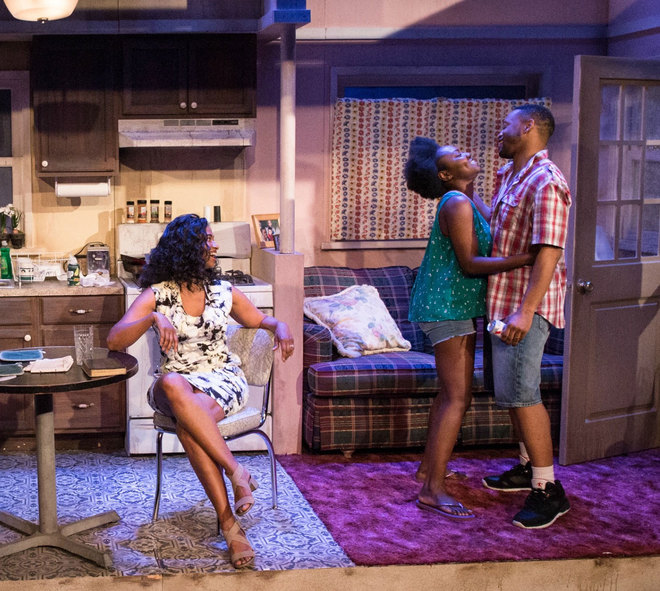
Turrell is a light and space artist, which is not an easy medium to display. For starters, a museum needs to set up some fairly sophisticated lighting equipment. And there needs to be space because the light and the space work together.
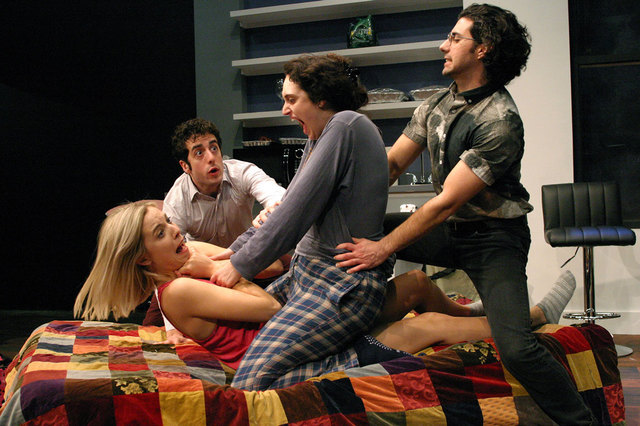
But, from our first experience with the exhibition, albeit on its second day of display, the space part may require visitors to LACMA to arrive with a great deal of patience to take all of the exhibit in. LACMA is recommending 90 minutes, but it may take even longer judging from our experience on Sunday night.

Continue reading "LACMA mounts an exhibition that may be the best thing hardly anyone sees" »

May 26, 2013

Driving into downtown

Exu - pomba gira.jpg

Artist J. Michael Walker wrote this for LA Observed after an experience in Downtown last weekend. The artwork is his too.

Driving into Downtown, I float down Los Angeles Street, and now - early Sunday evening, the shops shuttered, an occasional street person the only pedestrian - I have the whole block north of Fifth to myself. Car parked and locked, I stroll up Fifth a couple of blocks and, detouring into the Last Bookstore and snagging a pair of arcane art books (Wenceslaus Hollar: "Delineator of His Time," and "Gothic Panel Painting in Hungary)", I pay with plastic and pop into my destination next door - CB1 Gallery - for the opening of André Goeritz's monumental woodworks and Kiki Seror's ying-yang porn-art photos and videos.

As happens at art openings, you see one friend: you see them all. Conversation with one acquaintance leads to hugs and news with another. Between the bonding, the attention to the art, and the wine, two and a half hours pass and it's time to go home.
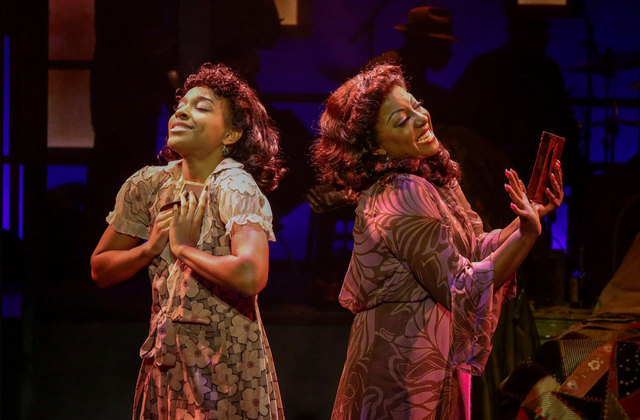
As I set back out down Fifth, smokers ring the gallery door; and a small dark woman dressed in red, whom I'd earlier noticed perusing Kiki's adult-website-based photographs with a knowing, sly smile, harangues some long-gone male with a preacher's wrath.
Rounding the corner at Los Angeles, I spy my car, all alone on the trash-strewn street. Setting my art books on the car roof, I reach into my pocket- and fail to find my car key. The more pockets I check (and re-check), the less I find my car key. It's not in the ignition, and of course it's not lying on the asphalt. I could call AAA to dispatch a truck and jimmy my door, but then I would just have an open car and no key; so I retrace my steps to CB1, silently calling out, "Okay, Exú," - Exú, Lord of the Crossroads, the orisha of opening pathways - "Figure this one out for me."

The gallery's now closed: the artists, the faithful, and the owners hover out front, deciding on drinks, dinner or home. I approach Clyde, the director, and ask if someone happened to find a car key: "No one turned anything in," he responds.

I check in at The Last Bookstore next door: "Not that I know of," the first clerk, who had rung up my purchase, answers, "What kind of car was it?"

"Nissan Versa."

"Gail," he calls out to the tall woman in a cool blouse, who had bagged and handed me my purchase, "Anybody turn in a key for a Nissan Versa?"

"Yessss!" comes her cheery reply and Gail hands me my lucky car key. I kiss her hand and ask, "So, where was it, do you know?"

"Right here," and she peers over the counter, to the floor where I had stood.

As I leave the bookstore she adds, "One of our regulars turned it in; a character called Little Bit."

I'm elated: the scenario for getting home by bus on a Sunday night to retrieve the spare key, returning to Los Angeles Street, and purchasing a replacement key for $130, had not looked pleasant.

Stepping outside, the homeless woman dressed in red, now humming contentedly to herself, catches my eye: "Have a blessed evening," I say, full of gratitude and generosity of spirit for this turn of events.

"Excuse me, sir?" she calls after me, and I expect a request for spare change, deciding in a split second, as I turn to meet her gaze, that I will happily offer whatever she asks.

"Do you like Old School Jazz?" comes the unexpected question, "Because I'm going to perform here on June 15th."

Dazed, I reply, "Sure, I'd love to come. Of course," and I notice her twinkling eyes, her widening smile against teak skin. "What's your name?"

"Little Bit."

Little Bit. Of course.

I raise my car key between us. She acknowledges it without the slightest indication of surprise. Then her smile widens, her eyebrow arches, and she leans in low.

"They say," She whispers, "I play guitar just like Eric Clapton."

"Goin' Down to the Crossroads," I think as I walk to my car: Exú.

I know it's a stretch, but tonight, as the key unlocks my door, I'm inclined to believe her....

April 29, 2013

LA Phil shakes tradition with Mälkki; Brown's legacy at UCLA

Okay. So the pure of heart may have missed it. But when the LA Philharmonic programmed two stellar women as headliners -- conductor Susanna Mälkki together with violin virtuosa Leila Josefowicz -- I said to myself: no male domination here, not for now!

SusannaMalkki.jpgAnd that, folks, is a rarity, a rebuff of tradition. Especially when we're talking about leadership roles. Especially when 2008 almost brought about the first woman as U.S president -- watch out for 2016 -- and when 2013 may see the same as Los Angeles mayor.

Oh, yes, we've had female baton-wavers at the Phil before, starting in the '70s with Antonia Brico, who, with skirts swaying, took the podium at Hollywood Bowl after spending a lifetime by then waiting in the wings (perhaps deservedly!)....and some recent others, including Marin Alsop and Joana Carneiro.

But Finnish-born Mälkki came with elite credentials -- a notable nod from Pierre Boulez to stand as director of the Ensemble InterContemporain in Paris. And she's being hailed as a conductor of today's most heady music, invited even to Milan's La Scala, that most hide-bound, male bastion where catcalls are commonplace and where she became the first woman to occupy the pit.

Mälkki's manner, like Boulez's, is to keep the scores at hand (even overly familiar ones, like Brahms' Fourth Symphony) and leave the baton at home. Ram-rod erect, tall and thin, she's something of a spectacle in a long, close-fitting tail coat.

Her calling card here was the U.S. premiere of the German composer Enno Poppe's "Markt," a thing of astringent beauty and startling clarity of lines, which the orchestra delivered in its full glory, along with powerful exclamations.

Bully for them all. And bully for that other star, Josefowicz, who opened new vistas with her account of Stravinsky's Violin Concerto. How often we've heard this alluring work on which Balanchine set his remarkable ballet (and thus do we "see the music"), yet never so alive or searingly intimate in its slippery asides as this fiddler made it. Mälkki backed up that interpretive stance, emphasizing the composer's devilish little dialogues, alternating the jaunty with the swoony.

In other circles, there were long careers to note. Namely those downtown New York avant-gardists, starting in the 1970s, who took on the same devotion to collaborative spirit as did Diaghilev in early 1900s Paris. Think Merce Cunningham, John Cage, Laurie Anderson, Robert Rauschenberg, Trisha Brown, et al.

Well, UCLA became the open arms of a major Trisha Brown Dance Company retrospective, the choreographer's last hurrah capping her career. There were site-specific offerings, films and theatrical events all over Westwood for several weeks. Its own kind of minimalism, the Brown aesthetic deals with repetitive movement, a softly shifting kaleidoscope of loose limbs swinging and hips undulating back and forth within an endlessly geometric network of patterns.

Guess The Ending became my own game while watching Brown's "Foret Foray" -- because the program note listed the Hamilton High School Marching Band as part of the piece. To be sure, distant sounds could be heard and they got closer and closer. But I was right: the marching musicians would not actually enter Royce Hall on whose stage the piece took place, they would not break into the sanctum sanctorum of this shrine-like, ever-closed-off opus...

At its end, though, Megan Madorin, who could have been Isadora herself -- such floated finger curls and foot falls as even that famous one had not the virtuosity to flaunt -- left us in staggering disbelief of her phantom image.

Brown's most current and, actually, her final piece, "I'm going to toss my arms - if you catch them they're yours" (a farewell title if ever there was one), shows her transition from that long-established uniform of floppy trousers and shirts to sleek swimsuits, a reflection of today's bare-it-all ethos, wherever you look. Who says nothing changes?

Probably not Bebe Miller, who qualifies as nearly vintage, celebrating her company's 27th year. She showcased Angie Hauser and the incomparable Darrell Jones in "A History," downtown at REDCAT. Throughout the piece, Miller seemed to be asking: What do we hold in our consciousness? Over and over, the duo showed us an answer: the creative process -- a whole variety of body linkages that are awkward and difficult. Through spoken word, sometimes by way of softly singing to herself (recorded), Miller also tells us they are dream fragments and that memory is possessed by the physical images of other dances.

But for the Trey McIntyre Project -- based in Boise and seen here at the Broad Stage -- there is no long history, just a wide net in which this gifted, young dance-maker catches fodder for his creative sensibilities. And what fodder that is. Songs of Richard Strauss, for instance (a recording with soprano Jessye Norman) form the basis of "Pass, Away," a mélange of lyrical movement that verges at times on acrobatic but strictly as an expression of intensity, not physicality for its own sake. The tone harkens back to German modern dance innovator Mary Wigman and even German cabaret, but the mode is rapturous, as in Strauss's sweeping music.

Altogether different was McIntyre's other extraordinary work, "Arrantza," a docu-dance of Basque immigrants in America, their recorded narratives heard above tambourines and recorders, their personas a thing of berets and kerchiefs, sneakers and jeans, their gathering place a village plaza filled with seemingly spontaneous but deceptively complex dances. Less known than the Ratmanskys and Wheeldons of the world, McIntyre is a genuine treasure.

And so, of course, is Angela Gheorghiu, who appeared in recital at that same Santa Monica oasis, the Broad.

"Brava, mi diva," shouted a fan from the audience, as the Romanian-born soprano headed out on stage, beaming broadly, taking a queenly stride. She knows she's beloved. And why. It's that magical voice, a liquid column of sound that can seduce with its sheer quality, its smoothness up and down the scale, its lustrous top and that signature Gheorghiu legato. Remember how she even captivated President Obama at the 2009 Kennedy Center Honors when she sang "Vissi d'arte?"

gheorghiu-1.jpggheorghiu-2.jpg

On this night, accompanied ably by pianist Jeff Cohen, Gheorghiu proved to be that same shrewd artist. Oddly, she kept a music stand throughout and used it almost like a prop, swinging it from here to there, making it a point of direction as she sang well-known ditties ("Plaisir d'amour") and other recital-appropriate songs in unrecognizable French before continuing to a whole range of lovely Romanian songs. All of it was gorgeous.

So was the singing at LA Opera's "La Cenerentola," or as it's lately called, "Cinderella." But as one wag put it, much of this Rossini work is repetitive, so that a good edit could ease its three hours to two -- nothwithstanding the lively treatment by James Conlon and orchestra, and the virtuosic performances of Kate Lindsey, Stacey Tappan, Ronnita Miller, Nicola Ulivieri, Alessandro Corbelli, René Barbera and Vito Priante.

Top photo: Susanna Mälkki. Bottom photos: Angela Gheorghiu

April 25, 2013

Paris Photo comes to Hollywood

Thumbnail image for paris-photo-paramount-iris.jpg
Paris Photo is the annual photography fair held in France — transported to the U.S. this weekend for the first time. On the lot at Paramount Studios are gallery spaces, booksellers such as Taschen and Aperture and live artist conversations and film screenings. Matthew Weiner, the creator of "Mad Men," is one of the featured speakers. At the preview on Thursday, City Hall's culture maven Olga Garay-English welcomed the organizers to LA and Councilman Tom LaBonge presented a proclamation and a calendar.

Photos by Iris Schneider. Top, looking onto the New York backlot at Paramount Studios from a facade occupied for the weekend by Zucker Art Books. Below, display space inside facades on the studio's New York street.

paris-photo-3.jpg paris-photo-2.jpg

March 24, 2013

Artist Shinique Smith visits Charles White Elementary

shinique-kids-iris-jpg.jpg
New York based artist Shinique Smith is known for taking everyday, unwanted objects and transforming them into complex, colorful sculptures. Some hang from the ceiling in rope-bound bundles, others sit on the floor in bale formations. All are products of the artist's passion for discovering and collecting materials wherever she finds herself in the world. Fabric, discarded wrappers, cast-off toys, old clothing, and second-hand furniture are just some of the items that have found their way into her pieces. Also known for her large-scale paintings and installations, Smith, 42, brings a concern for finding common threads between people to her work. She was first inspired to incorporate used clothing into her sculpture after reading a New York Times Magazine story that followed a t-shirt donated to a thrift shop in Manhattan and eventually became part of a bale of used clothing that was shipped to Africa. Growing up with her fashion editor mother in Baltimore, Smith had a wide range of experiences with travel, art, clothing design, and spirituality, all of which inform her work today.

shinique-this-years-girl.pngAnother of Smith's passions is working with children — she earned a degree in arts education at Tufts University before going on to an MFA from Maryland Institute College of Art. This made her a natural choice for LACMA On-site's current project at Charles White Elementary School in the Westlake district near Downtown. LACMA On-site is a partnership with LAUSD that provides art programs and materials to schools, libraries, and community organizations.

"We selected Shinique because we thought her background and artistic practice would resonate with the students. She has natural instincts as a teacher. Her work is fundamentally about transforming everyday objects into something one-of-a-kind, special....and emboldened the students to see their environment through new eyes," says LACMA educator Sarah Jesse. The museum operates a gallery in the school, opened in the former Otis Art Institute on Wilshire Boulevard, and Shinique Smith: Firsthand is the fifth exhibition mounted there. The show has served as a catalyst for artist, museum, and community to interact. It consists of three parts; work by Smith, objects chosen by her from LACMA's Costume and Textile collection, and art by students at Charles White. A new piece made by Smith specifically for the show was inspired by her exploration of MacArthur Park and the downtown fabric district.

shinique-dangling-iris.jpgSmith was first introduced to the students at assemblies last September. She showed images of her art, talked about what inspires her, and posed questions to the students about finding beauty in their everyday lives. The children were asked to collect their own ideas and inspirations in sketchbooks which they later worked from to create paintings and collages that became part of the show. Smith later returned to the school and in partnership with Jesse, conducted workshops with the kids where they made small sculptures out of socks, ribbon, yarn, and tape. All of the students' creations will be assembled by Smith into one giant sculpture, and will remain at the school permanently. Smith gathered unused socks from a New York store that was going out of business, and also during outings in Downtown Los Angeles and Koreatown. During one recent workshop, she gently urged a group of fourth graders to think about the materials they were about to utilize. "Why do you think I use socks? Are you the only people who use socks? People all over the world wear them, so that's something that connects us," she said.

Smith said that working with the LACMA Costume collection was a joy. "This was a first for me, the first time I've used part of a museum's collection (as part of a show), and a great opportunity. I wanted everything!," she said. "I chose objects for aesthetic and formal reasons, things that related to my work. But I also thought about the designers that I knew of when I was growing up. That's why Bill Blass is in the show." Also included, and juxtaposed against Smith's and the students work, are pieces by Geoffrey Beene, Rei Kawakubo, and Yves St. Laurent.

shinique-firsthand-iris.jpgReflecting on exactly when it was she discovered that she wanted to work with kids, Smith says, "Maybe it was about thinking back to when I was a kid, and about the things that worked out for me." She came to the realization, very early on, that she did not want to teach in an everyday situation. "I want to work with kids when they choose to be there, not when they have to be there," she said.

"It's been amazing to have her here," said school principal Irene Worrell. "The students have responded so well to Shinique. They show me their art and I love seeing their eyes light up. It's esteem building. Everyone is successful." The school's primarily Hispanic students are not strangers to art instruction. Charles White is one of the few LAUSD elementary schools to offer art, music, and dance. But getting to the museum can be another matter. Says Worrell, "It's funny, LACMA is only ten minutes away, but for a lot of these kids, it's a world away."

Top and bottom two photos for LA Observed by Iris Schneider. Photo of This Year's Girl, 2009 by Stephen Brayne

March 13, 2013

Ghostly "Dutchman" flies to Music Center while LA Phil and Jacaranda hold court

opera-Dutchman-FDm5068.jpgAt last, a "Flying Dutchman" without irrelevant whimsy or silly symbolism or egotistical re-writing. And not even one tomato thrown (yes, an audience member threw a tomato — at previous director Julie Taymor — for her staging of Wagner's mythic work, mounted nearly 20 years ago by LA Opera.)

This time the company let Wagner be Wagner. It borrowed Nikolaus Lehnhoff's darkly ominous production from Chicago. And through it we could see the composer's roiling conflicts so wildly illustrated in his score, a thing of irresistibly stormy outbursts.

What can I say? But that it's wonderful — even with a last-minute indisposition of the central soprano and her replacement by Julie Makerov, who met the challenge handsomely, despite a few patches of vocal grief, but many more of glory, thanks to her stentorian high notes and thrilling ascents.

opera-Dutchman-senta-FDm5198.jpgBetween conductor James Conlon's all-in approach to heroic orchestral calls like this one and the spectral visions defining the protagonist, you really are swept into the drama and not distracted from it. Here is an ideal mix of stylization and theatrical impact, by the eminent German team of Lehnhoff, Raimund Bauer and Andrea Schmidt-Futterer. It conjures up an ornate Bauhaus ship emerging out of smoky sea depths, with a Wotan-like Dutchman, all in black, hat brim pulled down, framed in an angle of light. The images are striking.

As the title character, that accursed, storm-weary ghost of a captain, Tómas Tómasson gives off the morbid aura of his endless journey and sings in a commandingly dark voice. Makerov, as Senta, the woman who can bring him salvation through her purity of purpose, made a believable heroine. James Creswell, in his best role yet with LA Opera, was her mercenary father, Daland, his rolling black basso used with nuance. And tenor Matthew Plenk, as the Steersman, also sang with idiomatic refinement.

Not least in this Wagnerian cosmos of doom to redemption was the marvelous roaring chorus.

But then there's the current world beckoning. And if you're Gustavo Dudamel leading the Los Angeles Philharmonic, you answer the invitation.

After all, the New York Times has just declared our resident band and its starry maestro pre-eminent among orchestras — for commissioning a vast number of new works. Even to the point of tacitly down-grading its own New York Phil. And so lustily does that paper herald LAPO's upcoming tour to Lincoln Center and also Europe, that we're getting to feel like a try-out stop.

Before it played that touring bill-of-fare (Debussy, Stravinsky, Adams), though, we trotted down to Disney Hall to hear Dudamel rouse his confreres to ground-rumbling, deliberative depths in "Siegfried's Death and Funeral Music" from Wagner's Götterdämmerung — a short tease of things to come, we hope.

But in a curious juxtaposition to the Wagner, Gil Shaham was on hand for Brahms' Violin Concerto — such as I've never heard it played. Imagine. If Giacometti were a composer he might turn out the piece this way: remarkably deconstructed, with minimal vibrato, lacking any big, juicy flourishes, played with the slenderest, most refined tone including a cadenza that was nothing if not lean, linear and veering to modern.

And while achieving it all, the tall, thin violinist lurched about on the stage like a Giacometti come rhythmically to life — taking small, staccato steps right up to the conductor's podium, back-stepping to the concert-master's stand. Never in doubt was his intense physical connection to fellow players.

What a contrast beside him, though, when Dudamel & Co. finally had their chance to revel in the concerto's gutsy Hungarian finale, so full of stretched chords and plangent heavings.

More contrast came with guest conductor Charles Dutoit, who asserted uncommon control over the orchestra's outpourings, with an added notch up in refinement. The 76-year-old Swiss is a pro — there's something to be said for age, wedded to talent. Here, in the Mozart 29th Symphony, we could hear him allow plenty of leeway between the margins but always return to that over-arching net that holds the whole thing together. It's called integrity. It's not so readily found.

Then, for heroic imagery, Dutoit and the Phil turned to Strauss's "Don Quixote" — where we heard cellist Gautier Capucon "impersonate" the knightly character as gruffly tormented at the start, daringly soft and soulful at the end, along with violist Carrie Dennis as a Sancho Panza who seemed to dance around the hall in gorgeously robust animation.

But if you're in search of salon splendor — as opposed to downtown's Disney — look no further than Jacaranda, the new-music enterprise in Santa Monica that incorporates the bold and the beautiful — with informed taste, imagination and a polish now brought to a peak of excellence, after a gestation of nine years.

The source of all this wonderment is Patrick Scott — you may remember him from his erstwhile identity: Patrick Marca Registrada (yes, that jokey moniker), the founder of Eyes Wide Open, a performance art group back in the '80s. Together with conductor Mark Alan Hilt he sees to every detail of their small, smart operation here. It's located in one of the premier spots for acoustics and ambience, believe it or not, the First Presbyterian Church on Second St. And it has a following these days of Westside intelligentsia/older hippy types that sells to the walls.

Newly designed, it's spare but warm and light, with a pleasing balance of scale and suggesting a kind of architectural humanity. The only sign of churchiness is in the stark simple, modern cross above the stage, draped with a maroon sash.

Jacaranda's recent concert, a thoroughly designed and thought-out affair, was "Thresholds: The Scandals of 1912-1913," that era in new music where audiences took noisy umbrage at the experimentalism of Schoenberg, Webern and Berg who comprised the Second Viennese School.

So naturally Scott found plenty to theatricalize. For Schoenberg's "Pierrot Lunaire," ably led by Hilt, he had the men in white tie/tuxes and flute/piccolo player Pamela Vliek Martchev in a chic cocktail dress and hat of the period. They all turned in stellar performances, even if Julia Migenes, no longer in good singing form, resorted to shtick instead of capturing the eerie fantasy of the character, a mocking specter who both scorns and feels menaced by the world.

The small pieces by Webern and Berg were striking in their distilled expression and played with scintillating purity. The evening was capped by duo pianists Danny Holt and Steven Vanhauwaerts, whose "Sacre du Printemps" yielded that same overwhelming pagan force as Stravinsky's full orchestration.

Photos from "Flying Dutchman" by Robert Millard/LA Opera

February 17, 2013

Dancer Melissa Barak takes on a new leading role

barak-instudio-jg.jpg

Choreographer/dancer Melissa Barak might just be one of those rare people — a deeply committed artist who is equally passionate about business. If this is the case, then she will need all the business savvy she can muster because Barak has big plans. The Los Angeles native spent nine years with the New York City Ballet, four with Los Angeles Ballet, and is now hoping to establish a ballet company in her hometown that will provide it's dancers with "the environment I always wished I had been part of. I want to create my own dance heaven."

We spoke recently at Westside School of Ballet, where she is in the middle of rehearsals for her company's debut. "I've always admired innovation, and building something from the ground up intrigues me," says Barak. It's clear that, for the time being at least, she wants to keep things scaled down. "I'm not shy or embarrassed to say we're going to start small and work our way up. Right now I'm working with several dancers locally and bringing in guests from other companies. Ideally, I'd like to hire fifteen dancers." The company's repertoire will focus on contemporary pieces. "This is going to be all about the 'new'...new voices in choreography,"says Barak.

She acknowledges that Barak Ballet, still in its infancy, is currently a labor of love. She started with a few fund raisers to gather seed money, and proudly says that enough was raised to produce the fledgling company's first official performance on March 31. "This performance is going to be my 'big ask' to the community to help me make this a reality," she says. The program will feature ballets by noted choreographers Christopher Wheeldon, Darrell Grand Moultrie and Frank Chaves, and a new piece by Barak. She is getting a leg up from participating in the Pasadena Arts Council's "Emerge" program, which supports new arts organizations and enables them to have non-profit status. The focus now is on building some private donors. After that, she hopes to apply for grants while continuing to build on other forms of funding.

It's no surprise that Barak, 33, has arrived at this point in her dance career. "Growing up in Los Angeles, I was always choreographing in my head, always loved listening to music, especially classical, in the car." She began to take ballet seriously at the age of 6 and studied at Westside until 16, when she went to the School of American Ballet in New York (the official school of New York City Ballet.) While at SAB she participated in a student choreography workshop and got the attention of NYCB artistic director Peter Martins. She entered the company at 18 and embarked on a kind of split existence, divided between dance and choreography. Her 2001 piece, "Telemann Overture Suite," first created for a SAB workshop, was added to City Ballet's repertoire and earned Barak her first critical success as a choreographer. "That was one of my struggles because I had just started my career and I felt like right off the bat I was seen by my director as more of a choreographer than a dancer. But, I really loved to dance, and that was where I wanted to shine."

Although she spent her entire career at City Ballet in the corps, Barak didn't lack for opportunity. "Even as a corps member, you could really stand out in that company. You're given lots of chances. Toward the second half of my time there I was doing very nice roles. I was very happy with what I was getting to do." Martins continued to support her choreography, and in 2002 the company performed her piece, "If By Chance," featuring a young dancer named Benjamin Millepied, who more recently has become known for choreographing the movie "Black Swan" and founding the LA Dance Project.

barak-sitting-jg.jpgIn 2007 Barak took stock and decided it was time to move on. "I was happy by the time I left, which was on a positive note. I felt good about my career there and about what I had learned and gone through." She returned to California and joined the newly formed Los Angeles Ballet. "I had done the big company thing for so long. This was a small company and I felt like I'd stand out and be able to give what I'd always wanted to give as a performer. It was also nice to be back home in a city I love with a lot of people I know." Barak continued to choreograph and perform, as well as spending part of 2009 dancing with Christopher Wheeldon's company, Morphoses. The relationship with Los Angeles Ballet ended in 2011 and Barak found herself at a crossroads. "I thought to myself, now what? Do I go into another company, go up the ladder and deal with all the politics? Do I want to do all that over again at 31? Or do I want to do my own thing and start something different. I even thought, do I want to continue dancing, or should I go into something completely different? But I love business and I love working with people. Building this company felt like the right thing. I'll still have ballet in my life, I'll be able to choreograph, and who knows -- maybe I'll dance!"

Barak's timing may prove to be fortuitous. With Millepied departing for the Paris Opera Ballet next year, there will be a new opening in the L.A. dance landscape. The two were colleagues throughout her career at NYCB, says Barak."I think Benjamin, with the success of "Black Swan" and appearing throughout the mainstream media, was able to cast a real spotlight on dance in this city...which is a wonderful thing. I've always admired his tenacity and ability to make things happen."

For now, though, Barak is taking it one step at a time. "This first performance is like, what's going to be the response? After this, we'll assess where to go next, " she said. And then, as is her way, Barak's practical side inevitably re-emerges. "A ballet company is no different from any other business. You start small and grow organically. You take your time building a solid foundation with a network of supporters who believe in your vision and you grow as big as the company is meant to grow. You really can't force these things."

Barak Ballet, Sunday, March 31 at 7 p.m. Ann & Jerry Moss Theater, Santa Monica. Limited number of tickets available

Photos of Melissa Barak by Judy Graeme/LA Observed

February 4, 2013

Joffrey Ballet throws 100th birthday bash for "Rite of Spring"

Le-Sacre-du-Printemps_Joann.jpg
Joanna Wozniak in "Rite of Spring," photo by Herbert Migdoll

Robert Joffrey worshipped deeply, from afar.

So genuine was his devotion to the legendary past - say the Paris of Diaghilev's Ballets Russes, with its wildly rich collection of visual artists, designers, composers and choreographers -- that he bid his company to painstakingly recover some masterpieces from that 20th century peak of creative collaboration.

And lucky Los Angeles was the first city, back in 1987, to gaze upon the Joffrey Ballet's most famous reconstruction of them all: "Rite of Spring," or "Le Sacre du Printemps," as it's known around the rest of the world (also referred to by musicians and dancers simply as "Sacre.")

So, naturally, there it was on the Dorothy Chandler Pavilion stage, celebrating its 100th birthday -- yes, the infamous Stravinsky/Nijinsky ballet that caused a Parisian audience to riot at its 1913 premiere ("ballet brought to barbarism" and "music gone mad" wrote critics.)

Nijinsky's stylized choreography - dancers moving in profile at times, as in bas relief, like figures on a Greek vase; the sacrificial virgin, standing in the now-iconic pose as Nijinsky was often depicted, with head tilted sideways, eyes vacant, knees slightly bent, toes turned in - wholly rejected the classical ballet idiom.

And Stravinsky's cataclysmic score - with its skewed meters and pounding rhythms -- would haunt the halls of concert music from then to now.

Yet, a century later, our vision has broadened, our ears have stretched.

Now that doesn't mean we no longer admire immensely the meticulous Hodson/Archer recreation of the original "Sacre," with its attention to historical detail.

It's still startling, for instance, to see the tightly circling Maidens, facing outwards and lit overhead, along with other intricate interweavings, rock against the score's rhythms of foreboding.

But, pardon me, the whole of it seems puny today. Because the music has eaten the ballet! The visual events onstage are dwarfed by the score.

We're now used to hearing augmented orchestras turn "Sacre" - by itself - into an unequaled feast, more vast and overwhelming than any theater could contain. Our own Philharmonic powers through the score, courtesy of Salonen, Dudamel, et al - even though the pit band here, despite a wayward trumpet entry, did a creditable job, led by Joffrey music director Scott Speck.

Still, the adoring crowds seemed to get what they came for.

Speck also made the most of excerpts from Philip Glass's Symphony No. 3, the basis for Edwaard Liang's "Age of Innocence," which showed off the company's superb dancers - though he could lose the Jane Austen title borrowing.

But William Forsythe's constant-composer-companion Thom Willems surely offers too much of a crashing thing for the choreographer's "In the Middle, Somewhat Elevated," another engrossing exercise in his break-apart-put-together ballets of inordinate intrigue.

Meanwhile other events beckoned. And raised a question...

What, for instance, do Midori, Meredith Monk and Helmuth Rilling have in common? They are all musical brands, that's what.

The still-girlish violinist, known by her single name since blazing into the spotlight as a wunderkind more than three decades ago, recently played with the LA Philharmonic, led by a surprisingly uncommanding Pablo Heras-Casado, and put a virtuosa's shine on Peter Eötvös's 2nd Violin Concerto, cutely titled "DoReMi," and heard in its world premiere.

Intermedia maven Monk, now 71, has been collecting cult fans for four decades. Her brand of vocalizing, unique in the sound kingdom, her clear but complex compositions and theatrical esoterica, drew the usual suspects to UCLA's Freud Playhouse for "On Behalf of Nature."

At the same campus, and in that rarest of occasions - a completely sold out Royce Hall - music lovers showed up on a wet, blustery, cold night to hear acclaimed German maestro Rilling lead the LA Chamber Orchestra in Mozart's 39th Symphony and D-minor Requiem.

Talk about a diverse collection, it would be these three performing artists.

Midori by K Miura.jpgFor the greater part of her career Midori enchanted audiences --- a mere slip of a thing, head bent over her instrument with an inward-curling intensity yet exhibiting powerhouse technique - playing the standard violin warhorses: Tchaikovsky, Beethoven, Brahms, Sibelius. But now she has taken on thorny, new music and the Hungarian composer's work at hand proved no exception to the model.

As expected, here was Midori lavishing pinpoint perfection on the Hungarian composer's very graphic composition. She limned its glistening twitterings, lovely as a starry night, then turned to dangerous piercings high on the string before dropping down to earth, snarled and snared in cavernous terrors - the orchestral accents robust, sizzling and full of Magyar markings.

Monk, on the other hand, was always at the cutting edge - or better put, an original. She's another diminutive figure, recognized by her multitude of skinny signature braids (she once called herself "Inca Jewish," having been born in Lima), and alerted us years ago to a voice that ranged over several octaves, did astonishing stunts with dynamics, colorations, glottal clicks and warblings and could plunge the listener backwards to a pre-linguistic state of consciousness. I think of it as primeval. Add to that her astute fellow musicians, the entire stage pictures they paint and you have a unique universe.

But voices don't last. So the denizens at Freud could not sample Monk at her most compelling.

Conductors do last, though. And when Maestro Rilling raised his baton and leaned into the orchestra to draw out the portent from that first long majestic chord in Mozart No. 39, K. 543, we knew immediately this would not be a musical hologram of well-worn music but something created on the spot. This and the Requiem bore such rewards, courtesy of the LACO, guest soloists and USC Chamber Singers. There's something about these serious German conductors (Christian Thielemann, who led the LA Phil some years ago in a rare appearance, is another.) They go to the crux of things.

Photo of Midori by K. Miura

February 3, 2013

'The Snake Can' at the Odyssey Theater gets her thinking

It's been hard to ignore the baggage that comes with aging. As the medicare cards and applications crowd my mailbox, and funerals of friends--not their parents--pop up in my emails, the signs are all around me. I guess I have to accept that I really am that old. Of course, as my mom told me, age is only a number and from someone who'll turn 99 on her birthday in April, she should know. Of course, she's also said "Getting old is not for sissies," and as I struggle with the ups and downs of memory lapses and other annoying changes, I concur. Fortunately I still have a kid in high school--if you want to do the math, I was just shy of 48 when she was born--so I'm hanging on for dear life to my membership in the child-rearing set. I guess in my neighborhood the thing that dates me the most is not my graying hair but the fact that I don't have a single tattoo to show the world how cool I am.

So it was with some trepidation that I sat down to watch "The Snake Can," Kathryn Graf's play about "middle age" at the Odyssey Theater through February 24. "Proceed with caution," the tagline warns, and duly warned, I was worried about seeing another treatise on the travails of navigating the aging process. But the piece was really more about the friendships, loyalties, yearnings and fears that accompany us on our life's journey, and it moved me to tears. Of course, as my children can attest, I cry during commercials, movie trailers and "Story Corps" on NPR. In fact, unless I can find something to cry about in a movie, I deem it a non-starter. So I am an easy target.

But I found the characters in "Snake Can" real and honest, and once the second act unfolded, I genuinely cared about their lives and their struggles.

The play, directed by Steven Robman, centers on three women (Graf has written in the notes that they actually each represent a part of herself): Nina (Diane Cary), an artist who has been living in the shadow of her famous actor husband; Meg (Sharon Sharth), a successful and outwardly upbeat career woman still looking for love after two failed and childless marriages and Harriet (Jane Kaczmarek), a widow with two children who's finally decided after seven years alone that it's time to get out there and date again. These days that means signing up on a dating website that eliminates the drudgery and uncertainty of actually going out, and soon we meet a sampling of what's available for women of a certain age. Of course, we don't need to be reminded of the narrow playing field, but Graf and her women navigate with humor and a good bit of wisdom.

Each of the women has their personal crisis, fostered by the men in, or in and out of, their lives, but what resonated for me was the love and loyalty that defined the long friendships these women have forged over years and years, and the strength and solace those friendships provide.

Their stories are familiar and we can relate, and they are seasoned with a good bit of candor. Afterwards I found myself thinking and talking with my husband about my own journey, and our struggles, triumphs and disappointments. If a good play engenders a good discussion, "Snake Can" more than passes the test. And anything that can make you laugh at getting older is a worthwhile way to spend some time.

January 24, 2013

Millepied not so committed to dance in LA after all

Thumbnail image for millepied3-iris.jpg
Either choreographer Benjamin Millepied was ready to move on or he got an offer he couldn't refuse. Millepied, the former principal dancer with the New York City Ballet and founder of the one-year-old LA Dance Project, was introduced today as the new director of dance at the Paris Opera Ballet, starting in September 2014. Millepied caused a sensation in the LA arts community when he moved here with his future wife, actress Natalie Portman, after retiring from the New York ballet in 2011.

In interviews at the time, Millepied was often quoted expressing his sense of liberation in leaving the New York dance scene and talking about the possibilities of creative freedom in Los Angeles. LA Dance Project, a small and experimental company, and primarily funded by local dance philanthropist Glorya Kaufman, had it's premiere September 22, 2012 at the Disney Hall. Created as an art collective, Millepied's plan for LA Dance Project was to collaborate with artists in multiple mediums and perform not only in traditional venues, but also in alternatives spaces, such as museums.

LA Dance Project has a guaranteed budget for the next three years, the New York Times says, and Millepied is expected to continue to run it until he moves to Paris. Today's news was broken by the New York Times, which also carries an interview with the choreographer.

Previously on LA Observed:
Benjamin Millepied at MOCA
Zocalo goes dancing -- but never back to Saddle Ranch
Natalie Portman, Millepied marry in Big Sur

Photo of Millepied dancing at MOCA in 2012 by Iris Schneider

January 22, 2013

LACMA curators excited about new couture collection

M2012_95_41-AV001.jpgM2012_95_146.jpg
Evening dresses by Jean Dessès (1956), left, and Madeleine Vionnet (1925.)

"It started with a cold call from someone representing a collector," said Sharon Takeda, senior curator and head of LACMA's Costumes and Textiles department. "Would we be interested in a 20th century couture collection? It was all very anonymous." She and fellow curator Kaye Spilker were recalling the long and involved process of acquiring their latest find, a group of 158 examples of couture designs dating from 1880 to 2008. Nearly fifty important fashion designers are represented, including Coco Chanel, Madame Grès, Madeline Vionnet, Jean Dessès, Jeanne Lanvin, and Alexander McQueen.

The mystery soon began to lift and the two curators discovered that the collector in question was Dominique Sirop, a French haute couturier who in addition to running his own atelier in Paris has also published books on fashion history. "When we learned that the pieces were collected by a haute couture designer we felt that meant the selection would be good. The list of names were a 'who's who' of fashion." said Takeda. When the two curators arrived at Sirop's studio in Paris they were pleasantly surprised. "It was all in a database system with photographs, which isn't always the case with collectors. They (Sirop and his collections manager) had done quite a lot by the time we got there."

120926_M2012_95_85-copy-(1).jpgThe curators were also mostly pleased with the condition of the pieces, which took nearly four days to examine. "Couture isn't always pristine," said Takeda. "Sometimes things have been altered by different owners. Can this or that be reversible? Is the integrity of the initial design there?" Sirop, who had not dealt like this with a major museum, paid close attention to how the curators worked. "I had to kind of educate him" said Takeda. Spilker added, "the people selling the objects don't always think about the museum's costs. There are also multiple steps (once the powers-that-be at the museum approve the purchase) including cataloging, labeling, tagging, and shipping."

Not only were the curators negotiating with a relatively inexperienced seller, they also had to raise the money to buy the collection. Enter philanthropist Ellen Michelson, a member of the LACMA Costume Council who has helped with the purchase of two previous collections, including the one which contributed to LACMA's major 2010 exhibit, Fashioning Fashion: European Dress in Detail, 1700-1915. Michelson began her relationship with the department about six years ago during a tour in France with Takeda. A collector of vintage clothing and children's books, Michelson elicits high praise from the two curators. "She is absolutely the best donor one could hope for because she's so generous, and it's no strings attached," said Spilker. "She respects the professional staff and doesn't try to influence us. She likes our scholarship and the time we take with it."

"I think she enjoys learning from us," said Takeda. "She will come down for the day (Michelson lives in Atherton) to visit. We want her to understand what we do. I recently overheard her telling someone that 'getting involved with LACMA and these collections has changed my life.'"

M2012_95_109.jpgAfter nearly two years from that initial phone call, the collection finally arrived at LACMA four months ago. Before being introduced into the museum's storage areas the objects were put through a freezing process that ensured the elimination of any unwanted critters (Takeda's term), which might include moths, silverfish and their eggs. The items have since been cataloged and photographed. Luckily for the department's conservation team, the pieces are considered mostly exhibit ready. "These pieces will form the impetus for a show on twentieth century couture," said Takeda.

As excited as Takeda and Spilker are for the public to see the new collection, that will have to wait. The curators are currently focused on their next exhibit , "Reigning Men: From the Macaroni to the Metrosexual," opening in January 2016. It could be a few years before the couture show opens. As they told me, "stay tuned."

Lower photos: Madame Grès evening gown (1987), middle, and Alexander McQueen evening dress (2007.) Click images to enlarge. Courtesy of LACMA.

January 8, 2013

Celebrating Marion Davies in Santa Monica

Thumbnail image for Marion Davies Beach House 2.jpgLast Sunday, the Santa Monica Conservancy celebrated the birthday of Marion Davies at the Annenberg Community Beach House, which is appropriate since the center occupies the spot where William Randolph Hearst and Ms. Davies once shared an opulent Old Hollywood mansion and now shares the site with the remaining pool and a guest house designed by Julia Morgan in 1928.

guest house.jpgdining room.jpgGiven my passion for other properties in the famous couple's real estate portfolio, I really appreciated the guided tours of the Guest House. Conservancy docents, dressed in vintage, assumed the role of a Davies' contemporary in order to share tidbits about the residence and its owners.

joan crawford.jpgWe had a swell time in the dining room listening to Joan Crawford discuss Marion's parties.

hedda.jpgAnd Hedda Hopper dished about that infamous cruise with the couple while we stood in the foyer.

Later, there was vintage dancing, toasts and cake. Notables in attendance included Old Hollywood historian Marc Wanamaker and author Ernest Marquez. I even learned that Charles Hood is the 2013 artist in residence at the Davies Guest House. You can read his beach house blog here.

It was a beautiful day to be by the sea. More pics below and on Flickr.

celebration sign.jpg Katherine in dress.jpgnicole and dylan.jpg

porch.jpgtub tile.jpgswingers.jpg

mc of event.jpgporch view.jpg

January 1, 2013

Visiting Dawnridge with Hutton Wilkinson

hutton portrait.jpgI only have a few minutes left before 2012 turns into 2013. I'm observing the folk tradition that you should envision the best moment of the last year in hopes that it will manifest again in the new one.

My best moment of 2012 was visiting with Hutton Wilkinson at his home in Beverly Hills in April. Interior designer, jewelry guru, businessman, socialite, native Angeleno, author, raconteur, and Old Hollywood maven, Hutton Wilkinson is the perfect embodiment of Los Angeles past, present and future.

I'd been aware of him through his role as protégé and business partner of the late artist and interior designer, Tony Duquette, but had never had the opportunity to meet him until a journalist friend invited me along on a visit to Mr. Wilkinson's compound in Beverly Hills, which includes, Dawnridge, Duquette's magnificent house, for an interview about his latest jewelry collection and its accompanying book, Tony Duquette Hutton Wilkinson Jewelry.

Charming, funny, erudite, gracious and kind, Mr. Wilkinson is one of those people who make you feel smart and witty just being in his presence. Wearing a fantastic silk robe from Duquette's personal collection of Asian textiles, he welcomed us as we stepped into Dawnridge's mirrored foyer.

one_kings_lane_decorator_designer_tony_duquette_img07.jpg

"Ask me more questions, " he commanded as we sipped ice tea in the beyond-baroque living room.

"What kind of jewelry looks best on the jolie laide?" I said.

"Pearls! No, you have to have attitude to wear my jewelry. You need lots of self-confidence. Like Elsie De Wolf, you have to make people see beyond [the plainness of your face]."

Continue reading "Visiting Dawnridge with Hutton Wilkinson" »

December 17, 2012

Backstage at the Nutcracker with Tiler Peck of the NYC Ballet

tiler-boada-backstage-iris.jpgBallerina Tiler Peck and her Nutcracker partner, Joan Boada, at the Thousand Oaks Civic Arts Plaza. Photographs by Iris Schneider


Last July I visited with Tiler Peck, a principal dancer with the New York City Ballet, while she was guest teaching at her old ballet school in Santa Monica. She was emphatic then about her desire to return to her home state whenever possible. This past weekend, she came back to California to dance as the Sugar Plum Fairy in the Pacific Festival Ballet production of The Nutcracker in Thousand Oaks. It's her third year helping out with the local production.

Many ballet stars hit the road during Nutcracker season to perform with local companies. Benefits include extra income and stage time, as well as the knowledge that they are inspiring and motivating the younger dancers in the production, many of them still students. "I look forward to this gig every year," Peck told me. "It's fun to share the stage with so many children. Also, my family and friends come and they don't normally get to see me dance in person." This year she performed alongside Joan Boada, a principal with the San Francisco Ballet who danced the Cavalier.

tiler-stretching-iris.jpg
Peck, right, and Boada stretch in their dressing room.


"One of the things that makes Tiler so endearing is that she always makes time for the kids, always finds time to sign their pointe shoes," said Kim Maselli, the company's artistic director. Young starstruck fans knocked steadily on Peck's dressing room door for a treasured autograph. "One kid wanted me to sign her face in permanent marker!" she said. It was the one request that went ungranted. An hour before the Sunday matinee performance, three eleven-year-old girls, dancers in the show, hovered close by, giggling and gawking at Peck while she prepared her pointe shoes. They declared her their favorite ballerina, and when asked if they had ever seen her perform before this, they said in unison, "only on YouTube!". (Here's a sample.)

The pre-show mood in Peck and Boada's shared dressing room was relaxed and chatty. Since the two didn't have to appear on stage until the second act, there was plenty of time for makeup, hair and gossip. Topics of conversation included Hurricane Sandy, movies, basketball, fashion, and choreography — good and bad. Chocolate was consumed. Boada, who grew up in Cuba, compared notes on Havana with Peck, who recently performed at the Havana International Ballet Festival.


tiler-tutu-iris.jpgtiler-hair.jpg
Left, Peck with her tutu. Right, getting ready to dance.

Peck casually transformed herself into the Sugar Plum Fairy while sharing iPhone photos and holiday plans. Her glittering tutu, made for her by the New York City Ballet costume shop, lay safely on the floor waiting to be put on. "That's the one thing I don't check through luggage," she said.

Peck talked about what she considers to be the highlight of her year: dancing at the Kennedy Center Honors earlier this month. Chosen to dance for prima ballerina Natalia Makarova, one of the honorees, Peck performed "Other Dances," a Jerome Robbins piece originally choreographed for Makarova and Mikhail Baryshnikov. Peck admitted to having major nerves, finding it all "crazy" but thrilling at the same time. She had starstruck moments of her own, meeting Glenn Close, Morgan Freeman, David Letterman, Rahm Emanuel (a ballet dancer in his youth), Bill Clinton and celebrities-in-chief the Obamas.

tiler-boada-wings-iris.jpg
In the wings between scenes.
.
Finally, with warmup clothes over their costumes, Peck and Boada made their way to the wings. Now all business, they became part of the huge machine that is any production of "The Nutcracker," with dancers of varying ages whizzing on and offstage in all manner of exotic costumes. When not on stage, Peck and Boada kept to themselves in the area reserved for them, equipped with folding chairs and box of rosin, which dancers dip the toes of their shoes in to prevent slippage. This weekend was their first time dancing together, so they exchanged tips and checked each other's costumes. Boada at one point smoothed Peck's hair. After the performance, Peck's parents, sister, and grandmother came backstage. Like anyone who doesn't get to see their family as often as she'd like, Peck looked really happy to have them there.

tler-boada-nutcracker-iris.jpg
Cavalier and Sugar Plum Fairy on stage.

The Thousand Oaks stop is the midway point for Peck on her Nutcracker circuit. She performed earlier in the NYCB production (dancing both Sugar Plum Fairy and Dewdrop) and she next heads to Vancouver for a week of performances with the Goh Ballet. Though Peck is a world traveler, Vancouver is a new city for her and she plans to squeeze in as much sight-seeing as possible, along with some last-minute holiday shopping. After that it's back to New York by Christmas Eve. Her family will be spending the holiday with her in New York, giving Peck an ideal ending to what has been, for her, a pretty spectacular year.

The Kennedy Center Honors gala air on CBS on December 26, at 9 p.m.

Photographs by Iris Schneider

Previously on LA Observed:
Ballet star Tiler Peck is a devoted California girl

December 9, 2012

Downton Abbey does LA

downton-line.jpg

The Downton Abbey roadshow came to town Friday night in the form of an event promoting season three of the wildly popular British program that depicts the lives of the aristocratic Crawley family and their servants. The show resumes in the U.S. Jan. 6 on PBS. More than 300 fans (there were thousands of requests for tickets) came to ooh and ahh over cast members Hugh Bonneville, Joanne Froggatt, Rob James-Collier and Lesley Nichol at the Silver Screen Theater in the Pacific Design Center. The audience watched the first twenty minutes of episode one, then Hollywood Reporter chief television critic Tim Goodman moderated a panel with the actors, executive producer Gareth Neame and Masterpiece executive producer Rebecca Eaton. I sensed that by now, in terms of press tours, these actors are a well-oiled machine and could probably do these things in their sleep. However, they did seem to enjoy speculating (as they have been doing ad nauseum for the past two years) why Downton is such a hit with American audiences, and updating their characters' story lines.

downton-panel-srr.jpg

Series three has already aired in the UK, and many in the United States have illegally watched the episodes online or in bootlegged files passed by email. (As Eaton acknowledged to me.) But if these people already have seen the shows, they didn't give anything away. Nor did anyone inquire about rampant rumors that certain cast members, Dan Stevens in particular, might not be returning for the just-commissioned season four. This was a polite and respectful crowd, with no hardball questions for actors or producers.

downtown-costumes.jpgdownton-fans-1-sr.jpg


Fans came in all shapes and sizes and and from many parts of Southern California. Sheri Earls, a manicurist from Orange County, told me she had only discovered Downton a month ago and has rapidly caught up on seasons one and two via Amazon. Waiting on a very long line at the "meet and greet" for James-Collier, who plays gay footman Thomas Barrow, Earls made it clear that she is addicted. "Anna (the ladies maid played by Froggatt) is my favorite. Her spirit is so sweet...and Hugh Bonneville (Lord Grantham) would have to be my heartthrob." At the other end of the fan spectrum were Jennifer Ramone and Jim Dover, from North Hills. The couple, who have watched from the beginning, love the historical aspect of the show. Jennifer, a marketing consultant for Paramount, wasn't interested in meeting any of the cast members: "I've learned to stay away from the talent. I don't want to spoil the illusion." A few fans dressed in costume from the 1920's, the show's current period. All waited patiently to meet each of the actors, who appeared to be having a genuinely good time. At one point Bonneville yelled good-naturedly at a shy fan, "Hey! Take a picture! Whaddya here for?" Froggatt seemed to spend more time hugging than conversing, and James-Collier spent extra time chatting with an elderly woman in a wheelchair who is from Manchester,England, near where the actor was born.

downton-rob-srr.jpgdowntown-hugh-joanne-srr.jpg

Next stop for the group is New York City, where there will be more events like this one, and lots more press to do, as well as a season three premiere party hosted by Vanity Fair and Ralph Lauren at MOMA on Monday night. CBS Sunday Morning aired a behind-the-scenes feature on the coming season this weekend. Bonneville also was on NPR's Wait, wait...don't tell me on Saturday in a show taped last week at the Nokia Theatre in Los Angeles.

Photos: Sean Roderick/LA Observed

December 2, 2012

7 hours of 'Gatz' leaves her wanting more

gatz-stage-iris.jpg
One of the great perks of being a kid is that people read to you. I still miss it. That may be part of why I was so enchanted by "Gatz," currently playing 9 performances at the Redcat at Disney Hall. The theater production, put together by the New York-based avant-garde troupe called Elevator Repair Service, brilliantly performs F. Scott Fitzgerald's "The Great Gatsby" by reading the entire novel onstage, incorporating every written word into the production. In doing so, it becomes so much more than the novel is, or than a play could be--I guess that's why the word transformative was invented.

I admit I was nervous before the show. But it was a nervous anticipation. Could I last seven hours (eight including a dinner break) in a not-that-comfortable chair listening to a whole novel? Within minutes I was swept away. If you're going to read a novel in one sitting, better make it a good one and in choosing "The Great Gatsby," ERS chose well.

I was awed by the beauty of the words, the way they sounded strung together, the images they painted. The staging was quirky and minimal. It allowed my imagination enough room to fill in the blanks, making the event participatory and thrilling. Like good theater should be, it was a very social experience: the intimate Redcat is a perfect venue — everyone knew from the start that we were all in it together and you could sense that excitement as we took our seats.

Set in a dingy office, the play begins with the narrator, Nick, played by Scott Shepherd, finding a copy of "The Great Gatsby" in a Rolodex on his desk. While waiting for an interminable reboot of his aging computer, he picks it up and starts reading. His bored colleagues gradually drift in and out of their workaday doldrums playing the characters so elegantly drawn by Fitzgerald. The seminal novel about the dreams and delusions of the young strivers of New York's upper and wannabe-upper class took flight onstage. The drab office was a perfect contrast to the life, both lofty and artificial, depicted in the book.

There are many surprises. First, it's funny — something unexpected from one of the great tragedies in American literature. But it's undeniable when hearing and seeing it onstage. Of course ERS has helped entertain with its inventive staging and visual touches. You feel you are witnessing something fresh and new. Great art often makes you see something familiar in a totally new way. Director John Collins said recently, "We knew we might fail, but it would be a worthwhile failure."

gatz-shepherd-iris.jpgAs Shepherd reads and the action takes place around him, the novel he holds becomes the most important character on the stage. In fact, when he leaves the book after Gatsby's murder and starts reciting the words by heart, it's somehow shocking to see him go on without the novel in hand.

It was exhilarating, exciting, hypnotic, poignant, heartfelt, intelligent and utterly charming theater. It lasted from afternoon 'til evening and it didn't make me tired. I laughed, I cried and felt everything in between.

When it was over, I was weirdly energized. I confess that somehow I had gone all these years without actually ever reading the novel, having started it a few days before I saw the show. After it was over, I couldn't wait to go home and finish it, relishing the thought of being immersed in the writing all over again.

Elevator Repair Service has been trying since 1999 to do a staging of "The Great Gatsby." Initially, it was not their intention to read the whole book onstage. But in trying to structure a play from the book, Collins and Shepherd said that every time they tried to extract something meaningful from the novel, it always seemed to diminish the work.

After years of wrestling with the book they decided the only way to do this was to read the novel it in its entirety. It took years to get permission from the estate to play in New York and Los Angeles, although it has been performed abroad intermittently since its Brussels premiere in 2006. Redcat finally succeeded in bringing it to its stage. It will run for 9 performances through December 9.

After seeing this production, I watched a trailer for the upcoming film of "The Great Gatsby" by Baz Luhrman, starring Leonardo DiCaprio, Tobey McGuire, Carey Mulligan and a cast of thousands. Multitudes of elaborately costumed extras leap off the screen, carousing in opulent locations featuring Gatsby's extravagant mansion lit up like a house on fire. It was a cacophony of excess. Nothing was left to the imagination and I'm sure no expense was spared. The clip only lasted two minutes, but I afterwards I thought "Now THAT was exhausting."

It was so much more satisfying to settle in for 7 hours of inventive storytelling, seated in a roomful of perfect strangers who had gathered together to share something unforgettable.

Photos of the production and of Scott Shepherd by Iris Schneider

The enduring cool of tap

anything-goes.jpg

It wasn't the usual ladies room chatter the other night during intermission of "Anything Goes" at the Ahmanson Theater. "Damn, why didn't I take tap?" one woman said. Others murmured in agreement . I myself was still in a daze, recovering from the blast of energy we had all just witnessed. "People love the finale of act one" said Sean McKnight, dance captain for the national touring company of the 2011 revival of the Cole Porter musical. "They love a huge tap number. It's like coffee. It's energizing and puts people in a good mood."

I couldn't find the Los Angeles cast on video, but here is the first act finale performed by Sutton Foster and the Broadway cast, from the 2011 Tony Awards broadcast.

"Anything Goes," originally produced on Broadway in 1934, takes place aboard an ocean liner traveling from New York to London. It's pure escapist fare with iconic songs one after another, so the Ahmanson audience was already in a happy place when the theater filled with the pounding of tap shoes on floor boards. The cast here stars Rachel York as Reno Sweeney.

It's clear that dancers (and sometimes critics too, it seems) keep a special place in their hearts for tap. Robert Fairchild, a principal dancer with the New York City Ballet, told me he studied tap as a child, long before he started his ballet training. "It's great for a kid. You get to make noise with your feet." Fairchild, whose dance idol is Gene Kelly, got the attention of New York Times dance critic Alastair Macaulay during a gala performance last September of "Not My Girl", a Peter Martins choreographed pas-de-deux inspired by music composed by Fred Astaire. "'Not My Girl' began with a tap solo for Mr. Fairchild...that was the evenings freshest dance moment," Macaulay's review noted.

Says Fairchild, "it's a real treat for me to tap with the company. Some people think it's not new age or cutting edge, but tap has evolved and it's such a huge tool to have." Explaining the appeal to audiences, he says "they are watching AND listening. People enjoy the sound of tapping. It just adds another aspect to the dance experience."

Rogelio Douglas Jr., a triple threat performer (singer, dancer, actor) who has appeared in LA in "In the Heights" and on Broadway in "The Little Mermaid" and "Riverdance," started his tap training at age 8. "My mom was a big fan of Sammy Davis Jr. and I loved Gregory Hines. What makes tap different [from other forms of dance] is that you have to be a musician. You are creating music, different rhythms and patterns...Tap is a hybrid art form."

"A lot of singers I know do tap," says McKnight, the dance captain for "Anything Goes. "For them it's part of musicality, and the form of dance they are most drawn to." McKnight frequently teaches dance to children and at the college level. "I always tell kids..do tap, you'll find yourself smiling. Tap dancers are a different breed, they're always happy to tap. The minute you put on the shoes you want to make sound."

Audience response at the Ahmanson confirmed tap's enduring allure. I wouldn't be surprised if there's a sudden rise in L.A. tap class enrollment.

Anything Goes runs at the Ahmanson Theater through Jan.6, 2013

Bonus video: Fayard Nicholas and Harold Nicholas from "Stormy Weather," in what some consider the best tap dancing scene ever filmed. It was shot at 20th Century Fox, per IMDb. Fayard Nicholas died in Burbank in 2006.


Photo of touring company of "Anything Goes," by Joan Marcus

November 25, 2012

A back-to-basics "Butterfly" and other stage highlights

butterly-child-laopera.jpg
We've had the whole range — from traditional to poetic to deconstructed, the last one a stunning abstraction by Robert Wilson. But now, in its umpteenth production of "Madama Butterfly," LA Opera has gone back to basics. After all, Puccini's cross-cultural tragedy is a box office shoo-in, so no matter what form it takes, there's an audience beating down the doors.

This edition — by the Ron Daniels-Michael Yeargan team — hails from San Francisco and rolls out across the full horizontal stretch of the Dorothy Chandler Pavilion's stage — no clutter, simplicity itself, with an almost utilitarian sense of japonaiserie. (Don't look for a cozy love nest here!) But all the central pieces are in place: an innocent geisha from Nagasaki, an American lieutenant who caddishly engineers his way through a fake marriage to her, an honor-bound suicide that becomes the only way out, a small child left in its wake.

butterfly-laopera.jpgAnd so does the cast solidly support the above game plan, albeit with little directorial dimension. Oksana Dyka may look a tad matronly for a 15-year-old Cio-Cio-San who is described as "a flower of a girl" (no thanks to her overly-padded traditional wedding gown), but she boasts a sturdy soprano that can cut through heavy orchestral fabric for her big outpourings. Brandon Jovanovich also trumpets a bright tenor that resounds strongly, as the single-minded Pinkerton who maneuvers his temporary way to her bed, though without anything resembling ardor.

Milena Kitic, a Suzuki full of empathy for the jilted bride, sings with deep expressiveness. Rodel Rosel is an animated, fleet-footed marriage-broker, Goro. Not least, Eric Owens endows the American consul Sharpless with subdued understanding for the sorrowful situation. And Grant Gershon coordinates stage and orchestra ably, with emphasis on the score's soaring melodies. However, the question of whether a tiny child — Garret Chang, as Trouble — could sit quietly onstage for at least a half hour proved a distraction from the high drama going on around him.

But, ah, our memories of past "Butterfly's" do not evaporate. Could anyone forget Maria Ewing in the title role — that porcelain figurine of a geisha, a picture of stillness and gravity (no pattering feet or metaphoric wing-fluttering) — even though she lacked vocal heft? Or Tom Allen as the horror-struck, husky-voiced Sharpless, shadowing the tragedy to come? Or Plácido Domingo's dashing lieutenant, enveloping his bride in tender eroticism? Or the dark, Debussyean currents Kent Nagano unearthed in Puccini's score?

Sometimes, though, memories get reinforced. Take the performances of Barbara Cook, for example.

Yes, she can still make you cry. Such is the pinpoint pathos that the cabaret singer extraordinaire unfailingly evokes — at 85 — -together with all the other magical facets of her artistry.

She walks onstage now with a cane, to roaring ovation, and (reluctantly) sits in a chair huddled against the piano's crook (remember Mabel Mercer?), where, even seated, she can glitter and be gay. That's what Cook did at Disney Hall — backed up by the LA Philharmonic, led to loving effect by the savvy Rob Berman and surrounded by her own superb, hand-picked instrumental quartet.

So what is it about her, you're wondering. Why is she a Kennedy Center honoree, a master of the master-class, one who draws gifted musicians and composers to her side and other famous singers to her feet?

Well, if you have a discerning ear you'll know: it's the same as for any purveyor of art songs — and I say this because she raises American show tunes to the level of Lieder.

You can hear it in her phrasing, which purifies to poetry and emerges as natural utterance, not words mashed into music. It's in the voice itself which spans to an architectural overview so that every line makes sense. It's in the coloration within a single note — all at the service of expression and word pointing. It's in the manner of delivery, with a legato that's like a leaf floating on a breeze as it turns this way and that.

Never mind that her pitch strayed a bit at the start or even that she ever so mildly resorted to parlando at times. Just try, if you can, to not come to tears listening to her sing Sondheim — in this case, "No one is alone," from "Into the Woods." I wish I could tell you more about this emotional mystery, how she touches the innermost heart. It happens regularly: a few years ago at a Cerritos concert with "Anyone Can Whistle" and, until she retired it, with "Send in the Clowns." Something about Cook and Sondheim...

As for her forays into those foot-tapping bar-room ditties, she loses me. It's the sophisticated intimacies that Cook unveils that are hers alone — in songs that capitalize on sophisticated intimacies.

But the always-questing singer digs deep into the lore; she lavishes great regard on composers and librettists by name. I especially love how she explains why Cole Porter, for all his cleverness, escaped her — how she never could fantasize "flying too high in the sky with a guy" — until the day she sang "I've Got You under My Skin" as a slow, serious confession. And what a coup that was at Disney with her quartet's masterly arrangement. The same goes for "Bye Bye Blackbird," deciphered (and sung) as an antidote to "House of the Rising Sun" (a capella), about the enslaved girls' misery at a brothel.

esa-pekka-salonen-1.jpgAnd, again, dramatic misery engulfed Disney Hall when Esa-Pekka Salonen returned to the podium, with his Philharmonia Orchestra for Alban Berg's "Wozzeck" - forever destroying the myth that it takes a fully-staged performance to bring powerful immediacy to a work like this.

What a night it was. The house lights completely up, no props, the mostly male cast in black suits fronting the band. And yet, all vestiges of their semi-staging in London a few years ago, with costumes and video, had rubbed into the portrayals — they were vivid, riveting. As the haunted proletariat Wozzeck Johan Reuter was believably delusional, made so by his antagonists: Peter Hoare, an aptly hectoring Captain; Kevin Burdette, the equally cruel Doctor; Hubert Francis a preening Drum Major; and Angela Denoke, his common-law-wife who showed him no regard but provoked him to murder.

Salonen wrung from the orchestra a lean, clarified sound that could explode with the score's roiling anguish or taper into palpable hopelessness or exquisite yearning - momentous from beginning to end.

Also with house lights up, and deliberately so, is the jaunty, almost ironic "Hamlet," courtesy of Shakespeare's Globe Theatre and playing through Nov. 25 at the Broad Stage. Touches of late-night humor here and there prove that nothing is beyond reach anymore.

LA Opera photos: Robert Millard

November 8, 2012

Time travel: Bo Diddley and The Duchess on 'Shindig!'

1960s television had its moments. Bo Diddley and Norma-Jean Wofford on ABC's "Shindig!," originally aired August 18, 1965.

Diddley died on June 2, 2008 at home in Archer, Florida. Diddley gave Wofford, who followed Peggy Jones as his guitarist, her stage name The Duchess. She left the band in 1966 and died in Fontana, Calif. on April 30, 2005.

October 25, 2012

Show of Stanley Kubrick materials to open at LACMA

kubrick-exhibit.jpg
Woman at LACMA checks out posters from Kubrick's movies. Judy Graeme/LAO.


"Stanley Kubrick" (at LACMA) is the first retrospective exhibition of the legendary filmmaker's work in the U.S. It's co-presented with the Academy of Motion Picture Arts and Sciences and originated in Frankfurt, Germany. Included is archival material, annotated scripts, photographs, costumes, cameras and equipment, set models, and props.

The show is accompanied by a film retrospective at the Bing Theater beginning in November. The exhibition opens Nov. 1 and runs through June 30, 2013.

October 20, 2012

Alice's ballet adventures from Canada

alice-cheshire-cat.jpg

The National Ballet of Canada's hugely ambitious production of "Alice's Adventures in Wonderland" (in Los Angeles for a brief three day run at the Music Center) has much to offer. A world-class choreographer in Christopher Wheeldon, an original score by Joby Talbot, superb dancing, romance, and a surprise ending. There's even a tap-dancing, if slightly twisted, Gene Kelly-esque Mad Hatter. But for me, the real stars are the sets and costumes (by Bob Crowley) and the special effects.

alice-red-queen.jpgAlice's journey must be a theatrical designer's dream and in this case the creative team didn't hold back. Our heroine's wild descent down the rabbit hole and inevitable shrinking and growing are experienced through video projection (used frequently throughout the show and designed by Jon Driscoll and Gemma Carrington) which employs a mix of animation and stills. The "Mad Tea Party" blazes with wacky color, the Caterpillar and his magic mushroom have been given an exotic Oriental twist, and the Queen of Heart's garden and courtroom are a geometric revelation. The costumes are sumptuous, and humorous when they need to be. A clear audience favorite is the super-sized Cheshire Cat who, through the use of puppetry, moves his independent body parts at will to surprise and confound Alice.

It's always a pleasure to experience a story and characters you think you know in a new way. The ballet is long, running a little over two and a half hours, but the anticipation of each scene and how the designers might wow us helped it to move along quickly. This interpretation of the much loved children's classic is a collaboration between the Canadian company and London's Royal Ballet and first premiered in 2011. It's only here through Sunday, Oct. 21 so those who want to see it should take a cue from the White Rabbit and move quickly.

Video tour of the costumes and sets back home in Canada:

National Ballet of Canada website

Photos: Cylla von Tiedemann

The Scapegoat *

"Surely he hath borne our Griefs, and carried our Sorrows/Yet we did esteem him stricken, smitten of GOD, and afflicted." - Isaiah LIII, 4

LONDON — I heard the sad news about George McGovern, the former senator and Democratic presidential candidate — age 90, in hospice, said to be "unresponsive" — as I was on my way to the Tate Britain to visit its stunning exhibit on the Pre-Raphaelites, whose unsparing naturalism and often tragic subject matter suddenly suited my newly melancholy mood.

Wandering through the galleries as I glumly reflected on that dainty euphemism, "unresponsive," i.e. comatose — and his daughter Ann's more blunt assessment, that her father was "nearing the end" — I looked up from my reverie and found myself gazing at "The Scapegoat," the extraordinary 1851 work by William Holman Hunt. The biblical quotation above adorns the top of the frame, while below the inscription reads, "And the Goat shall bear upon him all their iniquities unto a Land not inhabited." (Leviticus XVI, 22)

thescapegoat.jpg

I was utterly transfixed by the power of this painting, whose grim composition offered an almost mystical relevance to my ruminations. Inspired by Hunt's first visit to the Holy Land and his research into Biblical legends, it depicts the hapless goat ritually cast out into the wilderness by the ancient Hebrews, bearing a scarlet cloth on its horns representing the collective sins of the community.

As portrayed by Hunt, a bleaker scene could hardly be imagined. The luckless beast stands in the foreground, mouth agape as it gasps for breath, its doleful eyes rolled heavenward in futile supplication as it totters on faltering legs. Around it, a barren landscape of perfect desolation: the salty flats of the Dead Sea, littered with the skeletal remains of other doomed creatures who perished before.

I'm always wary of resting too heavily on metaphors — as the British humorist Spike Milligan said of cliches, they're like handrails for a crippled mind — but this one was inescapable, and it sent me hurtling back into time 40 years before, when I worked in McGovern's presidential campaign.

As it was for many of us, it was my first foray into politics. Although 18-year-olds had been granted the vote a year before, I was still too young to cast my own ballot. So, fired up by youthful idealism and undisturbed by any intrusion of political reality, I plunged into fevered volunteer work on the McGovern campaign, my 15-year-old brother in tow beside me.

The Vietnam War raged on, despite Nixon's promised "secret plan" to end it, and the draft was still in effect. Rejecting the moderate findings of an obscenity commission originally charted by President Johnson, Nixon threatened a new crackdown on smut, not exactly a top policy priority for a teenage boy with raging hormones. And his "Operation Intercept" program aimed at interdicting cheap Mexican marijuana flowing over the border - well, let's just say any adolescent of that era with a measurable pulse had compelling reasons to prefer McGovern.

That said, I had learned at my father's knee that Tricky Dick represented everything loathsome in postwar American politics. He launched his career in 1946 by Red-baiting FDR liberal Rep. Jerry Voorhees out of his long-held congressional seat, then followed that up by cross-filing in the Democratic primary two years later and obscuring his Republican affiliation so effectively that he defeated the Democratic opponent in his own party primary. Two years later, in 1950, capitalizing on his exploits as an anti-Communist crusader in pursuit of alleged Soviet spy Alger Hiss, he defeated incumbent Sen. Helen Gahagan Douglas by attacking her as "pink right down to her underwear." By 1952, Eisenhower plucked him out of the Senate to join the ticket as vice-president. But not everyone who liked Ike also liked Nixon, and explosive revelations of a hidden slush fund from political supporters soon prompted his legendary "Checkers" speech, a desperate but successful effort to save his career. After a failed presidential run in 1960 and in quick succession, the California gubernatorial defeat in 1962 - capped by his embittered blast at the press, "You won't have Dick Nixon to kick around anymore" - the political establishment pronounced him dead and buried.

Until, that is, a reanimated Nixon rose from the grave in 1968 with what became known as a "Southern strategy" of thinly-veiled racial messaging coupled with pandering to fears of urban unrest and vows to restore law and order. By 1972, the Nixon campaign - "Four More Years," "Now More Than Ever" - was rolling in lobbyist cash, run by a sinister cabal of lackeys heading up a campaign operation called The Committee to Re-Elect the President (aptly known as CREEP), while in the background lurked a mysterious unsolved burglary hinting at even darker misdeeds yet to be revealed.

In short, Nixon to us was The Fiend Incarnate. And imbued with youthful idealism and base adolescent self-interest, we eagerly enlisted in what cynics mockingly dismissed as McGovern's "children's crusade."

We did it all, from cold-calling potential donors to writing them personal thank-you notes. We set up for events, greeted walk-ins, canvassed precincts, handed out door-hangers, put up lawn signs. We stuffed envelopes and leafleted factory gates. We met visiting pols who'd agreed to host local fundraisers, including then-state Sen. George Moscone, later to be elected - and murdered - as mayor of San Francisco. Once, we even crashed a Nixon homecoming rally at the Ontario Airport, talking our way in and getting as close as we could to the candidate's podium before proudly stripping off our jackets to flaunt our McGovern for President T-shirts. How we avoided getting pummeled by the crowd or roughed-up by security I'll never know.

Heading into the final stretch, we dialed names off mimeographed lists to get out the vote, and even drove people to the polls on Election Day (for a kid with a license less than a year, the liability today would be unimaginable.) Oblivious to the polls, we knew that somehow good would triumph.

And so, on election night, we were stunned - and crushed - when McGovern was buried by a 49-state landslide in which he lost even his own state of South Dakota.

He broke our hearts, and as the song says, the first cut is the deepest. But where some turned away in disgust and disillusionment, I found a new sense of engagement and empowerment. Yes, we lost. But we did something that mattered: We believed. We participated. We acted.

And not long after, when the Watergate scandal exploded and the foulness of Nixon's "White House horrors" was finally revealed to the world, we felt we had finally been vindicated.

McGovern, however, never recovered. His campaign was — is — viewed by party regulars as the low-point in modern Democratic politics, emblematic of everything wrong with the nomination and vetting process, a casualty of naive amateurs and interlopers, the very apotheosis of far-left, unelectable self-destructive kookery.

Forty years down the road, there's a lot I wish he would have done differently. His foreign policy isolationism looks more like modern Republicanism than the FDR global engagement I prefer. His cavalier and irresponsible VP selection of Sen. Thomas Eagleton rivals that of Sarah Palin. He made it almost a point of pride to alienate the core constituencies any Democrat needs to win. And ultimately, he just had no clue what he was up against, which raises real questions about what might have followed as President.

As I said, metaphors can be over-extended. But George McGovern never deserved to become the lonely scapegoat for the entire Democratic Party's failure of imagination, of principle, of nerve, and ultimately of competence.

He was an honorable, decent, idealistic and conscientious politician. Now he is dying, abandoned and alone in the political wilderness. With his passing, it's long past time for Democrats to lift the burden of all the sin and iniquity they have inflicted on his reputation and show him the respect and affection he surely has earned.


Editor's update: McGovern died early Sunday morning, Oct. 21, under hospice care in South Dakota. He was 90 years old.

'The Flat' explores complicated family history

arnon-goldfinger-iris.jpgWhen Arnon Goldfinger's 98-year-old grandmother Gerda passed away, the Israeli filmmaker and teacher set out to make a short film about her flat in Tel Aviv. He remembered it from his childhood as a place where Germany was very present. Although they had emigrated from Germany to Israel in the 30's before World War II was fully raging, his grandmother and grandfather never assimilated into Israeli culture. Their books, spoken language, furniture and clothing remained as it was in Germany, simply transported to another city. In order to process her passing and say goodbye to her, Goldfinger set out to see what he could learn about her from the things she left behind. He thought about what he had always told his students: In your work, you must do something that is meaningful to your life. And the most meaningful work is that which you really do just for yourself. But he hoped that perhaps what was meaningful to him would also be meaningful to others.

So, he brought his camera crew to his grandmother's flat and filmed everything as he and his family unearthed her treasures, her ephemera, and eventually, her secrets.

Although his grandparent's story is a very individual one it brings up issues that we all deal with in our lives, from the mundane--what do we save and what do we throw away—to the very emotional--what do we share with our family, what do we talk about and what do we hide?

"The film is talking about very basic things," Goldfinger said recently as he passed through Los Angeles to discuss it. "Friendship, longing for the motherland and our connection to our past." He talked about how the second generation of Holocaust era survivors rarely asked questions, for fear of bringing up painful memories. It was easier for the third generation, a bit removed, to ask the tough questions about a painful past. But in talking to audiences at his screenings, he discovered that many children of all backgrounds know little of their family's history.

Goldfinger's film is really about two families, his grandparents and a family in Germany to whom they remained connected during and after the war. In a probing, yet sensitive way, Goldfinger peeled back the layers of their history and discovered some troubling surprises. He knew he could never have asked his grandmother the questions he tried to answer after her death.

But in making this journey to unravel a tangled web of secrets, "I feel much closer to them now," he says of his grandparents. "They became much more human. I felt compassion and sometimes anger. I feel I know them better but that knowing is connected to emotions. When I learned what she was hiding, I was astonished. But people are very complicated. Not everything is in your control."

For many of the German Jews who emigrated to Israel, their connection to their past and to their adopted country was fraught with many conflicting feelings. "When the State of Israel was started, the pioneers and leaders wanted to make a new nation--fresh, brave, strong, with no connections to the Diaspora, to weakness. Of course, it was an illusion," he said. "No one can live without the past."

"The Flat," Goldfinger's exploration of his family's complicated and very unique history, is haunting, thought-provoking and universally human. It opens at the Landmark Theatres on October 24.

Photo of Goldfinger: Iris Schneider. Photo of Gerda and Kurt Tuchler © Goldfinger / Tuchler Family Archive.

October 7, 2012

The LA Phil goes dancing at Disney Hall

dudamel-at-dance.jpg
Disney Hall is not just alive with music these days -- it's throbbing with dance. For their kick-off gala, Gustavo Dudamel and the LA Philharmonic enlisted nothing less than American Ballet Theatre stars and stage-worthy others as the featured attraction.

And that's a relatively new activity for the house that Frank Gehry built to show off the city's musical jewel.

So here was the question: what space did our celebrated conductor and his band occupy -- while dancers trod a cleverly arranged mid-level ad hoc stage? The answer: one just below the jerry-rigged platform that cleaved out seats from the hull-shaped hall. Conclusion: the orchestra did not play in an actual pit, but occupied an approximate one, just below the fleet-footed collaborators. The verdict: it all worked surprisingly well, the logistics, that is.

chairman.jpgThe best meeting of minds between "pit" and stage came in Barak Marshall's choreography for "The Chairman Dances" from John Adams' "Nixon in China." It's a distinctly rousing pièce d' occasion -- one that catches the ethnic flavor with red flags flying, white fans flaring and regimental corps enlivened by the dance-maker's signature semaphores. What's more, the 10-member Body Traffic brought terrific energy to the task, as a grateful complement to Adams' rip-roaring rhythmic engine. And not least, the piece fit its frame to a T.

So did Josh Rhodes' episode from Bernstein's "On the Town" work out well, with wit to boot - although the familiar piece had four sailors here instead of three.

Those were the easy parts. But when it came to ballet repertory icons and the absolutely critical heartbeat collaboration needed between soloist and conductor things became iffy.

So no matter the sculptural perfection of Roberto Bolle's "Apollo" variation, with his young god's commanding insouciance, Dudamel and Co. could not muster Balanchine's and Stravinsky's accents, critically-timed here to the dancers. Ditto the "Swan Lake" excerpts for him and Veronika Part. Yes, the two performed with that sense of ingrained virtuosity and depth of expression. But, like watching people talk on screen with audio out-of-sync, the power of their dancing was short-changed. Also there were no wings to fly into, so steps had to artificially halt so as not to hit a wall at full momentum.

Apparently, none of the musical misalliances escaped Dudamel's notice.

"It takes a great specialist to accompany dancers," he said at an interval, implying his apology for not being one!

black-swan-laphil.jpgStill, there were wonderful moments: as when Part, the Black Swan Odile, surreptitiously turns her head back to see if her trickery has worked on the duped Siegfried, Bolle; and there was Martin Chalifour's accompanying violin solo to their pas de deux -- with its fine, old Slavic vibrato - which brought out the narrative's romantic darkness.

No matter what, these are two gorgeous dancers; the glitzy gala audience roared with appreciation and Dudamel and the Phil gave full-out performances, concluding with the finale of Stravinsky's "Firebird," music that defies anyone not to love it.

The next night, with not a trace of dance feathers floating down, the musicians alone took center stage, but continued on the Stravinsky path -- this time with that other storied ballet score, "Rite of Spring," or "Sacre du Printemps" as the 1913 Parisians who rioted in its cause called it.

And you can be sure that Dudamel ripped into the pagan ritual, a model of modernity, with cataclysmic force. But there was less of the razor's edge here that some others find and more emphasis on earthiness - all those deep, rich, lower-string glissandos - without ever slighting the lyric wisps left hanging seductively in the air. If there's sensuality to be had, the Phil and its director will latch onto it.

The same goes for fullness of sound elsewhere. Which means that their outing with an all-Beethoven program boasted robust, big-breadth playing that blazed and soared in the "Eroica" Symphony. They luxuriated in it. And how the band loves to be given its head!

Somehow, though, the smaller-scaled vision of pianist Leif Ove Andsnes in the C-Major Concerto No. 1 did not conflict with Dudamel's zestful approach -- they got along quite nicely. The tall, slender no-nonsense Norwegian did strike his own kind of blow - with pristine pianism that found the living breath of Beethoven. It came in his phrasing, built on the impetus for these sentences, their beginnings and endings that were of a complete, single impulse. Great musicians - be they singers or instrumentalists or dancers all have this gift. He's one.

September 30, 2012

Music Center season begins with a busy calendar

placido-domingo-fc.jpg
Domingo and Poplavskaya during "I Due Foscari"

One week before Carmageddon II the whole city seemed to converge downtown - luckily, the Music Center opened its various doors to the new season before freeways posted their Closed signs.

There was dance at Disney, opera at the Pavilion, premieres of everything, much hullaballoo all around.

But some of it stood out indelibly.

Take Plácido Domingo, for instance, our all-time music magnate who directs companies, sponsors competitions, conducts and oh, yes, has been singing to world acclaim for nearly half a century over a span of 140 roles.

Well, note this: He gave his first absolute powerhouse performance as a baritone. I say - first - having heard him sing these lower-voiced roles before. But never with the vocal fullness and expressive impact that he managed here, in LA Opera's premiere of Verdi's "I Due Foscari," an undeservedly ignored and splendid early work .

At 71, the celebrated tenor has arguably begun a new career.

And instead of finding him again as a dreary old Doge (Simon Boccanegra was the last such role he took on for the company), as another white-bearded paterfamilias type in long robes, we saw and heard the viscerally anguished father whose only living son was falsely convicted of murder by a wicked political rival. Oh, did our Plácido sing the role -- with that same brightly burning tone of his erstwhile tenor peak, only darker and deeper. And oh, did he act it, with the same immediate ferocity of his golden days.

Nor was he alone in this relatively compact and altogether stage-worthy opera based on a Lord Byron play.

Marina Poplavskaya, a strong presence as Foscari's daughter-in-law Lucrezia, matched him as more than an aggrieved wife but also a determined foe of her husband's torturers and corrupt judges. Their scenes together were electric, and shades of Sutherland could be heard in her lustrous, ample soprano with its all-encompassing bloom. Tenor Francesco Meli sang Jacopo, the younger Foscari, to good effect, although he blew his big opening aria - while descending picturesquely onto the stage in a prisoner's cage - by yelling full blast instead of detailing its bel canto shadings.

But Thaddeus Strassberger's aptly formalized staging, with its phalanxes of 15th-century Venetian councils parading in geometric patterns and adorned in the usual red-black-white scheme, hit the mark. Even the final scene, a carnival with a colorful angel hovering in space and dispensing confetti, showed a savvy artistic hand at work. Conductor James Conlon ably commandeered the whole thing from the pit.

Not so enterprising was the burned-out looking, much-traveled, now-crude "Don Giovanni" production originally directed by the innovative German dramaturg Peter Stein, but here entrusted to the American rookie who gave us a connect-the-dots "Bohème" revival last season. Whatever special insights the staging may have had, none remained.

Don Giovanni scene

Instead we had a perfectly pleasant generic model of Mozart's masterpiece. That meant traffic-cop direction, with singers depending mainly on whatever various devices they could dredge up. And it left Ildebrando D'Arcangelo to float about as a mousy little man with long payes (sidelocks), hardly the notorious womanizer of lore. No matter his velvety burnished basso, this Don was not grand or sly or elegant or charismatic - he did not command or maneuver or outsmart or even hint at having any powers, much less seductive ones.

The others went through their little routines less calamitously and sang well - David Bizic made a blustery, comic sidekick as Leporello, Juliana di Giacomo a sturdily accurate Donna Anna (except for a grievous ending to "Non mi dir"), Soile Isokoski a mock-vamp as Donna Elvira, Andrej Dunaev a supplicating Don Ottavio, Roxana Constantinescu a playful Zerlina and Joshua Bloom an easily pacified Masetto. Conlon led all with authority.

But what a sad decline from the work's previous standards here - LA Opera stagings that boasted distinct directorial points of view and casts that included, several times, the dynamic Erwin Schrott and the inspired Thomas Allen. And we won't even mention the LA Philharmonic's deconstructed "Don Giovanni" - across the street at Disney just months ago - with its high-end creative team including Rodarte costume design. I guess we know where the money is.

Sure enough. The brand new, highly endowed, Glorya Kaufman-blessed LA Dance Project is headed by leading light Benjamin Millepied - you remember him, the emerging choreographer/dancer from New York City Ballet, who played Natalie Portman's partner in "Black Swan," then married her in real life and continued his career as a bold face name.

Well, he staged his first full LADP event at Disney and, indeed, his own new piece, "Moving Parts," also listed celeb costumer Rodarte, the well-known painter Christopher Wool's tri-panel installation that did some moving around and composer Nico Muhly's attractive commissioned score. Big budget all around. Little to remember.

But curiously (or not so curiously), it wasn't the Millepied work that marked the moment. Nor was it a revisitation of Merce Cunningham's 1964 "Winterbranch," seen a few decades back at Royce Hall (at Disney it was an unbearably painful earful neither worth the endurance nor the potential hearing loss.)

No, it was the 1993 "Quintett" by William Forsythe, the brilliant American expat lured away years ago by the Frankfurt Opera Ballet. If Millepied does nothing else but bring us a rare extraordinary work like this - the kind that makes us think that most other choreographers might as well hang it up - he'll have earned his investment dollars.

And this is not said lightly. When all the other decorative choreography-by-the-yard filling our stages pales by comparison and goes to instantly forgettable, it's a wake-up call.

So here's what I saw in "Quintett": a dynamic of life, reposeful to frenzied, internally and organically motivated movement, the dancerly whole of it pristine and spare and sumptuous, a fractional ballet breakdown, a puncturing of space by singles, duos, etc. with each dancer motored by an inner centrifuge that results in a swirl, a twist, a connection - all of it reactive to some ongoing stimulus.

I think that stimulus was Gavin Bryars' famous archival song-find of the worn and weary vagrant's voice lifted up by its innocence, softly rasping "Jesus' Blood Never Failed Me Yet," and the composer's string complement slowly building around it.

millepied-moving-parts.jpg
'Moving Parts.' Photo by Eric Politzer

The whole serene thing aches in a sublime way. You sit there riveted. This is dancer definition that's thrilling. (Forsythe sent three ballet masters from Frankfurt to set the piece on LADP's marvelous contingent of six, the same ones who were anonymous in "Moving Parts.") A special wonder was Frances Chiaverini, who showed how a long-limbed figure in a gauzy tunic with a long sheet of hair that flies loose can reveal the movement's power and her own power within it.

We hear that Millepied is bringing Forsythe to Los Angeles. There's reason to cheer.

August 19, 2012

Yuja Wang ready for her closeups, as usual

yuja-wang-promo.jpgJust look at Yuja Wang, the whizbang pianist currently wowing 'em on concert stages, particularly at the Hollywood Bowl where this gorgeous 25-year-old recently played.

You need to know that she's the hottest example of what our screen-crazed world has produced. And the mammoth amphitheater could not be a more perfect place to advertise her extra-musical charms.

Now, by mentioning this up front I do not minimize her virtuosity - prodigious and stunning by any standard — but that subject is not the news. Screens, screens everywhere is. They're numerous on most restaurant walls, sky high in open-air malls, hand-held by a majority of passers-by. So it's no surprise that some performers at the Bowl, with its mega screens now, are taking huge publicity advantage of our picto-tronic world where everything is a giant-sized close-up.

Remember what happened last year, when Wang played not only the Steinway but for the Jumbotron at the 18,000-seat outdoor showplace? In her mini bandage dress, an orangey-red thing not much bigger than a swim suit and her stiletto-heeled sandals, she sent an image that carried to newspapers and also went viral on the internet.

As a mere starlet or model, Wang would hardly stand out from the crowd. But as a prototype of this generation's burning technicians - those keyboard wizards who can take on the literature's blockbusters and play faster, louder, softer than the norm; who can grab up the dense-est, knottiest passages with what seems like 20 fingers, pound out the octaves with thrilling weight and excitement - her physical appearance is, to put it mildly, unexpected.

Maybe it's proof that women can have it all, including a multi-faceted feminine identity (thank you, at last, Helen Gurley Brown.) And that a serious virtuosa like Wang can compete in the sex-doll sweepstakes no matter how dissonant that chic vamp image might have seemed in the realm of classical music.

In any case, she has mapped out an m. o. by now. And for this second Bowl date she looked as ready for her close-up as before - bare arms and shoulders above a purple gown, with a slit to the high thigh that angled to the audience. Last year, also playing with the LA Philharmonic led by Gustavo Dudamel, she championed Rachmaninoff's murderously hard Third Piano Concerto, aka "Rach Three." This time it was Tchaikovsky's First. (Incidental intelligence: Van Cliburn played both, back-to-back on a single Bowl program some years ago.)

On both of Wang's outings there was that soupcon of disbelief: a kitten at the keyboard -- so petite, but commanding it, conquering it. She could make the sound of a cat's paws skipping over the ivories but a ferocious tiger, too. She knew where the work waxed and waned, how to set up for the big, cadential flourishes and had full grasp of its overall structure as well as the ability to let loose for free-floating lyricism. To boot, there were unstoppable driving furies and an elastic snap to vehement passages.

No matter that there was also a share of dropped notes. Indoor listening, though, would tell if Wang could deliver the inner poetry of this and other music, as well.

Dudamel and the orchestra seemed to be in sync with her most of the time, although theirs was not an ideal collaboration - at least not here.

The Bowl, with its amplification infidelities and sundry environmental disturbances, hardly provides a testing ground. And that strangeness also beset what came next: the Tchaikovsky Fourth Symphony. What I heard, courtesy of Dudamel & Co., was a kind of reductionism, notwithstanding the lovely second movement tune — as though the work was a collection of etudes, each performed with great care (except for horn bobbles), but almost tediously. It can be this way at our musical oasis under the stars, even though sheltered by those surrounding Aleppo Pines (yes, trees from the besieged Syrian city.)

August 11, 2012

Women and war becomes life for LA photojournalist

AliceMcNally-roth.jpg
Black and white photos by Marissa Roth; portrait by Iris Schneider.

Common wisdom advises that life is a journey. For photojournalist Marissa Roth, life and art conspired, taking her on a worldwide odyssey that rambled over 28 years. The work she produced will be on exhibit at the Museum of Tolerance beginning August 16. "One Person Crying: Women and War" began for Roth when she was working on a book project in the Philippines. A colleague advised her that there would be a coup the next morning, just the day she was supposed to leave the country. At 3 a.m. she jumped on the back of his motorscooter and headed out, on assignment for the Los Angeles Times, to cover it. But she realized as the mayhem unfolded, "it wasn't my thing. I was more interested in the other side, what was happening in the homes while this was going on."

This became a recurring theme of interest in her work, eventually taking her to Cambodia and Vietnam, Kosovo, Bosnia Herzegovina, Pakistan, Hiroshima, Afghanistan, Northern Ireland, Novi Sad in Eastern Europe where her grandparents lost their lives in World War II, and the United States.

Women are the real collateral damage when wars are waged. Though they are not the fighters, their struggles are far more personal, as they are left behind to keep the home functioning, the children fed and clothed, the cities and villages alive. These women are the survivors who soldier on in war's aftermath. Roth traveled around the world, bearing witness as she let them tell their stories. "I can't explain it. I couldn't get away from it. It's like I was following my path and my passion. I just had to surrender to it." Her photographs, while steeped in the physical and emotional wreckage of war, show no guns, no blood, no combat.

magbula-and-son.jpgI've known Marissa for decades. We met while I was working as a photographer at the Los Angeles Times and she was freelancing for the paper. She was always flying off somewhere to shoot something on her project and I always wondered how she was able to fund all that travel. Through a combination of some savings, some inheritance and a lot of hustling she was able to make intermittent trips. "I've probably spent close to $200,000 on the project. I could have given myself a masters and a doctorate! But I thought 'I just have to do this, no matter what it costs.' It's been a great lesson in trust, I suppose, trusting the unknown. Not letting fear be my copilot. I had to learn to just trust the process." And she never let go of her vision.

Now that the exhibit is close enough to be real, she has turned to Kickstarter to help raise $15,000 to pay for some of the costs of exhibiting the work here and elsewhere and give voice to women all over the world who have been affected by war.

Although she has published several books, Roth was unsuccessful in finding a publisher for this project. She changed her game plan and looked instead for an exhibition space. With the help of Howard Spector, a curator and mentor, she created a Powerpoint presentation for a lecture, and last October she showed it to Liebe Geft, director of the Museum of Tolerance. Geft committed to doing a show at the museum. But that commitment was for the exhibit space only.

"She basically said that a show like this would cost $50,000-60,000 to produce and an additional $40,000 for travel costs," Roth said, and those were costs which Roth would have to pay. "I wanted it to be beautiful. I knew it would be expensive but after all the work I'd done, I wasn't going to scrimp on prints, mats, frames." She forged ahead finishing the work. Her brother passed away and left her some money and that gave her the impetus and the means to make the final push.

Srebrenica-massacre-victims-roth.jpg

With a recent trip to Vietnam, her travels came to a close. "I thought that once I found my grandparent's home and memorial in Novi Sad in 2009 that I was done." But she realized that she needed to go to Vietnam after talking with Spector, who was working to create a cohesive exhibit from all her years of work and images. "I was tired, but knew I needed to go."

"Vietnam was my coming of age war and I realized it was a huge influence on me. I didn't fully appreciate how it shaped me in terms of my desires as a peace activist, and to become a photojournalist. I still have vivid memories of sitting on my bed as a kid and looking at Life, Look and National Geographic. I was conscious of those pictures early on."

Often the trips would take a year of planning, so she could hit the ground running and maximize her time in the country. Once she returned from Vietnam, and with Geft's commitment to a show, she hired a designer and set about creating the exhibition. "Because I deal with so much history and address so many wars and conflicts, I felt I had to also give history lessons in the exhibit. We determined we would create freestanding text panels that give background to the wars I've covered."

Some private donors and foundations have come forward with grants. She is represented by Creative Visions Foundation, a non-profit foundation started by Kathy Eldon to fund visual projects and honor her son, photographer Dan Eldon, a Reuters photographer who was killed at 22 while on assignment in Somalia. To help pay for the remaining exhibition costs, Roth turned to Kickstarter.

MarissaRothsmall-iris.jpgNow that the traveling and photography are done, and the show is coming together, "I find myself weeping a lot," she said. "In a funny way, now I find myself feeling all the pain of these women. I don't have to keep myself cinched up in order to keep going." She has already moved on to another project, a book of images she made in Tibet. "I don't want to do too much more war stuff. I've hit my pain threshold," she says. "I'm not sure where the road will take me. I had to do this documentary project, but my roots are in art. The Tibet project is very different, almost like a photographic meditation," she said. She paused and took a breath. "I want the lights turned on in my life."

The exhibition at the Museum of Tolerance will run from August 16 to October 25. Visit Kickstarter to support this project.

Corrected post

August 10, 2012

Neil Diamond gets his Hollywood star

neil-diamond-star.jpg

Neil Diamond gets his star on the Hollywood Walk of Fame, accompanied by Los Angeles City Council members Tom LaBonge (clutching a loaf of pumpkin bread), Eric Garcetti and Joe Buscaino. Diamond noted it has been 40 years since his first concerts at the Greek Theater, and that his his first Los Angeles concert was in 1966 at the Hullabaloo, the Sunset Boulevard club of KRLA disk jockey Dave Hull that was located where the Nickelodeon theater is now. His performance was panned by the Los Angeles Times, he said.

Photo by Gary Leonard

August 2, 2012

My back pages

Joel Bellman, formerly an award-winning radio reporter and editorial writer for the Los Angeles Herald Examiner, is a longtime journalism instructor for UCLA Extension and the communications deputy for county Supervisor Zev Yaroslavsky. He submitted this piece as an individual.

"The past is never dead," William Faulkner wrote, "It's not even past."

I beg to differ. A significant part of my past is dead, buried, never to be exhumed and resuscitated. Missed, mourned, lost, lamented, certainly not forgotten. But gone, baby, gone.

I read recently that a young filmmaker has gone public to plead for funding to complete his documentary "Rhino Resurrected," an earnest and reverential attempt to evoke and recapture the spirit that animated the celebrated Westwood record store. I saw the rough cut he screened at a local art house last summer, and it wasn't bad. His fundraising window has only a couple of days left to run, and I wish him luck. I hope he finds his audience. But really telling that tale will be harder than capturing lightning in a bottle.

Let me offer a personal chapter you won't be seeing in that film: my three-year stint working at the Rhino Records sister store out in Claremont, about 60 miles east of the uber-hip Westwood location. Not exactly a canny career move for an aspiring journalist marking time between college and grad school, I grant you. But in some ways it wasn't that different than what I trained to do, and what I've done in every job I've had for the last 30-plus years. Spreading knowledge. Hipping people to what's happening. Trading information. Learning new things. Championing the underdog. Arguing endlessly with genuine passion.

And I wouldn't trade it for anything.

"Happy to be a part of the industry of human happiness," Andrew Oldham's Immediate Records label used to boast. Well, I certainly was. Back in the day - especially in a college town like Claremont, where I grew up - the record store in The Village downtown seemed like the coolest place around. With seven private universities within walking distance, we rarely lacked for customers. They were smart, eclectic, and as besotted with music as we were.

What a gig! Sit around in a rock t-shirt and jeans all day playing whatever records we wanted, hanging out, spewing opinions, and getting paid for it! I still can't believe it.

But like I said: Dead. Past. Gone.

I don't remember when I first discovered the place; it opened in 1974 or 1975, a year or two after its more famous Westwood counterpart. The original location on Second Street (directly next door to the police station!) was barely larger than my living room today. Tiny two-person counter, manned by a taciturn young guy and his wife. Cash box. Little carbon note pads to write up the orders. Credit cards? Forget it. Checks? Each one had to be called in to a credit service individually, the bank routing number read aloud, and cleared. Modern retailing, it wasn't.

Inventory, maybe a couple thousand LPs. But what albums they were! British and European imports. Out-of-print and overstock cut-outs. Deep catalogue stuff, not just the latest releases. Obscure jazz and blues reissues of uncertain provenance. Used and promo copies (price tags plastered, hilariously, on top of the "Promotional Copy - Not for Sale" sticker). This wasn't your parents' Wallich's Music City.

Did I mention the bootlegs? Live concert recordings, outtakes, unreleased studio sessions, out-of-print B-sides - many featuring superb covers by William Stout, today a recognized master of commercial and fine art - they were a record geek's delight. For pop music acolytes, the place was a holy shrine. And about as anti-corporate as it was possible to be while still turning a decent profit.

So when Rhino finally outgrew its space and decided to relocate to larger quarters a block away on Yale Ave., I was astounded when the taciturn manager offhandedly offered me a part-time job. Summer of '77, I'd just graduated college with a degree in communications, desperate to become a radio journalist, and no job in sight.

I took it.

The pay was modest - the first day, my wages included a second-hand copy of Neil Young's "American Stars 'n' Bars" - but I would gladly have paid them for the privilege. If there was ever a dream job, that was it.

If you remember the film "High Fidelity," that was us. Yes, we, too used to run people out if we didn't like their music, like the poor fellow who came in one day looking for a Village People album. "We don't carry that kind of stuff," I sneered. "Why don't you try The Wherehouse." And if they ever argued with us about our trade-in appraisal - they were dead. We almost bodily threw one grumbler out of the store - to the lusty cheers of the other patrons.

Now if, on the other hand, you came in looking for Kevin Coyne, or Kraftwerk, or Holly Near, or virtually any pub-rock, punk, New Wave, progressive rock, minimalist jazz or '50s and '60s reissue compilations - you were our kind of customer. It really was like a family. And Amazon algorithms that today cheerily inform us, "People who bought this also bought these" really can't compete with the human factor when it comes to sussing out the needs and wants of the discriminating record buyer.

There was the dapper little guy who dropped by every few months and collected only soundtrack albums - we'd always stash the rare trade-ins for him, which he'd delightedly snap up. One day he showed up, and handed me a mint copy of an impossibly rare import pressing of Pino Donaggio's score for "Don't Look Now," which he remembered I'd been looking for. "That's just to say thanks," he said. Another regular customer - a bluegrass and folk fan - appeared one Saturday and handed me a paper bag. Inside were mint copies of two out-of-print John Fahey albums I'd once mentioned to him. "For you," he said simply. And I still fondly remember the older guy with the duck's ass haircut whose face lit up when I handed him a copy I'd found for him of a rare Coasters anthology with "Idol With the Golden Head" that he'd been searching for since his high school days back in the '50s.

One Saturday morning, I'd just opened and the store was still empty when a kid wandered in with an old Beatle album he wanted to trade in: "Yesterday and Today" - the first pressing, with the notorious pasted over "butcher cover" I'd only heard about but never before seen. Another Saturday morning, the singer Iggy Pop unexpectedly walked through the door, joined by one of his former bandmates in the Stooges who'd become a friend of one of my co-workers. Among our other customers, a young Ben Harper, whose grandfather founded the legendary Folk Music Center across the street that today Ben owns.

I worked at Rhino part-time and then full-time for two years, and when the manager who'd hired me left to take a job with a record company, I took over. But by then, I already knew that my record store days were numbered. I'd enrolled in graduate school, had ramped up my writing, and soon landed the radio internship I'd long been seeking. When it turned into a paying gig in another radio news department in Los Angeles, I quit the store for good and moved west to be closer to school and the job.

Rhino grew from a couple of stores into an independent record label, and eventually into a major-label division that set a global standard for high-quality archival reissues. But the big wheel keeps on turning, and eventually the label's founders were bought out, the division downsized, and the business increasingly migrated into little more than digital downloads. The old business model has almost entirely collapsed, and the retail music store is today virtually obsolete.

I never again worked in any aspect of the music industry, or ever wanted to. But my passion for music - and my vinyl addiction - have never abated. My voluminous record collection has survived intact one divorce and half a dozen moves. Those long, lazy days I shared with my fellow employees - Mark and Linda, Jeff, Karen, Eva - are among my most cherished.

There was a time when it took me more than 30 years to hunt down another copy of the obscure British 45 I once briefly encountered in a dusty little record shop on a back street off Caledonian Road in North London on my first trip to the UK. Another time, it took several miles of walking through some pretty dicey New Orleans residential neighborhoods far from the tourist-friendly French Quarter for me to finally locate a rare original local-label version of a minor R&B favorite of mine by Big Sambo and the Housewreckers. I may be nuts, but I've got at least a dozen stories like that.

In today's world, when virtually any song anyone's ever heard of can be streamed and downloaded within seconds, legally or otherwise, most music fans would surely find such behavior unfathomable, if not psychotic. How can a little scrap of plastic with a hole in the middle in a paper sleeve or cardboard jacket possibly mean that much to anyone?

But once upon a time, there was magic in those grooves. And for those of a certain age, they cast a spell that still enchants - and always will.

July 30, 2012

Downton Abbey costumes and other shows now at FIDM

downton-abbey-fidm.jpg
Costumes from "Downton Abbey"

One of my favorite things about "Downton Abbey" (besides the addictive story lines and actor Dan Stevens' blue eyes) are the costumes. They've attracted attention for their opulence and historical accuracy since the "upstairs/downstairs" drama about an aristocratic family in early 20th Century England premiered there in 2010. Designer Susannah Buxton won an Emmy for her work on the show in 2011 and is nominated again this year. Starting Tuesday, Los Angeles fans of the show and its costumes can see some of them up close, as well as sartorial creations from other Emmy-nominated shows such as "Boardwalk Empire," "Game of Thrones" and "Once Upon a Time." They are featured in FIDM's new museum show, Outstanding Art of Television Costume Design.

magic-city-fidm-jg.jpgNot nominated this year, but included in the show, are costumes from "Pan Am," "Smash," "New Girl," and "Magic City." Devotees of "Mad Men," however, will be disappointed. Not only was the show's designer Janie Bryant not nominated for an Emmy this year, the producers decided not to participate in the FIDM show this time around. Oh well, there's always next year.
"Magic City"

The 2012 Emmy winners for outstanding costumes will be announced at the Primetime Creative Arts Emmy Awards on Sept. 15, 2012.

"The Outstanding Art of Television Costume Design" runs through Oct. 20, 2012 at the Fashion Institute of Design & Merchandising in the South Park area of downtown.

onceupon-fidm-jg.jpgboardwalk-empire-fidm.jpg
"Once Upon a Time," left, and "Boardwalk Empire"

All photos by Judy Graeme. Click any picture to view larger

July 22, 2012

Who did shoot rock and roll?

ASP-Dickson-Ramones.jpg
The Ramones at Eric's Club, Liverpool, England, May 1977. Courtesy of Ian Dickson / www.late20thcenturyboy.com

If the question is "Who Shot Rock and Roll," the answer according to the new show at the Annenberg Space for Photography would have to be everybody.

The show is a rambling exhibition of 166 images, some iconic and many obscure, documenting rock and roll and and along with it a slice of cultural history. Most photographers have only a single image displayed, including Annie Liebovitz — whose early unrehearsed black and white images for Rolling Stone are so different than the posed portraits she is more well-known for — and some such as LA's own Ann Summa, who documented the early punk rockers, are ignored. The show marks the first time that the Annenberg Space for Photography has collaborated with a museum, taking a show curated by Gail Buckland that began at the Brooklyn Museum and adapting its space to fit the show.

viewers-annenberg-iris.jpgWith so many photographs plastering the walls, the exhibit is as overstimulating as a concert whose speakers are turned up to 11. But a very fine film made to accompany the show features 8 photographers — Bob Gruen, Norman Seeff, Lynn Goldsmith, Henry Diltz, Guy Webster, Mark Seliger, Jill Furmanovsky and Edward Colver — and helps to distill the experience down to something manageable, enjoyable and educational.

I have found some of the shows at the Annenberg too overwhelming, with images hanging up and down the walls, impossible to physically see unless you are Kobe Bryant, and difficult to process because there are just too many images competing for your attention. But for me, the films always come to the rescue, allowing you to sit and take in the experience from a different perspective, then attack the images again.

In this exhibit's film, created by Arclight Productions, photographers whose iconic images are seared into our memories — Norman Seeff's vibrant and sexy Tina Turner, the innocence of Joni Mitchell captured by Henry Diltz, Bob Gruen's John Lennon touting New York City, Colver's raw punk energy — reminisce and tell stories out of school. I learned that Guy Webster's famous Mama's and Papa's album cover photograph of all four of the bandmembers in a bathtub happened because everyone, including the photographer, was too stoned to leave the house. Often the photographers developed friendships with their subjects first, and photography came afterwards. Some, like Diltz with the Lovin' Spoonful, were invited to hop on the bus and tour with the band as their first professional gig.

"So many people say, 'Oh, this was my life,'" Diltz said at the show's opening. As the only official photographer at Woodstock, Diltz's images provide a history of rock that marked milestones for a generation, most of whom remember not only the songs but where they were when they heard them, and what they went through to hear them live. Diltz lived in Laurel Canyon during that golden time when Joni Mitchell, Mama Cass and so many other folk icons hung out together in their backyards, making music and mayhem, and then rolled down the hill to play the Troubador or watch their friends perform on Sunset Strip.

Diltz had been a musician, singing harmonies in a folk group that toured the college circuit. He picked up an old camera on a whim at a flea market while on tour and was blown away when he did his first slideshow for his friends. Totally self-taught ("I learned by reading the directions on the yellow box of Kodak film") he got special access because he was a friend first, photographer second. "It was all by accident," he said.

ASP-Clinch.jpgASP-Wertheimer-Elvis.jpg
Left: Tupac Shakur, August 1993 - Courtesy of Danny Clinch; Elvis Whispers Softly, 1956 - © Alfred Wertheimer, The Wertheimer Collection


Indeed, many of the photographers represented in the show started out by touring with a band, gaining the access that made those special and unique images possible simply by being there, camera in hand. It was a much more innocent time. The bands were new themselves, not worried about controlling their image like they are today. There were no restrictions or rules. No limits on what could and could not be shot. They were too involved with having a good time to worry about being in control.

Diltz said that many times he would sit for hours and not shoot a thing. "I learned an important skill as a musician on tour myself. The art of just hanging out."

As these photographs and stories have shown, it paid off.

The show has proven to be extremely popular, and the Annenberg has extended its hours to accommodate the crowds. Indeed, I stopped by on a Saturday night close to the 9 pm closing time and the place was packed. Besides those milling around looking at photos, about 50 people were seated in the area usually reserved for film watchers, totally mesmerized by slides of album covers flashing on huge screens because it was too late to begin a screening of the film.

People connect with these images not only because of what they are, but because of what they mean to them, what memories they trigger, what part they played in the history of their own lives. Music accompanied us along our path in life, whether it was the music we danced to in the 60's or rebelled with in the 80's. For whatever the show lacks in focus, it does provide an opportunity to appreciate some great photography on a communal head trip into our past.

The Annenberg always schedules a series of lectures during their exhibits which are usually sold out immediately and this time they have also added three live, free concerts hosted by KCRW. Despite my reservations about the overkill of imagery, I have to acknowledge the Annenberg Space for its efforts to make photography hip, and accessible to new audiences.

Edited post

Who Shot Rock and Roll: A Photographic History, 1955 to the Present is at the Annenberg Space for Photography in Century City through Oct. 7. Info

Color photo by Iris Schneider

July 20, 2012

Benjamin Millepied at MOCA

Benjamin Millepied and Amanda Wells give a free performance for his LA Dance Project last night at the Museum of Contemporary Art. The crowd included actress Natalie Portman. Photos by Iris Schneider.

millepied3-iris.jpg

millepied2-iris.jpg

millepied1-iris.jpg

July 15, 2012

Ballet star Tiler Peck is a devoted California girl

tiler-peck-class-iris.jpg
Tiler Peck teaching a class at her old ballet school in Santa Monica.

On a recent Wednesday morning, Tiler Peck, one of the most brilliant young stars in the world of ballet, strolled through the 3rd St. Promenade in Santa Monica completely unnoticed. The New York City Ballet principal dancer and California native was on hiatus from the company and quite happy to be back on home turf.

Dressed like any other girl out for a day of cruising the beach-side mall in shorts and sandals, Peck blends right in. The only clue to her dance pedigree is her slender frame and graceful carriage. Unlike in NYC, where ballet is a major part of the cultural scene, Southern California is a haven of anonymity for Peck. The exception is when she walks into a class at the Westside School of Ballet, where she studied as a child. She's a guest teacher at the Santa Monica school for a week, and couldn't be more cheerful and welcoming. The 12 to 16-year-old advanced students, however, look at her with silent awe. Most of the girls are too shy to approach her, but they are clearly eager to soak up any wisdom she has to offer. She has made it to where they dream of being.

tiler-peck-teaching-iris.jpg

Peck, 23, first studied dance at her mom's ballet studio in Bakersfield, where her family still lives. At 7 she began commuting to Los Angeles to take private lessons with former Bolshoi ballerina Alla Khaniashvili, and later enrolled at Westside. While taking ballet classes, she also was focused on jazz dancing, acting, and singing. She had small parts in movies and in TV commercials. She also had a refreshingly normal childhood. "I was brought up with dogs, and we had the back yard and pool parties...lots of fun," she said. At 11 she auditioned for, and got, the part of Gracie Shinn, the mayor's daughter in the Broadway revival of "The Music Man." She and her grandmother moved to New York and lived in a tiny apartment for the one-year run of the show. Daytime classes at the School of American Ballet (NYCB's official school) made her realize that ballet was her passion. Subsequent summer courses led to an apprenticeship at NYCB and ultimately, in 2005, to a place in the company's corps. Peck was promoted to soloist in 2006, and became a principal in 2009.

Audiences at Lincoln Center are as likely to see her dance in a traditional story ballet such as "The Sleeping Beauty" as in something like "Two Hearts," a contemporary piece showcasing Peck by recently retired NYCB dancer and choreographer (now Los Angeles resident) Benjamin Millepied. She has performed roles in ballets by George Balanchine, Jerome Robbins, Susan Stroman, Christopher Wheeldon, and company director Peter Martins.


Peck in excerpt from "Two Hearts."

Peck is always on the lookout for a reason to jump on a plane headed for her home state. In 2010 she came back to guest-perform on ABC's "Dancing With the Stars." This past April she and fellow NYCB dancer Joaquin De Luz brought the house down at the Laguna Dance Festival. When she is here, if she isn't performing or visiting her family in Bakersfield (where she often teaches at her mom's school), there's a good chance she can be found relaxing in Santa Monica. Her favorite store is Fred Segal, and she loves to hunt for clothes in surf shops. On this visit, she was joined by her boyfriend, Robert Fairchild, also a principal dancer with the company. Peck delighted in showing him her favorite spots.tiler-peck-robert-iris.jpg "The first day we played Foosball and air hockey on the pier and then just sat on the beach for two hours," she said. The couple checked out the Santa Monica Farmers Market and scored a table on the patio at Gjelina in Venice. She always tries to get to a favorite outdoor café in Sunset Plaza and has a soft spot for Ventura Boulevard near Universal Studios, where she spent time as a child performer. "I love to come here, have my own car to drive around in and not worry about hailing a cab. I love the sun, the beach, and the weather."

It's hard not to wonder about a possible collaboration in Los Angeles with Millepied, who recently founded the L.A. Dance Project and with whom Peck has a long professional relationship. When asked about this her face lights up. "I think it's amazing Benjamin is trying to start something really unique here and I think he'll do it," she says. "I just hope there will be the audience for it which you always worry about in Los Angeles because there are so many other mainstream things like sports. I do think he's very smart and he knows the way to reach out to all kinds of different crowds and bring in the audience. I feel that we work really well together. If he were to ask me, I would definitely come out to guest in a heartbeat.".

Peck is currently in the middle of a typically busy year. In addition to her work with the New York City Ballet and trips home, she has performed in Germany and China. This summer she will dance in Vail, Jackson Hole, Santa Fe, and Nantucket, and then it's back to New York by August 28 to begin rehearsals for the fall season. Speculating on her future, as dancers inevitably must, Peck says: "After I can't dance anymore I would love to do Broadway, or go back into film and TV. I still study and keep up my acting and singing in case I have to transition.

tiler-peck-grass-iris.jpg"I've also thought, maybe at the end of my career, of maybe opening a studio. I've been around teaching for so long and I love it. Even if you don't want to teach that day, somehow if you get into class and you see the faces, the excitement, it's hard not to want to give what you know.".

While her life and career are, for the time being, very much based in New York, Peck admits "it doesn't feel like home to me. I see New York as a place for when you're young to live temporarily, and I see California as a place to settle down and have a house and a back yard....When people ask me where I'm from, I say California. It's where I feel at home."

All photographs by Iris Schneider

June 21, 2012

Western Costume feted at LACMA

moses-schmoozes.jpg

The Costume Council saluted 100 years of service to Hollywood films by the Western Costume Co. on Wednesday night at the Los Angeles County Museum of Art. Moses (Ned Albright) chatted with Miwa Kosuga in the museum's atrium after the program. Photo by Iris Schneider.

June 20, 2012

Folding paper: Origami as contemporary art

floderer-boom.jpg

Vincent Floderer's gorgeous construction Boom! assails the retina like a burst of intergalactic activity frozen in time, not the work of a contemporary origami artist. Instead of folding, the French artist's technique involves the application of watercolors and Indian ink to Wenzhou calligraphy paper, which he dampens, stretches and crumples to form jagged three-dimensional corals, sponges and other organic and abstract creations.

Boom! is among the many highlights of The Japanese American National Museum's Folding Paper: The Infinite Possibilities of Origami, the first major exhibition to look at origami as a contemporary art form. Featuring 150 works by 40 international artists from 16 countries, it is also a survey of the explosion in global origami art over the past fifty years.

Some of the show's exquisitely beautiful origami forms are the works of artists with backgrounds in sculpture, architecture or design; others trained as physicists, mathematicians and engineers. Many have turned their childhood passion for origami into complex explorations of tessellation (the creation of repeating abstract and textured patterns), modular origami and sculptural animal, insect and flower shapes. The work of the scientifically based artists has given rise to "origami math," "computational origami," and algorithms that map the way for artists to fold increasingly intricate shapes from a single sheet of paper. The exhibit also includes examples of origami's infiltration into the worlds of fashion, design, architecture, medical research, astronomy and manufacturing.

"Folding Paper" will be on view in Los Angeles through August 26, then travel to museums in Sacramento, CA; Portland, OR; Keene, NH; Peoria, IL, and Wasau, WI through August 2014. Organized by independent curator, author and educator Meher McArthur for the traveling exhibit service of the non-profit organization International Art & Artists, the show, which opened on March 10, has been the hit of the season for JANM.

McArthur, who specializes in Asian art, compares origami in Japan to woodblock prints in the late 19th century, when Japanese treated them so casually they would pack pieces of porcelain in them to send to Europe. Or to Japanese bamboo baskets, which only recently gained the status of an art form in Japan. "There was never a distinction between art and craft," she explains, although today the Japanese have adopted the Western distinction.

One artist represented in the exhibit, physicist and full-time origami artist and educator Robert Lang, has designed and catalogued over 500 original origami patterns, created origami algorithms, and invented a revolutionary new technique that allows for the addition of multiple appendages using a single sheet of paper. Lang has also applied origami techniques in his designs for a folding glass lens for a giant space telescope at Lawrence Livermore National Laboratory and an automobile air bag. The algorithms, he says, involve the principles of both algebra and geometry, and "a lot of manipulating squares and rectangles, like packing shapes in a box."

Yet Lang notes that the "growth and interest in origami preceded the heavy involvement of math," with the real renaissance occurring in the mid-20th century. Pioneer Akira Yoshizawa was responsible for turning what had been considered a children's pastime in Japan into a form of sculptural art. On March 14 of this year, Yoshizawa's birthday, Google asked Lang to design (after signing a non-disclosure agreement) the origami shapes that became this logo on Google's Web site.

The architectural portions of the exhibit include this short documentary on an origami-inspired temporary chapel, St. Loup, in the foothills of the Jura in Switzerland, and a reference to another origami-based building, the Klein Bottle House in Melbourne, Australia. Origami fashion is represented by Linda Tomoko Mihara and L.A. fashion designer Monica Leigh, and the exhibit's one installation is a menacing swarm of origami locusts made from sheets of U.S one dollar bills, by Swiss-South African artist Sipho Mabona.

Nancy Matsumoto is a New York City-based freelance writer who writes frequently on Japanese American issues and culture.

June 17, 2012

Concert at the Getty

dancing-getty-iris.jpg

Dancers enjoy the music on Saturday at the Getty Center's "Saturdays Off the 405" concert series. Photograph by Iris Schneider.

June 4, 2012

Disney Hall 'Don Giovanni' doubles Downtown opera

What? An opera sweepstakes going on in the city formerly known as opera-poor?

Well, try this: at Disney Hall a posse of arts-elite collaborators led by Gustavo Dudamel and the LA Philharmonic put on a new, fanciful, hyper-stylized production of "Don Giovanni," while across the street the LA Opera trotted out its old Herb Ross staging of "La Bohème," both houses doing bang-up box office at the same time.

Not bad at all.

don-giovanni-1.jpg

But now we get to the interesting parts. Frank Gehry's deservedly famous Disney is a favorite tourist attraction. It was built, to acoustic perfection, as a concert hall, the one that would showcase the Philharmonic in all its splendor and provide the proper venue for sending out its glorious sound.

Aspirations do grow, though. And along the way Dudamel et al hatched the idea to "stage" opera: the Mozart-DaPonte trilogy in three successive seasons, for starters, beginning with "Don Giovanni." Nothing standard, of course, because the hull-shaped hall has no proscenium - it cannot accommodate the trappings of scenery, etc. Nor, importantly, is there an orchestra pit.

So they opted for a contemporary realization with creators who are adept at experimental ventures, director Christopher Alden chief among them. And there could hardly be a better choice -- we knew him from his revelatory work years ago at Long Beach Opera, a master at deconstructing a set piece like this, but not one to go in for the usual hijinks.

Even without Rodarte, whose sumptuous-to-sleek costumes are a Baroque eyeful in themselves, and even without Gehry's "installations," crumpled paper icebergs and giant cubes that provide platforms for the singers to cavort on and climb around, Alden brilliantly makes the case for the characters' inner drama - their floating urges, their undersea lusts. These nobles and peasants are no longer cardboard cutouts.

Now we know that Donna Anna openly acknowledges her guilty pleasure with the Don, why she kisses and caresses him while her fiancé - three's a crowd - stands breath-close to them. She's acting out what she feels and will not suppress, rather than just playing a wronged woman vengeful over her father's murder. And, earlier, after their night together, the Don slithers elegantly along a cube's side wall as Anna languishes on top of it, still in her erotic throes. So we actually see him as a louche lingerer. And Alden, defying the moralistic "crime does not pay" meme, even brings him back at the end -- triumphantly alive.

dn-giovanni-2.jpgOver and over they all reveal themselves, in elongated episodes. When Zerlina sings "Batti, batti" to her bridegroom Masetto, she reverses her plea for punishment and beats him instead, frustrated with his non-assertive manner. And Leporello, while "cataloging" his master's many conquests, goes up on his toes and down on twisted knees, to show how hard a task it is to follow the philanderer. Everything Alden maps out telegraphs a value; there are no typical operatic stances here. And that's the beauty of this show.

But then there's the rest - beginning and ending with an irony: the world-class Philharmonic, with its inspired maestro, Dudamel, are consigned to the rear, out of good-hearing range, and nearly covered by the ersatz set. Not surprisingly, the sound has little presence. This, in a hall storied for its vibrant sound.

What's even worse, the singers and conductor have no chance at all for the electric connection, phrase by phrase, that sparks the best opera performances - the swoop and sweep of single-breath music-making that depends crucially on eye-to-eye proximity between stage and orchestra leader.

There's got to be a better way.

But the cast did not disappoint - even while we knew how many notches higher its performances would go under normal circumstances. The men were strikingly lean and virile in their space-suit whites, with hair fashionably slicked back. Mariusz Kwiecien, in the title role, epitomized those features, sometimes brutally, and sang with dark luster to match the persona of history's most obsessive womanizer.

So did the others come through. Kevin Burdette's basso power served up Leporello as both a cowering servant and willing conspirator. Tenor Pavol Breslik, as the good guy Ottavio, did take too many liberties in "Dalla sua pace" (and nearly came to grief, as a result), but recovered in "Il mio tesoro," while Ryan Kuster's Masetto was a tad complacent as cuckolds go.

The women looked delectable in their costumes - all ruffled, be-feathered whimsy. But Carmela Remigio's soprano was not quite up to Donna Anna's outpourings - Aga Mikolaj clearly had the edge here, not to mention the coloratura chops, as Elvira. So did Anna Prohaska excel -- injecting a pert, even defiantly off-center portrayal of Zerlina underlined by her radiant voice.

What we're left wondering is whether the LA Phil has, perhaps inadvertently, set up a strange rivalry with its neighbor the LA Opera - given future plans that indicate more of the same. At any rate, the traffic does get heavier, the more the merrier and all that. Come September, watch for a proscenium-style "Don Giovanni" across the street, bearing the exalted directorial name of Peter Stein. But don't count on that hand to be much in evidence . A relative rookie will direct traffic.

May 26, 2012

Baseball folk art

baseball-cafam.jpg

Baseball: The All-American Game, an exhibition of pieces owned by Los Angeles memorabilia collector Gary Cypres, opens Sunday at the Craft and Folk Art Museum on Wilshire Boulevard in the Miracle Mile district. The exhibit "explores the influence of baseball on American folk art made between the late-1800s to present day. For the first time in Los Angeles, the public will have access to the largest exhibition of baseball-related traditional folk art since the American Folk Art Museum's historic "Perfect Game: America Looks at Baseball: in 2003, says CAFAM.

There's a public opening reception at the museum tonight from 6 p.m. to 9 p.m.

The photo above shows an arcade display of a batter and catcher with moving arms, produced by Strike-em out Baseball Co. in Boston about 1929.

LA Observed photo: Judy Graeme

May 17, 2012

LA Phil rolls out the red carpet for old friend Simon Rattle

Now we call him Sir Simon. But back in the day — before his curly top turned white — Simon Rattle was an enormously gifted principal guest conductor of the LA Philharmonic.

Simon-Rattle.jpgHe'd joined forces with Carlo Maria Giulini. Remember him? The old-world maestro who led our resident band on excursions of poetic transport? Who looked every part the willowy patrician and got the orchestra to play like heaven's tribunes?

Of course you do.

Okay, that was an earlier golden era — well before this one headed by the spirited, infectious Gustavo Dudamel, who belies its administration's corporate style.

We cannot forget any of those from the '80s -- not Rattle, the young Liverpudlian, nor native Angeleno Michael Tilson Thomas, co-principal guest conductor. Together they stood next to Giulini, breathing in his aura, forever to be held to the Italian podium meister's standards.

So here's what happened in the wake of the Sainted One's 1984 departure from this country.

LA Phil director Ernest Fleischmann passed over MTT for the chief post, allegedly because the candidate had a same-sex partner and in those pre-historic times of full-bloom homophobia, such preferences were a no-no.

And Sir Simon — now ennobled by the Brits — reportedly turned down the offer, preferring to be back across the pond with his orchestra in Birmingham. Finally, he was tapped by the Berlin Philharmonic to head that Rolls Royce of orchestras, where perfection does not go wanting.

In 2003 he and the Berliners joined Disney Hall's glitzy inaugural revelries — with an unforgettable sonic blast that still reverberates. And now, at last, the beloved Brit returned to his old chums here who still remain in the LA Phil and the newer hires.

In a word their concert together was fabulous. Rattle gave us modernist Ligeti's long-lined floating essences, "Atmosphères," devolving into Wagner's similarly long-lined "Lohengrin" (first act prelude) - both works cosmic to the core. An inspired stroke to present them as a unit.

The solo spot fell to his wife, the dazzling Czech mezzo and European star Magdalena Kozená, for Mahler's "Rückert Lieder." And while we could hear her voice in the drifts of velvet gorgeousness that wended their way to our side seats at Disney (hardly an ideal location), her sense of the poems — wistful, innocent, profound — was always evident, as was Rattle's and the players' collaboration in same.

Next came Bruckner's massive 9th Symphony, which he conducted from memory. There were extraordinary stop-on-a-dime moments that dropped from big striding basses to sudden, suspended quiet and delicate playing. What treachery lurks in this work, as performance goes, and what a physical workout for any ensemble.

What's more, we could see/hear in his ministrations where much of Dudamel's influences came from. For instance, Rattle sometimes stands stock still, in a groove with the players as they go at it, conducting with his eyebrows! And there's the trick of passing his baton from hand to hand as needed, as though a it's a mere extension. He even joins his musicians at curtain calls, shoulder to shoulder with them on the stage floor, not on the podium.

Mona-Golabek-in-The-Pianist-of-Willesden-Lane-Photo-by-Michael-Lamont-4.jpg Another hero in our midst, Mona Golabek, has taken her talents to the Geffen stage in "The Pianist of Willesden Lane" (through June 24) as actor/musician (have you heard her reading Chopin's letters to George Sand on air, courtesy of K-Mozart, 1260 AM?) So powerfully moving is Golabek's chronicle of her mother, Holocaust orphan Lisa Jura — an aspiring pianist who boarded Vienna's Kindertransport to London at age 12, never to see her parents again — that the one-woman bio-show is an epic not to miss. Hershey Felder, the creator of this genre, helped bring the memoir to script form.

So much for performing artists. And now a little something about a woman who presents them, Dale Franzen. The former opera singer surely qualifies as LA's leading impresaria — she even undertook the project of building a concert hall, Santa Monica's Broad Stage, bankrolled by, of course...

Franzen's last event of the season there was the recital of big-time tenor Piotr Beczala. The Polish singer, seen recently in a Met simulcast of "Manon," with Anna Netrebko, drew a sellout crowd of voice fanciers to the Broad. But although he boasts a stellar, ringing voice, Beczala hasn't adjusted down to the scale of an intimate 500-seat theater that is already resonant to the nth degree. Nor did he bother much with the recital mode: nuanced singing, subtlety of characterization, word pointing. And because he used the same big projection technique needed for a 4,000-seat house, some of us — and I'm not exaggerating — required ear-stuffers.

Rattle photo courtesy of LA Phil; Mona Golabek by Michael Lamont.

April 23, 2012

Admiring LA's Center for the Study of Political Graphics *

Exhibition extended, see below

carol+wells+is.jpgCarol Wells loves learning. As a researcher and UCLA graduate, she has spent most of her life learning about history through the art of politics. Political posters to be precise. And since she first began collecting, on a trip to Nicaragua in 1981 in the middle of the Sandinista revolution, she has amassed an impressive collection of posters that chronicle labor, and political movements filtered through the prism of art and activism.

After a few years, she had to move her collection out from under her bed and the Center for the Study of Political Graphics was born. Nestled among bakeries and design boutiques along the tony stretch of Third Street between Fairfax and La Cienega, in a building dedicated to peace and justice and shared — through the beneficence of a sympathetic landlord — with other like-minded organizations, the center occupies several rooms filled with flat files and vertical shelving brimming with art that is a call to action. Over the years, through persistence, dedication and some luck, Wells has amassed an impressive collection of 80,000 posters. "There are ten dissertations here, waiting to happen," she says. What started simply as an appreciation has become a calling that has helped Wells do what she most loves to do: teach.

"Posters are a very efficient and powerful way of teaching history that you don't learn in school." She talks about children of color seeing people who look like them portrayed as heroes, something that can be in short supply in school textbooks and on television. She worries that kids aren't reading anymore and much of history will be lost to them.
On her school visits, she will sometimes show the iconic and powerful image familiar to anyone who lived through the 60's, the victims of the My Lai massacre, lifeless bodies of women and children strewn on the road. "Children will ask me how they put those babies into the photograph," she said. "Teachers are getting younger and younger and didn't experience these events firsthand. Digital manipulation means that we can no longer believe what we see, and that terrifies me."

cpg-taller-iris.jpg Her knowledge of the backstory of events depicted in these posters has enabled her to connect the dots of events worldwide, showing how they have reverberated through history. She pulls out a folder of Cuban art done by an artists collective called OSPAAAL ( Organization in Solidarity with the People of Asia and Latin America), protesting the Vietnam War. She credits the Cubans with the revitalization of postermaking in the late 60's, many of which were folded and and inserted into magazines of the day. They document solidarity with the people of Vietnam, Latin America and Africa. Another group of posters was done by a Mexican art collective, Taller de Grafica Popular (Popular Graphic Arts Workshop), started in the 1930's and joined by some blacklisted American artists who left the U.S. to escape political persecution.

Wearing white gloves to protect the sometimes disintegrating paper works, Wells pulls out a group of posters printed by Peace Press, an organization of artists protesting the Vietnam War. "Peace Press was founded by artists who could not get their work printed by mainstream printers. Unions at the time were very conservative and supported the war. So the artists did it themselves." The posters were printed on anything they could get their hands on, some silkscreened onto castoff computer printouts with mundane office business printed on the back, having been culled from the floor or trashbins next to the printers.

cspg-vietnam-iris.jpg CSPG is reclaiming the power of art to educate and inspire people to action. "If it doesn't make you angry or make you laugh, we haven't done a good job,"
Wells says. "And you learn that one person can make a difference." She herself still walks the talk. She remembers the first demonstration she participated in, an anti-war rally at Century City in 1967 that changed her life. "Lyndon Johnson was doing a fundraiser and mid-rally our demonstration permit was rescinded by the LAPD," she says. It was the largest anti-war rally ever up to that time in Los Angeles and she remembers motorcycle officers riding into the crowd with their batons swinging. "That rally changed me from a naïve liberal into an activist."

She and her husband Ted had their first date at an anti-war demonstration and she still believes in marching in solidarity for causes she supports.

In its efforts to encourage education, the center also organizes forums for discussion and debate. This past November it co-hosted a conversation between Angela Davis and Reverend James Lawson at Temple Emanuel. On Saturday an event at the West Hollywood Library discussed how art and activism relate in Ray Bradbury's work "Fahrenheit 451."

There is still time to see CSPG's current exhibit. "Decade of Dissent: Democracy in Action 1965-1975," at the newly redesigned West Hollywood branch of the Los Angeles County library, ends April 28 [extended to May 7.] It is a collection of posters printed around the turmoil of the 60's: the American involvement in Vietnam, the Free Speech Movement on college campuses nationwide, the injustices that sparked the Civil Rights movement, the fight for equality by women and minorities. As Wells wrote in the exhibit notes, and firmly believes: "Dissent is patriotic." The posters on display prove the point powerfully, passionately and eloquently.

moffitt+gernreich+moca.jpg While on the topic of dissent, the organizers of an exhibit right across the street, at MOCA at the Pacific Design Center, argue that Rudi Gernreich, he of the one piece topless bathing suit that shocked the world in the 60's, was not crafting a design but rather making a statement on women and their right to freedom. An interesting addition to an afternoon studying dissent would include a visit to the exhibit currently on display there through May 20. Through costumes, film and still images by the brilliant photographer William Claxton in conjunction with his wife, and Gernreich muse Peggy Moffitt, the exuberance of the 60's are celebrated. Well worth a visit.

Bottom photo: Peggy Moffitt models a Rudi Gernreich design, photographed in 1968 by her husband William Claxton.

April 21, 2012

Record Store Day 2012 at Amoeba Hollywood

amoeba-recordday-srr.jpg

Searching the vinyl bins for bargains at Amoeba Music Hollywood on Record Store Day.

amoeba-line-recordday-srr.jpg

Music fans began lining up before dawn on Saturday. The line stretched down Ivar Avenue in Hollywood.

amoeba-hwd-42112-srr.jpg

Early arrivals had plenty of room to spread out and look for today's new releases.

amoeba-recordday-bins-srr.jpg

LA Observed photos by Sean Roderick

April 19, 2012

Baryshnikov returns to the Broad (plus Benjamin Millepied downtown)

Yes, it's Misha. There's no mistaking him: the ever-chic haircut, the stern expression peering out from a face that now has added lines and deep crevices, the allure of an icon.

misha-broad-vert.jpgAnd 18 years past the prime of his career - we're talking about the one-time heartthrob who could toss off balletic pyrotechnics with laughing ease, defy gravity, devour space and dazzle us with the purity and power of his dancing -- he's basking in a new vehicle, once more at the hospitable Broad Stage.

It's called "In Paris." And the producers identify it as a play. But don't be fooled. Just remember that Mikhail Baryshnikov is a moth to the flame, a performing artist to the stage. Whether he finds heat burning bright, or a dim though artful hangout for his persona, is iffy.

You can't blame him for not habitually trying: he did speaking parts in Hollywood feature films, Kafka-esque experiments on Broadway, TV guest-star episodes, and pseudo-modern-dance forays that gave him no more than the movement equivalent of butlers' lines -- with the spotlight shining all the while.

The single stellar event we've seen since the end of those high-flying days came on his visit three years ago to this same Santa Monica venue. Actually, it was a marvel. Why? Because he put himself in the hands of choreographers who knew how to bring out the best of Baryshnikov - to find the vital dancing actor that is his core, the artist who can extract a deeply human element in characterizations of elegant, ironic humor or burning ardor.

Those three dance-makers -- Mats Eks, Alexei Ratmansky and Benjamin Millepied - got it. And so Misha, the master mime magician, re-materialized as the snazzy Jimmy Cagney vaudevillian, and as the proper Chaplin-esque suitor, and as the ardent Siegfried of romantic fatalism. All of it allowing the unregenerate star, no longer so springy or well-oiled, not to be over-taxed.

This time, though, he put himself in less knowing -- albeit illustrious and theatrically elite -- hands: Moscow's Dmitry Krymov Laboratory. And again we saw Baryshnikov reaching for High Art Experimentalism. But this time, with his fellow Russians as production collaborators, he became just one more object amid a stage of poster cutouts that went in search of a play.

Oh, it was artful, this 80-minute rollout. And distant. And remote. At no time did director Krymov, who adapted Nobel-winner Ivan Bunin's short story about two White Russian fugitives thrust together while living lonely lives in Paris, let up on his compositionally perfect and ever-changing stage pictures - what with English translations of the French and Russian texts crawling up a black screen in huge letters that became part of those pictures; and the black-and-white '30s aura of Baryshnikov in a general's long coat; the cardboard poster look throughout, grouped singers taking up the slack; and at several points a mezzo wailing Mozart and Bizet arias designed to sound as though sung underwater.

There were stagecraft visuals to mildly engage us. But, apart from the momentary fun of listening to him recite the texts in low-voiced French and then in stilted Russian, there was little for the show's star to do that was worthy of him.

What? That old vaudeville shtick of hanging a coat and hat on a wall hook only to have them fall off just as he walks away? (then repeat.) Or the ultimate tedium of watching him apply shaving cream, then comtemplate the razor's edge? Or of unbuttoning a shirt, taking it off, then putting it back on and re-buttoning it? (Total: 10 long minutes.) Do we spy the emperor's new clothes? Or what about the finale's 15-second matador sequence, where he whips a red cape around? Does it seem like an ad-copy reminder that, yes, Misha was a dancer?

We must hope the quest is not over.


  • Onto the new: Benjamin Millepied, he of last year's hit film, "Black Swan," and, notably, the choreographer of a cameo danced by Baryshnikov (referenced above), just left us his calling card at the Music Center via Geneva Ballet, formally called Grand Théâtre de Genève Ballet.

    Since he will head L.A. Dance Project downtown, this little sampler of his work is telling.

    Spectre de la rose-1.jpg
    First off, we should know from it that men are the stars. In their black suits and white open-neck shirts they are exultantly air-borne, they convey the definitive, sharp direction of what his dances are about - and lots of that substance is witty.

    As a spoof on Romantic-era classics, he brought us two Fokine ballets and thrust them into the 21st century. For "Le Spectre de la Rose" there is no open window behind the seated girl, who is dreaming that a hero comes dashing through it. In its place, against an intriguing and colorful Russian modernist set, three semi-comic gallants in those hip black suits and black masks leap through an opening. She stays asleep mostly and they carry her around in cleverly, sporting manner. The whole thing is marvelously entertaining and imaginative.

    The same choreographic held for "Les Sylphides," except that here Millepied ran into trouble with the Chopin score: whenever the waltzes and mazurkas went limpid and long-lined he kept his dancers - women in bright-hued, full-skirted dresses, men in black suits again - hopping around furiously, often suggesting some confrontational behavior between the sexes. Mainly, though, we had massive musical contradiction, a common failing with dance-makers. At times like these we long for the originals.

    Otherwise, Millepied showed off his game with "Amoveo," set to excerpts from Philip Glass's "Einstein on the Beach." An abstract piece, it abounded in the stuff a fine dancer appreciates: something lyric, flowing and natural that is composed of turns and extensions, fast and slow, long and short - all of it within a given heartbeat.

    No doubt we'll have more reasons now to drive downtown, thanks to the Glorya Kaufman Foundation, celebrating its 10th year as an underwriter of Dance at the Music Center.

  • April 16, 2012

    The Stendahl connection

    P4140087.JPGNow that I've read April Dammann's book, The Exhibitionist: Earl Stendahl, Art Dealer as Impresario, I'm discovering more and more that art dealer Earl Stendahl still influences our city's artistic evolution.

    There's a Stendahl connection to LACMA's exhibition "Children of the Plumed Serpent: the Legacy of Quetzalcoatl in Ancient Mexico," which opened April 1st. Stendahl, the first U.S. dealer in Pre-Columbian art has a piece in the show, a large capstone from Teotihuacan, Mexico, which the late Dr. Virginia (Ginny) Fields acquired for the museum before her untimely passing. In addition, Stendahl Galleries loaned Earl Stendahl's letters from Diego Rivera, promoting Emmy Lou Packard, a young American artist who worked with Diego and Frida Kahlo in Mexico, to the current LACMA show "In Wonderland: The Surrealist Adventures of Women Artists in Mexico and the United States." Earl Stendahl became Packard's dealer and sold her work at rates equal to his male artists at a time when many dealers did not.

    Upcoming are two rare occasions to tour Earl Stendahl's home/gallery in Hollywood. Author April Dammann will be discussing her book and Earl Stendahl's work at an open house with the Los Angeles Visionaries Association on Sunday, April 22nd at 1 PM. Make your reservations here.

    Stendahl Galleries will host a new show that is only open for one weekend. From Friday, April 27 through Sunday, April 29, the work of Maynard Hale Lyndon will be on view in an exhibit called "Looking Boxes: Playful Ways of Seeing the World." "Meet the Artist" receptions are planned for Friday, April 27, 6 - 9 pm and Sat, April 28, 4 - 7 pm. RSVP. Contact stendahlart@aol.com for details and reservations.

    Be sure to check out the Pre-Columbian art in the garden as pictured in this post. If you like what you see, here's the book's video.

    April 14, 2012

    Remembering Herb Ritts

    Walking through the J. Paul Getty Museum's new exhibition, Herb Ritts: L.A. Style, I kept thinking back 20 years to when I wrote a profile of Ritts for the Los Angeles Times. I was writing about the photography market for the paper, and there were few bigger players locally than Ritts.

    octopus-ritts-getty.jpg
    Djimon with octopus, Hollywood. 1989. © Herb Ritts Foundation

    Familiar photos of such people as Madonna and Richard Gere are among the show's highlights, but the beautifully printed photographs feature unfamiliar as well as familiar figures, celebrities as well as people made celebrities by Ritts' photos. Perhaps more important, the exhibition demonstrates a very creative mind at work, maximizing his models, light and settings.

    Not that I was surprised. The day of our visit, Ritts eagerly gathered up his magazine layouts and books, proudly turning pages for me to see one photograph after another. As he did so, I sensed that the tentative smile and ingenuousness charming me must surely have gone a long way in similarly charming his photography subjects. This show proves me right with its oiled bodies, strangely turned limbs, unexpected celebrity poses and even a model crowned by a dead octopus.

    Ritts' Hollywood Hills home was a showplace for photography, including print after print by photographers he admired. I recall he'd built ledges along the walls for photographs, rather than framing them, so he could move them around. The day I was there, his library's prime spot was held by one of Berenice Abbott's glorious photos of New York at night, and around the house were recognizable masterpieces by other legendary photographers.

    He considered himself a photography collector, he told me, and on display were great photos by Man Ray and Edward Weston, Henri Cartier-Bresson and Paul Outerbridge. He said he had just purchased others by Joel Peter Witkin and Robert Mapplethorpe, and when we later discussed the photo market, we talked as much about his buying more of their work as about others buying his work.

    The Getty's companion show, "Portraits of Renown: Photography and the Cult of Celebrity," places Ritts' work adjacent to walls of iconic photographs by everyone from Nadar and Edward Steichen to Diane Arbus and Andy Warhol. Ritts died in 2002, but remembering the way he spoke of his photographic influences--including Weston for his simplicity, Helmut Newton for his risk-taking, and Irving Penn for nearly everything else--I imagine the juxtaposition would have made him a happy man indeed.

    herb+ritts+models.jpg
    Stephanie Seymour, Cindy Crawford, Christy Turlington, Tatjana Patitz and Naomi Cambell pose for Herb Ritts in Hollywood in 1989. © Herb Ritts Foundation

    tatjana-ritts-getty.jpg
    Tatjana, veiled head, Joshua Tree 1988. © Herb Ritts Foundation

    "Herb Ritts: L.A. Style" is at the Getty Center through August 26.

    Barbara Isenberg is a Los Angeles-based arts writer. Her most recent book is the Los Angeles Times bestseller "Conversations with Frank Gehry."


    Previously on LA Observed:
    Getty acquires 69 Herb Ritts photographs
    The Getty's gardens to close for three months
    Getty Research Institute acquires two Man Ray archives

    March 14, 2012

    Swan feathers float down on local stages

    swanlake-noelle-shimizu1.jpg

    Something rare is afoot in Los Angeles. To put it simply, "Swan Lake." Yes, that icon of classical exactitude and style is popping up on stages all over. And the producer turns out to be not some long-standing, well-endowed enterprise on tour here, but the LA Ballet, which is a mere six years old.

    Why? Why would brand-name husband/wife directors Thordal Christensen and Colleen Neary be confident enough to mount this behemoth of a ballet? This vast spectacle designed for the likes of kingly companies with multi-millions -- the Bolshoi, American Ballet Theatre, Royal Covent Garden, Royal Danish?

    Answer: They have the chops now, that is, the dancers, together with their deep, artistic savvy. And they know it.

    All I did was tip-toe into Royce Hall - the first stop in a city-wide tour of major Southland venues that continues through March 31 - only to discover a production of the Petipa-Ivanov-Tchaikovsky ballet that approximated world-class standards.

    The capstone of all this cheering came in the second act - you know, the famed lakeside scene, that moonlit mirage with the snowy white swan corps floating about and Prince Siegfried sensing the imminent appearance of his fateful inamorata Odette, aka the Swan Queen, turned from maiden into an avian creature by an evil sorcerer.

    And when she alit onstage, in the person of Allynne Noelle, the effect was dazzling -- as that first sighting was meant to be. Tall, with perfect proportions and gorgeously tapering long limbs, this Swan Queen had both bird-like spark and human pathos, her hand articulation spelling out regal elegance. She danced with alacrity and definition and fluid musicality. It was as though she'd been in training at Vaganova since adolescence - not a girl from Huntington Beach - although she'd done stints at redoubtable dance oases (National Ballet of Canada, Villella's Miami City Ballet and not least, Vicky Koenig's Inland Pacific Ballet).

    So...with Noelle and a host of others now just in their second season with LAB, Christensen and Neary knew this was their moment. In fact, the bench is deep enough to alternate the lead role, as well as others.

    But that's not all. These high-pedigree directors (he a Royal Dane, she a Balanchine Trustee), who have both formerly danced the "Swan Lake" lead roles for years, boast wide contacts for bringing resources to the company -- the dancers, for instance -- and this production, originally designed for Pacific Northwest Ballet.

    swan-lake-noelle-shimizu2.jpgBesides Noelle, who joined LAB only 18 months ago, is Alyssa Bross, the alternate lead. I glimpsed her rehearsing Odile (the Black Swan), and saw richly expressive qualities - she used every enticement to undermine the Prince's oath to Odette and was a dewy seductress, not the hard, haughty type who would laugh at her easy conquest. And when she danced Odette, it was with aching vulnerability - which belies her photograph on the program book cover, a misleadingly placid look.

    No wonder Christensen went forward with "Swan Lake." He knew he'd recruited the talent - many had trained at prestigious schools and had danced with top companies. As Noelle's and Bross's partners, both Kenta Shimizu and Christopher Revels acquitted themselves nobly, if not exactly at the danseur level. Guest artist Akimitsu Yahata did his thrilling bravura stuff as the Jester.

    But down to the last coryphée, the coaching was scrupulous. Everyone had clear focus and a sense of unanimity, even the mimed gestures were natural. What's more, the muted, old-world sets and costumes looked lovely on the Royce Hall stage, as if made for it.

    Considering that taped music allows for no moment-to-moment variation, the company coped well.

    Photos above: Reed Hutchinson

    Previously on LA Observed:

    katie-tomer-wall.jpgPhoto slide show: Inside the Los Angeles Ballet studio on the Westside, meeting the dancers and seeing them rehearse.

    LA Observed photo of dancers Katie Tomer and Drew Grant: Judy Graeme

    February 5, 2012

    Discovering Francesca Woodman

    francesca+woodman+lacma+mouth.jpg

    How is it that until about a week ago I'd never heard of the photographer Francesca Woodman? She has been hovering about in my universe for years, but I'm embarrassed that I completely missed her. It took a look through LACMA's newly opened In Wonderland: Surrealist Adventures of Women Artists to be enlightened. Fate intervened and our paths finally crossed.

    Woodman is one of the nearly 50 artists included in this "first exhibition devoted to the female surrealist artists who worked in Mexico and the U.S," as the press materials read. Born in 1958, she is the youngest and one of the lesser known artists in the show that includes superstars of the movement Frida Kahlo, Louise Bourgeois and Louise Nevelson.

    francesca+woodman+3.jpgWoodman's black and white images, made primarily with a square format camera and printed small, demand that the viewer come in close. Reading the wall label next to the first photograph, "Self Portrait talking to Vince" (top photo here), told me that her life was shockingly brief (1958-1981) and that she photographed in Providence, R.I. My first thought was that perhaps she had been a student at the Rhode Island School of Design, where I graduated. Later in the day a Google search confirmed it. Woodman was a photography student at RISD from 1975 to 1978, around the time I was there, and in the same department, although she was 2 years behind me. It's entirely possible that we may have passed in the hallway or on the street. Other images in the LACMA show were made in Rome where Woodman spent her junior year as part of RISD's European Honors Program.

    Like the mystery of her abbreviated life, Woodman's images are haunting and provocative. The level of her work is highly sophisticated for someone so young and still in school. Woodman often photographed herself, sometimes nude, sometimes clothed. She used props, blurring, and dilapidated interiors (not hard to find in Providence.) She experimented with cut paper, reflections and alternative processes. She used her sexuality, her relationships and her environment to develop themes in her work. The disturbing spookiness in some of them hit me hard. Sadly, an ominous feeling about her proved true. I learned that Woodman committed suicide in 1981 at the age of 22, not long after graduation and a move to New York City.

    francesca+woodman+lacma+2.jpg
    In the 2010 documentary The Woodmans, a revealing and sometimes unsettling look at the photographer's family that I watched after seeing the show at LACMA, her close RISD friend Sloan Rankin acknowledges that Woodman was far more artistically evolved than the other students. But also chronically needy. "She was a fragile person. It caused her to make beautiful pictures," Rankin says. As I watched the film, clues about her emotionally complex life emerged. Maybe also clues into her imagemaking. I felt little sympathy for her parents, both accomplished artists in their own right. They are clearly still wrestling with not only their daughter's suicide, but with the fact that her artistic success has far eclipsed their own. "As Francesca has become more and more famous, we've become the famous artists family," her mother Betty says in one scene.

    While Woodman is part of a large group at LACMA, she is currently the star of her own show up north at SFMOMA. Francesca Woodman is the most comprehensive exhibition of her work ever mounted. Her RISD work is well represented, as well as her experiments with the diazotype process (think architects' blueprints) and her fashion photographs. The show fully explores Woodman's body of work, which impressed me as hugely accomplished for someone barely entering adulthood. She had hoped to pursue fashion photography in New York, but struggled with finding opportunities.

    francesca+woodman+lacma+1.jpg
    Even a drop of the attention her work is now receiving might have been a huge gift to Woodman following her graduation from RISD. She battled to survive professionally in New York, and according to her father was "discouraged and demoralized in her personal life." There was intense therapy, medication and a failed first attempt at suicide. Making photographs became a rarer and rarer occurrence.

    Then again, perhaps no amount of validation or success would have been enough to save the life of a young woman so deeply in pain. Her apparently overwhelming inner demons broke her spirit before she could find a way to harness them. Surely trouble was brewing long before she arrived in Providence. However, her images have survived and taken on a brilliant life of their own. Although I'm late to the game, I'm glad that at last I've found them.

    Trailer from the documentary on Woodman's life:

    "In Wonderland: Surrealist Adventures of Women Artists" runs at LACMA's Resnick Pavilion through May 6.

    "Francesca Woodman" runs at SF MOMA though Feb. 20 and will travel to the Guggenheim Museum in New York in spring 2012.

    Photographs by Francesca Woodman courtesy of the Marian Goodman Gallery, New York

    January 12, 2012

    Wim Wenders on 'Pina' the film and the friend

    wim+wenders+900h+iris.jpg
    Wim Wenders photos by Iris Schneider

    When avant-garde choreographer Pina Bausch died suddenly in 2009, filmmaker Wim Wenders not only mourned his close friend. He felt he could no longer make the film they would have begun shooting two days later. His hope of finally bringing her emotional and ground-breaking work to a larger audience ended abruptly after almost twenty years of collaboration.

    "My interest was to see and film Pina's eyes at work. We cancelled the film and pulled the plug," he said. "Only when the dancers made me understand a month or two months later that we could make a different film, not of Pina but for Pina, did I think I could do it."

    What Wenders and the Pina Bausch company have created with their documentary, "Pina," which opens in Los Angeles January 13, is an elegy, a meditation, an emotional roller coaster ride through life and all its emotions depicted almost soundlessly through movement.

    Recently, Wenders sat down for interviews to talk about the experience of making his latest film. Dressed in a natty but rumpled three-piece suit, and in a blue mood with royal blue glasses framing his eyes, a blue shirt and a blue wristwatch on his arm, Wenders talked passionately about the challenges of making this film. He had pondered for years just how to capture and communicate the power, emotion and simplicity that characterized Bausch's work.

    Finally, in 2008, he started playing with 3D technology. "I was convinced that 3D was the perfect language for dance, the answer to 20 years of hesitation, and stalling and ruining my brain wondering how to make an appropriate film of Pina's work. Dance and 3D could bring out the best in each other...But this was before 'Avatar,' and 3D was really in its infancy."

    There were many physical challenges working with unwieldy cameras unable to capture the fluidity and elegance of Bausch's movements. "My assistant became a four-armed Indian goddess" trying to move and shoot in 3-D with the bulky cameras available at the time. Wenders also sensed a huge opportunity and he dove in, modifying the cameras and adapting them as he went along. In the end, Wenders was able to stand back and allow the dancers to pay their very personal tribute to Bausch, in the visual language that Bausch taught them to use. "In the best possible sense of the word," he said, "technology was at the service of these emotions."

    pina+still.jpg

    "I cried my heart out the first time I saw a piece by Pina, not really knowing what hit me," Wenders explained. "Her dance is so physical, it involved the bodies of her dancers so much...Pina's work was not just an aesthetic experience, it is an existential experience. It is about life. She said it best herself. 'I am not interested in how my dancers move, I'm interested in what moves them.'"

    The film was shot in and around Wupperthal, Germany, where the company is based. "Wupperthal has an incredibly rich history, industrial landscapes, a richness of possibilities. It was great to be outdoors in the sunlight, have the horizon, the hanging train, the city and industrial landscape," Wenders said. Indeed, seeing the dancers move along mountaintops, on streetcorners, with railways speeding above them or onstage in the pouring rain is shocking, and exhilarating, and gives the film a very unique visual framework. Wenders, who has been a photographer since his teens, used his sharp eye to great advantage.

    Moving on without Pina by his side was difficult. "I had to face the question every day: What would Pina think? She was looking over my shoulder with each and every shot. Does Pina like it? Is this good enough? She was very present, for the dancers and myself. Her spirit is there and amazing...Only when I edited the film and first showed it to the dancers and they felt that Pina's universe was well-preserved in the film did I feel that Pina would approve."

    Working with Pina's troupe was also a very different directing experience for Wenders, whose films include "Wings of Desire," "The State of Things," "Paris, Texas," and "The Buena Vista Social Club."

    "She had assembled a strange utopian humanity around her," he said. "So different than the typical directing experience, where you work with actors for a few months. Pina's relationship with her dancers went on for decades...

    wim+wenders+1000v+iris.jpg"I don't know how I will continue working with actors after this experience. Over the course of one year I did not have one complaint, not one single scene of jealousy. None of that stuff you are used to on every movie crew. I was privileged to work with them."

    And ultimately, Wenders was satisfied by the technological accomplishment of "Pina."
    "The challenge was big, working with such a new language. We tried to imitate what two eyes are doing, and what the brain does with what two eyes do. To really be in awe of what our two eyes do every day," he said.

    He must have done something right. After a brief opening to qualify for Oscar consideration, "Pina" is currently on the shortlist for an Oscar nomination in the documentary category.

    Metropolis II at LACMA

    metropolis2-jg.jpg

    Chris Burden's Metropolis II installation opens to the public on Saturday. It was previewed for the media yesterday. Read more

    burden-lacma.jpg

    Photos: Judy Graeme

    November 18, 2011

    Weegee's Hollywood

    weegee-liz.jpg
    Weegee's plastic lens turned on Elizabeth Taylor circa 1950..

    Here's a riddle from the art world: Who was part huckster, part experimental trailblazer and part social commentator, lampooning society's adoration of celebrity, but longing to be one at the same time? Warhol, you say? No, turns out it's Weegee, the cigar chomping photographer — aka Arthur Fellig — who fled New York in 1946, where he made his reputation as a chronicler of the night, of crime scenes and the spectators who gathered to watch, to turn his sights on Hollywood.

    Claiming he was "through with the newspaper game," after selling the title of his book of New York photographs called "The Naked City" to a producer who turned it into a movie, he was drawn to Hollywood. But, as the sweeping show currently up at MOCA proves, Weegee was a lot more complicated than we thought.

    Continue reading "Weegee's Hollywood" »

    November 17, 2011

    Angeleno Datebook- November 17, 2011

    Thursday, November 17, 2011

    • Los Angeles Press Club honors Hugh Hefner at its Fourth Annual National Entertainment Journalism Awards dinner at the Millennium Biltmore Hotel
    • Victoria Patterson speaks at Gustavo's [ Arellano] Awesome Lecture Series at Fullerton Library about her new novel, This Vacant Paradise. 6:30 PM
    • Los Angeles Chamber Orchestra hosts "Austria a la Carte" at the Austrian Consul's residence in Brentwood.
    • Author Richard Polsky converses with Shepard Fairey about Polsky's book, The Art Prophets: The Artists, Dealers, and Tastemakers Who Shook the Art World, at Book Soup. 7 PM

    Friday, November 18, 2011
    • The Spa Less Traveled: Discovering Ethnic Los Angeles, One Spa At a Time editors read their book at Vroman's. Oh, and happy 5th birthday to Prospect Park Media. 7 PM
    • Pasadena Children's Guild hosts its 44th Annual Snow Ball Preview Party and Auction at the Castle Green in Pasadena. 6:00 PM. Event continues with a brunch and holiday boutique at the same location on Saturday.
    • Filmmaker Wim Wenders discusses and signs Places, Strange and Quiet at Book Soup at 4 PM.
    • Randall Robinson discusses his novel, Makeda, at Eso Won Books at 7 PM.
    • Soil Desire People Dance performance starts at The Velaslavasay Panorama. Continues to Saturday. 8 PM

    Continue reading "Angeleno Datebook- November 17, 2011" »

    November 4, 2011

    Angeleno Datebook- November 4, 2011

    Friday, November 4, 2011

    • Dick Howard and Martín Plot discuss "Democracy in America" as part of the new West Hollywood Lecture Series curated in partnership with CalArts at the West Hollywood Library, City Council Chambers, starts at 7 PM
    • "Antiquity in the Twentieth Century: Modern Art and the Classical Vision" symposium starts at the Getty Villa and continues to Saturday. 10:30-5 PM
    • Los Angeles Transportation Club hosts its 88th Annual Installation Dinner at the Hyatt Regency Long Beach.
    • Lupus LA hosts its Ninth Annual Hollywood Bag Ladies Luncheon at the Beverly Wilshire Hotel.
    • La Luz de Jesus Gallery 25th Anniversary Celebration Part 11 with Mark Mothersbaugh, Mark Ryden, and many, many others. 8 PM
    • Designer Alber Elbaz visits Lavin Store in Beverly Hills tonight.
    • Night & the City: LA Noir in Poetry, Fiction, & Film events at Beyond Baroque: Raymond Chandler and his Los Angeles Legacy at 7:30 PM and A Night with James Ellroy, live and in person, at 9:30 PM. Venice
    Saturday, November 5, 2011
    • SNL's Molly Shannon signs new book, Tilly the Trickster, at Barnes & Noble at the Grove. 1 PM
    • Los Angeles Police Foundation hosts its True Blue Gala at L.A. Live.
    • American Indian Arts Market at Autry National Center 10 AM -5 PM.
    • Friends of the Los Angeles River benefit hosted by the LA Weekly at its LA 101 Music Festival at the Gibson Ampitheatre, Universal City.
    • Leslie Klinger discusses Before Dracula: History of Vampire Literature at Brentwood Branch Library. 2PM
    • Los Angeles County Museum of Art honors John Baldessari and Clint Eastwood at its inaugural Art and Film Gala.
    • Seth Rogen, Adam Arkin and others host Exceptional Children's Foundation's Fourth Annual Art Sale Fundraiser at Downtown Art Center Gallery. Los Angeles. 6 PM

    Continue reading "Angeleno Datebook- November 4, 2011" »

    November 2, 2011

    From Tharp's Sinatra to Gergiev's symphonic soul in one big swoop, and more

    comeflyaway.jpg
    Come Fly Away

    Yes, the physical distance between Northridge and Hollywood and Vine might seem daunting. But an adventurer needn't miss either Twyla Tharp's extravaganza "Come Fly Away," her latest ode to Frank Sinatra, or the new Valley Performing Arts Center's headliner, Valery Gergiev with his Mariinsky Orchestra, those venerable Russians.

    Both, you see, are storied artists. And what's a few scrappy miles down the freeway for the hardiest among us? Right now it's possible to catch the ultimate Sinatra-phile's show at the Pantages. It was only a few blocks from there, actually, that dance fans feasted on the choreographer's "Nine Sinatra Songs," back in 1982.

    Remember? We left swooning over "Strangers in the Night," which Tharp's lead dancer Gary Chryst let us see as the sleek tango rhythm that underpins ol' blue eyes balladeering. No less were the other songs/dances in this black velvet dazzler, the women in Oscar de la Renta's swirly chiffon dresses, the men in black tie.

    But don't start thinking Fred and Ginger - because, in contrast to them, Tharp came up with wonderfully inventive subtexts for each song, often cued to night-time mischief or silly weariness or lush nostalgia, with touches of sly humor when least expected.

    Both in "Come Fly Away" and in "Nine Sinatra Songs" Tharp gives us "That's Life" as a low-down, treat 'em rough, deadpan farce. And in the closing number, "My Way," she's back to dreamy idealization. But no matter what the song in her earlier work it became potent stuff, tapping images in the collective pop unconscious.

    There ends the similarity between Tharp 1982 and Tharp 2011. Sorry to say, the road gets rougher here. From the upside-down splits for women -- aka crotch dancing that's featured in at least 15 lifts -- to the sleazy-schlock costumes, to the glaring back-lit tinsel set imitating a chintzy exurban roadhouse club, "Come Fly Away" has transformed the original into a coarse spectacle.

    Still, it's Sinatra - boasting some newly-discovered tapes from his voice-troubled years (sung slightly off-pitch) - and it's Tharp. So the show's credits outweigh its debits.

    It was credits also that piled up at Valley Performing Arts Center, when Cal State Northridge's new $17 milliion edifice hosted Gergiev/Mariinsky. First came the shock of this ensemble's crystal-clear sound in Stravinsky's "Firebird" Suite: each section and each instrument within it emerged as a separate entity that massed into a gleaming, smooth, and rich avalanche. Then, together with long-time Russian compatriot Alexandre Toradze, they dug deep for an earthy, inward, dark but still explosive Prokofiev 3rd Piano Concerto, unlike the purely lyric/percussive piece we usually hear.

    valery-gergiev-by--valentin-baranovsky.jpg
    Valery Gerviev by Valentin Baranovsky


    Shostakovich's 1st Symphony, written when the composer that Stalin hated was a teen, completed the bill. A pity there was no Tchaikovsky, but Gergiev had fully exhausted that realm on his previous nights in Orange County.

    Not to be outdone by these Russian riches, though, was Los Angeles Chamber Orchestra at UCLA's Royce Hall - in a concert that featured Britten's ravishing "Les Illuminations." So, yes, the world of poetry - Rimbaud's, for instance, which the British composer set so powerfully to music here - can pierce the thickest skin. And thanks to conductor/director Jeffrey Kahane and Co. who delivered this song cycle's shimmering vivaciousness we're left to wonder why it is rarely performed.

    Maybe because the evening's protagonist, soprano Katrina Gauvin, is also a rarity. She took us through the texts - an outsider's observations of life as "a savage parade" - by getting inside the physical nature of the words with her whole being, her whole demeanor. And she painted those words in a myriad of colors, with a voice ranging from its pure, delicately disembodied high notes to broad, dramatic ones. A standout event.

    For different reasons, we can remember Gustavo Dudamel's last concert with the Los Angeles Philharmonic for a few months. Why, exactly? Well, because I can't recall a program that opened with so sparse a composition and ended with one so ferociously packed.

    Start with sparse: That would be Kurtág's "Grabstein für Stephan," consisting of a few musicians scattered around stations within Disney Hall, each emitting a single note or two, then another, and another. The whole 10-minute thing could stand as a parody of new music, or so this non-elite perceived it.

    End with enormous: That would be Strauss's "Also sprach Zarathustra," the pan-Galactic piece, now an icon, because its opening bars are used in Kubric's classic "2001: A Space Odyssey." Well, folks, you can imagine the mighty Philharmonic spilling over the stage (as augmented orchestras do) and making splendid Straussian noise in the manner Dudamel luxuriates in. It was that, and more. It was also, after the sonic fireworks, a darkly somber, back-to-earth splashdown of Nietzschean matter.

    Everything you can think of seems to happen in L.A.

    October 28, 2011

    Angeleno Datebook- October 28, 2011

    Friday, October 28, 2011

    • Young Literati 4th Annual Toastbenefit for the Los Angeles Public Library hosted by Shepard Fairey and featuring the talents of Russell Brand, Demetri Martin, Henry Rollins at Richard J. Riordan Central Library, 630 W. Fifth Street, Los Angeles, CA 90071. 8 PM
    • Zombie Prom starts at 9 PM in the historic Linda Vista Hospital , formerly Sante Fe Railroad Hospital, 610 S. St Louis St, Downtown, continues Sunday.
    • Peace Over Violence honors Los Angeles Police Chief at its 40th Annual Humanitarian Awards at the Beverly Hills Hotel. 6 PM.
    • Urban Land Institute hosts Night at the Square on 10/27 from 6-8 PM
    • Big Brothers Big Sisters of Greater Los Angeles throw the The Big Bash! fundraiser at the Beverly Hilton Hotel.
    • Los Angeles Chamber Orchestra (LACO) presents "BELGIUM à la carte" at the Hancock Park residence of the Consul General of Belgium 7PM
    Saturday, October 29 2011
    • ¡Vivan Los Muertos! at The Autry in Griffith Park, 4700 Western Heritage Way, Los Angeles, CA 90027-1462. 3-9 PM
    • Janet Fitch reads at the Hedgebrook LA Alumn Garden Party at the historic Stendahl Galleries in Hollywood Outpost Estates, benefiting Hedgebrook Women's Writer Colony in the Puget Sound.
    • First annual Automotive Authors Book Signing featuring Matt Stone, Steve Lehto, & Phil Noyes at Petersen Museum, 6060 Wilshire Blvd, Miracle Mile. 2-5 PM
    • Night & the City Lit Bar Crawl with PENUSA. 7 PM h/t Rina Rubinstein's Culture Alert newsletter: CultureAlert@hotmail.com
    • Cedars-Sinai Medical Center hosts the Women's Guild Annual Gala at the Kodak Theatre.
    • Girl Scouts of Greater Los Angeles hosts Girltopia: The World of Girl Live at the Los Angeles Convention Center. Run for cover from the Girlzillas running amok Downtown at the sold out event.

    Continue reading "Angeleno Datebook- October 28, 2011" »

    October 24, 2011

    LARB eyes Joan Didion

    Los Angeles Review of Books (LARB) devotes a week to the work of Joan Didion, who has just released another memoir, called Blue Nights. Meghan Daum, Susan Straight, Amy Wilentz, Richard Rayner, Amy Ephron, and today, Matthew Specktor, who grew up around the corner when Didion lived in Brentwood, contribute essays contemplating the author and her place in the L.A. literary landscape.

    The upstart literary review now comes in e-book format via Kindle. And on Thursday, November 3, Live Talks Los Angeles hosts a benefit for the LARB in the form of a conversation between the New Yorker's Adam Gopnik and filmmaker Ed Zwick.

    Can't get enough of La Didion? Catch "An Evening with Joan Didion" at Vibiana on Nov. 16 through the ALOUD lectures program.

    October 20, 2011

    Angeleno Datebook- October 20, 2011

    Thursday, October 2011

    • Celebrity Chef Tour fundraiser for the James Beard Foundation, featuring the cooking of Iron Chef Marc Forgione and family at Chaya Brasserie, West Hollywood, 7:30 PM. h/t Eater LA
    • Outfest Legacy Project honors Adam Shankman at its Legacy Awards 2011 at the Directors Guild of America. 8 PM
    • Eric Olsen, Glenn Schaeffer, & Michelle Huneven discuss and sign We Wanted to Be Writers: Life, Love, and Literature at the Iowa Writers' Workshop at Book Soup at 7 PM.
    • Boys & Girls Clubs of America honors Earvin "Magic" Johnson at its Heroes & High Hopes Award at the Ritz-Carlton, Los Angeles at L.A. Live.
    • Bonnie Nadzam will read and sign her debut novel, Lamb, at Skylight Books at 7:30 PM
    Friday, October 21, 2011
    • LA Fashion Week starts today at the Sunset Gower Studios.
    • Thad Nodine will read and sign his debut novel, Touch and Go, and Andrea Portes will read her novel, Hick, at Skylight Books, starting at 7:30 PM
    • GLSEN-Gay, Lesbian and Straight Education Network honors Chaz Bono and Rob Reiner at its Seventh Annual Respect Awards at the Beverly Hills Hotel. 5:30 PM

    Continue reading "Angeleno Datebook- October 20, 2011" »

    October 14, 2011

    Angeleno Datebook- October 14, 2011

    Friday, October 14, 2011

    • Congresswoman Karen Bass discusses Obama's Job Package at the Urban Issues Breakfast Forum of Greater Los Angeles in the North Campus,Crystal Ballroom of the West Angeles Church of God In Christ, 3045 Crenshaw Blvd., Los Angeles, CA. 7:30 AM
    • William Shatner signs his release of his new space-themed concept album, "Seeking Major Tom." at Amoeba Music in Hollywood. 7 PM
    • American Cinematheque honors Robert Downey, Jr. at its 25th Annual Awards at the Beverly Hilton Hotel. Starts at 6:30 PM
    • ArtNight starts in Pasadena at 6 PM

    Continue reading "Angeleno Datebook- October 14, 2011" »

    October 10, 2011

    Media scene: Elizabeth Taylor exhibit

    liz-show-scene.jpg

    After viewing the traveling show "The Elizabeth Taylor Collection" at MOCA PDC this morning, it isn't hard to understand why Andy Warhol once said, "It would be very glamorous to be reincarnated as a great big ring on Liz Taylor's finger."

    Taylor, who died last March at the age of 79, spent a lifetime amassing her legendary collection of fabulous jewels, fine art, and haute couture. The show, which represents just highlights of the collection that will be auctioned by Christie's this winter, is a window into Taylor's dazzling life. After being on display in Moscow and London, the exhibit will run in Los Angeles for four days beginning Oct 13 then move on to Dubai, Geneva, Paris, Hong Kong, and New York.

    Sapphire & Diamond Sautoir.jpg
    Sapphire & diamond sautoir by Bvlgari.

    The jewelry is considered one of the greatest private collections ever assembled. There are stories behind numerous pieces. Many were gifts from the men in Taylor's life. Viewers can drool over gems from husband numbers 5 & 6, Richard Burton — including the 33-carat "Elizabeth Taylor Diamond" ring; "La Peregrina," a ruby and diamond necklace incorporating a 16th century pearl once owned by King Phillip 2 of Spain; and the "Taj Majal Diamond," a 40th birthday present.

    From husband number 3, Mike Todd, there is the "Mike Todd Diamond Tiara;" given to Taylor in 1957 and the "Cartier Ruby Suite" which Todd gave her while she was swimming in their pool in St. Jean Cap Ferrat. One of the most unique pieces is the necklace fashioned from ivory theater tokens once owned by Hollywood costume designer Edith Head. This was Head's signature necklace and Taylor admired it throughout the years of their close friendship. Head left it to Taylor in her will.

    Warhol's 1963 portrait of Taylor is there, representing just a small part of Taylor's art collection. Also on display is a Versace beaded evening jacket from the 1990s, arrayed with portraits of Taylor in her most famous roles, a Chanel ballgown, and a Tiziani black velvet evening cape from the late 1960s which Taylor wore to Princess Grace's 40th birthday ball.

    It's not surprising that tickets sold out quickly. Exhibit organizers announced this morning that viewing hours will be extended to include Friday and Saturday evenings from 8 p.m. to midnight on Oct. 14 and 15. Tickets cost $50.00 and will go on sale tomorrow morning at www.christies.com/elizabethtaylor. A portion of the profits will be donated to The Elizabeth Taylor AIDS Foundation.

    Those lucky lucky enough to score tickets most likely won't be disappointed. Fans will get a close look at many of Taylor's most treasured posessions. Collectors will no doubt contemplate making arrangements to attend the auctions in New York and London. Taylor herself would be pleased. She always planned to put her jewelry up for auction with the hope that the next owners would "give them a really good home."

    "The Collection of Elizabeth Taylor" @MOCA Pacific Design Center
    Oct. 13-16, 2011

    liz-taylor-moca-camera.jpg

    liz-taylor-moca.jpg

    Photos by Sean Roderick except sautoir, which was provided by MOCA.

    October 6, 2011

    Angeleno Datebook- October 6, 2011

    Thursday, October 6, 2011

    • PEN USA and The Paris Review host a party featuring insights from Ann Louise Bardach, David Kipen, Jonathan Lethem, Tom Lutz, Mona Simpson, and Michael Tolkin in the Cactus Lounge of the Standard Hotel. 7:30-10 PM
    • The Drucker Business Forum hosts Deputy Mayor Austin Beutner for a look at "Keeping LA Competitive in the Global Economy" at Crawford Family Forum, 474 S Raymond Ave, 3 PM
    • LA Times architecture critic Christopher Hawthorne discusses cars, freeways, & getting around LA as part of a series on "Transportation & Living Streets" at Occidental College
    • Documentarian Aron Ramen screens his documentary "Pwer & Control: LSD In the 60's" at Beyond Baroque , 681 Venice Blvd, Venice 5 PM
    • LA artists Larry Bell, Billy Al Bengston & Betye Saar reminisce at Natural History Museum as part of Pacific Standard Time. Natural History Museum, 900 Exposition Blvd
    • Aloud presents criminologist David M Kennedy in conversation with LAPD Police Chief Charlie Beck at 7 PM.Taper Auditorium, LA Central Public Library, Downtown LA
    • "The Hollywood Librarian" documentary screens at CSULA, U-SU Theatre, Cal State Univ, 5151 State University Dr, LA. 6 PM
    • Harry Gamboa, Jr. & Willie Herrón lead a tour of the exhibition "Asco: Elite of the Obscure, A Retrospective, 1972-1987" at 7 PM at LA County Museum of Art

    Friday, October 7, 2011

    September 27, 2011

    Angeleno Datebook- September 27, 2011

    Tuesday, September 27, 2011

    • Los Angeles Philharmonic's gala "Rhapsody in Blue" expects about 650 guests at Disney Hall.
    • Chris Salewicz discusses his book, Bob Marley: The Untold Story, at Book Soup, 8818 W. Sunset Blvd., West Hollywood. 7PM
    • Aloud at Central Library presents Adam Winkler, the author of Gunfight: The Battle Over the Right to Bear Arms in America in conversation with UC Irvine School of Law founding dean Erwin Chemerinsky. Richard J. Riordan Central Library, 630 W. 5th St., L.A. 7 p.m. Free.
    Wednesday, September 28, 2011
    • Jaimy Gordon: The National Book Award-winning author of The Lord of Misrule will read and discuss her work at Otis College of Art and Design, 9045 Lincoln Blvd., L.A. 7:30 PM
    • Violence Prevention Coalition of Greater Los Angeles honors Connie Rice at its Angel of Peace Award Luncheon at the offices of the California Endowment.
    • Amor Towles signs his new novel, Rules of Civility, at Diesel Bookstore, 225 26th St., L.A. 7 PM
    Thursday, September 29, 2011
    • Joachim Sauter, Art Center alumna Rebeca Méndez and Christian Moeller discuss digital media in a built environment at Art Center in Pasadena 7 PM, as part of the school's 3X3 series: "Get Physical, New Media in Space."
    • Author Mark Z. Danielewski ("House of Leaves," "Only Revolutions") will give a talk on Thomas Pynchon's three Los Angeles novels, not counting Gravity's Rainbow. Libros Schmibros, 2000 E. 1st St., L.A. 7

    Continue reading "Angeleno Datebook- September 27, 2011" »

    September 24, 2011

    Sam Maloof and friends at the Huntington

    Music-Stand-and-Chair.jpg
    Sam Maloof music stand and chair

    Rocking-Chair.jpgAn exhibition of the artists who formed a community around Sam Maloof in the Claremont area opens today at the Huntington Library. The House That Sam Built: Sam Maloof and Art in the Pomona Valley 1945-1985 includes furniture by Maloof, ceramics by Ward Youry, paintings by Karl Benjamin and Millard Sheets and works by more than two dozen other artists. The show runs through Jan. 30, 2012 as part of the Pacific Standard Time series. Rocking chair by Sam Maloof

    Youry-Ceramic-Group-low-res.jpg
    Ceramics by Ward Youry

    Benjamin-Abstraction-1955-l.jpg
    Oil on canvas by Karl Benjamin

    Also today: Q&A with April Damman of the Stendahl Gallery by Adrienne Crew at Native Intelligence.

    Coming up: Blue Sky Metropolis: The Aerospace Century in Southern California opens at the Huntington on Oct. 8.

    Photos: The Huntington Library, Art Collections and Botanical Gardens. Click to enlarge.

    Opposites still attract in L.A. Opera's 'Onegin' and 'Così'

    Ferrando-Fiordiligi-LAOp.jpgAh, love! Ah, love lost! Ah, love deliciously betrayed! So begins the Los Angeles Opera's seasonal salvo: with the profound Russian melancholy of Tchaikovsky's "Eugene Onegin" and the antic comeuppance of Mozart's "Così fan tutte."

    So if you run down the freeway to catch both works, bear in mind that the two are worlds apart in their notions of the human condition.

    Continue reading "Opposites still attract in L.A. Opera's 'Onegin' and 'Così'" »

    September 23, 2011

    Q&A: April Dammann on Earl Stendahl and the early LA art scene

    porch.jpgPacific Standard Time: Art in L.A. 1945-1980 -- that Getty-supported initiative documenting the origins of the area's contemporary art scene currently on display at various cultural institutions across the Southland -- provides Angelenos with unprecedented opportunities to peep into hitherto hidden private collections and galleries all over town. One such treasure is the Stendahl Galleries in the Hollywood Hills. It is the legacy of legendary art dealer, Earl Stendahl, who played an important role in incubating a market for Modern art in Southern California in the early 20th century.

    Continue reading "Q&A: April Dammann on Earl Stendahl and the early LA art scene" »

    September 8, 2011

    Angeleno Datebook- September 8, 2011

    Thursday, September 8, 2011

    • Zócalo at the Hammer: Randall Kennedy ponders "Is Obama Erasing the Color Line?" at Hammer Museum at 7 PM.
    • Taschen Beverly Hills hosts a tasting and book party for Jim Heimann's Menu Design in America from 7-9 PM. Reservations required. Call 310 274 4300.
    • MAK Center Exhibition Opening Reception for "Final Projects" 7:00 PM
    • Fashion Night Out events all over town

    Friday, September 9, 2011

    Continue reading "Angeleno Datebook- September 8, 2011" »

    August 29, 2011

    Slatkin unfurls French masterworks at the Bowl

    slatkin-at-bowl.jpg

    Late into the season, what does a week at Hollywood Bowl bring? Memories of big-boned, sweeping symphonies? Of long-built explosive climaxes? Of thundering musical monuments? No, to those.

    But yes, to what guest conductor Leonard Slatkin and the L.A. Philharmonic delivered in their Ravel evening. Afterwards, how about having the tenderly misty strains of the "Mother Goose" Suite, followed by the glinting sensual silver of the "Daphnis and Chloe" Suite No. 2, branded in your brain for days and days? Spinning 'round and 'round on that imaginary turntable, despite all the more sensational works that came before and after.

    The likeliest bet is that such textural delicacy will dissipate, and certainly not haunt us. What we've come to expect at the orchestra's summer home in Cahuenga Pass is big-muscled music with broadly stated themes. You know, the resounding stuff.

    But there it was, the L. A. Philharmonic waxing luminous in the Ravel. And there he was, hometown hero Slatkin, back from musical wars around the country, finding both a lofty place via the French composer, and kindred musician spirits to commune with.

    We never quite know the magic ingredients, besides the artistic ones -- climate conditions, sound engineers turning knobs and all other variables that affect outdoor music - but somehow they coalesced to a state of near-perfection here.

    What's curious, though, is how the powerhouse piano/orchestra works that Slatkin and the band also dug into made less of an impression. For starters, there were two soloists: the veteran André Watts and the young Russian Olga Kern -- both of them keyboard firebrands who go for the literature's knuckle-busters. And if you think that they're not compelling, with the Bowl's cameras zooming in on their every cheek-muscle spasm, every elbow thrust skyward, guess again.

    But listening to music needs a focused ear, not a captive eye, per se. And so, the big screens don't always do us such a favor. Especially in Watts' case, playing Liszt's 2nd Concerto.

    Because here is a pianist who, even without a close-up capturing him, entertains us with his facial antics. To the point of laughter, I'm afraid. Just imagine what the Jumbotron adds: his fast-fluttering auctioneer lips with silent incantations of gibberish that never stop; meanwhile his physicality at the keyboard -- those big hands that grabbed up fistfuls of notes and unleashed percussive might -- were a thrill. In a concert hall, without a camera? Okay, if you like his brand of pianism. Here, a severe compromise.

    olga-kern-baez.jpgKern, on the other hand, didn't put on that kind of show. Although the tall, gorgeous blonde came close histrionically several years ago when she then, also, took up Rachmaninoff's "Rhapsody on a Theme of Paganini" at Royce Hall with the touring National Philharmonic of Russia. She was more assured earlier (better rehearsed, having played it countless times with the same orchestra and conductor). Here, her approach to it seemed broken down, section by percussive section, with some sound lapses between -- until, of course, she got to the big, dreamy, all-encompassing ultra-romantic theme. It always scores.

    Lesson learned: Mammoth amphitheatres can sometimes win with the most intricately spun music and fall behind in blockbusters.

    July 25, 2011

    Sunday afternoon with books and Mr. Hearst

    I love books. I also love historic architecture and gossip, especially gossip involving historic architecture. So I was delighted to mix all my obsessions at a reception celebrating the publication of George Snyder's novel, On Wings of Affection, in William Randolph Hearst's two-story, customized suite at the historic Los Altos apartment house near Hancock Park.

    The novel is about a well-connected Angeleno immersed in the West Hollywood substance abuse-recovery scene who struggles to keep his social circles from intersecting when his young ward befriends a notorious gigolo kept by a Beverly Hills interior decorator who turns up dead. It's a sexy read and well-written.

    Continue reading "Sunday afternoon with books and Mr. Hearst" »

    July 20, 2011

    Reviewing the opening weekend at the Bowl

    dudamel-turandot.jpgAnother opening, another show. Last week the faithful trekked up to Cahuenga Pass, with their picnic baskets, to inaugurate the summer season at Hollywood Bowl -- both before and after our so-called Carmageddon put us in the national spotlight and had Angelenos quaking in their driving shoes.

    Yes, it was splashy. Gustavo Dudamel's name on the marquee, alone, guarantees big notice. He could have programmed the Yellow Pages and, as always, caused a box-office bonanza. But our LA Philharmonic director didn't leave it at that. The celebrity conductor added the celebrity pianist Lang Lang to the first bill and put on a concert version of Puccini's last opera "Turandot" for the second.

    Now everyone knows that the Bowl crowd feasts on familiar, hummable fare and that our Venezuelan man of the hour doesn't have an elitist bone in his lithe body - which make evenings at the mammoth showplace happy, easy-going affairs.

    Especially so when, at last, we get an ear-opening account of Moussorgsky's "Pictures at an Exhibition" after having it served as pain quotidien every summer for as far back as I can remember. No surface contours alone -- the usual -- would do for Dudamel and his band.

    Instead there was depth of characterization, with more seriousness and more mystery, so darkly vivid in the low strings that the big, heavy, striding chords seemed to shake the huge amphitheatre from the ground up. So immersed was our podium meister in getting what he wanted that once we even heard him explode in a grunt, forgetting the live mic, and that this was not a rehearsal where a conductor's audible urgings are commonplace.

    And if full-out explosions are Dudamel's order of the day (they are), then it came as no surprise that Lang Lang -- in all-white attire sans neckwear, his black hair moussed high to perfection - provided the keyboard pyrotechnics. His launchpad was Prokofiev's Third Piano Concerto (remember "The Competition" with Richard Dreyfus and Lee Remick? That concerto.)

    Ordained for virtuosos with the chops for dense, raging octaves and the snap-and-spring for tinkling effervescence, it was a mere toy in his hands. Dreamy, ghostly effects emerged in the slow movement, with a growing sweep that spread through the orchestra, before arriving at the tumultuous, heart-stoppingly percussive climb to the finale.

    The Chinese wonder played an encore: Liszt's Consolation No. 3. And we could see he was ready for his close-up. Cameras complied and took in his face -- eyes shut, head tilted back so as to capture the chiseled cheekbones, lips in open ecstasy. Yes, the showman lives.

    But he was not the only guest force at work opening week at the Bowl. On Sunday Dudamel & Co. let it rip as they enlisted Christine Brewer, she of the powerhouse voice, as Princess Turandot. And while she made us wince deeply at some wayward high notes yelled out too close to the mic, not to mention at the strangest slurs down from the top, her soprano, when warmed up, cut through full-decibel orchestral tuttis and overwhelmed other voices - including Frank Porretta, as Calaf, who, in his best moments, could recall Franco Corelli; Hei-Kyung Hong, who sang a gorgeously wrenching Liù (after a dry-throated start) and the terrific LA Master Chorale and Children's Chorus.

    Overall, though, this concert version was arbitrarily staged. Calaf turned, at the end, to give his X-sized Turandot a big smooch, but Liù did not gesture her knife-to-the-gut suicide, even with the music charting it.

    Main afterthoughts: Puccini's opera, not grounded in the composer's skilled music drama, but overridden with grandiose, ceremonial Chinese motifs and bulked up here with the Bowl's amplification, never sounded so much like a score to fit the name Hollywood. All those triumphal climaxes, coming at key junctures, one after another, made me feel like a witness to the birth of overkill, movie-score glory. Did the composer know what he wrought?

    June 17, 2011

    Debbie Reynolds sells off her Hollywood collection

    debbie-reynolds-collex1.jpg

    "Isn't there some millionaire out there who can save all this?" The question hung in the air as hundreds of ordinary people, film buffs with their kids, designers and lookie-loos lined up to ogle the astounding array of costumes and props collected over the years by Debbie Reynolds and now, sadly, being put up for auction.

    The collection is on display for preview before Saturday's auction at the Paley Center in Beverly Hills. A visit is a jaw-dropping experience. So many costumes from so many landmark films, it simply boggles the mind that no one has stepped forward to save the collection before it's dispersed in a diaspora of Ben Hur-ish proportions.

    As I worked my way through the crowd, I overheard again and again that same lament: "Why couldn't this be saved?" Apparently not for lack of trying, as Reynolds has found out. She has finally given up her dream of creating a museum in Los Angeles to house her vast collection of some 5,000 costumes and sets after a failed attempt to open one in Las Vegas in the 80's. Now she is ready to move on.

    debbie-reynolds-collex3.jpg


    Walking through the rooms of pristine costumes, each accompanied by a loop of the scene from its movie, I was awestruck at the tenacity of Reynolds, who attempted to save all this history. Where did she keep it all? And how did she keep them in such good condition? Every gown looked pristine.

    debbie-reynolds-collex2.jpg"They all came folded in plastic tubs," said a Paley Center employee, "We were shocked at how perfect everything was." Everything from Gene Kelly and Donald O'Connor's vaudeville suits from "Singin' in the Rain" to Marlon Brando's uniforms in "Mutiny on the Bounty," Audrey Hepburn's gown from "My Fair Lady," Katherine Hepburn's from "Mary Queen of Scots," and Marilyn Monroe's iconic white dress from "The Seven Year Itch," displayed next to the photograph that froze it in our memory as she famously stepped over a subway grate and tried to maintain some modesty. There is Grace Kelley's pink appliquéd dress and Cary Grant's sports coat, come to life as they picnicked on fried chicken in "To Catch a Thief." Even one of Austin Powers' 60's suits made the cut. All the greats are there: Hepburn (Kate and Audrey), Kelly (Gene and Grace), Donald O'Connor, Barbra Streisand, Bette Davis, Greta Garbo, Rudolph Valentino, la Liz, Brando.

    Joanne Paull let her daughter Elizabeth miss a day of school ("They were cleaning out their desks, so I decided it was okay") to come and view the collection with her mom Holly Margulies in tow. It was as worthy an experience as any museum had to offer.

    Erica Enders, who works with Profiles in History, the auction house Reynolds chose to sell the collection, says she has met the actress several times. "She's got a sad face," she said. "This is hard for her." No doubt. My condolences to Debbie.

    debbie-reynolds-collex4.jpgIn my opinion, she deserves not only a museum, but her own special Oscar for trying so hard to preserve Hollywood's history.

    May 25, 2011

    Tim Burton exhibition has Burbank on the mind

    burton-romeo-juliet.jpg

    Tim Burton's major retrospective of his art and film work was a big hit at the Museum of Modern Art in New York. The exhibition opens Sunday in the Resnick Pavillion at LACMA. Included are more than 700 drawings, paintings, photos, film and video works, puppets, storyboards, costumes and other "cinematic ephemera." The show is organized in three sections "each in relation to Burbank, the city in which he was raised."

    Burton will be at the museum on Saturday from noon to 2 p.m. signing the catalog. Tickets for the exhibition are $20 each. LACMA's Unframed blog has a video interview with Burton's high school art teacher.

    Selected images from the show, provided by LACMA. The bottom photo is by Sean Roderick.

    burton-Corpse Bride.jpg

    burton-Blue Girl with Wine.jpg

    burton-Edward Scissorhands.jpg

    Burton_Carousel.jpg

    tim-burton-lacma-sean.jpg

    May 11, 2011

    Dance reviews: Lucinda Childs and Mark Morris

    Shawn-Gannon-and-Women.jpg
    Shawn Gannon and women. Photo: Ken Friedman

    What a weekend for dance: Lucinda Childs and Mark Morris back-to-back! The old avant-garde and the ever-new Baroque. Both brought their signature wares to town, to profoundly different effect.

    Morris, you may remember, was in the money 23 years ago. Or rather, in Brussels' Monnaie Theatre, where its impresario Gérard Mortier offered to his newly installed dance director "the biggest thing you want to do."

    Continue reading "Dance reviews: Lucinda Childs and Mark Morris" »

    May 5, 2011

    Need another dose of British culture?

    7-Green-Dress.jpg

    If last week's royal wedding has left you wanting more things British, check out the Huntington Library's exhibit Revisiting the Regency: England, 1811-1820.

    The Regency period, named for the decade in which the "extravagant, emotional, and self-indulgent" Prince of Wales (later George IV) ruled in place of his mentally disabled father King George III, was an era of expansion in technology, media, arts, and architecture. It was also a time of war and rising unemployment.

    11-Pride-and-Prejudice.jpgMuseum visitors who are Jane Austen devotees can see a first edition of "Pride & Prejudice" from 1813. The Prince Regent was a fan of Austen, insisting she dedicate her novel "Emma" to him. Architect John Nash, who spent the bulk of his career working for the Prince, built the Royal Pavilion at Brighton and remade London's West End. He was responsible for the planning of a good deal of what is now contemporary central London. The exhibit includes an image of the Pavilion's "Music Room" from 1826.

    Also on view is a manuscript fragment of the score from "King Stephen" by Ludwig van Beethoven. The composer was extremely popular in Regency England. His iconic 9th Symphony was commissioned by the Philharmonic Society of London in 1817. There were developments in fashion with the introduction of "modern" men's clothing and the early version of today's business suit. Women favored the "empire" silhouette.

    13-Music-Room.jpg

    Curator Mary Robertson and exhibit designer Lauren Tawa want viewers to feel the extravagance of the era. They painted the gallery walls a shade of bright red that was widely used in stately English homes of that period. They also hung the objects in a scaled-down version of the floor-to-ceiling "salon style" to showcase the abundance of materials, including drawings, manuscripts, and rare books. All come from the Huntington's collection.

    This show should satisfy even the most scholarly of Los Angeles Anglophiles — and give fans of British history and culture lots to think about until Kate and William come to town in July.

    "Revisiting the Regency: England, 1811-1820" through August 1, 2011 at the Huntington Library in San Marino. Photos courtesy of the Huntington Library, Art Collections and Botanical Gardens

    April 24, 2011

    Dance review: 'Monger' at UCLA Live *

    monger-uclalive.jpg

    There's the world, says choreographer Barak Marshall, with all its social inequities, hard-scrabble struggles and heartless contradictions. And then there's a person's heritage - a dual one in the case of this native Angeleno whose mother is the former Yemeni star of Inbal Dance Theater and whose father hails from the Bronx.

    In "Monger," the piece danced by Marshall's Israeli troupe at UCLA's Royce Hall, we find them both - societal vagaries and his own cultural heritage - framed in the dark downstairs quarters of humbled, obedient servants answering their mistress's bell.

    We hear her clicking footsteps through the floor boards and a leak dripping from the interior plumbing - all of it fearsome and ominous. We hear those solemn, ting-a-ling attention calls, followed by the employer's amplified voice delivering orders. We see the listeners below gather like frightened prisoners as one of them replies to those orders and apologizes for any infraction previously committed.

    But all hell breaks loose after the duties are fulfilled. No longer supplicants, these workers show their raging side; through hyperkinetic, in-your-face movement, they spill aggression in forcefully rhythmic low squats and pungently pithy gestures plotted as a convulsive step-per-beat -- all set to a raucous sound score pieced together from Middle Eastern rock and Klezmer bacchanales. At intervals it stops to embrace American pop ballads and '50s swing, and, yes, even Handel and Verdi.

    Because, after all, there is a lyrical component to life, even in the worst of circumstances. For that, Marshall turns to an aptly balletic "Traviata" excerpt, in this case, the terminally tubercular Violetta sadly reciting Alfredo's love letter to her. (Remember, she is of the underclass as well, a courtesan who would bring dishonor to a "good" family, so the episode is thematically akin).

    And then there's the curious sleight-of-hand image he constructs of three women clutching their babies, born in the backstairs, away from public view. Also, there's the outright comic cross-dressing vignette that brilliantly makes two seated men into three figures, one of them a woman. Interspersed are choice tidbits like commercials for Manischewitz as delivered on NPR's Yiddish Radio Project and spoken with laughably perfect English diction.

    No doubt, the choreographer boasts endless sources of material that inspire him, though, possibly, he might want to limit his palette somewhat.

    And while the work may not boast the nuanced stratification seen in Bob Altman's "Gosford Park" or the grim sado-masochism of Jean Genet's "The Maids" (both cited in the program notes as its basis) there's a huge inventory here of vulnerability, helplessness, and finally revolt.

    Still, it's subterranean anger that has a field day in "Monger," which in the spirit of fish-sellers and war-makers, is no subtle business. Brutish, it curiously resembles an aspect of Israeli culture: argumentative, unafraid of loud debate. The national reputation is built on this stuff, as with the Israeli Philharmonic, for example, that marvelously irascible band of players.

    "Monger" shows a tender nostalgia, though, as it ends. The ballad "Close Your Eyes," led us out the door, with a golden-oldie male voice poised in the air, gently floating above all that had preceded it.

    [* Update: Also posted at LA Opus.]

    Donna Perlmutter is an award-winning critic, journalist and author. Formerly the chief music/dance critic for the Los Angeles Herald Examiner, she contributes to the Los Angeles Times and other publications.

    Photo: Gadi Dagon

    March 30, 2011

    David Smith finally gets to LACMA

    david-smith-lacma-1.jpg

    David Smith, considered the greatest American sculptor of the 20th century, is the subject of a new exhibit opening April 3 at LACMA's Resnick Pavilion. That's almost poignant. He died in a car accident in 1965 (at the age of 59) during the planning of a major exhibit for the new Los Angeles County Museum of Art, which opened on Wilshire Boulevard that year. Thursday is the 46th anniversary of LACMA's debut.

    David Smith: Cubes and Anarchy is the first West Coast exhibition of his work since then.

    david-smith-lacma-2.jpg

    Born in Indiana in 1906, Smith worked as a welder and riveter at a Studebaker auto factory while attending college. He later moved to New York City to study art and was heavily influenced by Pablo Picasso and Cubism, Italian sculptor Alberto Giacometti, and Spanish artist Joan Miró. When Smith saw images of Picasso's iron constructions in 1932 he realized that he could use his welding skill and knowledge of industrial materials for making art.

    david-smith-lacma-3.jpg

    Smith, who preferred to work with steel, iron, and aluminum, has "often been presented as a counterpart to the abstract expressionist painters or as a draftsman in space." The welder from Indiana befriended many other prominent artists, including Adolph Gottlieb and Milton Avery in the 1930's and Robert Motherwell, Jackson Pollock, and Franz Kline in the 1950's.

    david-smith-lacma-4.jpg

    The new exhibit was designed by Brenda Levin, more known for her work as a preservation architect. She discusses the project on LACMA's blog. "David Smith: Cubes and Anarchy" runs through July 24.

    All photos by Judy Graeme

    February 20, 2011

    Focusing on the Getty's tree exhibit

    tree-talbot-getty.jpg
    William Henry Fox Talbot, "An Oak Tree in Winter," 1842/43

    One of my college student daughter's favorite photographic subjects during her recent semester in London was trees. Trees of all shapes and sizes caught Sean's eye on outings in the city and day trips around the countryside. I first noticed when she posted pictures on Facebook from a day in Hampstead Heath. Time spent walking around the Victoria Embankment Gardens, Hyde Park, Buckingham Palace Gardens, Oxford, and even Liverpool yielded more arboreal subject matter. I wondered the cause of her attraction. She grew up in Los Angeles, and while she's been avidly using a camera for years now, she's never shown any interest in photographing trees.

    Who better to invite along to view "In Focus: The Tree," the newest offering in the Getty Center's series of thematic photography exhibits. This is a small show, about 40 images, but it gives viewers a chance to see how the tree has been interpreted by a variety of photographers throughout the history of the medium. William Henry Fox Talbot's 1842/43 An Oak Tree in Winter is one of the show's earliest pieces. There are images by photographers famously associated with trees, such as Ansel Adams and Carleton Watkins, and surprises by some who are not, like Man Ray and Dorothea Lange. There are pictures which faithfully record trees in their environment, like a Henri Cartier Bresson from Brie, France , and also works like Simryn Gill's large-scale black and white close-up conceptual image of a tree trunk.

    trees-loggers-kinsey-getty.jpgSean gravitated to an image from London, naturally: John Jabez Edwin Mayall's 1851 daguerreotype showing a tree growing inside the Crystal Palace in Hyde Park. She saw irony in Darius Kinsey's photo of loggers trying to saw through a giant cedar, 76 feet in circumference, by hand near Seattle in 1906. Robert Adam's closeup of a blossoming tree in Utah struck her as more optimistic. I sensed that as she looked at the photographs she felt the stirrings of a bond. Maybe she was realizing that these photographers were drawn to trees in part by the need to understand and connect with what's unique about a particular location. No surprise, then, that someone who has taken trees for granted in her hometown would suddenly pay them close attention while far away in a new place for an extended period.

    The exhibit — co-curated by Francoise Reynaud (photography curator at Paris' Musee Carnavalet) and Getty associate photography curator Anne Lyden — began as a research project when Reynaud was a guest scholar at the Getty in 2004. Walking through the exhibit with us a few weeks ago, Reynaud explained that she has been fascinated by trees since childhood. Especially trees standing alone in the countryside.

    "I thought that they were like people looking at us, trying to send us messages that we probably wouldn't understand," she said. Reynaud collected images of trees from books and auction catalogues with the thought of someday doing a project on the subject. When she arrived at the Getty and was asked what she would like to concentrate on, Reynaud requested to explore the trees represented in the museum's photography collection. "It was like a gift — doing something I really wanted to do."

    Lyden said that Reynaud "brought to light many aspects of the collection that we hadn't realized existed in our storeroom and vaults....We asked her in 2008 if she would be interested in working on an exhibit and she very graciously said yes!"

    Reynaud pointed us to some of her favorites in the show, among them Eliot Porter's richly colored dye-transfer print "Juniper Tree, Arches National Monument, Utah, 1958." She takes delight in mentioning that the show's popular favorite so far seems to be William Eggleston's "Untitled, (Small Tree against Wall), 1980," which depicts a tiny, almost-bare tree struggling to survive in dirt against the backdrop of a wall.

    trees-eggleston-getty.jpg
    William Eggleston, "Untitled (Small Tree against Wall), 1980

    Before leaving us, Reynaud recalls a friend's experience with a neighbor's burning house and the tree growing next to it. The friend was instructed to tell the firemen, "save the tree — I can always rebuild the house!" Those words stayed with her. In the exhibit's book, Reynaud writes: "Such a desperate plea highlights the fierce attachment a person may feel for the presence and company of a tree; in fact, human identification with the tree is a recognized phenomenon....The tree has, for millennia, also been a symbol of life, and the structure of a tree's branches, leaves and roots is mirrored in other living systems."

    On our way out of the exhibit, I asked Sean if she had gained any new perspective. Unaccustomed to analyzing her photographic motives, she simply said, "whenever I saw something that turned a light on in my head I took a picture. I think that with the trees I just really wanted to capture something that was naturally there." And really, when you think about it, what more reason does a traveler need to make a photograph?

    In Focus: The Tree is on view at the Getty Center through July 3, 2011

    Curator Lyden leads a gallery talk on the exhibition on April 7 at 2:30 p.m.

    Photographs courtesy of the Getty. Click on the image to see bigger.

    February 13, 2011

    Getting to know Bill Cunningham

    billcunninghamnewyork.photo01.jpg
    Bill Cunningham at work

    I have a confession to make. I'm a Bill-a-holic. I can't start the weekend without first checking out legendary photographer Bill Cunningham's column of street fashion on the New York Times website. If I miss his latest pictures for some reason, I feel like something's off, like I've misplaced some piece of vital information that is my fashion touchstone for the week.

    I'm especially addicted to his "On the Street" audio slideshows. When I press play and the cool, man-about-town theme music reaches my ears, I'm transported to the streets of New York. His distinctive voice makes me happy. Former Los Angeles Times photographer Iris Schneider, who met Cunningham when she was freelancing in NYC, says you can almost hear the twinkle in his eye. "I'd say he sounds like an upper-crust leprechaun," she says. "There is an upper-crust polish straight out of Sutton Place, but he's got an infectious lilt that is totally his own."

    Cunningham also chronicles New York society parties in his weekly "Evening Hours" column, but fashion is his love. A ladies' hat designer in his younger days (he's now in his 80s), Cunningham has been documenting fashion trends in New York and Paris since the mid 1960's — for Women's Wear Daily and Details Magazine as well as the Times. Not merely a reporter, Cunningham is a fashion historian and anthropologist, detailing shifting styles and eras of fashion. He photographs everyone from society matrons in Chanel to kids showing off the latest trend in t-shirts, if he thinks they're interesting. Subjects who make the cut are usually thrilled. "We all get dressed for Bill," says Vogue editor Anna Wintour, part of the sartorial royalty that respects Cunningham's fashion eye. Harold Koda, curator of the Metropolitan Museum of Art Costume Institute, is another fan.

    As someone who has shot a bit of street fashion, I marvel at how easy Cunningham makes it look. Shooting street fashion is not easy. First you have to spot someone who's wearing something interesting. Then it's about getting just the right angle, in the right light, at just the right moment (and that's when your subjects are cooperating.) Cunningham has the advantage of hunting his subjects in the highly compressed geography of Manhattan. On any given day, hundreds of fashionistas parade before his camera. But Cunningham isn't interested in just the well-dressed. He's looking for men and women who think creatively with their clothing. That's the stuff that really excites him.

    And get this: This 80-something photographer gets around New York's wild streets on a bicycle, day and night. He's on at least his 29th bike. The others have been stolen.

    Continue reading "Getting to know Bill Cunningham" »

    July 15, 2010

    MOCA's double standard on Dennis Hopper

    hopper-moca-iris.jpg
    Photograph by Iris Schneider

    Even before Andy Warhol hung his painting of a soup can, people have pondered what is art, who is an artist, and what role do museums have in determining either. But after spending a few hours at MOCA walking through the new Dennis Hopper show, ironically titled "Double Standard" — after one of his most famous photographs — curator Julian Schnabel and MOCA director Jeffrey Deitch seem to have re-opened the debate anew and added several layers to the stew.

    I went to the show to see Hopper's photography. And somewhere, nearly buried in the rambling exhibit, there are several hundred photographs, mounted grid-style on a couple of walls. The photography was shot over several decades beginning with the civil rights march on Selma, the early birth of pop art in Los Angeles, Hopper's moviemaking years in Hollywood and his more recent fascination with abstract street art in Venice.

    After looking at those pictures, my main thought was: what an interesting life this guy had. And he had the presence of mind and artistic inclination to document every inch of it. While it would be easy to dismiss his photography as a case of being in the right place at the right time, his photographs are more than that. He had an eye for the ironies of life, a sense of humor and history, an appreciation for the struggles of the common man, and for his own fortuitous place at the corner of art and commerce. Some of his photographs moved me, made me laugh ("Is that really Jane Fonda in that bikini?") and shake my head. Lucky guy, I thought, and talented. And, apparently, very likeable. This, I think, is what got him in trouble MOCA-wise.

    As museum director Jeffrey Deitch explained for the press last week, the show was rushed into production in two or three months due to Hopper's illness. (He died a few months before the show was to open). As his condition became more grave, Schnabel, a good friend, told Deitch "We've got to do this" and volunteered to curate the show. It feels as though his relationship with Hopper clouded his vision of what exactly is art. In Hopper's case this show reflects as much the fact that he was an appreciator of art, and a knowledgeable collector, than an artist himself.

    The two huge pop sculptures — a 30-foot-tall "La Salsa Man" and an Esso gas station attendant — at the entrance of the show are a puzzling case in point. Hopper apparently saw the Mexican waiter towering above PCH as he was driving through Malibu and thought it was fabulous. These figures are common in the California landscape. I remember seeing that waiter myself, and thinking if I had the money I would love to buy one and put it in my backyard.

    Hopper did have the money. He bought the mold and hired someone to fabricate one that he could call his own. This, in the world of pop art, would be "found art" or a "readymade." It now sits at the entrance of the exhibition, attributed, like many pieces in this show, to the Dennis Hopper collection.

    Deitch said Hopper was very involved in every step of the fabrication of these pieces, even determining that the hair on the Esso man should be blonde, not brown. But if you recognize something as great, buy it and put it on display, does your name go on it as the artist? Hopper may have recognized its coolness but Salsa Man is not his creation. What is it doing in a museum show of his artistic works? If the show were a re-creation of his home, which was filled with pop art he had collected over time, I could understand it. But as a retrospective of his artwork, it feels wrong to be here, and misleading.

    This kind of clouding of the waters is rampant at the show. The gallery walls are filled with huge paintings that replicate his photography. These are described in the press release as "Hopper's monumental billboard paintings from the 2000's." One wonders how and when Hopper did those? Did he project the negatives from his photos onto the canvas?

    When Schnabel was asked about the technique, he clarified: Hopper hired billboard artists to create these renderings of his photographs. Those artists' names are nowhere to be found, and the assumption that Hopper created the paintings is only corrected in conversation with the curator. I'm sure that many who visit the show will think that these works were done by Hopper.

    In the end, what was meant to be a tribute to Hopper has become a messy example of throwing everything on the wall to see what sticks. If Deitch and Schnabel had focused on his photography, and exhibited it so it could be appreciated as an artful and interesting document of a life well-lived, and a history of the burgeoning art scene, Hopper's friends would have given him a much more fitting tribute.

    Double Standard is at the Museum of Contemporary Art until Sept. 26.

    June 2, 2008

    The photographs of Charles Brittin

    Observing an L.A. Photographer: fifth in a series
    Venice oil derricks, circa 1957
    Photographer Charles Brittin is not as revered in Los Angeles as his work deserves. In the 1950s and '60s, he documented the Los Angeles avant-garde artists like Ed Ruscha, Robert Irwin and John Altoon. Brittin's friend, the artist Wallace Berman, introduced him to the Beat culture and social life of the Ferus Gallery, a legendary exhibition space that opened in 1957 on North La Cienega.

    The Ferus was notable for showcasing innovative young artists who would become famous, and was the site of Andy Warhol's first solo pop art exhibition. Founded by artist Ed Kienholz and curator Walter Hopps, it was just around the corner from Barney's Beanery, where the artists and friends such as Frank Gehry and Dennis Hopper gathered to smoke, drink and talk about art.

    John Altoon on Venice Beach, undatedBrittin's photographs are sure to become better appreciated now that the Getty has acquired his archives and plans to feature him in a major L.A. art retrospective. "Charles' work stands as an important record of the Los Angeles art scene in the 1960's," senior curator Frances Turpak told me.

    Brittin, now 80, wears his long hair in a ponytail. His subjects have also included Venice Beach when the view was filled with oil derricks, Ocean Park before it became gentrified, and the civil rights and antiwar clashes of the '60s. As the child of an abstract expressionist painter who was active in Los Angeles then, I jumped at the chance to meet Brittin and see his photographs. We met in the Seminar Room of the Getty Research Institute and went through box after box of prints, proof sheets and negatives.

    A surprise for me was seeing Brittin's photographs from the 1966 art installation called "The Peace Tower," which was conceived by the L.A. Artists Protest Committee as a response to the Vietnam War. The 58-foot steel tower, built in an empty lot on Sunset Strip, was designed by artist Mark di Suvero. It held 418 2 foot-by-2 foot paintings contributed by artists including Vija Celmins, Elaine de Kooning, Roy Lichtenstein, and Robert Motherwell. Brittin's color image of the installation appeared on the cover of Artforum magazine.

    Fun house head on Ocean Park pier, 1957Brittin's work was also published in the Los Angeles Times, Harpers Bazaar, the New York Times, and Semina, the handmade Beat literary and art magazine created by Wallace Berman. Born in the Midwest, Brittin moved here in 1944. He lived first in the Fairfax area, where he says, "I was politically and culturally awakened." After attending high school in Pomona he enrolled at UCLA and discovered photography. He was attracted to the work of Alfred Stieglitz and Paul Strand and admired the documentary style of Robert Frank.

    He moved to Venice and helped attract attention to the young painters and sculptors who were creating an exciting new art movement in Los Angeles. In the 1960's, he became involved with CORE and the Black Panthers. His growing political activism moved him to document civil rights demonstrations in Los Angeles and the South. His photo of a woman being arrested at the Los Angeles federal building in 1965 is among his images from that time in a 1999 book, "Charles Brittin," from Smart Art Press and the Craig Krull Gallery.

    Later he worked for the designers Charles and Ray Eames. The 1970's saw Brittin drop off the radar. He put everything aside to deal with health issues and survived liver and kidney transplants. After an extended recovery period, he began photographing again in 1996.

    Over the years, Brittin has utilized various photographic formats from 35mm to 4x5 view cameras. He has recently embraced digital technology and carries a camera with him "always." He continues to be primarily interested in photographing people. His love of the ocean and living in Santa Monica Canyon keep him close to his old haunts.

    Arrest at federal building, 1965While we talk, his pleasure at having his work acquired by the Getty is palpable. His images will be included in a 2011 exhibition entitled "On The Record: Art in L.A., 1945-1980," being curated by Getty Research Institute assistant director Andrew Perchuk. Referring to the late 50's and early 60's, Perchuk says that Brittin's photographs help bring attention to this "very difficult period of art history to study. Many of these artworks no longer exist. He was a real insider to the scene. You get a sense of the personal connection he had with his subjects."

    Many of his Beat friends never knew about his later work. "Until I had the privilege of reviewing Charles's work for this book, I had no idea of the range or the amount of work he'd done," Ferus gallery co-founder Walter Hopps said in the 1999 book. "Some artists are always out there pitching the goods but Charles has never done that, nor have I ever heard him complain about not getting more attention. His self-effacing modesty is, of course, key to his sensibility as an artist."

    Brittin is still out there shooting Los Angeles. I can't wait to see what he comes up with next.

    This is the fifth post in an occasional series about Los Angeles photographers whose subject is the city. Previous entries featured Iris Schneider, Julius Shulman, teenagers Downtown and Joyce Campbell.

    All photos courtesy of the J. Paul Getty Trust